2027 Principal/Administrative Certification and Requirements

Co-Founder and Chief Data Scientist
Becoming a K-12 principal is not a single-step promotion from teaching. In most states, it requires graduate study, documented classroom experience, a state-approved leadership preparation program, certification exams, and ongoing professional development after licensure. The process can be confusing because each state sets its own rules for principal, school building leader, or administrative services credentials.
This guide explains the principal/administrative certification pathway for aspiring school leaders, teachers considering advancement, and career changers comparing education leadership options. You will learn what degree is usually required, how teaching experience fits into the timeline, which certifications and exams may apply, how long the process can take, what principals earn, and how to choose a program that supports state licensure and long-term career goals.
Quick Answer: What Do You Need to Become a K-12 Principal?
Most aspiring K-12 principals need a bachelor's degree, several years of teaching experience, a master's degree in educational leadership or a related field, completion of a state-approved principal preparation program, passing scores on required leadership exams, and a state-issued principal or administrative license. Requirements vary by state, so candidates should confirm rules with their state education agency before enrolling in a program.
Key Things You Should Know About Principal/Administrative Certification and Requirements
- State rules control the process. Most states require a master's degree in educational leadership, education administration, or a closely related area, plus state exams and a principal or administrative license.
- Classroom experience is usually expected. Many states require 2 to 5 years of teaching experience before a candidate can qualify for principal certification.
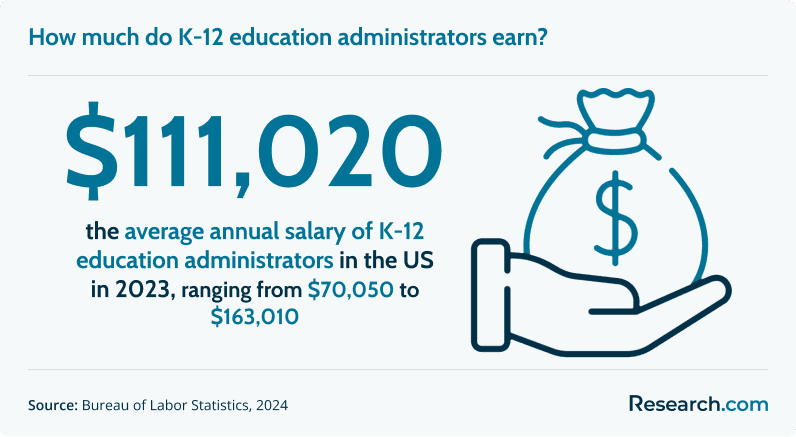
- The salary potential is strong, but not guaranteed. K-12 education administrators earned an average annual salary of $111,020 in 2023, with wages ranging from $70,050 to $163,010 depending on location, employer type, experience, and other factors.
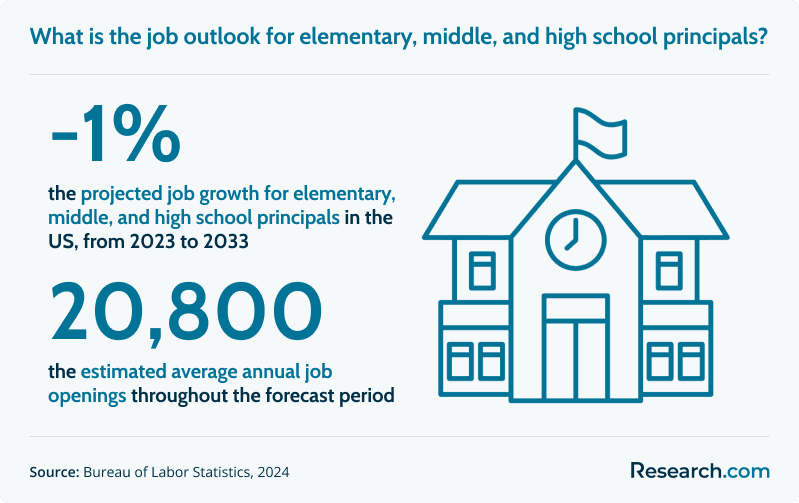
- The labor market is stable but selective. Employment for elementary, middle, and high school principals is projected to decline by -1% from 2023 to 2033, although projected openings average 20,800 per year because of retirements and workforce movement.
- Certification does not end after hiring. Many states require principals to complete professional development or continuing education to renew their licenses, often every 3 to 5 years.
- Principal/Administrative Certification and Requirements for 2027
- What educational requirements do I need for principal/administrative certification for 2027?
- What certifications do I need to become a K-12 principal?
- Is teaching experience required for principal/administrative certification?
- How long does it take to earn principal/administrative certification?
- What continuing education or professional development is required for maintaining principal/administrative certification?
- How much do principal/administrators earn?
- What are the main responsibilities of a school principal/administrator?
- How can an accelerated bachelor's degree fast-track a career in school leadership?
- What are the challenges facing K-12 education administrators?
- How Do I Choose the Right Certification Program for School Leadership?
- What trends in K-12 education should principals be aware of?
- Should an Easy Online Bachelor's Degree Be the Starting Point for a Leadership Career?
- What is the job market for principal/administrator positions?
- Can Fast Online Degrees Enhance My Path to Becoming a Principal?
- What financial aid options are available for aspiring school leaders?
- Is a Short-Term Associate Degree a Viable Starting Point for a Leadership Career?
- How Can I Identify an Affordable Online Bachelor's Program That Aligns with Certification Requirements?
- Can Supplementary Online Certifications Elevate My School Leadership Prospects?
- What Is the Return on Investment of Principal/Administrative Certification?
Principal/Administrative Certification and Requirements for 2027
Principal certification is the state-recognized credential that allows an educator to serve as a school principal or administrator in a K-12 setting. The exact title differs by state. Some states call it a principal certificate, others use terms such as school building leader, administrative services credential, or educational leadership license.
The certification pathway is designed to verify that a future principal can lead instruction, supervise staff, manage school operations, comply with education law, support student safety, and communicate with families and communities. It is not simply a management credential. Principals are expected to understand teaching and learning deeply enough to guide teachers and improve student outcomes.
Typical Pathway From Teacher to Principal
| Stage | What It Usually Involves | Why It Matters |
| Bachelor's degree | Completion of an undergraduate program, commonly in education or a teachable subject area | Builds the academic foundation for teacher licensure and classroom entry |
| Teaching experience | Many states require 2 to 5 years of classroom teaching | Helps future principals understand instruction, student behavior, assessment, and teacher support |
| Graduate education | A master's degree in educational leadership, administration, or a related field is commonly required | Provides preparation in leadership, school law, finance, supervision, curriculum, and data use |
| Principal preparation | State-approved coursework, internship, residency, or supervised field experience | Connects leadership theory with real administrative practice |
| Exams and licensure | Passing required exams and applying to the state education agency | Confirms eligibility for a state-issued principal or administrative credential |
| Renewal | Professional development, continuing education, or graduate coursework | Keeps administrators current on policy, leadership practice, safety, equity, and technology |
Best Undergraduate Starting Points for Future Principals
A bachelor's degree is usually the first milestone, but the major should support the candidate's eventual teaching pathway. Students comparing college majors that lead to strong career options may want to prioritize programs that can lead to teacher certification or provide preparation for working in schools.
- Education or teaching: The most direct route for candidates who plan to become licensed classroom teachers before moving into administration.
- Psychology: Useful for understanding student development, learning behavior, motivation, and school climate.
- Public administration: Relevant for students interested in education policy, organizational leadership, school governance, or district-level work.
- English or mathematics: Common subject-area pathways for future teachers who may later pursue school leadership.
General Steps to Become a K-12 Principal
- Complete an undergraduate degree. Most candidates begin with a bachelor's degree in education, a teachable subject, or a related field.
- Earn teacher licensure and work in the classroom. Many states expect future principals to demonstrate successful teaching experience before entering school leadership.
- Choose a graduate program aligned with state requirements. A master's degree in educational leadership or administration is the most common academic route.
- Complete a state-approved principal preparation program. This may be embedded in the master's degree or offered separately as a post-master's credential.
- Pass required assessments. Some states use the School Leaders Licensure Assessment (SLLA), while others require state-specific exams or performance assessments.
- Apply for licensure. Candidates typically submit transcripts, experience verification, test scores, background check materials, and application fees to the state.
- Maintain the credential. Once licensed, principals generally need professional development or continuing education to renew certification.
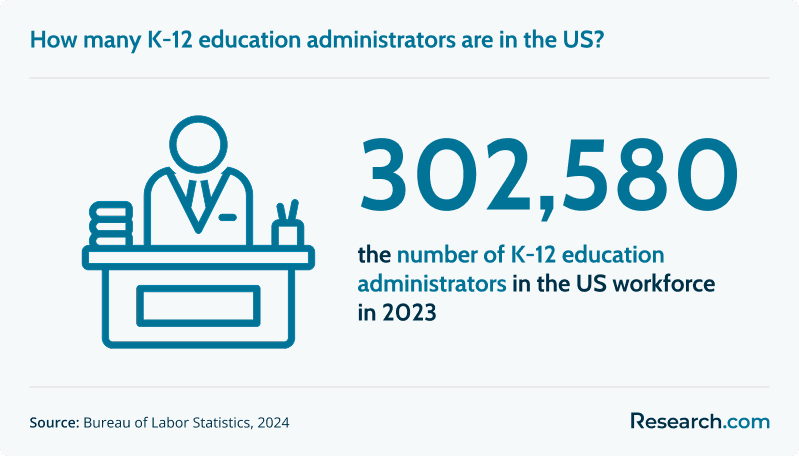
In 2023, there were around 302,580 K-12 education administrators in the country.
What educational requirements do I need for principal/administrative certification for 2027?
Most principal certification pathways require graduate-level preparation. A bachelor's degree may qualify an educator to begin teaching, but school leadership usually requires advanced study in supervision, school law, budgeting, instructional improvement, assessment, personnel management, and community engagement.
For working educators, program format matters. Teachers who cannot pause their careers may compare evening, hybrid, online, and cohort-based options. Some accelerated online degree programs for adults may help educators move more quickly through academic requirements, but candidates should verify that the program is accepted for principal licensure in their state before enrolling.
Common Graduate Degree Options for Aspiring Principals
| Degree Option | Best Fit | Certification Consideration |
| Master's in Educational Leadership | Teachers who want the most direct academic route into principal or assistant principal roles | Often designed to align with state principal certification requirements |
| Master's in Education Administration | Educators interested in school operations, personnel, budgeting, compliance, and leadership | May meet licensure requirements when paired with approved field experience and exams |
| Master's in Curriculum and Instruction with a leadership focus | Teachers who want to lead instructional improvement, curriculum planning, and academic initiatives | May need an added administrative certification track depending on state rules |
| Master's in Public Administration with an education concentration | Professionals interested in education policy, district administration, public systems, or nonprofit education leadership | May not automatically qualify for principal licensure unless it includes state-approved administrator preparation |
| Master's in Special Education Administration | Educators preparing to lead special education services, compliance, and student support programs | Especially relevant for administrators working with special education populations or district-level services tied to special education teaching certification and requirements |
What to Check Before Choosing a Graduate Program
- State approval: Confirm whether the program is approved by your state for principal or administrator licensure.
- Accreditation: Make sure the college or university is institutionally accredited.
- Internship requirements: Ask whether the program places you in a supervised leadership experience or expects you to arrange it independently.
- Exam preparation: Review whether coursework prepares students for required state assessments.
- Licensure portability: If you may move, ask how graduates pursue certification in other states.
What certifications do I need to become a K-12 principal?
The required credential depends on the state and the role. In many places, candidates first earn an initial, preliminary, or provisional administrative credential. After gaining administrative experience and completing renewal requirements, they may qualify for a standard, professional, or advanced license.
Because graduate education is a major investment, teachers should also consider how the credential may affect compensation and career mobility. Research.com's guide to teacher salary with a master's degree can help educators think through the broader financial implications of graduate study, although individual pay depends on district contracts, role, state, and experience.
Major Certification Categories
| Certification Type | Who It Is For | Examples |
| Initial or preliminary certification | First-time administrators who have met education, exam, and preparation requirements but have limited administrative experience | California Preliminary Administrative Services Credential; New York Initial School Building Leader Certificate |
| Standard or professional certification | Principals or administrators who have completed required experience and professional development | Texas Standard Principal Certificate; Georgia Performance-Based Leadership Certificate |
| Alternative certification pathways | Experienced educators or qualified professionals entering through approved nontraditional routes | Illinois Alternative Principal Preparation Program; New York Transitional D Certificate |
Examples of State-Specific Requirements
- California Preliminary Administrative Services Credential: Requires a master's degree, completion of a state-approved preparation program, and passing the California Administrator Performance Assessment (CalAPA).
- New York Initial School Building Leader Certificate: Requires a master's degree, passing the School Building Leader (SBL) exam, and 3 years of teaching experience.
- Texas Standard Principal Certificate: Requires 2 years of administrative experience and 200 hours of professional development every five years.
- Georgia Performance-Based Leadership Certificate: Requires a mentorship-based residency program and successful completion of the Georgia Educational Leadership Assessment.
- Illinois Alternative Principal Preparation Program: Designed for educators with at least 4 years of teaching experience and includes coursework with a year-long internship.
- New York Transitional D Certificate: Designed for career changers with a master's degree in a related field and leadership experience outside education, combined with a leadership preparation program.
Principal/Administrative Certification Exams: What to Expect
Certification exams usually measure whether a candidate can apply leadership knowledge to real school problems. Topics often include instructional leadership, school improvement planning, teacher evaluation, school operations, education law, equity, budgeting, family engagement, and ethical decision-making. Some states use national assessments, while others require state-developed exams or performance-based assessments.
Is teaching experience required for principal/administrative certification?
Yes, in many states, teaching experience is required before a candidate can earn principal or administrative certification. The common requirement is 2 to 5 years of full-time classroom teaching. This expectation reflects the reality of the principal's job: school leaders evaluate instruction, coach teachers, interpret student data, respond to classroom challenges, and make decisions that directly affect learning.
Educators who are still early in their journey should account for the time needed to become a teacher before pursuing administration. Research.com's guide on how long it takes to become a teacher can help candidates map the full timeline from undergraduate education to licensure, classroom experience, and principal preparation.
Why Teaching Experience Matters
- Instructional credibility: Teachers are more likely to trust leaders who understand classroom realities.
- Better teacher evaluation: Principals need to recognize effective instruction and give useful feedback.
- Student-centered decision-making: Classroom experience helps administrators understand how policies affect students and teachers day to day.
- Stronger school culture leadership: Principals often mediate between staff, families, students, and district leaders.
Some states offer alternative pathways for candidates without a traditional teaching background. These routes may apply to professionals with leadership experience in education-related fields, curriculum development, policy, or school operations. However, alternative pathways typically require extra coursework, mentoring, supervised fieldwork, or a residency.
How long does it take to earn principal/administrative certification?
The timeline depends on where you start. A teacher who already holds a bachelor's degree, has several years of classroom experience, and enrolls in a master's-level leadership program may complete the certification process more quickly than a student beginning college for the first time.
| Requirement | Typical Timeframe | Notes |
| Bachelor's degree | 4 years | Often completed in education or a subject area that leads to teacher licensure |
| Teaching experience | 2–5 years | Many states require this before principal certification |
| Master's degree in educational leadership or administration | 1–2 years | An online master's in education administration may help working educators balance school, work, and field experience |
| Principal preparation program and internship | 6 months–1 year | May be built into the master's degree or required separately |
| Certification exams | Several months of preparation is common | Timeline varies by testing schedule, retake policies, and state requirements |
After meeting teaching requirements, many candidates complete the remaining certification process in two to three years. The total time from the start of college to principal eligibility can be longer because most candidates first complete undergraduate education and several years of classroom teaching.
In 2023, the industry with the highest employment levels in K-12 education administrators are elementary and secondary schools (295,810). But there are also other industries, aside from schools, that employ them like local governments (1,800) and management services (1,010). In these industries, education administrators can work in advocacies, management consulting, and shaping public policy.
What continuing education or professional development is required for maintaining principal/administrative certification?
Principal certification usually has renewal requirements. Most states require certified administrators to document professional development, continuing education, graduate coursework, or other approved learning activities every 3 to 5 years. Renewal rules vary, so principals should track deadlines and approved activities through their state education agency or district licensure office.
Long-term professional growth can also include doctoral study. Educators comparing advanced academic routes may want to review the difference between an EdD and a PhD, especially if they are considering district leadership, research, policy, or higher education administration later in their careers.
Common Renewal and Professional Development Activities
- Graduate coursework: Courses in school law, leadership, curriculum, assessment, finance, special education, or educational technology.
- Approved workshops: Training on equity, school safety, instructional coaching, data use, family engagement, and emerging technologies.
- Mentoring or coaching: Formal programs that support new principals through guidance from experienced administrators.
- Professional conferences: Events hosted by education associations such as the National Association of Elementary School Principals (NAESP) or the National Association of Secondary School Principals (NASSP).
- Policy or community involvement: Service on committees, boards, or initiatives that connect school leadership to broader education issues.
Why Continuing Education Matters
Renewal requirements are not just administrative tasks. Principals face changing expectations around student mental health, staffing, digital learning, school safety, equity, accountability, and family engagement. Ongoing learning helps administrators stay prepared for these responsibilities and remain eligible for leadership roles.
How much do principal/administrators earn?
K-12 principal and administrator pay varies by state, district, school size, experience, employer, and bargaining or salary schedule rules. In 2023, K-12 education administrators in the US earned an average annual salary of $111,020. Reported wages ranged from $70,050 to $163,010.
For comparison, postsecondary education administrators earned an average annual salary of $122,010 in 2023. Some K-12 administrators may earn salaries comparable to postsecondary administrators, particularly in higher-paying states, large districts, local government roles, or corporate education services. K-12 education administrators employed in local government or corporate education services had average salaries reaching up to $121,350.
| Compensation Factor | How It Can Affect Pay |
| Location | State and district salary schedules can create large differences in earnings. |
| Experience | Veteran administrators often earn more than first-time assistant principals or entry-level principals. |
| School type and size | Larger schools or districts may have more complex responsibilities and different pay structures. |
| Employer type | Elementary and secondary schools employ most K-12 administrators, but local government and management services also employ some education leaders. |
| Credentials | Advanced degrees, required licenses, and specialized leadership experience may improve competitiveness for higher-level roles. |
Salary should be one part of the decision, not the only reason to pursue certification. Principals carry high levels of responsibility for students, staff, families, budgets, safety, and school culture.
What are the main responsibilities of a school principal/administrator?
A principal is both an instructional leader and an operational manager. The role combines teacher support, student discipline, compliance, budgeting, family communication, data analysis, school improvement planning, and crisis response. Aspiring administrators should understand that the job is not limited to office work; much of the role involves visible leadership across classrooms, hallways, staff meetings, community events, and district conversations.
Formal leadership preparation can help educators build these skills. Candidates comparing affordable graduate options may review low-cost online master's degrees in educational leadership as one way to explore programs that prepare aspiring principals without ignoring budget concerns.
Core Responsibilities of School Principals
| Responsibility | What It Looks Like in Practice |
| Instructional leadership | Supporting curriculum quality, teacher effectiveness, assessment practices, and student learning goals |
| Staff supervision and evaluation | Hiring, mentoring, observing, evaluating, and supporting teachers and staff |
| Budget and resource management | Allocating funds, planning expenditures, managing supplies, and aligning resources with school priorities |
| School climate and safety | Creating a respectful environment, implementing safety procedures, and responding to behavioral concerns |
| Family and community engagement | Communicating with parents, community partners, boards, and district leaders |
| Policy and legal compliance | Following district policies, state education laws, federal rules, and student privacy requirements |
Skills Successful Principals Need
The principal occupation profile shows why the role requires a broad skill set. Effective school leaders typically need the following abilities:
- Leadership and judgment: Making difficult decisions while keeping student learning and school mission at the center.
- Clear communication: Explaining expectations, policies, decisions, and concerns to teachers, students, families, and district leaders.
- Conflict resolution: Addressing disagreements involving students, staff, parents, or community members with fairness and consistency.
- Organization: Managing schedules, reports, budgets, meetings, evaluations, emergencies, and competing priorities.
- Data analysis: Using attendance, behavior, assessment, and performance data to guide school improvement.
How can an accelerated bachelor's degree fast-track a career in school leadership?
An accelerated bachelor's degree can shorten the first phase of the school leadership pathway for students who have transfer credits, prior college coursework, or the ability to study at a faster pace. A program such as an accelerated bachelor's degree may be useful for adults who want to qualify for teacher preparation sooner and eventually move toward graduate-level leadership study.
However, speed should not outweigh licensure fit. Future principals should confirm that an accelerated undergraduate program supports teacher certification requirements in their state if they plan to follow the traditional teacher-to-principal route.
What are the challenges facing K-12 education administrators?
Principal certification prepares candidates for leadership, but the job itself is demanding. Administrators must make decisions in environments shaped by staffing shortages, limited budgets, safety concerns, family expectations, policy changes, and student needs. Understanding these challenges helps candidates decide whether school leadership matches their strengths and career goals.
Staffing Shortages and Recruitment
Hiring and retaining qualified staff remains one of the most difficult responsibilities for many school leaders. According to data from the 2024–2025 school year:
- 82% of public schools needed to fill two or more teaching vacancies before the start of the school year.
- 72% of schools with vacancies in special education struggled to find fully certified teachers.
- 64% of public schools cited the lack of qualified candidates as a major obstacle in filling teaching positions.
- 50% of public-school leaders reported their schools were understaffed before the 2024–2025 school year.
Staffing gaps can increase workloads, reduce course offerings, strain student services, and make school improvement goals harder to achieve.
Budget Constraints
Principals often have to prioritize among competing needs: teachers, support staff, technology, instructional materials, facilities, extracurricular programs, counseling, and professional development. Limited funding can force difficult trade-offs that affect students and staff.
Student Safety and Well-Being
Principals are responsible for creating safe, supportive learning environments. Recent data shows:
- 11% of public schools agree that crime around their school poses a threat to student safety during commutes.
- 38% of schools report that traffic patterns around their campus pose risks to students.
Administrators must balance safety planning with student belonging, mental health, discipline, and family trust.
Community Engagement and Communication
Principals are often the public face of a school. They must communicate with families, staff, students, district officials, local organizations, and boards. Strong communication is especially important when schools face controversy, budget pressure, policy changes, or student safety concerns.
Adapting to Educational Change
School leaders must stay current on instructional technology, digital access, student mental health, equity, curriculum changes, accountability requirements, and teacher support. The pace of change makes professional learning a practical necessity, not a credential formality.
How Do I Choose the Right Certification Program for School Leadership?
The right principal certification program is the one that meets your state's licensure requirements, fits your schedule, provides supervised leadership experience, and prepares you for the responsibilities of school administration. A program that is inexpensive or fast but not state-approved can delay certification and waste money.
Some candidates may consider one-year online master's programs when they want a shorter route. That option can be useful for experienced educators, but only if the curriculum, internship, accreditation, and exam preparation align with principal licensure rules.
Questions to Ask Before Enrolling
- Is the institution accredited?
- Is the program approved for principal or administrator certification in my state?
- Does the program include the required internship, practicum, or residency?
- What exams do graduates need to pass, and how does the program prepare them?
- Can I complete fieldwork while continuing to teach full time?
- What is the total cost, including fees, books, testing, background checks, and travel?
- Does the program support out-of-state licensure if I relocate?
- What support is available for working teachers, career changers, or candidates from underrepresented communities?
Common Mistakes to Avoid
| Mistake | Why It Can Hurt You | Better Approach |
| Choosing a program before checking state approval | The degree may not qualify you for principal licensure. | Confirm state authorization with the state education agency and the program advisor. |
| Comparing tuition only | Fees, exams, books, travel, and unpaid internship time can change the real cost. | Calculate total program cost and likely income impact. |
| Assuming online means easier | Online leadership programs can still require fieldwork, synchronous sessions, and intensive writing. | Review weekly workload, internship expectations, and course format. |
| Ignoring transfer and prior learning policies | You may spend more time and money than necessary. | Ask how prior graduate credits, certifications, or professional experience are evaluated. |
| Relying only on rankings | A highly ranked program may not fit your state's licensure rules or your schedule. | Use rankings as one data point alongside licensure alignment, cost, support, and outcomes. |
What trends in K-12 education should principals be aware of?
Future principals should prepare for a role shaped by technology, student well-being, equity, workforce pressures, and public accountability. These trends affect hiring, budgeting, instruction, discipline, family communication, and school improvement planning.
Technology Integration and Digital Equity
Digital tools are now part of everyday instruction, assessment, communication, and operations. Principals must support effective technology use while addressing unequal access to devices, internet connectivity, and digital literacy. Technology plans should focus on learning outcomes, teacher training, data privacy, and equitable access.
AI and Automation in Schools
Artificial intelligence is affecting lesson planning, tutoring tools, administrative workflows, academic integrity, data analysis, and communication. Principals need clear policies for ethical use, student privacy, teacher guidance, and responsible implementation. AI should support educators, not replace professional judgment.
Mental Health and Student Well-Being
Schools continue to face rising expectations around counseling, social-emotional support, trauma-informed practice, and crisis response. Principals must coordinate staff, families, counselors, nurses, community partners, and district resources to support student well-being.
Diversity, Equity, and Inclusion
Administrators are expected to use data and policy to address gaps in access, discipline, achievement, advanced coursework, special education, and family engagement. Effective equity work requires more than statements; it requires measurable practices, staff development, and community trust.
Personalized Learning and Curriculum Innovation
Personalized learning, project-based learning, differentiated instruction, and competency-based approaches can improve engagement when implemented carefully. Principals must ensure that innovation aligns with state standards, assessment expectations, teacher capacity, and available resources.
Community and Family Engagement
Principals increasingly serve as community connectors. Strong family engagement depends on transparent communication, accessible meetings, multilingual outreach where needed, and authentic opportunities for families to influence school improvement.
Educators who want to influence broader systems beyond a single school may also explore public policy careers, especially if they are interested in education legislation, advocacy, government service, or nonprofit leadership.
Should an Easy Online Bachelor's Degree Be the Starting Point for a Leadership Career?
An accessible online bachelor's degree can be a practical starting point for adults who need flexibility, especially if they are changing careers or completing unfinished college credits. Programs described as easy online bachelor's degrees should still be evaluated carefully. For a future principal, the key question is not whether a degree is easy, but whether it supports teacher licensure, transfer goals, graduate admission, and long-term leadership preparation.
If your goal is school administration, prioritize accreditation, academic support, field placement options, and alignment with state teacher certification. A convenient bachelor's program that does not lead toward licensure may create extra steps later.
What is the job market for principal/administrator positions?
The principal job market is expected to be competitive. From 2023 to 2033, employment of elementary, middle, and high school principals is projected to decline by 1%. Even with that slight decline, an estimated 20,800 openings are expected each year because of retirements and career transitions.
Job availability can be affected by student enrollment, school consolidation, local and state budgets, district leadership changes, and regional demand. Candidates with strong teaching records, leadership internships, data skills, staff supervision experience, and state-required credentials may be better positioned for openings.
Flexible graduate study can help working educators stay employed while preparing for advancement. Candidates exploring flexible options may compare online master's programs designed for working adults, but they should still verify rigor, accreditation, and licensure alignment.
Can Fast Online Degrees Enhance My Path to Becoming a Principal?
Fast online degrees can help some candidates move through academic requirements more efficiently, especially adults with transfer credits, prior coursework, or clear professional goals. Research.com's guide to fast online degrees can be useful for comparing accelerated options, but aspiring principals should be cautious: the fastest program is not always the best program for licensure.
For school leadership, the program must support the correct sequence: undergraduate preparation, teacher licensure where required, classroom experience, graduate-level leadership training, supervised administrative practice, exams, and state certification.
What financial aid options are available for aspiring school leaders?
Principal preparation can involve tuition, fees, textbooks, testing costs, background checks, and possible travel for field experiences. Aspiring school leaders should compare financial aid options before committing to a program.
- Federal financial aid: Eligible students can complete the FAFSA to determine access to federal aid.
- Scholarships: Some colleges, districts, education associations, and foundations offer scholarships for educators pursuing leadership credentials.
- State grants or educator incentives: Availability varies by state and may depend on shortage areas, service commitments, or employment status.
- Employer tuition support: Some districts offer tuition reimbursement or professional development funds.
- Payment plans: Colleges may allow students to spread tuition payments across a term.
Candidates comparing online options can review online colleges that accept FAFSA while confirming that any selected program also meets principal certification requirements.
Is a Short-Term Associate Degree a Viable Starting Point for a Leadership Career?
A short-term associate degree may be useful for students who need an affordable entry point into higher education, but it is not enough to become a principal. Principal certification typically requires a bachelor's degree, teaching experience, graduate education, and state licensure.
For career changers or students with no college background, a six-month online associate degree may help build transfer credits or establish academic momentum. Before enrolling, students should confirm accreditation, transfer agreements, credit acceptance by bachelor's programs, and whether the coursework supports eventual teacher preparation.
How Can I Identify an Affordable Online Bachelor's Program That Aligns with Certification Requirements?
An affordable online bachelor's program can be a smart first step if it supports your state's teacher certification route or transfers cleanly into a teacher preparation pathway. Cost matters, but licensure fit matters more. A low-cost degree that does not meet certification prerequisites can create additional expenses later.
When comparing an affordable online bachelor's degree, ask whether the institution is accredited, whether the program includes teacher preparation or transfer pathways, whether field placements are available in your state, and whether graduates are eligible for licensure exams or graduate admission in educational leadership.
Can Supplementary Online Certifications Elevate My School Leadership Prospects?
Supplementary certifications can strengthen a leadership profile when they fill real skill gaps. Useful areas may include school finance, special education compliance, instructional coaching, data analytics, education technology, crisis management, restorative practices, or human resources. These credentials should complement—not replace—state-required principal certification.
Candidates interested in extra credentials can explore online certifications with strong earning potential, but they should choose options that are relevant to K-12 administration and recognized by employers. A short certificate is most valuable when it helps you solve specific school leadership problems.
What Is the Return on Investment of Principal/Administrative Certification?
The return on investment of principal certification depends on program cost, time commitment, salary difference, job availability, career goals, and personal fit for leadership. Certification can open access to assistant principal, principal, district administrator, policy, or education management roles, but it does not guarantee a promotion or a specific salary.
To evaluate ROI, compare the total cost of the credential with realistic career outcomes in your state or district. Include tuition, fees, testing, lost time, commute or travel costs, and the opportunity cost of graduate study. Then compare those costs with local administrator salary schedules, expected openings, and advancement timelines.
Educators considering additional credentials can review certification programs tied to higher-paying careers, but principal licensure should be judged by its relevance to school leadership, not only by salary potential.
ROI Questions to Ask Yourself
- Do I want to lead adults, manage conflict, and make high-stakes decisions daily?
- Does my district or state have realistic principal or assistant principal openings?
- Will the program qualify me for certification where I plan to work?
- How much salary increase is realistic based on local pay schedules?
- Can I complete the internship or fieldwork while maintaining employment?
- Will this credential support district leadership, policy, or specialized administrative roles later?
Key Insights
- Principal certification is state-regulated, so the first step is always to verify your state's education, experience, exam, and renewal requirements.
- Most traditional pathways require a bachelor's degree, teacher licensure, 2 to 5 years of teaching experience, a master's degree, a state-approved principal preparation program, exams, and continuing education.
- K-12 education administrators earned an average annual salary of $111,020 in 2023, with wages ranging from $70,050 to $163,010, but earnings vary widely by location, employer, experience, and role.
- The job outlook is competitive: principal employment is projected to decline by -1% from 2023 to 2033, while annual openings are expected to average 20,800 because of retirements and career transitions.
- Program choice should be based on accreditation, state approval, internship quality, exam preparation, cost, flexibility, and licensure portability—not speed or tuition alone.
- Future principals should prepare for real leadership pressures, including staffing shortages, budget limits, safety concerns, student mental health needs, digital equity, AI policy, and community trust.
- Supplementary certificates, accelerated degrees, and online programs can support the pathway, but they should never replace the state-approved credential required for principal licensure.
References:
- Bureau of Labor Statistics. (2024). Elementary, middle, and high school principals. U.S. Department of Labor. Retrieved February 28, 2024, from BLS.
- Bureau of Labor Statistics. (2024). Occupational employment and wages, May 2023 – 11-9032 education administrators, kindergarten through secondary. U.S. Department of Labor. Retrieved February 28, 2024, from BLS.
- Bureau of Labor Statistics. (2024). Postsecondary education administrators. U.S. Department of Labor. Retrieved February 28, 2024, from BLS.
- Bureau of Labor Statistics. (2024). Occupational employment and wages, May 2023 – 11-9033 education administrators, postsecondary. U.S. Department of Labor. Retrieved February 28, 2024, from BLS.
- National Center for Education Statistics. (2025). School Pulse Panel: Surveying high-priority, education-related topics. U.S. Department of Education. Retrieved February 28, 2025, from NCES.
- Peck, D. (2025, January 3). 15 teacher shortage statistics (2025). Retrieved February 28, 2025, from Devlin Peck.
Other Things You Should Know About Principal/Administrative Certification and Requirements
Most states require a fingerprint-based criminal background check and a state child-abuse registry check before issuing principal certification. Some districts also require a TB screening or employment verification. Final approval usually comes from the state education department or licensing agency after all results are cleared.
The School Leaders Licensure Assessment (SLLA) is a necessary exam for principal certification in 2027 in most states. It's designed to measure competence in educational leadership and typically requires a score of at least 163 to pass. Check local regulations for state-specific requirements.
In 2027, maintaining principal certification typically requires completing a set number of continuing education units (CEUs) every renewal period, usually three to five years, depending on the state. These can include workshops, coursework, or professional development activities approved by the state education department.