2027 How to Become an Art Teacher in Massachusetts: Requirements & Certification

Co-Founder and Chief Data Scientist
Becoming an art teacher in Massachusetts means preparing for two careers at once: practicing visual art and teaching children or adolescents in a licensed school setting. The path is manageable, but it is not automatic. You will need the right degree or educator preparation background, passing MTEL scores, supervised classroom experience, and a clear understanding of how Massachusetts public school licensure works.
This guide is for aspiring college students, current artists, paraprofessionals, career changers, and out-of-state teachers who want to teach visual arts in Massachusetts. It explains the education requirements, licensure steps, classroom preparation, salary expectations, professional development options, and decision points that matter before you invest time and money in a teacher preparation program.
Quick Answer: How do you become an art teacher in Massachusetts?
To teach visual arts in Massachusetts public schools, you generally need a bachelor’s degree, completion of a state-approved educator preparation program, student teaching experience, passing scores on the Massachusetts Tests for Educator Licensure, and an Initial License in Visual Arts from the Massachusetts Department of Elementary and Secondary Education. Private schools may use different hiring standards, but public schools require state licensure.
Key Things You Should Know About Becoming an Art Teacher in Massachusetts
- The Massachusetts Department of Elementary and Secondary Education has reported a notable shortage of art teachers, especially in urban districts.
- The average salary for art teachers in Massachusetts is approximately $87,000 per year. Pay can vary by district, experience level, contract terms, and location. Teachers in Boston may earn upwards of $88,000, while teachers in rural communities may earn less.
- The employment outlook is cautiously positive, with projected growth of about 4% over the next decade. Demand is shaped by district budgets, school priorities, and the value placed on arts education.
- Massachusetts has a high cost of living, particularly in Boston and Cambridge, so salary should be evaluated alongside housing, commuting, benefits, and loan repayment costs.
- Steps to become an art teacher in Massachusetts
- Education requirements for Massachusetts art teachers
- Certification and licensure process
- Student teaching, internships, and field experience
- Massachusetts visual arts standards and curriculum
- Job market and salary expectations
- Professional development and continuing education
- Classroom management and teaching methods
- How to begin your teaching journey
- Career growth and specialization options
- Mentorship and networking for early-career teachers
- Digital and research resources for new art teachers
- Additional credentials that can strengthen your career
- Interdisciplinary approaches in art education
- Certifications that support inclusive art classrooms
- Funding and scholarship options
- Using historical context in art lessons
- Technology integration in art education
- Private versus public school art teaching jobs
- Resources for new Massachusetts art teachers Career changer considerations Additional planning notes
- Challenges and advantages for career changers
- Connecting music and visual arts instruction Licensure considerations Related planning topics
How can you become an art teacher in Massachusetts?
The most reliable route is to plan backward from licensure. Massachusetts public schools hire licensed educators, so your degree, testing, fieldwork, and job search should all support the Visual Arts license you intend to earn.
| Step | What to do | Why it matters |
| Choose the right academic path | Complete a bachelor’s degree in art education, visual arts with teacher preparation, or a closely related field that meets state expectations. | Your program should prepare you for both studio practice and classroom teaching. |
| Complete approved teacher preparation | Enroll in a state-approved program that includes pedagogy, classroom methods, assessment, and supervised field experience. | Massachusetts uses educator preparation as part of the pathway to licensure. |
| Pass required MTEL exams | Prepare for and pass the communication and literacy assessment and the Visual Arts subject test. | Passing scores demonstrate that you meet the state’s professional and subject-area requirements. |
| Finish student teaching | Complete supervised teaching in a school setting, usually under an experienced licensed educator. | This is where you practice lesson planning, classroom management, critique, assessment, and differentiated instruction. |
| Apply for the Initial License | Submit your application to the Massachusetts Department of Elementary and Secondary Education. | The Initial License allows you to teach visual arts in Massachusetts public schools. |
| Prepare for hiring | Build a teaching portfolio, revise your resume, gather references, and practice interview responses. | Schools want evidence that you can teach standards-based art lessons, manage materials safely, and support diverse learners. |
| Maintain and advance your license | Track renewal timelines, professional development, and additional coursework requirements. | Licensure is not a one-time task; ongoing professional learning is part of the teaching career. |
- Degree planning: A bachelor’s degree is the usual starting point. Art education degrees are the most direct fit, but candidates with strong studio art backgrounds may still qualify if they complete the required educator preparation components.
- Testing: The Massachusetts Tests for Educator Licensure are a major checkpoint. Build MTEL preparation into your timeline rather than treating it as an afterthought.
- Licensure application: After meeting education, testing, and fieldwork requirements, candidates apply for the Initial License through the state.
- Portfolio preparation: A strong portfolio should show your artistic range, teaching philosophy, sample lessons, assessment approach, student-centered thinking, and ability to connect artmaking with state standards.
- Job search readiness: Districts look for teachers who can manage supplies, maintain safe studio routines, adapt lessons, support multilingual learners, and communicate the value of arts education to families and administrators.
- Long-term renewal planning: Once hired, stay organized about continuing education, district requirements, and any steps needed to move from an Initial License toward a Professional License.
If you are comparing art teaching with other creative careers, it can also be useful to review career options in interior design to see how education, licensing, client work, and creative practice differ.
What are the educational requirements for becoming an art teacher in Massachusetts?
The minimum education requirement is typically a bachelor’s degree, but the exact program you choose matters. Massachusetts candidates should look for programs that combine studio art, art history, teaching methods, child or adolescent development, assessment, classroom management, and supervised school experience.
A master’s degree is not always the first requirement for entry, but many candidates pursue graduate study to strengthen their teaching practice, meet advancement goals, or change careers. If your long-term plan includes working with students who need additional learning support, an online master's in inclusive education may help you compare graduate-level options connected to inclusive teaching.
Coursework should build both artistic competence and instructional skill. Useful academic areas include drawing, painting, sculpture, printmaking, digital media, ceramics, photography, art criticism, art history, curriculum design, educational psychology, and methods for teaching visual arts across grade levels.
Participation in a state-approved educator preparation program is a key requirement. These programs connect academic study with school-based practice, helping future teachers learn how to plan lessons, evaluate student work, adapt instruction, and run a safe studio classroom.
Accreditation should be checked before enrolling. Massachusetts licensure depends on recognized academic preparation, so candidates should verify that the college or university is appropriately accredited and that the educator preparation program aligns with state requirements.
Subject-matter competency is also required. Art teacher candidates must pass the relevant Massachusetts Tests for Educator Licensure, including communication and literacy requirements and the Visual Arts subject assessment.
| Education option | Best for | Important caution |
| Bachelor’s in art education | Students who know early that they want to teach visual arts in schools. | Confirm that the program is designed for Massachusetts licensure, not only general art study. |
| Bachelor’s in studio art plus teacher preparation | Artists who want deeper studio training while completing licensure requirements. | You may need additional education courses or a post-baccalaureate pathway. |
| Master’s in art education | Career changers, current teachers, or candidates seeking advanced preparation. | Check whether the program leads to initial licensure or assumes you are already licensed. |
| License-only or post-baccalaureate program | Graduates who already hold a bachelor’s degree and need the educator preparation component. | Ask how student teaching placements, MTEL preparation, and state approval are handled. |
What is the certification and licensing process for an art teacher in Massachusetts?
Massachusetts public school art teachers need an educator license, typically the Initial License in Visual Arts. The state licensing process is designed to verify that you understand both visual arts content and teaching practice.
Most candidates complete a bachelor’s degree in art education or a related field, finish a state-approved teacher preparation program, complete student teaching, and pass required MTEL exams. Student teaching commonly includes at least 300 hours of supervised classroom experience, giving candidates direct practice under the guidance of a licensed educator.
The Massachusetts Department of Elementary and Secondary Education oversees licensure. For visual arts candidates, the MTEL process includes the Visual Arts subject test, which measures knowledge of art concepts, materials, techniques, history, and pedagogy.
After receiving an Initial License, teachers must plan for the next stage of their career. A Professional License application is required within five years and involves additional coursework and professional development. This makes continuing education a practical requirement, not simply an optional resume booster.
| Licensure stage | What candidates should prepare | Common mistake to avoid |
| Before applying | Degree records, educator preparation documentation, MTEL results, and student teaching verification. | Assuming a general art degree automatically meets teacher licensure requirements. |
| Initial License | State application materials and evidence that all required preparation steps are complete. | Waiting until graduation to learn which MTEL exams are required. |
| Professional License planning | Professional development records, coursework plans, and renewal timeline tracking. | Ignoring licensure deadlines after getting hired. |
How important is teaching experience and what are the internship opportunities for art teachers in Massachusetts?
Teaching experience is one of the most important parts of becoming an art teacher because art classrooms are highly active environments. You are not only explaining concepts; you are managing tools, materials, movement, critique, collaboration, cleanup routines, and students with different levels of confidence in their creative abilities.
Massachusetts requires supervised classroom experience as part of the licensure pathway. Student teaching is typically completed in a K-12 setting and gives candidates the chance to practice lesson design, instructional delivery, assessment, classroom routines, and professional communication.
Internship and fieldwork opportunities are often arranged through colleges and universities that partner with local districts. Candidates may also find valuable experience through museums, galleries, community arts programs, youth organizations, after-school programs, summer camps, and teaching assistant roles.
To make field experience count, ask for specific feedback from mentor teachers, keep a reflective teaching journal, collect sample lesson materials, and document how you adjusted instruction for different learners. These artifacts can later strengthen your teaching portfolio.
Volunteer and community-based work can also help, especially for career changers or applicants who need more experience working with children and adolescents. While these experiences do not replace state-required student teaching, they can improve classroom confidence and show commitment to arts education.
| Experience type | What you learn | How it helps your job search |
| Student teaching | Full lesson planning, classroom routines, assessment, critique, and professional expectations. | Provides the strongest school-based evidence of readiness. |
| Teaching assistant role | Small-group support, material preparation, student engagement, and classroom observation. | Shows that you understand school routines and can support lead teachers. |
| Museum or gallery education | Object-based learning, public engagement, art interpretation, and informal instruction. | Demonstrates ability to connect students with real artworks and cultural institutions. |
| Community art programs | Inclusive instruction, flexible lesson design, and youth development. | Helps you show adaptability with different age groups and settings. |
| Workshop leadership | Project management, demonstration skills, and creative facilitation. | Gives concrete examples for interviews and portfolio materials. |

What are the standards and curriculum requirements for teaching art in Massachusetts?
Massachusetts visual arts instruction is guided by state arts standards that emphasize artistic literacy. Art teachers are expected to help students create, present, respond to, and connect with art rather than simply complete isolated projects.
This standards-based approach asks teachers to design lessons that build creative practice, observation, critique, cultural understanding, and reflection. A strong art curriculum helps students develop technical skills while also learning how art communicates ideas, identity, history, and social meaning.
The Massachusetts Department of Elementary and Secondary Education provides curriculum frameworks, rubrics, and support materials that help teachers align lessons with grade-level expectations. New teachers should become familiar with these resources before interviews because schools may ask how their lesson planning reflects state standards.
Effective curriculum planning usually includes a sequence of learning from Pre-K through 12th grade. Students should gradually move from exploration and basic skill-building toward more independent artistic choices, deeper analysis, and more sophisticated presentation of their work.
Professional organizations such as the Massachusetts Art Education Association help teachers interpret standards, share lesson ideas, and stay current with instructional practices. These networks are especially useful for new teachers who may be the only art educator in a small school.
If you are comparing education-related graduate paths outside visual arts, you can also review an affordable online speech pathology master's degree resource to understand how specialized education careers may differ in training and practice.
What is the job market like and what are the salary expectations for art teachers in Massachusetts?
The Massachusetts job market for art teachers includes real opportunities, but hiring conditions vary by district. Some schools actively prioritize arts education, while others face budget constraints that can affect staffing. Urban districts may have more openings, while smaller districts may hire less frequently because they have fewer art positions overall.
According to the Bureau of Labor Statistics, the average salary for art teachers in Massachusetts is around $87,000 annually. Location matters: teachers in urban areas such as Boston may earn upwards of $85,000, while teachers in rural districts may see salaries closer to $75,000. Contract steps, education level, years of service, and district budgets all influence actual pay.
The demand for teachers in Massachusetts should be interpreted carefully. Shortages can create openings, but art positions still depend on local priorities, school funding, retirements, and enrollment patterns.
Benefits are an important part of total compensation. Public school teaching roles commonly include health insurance, retirement benefits, paid time off, and negotiated contract protections. These benefits can make the profession more financially stable, even when the cost of living is high.
| Factor | How it affects art teacher pay and hiring | Question to ask before accepting a job |
| District location | Urban, suburban, and rural districts may offer different salary schedules and workloads. | How does the salary compare with local rent, commute costs, and benefits? |
| Union contract | Salary steps, raises, planning time, and duties are often shaped by contract language. | Where would I enter on the salary scale based on my degree and experience? |
| Program structure | Some art teachers serve one school; others travel between buildings. | Will I have a dedicated classroom, cart-based teaching, or multiple campuses? |
| Class size and supplies | Large classes and limited budgets can affect workload and lesson design. | What is the annual art supply budget and who controls ordering? |
| School priorities | Districts that value arts integration may offer stronger support and collaboration. | How is visual arts represented in the school improvement plan? |
One Massachusetts teacher described the decision this way: “I completed a local program at UMass Dartmouth and had to compare the salary with the cost of living near Boston. Benefits helped, but I still had to think carefully about rent, commuting, and student loans. What kept me in the field was seeing students discover that art gave them a voice.”
What professional development and continuing education opportunities are available for art teachers in Massachusetts?
Professional development matters for two reasons: it supports licensure maintenance and it helps art teachers keep their instruction relevant. Art education changes as new media, digital tools, inclusive practices, and assessment expectations evolve.
Massachusetts educators can search for approved professional development opportunities through state resources. Many sessions focus on curriculum frameworks, instructional strategies, assessment, and adapting lessons for diverse learners.
The Massachusetts Art Education Association and the Northeast Professional Educator Network offer workshops and networking opportunities for art educators. These events can be especially valuable for teachers who want practical lesson ideas, critique strategies, and peer feedback.
The Museum of Fine Arts in Boston provides educator workshops that help teachers use collections, visual analysis, and object-based learning in their classrooms. Programs like these can help art teachers connect curriculum standards with real artworks and cultural context.
Continuing education may also support broader career goals. Teachers interested in leadership, curriculum design, or district-level roles can explore advanced education pathways and compare possible EdD career opportunities.
Organizations such as Artworks Studio emphasize hands-on professional training aligned with PreK-12 visual arts learning standards. Practical workshops can help teachers test materials, plan projects, and bring new techniques back to students.
The Massachusetts Department of Elementary and Secondary Education also provides guidance as schools respond to changing educational needs, including shifts that became more visible after COVID-19.
What are effective classroom management strategies and teaching methods for art teachers in Massachusetts?
Art classroom management is different from management in a lecture-based classroom. Students move, share tools, handle supplies, work at different speeds, and make creative decisions. Strong routines protect instructional time and make the room safer.
- Teach procedures explicitly: Show students how to enter, collect materials, clean brushes, store artwork, use tools, and transition between activities.
- Use positive reinforcement: Recognize students who follow studio expectations, support peers, take creative risks, or revise thoughtfully.
- Be consistent and fair: Students are more likely to respect routines when expectations apply to everyone and consequences are predictable.
- Design engaging lessons: Projects should have clear objectives, meaningful choices, and enough structure to keep students focused.
- Use project-based learning: Art naturally supports inquiry, iteration, critique, and presentation. These methods help students develop both creative and problem-solving skills.
- Differentiate instruction: Offer varied materials, modified steps, visual examples, choice-based prompts, and multiple ways for students to show learning.
- Communicate clearly: Demonstrations, posted steps, rubrics, and visual cues help students understand what to do without constant repeated directions.
| Common classroom challenge | Better strategy | Why it works |
| Students rush through projects | Build in sketchbook planning, peer critique, and revision checkpoints. | Students learn that artmaking involves process, not just completion. |
| Materials are misused | Demonstrate proper use and assign cleanup responsibilities. | Clear systems reduce waste, damage, and unsafe behavior. |
| Students say they are “bad at art” | Use skill-building mini-lessons and emphasize growth over talent. | Confidence increases when students see progress through practice. |
| Wide range of ability levels | Offer tiered prompts and optional extensions. | Students can work at an appropriate level without feeling singled out. |
| Critique becomes too vague | Teach sentence frames and criteria-based feedback. | Students learn how to discuss art respectfully and analytically. |
If you are still comparing educator preparation options, reviewing best value online education degrees can help you think through cost, format, and program fit.
How do I start my journey to become an art teacher in Massachusetts?
Start by confirming which license you need, then choose an academic program that leads toward that license. Do not begin with a school search alone; begin with the end requirement: Massachusetts authorization to teach visual arts in the public schools.
- Review the Massachusetts educator licensure expectations for Visual Arts.
- Choose a bachelor’s, post-baccalaureate, license-only, or graduate program that aligns with those expectations.
- Ask programs how they prepare candidates for MTEL exams and student teaching placements.
- Build a portfolio that includes both your own artwork and sample teaching materials.
- Gain experience with children or adolescents through tutoring, camps, museums, after-school programs, or classroom support roles.
- Track costs, deadlines, testing fees, transportation, and possible unpaid student teaching time before committing.
For a broader overview of state teaching requirements, see this guide on how to become a teacher in Massachusetts. It can help you understand the general structure of educator preparation before narrowing your plan to visual arts.
What are the career advancement opportunities and specializations for art teachers in Massachusetts?
Art teaching can grow in several directions. Some educators deepen their classroom practice, while others move into leadership, curriculum design, museum education, arts administration, or specialized student support.
- Art specializations: Teachers may focus on art history, digital media, ceramics, photography, printmaking, sculpture, or art therapy-informed practices. Specialization can help a teacher design stronger electives and stand out for roles with specific program needs.
- Technology-rich instruction: Digital media and design skills can be valuable as schools expand student exposure to creative technology, visual communication, and portfolio development.
- Leadership roles: Experienced teachers may pursue department chair, curriculum coordinator, mentor teacher, or district arts leadership positions. Some leadership paths may require additional credentials, such as a Massachusetts Administrator License.
- Additional endorsements: Credentials connected to special education or English as a Second Language can help art teachers serve a wider range of learners and collaborate more effectively with support staff.
- Curriculum and policy work: Some teachers contribute to standards alignment, district curriculum maps, arts advocacy, assessment design, or professional development for other educators.
A Massachusetts educator described one advancement path this way: “After studying at Massachusetts College of Art and Design in Boston, I realized I wanted my art teaching to include more support for students with special needs. I pursued training connected to art therapy practices and now design workshops that combine creativity, expression, and student support.”
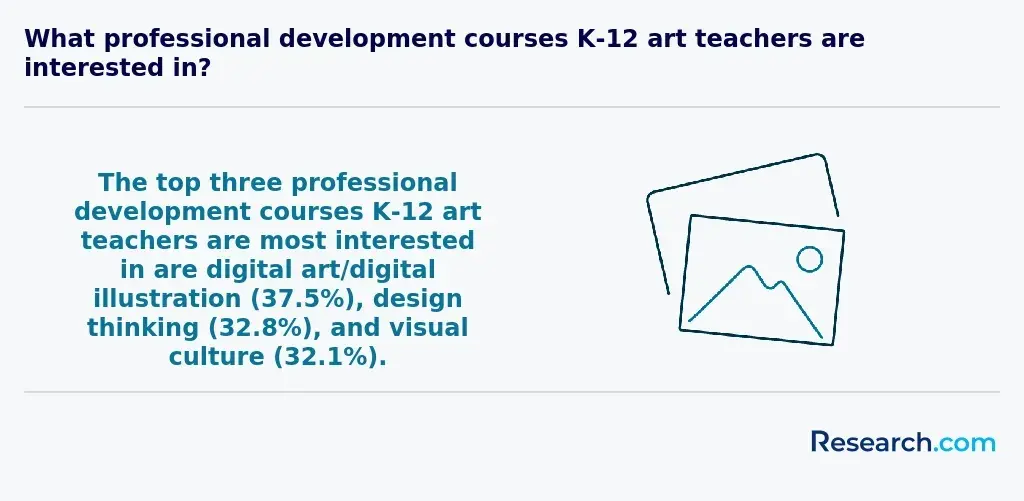
What mentorship and networking opportunities can boost early career success?
New art teachers benefit from mentors because many art educators manage specialized classrooms with unique schedules, budgets, supplies, and assessment challenges. A mentor can help with lesson pacing, classroom routines, parent communication, display planning, and navigating school culture.
Useful networking sources include district mentor programs, state education initiatives, the Massachusetts Art Education Association, local museum educator groups, and online professional communities. These networks can reduce isolation, especially for teachers who are the only visual arts instructor in their building.
Peer collaboration is also practical. Early-career teachers can share supply lists, critique rubrics, substitute plans, display ideas, and project adaptations. For a comparison with another licensure pathway, review how to become an English teacher in Massachusetts and note how subject-specific preparation differs across teaching fields.
What digital and research-oriented resources can enhance support for new art teachers in Massachusetts?
New art teachers should build a reliable digital resource system before the school year becomes overwhelming. Useful resources include state curriculum frameworks, lesson repositories, museum collections, digital portfolio platforms, visual reference libraries, rubric templates, and teacher discussion forums.
Research skills also matter. Teachers need to evaluate sources, curate age-appropriate images, cite artworks, organize digital materials, and help students use visual information responsibly. Educators who want stronger information management skills may find it useful to explore a library science degree, especially if they are interested in research, archives, digital collections, or school library collaboration.
What additional certifications can enhance an art teacher’s career trajectory in Massachusetts?
Additional credentials can make an art teacher more flexible, especially in districts serving students with diverse learning, language, and technology needs. The best credential depends on your students, your school setting, and your long-term career goals.
| Additional credential area | How it can help an art teacher | Best fit |
| Technology integration | Supports digital art, multimedia projects, portfolio development, and blended instruction. | Teachers interested in digital media, design, or creative technology. |
| Inclusive education | Strengthens differentiated instruction and collaboration with support staff. | Teachers working with students who need modified materials or supports. |
| Bilingual or multilingual support | Improves communication and lesson access for multilingual learners. | Teachers in linguistically diverse schools. |
| ESL-related preparation | Builds strategies for vocabulary, visual instructions, and language-accessible critique. | Teachers who want to better support English learners. |
If multilingual student support is a priority, comparing the requirements to become an ESL teacher can help you understand how language-focused preparation differs from visual arts licensure.
How can interdisciplinary methods enrich art teaching in Massachusetts?
Interdisciplinary art lessons help students see visual art as part of larger systems of thinking. Art can connect naturally with mathematics, history, science, technology, language arts, music, and social studies.
For example, a visual arts lesson might use symmetry, proportion, geometry, pattern, or measurement. Another project might ask students to examine how artists respond to scientific discovery, environmental change, community identity, or historical events. These lessons can make art feel more relevant while preserving the depth of artmaking itself.
Teachers interested in stronger STEM connections may benefit from comparing instructional approaches in how to be a middle school math teacher in Massachusetts. The goal is not to turn art into another subject, but to help students make meaningful connections across disciplines.
How can targeted certifications enhance inclusive art education in Massachusetts?
Inclusive art education means more than offering the same project to every student. It requires flexible materials, accessible demonstrations, multiple ways to participate, and thoughtful support for students with disabilities, language needs, trauma histories, or different motor skills.
Targeted credentials can help art teachers design better accommodations and collaborate with special educators, paraprofessionals, counselors, occupational therapists, and families. Teachers who want formal preparation in this area can review special education teacher certification in Massachusetts to understand the training expectations for that field.
In practice, inclusive art teaching may involve adaptive tools, visual schedules, modified rubrics, sensory-aware materials, peer collaboration, and choice-based assignments that allow students to show learning in different ways.
What funding and scholarship opportunities are available for new art teachers in Massachusetts?
Cost is a major planning issue for future art teachers. Candidates may need to pay for tuition, testing, transportation, art supplies, background checks, and unpaid or reduced-work periods during student teaching. Before enrolling, ask programs for a full cost breakdown rather than comparing tuition alone.
Possible sources of support include state and local grants, institutional scholarships, professional education awards, arts organization funding, and district partnerships. Some opportunities support tuition, while others help teachers purchase classroom materials or attend professional development.
When researching funding, ask whether awards are restricted to licensed teachers, current students, first-year educators, or specific districts. Also ask whether funding requires a service commitment.
If you are exploring education-adjacent fields with overlapping skills in research, community programming, and public learning, this guide on how to become a librarian in Massachusetts may help you compare alternative career directions.
How does historical context enrich art education in Massachusetts?
Historical context helps students understand that art is shaped by culture, place, technology, politics, identity, and lived experience. Instead of treating artworks as isolated images, teachers can ask students to examine why an artwork was made, who made it, what materials were available, and how audiences responded.
This approach deepens visual analysis and supports critical thinking. Students can compare artistic movements, examine local and global traditions, and connect older works to contemporary artistic practice.
Art teachers who want to build stronger history connections may find useful planning ideas in become a history teacher in Massachusetts. Strong interdisciplinary planning can help students understand both artistic technique and historical meaning.
How can technology integration enhance art education in Massachusetts?
Technology can expand what students create and how they reflect on their work. Digital drawing tools, design software, interactive displays, virtual museum collections, online portfolios, and digital critique platforms can all support modern art instruction when used intentionally.
The key is alignment. Technology should support artistic goals rather than replace hands-on making without purpose. A balanced curriculum may include traditional media, digital media, research, critique, documentation, and presentation.
Digital portfolios are especially useful because students can document process, reflect on revisions, and show growth over time. Online tools can also help teachers give feedback, organize student work, and connect students with artworks they could not easily see in person.
Educators who work with younger children may also want to compare developmentally appropriate teaching approaches by reading how to become a kindergarten teacher in Massachusetts.
What are the differences between private and public art teaching positions in Massachusetts?
Public and private school art teaching roles can look similar in the classroom but differ in licensure expectations, curriculum rules, salary structures, evaluation systems, and institutional culture.
| Category | Public school art teaching | Private school art teaching |
| Licensure | Massachusetts public schools require state educator licensure for teaching positions. | Private schools may set their own hiring requirements, though many still prefer licensed teachers. |
| Curriculum | Instruction is usually tied to state standards and district curriculum expectations. | Teachers may have more curricular flexibility, depending on the school. |
| Pay and benefits | Often governed by district salary schedules and negotiated contracts. | Compensation varies widely by institution and may not follow public salary scales. |
| Work environment | May include larger systems, union protections, district initiatives, and standardized evaluation processes. | May offer smaller communities, distinctive missions, and different expectations for family engagement. |
| Best fit | Candidates who want a state-regulated pathway, public service setting, and structured benefits. | Candidates who value mission-specific schools, curricular autonomy, or independent school culture. |
If you are considering independent schools, review how to become a private school teacher in Massachusetts to compare expectations before choosing a licensure or job-search strategy.
What resources and support are available for new art teachers in Massachusetts?
- Massachusetts Art Education Association: Offers professional development, networking, conferences, and a community of practicing art educators who understand Massachusetts schools.
- Massachusetts Department of Elementary and Secondary Education: Provides licensure information, curriculum frameworks, standards guidance, and educator resources.
- Massachusetts Teacher of the Year Network: Can help new teachers learn from experienced educators and connect with mentors.
- Online teaching platforms: Teachers Pay Teachers and Artsonia can provide lesson ideas, visual examples, and student art-sharing tools. Use these resources carefully and adapt materials to state standards and your students’ needs.
- Massachusetts Cultural Council: Offers arts-related grants and funding opportunities that may support classroom resources, arts partnerships, and enrichment projects.
Common mistakes to avoid when planning this career
- Choosing a program without checking licensure alignment: A strong art program is not always a teacher preparation program.
- Looking only at tuition: Include testing fees, supplies, commuting, technology, and the financial impact of student teaching.
- Waiting too long to prepare for MTEL exams: Testing can affect your timeline, student teaching eligibility, and hiring schedule.
- Assuming online coursework automatically meets Massachusetts requirements: Verify state approval, field placement support, and licensure outcomes.
- Ignoring district salary schedules: Your actual pay depends on placement on the local scale, not only statewide averages.
- Underestimating classroom management: Strong art skills alone do not prepare you for managing materials, transitions, safety, and behavior.
- Relying only on rankings: Program fit, licensure success, placement support, and affordability matter more than reputation alone.
What are the challenges and benefits of pursuing teaching in Massachusetts for career changers?
Career changers can bring valuable experience to art education, especially if they have worked as artists, designers, museum educators, community arts leaders, or creative professionals. However, switching into public school teaching requires meeting Massachusetts licensure requirements, not just having art expertise.
The biggest challenges are usually time, cost, testing, and fieldwork. Candidates who do not already have an education background may need additional coursework or an alternative teacher preparation pathway. Student teaching can also be difficult for adults who are balancing work, family, and income needs.
Massachusetts offers alternative licensure options that may help career changers use existing skills while building required teaching competencies. These pathways can be more efficient than starting over, but candidates still need to confirm that the program meets state expectations for Visual Arts licensure.
The benefits can be significant. Teaching offers the chance to mentor young artists, build stable school-based employment, access a competitive salary structure, and contribute to a well-rounded education. In districts experiencing staffing needs, career changers with strong art and youth-development experience may be attractive candidates.
If you want to compare the transition process with another teaching area, review how to become an elementary school teacher in Massachusetts. Many licensure planning questions are similar, even though the subject-area requirements differ.
Before making the switch, career changers should ask whether they can afford the preparation period, whether they are ready for classroom realities, and whether they want to work with children or adolescents every day—not only practice art.
What do graduates have to say about becoming an art teacher in Massachusetts?
- “Teaching art in Massachusetts has allowed me to work in a state where creativity is taken seriously. My students respond strongly when lessons give them room to express personal ideas, and local arts organizations have helped me expand what I can bring into the classroom.” Lucas
- “I worried about stability in an arts-related career, but I found that many schools still need committed art teachers. Working with students from different backgrounds has made conversations about culture, identity, and visual storytelling central to my teaching.” Jonathan
- “Collaboration has been one of the best parts of the job. I often work with teachers in other subjects to design projects that connect art with larger questions, and students benefit when they see creativity across the curriculum.” Sofia
How can integrating music enhance art education in Massachusetts?
Music and visual art can work together to help students explore rhythm, pattern, mood, movement, composition, and cultural expression. A lesson might ask students to create visual responses to sound, design album art, study performance traditions, or compare how artists and musicians communicate emotion.
Collaboration between music and art teachers can support project-based learning and give students more ways to express ideas. These lessons also build communication, interpretation, and creative problem-solving skills.
Art teachers who want to design stronger arts-integration projects can review how to become a music teacher in Massachusetts to better understand how another arts teaching pathway approaches preparation and instruction.
Key Insights
- The Massachusetts Department of Elementary and Secondary Education reported that as of 2023, there were approximately 1,200 art teachers employed in public schools across the state, suggesting an established statewide workforce for visual arts instruction.
- The average salary for an art teacher in Massachusetts is around $87,000 annually, but district, location, experience, and cost of living can change the real financial picture.
- To become an art teacher in Massachusetts public schools, candidates must complete a state-approved educator preparation program and obtain a Massachusetts teaching license. As of 2023, there are over 30 accredited programs offering art education degrees.
- The Massachusetts Teacher Licensure Test is a major milestone. In 2023, the pass rate for the Visual Arts MTEL was approximately 75%, so candidates should prepare early and seriously.
- A 2023 survey found that 60% of current art teachers in Massachusetts believe technology integration is essential for preparing students for the future.
- The best path depends on your starting point. Traditional undergraduates, studio artists, graduate students, and career changers may need different programs, but all should verify licensure alignment before enrolling.
- Do not choose a program based only on reputation or tuition. Ask about state approval, MTEL support, student teaching placements, transfer policies, total costs, and job placement support.
- Successful art teachers combine artistic skill with pedagogy, classroom management, inclusive teaching, curriculum planning, and the ability to advocate for arts education.
Related Articles for Nearby States
- 2027 How to Become an Art Teacher in Rhode Island: Requirements & Certification
- 2027 How to Become an Art Teacher in Connecticut: Requirements & Certification
- 2027 How to Become an Art Teacher in New Hampshire: Requirements & Certification
- 2027 How to Become an Art Teacher in New York: Requirements & Certification
- 2027 How to Become an Art Teacher in Vermont: Requirements & Certification
- 2027 How to Become an Art Teacher in New Jersey: Requirements & Certification
- 2027 How to Become an Art Teacher in Maine: Requirements & Certification
- 2027 How to Become an Art Teacher in Pennsylvania: Requirements & Certification
- 2027 How to Become an Art Teacher in Delaware: Requirements & Certification
- 2027 How to Become an Art Teacher in Maryland: Requirements & Certification
References:
- Boston University (n.d.). MA in Art Education with Initial License.
- Lesley University (n.d.). Visual art license-only program for PreK-12 teaching.
- Massachusetts Art Education Association (2022). Professional development resources.
- Massachusetts Curriculum Framework for Arts (2019). Massachusetts arts curriculum framework.
- Massachusetts College of Arts and Design (2024). Professional and continuing education at MassArt.
- Museum of Fine Arts Boston (n.d.). Educator professional development.
- The Eliot School of Fine and Applied Arts (2024). Professional development for art teachers.
Other Things You Should Know About Becoming an Art Teacher in Massachusetts
In 2027, to become an art teacher in Massachusetts, candidates must hold at least a bachelor's degree, complete a state-approved educator preparation program, and pass the Massachusetts Tests for Educator Licensure (MTEL). Additionally, obtaining a Preliminary or Initial License is necessary, followed by professional licensure after gaining teaching experience.
To become an art teacher in Massachusetts in 2027, candidates must pass the Massachusetts Tests for Educator Licensure (MTEL), including the Communication and Literacy Skills test and the Visual Arts subject test. These exams assess both basic skills and specific art knowledge.
The Massachusetts Department of Elementary and Secondary Education (DESE) issues art teacher licenses. Applicants must apply through the Educator Licensure and Renewal system and meet the state’s licensure standards for a Preliminary, Initial, or Professional license.