
2027 How to Become a Teacher in New York – What Degree Do You Need to Be a Teacher?

Co-Founder and Chief Data Scientist
Becoming a teacher in New York is not a single-step process. Your route depends on what grade level or subject you want to teach, whether you already hold a degree, whether you completed a state-approved educator preparation program, and whether you are entering from another state or another career.
Recent data provided by the US Bureau of Labor and Statistics indicates that New York had hired 7,490 kindergarten teachers, 95,840 elementary teachers, 64,250 secondary teachers, and 124,190 postsecondary teachers (BLS, 2024). These figures show why teacher certification remains an important decision for aspiring educators, career changers, substitute teachers, and licensed teachers planning to advance into specialized or leadership roles.
This guide explains the New York teacher certification process, including education requirements, exams, initial and professional certificates, alternative pathways, out-of-state credential transfer, renewal expectations, and program options. It also highlights practical questions to ask before choosing a teacher preparation program, whether you are considering a campus-based degree, an online route, or a specialized field such as special education, English, early childhood, or higher education.
Kindergarten and elementary teachers, including those who complete a special education degree online, help students build early academic and social foundations. Secondary teachers prepare students for college, technical training, and employment by teaching subject-specific knowledge and transferable skills. Postsecondary teachers educate students beyond high school in academic, professional, and technical fields. In New York, public school teachers generally need state-issued certification to show that they meet the required preparation, testing, and professional standards.
New York Teaching Licensure Requirements Table of Contents
- Overview of the Teaching Industry in New York
- Educational Requirements for a Licensed Teacher in New York
- New York Licensure Application and Renewal Process
- Pathways to Alternative Teacher Certification in New York
- How can out-of-state teachers become certified in New York?
- What are the specialized steps to pursue English teaching in New York?
- What professional development resources are available for teachers in New York?
- List of Top Teaching Programs in New York for 2027
- What are the benefits of pursuing a master's degree in education for teachers in New York?
- Are there alternative educational career paths to broaden your impact in New York?
- What are the latest policy changes impacting teacher certification in New York?
- What are the requirements for teaching in private schools in New York?
- How can advanced credentials propel career progression for teachers in New York?
- How can mentorship programs optimize your teacher certification journey in New York?
- What are the substitute teaching requirements for educators in New York?
- What additional resources are available to support teachers in New York?
- What challenges might you face during the New York teacher certification process?
- How can affordable graduate programs boost career growth for teachers in New York?
- How can online teacher preparation programs benefit New York educators?
Quick Answer: How do you become a certified teacher in New York?
To become a licensed public school teacher in New York, most candidates need a bachelor’s degree, completion of a New York State Registered teacher preparation program, passing scores on required state exams such as the Educating All Students test and applicable Content Specialty Test, fingerprint clearance, and an application through the state certification system. New teachers typically begin with an Initial Certificate, which is valid for five years. Moving to a Professional Certificate generally requires additional education, teaching experience, and ongoing professional learning.
| Certification step | What it means for candidates |
| Choose a teaching area | Decide whether you want early childhood, childhood, adolescent, special education, English, STEM, postsecondary, private school, or another route. |
| Complete required education | Earn the required degree and complete approved teacher preparation coursework aligned with your intended certificate area. |
| Pass required exams | Plan for New York State assessments, including the EAS and, for many core subject teachers, the CST. |
| Apply for Initial Certification | Submit transcripts, exam results, clearance materials, and other documentation required for your certificate type. |
| Advance professionally | Work toward Professional Certification, required experience, mentoring, and continuing education obligations. |
Overview of the Teaching Industry in New York
New York remains one of the largest education labor markets in the United States, with demand spread across early childhood, elementary, secondary, special education, and postsecondary settings. The opportunity is real, but it is not uniform. Hiring conditions vary by district, grade level, subject area, certification area, and location.
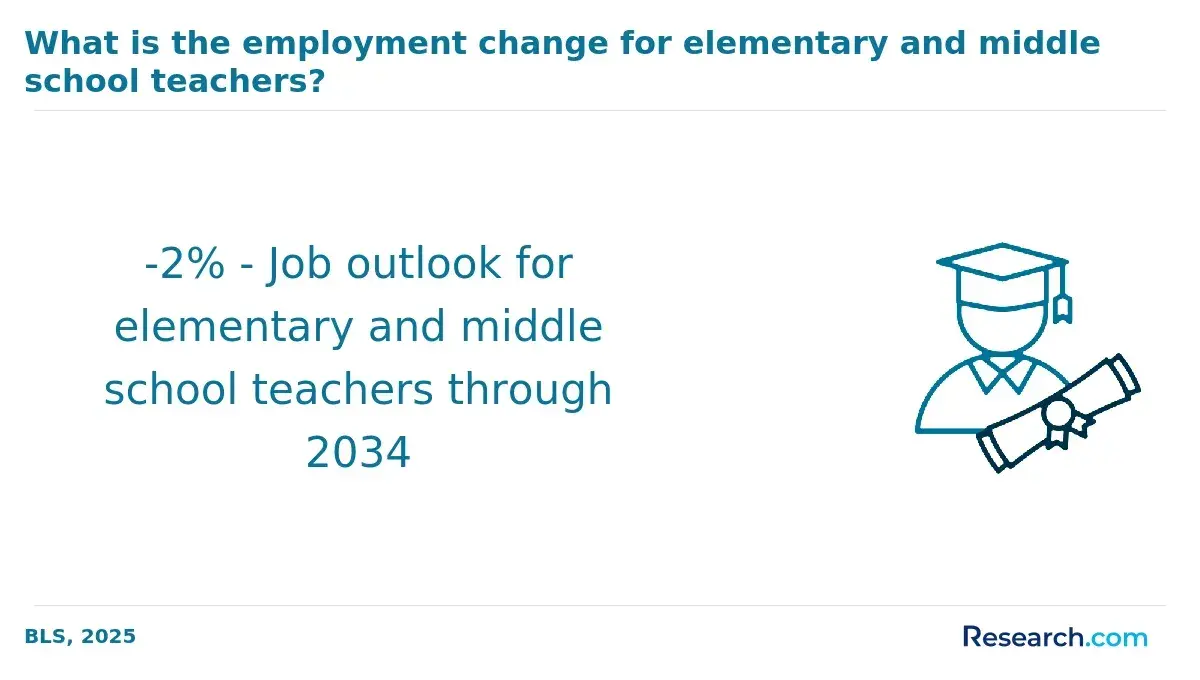
In kindergarten teaching in New York, the employment landscape is projected to decline by 2% between 2024 and 2034. Even with that projected decline, about 103,800 job openings are projected annually nationwide, with New York ranking high in demand among states.[3]
For elementary teaching in New York City, 5,263 pedagogical vacancies are reported as of Fiscal 2025, amid budgeted headcount of 125,188 positions. Recent hiring trends point to continuing need in elementary education, especially in high-need boroughs such as the Bronx and Brooklyn.
Secondary school teaching in New York has an expected 15.3% increase in job opportunities by 2030. This growth is expected to create approximately 5,940 annual job openings, totaling 78,290 by 2030.
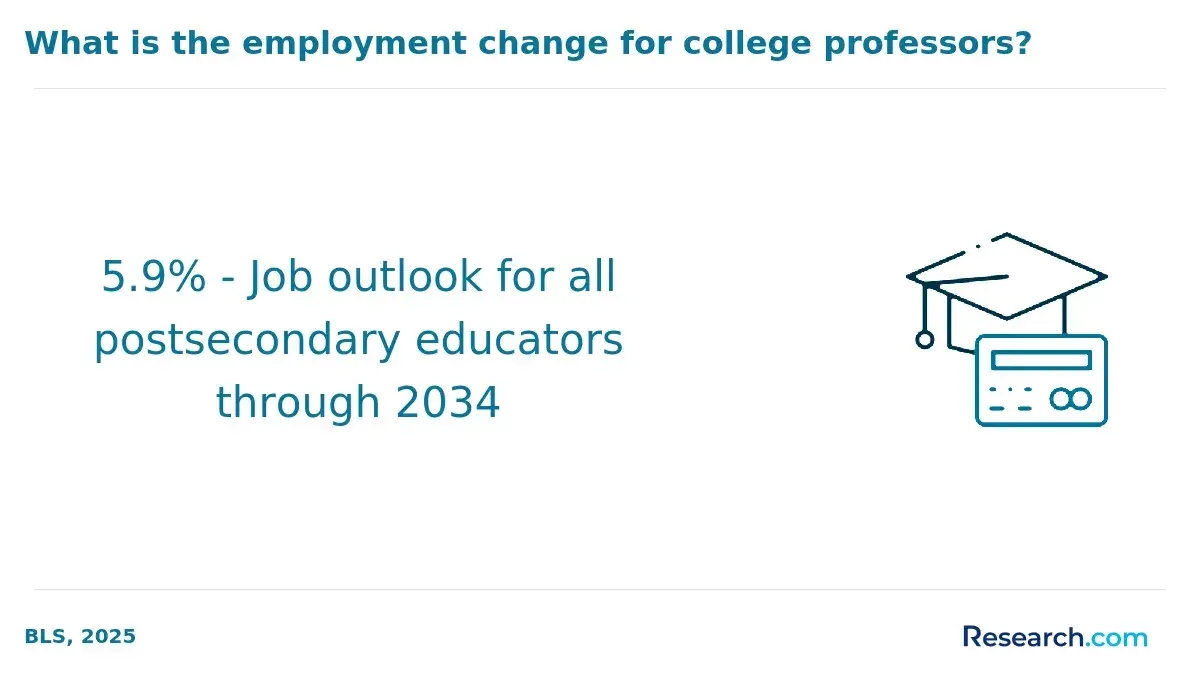
At the postsecondary level, teaching positions nationally are expected to grow by 7% between 2024 and 2034. By 2034, total job openings for postsecondary teachers are expected to average 114,000 annually (U.S. Bureau of Labor Statistics, 2024).
Pay is another reason many candidates compare teaching pathways carefully. The average annual salary for a licensed teacher in New York stands at $69,066 as of January 01, 2025, which is 129% higher than the national average. Salaries in this profession range from a minimum of $47,270 to a maximum of $98,102, based on data from Salary.com (2025). Actual compensation can depend on district salary schedules, years of experience, graduate credits, certification area, union contracts, and leadership responsibilities.
Candidates interested in college administration, student affairs, academic advising, or teaching beyond K-12 may also compare teacher preparation with a master’s in higher education online, which can support career paths outside traditional classroom teaching.
| Teaching level | What teachers usually focus on | Decision point for candidates |
| Kindergarten | Early literacy, numeracy, classroom routines, social development, and family communication. | Best for candidates who enjoy early childhood learning and highly structured classroom support. |
| Elementary | Multiple subjects, foundational academic skills, assessment, and whole-child development. | Best for candidates who want broad instructional responsibilities across subjects. |
| Secondary | Subject-specific instruction, college and career preparation, and adolescent development. | Best for candidates with strong academic preparation in a teachable subject. |
| Postsecondary | Advanced instruction, research, advising, and discipline-specific expertise. | Best for candidates considering graduate study, academic careers, or specialized professional teaching. |
Educational Requirements for a Licensed Teacher in New York
New York teacher certification is built around a combination of academic preparation, supervised educator training, testing, and professional standards. The exact requirements may differ by certificate area, but most public school teaching routes include the following core elements.
- A bachelor’s degree is required with a minimum GPA of 3.0. Candidates generally need either a major in the subject they plan to teach or at least 18 semester hours in that subject, along with 12 semester hours in liberal arts and sciences.
- Candidates must complete an approved teacher preparation program, also called a New York State Registered Program. This may be part of a bachelor’s degree, a post-baccalaureate certificate, or a graduate program such as a master’s degree in child development.
- Required New York State teaching exams must be passed. These commonly include the Educating All Students test and, for core subject teachers, the Content Specialty Test.
- After meeting the required conditions, candidates may qualify for an Initial Certificate. This is the first teaching license for many New York educators and is valid for five years.
- To move to a Professional Certificate, teachers generally need an advanced credential connected to a master’s degree, three years of teaching experience, and completion of 175 hours of professional development every five years.
- Certification must remain current for continued employment. Pedagogical New York State Department of Education employees, including teachers and school administrators, are expected to maintain valid certification.
Because certificate requirements can change by grade band, subject, student population, and preparation pathway, candidates should verify their exact certificate title before enrolling in a program. A childhood education program, adolescent English program, special education program, and school leadership program may share some foundations but lead to different credential outcomes.
| If your goal is... | Look for a program that... | Potential mistake to avoid |
| Public school teaching in New York | Is aligned with New York certification requirements and includes required fieldwork or student teaching. | Choosing a general education degree that does not lead to the certificate you need. |
| Special education teaching | Prepares you for the correct special education certification area and any required exams. | Assuming all education degrees qualify you for special education roles. |
| Secondary subject teaching | Includes the right subject-area coursework and educator preparation sequence. | Ignoring the required semester hours or major expectations in your teaching subject. |
| Career change into teaching | Offers alternative certification or post-baccalaureate options for degree holders. | Starting a second bachelor’s degree without comparing alternative routes. |
| Teaching outside public schools | Matches the hiring expectations of private, charter, independent, or religious schools. | Assuming private school requirements are identical to public school certification rules. |
New York Licensure Application and Renewal Process
The certification process does not end once an educator receives an initial credential. New York teachers must understand the difference between initial certification, professional certification, reissuance, registration, reinstatement, and continuing education. These terms are often confused, and confusing them can delay employment or renewal.
Initial Certification
- Initial certificates for classroom teachers, school building leaders, and school counselors are valid for five years.
- Educators are expected to complete the requirements for a Professional Certificate within five years. This includes mentoring during the first year of teaching and at least two additional years of teaching experience within that five-year period.
- One route to the Professional level is completing a master’s degree in the area of initial certification through a graduate-level teacher preparation program.
Professional Certification
- Professional Certificates remain valid indefinitely as long as educators meet the professional development standards required during each five-year block.
- The renewal expectation includes 175 hours of PD every five years.
- The New York public school employing the educator approves professional development hours and reports them to the DOE. Schools must also keep records of educators’ PD hours for seven years in case of audit.
- Educators can complete renewal steps online.
Reinstatement of Certification
- If educators do not complete 175 hours of PD every five years, their teaching certificate may be revoked.
- Educators seeking reinstatement may need to pay an expiration fee and complete the missing professional development hours to return the license to good standing.
- For case-specific questions, educators can contact the New York State Education Department Office of Teaching Initiatives at 518-474-3901.
Reissuance of Expired Initial Classroom Teacher Leader Certificates
- Educators who have already received a Time Extension may qualify for one Initial Reissuance.
- To request the first Initial Reissuance, educators must send the Attestation Form to [email protected] and state that they have not met the education or experience requirements for the Professional Certificate. They must also submit and pay for the First Initial Reissuance application through their TEACH account before the attestation can be reviewed.
- For the second Initial Reissuance, educators must satisfy all Professional Certificate requirements except the education or experience requirements.
Online Registration Renewal
- Educators can renew their registration online.
- This online service is available to licensees in all professions who are in the final five months of their current registration period or no more than four months beyond the expiration of their last valid registration period.
- Through the online system, educators can complete the registration renewal application, request an optional Professional Photo ID Card, and pay with a credit card.
- Educators may also choose inactive status for the new registration period and/or update their address.
- Educators who want to practice their profession or use their professional title in New York State must register with the New York State Education Department through the TEACH online system every five years.
Continuing Teacher and Leader Education (CTLE) Hours
- Professionally certified teachers are required to complete 100 CTLE hours during each five-year period.
- Each semester-hour of credit from a regionally accredited university counts as 15 clock hours of CTLE credit.
- All Professional Learning Board courses include a free PD Tracker.
- Educators may use online professional development and continuing education courses to renew a teaching certificate in New York and New York City.
- Acceptable CTLE must come from a sponsor approved by the DOE.
- Renew a Teaching Certificate by Professional Learning Board is an approved sponsor of online CTLE courses.
Because New York uses several terms for professional learning, including PD and CTLE, teachers should confirm the requirement that applies to their certificate type, employment setting, and registration cycle before paying for courses.
Pathways to Alternative Teacher Certification in New York
Alternative certification can be a practical route for adults who already have a bachelor’s degree, subject-area expertise, or professional experience but did not complete a traditional undergraduate teacher preparation program. These routes are especially relevant for candidates entering hard-to-staff subjects, high-need schools, or career-change pathways.
The Transitional B Certification route allows candidates with a bachelor’s degree to teach while enrolled in an approved alternative teacher preparation program. This path is often used by candidates who can demonstrate subject knowledge and meet the eligibility requirements established by the New York State Education Department.
The Transitional C Certification route is designed for professionals who already hold a master’s degree and have substantial experience in their field. It may be appropriate for candidates moving from industry into teaching, including those with backgrounds in high-demand areas such as science, technology, engineering, and math.
Alternative routes are not shortcuts around state standards. Candidates still need to document qualifications, complete approved preparation, pass required assessments, and meet certification rules. The advantage is that the sequence may allow eligible candidates to begin teaching sooner while completing remaining preparation requirements.
For a closer comparison of available credentials, review this guide to the types of teaching certificates in New York. It can help career changers and degree holders decide whether a traditional, alternative, or graduate-level route is the most efficient fit.
| Pathway | Who it may fit | Key consideration |
| Traditional undergraduate preparation | First-time college students planning early for a teaching career. | Usually integrates major coursework, pedagogy, fieldwork, and student teaching. |
| Post-baccalaureate or graduate preparation | Degree holders who decided to teach after completing a bachelor’s degree. | May be more efficient than earning another undergraduate degree. |
| Transitional B Certification | Bachelor’s degree holders enrolled in an approved alternative program. | Requires careful coordination between employment, coursework, testing, and certification milestones. |
| Transitional C Certification | Master’s degree holders with significant professional experience. | Best suited to candidates whose work background aligns with a teachable field. |
How can out-of-state teachers become certified in New York?
Teachers licensed in another state may be able to use reciprocity or pathway recognition to pursue New York certification. This does not always mean automatic approval. New York may still require documentation, testing, fingerprinting, and review of the teacher’s preparation and experience.
- Confirm reciprocity eligibility: Start by checking whether your active out-of-state certificate, degree, educator preparation, and experience match New York’s requirements for the certificate you want.
- Send transcripts and supporting records: Submit official college transcripts and any other required documents to the New York State Education Department so your academic preparation can be reviewed.
- Prepare for New York exams: Many out-of-state teachers must pass New York State assessments, including the Educating All Students test and the Content Specialty Test for the relevant subject area, unless equivalent testing requirements have already been accepted.
- Complete fingerprinting and background review: New York requires a fingerprint and background check to evaluate safety and suitability for school employment.
- Apply through the state system: Once documents, exam results, and clearance requirements are ready, teachers can submit the certification application through the New York State Education Department’s online portal.
Out-of-state educators who need additional coursework or professional learning can compare options through online accredited colleges. Before enrolling, verify that the course or program satisfies the New York requirement you are trying to meet.
What are the specialized steps to pursue English teaching in New York?
Prospective English teachers need both educator preparation and subject-area readiness. That usually means aligning coursework, field experiences, and exam preparation with the English certificate area. Candidates should evaluate whether their program includes literature, writing instruction, adolescent literacy, assessment, diverse learners, and supervised teaching experiences connected to English language arts. For a focused breakdown, see how to become an english teacher in New York, which explains certification expectations, preparation steps, and professional resources for English teaching roles.
What professional development resources are available for teachers in New York?
Professional development is not only a renewal requirement; it is also how teachers keep pace with instructional technology, curriculum changes, student needs, assessment practices, and classroom management strategies. Strong professional learning should be relevant to your certificate area, accepted by your employer or the state, and useful in your actual classroom.
- New York State United Teachers programs: NYSUT offers workshops, conferences, and online coursework on topics such as classroom management, technology use, and student engagement.
- Board of Cooperative Educational Services: BOCES provides training and instructional support in specialized areas, including STEM and special education.
- University-led programs: Institutions such as Columbia University and SUNY offer workshops and continuing education options for teachers seeking advanced preparation or added expertise.
- Online learning platforms: Teachers may use platforms such as Coursera, edX, and Teachers Pay Teachers for on-demand learning in classroom technology, curriculum development, and assessment methods.
Before counting any course toward renewal, confirm that the provider is acceptable for your certification and that your school or district will recognize the hours.
List of Top Teaching Programs in New York for 2027
The programs below are examples of New York teaching pathways that may interest future educators. Use them as a starting point, not as the only factor in your decision. Compare accreditation, certification alignment, field placement quality, cost per credit, transfer policies, and whether the program prepares you for the exact certificate you plan to pursue. Students considering early learning careers may also compare undergraduate degree programs in child development.
| School | Program | Credits | Cost per credit | Accreditation |
| Pace University | BS in Adolescent Education | 120 | $1,277 | Council for the Accreditation of Educator Preparation (CAEP) |
| City University of New York (CUNY) | BA in Adolescent Education at Hunter College | 120 | $305 | CAEP |
| State University of New York (SUNY) | BS in Childhood and Special Education at SUNY Geneseo | 120 | $295 | CAEP |
| St. John’s University | BS in Childhood Education | 120 | $1,390 | CAEP |
| Fordham University | Master’s degree in Childhood Education | 36 | $1,310 | CAEP |
Pace University
Pace University offers a Bachelor of Science in Adolescent Education that leads to a bachelor’s degree and New York State Initial Teaching Certificate in Adolescent Education. Students may prepare to teach Biology, Chemistry, English, History, Mathematics, or Spanish. The program is designed for candidates who want a subject-specific secondary teaching route.
- Program Length: Four years
- Tracks/Concentrations: Adolescent Education with concentrations in Biology, Chemistry, English, History, Mathematics, or Spanish
- Required Number of Credits to Graduate: 120
- Cost per Credit: $1,277
- Accreditation: Council for the Accreditation of Educator Preparation (CAEP)
City University of New York (CUNY)
CUNY’s Hunter College offers a Bachelor of Arts in Adolescent Education. The program prepares future teachers for urban secondary school classrooms and combines education coursework with the CUNY Common Core Requirement and a liberal arts or sciences major. Students also complete practical experience in New York City public schools.
- Program Length: Four years
- Tracks/Concentrations: Adolescent Education
- Required Number of Credits to Graduate: 120
- Cost per Credit: $305
- Accreditation: CAEP
State University of New York (SUNY)
SUNY Geneseo offers a BS in Childhood and Special Education. Field-based preparation begins in the sophomore year and increases each semester, helping students build classroom readiness before student teaching. Candidates gain experience across grade levels and with learners who have diverse abilities.
- Program Length: Four years
- Tracks/Concentrations: Childhood and Special Education
- Required Number of Credits to Graduate: 120
- Cost per Credit: $295
- Accreditation: CAEP
St. John’s University
St. John’s University offers a BS in Childhood Education with field exposure beginning in the first semester. Students work with children in underserved communities in and around New York City and Long Island.
The program includes advising to help students track certification and degree requirements. Students seeking additional academic challenge may take honors-level courses and work with faculty on research projects.
The program also includes global study opportunities, including a full semester in Rome.
- Program Length: Four years
- Tracks/Concentrations: Childhood Education
- Required Number of Credits to Graduate: 120
- Cost per Credit: $1,390
- Accreditation: CAEP
Fordham University
Fordham University offers a master’s degree in Childhood Education with a course sequence that moves from foundational teaching concepts to applied practice and professional portfolio development.
Through field experiences, candidates apply what they learn in coursework while receiving support from faculty, master teachers, field advisors, and mentors.
- Program Length: Two years
- Tracks/Concentrations: Childhood Education
- Required Number of Credits to Graduate: 36
- Cost per Credit: $1,310
- Accreditation: CAEP
How to compare New York teaching programs
- Confirm certification alignment: Ask whether the program leads to the specific New York certificate you need, not just a general education degree.
- Check accreditation and approval: Accreditation such as CAEP matters, but candidates should also verify state registration and certification outcomes.
- Review field placement support: Strong programs help students secure supervised practice in appropriate grade levels and subject areas.
- Calculate total cost: Look beyond cost per credit. Include fees, transportation, test costs, books, student teaching schedule constraints, and lost work hours.
- Ask about exam preparation: Find out how the program supports EAS, CST, and other assessment requirements.
- Evaluate flexibility: Working adults should compare evening, hybrid, online, and part-time options carefully.
What are the benefits of pursuing a master's degree in education for teachers in New York?
A master’s degree can be especially important in New York because it is tied to advancement from Initial Certification to Professional Certification for many educators. It can also help teachers specialize, move into leadership, and strengthen instructional practice. However, candidates should weigh the cost, workload, program quality, and salary schedule impact before enrolling.
- Professional certification pathway: A master’s degree is a requirement for obtaining a Professional Certificate in New York, which teachers need if they plan to advance beyond the initial credential stage.
- Career mobility: Graduate study can support movement into roles such as instructional coordinator, department head, curriculum specialist, mentor teacher, or school leader, depending on certification and experience.
- Higher salary potential: Teachers with a master’s degree often qualify for higher salary lanes than teachers with only a bachelor’s degree. In New York, the average salary increase for teachers holding a master's degree can range from 10% to 20%, depending on the district and role.
- Stronger instructional practice: Many masters in education programs include advanced work in differentiated instruction, classroom management, assessment, curriculum design, and education technology.
- Specialized expertise: Graduate tracks in literacy, special education, educational technology, child development, or leadership can help teachers serve specific student populations or move into high-need areas.
- Professional network: Graduate programs connect teachers with faculty, peers, mentors, and potential collaborators who can support long-term career development.
| A master’s degree may be worth it if... | Consider delaying or comparing alternatives if... |
| You need it for Professional Certification. | You have not confirmed whether the program satisfies New York certification rules. |
| Your district salary schedule rewards graduate credits. | The added debt would outweigh likely salary gains in your district or role. |
| You want to specialize in literacy, special education, leadership, or educational technology. | You are unsure which certificate area or grade level you want. |
| You need a flexible route while teaching full time. | The program lacks strong advising, field placement support, or exam preparation. |
Are there alternative educational career paths to broaden your impact in New York?
Not every educator stays in a traditional classroom role. Some move into curriculum design, instructional coaching, educational technology, school administration, student support, or library services. These pathways can be a good fit for teachers who enjoy education but want broader influence across a school or district. If you are interested in learning environments, research support, and student access to information, review how to be a school librarian in New York as one possible route.
What are the latest policy changes impacting teacher certification in New York?
New York educators should expect certification and renewal expectations to keep evolving as schools respond to digital instruction, changing assessments, curriculum alignment, and professional learning requirements. Recent updates by the New York State Education Department emphasize enhanced digital instruction standards, tighter alignment between curriculum frameworks and state assessments, and increased professional development quotas for license renewal.
The practical takeaway is simple: do not rely only on an old checklist, a friend’s certification experience, or a program brochure. Check official state guidance, monitor TEACH account requirements, and ask your preparation program how it tracks policy changes. Candidates focused on early childhood education can also review kindergarten teacher requirements in New York for grade-specific guidance.
What are the requirements for teaching in private schools in New York?
Private school hiring rules in New York can differ from public school certification rules. Some private schools prefer or require state certification, while others may prioritize a relevant degree, subject expertise, teaching experience, religious affiliation, specialized training, or school-specific criteria.
If you are targeting private schools, do not assume that the public school certification process is either required or irrelevant. Ask each employer what credentials it expects, whether certification affects salary or advancement, and whether the school supports teachers working toward licensure. For a detailed overview, see private school teacher requirements in New York.
How can advanced credentials propel career progression for teachers in New York?
Advanced credentials can help teachers move from classroom instruction into broader responsibilities. An online teaching master's may support deeper instructional expertise, eligibility for advanced certification, and preparation for roles such as curriculum coordinator, department chair, instructional coach, or teacher leader.
The value depends on alignment. A strong credential should match your target role, certification needs, district salary schedule, and long-term career plan. For example, a teacher who wants leadership responsibilities may need a different graduate pathway than a teacher who wants to specialize in literacy or special education.
How can mentorship programs optimize your teacher certification journey in New York?
Mentorship can make the certification process easier to navigate because experienced educators understand the hidden deadlines, paperwork issues, exam preparation challenges, and classroom realities that new teachers often underestimate. A mentor can help candidates plan fieldwork, prepare for required assessments, organize TEACH documentation, and interpret teacher certification requirements in New York.
New teachers should look for mentors in three places: their preparation program, their placement school, and professional organizations. The best mentors do more than offer encouragement; they help candidates make practical decisions about certification sequence, classroom management, lesson planning, professional development, and career growth.
What are the substitute teaching requirements for educators in New York?
Substitute teaching can be a useful entry point for candidates who want classroom experience before committing to full certification or who are completing certification requirements. It can help future teachers practice classroom management, observe different grade levels, and build relationships with schools.
In New York, substitute teaching candidates generally need to satisfy clearance and background check requirements, and districts may set additional training or eligibility standards. Requirements can differ from full teacher certification. For details on documentation, training, and eligibility, review the New York substitute teacher requirements.
What additional resources are available to support teachers in New York?
Aspiring teachers should use multiple resources before choosing a certification path. State certification rules explain the legal requirements, while school district job postings reveal what employers actually want. Program advisors can clarify degree requirements, and professional organizations can help candidates prepare for classroom expectations.
For candidates focused on elementary education, the guide on How to become an elementary school teacher in New York provides a more specific look at education requirements, certification steps, and professional development expectations for elementary teaching roles.
What challenges might you face during the New York teacher certification process?
New York certification can be manageable when candidates plan early, but several issues commonly create delays. State exams may take longer than expected. Coursework may not match the intended certificate. Alternative-route candidates may need extra documentation. Online programs may not automatically satisfy New York requirements. Specialized fields may include additional assessments or coursework.
Special education is one area where planning is especially important. Candidates seeking special education teacher certification in New York should confirm that their program covers the correct student population, grade band, field placement, and assessment requirements.
| Common mistake | Why it causes problems | Better approach |
| Choosing a program before checking certification alignment | You may finish coursework that does not lead to the credential you need. | Ask the program to name the exact New York certificate it prepares students to pursue. |
| Looking only at tuition | Fees, exams, books, commuting, and unpaid student teaching time can change the true cost. | Calculate total cost and compare it with expected salary schedule benefits. |
| Assuming online means approved | Online delivery does not guarantee New York certification eligibility. | Verify state approval, fieldwork requirements, and licensure outcomes before enrolling. |
| Waiting too long to schedule exams | Testing delays can postpone certification and hiring. | Build exam preparation and retake time into your timeline. |
| Ignoring renewal requirements | Missing professional learning requirements can affect certificate status. | Track PD or CTLE hours from the beginning of each five-year cycle. |
| Relying only on rankings | A highly visible school may not be the best fit for your certificate, budget, or schedule. | Compare outcomes, advising, placement support, accreditation, and affordability. |
How can affordable graduate programs boost career growth for teachers in New York?
Graduate education can help teachers qualify for advanced certification, specialize, or move into higher-responsibility roles, but cost matters. Affordable programs can reduce financial pressure while allowing teachers to continue developing professionally. This is especially important for working educators balancing tuition, classroom responsibilities, and certification deadlines.
Teachers should compare total program cost, employer tuition support, transfer credits, part-time pacing, online flexibility, and whether the degree directly supports certification or salary advancement. Educators interested in special education can start by reviewing online schools for masters in special education.
How can online teacher preparation programs benefit New York educators?
Online teacher preparation can work well for career changers, paraprofessionals, substitute teachers, and working adults who need a flexible schedule. The best online programs combine remote coursework with supervised field experiences, certification advising, exam preparation, and support for meeting New York requirements.
Online does not mean easier, and it does not remove clinical practice requirements. Before enrolling, ask how the program arranges field placements in New York, whether it leads to the specific certificate you need, how it supports EAS and CST preparation, and whether it has experience serving New York candidates. For a focused overview, read how to become a teacher online in New York.
Becoming Licensed as a Teacher in New York
Becoming a licensed teacher in New York requires planning across education, testing, certification, and renewal. Candidates usually need to complete required coursework, pass New York State teaching assessments such as the EAS and, for core subjects, the CST, and maintain certification once employed.
The strongest path is the one that matches your teaching goal, timeline, budget, and certificate area. A future high school English teacher, an elementary teacher, a special education candidate, a substitute teacher, and a career changer may all need different steps even though they are pursuing work in the same state education system.
Funding also matters. Students and working educators can look into education major scholarships to reduce the cost of teacher preparation and graduate study.
Key Insights
- New York certification is pathway-specific: Your requirements depend on the grade level, subject, student population, and route you choose.
- The Initial Certificate is not the final step: Initial certificates are valid for five years, and teachers must plan early for Professional Certification requirements.
- Program choice affects certification speed: The right program should match the exact New York certificate you need and include the required fieldwork, exams, and advising support.
- Alternative certification can help career changers: Transitional B and Transitional C routes may allow qualified degree holders and experienced professionals to enter teaching while completing approved preparation.
- Renewal rules require active tracking: Teachers should monitor PD or CTLE requirements, approved sponsors, and five-year registration cycles to avoid certification problems.
- Cost and ROI should be evaluated carefully: Compare total program cost, salary schedule benefits, graduate degree requirements, financial aid, and employment goals before enrolling.
- Online programs can be useful but must be verified: Flexible delivery is valuable only if the program satisfies New York certification expectations and provides appropriate field placement support.
Related Articles for Nearby States
- 2027 How to Become a Teacher in New Jersey – What Degree Do You Need to Be a Teacher
- 2027 How to Become a Teacher in Pennsylvania – What Degree Do You Need to Be a Teacher?
- 2027 How to Become a Teacher in Connecticut – What Degree Do You Need to Be a Teacher?
- 2027 How to Become a Teacher in Massachusetts – What Degree Do You Need to Be a Teacher
- 2027 How to Become a Teacher in Vermont – What Degree Do You Need to Be a Teacher?
- 2027 How to Become a Teacher in Rhode Island – What Degree Do You Need to Be a Teacher?
- 2027 How to Become a Teacher in Delaware – What Degree Do You Need to Be a Teacher
- 2027 How to Become a Teacher in Maryland – What Degree Do You Need to Be a Teacher?
- 2027 How to Become a Teacher in New Hampshire – What Degree Do You Need to Be a Teacher?
- 2027 How to Become a Teacher in Ohio – What Degree Do You Need to Be a Teacher?
References:
- BLS. (2025). Elementary school teachers, except special education. https://www.bls.gov/oes/current/oes252021.htm
- BLS. (2025). Kindergarten teachers, except special education. https://www.bls.gov/oes/current/oes252012.htm
- BLS. (2025). Secondary school teachers, except special and Career/Technical education. https://www.bls.gov/oes/current/oes252031.htm
- Indeed. (2025). Teacher salary in New York, NY. https://www.indeed.com/career/teacher/salaries/New-YorkNY
- National Student Clearinghouse Research Center. (2026, January 15). Final Fall Enrollment Trends. https://nscresearchcenter.org/final-fall-enrollment-trends
Other Things You Should Know About Becoming a Teacher in New York
To become a licensed teacher in New York, you need a bachelor’s degree with a minimum GPA of 3.0, completion of an approved teacher preparation program, and passage of the required New York State teaching exams, including the Educating All Students (EAS) test and the Content Specialty Test (CST) for core subjects.
To obtain initial teacher certification in New York, you must complete a bachelor’s degree and an approved teacher preparation program, pass the required state exams (EAS and CST), and submit an application with all necessary documentation, including a background check and official transcripts.
To obtain a Professional Certificate, you must have a master’s degree, complete three years of teaching experience, and fulfill 175 hours of professional development every five years. Additionally, you must have completed the requirements for the initial certificate.
If a teacher’s certification expires, they must complete the required professional development hours and pay an expiration fee to reinstate their license. They can contact the New York State Education Department Office of Teaching Initiatives for more information on the reinstatement process.
Teachers in New York must renew their Professional Certification every five years. During each renewal cycle, educators are required to complete 100 hours of Continuing Teacher and Leader Education (CTLE) to maintain their active status and fulfill professional development requirements.


