2027 How to Become a History Teacher in Wyoming: Requirements & Certification

Co-Founder and Chief Data Scientist
Becoming a history teacher in Wyoming means preparing to teach social studies content while meeting the state’s teacher licensure rules, endorsement requirements, testing expectations, and classroom-readiness standards. For students, career changers, and licensed teachers moving into Wyoming, the main decision is not simply whether you enjoy history. It is whether you can complete the right educator preparation pathway, qualify for the appropriate endorsement, manage the cost of training, and find a school setting that fits your goals.
This guide explains how to become a history teacher in Wyoming in practical terms: the education path, exams, licensure process, reciprocity rules, scholarships, salaries, career options, professional development, and common mistakes to avoid. It also covers Wyoming-specific considerations, including local history instruction, rural school needs, Indian Education For All expectations, and how teachers can expand into adjacent education roles.
Quick answer: How do you become a history teacher in Wyoming?
To teach history in Wyoming public schools, you typically need a bachelor’s degree, completion of an approved educator preparation program, supervised student teaching, passing scores on the required Praxis exams for the relevant social studies endorsement, and a teaching license issued by the Wyoming Professional Teaching Standards Board. History is generally taught under a social studies endorsement rather than a separate stand-alone history certification. Out-of-state teachers may use Wyoming’s reciprocity process, but licensure is not automatic.
Key things you should know before choosing this career path
- According to the National Education Association, Wyoming had a student-teacher ratio of approximately 13:1 as of 2022-2023, which may support more individualized classroom interaction than larger class settings.
- History teacher hiring is projected to grow by 5% by 2028, with retirements and population changes contributing to openings.
- Wyoming history teachers earn around $61,000 on average, compared with an approximate national average of $53,700.
- Teaching history in Wyoming often involves state and regional topics such as Native American heritage, westward expansion, frontier history, public lands, and local community history.
- Wyoming offers traditional and alternative routes to licensure, but alternative certification options may be narrower than those available in some other states.
- Requirements to become a history teacher in Wyoming
- Scholarships and grants for aspiring Wyoming history teachers
- History teacher endorsements and Praxis requirements
- Wyoming certification reciprocity for out-of-state teachers
- History teacher salaries in Wyoming
- Career options for history teachers
- How to start your Wyoming teaching pathway
- Professional development for Wyoming history teachers
- Moving from history teaching into adjacent education roles
- Whether an advanced degree is worth it
- Interdisciplinary teaching options for history teachers
- Leadership education and advancement
- Dual education roles for history teachers
- Transitioning from history to elementary education
- Private school teaching opportunities
- Adding English teaching qualifications
- Policy and certification changes to monitor
- Using art to strengthen history instruction
- Useful resources for history teachers in Wyoming
- Whether Wyoming is a good state for teachers
- Challenges of teaching history in Wyoming
- Step-by-step path to becoming a Wyoming history teacher
- Key decision questions before you enroll
What are the requirements to become a history teacher in Wyoming?
The standard route to becoming a Wyoming history teacher is a teacher licensure pathway with a social studies endorsement. Most candidates complete an education degree or a history/social studies degree paired with an approved teacher preparation program.
| Requirement | What it means for aspiring history teachers | Why it matters |
| Bachelor’s degree | Most candidates complete a bachelor’s program in education with a history or social studies emphasis, or a closely related program that leads to teacher preparation. | Wyoming requires academic preparation before a candidate can qualify for initial licensure. |
| Educator preparation program | Candidates must complete education coursework, classroom fieldwork, and a supervised student teaching experience. | This is where future teachers learn lesson planning, assessment, classroom management, special education strategies, educational technology, and multicultural teaching practices. |
| Institutional Recommendation | The educator preparation program must lead to an Institutional Recommendation for licensure. | The Wyoming Professional Teaching Standards Board uses this official recommendation to verify that the applicant is eligible for licensure. |
| Praxis testing | Social studies endorsement applicants must complete the required Praxis exam for their grade level or endorsement category. | Testing confirms content knowledge and readiness to teach the assigned subject area. |
| Wyoming-specific requirements | Applicants must demonstrate knowledge of the U.S. and Wyoming Constitutions. | This is a state-specific requirement that candidates should plan for early. |
| Licensure application | After completing degree, program, testing, and documentation requirements, candidates apply through the Wyoming Professional Teaching Standards Board. | A Wyoming license is required for public school teaching roles. |
How Wyoming’s process differs from other states
Teacher certification is state-specific. The steps for becoming a teacher in Tennessee, for example, are not identical to Wyoming’s process. Wyoming candidates should confirm requirements directly with the Wyoming Professional Teaching Standards Board before enrolling in a program, especially if the program is online, out of state, post-baccalaureate, or alternative in format.
Traditional route versus alternative route
| Pathway | Best for | Main advantage | Main risk to check |
| Traditional bachelor’s degree with teacher preparation | First-time college students who know they want to teach social studies or history | Clear alignment with student teaching, licensure, and endorsement requirements | Program cost, time to completion, and whether the program is approved for Wyoming licensure |
| Post-baccalaureate teacher preparation | Career changers or history graduates who already hold a bachelor’s degree | May avoid repeating an entire undergraduate degree | Not every program leads to the Institutional Recommendation Wyoming requires |
| Out-of-state or online educator preparation | Students who need flexibility or live outside Wyoming | May offer broader scheduling options | Wyoming may require additional review, documentation, or testing before licensure |
The safest approach is to ask the program, in writing, whether it prepares graduates for Wyoming teacher licensure with the social studies endorsement you need.
Are there grants or scholarships available for aspiring history teachers in Wyoming?
Yes. Future history teachers in Wyoming may be able to reduce education costs through federal aid, state scholarships, school-based awards, and teacher-focused funding programs. The first step is usually completing the Free Application for Federal Student Aid because many colleges use FAFSA information to determine eligibility for need-based aid.
| Funding option | Who may qualify | Amount or benefit stated in available sources | What to verify |
| Hathaway Scholarship | Wyoming students who meet merit-based and need-based requirements and attend the University of Wyoming or a Wyoming community college | Merit-based awards are currently $840, $1,260, and $1,680 per semester, depending on category | High school GPA, residency, enrollment location, and continuing eligibility rules |
| Douvas Memorial Scholarship | Wyoming residents who are high school seniors aged 18 to 22 | $500 | Application deadline, eligibility, and approved use at the Univeristy of Wyoming or a state community college |
| GEAR UP | Qualified 7th to 12th-grade low-income students in Wyoming | Support is provided to at least 2,000 students through a statewide federally funded program | Scholarship eligibility, college preparation services, and participating schools |
| School-specific scholarships | Education majors, graduate students, recent graduates, or inservice teachers depending on the institution | Awards may range from a few hundred to several thousand dollars | Whether the scholarship is limited to education majors, social studies candidates, or licensed teachers |
Teacher preparation can be expensive whether you are completing a bachelor’s program, a post-baccalaureate certification route, a master’s degree, or another education-related credential such as those connected to child life specialist degree requirements. Do not compare programs by tuition alone. Include testing fees, licensure fees, student teaching costs, travel, books, technology, and the income you may give up while completing fieldwork.
Where else to look for education funding
- College of Education scholarships at your chosen school
- County and local foundation scholarships
- Professional association awards for future educators
- Federal grants or loan forgiveness programs tied to teaching service
- Scholarships for students from specific tribal communities or racial backgrounds
- District hiring incentives or support for high-need schools, when available
Some nonprofit and community-based programs focus on increasing teacher diversity. These opportunities can be especially relevant for candidates who want to teach culturally responsive history and social studies in Wyoming classrooms.
Do history teachers need special certifications in Wyoming?
Wyoming does not generally require a separate “history teacher certification” after licensure. Instead, public school teachers need the correct teaching license and social studies endorsement for the grade level they plan to teach. History is usually included within the social studies composite area.
| Endorsement or applicant category | Required exam stated by PTSB | Passing score or note |
| Social Studies Composite for Grades 6 through 12 | Praxis II exam 5581, “Social Studies” | 153 or better |
| Social Studies Composite for Grades 5 through 8 | Praxis II exam 5089/0089, “Middle School Social Studies” | 153 or better |
| Elementary Education | Praxis II 5001 Elementary Education: Multiple Subjects exams | Required for elementary education endorsement |
| Out-of-state applicants | Testing requirements for the state where the educator preparation program is located | Wyoming does not list the same Praxis II requirement for these applicants in the same way |
Because testing rules can change, candidates should confirm current endorsement requirements with the Wyoming Professional Teaching Standards Board before registering for an exam. This is especially important if you completed a program outside Wyoming or if you are adding an endorsement after initial licensure.
Which endorsement should you pursue?
- Choose Grades 6 through 12 Social Studies Composite if your goal is to teach middle school or high school U.S. history, world history, civics, economics, geography, or social studies courses.
- Choose Grades 5 through 8 Social Studies Composite if you plan to focus on middle grades and want a narrower grade-band option.
- Choose Elementary Education only if you want to teach multiple subjects in elementary classrooms rather than specialize mainly in history or social studies.
Is there certification reciprocity for history teachers in Wyoming?
Wyoming has a reciprocity process for licensed teachers from other states, but reciprocity does not mean automatic approval. The Wyoming Professional Teaching Standards Board reviews whether the applicant’s preparation, licensure, testing, student teaching, and endorsements are comparable to Wyoming expectations.
What Wyoming reviews for out-of-state history teachers
- Academic preparation and degree documentation
- Completion of a teacher preparation program recognized by national or regional accreditation agencies
- Supervised student teaching experience
- Existing teaching license and relevant social studies or history-related endorsement
- Testing completed in the state where the teacher preparation program was located
- Background check and any additional documents requested by Wyoming education authorities
Teachers move between states for many reasons: family, location, school culture, available openings, and compensation. A teacher researching how to become a teacher in Florida will encounter a different system than a teacher applying in Wyoming. Before relocating, out-of-state educators should collect transcripts, license copies, testing records, program verification, and student teaching documentation to avoid delays.
Questions out-of-state applicants should ask before moving
- Will Wyoming consider my current endorsement equivalent to its Social Studies Composite endorsement?
- Do I need to complete the U.S. and Wyoming Constitutions requirement?
- Will my student teaching or supervised clinical experience satisfy Wyoming’s expectations?
- Does my previous testing meet Wyoming’s reciprocity requirements?
- Can I begin teaching while documentation is under review, or must licensure be complete first?
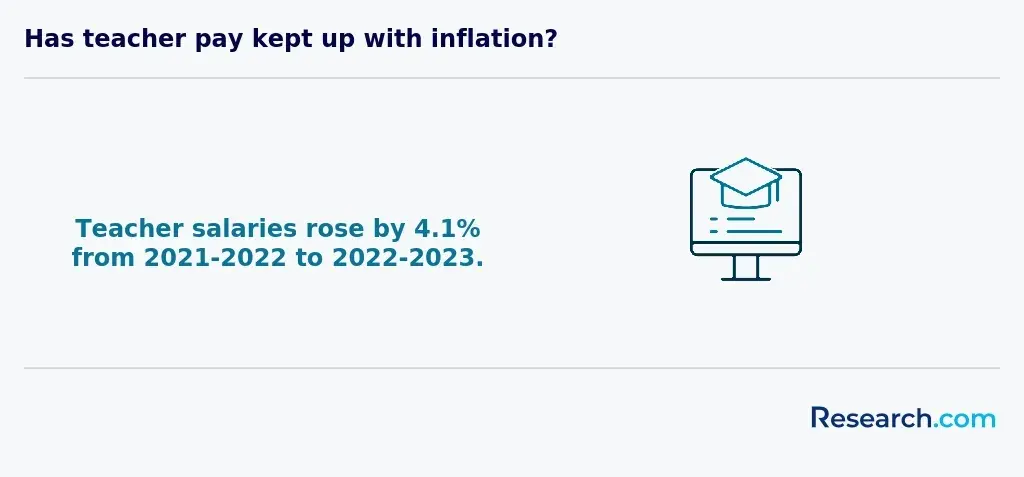
Teacher salaries have become a major factor in interstate mobility. The U.S. Department of Education has also identified educator shortages as a national concern, while available reports show recent increases in teacher salaries in some areas. Still, candidates should compare pay against cost of living, workload, benefits, retirement systems, and local housing availability rather than salary alone.
How much do history teachers make in Wyoming?
Wyoming teacher pay is relatively competitive based on the cited sources. The National Education Association reports an average teacher salary of $61,979 in Wyoming as of 2022-2023, with an average starting salary of $48,622. Zippia reports that Wyoming history teacher salaries range from approximately $42,000 to $88,000, with a median yearly salary of $61,324. The reported U.S. average for history teachers is $53,780.
| Salary measure | Reported amount | Source context |
| Average teacher salary in Wyoming | $61,979 | National Education Association, 2022-2023 |
| Average starting teacher salary in Wyoming | $48,622 | National Education Association |
| Wyoming history teacher salary range | Approximately $42,000 to $88,000 | Zippia |
| Median Wyoming history teacher salary | $61,324 | Zippia |
| Reported U.S. average for history teachers | $53,780 | Zippia |
| Average pay for postsecondary history teachers in the U.S. | $82,140 | O*NET OnLine |
What affects a Wyoming history teacher’s pay?
- District salary schedule: Public schools often use structured pay scales based on education level and years of experience.
- Experience: Teachers with more years in the classroom often move up the salary schedule.
- Graduate education: Some districts pay more for advanced degrees or additional approved coursework.
- School type: Public, private, charter, and postsecondary employers may use different compensation models.
- Location: Rural and urban districts may differ in openings, benefits, commute distance, and available resources.
Salary should be evaluated alongside health insurance, retirement contributions, professional development support, contract length, student teaching placement costs, and the likelihood of long-term employment in your preferred region.
What career paths are available for history teachers in Wyoming?
A Wyoming history teaching background can lead to more than one career path. Some teachers stay in grades 6-12 classrooms for their entire careers, while others move into curriculum, leadership, higher education, community history work, or adjacent student-support roles.
| Career path | Typical work | When it may make sense |
| K-12 social studies or history teacher | Teach U.S. history, world history, Wyoming history, civics, geography, economics, and related social studies courses | You want direct student interaction and a classroom-centered career |
| Department chair or lead teacher | Coordinate social studies curriculum, mentor teachers, and support instructional planning | You enjoy leadership but want to remain close to classroom teaching |
| Curriculum developer | Create lessons, assessments, standards-aligned materials, and district-level instructional resources | You like instructional design, research, and standards alignment |
| Educational administrator | Supervise programs, support compliance, manage school operations, or lead teams | You are interested in school leadership and may pursue advanced credentials |
| Higher education instructor | Teach college-level history courses or contribute to academic research | You are willing to pursue the advanced degree usually expected for postsecondary teaching |
| Museum, archive, or community education role | Develop exhibits, public programs, historical interpretation, or outreach materials | You want to teach history outside the K-12 classroom |
| Nonprofit or historical organization role | Support public history, community education, grants, programming, or outreach | You want to connect education with local history and civic engagement |
Some history teachers later explore other education areas, including educational leadership careers, elementary education, librarianship, English instruction, curriculum consulting, or museum education. Higher-paying paths often require graduate study, licensure additions, administrative credentials, or specialized experience.
How do you begin your journey as a history teacher in Wyoming?
The best starting point is to work backward from the license and endorsement you need. If you want to teach high school history, confirm the exact social studies endorsement requirements before selecting a degree program. If cost is your biggest concern, compare accredited routes carefully and review the cheapest way to get teaching credential in Wyoming before committing to a program.
Practical first steps
- Choose your target grade level. Decide whether you want elementary, middle school, high school, or postsecondary teaching.
- Confirm endorsement requirements. Match your goal to the correct social studies or elementary education endorsement.
- Research approved educator preparation programs. Ask whether the program leads to an Institutional Recommendation accepted by Wyoming.
- Estimate total cost. Include tuition, exams, student teaching expenses, licensure fees, travel, books, and lost wages if you must reduce work hours.
- Plan for Praxis testing. Build exam preparation into your academic timeline rather than treating it as a last-minute step.
- Complete student teaching intentionally. Try to secure a placement that reflects the grade level and community type where you hope to work.
- Apply for Wyoming licensure. Gather transcripts, test scores, recommendation forms, background check materials, and proof of required fieldwork.
Common mistakes to avoid
| Mistake | Why it causes problems | Better approach |
| Choosing a program before checking Wyoming licensure alignment | You may finish coursework that does not lead to the required Institutional Recommendation. | Ask the program and PTSB how graduates qualify for Wyoming licensure. |
| Assuming history and social studies endorsements are the same everywhere | Endorsement names and grade bands vary by state. | Use Wyoming’s current endorsement language when planning. |
| Looking only at tuition | Testing, fieldwork, travel, and unpaid student teaching can add significant cost. | Create a full budget before enrolling. |
| Waiting too long to prepare for Praxis exams | A missed passing score can delay licensure and hiring. | Schedule study time and retake windows early. |
| Ignoring rural placement realities | Some Wyoming opportunities may involve long commutes or fewer nearby resources. | Ask about mentorship, professional development access, and community support. |
What professional development opportunities are available for history teachers in Wyoming?
Professional development matters because history teaching is not static. Teachers must keep up with standards, civic education needs, culturally responsive teaching practices, classroom technology, assessment expectations, and new instructional resources. Additional training can also support movement into some of the popular education professions.
Professional development options to consider
- Professional Learning Communities: These school-based or district-based groups allow teachers to exchange lesson ideas, analyze student work, and improve instructional strategies.
- Title II Professional Development: These opportunities can include workshops and activities focused on instructional quality and student achievement.
- Level Up Leadership Program: This program supports an annual cohort of Wyoming educators who want to strengthen leadership capacity and respond to school-level challenges.
- Open education resources and webinars: Free or low-cost materials can help teachers build richer lessons without relying only on textbooks.
- Graduate certificates or degrees: Advanced coursework may support pay-scale movement, leadership preparation, or subject-area depth, depending on district policy.
Current trends affecting Wyoming history teachers
- AI and classroom technology: Teachers increasingly need to help students evaluate sources, detect misinformation, use digital tools responsibly, and distinguish evidence-based historical interpretation from generated content.
- Rural recruitment and retention: Wyoming’s geography means some districts face different staffing and professional development challenges than urban systems.
- Culturally responsive history instruction: Indian Education For All expectations make accurate, respectful instruction about Native American history and contemporary tribal communities essential.
- Credential-based hiring: Districts continue to look for teachers whose endorsements align cleanly with course assignments.
Can history teachers transition into adjacent educational roles?
Yes. History teachers build transferable skills in research, writing, discussion facilitation, curriculum planning, evidence analysis, and student assessment. Those skills can support roles in curriculum consulting, educational research, public history, museum education, instructional design, or policy-related work. Teachers who want to move into student communication and support services may also explore pathways such as how to become a speech pathologist in Wyoming, although that field has separate graduate education and licensure requirements.
Should I pursue an advanced degree as a history teacher in Wyoming?
An advanced degree can be worthwhile if it aligns with a specific goal: higher salary placement where district policy allows it, stronger content expertise, leadership preparation, curriculum work, or a move into a different grade level. It is less useful if you choose a program without checking cost, accreditation, licensure impact, or employer recognition. Teachers who want broader instructional flexibility can compare options such as masters in elementary education online programs, especially if they are considering a transition beyond secondary social studies.
Can history teachers expand their career scope through interdisciplinary teaching roles?
Interdisciplinary teaching can make a history teacher more versatile. For example, combining history with data analysis, geography, economics, literature, or civics can help students interpret primary sources, maps, population changes, political debates, and historical trends more effectively. Teachers who want to add a different content area should study endorsement rules first. A teacher interested in quantitative instruction, for instance, may compare the requirements for how to become a middle school math teacher in Wyoming.
Can advanced leadership education boost my career as a history teacher in Wyoming?
Leadership education can help history teachers move into department leadership, mentoring, curriculum coordination, professional development design, or administration. A program such as an online PhD organizational leadership may be relevant for educators pursuing high-level leadership roles, but it is not necessary for every classroom teacher. Before enrolling, compare program cost, time commitment, employer recognition, and whether the degree supports your actual career target.
Can history teachers diversify their career through dual educational roles?
History teachers often have strong research and information literacy skills, which can transfer well into school library, archival, or instructional resource roles. If you enjoy helping students find, evaluate, and use sources, a library pathway may be a practical extension of history teaching. Review how to become a school librarian in Wyoming to understand the credential expectations before making that shift.
How can history teachers transition to elementary education roles in Wyoming?
A history teacher who wants to move into elementary education must prepare for a broader teaching role. Elementary teachers usually teach multiple subjects, support early literacy and numeracy, and use age-appropriate pedagogy across the curriculum. Prior classroom experience helps, but it does not replace the need to meet the correct licensure and endorsement requirements. For a role-specific overview, see how to become an elementary school teacher in Wyoming.
What distinguishes private school teaching opportunities in Wyoming?
Private schools may have different hiring processes, curriculum expectations, class sizes, and credential preferences than public schools. Some roles may offer more curriculum flexibility, while others may pay differently or require alignment with a school’s mission. Candidates should ask whether a teaching license is required, preferred, or optional for the specific position. For more detail, review private school teacher requirements in Wyoming.
Can history teachers expand their qualifications to include English teaching in Wyoming?
Adding English can make a history teacher more flexible because history and English both rely on reading, writing, interpretation, argumentation, and evidence. This combination can be especially useful in humanities courses, interdisciplinary projects, and smaller schools where teachers may cover multiple subjects. However, candidates should confirm the additional endorsement, testing, and coursework expectations. Start with how to become an English teacher in Wyoming.
What recent policy changes should I know about as a history teacher in Wyoming?
Teacher certification rules, endorsement requirements, professional development expectations, and district hiring practices can change. History teachers and candidates should regularly review Wyoming Professional Teaching Standards Board updates, Wyoming Department of Education guidance, district communications, and educator preparation program notices. For a broader overview, consult Wyoming teacher certification types and requirements.
Can history teachers integrate art to enrich historical understanding in Wyoming?
Art can strengthen history instruction by helping students analyze visual evidence, propaganda, architecture, maps, political cartoons, memorials, photography, material culture, and public monuments. Art-based projects can also help students understand how communities represent the past. Teachers interested in a deeper arts education pathway can compare the requirements to be an art teacher in Wyoming with their current endorsement goals.
What are the best resources for history teachers in Wyoming?
Wyoming history teachers benefit from resources that connect state standards with local, regional, tribal, and national history. The strongest resources are those that provide primary sources, standards alignment, culturally accurate content, and classroom-ready materials.
- Wyoming Department of Education: Provides standards, guidance, and education resources, including materials connected to Indian Education.
- WyoHistory.org: Offers lesson plans, digital resources, and Wyoming history content that can support classroom planning.
- Wyoming State Museum and local historical societies: Museums and historical organizations can provide exhibits, field trip options, public programs, workshops, and primary source materials.
- University of Wyoming’s American Heritage Center: Supports Wyoming History Day activities and connects students with performances, documentaries, exhibits, and research-based historical learning.
- Wyoming State Library: Offers digital collections and access to historical materials useful for local history and research projects.
- Teacher communities and social media groups: Online educator networks can help teachers exchange lesson plans, classroom strategies, and professional development recommendations.
How to evaluate a history teaching resource
- Is it aligned with Wyoming standards?
- Does it include primary sources or evidence-based historical interpretation?
- Does it represent Native American history accurately and respectfully?
- Can it be adapted for different reading levels?
- Does it encourage analysis instead of memorization only?
Is Wyoming a good state to teach in?
Wyoming can be a strong choice for some teachers, especially those who value smaller communities, local history, and potentially competitive pay. It may be less ideal for candidates who need abundant nearby professional development options, large urban districts, or many alternative certification routes.
| Factor | Potential advantage | Potential drawback |
| Job market | A report by Stoddard presented to Wyoming committees showed 9.8% new teacher hires in 2022 and 12.2% in 2023, with an average all-teacher exit rate of 10.2% per year in 2021-2022. | Openings may vary widely by district, subject area, and location. |
| Population and competition | Wyoming’s population of around 579,900 plus residents may mean less competition than in larger states for some teaching roles. | Fewer total schools can also mean fewer openings in a preferred town or county. |
| Professional support | Wyoming offers initiatives such as professional development and recognition programs, including Teacher of the Year. | Access may be harder for teachers in remote areas. |
| Teacher advocacy | Teachers’ unions can help educators understand contracts, rights, salary issues, and working conditions. | The level of support and influence may vary by district and local context. |
| Rural teaching | Rural schools can offer strong community ties and meaningful local history teaching opportunities. | Teachers may face travel demands, limited nearby resources, or fewer professional development options. |
| Recruitment and retention | State leaders and education agencies have paid attention to recruitment and retention challenges. | Wyoming now competes with other states that are also trying to attract and keep teachers. |
The decision depends on your priorities. If you want community connection, local history relevance, and a smaller-state education environment, Wyoming may fit well. If you need a wide range of districts, frequent in-person training, or many alternate route options, compare Wyoming with other states before committing.
What are the challenges of teaching history to students in Wyoming?
History teaching in Wyoming requires more than covering dates, wars, and government structures. Teachers must help students understand local, state, tribal, national, and global history in ways that are accurate, inclusive, and age appropriate.
- Teaching Native American history with care: Wyoming’s Indian Education For All standards require attention to the histories and contributions of tribes such as the Eastern Shoshone and Northern Arapaho. Teachers need strong resources and cultural humility to avoid misrepresentation.
- Finding appropriate materials: Some teachers may struggle to locate culturally relevant and classroom-ready resources. The Wyoming Department of Education’s Indian Education Resources can help fill part of this gap.
- Addressing stereotypes: Students may arrive with simplistic or inaccurate ideas about Native American communities. Teachers need to present contemporary and historical perspectives with nuance, including the complexity of life on the Wind River Reservation.
- Collaborating on curriculum: Schools may need to consult tribal representatives when developing curriculum. This is valuable, but it requires time, relationship-building, and careful implementation.
- Correcting gaps in broader history standards: A national study indicates that many state history standards overlook Native American history after 1900. Wyoming teachers may need to intentionally supplement instruction so students receive a fuller understanding.
- Balancing local and national content: Teachers must connect Wyoming history to national and global developments without reducing local history to a brief add-on.
- Supporting source evaluation in the AI era: Students increasingly encounter historical claims online and through AI-generated summaries. Teachers must emphasize evidence, sourcing, context, and corroboration.
What steps should I take to become a history teacher in Wyoming?
Start with the specific role you want, then select the education and licensure pathway that leads there. If your goal is secondary history, review how to become a high school history teacher in Wyoming for a focused explanation of that path.
- Decide whether you want to teach middle school, high school, elementary school, private school, or postsecondary history.
- Identify the Wyoming endorsement that matches your target role.
- Choose an approved educator preparation program that can issue the required Institutional Recommendation.
- Complete the bachelor’s degree, education coursework, field placements, and student teaching requirements.
- Pass the required Praxis exam for your endorsement category.
- Meet Wyoming-specific requirements, including knowledge of the U.S. and Wyoming Constitutions.
- Submit your licensure application to the Wyoming Professional Teaching Standards Board.
- Apply to districts or schools that match your preferred grade level, community type, and professional goals.
- Continue professional development in social studies instruction, classroom technology, Indian Education For All, and culturally responsive teaching.
What history teachers in Wyoming say about the work
Educators who enjoy teaching history in Wyoming often point to small-community relationships, local history projects, and the ability to connect state history with students’ lived experiences. The most rewarding roles tend to be those where teachers can combine strong content knowledge with discussion-based instruction, primary source analysis, and community-centered learning.
At the same time, prospective teachers should be realistic. Rural travel, limited local resources, certification paperwork, and sensitive historical topics can make the job demanding. The teachers who thrive are usually those who seek mentorship, use high-quality materials, and stay engaged with professional learning.
Key decision questions before you enroll in a teacher preparation program
- Does this program prepare me for Wyoming licensure, not just general teacher certification?
- Will the program provide the Institutional Recommendation required for my license application?
- Which social studies endorsement will I qualify for after graduation?
- What Praxis exam should I take, and when should I schedule it?
- How much will the full pathway cost after tuition, testing, travel, books, fees, and student teaching expenses?
- Can I complete fieldwork or student teaching near where I live?
- What job placement support does the program offer in Wyoming districts?
- Will my credits transfer if I change schools?
- Does the program prepare me to teach Native American history and Wyoming history accurately?
- Will an advanced degree or added endorsement improve my pay or career options in the districts where I want to work?
Related Articles for Nearby States
- 2027 How to Become a History Teacher in Montana: Requirements & Certification
- 2027 How to Become a History Teacher in South Dakota: Requirements & Certification
- 2027 How to Become a History Teacher in Nebraska: Requirements & Certification
- 2027 How to Become a History Teacher in Colorado: Requirements & Certification
- 2027 How to Become a History Teacher in Idaho: Requirements & Certification
- 2027 How to Become a History Teacher in Utah: Requirements & Certification
- 2027 How to Become a History Teacher in North Dakota: Requirements & Certification
- 2027 How to Become a History Teacher in Kansas: Requirements & Certification
- 2027 How to Become a History Teacher in Iowa: Requirements & Certification
- 2027 How to Become a History Teacher in Nevada: Requirements & Certification
References:
- Hathaway Scholarship (n.d.). High School Eligibility Requirements. https://hathawayscholarship.org/requirements/high-school
- National Education Association (2024). Rankings of the States 2023 and Estimates of School Statistics 2024. Retrieved from https://www.nea.org/sites/default/files/2024-04/2024_rankings_and_estimates_report.pdf
- National Education Association (April 2024). 2024 Reports Educator Pay in America. https://www.nea.org/resource-library/educator-pay-and-student-spending-how-does-your-state-rank/teacher
- O*Net OnLine (2024). History Teachers, Postsecondary. Retrieved from https://www.onetonline.org/link/summary/25-1125.00
- Stoddard, C. (September 2023). Current Status of Cost Pressures on Teacher Salaries in Wyoming, Report to the Joint Appropriations Committee and the Joint Education Committee. https://wyoleg.gov/InterimCommittee/2023/04-2023092702-03_StoddardIndicators_FINAL_2023.pdf
- U.S. Department of Education (n.d.). Raise the Bar: Eliminate the Educator Shortage. https://www.ed.gov/about/ed-initiatives/raise-bar/raise-bar-eliminate-educator-shortage
- Wyoming Professional Teaching Standards Board (n.d.). Becoming Licensed in Wyoming. https://wyomingptsb.com/licensure/becoming-licensed
- Zippia (June 2024). History Teacher Salary. https://www.zippia.com/salaries/history-teacher
- Zippia (July 2024). Job outlook for history teachers in the United States. https://www.zippia.com/history-teacher-jobs/trends
Key Insights
- Wyoming history teachers usually qualify through a social studies endorsement, not a separate history-only certification.
- The traditional route requires a bachelor’s degree, approved educator preparation, student teaching, required Praxis testing, and a Wyoming teaching license.
- Wyoming-specific requirements matter. Candidates should plan for the Institutional Recommendation and the U.S. and Wyoming Constitutions requirement early.
- Reported Wyoming history teacher pay is competitive in the cited data, but salary should be weighed against location, benefits, housing, district resources, and long-term career goals.
- Out-of-state teachers can pursue reciprocity, but Wyoming still reviews credentials, endorsements, testing, and documentation.
- Scholarships such as the Hathaway Scholarship, Douvas Memorial Scholarship, GEAR UP, and school-based awards can reduce costs, but candidates should calculate the full cost of licensure.
- History teaching in Wyoming requires cultural accuracy, especially when teaching Native American history and contemporary tribal communities.
- The best preparation program is the one that clearly leads to Wyoming licensure, supports student teaching, prepares you for the correct Praxis exam, and fits your budget and target grade level.
Other Things You Should Know About Becoming a History Teacher in Wyoming
In 2027, to teach history in Wyoming, candidates typically need a bachelor's degree in history or education, along with a state-approved teacher preparation program. Additionally, candidates must pass the Praxis exam for social studies to obtain licensure.
In Wyoming, to become a history teacher in 2027, the steps include earning a bachelor's degree in history or education, completing a state-approved teacher preparation program, and passing the Praxis exams. After meeting these requirements, you must apply for a teaching license through the Wyoming Professional Teaching Standards Board.
In 2027, Wyoming offers alternative licensure programs for individuals with a bachelor's degree in a field other than education. These programs include coursework, exams, and often a period of supervised teaching to help candidates obtain the necessary credentials to teach history.