
2027 Most Affordable Online Ed.D Programs

Co-Founder and Chief Data Scientist
Are you looking to advance your teaching career but struggling to find an affordable and flexible path to earn your Doctor of Education (Ed.D)? Our experts present a comprehensive solution in this article, addressing the challenge of accessing quality doctoral education that fits your budget and busy schedule. This article aims to provide aspiring leaders with the knowledge and resources to make informed decisions and advance their careers.
What are the benefits of getting an online Ed.D program?
- Completing an online Ed.D program can qualify individuals for diverse educational leadership positions, including superintendent, school principal, dean, provost, or university president.
- Professionals holding an Ed.D degree can expect competitive salaries, particularly in leadership roles within the education sector. For instance, the salary range for a university president position in the U.S. is from $72,717 to $104,091 per year.
- Choosing an online Ed.D program provides additional flexibility. It enables working professionals to manage their studies alongside personal and professional obligations while progressing in their careers.
What can I expect from an online Ed.D program?
An online Ed.D program provides a transformative educational experience tailored to modern learners. It offers accessibility and flexibility for those aspiring to obtain leadership roles in education or beyond. This program equips students with the skills and knowledge required to excel in various leadership positions within the education sector.
By choosing an online Ed.D program, individuals can balance their studies with personal and professional commitments. They can benefit from the convenience of online learning while advancing their careers. Additionally, the curriculum of an online Ed.D program typically includes a wide range of topics, including:
- Education policy
- Organizational leadership
- Educational change projects
These topics prepare graduates to make a significant impact in education through effective leadership and ethical practices.
Where can I work with an online Ed.D program?
Graduates of an online Ed.D program enjoy diverse career opportunities spanning various industries and sectors. Equipped with the skills and knowledge obtained through this program, individuals can pursue leadership roles in fields including:
- Public policy
- Training and development
- Human resource (HR) development
- Nonprofit
- Academic medical centers
- Higher education
- Healthcare organizations
- Government
- The military
- Criminal justice
- K-12 education
The wide array of career paths accessible to Ed.D graduates highlights the degree's versatility and relevance across diverse organizational settings. Furthermore, Ed.D graduates are well-prepared for roles demanding higher-level management skills, leadership theory and practice, organizational systems expertise, and curriculum-building capabilities. They can apply their expertise to address specific organizational challenges in various contexts.
The depth of the Ed.D degree allows graduates to address complex issues within organizations effectively. They can also start a positive change through strategic programs aimed at solving challenges and enhancing overall business outcomes.
How much can I make with an online Ed.D program?
The salary expectations for Ed.D graduates can vary depending on the field of education and the specific roles they pursue post-graduation. For example, the average K-12 teacher salary in the U.S. is $58,000. Meanwhile, academic deans in the U.S. earn an average salary of $169,026 yearly, while Chief Learning Officers (CLO) based in the U.S. receive an average annual wage of $219,700.
- List of the Most Affordable Online Ed.D Programs for 2027 List of Programs
- How long does it take to complete an online Ed.D program? How long does it take to complete an online Ed.D program?
- How does an online Ed.D program compare to an on-campus program? Online vs. On-Campus
- What is the average cost of an online Ed.D program? Cost
- What are the financial aid options for students enrolling in an online Ed.D program? Financial Aid
- How do innovative online learning technologies enhance the Ed.D experience? How do innovative online learning technologies enhance the Ed.D experience?
- What are the prerequisites for enrolling in an online Ed.D program? Requirements
- What courses are typically in an online Ed.D program? Courses
- What types of specializations are available in an online Ed.D program? Specializations
- How to Choose the Best Online Ed.D Program How to Choose the Best Online Ed.D Program
- What challenges might I face in an online Ed.D program? What challenges might I face in an online Ed.D program?
- What career paths are available for graduates of an online Ed.D program? What career paths are available for graduates of an online Ed.D program?
- What additional credentials can complement an online Ed.D program? What additional credentials can complement an online Ed.D program?
- How can online Ed.D programs expand interdisciplinary career opportunities? How can online Ed.D programs expand interdisciplinary career opportunities?
- How can I assess the quality of an online Ed.D program? How can I assess the quality of an online Ed.D program?
- What is the job market for graduates with an online Ed.D program? Job Outlook
- How can online Ed.D students stay engaged and connected with their peers and faculty? How can online Ed.D students stay engaged and connected with their peers and faculty?
- What are the benefits of choosing an online Ed.D. program for educational leadership? What are the benefits of choosing an online Ed.D. program for educational leadership?
- What is the return on investment of an online Ed.D program? What is the return on investment of an online Ed.D program?
- Are accelerated online Ed.D. programs a good option for busy professionals? Are accelerated online Ed.D. programs a good option for busy professionals?
- What is the employer perception of an online Ed.D degree? What is the employer perception of an online Ed.D degree?
- What student support services are essential for online Ed.D success? What student support services are essential for online Ed.D success?
Most Affordable Online Ed.D Programs for 2027
An online Doctor of Education can help experienced educators, administrators, training leaders, and policy professionals move into higher-level leadership roles without leaving their current jobs. The challenge is cost: doctoral tuition, dissertation fees, residency expenses, and lost work time can turn an Ed.D into a major financial commitment. This guide focuses on affordable online Ed.D programs and explains how to compare them beyond tuition alone.
You will find a ranked list of affordable online Ed.D options, a practical comparison of program formats, cost factors, admissions expectations, common specializations, career paths, financial aid options, and questions to ask before enrolling. The goal is not simply to identify the cheapest program, but to help you choose a credible, accredited, career-relevant doctorate that fits your budget and professional plans.
Quick Answer: What Is the Most Affordable Way to Earn an Online Ed.D?
The most affordable online Ed.D programs are usually offered by public universities, especially when they charge a flat online tuition rate or extend lower rates to in-state students. Based on our research, the average annual cost of an online Ed.D program is approximately $6,912, while some of the least expensive options cost less than $5,000 per year. By comparison, the average annual cost of a traditional Ed.D program is approximately $37,300.
Price should not be the only deciding factor. Before applying, confirm institutional accreditation, program fit, dissertation or capstone requirements, residency expectations, transfer credit policies, and whether the degree supports your target role, such as school leadership, higher education administration, instructional technology, curriculum leadership, or organizational learning.
How We Rank Affordable Online Ed.D Programs
Because doctoral education is a high-stakes investment, students need transparent information about cost, quality, and program structure. Research.com reviewed affordable online Doctor of Education programs for 2027 using current and comprehensive data sources, including:
- The Integrated Postsecondary Education Data System (IPEDS) database
- Peterson’s database, including the Distance Learning Licensed Data Set
- College Scorecard database
- National Center for Education Statistics
Our review also considers quality indicators such as graduation rate, student-faculty ratio, delivery format, and program focus. More details about Research.com’s ranking process are available on our methodology page.
Affordable Online Ed.D Programs at a Glance
| Rank | School | Online Ed.D Focus | Cost per Credit | Credits Required | Program Length |
| 1 | Valdosta State University | Adult Learning & Development | $293 | 46 credit hours of coursework and 9 credit hours for the dissertation | N/A |
| 2 | University of North Georgia | Higher Education Leadership and Practice | $340.50 | 60 | 3 years |
| 3 | University of West Georgia | Higher Education Administration | $372 | 60 | 2 years |
| 4 | University of Massachusetts-Lowell | Leadership in Schooling | $500 | 42 | N/A |
| 5 | Marshall University | Leadership Studies | $445 | 45 | 3 |
| 6 | Northern Illinois University | Educational Leadership and Policy Studies | $570 | 42 | N/A |
| 7 | University of the Cumberlands | Educational Leadership | $415 | 60 | 3 years |
| 8 | Youngstown State University | Educational Leadership - Health and Human Services | $420 (Online Out-of-State); $415 (Online In-State) | 60 | 32 months |
| 9 | Kennesaw State University | Instructional Technology | $383 | 66 | N/A |
| 10 | University of Wyoming | Curriculum and Instruction | $385 (Wyoming resident), $585 (non-resident), $553 (children of alumni) | 80 | N/A |
1. Valdosta State University
Valdosta State University offers a Doctor of Education with a major in Adult Learning & Development. The program is built for professionals who work with adult learners and want deeper preparation in adult learning theory, developmental frameworks, curriculum planning, and instructional facilitation.
- Program Length: N/A
- Tracks/concentrations: Adult learning & development
- Cost per Credit: $293
- Required Credits to Graduate: 46 credit hours of coursework and 9 credit hours for the dissertation
- Accreditation: Council for the Accreditation of Educator Preparation (CAEP)
2. University of North Georgia
The University of North Georgia offers an online Doctor of Education in Higher Education Leadership and Practice (HELP). This program is intended for higher education administrators and professionals who want to strengthen their leadership knowledge and expand advancement options within colleges, universities, and related organizations.
- Program Length: 3 years
- Tracks/concentrations: Education leadership & practice
- Cost per Credit: $340.50
- Required Credits to Graduate: 60
- Accreditation: CAEP
3. University of West Georgia
The University of West Georgia provides an online Ed.D in Higher Education Administration. The degree is an applied doctorate, meaning it emphasizes using research, professional judgment, and evidence-based practice to address complex administrative problems in higher education settings.
- Program Length: 2 years
- Tracks/concentrations: Higher education administration
- Cost per Credit: $372
- Required Credits to Graduate: 60
- Accreditation: The Southern Association of Colleges and Schools Commission on Colleges (SACSCOC)
4. University of Massachusetts-Lowell
The University of Massachusetts-Lowell offers a Leadership in Schooling Ed.D designed for PK-12 practitioners. The curriculum supports educators who want to become stronger instructional leaders while also developing applied research skills relevant to school improvement.
- Program Length: N/A
- Tracks/concentrations: General leadership
- Cost per Credit: $500
- Required Credits to Graduate: 42
- Accreditation: New England Commission of Higher Education (NECHE)
5. Marshall University
Marshall University offers an online Leadership Studies, Ed.D for professionals preparing for senior leadership responsibilities. Graduates may apply the degree in K-12 education, higher education, nonprofit organizations, military settings, government agencies, and other professional environments.
- Program Length: 3
- Tracks/concentrations: Leadership studies
- Cost per Credit: $445
- Required Credits to Graduate: 45
- Accreditation: CAEP
6. Northern Illinois University
Northern Illinois University offers an online Ed.D in Educational Leadership and Policy Studies. The program prepares students to lead policy and practice improvements in education. Courses are delivered fully online in a synchronous format, with cohort members meeting once a week throughout the program.
- Program Length: N/A
- Tracks/concentrations: Educational leadership and policy studies
- Cost per Credit: $570
- Required Credits to Graduate: 42
- Accreditation: CAEP
7. University of the Cumberlands
The University of the Cumberlands offers an online Doctor of Educational Leadership. The program centers on advanced practitioner skills, research-based decision-making, creative problem-solving, and leadership strategies for addressing major challenges in education.
- Program Length: 3 years
- Tracks/concentrations: Educational leadership
- Cost per Credit: $415
- Required Credits to Graduate: 60
- Accreditation: (SACSCOC)
8. Youngstown State University
Youngstown State University offers an online Doctor of Education in Educational Leadership Health and Human Services. The program is designed for professionals who want to build leadership and research skills for roles in public, private, and charter schools, as well as education-related positions in other organizations. Students interested in this concentration may also want to review broader pathways in a human services degree.
- Program Length: 32 months
- Tracks/concentrations: Educational leadership - health and human services major
- Cost per Credit: $420 (Online Out-of-State); $415 (Online In-State)
- Required Credits to Graduate: 60
- Accreditation: CAEP
9. Kennesaw State University
Kennesaw State University offers an online Ed.D in Instructional Technology. The program includes an initial track for teachers seeking technology coach roles and an advanced track for current technology coaches preparing for leadership at the school, district, or state level.
- Program Length: N/A
- Tracks/concentrations: Initial and advanced track
- Cost per Credit: $383
- Required Credits to Graduate: 66
- Accreditation: SACSCOC
10. University of Wyoming
The University of Wyoming offers an online Curriculum and Instruction Ed.D. The program is intended for experienced educators who already hold a master’s degree and have at least three years of classroom teaching experience. Its focus is curriculum leadership and advanced instructional practice.
- Program Length: N/A
- Tracks/concentrations: Curriculum and instruction
- Cost per Credit: $385 (Wyoming resident), $585 (non-resident), $553 (children of alumni)
- Required Credits to Graduate: 80
- Accreditation: Higher Learning Commission (HLC)
What Is an Online Ed.D?
An online Doctor of Education is a practice-focused doctoral degree for professionals who want to solve real problems in education, training, policy, organizational learning, or institutional leadership. Unlike a Ph.D., which is often designed for theory-building and academic research careers, an Ed.D usually emphasizes applied research, organizational change, program evaluation, leadership practice, and evidence-based decision-making.
Online Ed.D programs commonly serve working adults. Many students remain employed as teachers, principals, higher education staff, instructional designers, student affairs professionals, training managers, or nonprofit leaders while completing coursework and a dissertation or doctoral project.
Key Findings
- Affordable online Ed.D programs can be significantly less expensive than traditional campus-based doctoral study, but tuition is only one part of the total cost.
- Program fit matters. A low-cost Ed.D in curriculum and instruction may not be the right choice for someone targeting higher education administration or corporate training leadership.
- Accreditation should be verified before applying. Institutional accreditation affects financial aid eligibility, transferability, employer recognition, and academic credibility.
- Online delivery is not one-size-fits-all. Some programs are asynchronous, while others require live weekly sessions, residencies, or cohort-based participation.
- Career outcomes vary by experience, location, industry, and role. An Ed.D can support advancement, but it does not guarantee a promotion or salary increase.
How Long Does It Take to Complete an Online Ed.D Program?
Most online Ed.D programs take about three to four years to complete, although exact timelines depend on course load, dissertation or doctoral project requirements, transfer credits, enrollment status, and whether the program uses an accelerated cohort model.
| Factor | How It Affects Completion Time | What to Ask the School |
| Course structure | Cohort programs often follow a fixed schedule, while flexible programs may allow students to move faster or slower. | Is the course sequence locked, or can I adjust my pace? |
| Dissertation or doctoral project | Research milestones can extend the timeline if proposal approval, data collection, or revisions take longer than planned. | What is the average time students spend on the dissertation or capstone? |
| Residency requirements | Some online programs require in-person sessions, which may affect scheduling and travel costs. | Are any campus visits, intensives, or residencies required? |
| Workload | Full-time professionals may need fewer courses per term to avoid burnout. | How many hours per week should students expect to study? |
How Does an Online Ed.D Compare to an On-Campus Program?
The main difference between online and on-campus Ed.D programs is delivery. Online students access coursework, lectures, assignments, group work, and faculty communication through digital platforms. This format is useful for professionals who cannot relocate or attend campus multiple times per week.
According to a 2023 Statista survey, about 60% of surveyed students said they selected online learning because it allowed them to customize their preferred program with electives that matched their goals. That flexibility is one reason online Ed.D programs appeal to working educators and administrators.
Campus-based Ed.D programs, by contrast, offer regular face-to-face interaction, a more structured schedule, and easier access to in-person campus resources. However, they can be less flexible for students balancing full-time employment, family responsibilities, or geographic limitations.
| Format | Best For | Potential Drawbacks |
| Online Ed.D | Working professionals who need schedule flexibility and want to study without relocating. | Requires self-discipline, strong time management, and comfort with digital collaboration. |
| On-campus Ed.D | Students who prefer in-person interaction, campus routines, and direct access to faculty and peers. | May require commuting, relocation, or schedule changes that conflict with full-time work. |
| Hybrid Ed.D | Students who want online flexibility with occasional in-person residencies or intensive sessions. | Travel, lodging, and time away from work can increase the total cost. |
The chart below shows leading reasons students in the United States chose online college options in 2023.
What Is the Average Cost of an Online Ed.D Program?
Based on our research, the average annual cost of an online Ed.D program is approximately $6,912, and some of the most affordable programs cost less than $5,000 per year. This is considerably lower than the average annual cost of a traditional Ed.D program, which is approximately $37,300.
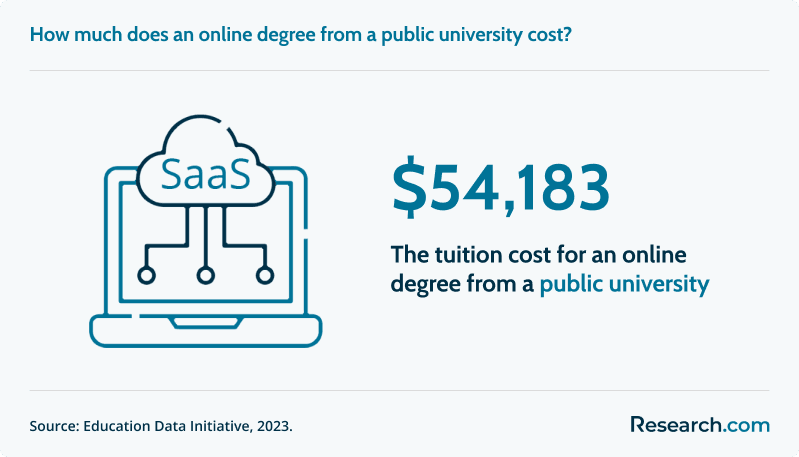
Cost differences between online and in-person degrees can be substantial. According to the Education Data Initiative, tuition for an online degree from a public university is approximately $54,183, compared with around $85,348 for the same degree in person. Private institutions charge an average of $60,593 for an online degree, while the in-person version from the same type of institution averages around $185,252.
When comparing programs, calculate the total cost of attendance rather than looking only at cost per credit. A program with a lower per-credit rate may still cost more if it requires many more credits, repeated dissertation enrollment, technology fees, or travel for residencies.
| Cost Item | Why It Matters | Question to Ask |
| Tuition per credit | This is the most visible cost, but it does not always show the full price. | Is tuition fixed for online students, or does it vary by residency? |
| Required credits | Total credits determine how much the per-credit rate actually costs. | How many credits are required after transfer or prior graduate work? |
| Fees | Technology, graduation, dissertation, and online learning fees can add up. | What mandatory fees apply each term? |
| Residencies | Travel, lodging, meals, and missed work can raise the true cost. | Are any campus visits required, and how often? |
| Dissertation continuation | Students who need extra time may pay additional registration or supervision fees. | What happens financially if I need more time to finish the dissertation? |
What Financial Aid Options Are Available for Online Ed.D Students?
Online Ed.D students may qualify for several types of financial support, depending on the institution, enrollment status, employer policies, and program eligibility. Always confirm that the school is properly accredited and that the program qualifies for aid before relying on any funding source.
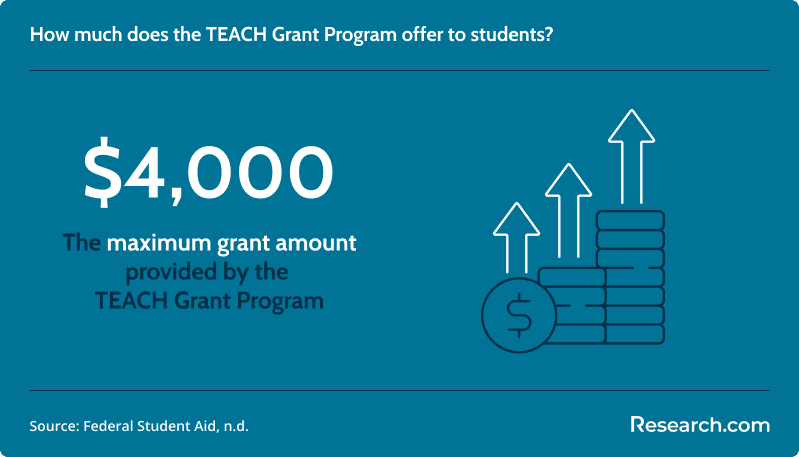
- Grants. Grants generally do not require repayment. They may come from the federal government, state agencies, universities, or private organizations. One example is the Teacher Education Assistance for College (TEACH) Grant, which offers up to $4,000 annually. Some grant opportunities may also be available through the U.S. Department of Health & Human Services Office of Planning, Research & Evaluation.
- Scholarships. Scholarships may be awarded for financial need, academic achievement, professional experience, service, or leadership potential. Examples for education students include PDK Educational Foundation scholarships, AASA Educational Administration Scholarships, and Pi Lambda Theta student support scholarships.
- Fellowships. Fellowships can support advanced research or dissertation work. Programs such as the NAEd/Spencer Dissertation Fellowship Program and the Stahl Research Grant may provide assistance for eligible Ed.D students.
- Graduate assistantships. Assistantships may involve research support, teaching-related work, peer support, or faculty collaboration. Availability can be more limited for fully online doctoral students, so ask each program directly.
- Employer tuition support. Some school districts, universities, nonprofits, healthcare organizations, government agencies, and corporations offer tuition reimbursement or professional development funds for employees pursuing leadership credentials.
How Do Online Learning Technologies Improve the Ed.D Experience?
Modern online Ed.D programs rely on more than recorded lectures. Learning Management Systems such as Blackboard, Canvas, and Moodle organize assignments, readings, discussion boards, grades, and course communication in one place. Video conferencing and virtual classrooms support live sessions, advising meetings, research presentations, and cohort discussions.
Some programs also use adaptive learning tools, collaborative software, digital whiteboards, online library databases, data analysis platforms, and simulation-based activities. These tools can help doctoral students practice leadership decision-making, analyze research, collaborate with peers, and apply coursework to real workplace problems.
Students comparing education degrees at different levels may also want to review a cheap online elementary education degree if their long-term plan begins with classroom teaching before moving into advanced leadership.
What Are the Prerequisites for Enrolling in an Online Ed.D Program?
Most online Ed.D programs expect applicants to hold a master’s degree from an accredited college or university, often in education or a related field. Many programs also require a minimum GPA of 3.0 or higher and relevant professional experience in education, leadership, administration, training, policy, or a related sector.
Common application materials include:
- Official transcripts from every postsecondary institution attended
- A curriculum vitae or professional résumé
- Letters of recommendation from academic, professional, or supervisory references
- A personal statement explaining career goals, research interests, and reasons for pursuing the Ed.D
- An interview, if required by the program
Requirements vary by institution. Some programs are designed for licensed educators, while others welcome professionals from higher education, healthcare, business, nonprofit leadership, public policy, instructional design, or workforce development.
What Courses Are Usually Included in an Online Ed.D Program?
Online Ed.D curricula vary by specialization, but most programs combine leadership theory, applied research, data use, organizational change, ethics, and a doctoral research project. The coursework is typically designed to help students identify a problem of practice, investigate it systematically, and recommend improvements grounded in evidence.
- Foundations of education. Students examine educational systems, leadership models, institutional structures, and major theories that shape teaching, learning, and administration.
- Applied research & evaluation. Coursework covers research design, data analysis, program evaluation, assessment, and methods for using evidence in decision-making.
- Specialization or elective courses. Students focus on areas such as educational leadership, higher education, curriculum, instructional technology, special education, or organizational leadership.
- Doctoral dossier research. Students complete a dissertation, capstone, or applied research project that demonstrates their ability to address a real educational or organizational challenge.
What Specializations Are Available in Online Ed.D Programs?
Choosing the right specialization is one of the most important decisions in an Ed.D search. The concentration should match the problems you want to solve and the roles you want to pursue after graduation.
| Specialization | Best Fit | Common Career Direction |
| Educational leadership | Educators preparing for school, district, or system-level leadership. | Principal, superintendent, school administrator, district leader. |
| Curriculum and instruction | Teachers, instructional coaches, and curriculum specialists focused on improving learning design. | Curriculum director, instructional coordinator, academic program leader. |
| Higher education administration | College and university professionals seeking administrative advancement. | Dean, student affairs leader, academic affairs administrator, enrollment leader. |
| Special education | Educators focused on programs, services, and systems for students with diverse learning needs. | Special education administrator, program director, policy specialist. Students exploring this area can learn more about a career in special education. |
| Organizational leadership | Professionals applying education, training, and learning theory beyond traditional schools. | Training leader, nonprofit executive, organizational development specialist. |
How to Choose the Best Online Ed.D Program
The best online Ed.D is the one that aligns with your goals, budget, schedule, and professional context. Use the following criteria to evaluate programs before applying.
- Confirm the degree focus. Review the exact degree title, concentration, delivery format, and expected timeline. A “100% online” program may still include live class meetings or required campus experiences.
- Match the concentration to your career plan. Educational leadership, higher education administration, instructional technology, and curriculum and instruction lead to different professional outcomes.
- Check quality indicators. Look for institutional accreditation, CAEP accreditation where relevant, faculty expertise, applied research opportunities, strong advising, and evidence of student support.
- Build a full budget. Include tuition, fees, books, software, dissertation costs, travel, lodging, and the cost of reducing work hours if that becomes necessary.
- Compare public and private universities carefully. Public institutions often cost less, but private universities may offer specialized networks, strong brand recognition, or generous aid. Compare value, not sticker price alone.
- Review faculty and dissertation topics. Faculty research areas and recent Ed.D dissertations can show whether the program supports the type of applied work you want to complete.
- Ask about student outcomes. Request available information about graduation rates, time to completion, career support, and alumni roles.
| Question | Why It Matters |
| Is the university institutionally accredited? | Accreditation affects credibility, aid eligibility, and employer recognition. |
| Does the program require a dissertation, capstone, or problem-of-practice project? | The final doctoral requirement can strongly influence workload and completion time. |
| Are courses asynchronous, synchronous, or mixed? | Live sessions may be difficult for students with demanding work schedules. |
| How much faculty advising is available during the dissertation stage? | Strong advising can help students stay on track and avoid extended enrollment. |
| What support exists for online students? | Library access, technical support, writing help, and research guidance are essential at the doctoral level. |
What Challenges Might I Face in an Online Ed.D Program?
Online Ed.D programs are flexible, but they are not easy. Students must manage doctoral reading, research design, writing, group projects, and dissertation milestones while often continuing full-time employment. Common challenges include limited time, uneven cohort participation, technology problems, difficulty staying motivated, and uncertainty during the research phase.
Before enrolling, evaluate whether the program provides strong advising, clear milestone tracking, writing support, research methods support, technical assistance, and accessible faculty communication. Students who want a shorter completion path can compare options in this guide to the shortest Ed.D program online.
What Career Paths Are Available for Online Ed.D Graduates?
An online Ed.D can support advancement in education, training, administration, policy, and organizational leadership. However, job titles and salary outcomes depend on your prior experience, location, licensure, employer type, and specialization.
- College administrators. Graduates may work in academic affairs, student services, enrollment management, institutional effectiveness, program leadership, or dean-level roles.
- Vocational school directors. Ed.D graduates with career and technical education experience may lead technical schools, trade programs, or workforce training institutions.
- Training and development managers. Professionals in business, healthcare, government, or nonprofit settings may design training systems, assess learning needs, manage staff development, and oversee training budgets.
- Professors. Some graduates teach in colleges or universities, especially in professional, adult education, education leadership, or online learning programs.
- Chief Learning Officers. CLOs guide learning strategy, talent development, technology adoption, and training outcomes across organizations.
- Public policy specialists. Ed.D holders may work on education policy, program evaluation, advocacy, or government initiatives.
- Human resources managers. Graduates with talent development or organizational learning experience may move into HR leadership. Students considering this broader path can compare it with guidance on how to get a degree in human resources.
- Non-profit managers. Education-focused nonprofits need leaders who can manage programs, staff, grants, partnerships, and outcomes.
- Healthcare administrators. Ed.D graduates with training, leadership, or organizational development experience may contribute to healthcare education and administration. Another related pathway is a business degree in healthcare.
What Additional Credentials Can Complement an Online Ed.D Program?
Additional credentials can help Ed.D students sharpen expertise in a specific area, especially if they are changing sectors or targeting specialized leadership roles. Useful options may include certificates in instructional design, learning analytics, special education leadership, higher education administration, organizational development, education policy, or school leadership.
Some students first complete a lower-cost graduate credential before committing to a doctorate. For example, comparing the cheapest online masters in education can help educators strengthen foundational expertise before pursuing doctoral-level work.
How Can Online Ed.D Programs Expand Interdisciplinary Career Opportunities?
An Ed.D is not limited to classroom or school leadership. The degree’s emphasis on research, adult learning, assessment, systems thinking, and organizational change can transfer to corporate training, community education, nonprofit leadership, workforce development, healthcare education, government programs, and information services.
For example, Ed.D coursework in curriculum design, evaluation, and data-informed decision-making can pair well with library and information science interests. Students considering that direction may find it useful to explore what you can do with a masters in library studies.
How Can I Assess the Quality of an Online Ed.D Program?
Quality evaluation should begin with accreditation, but it should not stop there. Review faculty qualifications, curriculum structure, dissertation support, research expectations, student services, and available outcome information. A credible program should clearly explain admissions standards, course sequence, tuition, fees, time to completion, and doctoral project requirements.
Students interested in interdisciplinary academic pathways can also compare doctoral study with related graduate credentials, such as affordable master's degrees in library science, to determine which option best supports their professional goal.
What Is the Job Market for Graduates With an Online Ed.D?
Online Ed.D graduates may pursue roles across education administration, postsecondary teaching, student services, training, policy, nonprofit leadership, and organizational learning. The strongest candidates usually combine the doctorate with relevant professional experience, leadership accomplishments, and a clear specialization.
For example, employment of postsecondary education administrators is projected to grow by 4% from 2022 to 2032, which is about as fast as the average for all occupations.
The table below summarizes selected occupations for workers with doctoral and master’s degrees in education.
| Occupation | Percent growth, projected 2022-2032 | Education degree |
| Educational, guidance, and career counselors and advisors | 5% | Master's degree |
| Postsecondary teachers, all other | 4% | Doctoral or professional degree |
| Education administrators, kindergarten through secondary | 1% | Master's degree |
How Can Online Ed.D Students Stay Engaged With Peers and Faculty?
Doctoral study can feel isolating if students do not intentionally build academic and professional connections. Strong online Ed.D students participate actively, communicate early, and use the cohort as a professional network rather than treating courses as independent tasks.
- Use discussion forums strategically. Go beyond minimum posting requirements by asking thoughtful questions, sharing practical examples, and connecting course theory to workplace problems.
- Create online study groups. Regular video meetings can help students discuss readings, prepare for research milestones, and stay accountable.
- Attend webinars and office hours. Faculty access is especially important during research design, proposal writing, and dissertation development.
- Join professional organizations. Groups such as the American Educational Research Association (AERA) can broaden networking and research exposure.
- Maintain professional connections online. LinkedIn groups, cohort chats, and alumni networks can help students exchange resources and identify career opportunities.
What Are the Benefits of Choosing an Online Ed.D Program for Educational Leadership?
An online Ed.D in educational leadership can be a practical option for educators who want to lead schools, districts, programs, or education-focused organizations while continuing to work. The format allows students to apply course concepts directly to current workplace challenges.
- Flexibility for working professionals. Online delivery can make doctoral study more manageable for educators who cannot pause their careers or relocate.
- Applied leadership curriculum. Courses often address policy analysis, organizational change, leadership theory, school improvement, equity, assessment, and decision-making.
- Professional networking. Online cohorts may include educators from multiple regions and institutional settings, creating opportunities to exchange practical solutions.
- Research with workplace relevance. Many Ed.D students investigate a problem of practice connected to their own school, district, college, or organization.
- Preparation for advanced roles. Graduates may pursue leadership roles such as principal, superintendent, program director, or higher education administrator. Students focused on this path can compare options in a doctorate in educational leadership online.
What Is the Return on Investment of an Online Ed.D Program?
The ROI of an online Ed.D depends on how much you pay, how long you take to finish, how the degree affects your career options, and whether your target roles require or reward doctoral-level preparation. A lower-cost program can improve ROI, but only if the degree is credible, relevant, and completed within a reasonable timeline.
When evaluating ROI, compare total cost with realistic career scenarios. Will the Ed.D help you qualify for a leadership role you could not otherwise access? Does your employer offer salary steps for doctoral credentials? Are you pursuing a role where experience matters more than the degree? Would a less expensive master’s or certificate meet the same goal? Some students may decide that the cheapest online masters in special education is a better intermediate investment before committing to an Ed.D.
Are Accelerated Online Ed.D Programs a Good Option for Busy Professionals?
Accelerated online Ed.D programs can be useful for professionals who have strong time management skills, a clear research interest, and enough schedule flexibility to handle intensive coursework. These programs compress the doctoral timeline, which may help students reach career goals sooner.
The trade-off is workload. A shorter program does not necessarily mean an easier program. Students may face heavier reading loads, faster assignment deadlines, fewer breaks, and a more demanding dissertation schedule. Before enrolling, ask how the accelerated format affects weekly study time, research milestones, advising access, and completion expectations.
Students comparing faster options can also review broader accelerated online degree programs to understand how condensed formats work across different fields.
What Is the Employer Perception of an Online Ed.D Degree?
Employers typically evaluate an online Ed.D by looking at the institution’s accreditation, reputation, curriculum rigor, relevance to the role, and the candidate’s professional experience. An online doctoral degree from an accredited university is generally more credible than a degree from an unaccredited or poorly documented provider.
For leadership roles, employers often care less about whether coursework was online and more about whether the graduate can lead teams, solve problems, use data, communicate clearly, and improve outcomes. Students targeting higher education roles can compare program expectations through resources on the best online doctoral programs higher education.
What Student Support Services Are Essential for Online Ed.D Success?
Student support can make a major difference in doctoral completion. Online Ed.D students should look for programs that provide academic advising, dissertation coaching, research methods support, writing assistance, library access, career counseling, technology support, and opportunities for peer connection.
Support is especially important during the transition from coursework to independent research. Ask whether dissertation chairs are assigned early, how often students meet with advisors, what happens if a chair leaves, and whether the program has structured checkpoints. Students focused on cost and leadership preparation may also want to compare an affordable online doctoral degree in educational leadership.
Common Mistakes to Avoid When Choosing an Online Ed.D
- Choosing only by tuition. Low tuition is important, but the cheapest program may not be the best value if it lacks support, requires more credits, or does not match your career goal.
- Ignoring accreditation. Always verify institutional accreditation and, where relevant, program-level accreditation such as CAEP.
- Assuming online means self-paced. Many online Ed.D programs have fixed cohorts, live class meetings, deadlines, and required group work.
- Underestimating the dissertation. The research phase often determines whether students finish on time. Ask about dissertation support before enrolling.
- Overlooking licensure requirements. If you need principal, superintendent, or other education licensure, confirm that the program meets requirements in your state.
- Relying only on rankings. Rankings are helpful starting points, but your best program depends on goals, cost, format, specialization, and support.
- Assuming salary gains are guaranteed. An Ed.D can support advancement, but promotions and earnings depend on employer policies, experience, location, and job market conditions.
References
- Bureau of Labor Statistics, U.S. Department of Labor, Occupational Outlook Handbook, Field of degree: Education, at https://www.bls.gov/ooh/field-of-degree/education/education-field-of-degree.htm
- Bureau of Labor Statistics, U.S. Department of Labor, Occupational Outlook Handbook, Postsecondary Education Administrators, at https://www.bls.gov/ooh/management/postsecondary-education-administrators.htm
- Hanson, M. (2023, August 23). Cost of Online Education vs. Traditional Education. Education Data. Retrieved from https://educationdata.org/cost-of-online-education-vs-traditional-education
- Korhonen, V. (2024, January 16). Leading reasons for online college selection among students in the United States in 2023. Statista. Retrieved from https://www.statista.com/statistics/956111/reasons-online-college-selection-students
- Salary.com. (2024). Chief Learning Officer Salary in the United States. Retrieved from https://www.salary.com/research/salary/alternate/chief-learning-officer-salary
- Salary.com. (2024). K-12 Teacher Salary in the United States. Retrieved from https://www.salary.com/research/salary/alternate/k-12-teacher-salary
- Salary.com. (2024). University President Salary in the United States. Retrieved from https://www.salary.com/research/salary/hiring/university-president-salary
Key Insights
- The most affordable online Ed.D programs can offer a lower-cost path to doctoral-level leadership preparation, but total cost depends on tuition, credits, fees, dissertation time, and residency requirements.
- Accreditation is non-negotiable. Verify institutional accreditation first, then look for relevant program-level accreditation or quality markers tied to your field.
- Program specialization should drive your decision. Higher education administration, educational leadership, curriculum and instruction, instructional technology, and organizational leadership prepare students for different roles.
- Online Ed.D programs are best suited for disciplined working professionals who can manage independent study, research deadlines, and virtual collaboration.
- A strong ROI comes from choosing a credible program that fits your career target, minimizing unnecessary costs, using financial aid wisely, and completing the dissertation or doctoral project on schedule.
Other Things You Should Know About the Most Affordable Online Ed.D Programs
Most affordable online Ed.D programs require a dissertation or applied doctoral project tied to leadership or school improvement. Students often complete 3 to 6 dissertation credits, a proposal defense, and an oral final defense under faculty supervision before graduation.
Admission requirements for affordable online Ed.D programs in 2027 typically include a master's degree, transcripts, letters of recommendation, and a statement of purpose. Some programs may also require GRE scores and a minimum GPA. Verify specific requirements from each institution before applying.
Affordable online Ed.D programs typically take 3 to 5 years to complete, depending on the institution and whether students are enrolled part-time or full-time. Program structures, such as dissertation requirements and residency components, can influence completion time.


