
2027 Best Online Master’s in Reading and Literacy Programs

Co-Founder and Chief Data Scientist
Choosing an online master’s in reading and literacy is usually a career decision, not just an academic one. Many applicants are classroom teachers who want to become reading specialists, literacy coaches, curriculum leaders, interventionists, or stronger evidence-based reading instructors without leaving their jobs. The stakes are high: in the United States, about 43 million adults have low literacy skills and may struggle with everyday reading and writing tasks (ProLiteracy, 2025). Low adult literacy is also estimated to cost the U.S. economy up to $2.2 trillion each year (Barbara Bush Foundation for Family Literacy, 2025).
This guide explains what online master’s in reading and literacy programs include, how they compare with campus programs, what they cost, how long they take, and which career paths they can support. It also reviews online program options, accreditation, financial aid, licensing considerations, common mistakes, and practical questions to ask before enrolling.
Quick Answer: Is an Online Master’s in Reading and Literacy Worth It?
An online master’s in reading and literacy can be worth it if you already work in education and want to specialize in reading instruction, literacy assessment, intervention, coaching, curriculum development, or schoolwide literacy improvement. It is especially useful for licensed teachers who need a graduate credential for reading specialist or literacy leadership roles. However, students should confirm accreditation, state licensure alignment, practicum requirements, total tuition, and whether the program’s curriculum matches their target career before applying.
| Best fit | May not be the best fit |
| Licensed teachers seeking reading specialist, literacy coach, or intervention roles | Students who want initial teacher licensure but choose a non-licensure program |
| Educators who need flexible graduate study while working full time | Learners who need frequent in-person supervision and campus-based support |
| Professionals interested in literacy curriculum, assessment, ESL, adult education, or education technology | Applicants who have not checked whether the degree meets their state’s endorsement rules |
What are the benefits of getting a master’s degree in reading and literacy?
- Flexible graduate study. Online programs can make advanced training possible for working educators. Recent data show that about 53% of U.S. graduate students were enrolled exclusively in distance education courses, showing that online graduate study is now a mainstream option (National Center for Education Statistics, 2025).
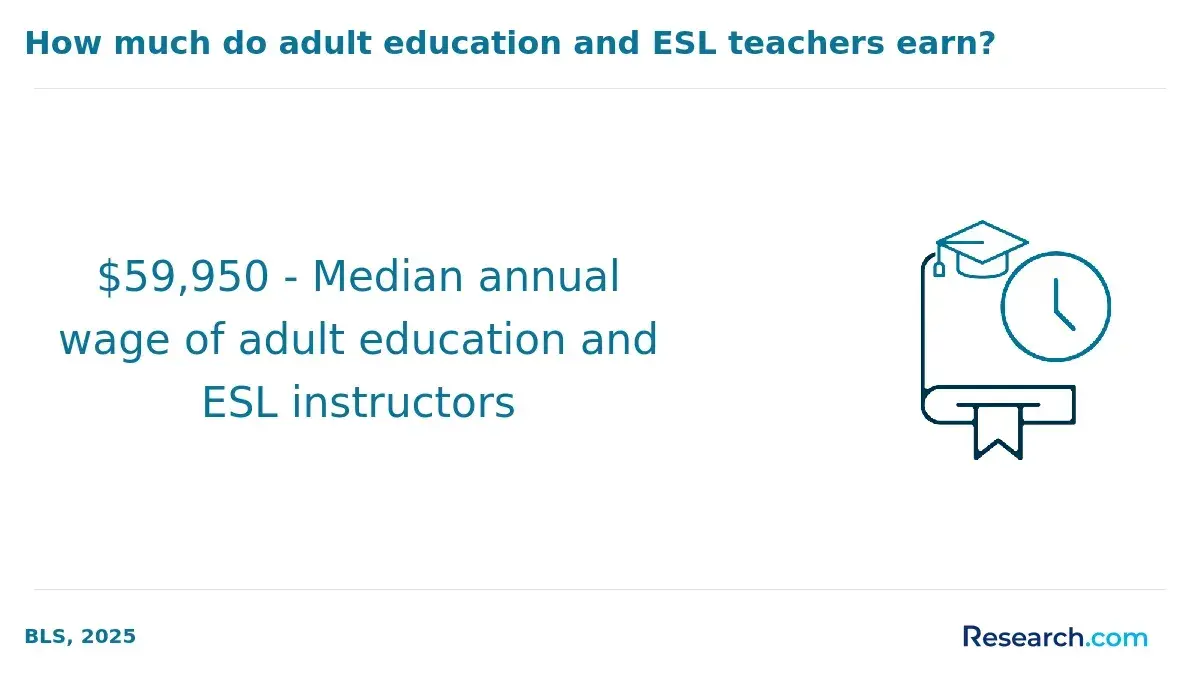
- Specialized career preparation. Graduates may move into reading intervention, literacy coaching, curriculum design, adult education, ESL instruction, or instructional coordination. Adult basic and secondary education and ESL teachers can earn as much as $63,130 annually.
- Multiple work settings. Reading and literacy expertise applies across schools, libraries, nonprofits, adult education programs, government agencies, education technology companies, and publishing. Among instructional coordinators, 43% work in elementary and secondary schools in the U.S.
- Stronger instructional impact. A focused graduate program can help educators use assessment data, evidence-based interventions, culturally responsive teaching, and digital literacy tools to support struggling readers.
- Potential pathway to leadership. Some programs prepare teachers for coaching, department leadership, curriculum roles, or future doctoral study, depending on accreditation and state requirements.
What can I expect from an online master’s in reading and literacy program?
An online master’s in reading and literacy usually covers reading theory, language development, literacy assessment, intervention strategies, research, curriculum design, and instructional leadership. If the program is properly accredited and offered by a reputable institution, the online format does not automatically make the degree less credible than a campus-based credential. What matters most is accreditation, curriculum quality, faculty expertise, field experience, and whether the program meets your professional or licensure goals.
| Program feature | What it means for students |
| Online coursework | Courses may be asynchronous, live online, or a combination of both, allowing students to study around teaching schedules. |
| Literacy assessment training | Students learn to identify reading difficulties, interpret assessment data, and plan targeted instruction. |
| Intervention and coaching focus | Programs often prepare educators to support struggling readers and help other teachers improve literacy instruction. |
| Technology-supported instruction | Students use digital tools, online resources, and learning platforms that are increasingly common in schools. |
| Fieldwork or practicum | Some programs require supervised practice, especially those connected to reading specialist certification or endorsement. |
To improve employer recognition, choose a school with institutional accreditation and, when relevant, programmatic accreditation in educator preparation. In fall 2024, about 5.2 million postsecondary students in the United States were enrolled exclusively in distance education courses, showing the continued importance of online learning in higher education (National Center for Education Statistics, 2025).
Where can I work with a master’s degree in reading and literacy?
Graduates can work in K-12 schools, libraries, literacy nonprofits, adult education centers, higher education programs, government agencies, education publishers, edtech companies, and corporate training departments. The right setting depends on your teaching license, state endorsement, experience level, and specialization.
| Work setting | Possible roles | What you may do |
| K-12 schools | Reading specialist, literacy coach, interventionist, special education teacher, curriculum developer | Assess reading needs, support classroom teachers, design interventions, and improve schoolwide literacy outcomes. |
| Libraries and community programs | Literacy program coordinator, outreach specialist, adult literacy instructor | Build community reading programs, support family literacy, and serve adult or underserved learners. |
| Nonprofits | Program manager, literacy advocate, education coordinator | Develop literacy initiatives, manage grants or outreach, and support community-based education. |
| Government agencies | Policy analyst, program evaluator, education researcher | Analyze literacy programs, evaluate outcomes, and contribute to public education initiatives. |
| Private sector | Instructional designer, content developer, literacy consultant | Create reading materials, digital lessons, assessments, or professional development resources. |
How much can I make with a master’s in reading and literacy?
Earnings vary widely by role, school district, state, credential, employer, and years of experience. According to Payscale (2024), reading specialists earn $57,764 yearly. U.S. Bureau of Labor Statistics data show annual pay of $63,130 for adult basic and secondary education and ESL teachers and $69,480 for high school educators.
Several Payscale reports place the average salary for graduates with a master’s in reading and literacy around $50,000 to $59,000. A graduate degree, reading endorsement, doctoral study, leadership experience, and specialized training may improve earning potential, but no program can guarantee a salary. Before enrolling, compare local salary schedules, district pay lanes, endorsement rules, and job postings in your state.
- Best Online Master’s in Reading and Literacy Programs for 2027
- How long does a master’s in reading and literacy take?
- Online vs. on-campus reading and literacy master’s programs
- Average cost of an online master’s in reading and literacy
- Financial aid options for reading and literacy graduate students
- Admissions requirements and prerequisites
- Common courses in reading and literacy master’s programs
- Reading and literacy specializations
- Accelerated master’s in reading and literacy programs
- How to choose the right program
- Student support and professional networking
- Accreditation and program quality
- Measuring program success in literacy education
- Challenges of online reading and literacy programs
- Reading, literacy, and library science careers
- Creative writing in literacy programs
- Creative writing as a tool for literacy education
- Applied research and community engagement
- Career paths for graduates
- Job market outlook
- Doctoral pathways after a reading and literacy master’s
- Emerging trends in reading and literacy education
List of the Best Online Master’s in Reading and Literacy Programs for 2027
How do we rank schools?
Research.com evaluates programs using a transparent methodology designed to help students compare legitimate, decision-relevant options. Our review process uses information from sources such as the Integrated Postsecondary Education Data System, Peterson’s database and its Distance Learning Licensed Data Set, College Scorecard, and the National Center for Education Statistics (NCES). Students should still verify current tuition, licensure rules, delivery format, and admission requirements directly with each school before applying.
| School | Program length | Credits | Cost per credit | Accreditation listed |
| Walden University | 15 months | 45 | $375 | CAEP, HLC |
| University of Arkansas at Little Rock | 1 year | 30 | $396 | CAEP, HLC |
| Capella University | 1.5 years | 45 | $470 | CAEP, HLC |
| Grand Canyon University | 32 months | 32 | $590 | AAQEP, HLC |
| Liberty University | 1.5 years | 36 | $415 (full-time); $615 (part-time) | CAEP, SACSCOC |
| Sam Houston State University | 2 years | 36 | $741.85 (in-state), $1,149.85 (out-of-state) | ILA, CAEP, SACSCOC |
| University of North Dakota | 2 years | 32 | $618.53 | CAEP, HLC |
| Appalachian State University | 2 years | 36 | $$318.61 (in-state), $1,194.16 (out-of-state) | CAEP, SACSCOC |
| University of Georgia | 2 years | 36 | $402 (in-state), $1,091 (out-of-state) | SACSCOC |
| University at Albany - State University of New York | 2 years | 30 | $532.76 (in-state), $626.76 (out-of-state) | MSCHE, AAQEP |
1. Walden University
Walden University offers a non-licensure Master of Science in Education with an Elementary Reading and Literacy specialization. The program is built for teachers who want to strengthen elementary literacy instruction and support college and career readiness through 21st-century literacy skills. Coursework covers reading and literacy, literacy development, and literacy instruction for culturally and academically diverse classrooms. The curriculum is aligned with the Common Core State Standards and International Literacy Association (ILA) standards.
- Program Length: 15 months
- Tracks/Concentrations: Elementary Reading and Literacy (P-6)
- Cost per Credit: $375
- Required Credits to Graduate: 45
- Accreditation: Council for the Accreditation of Educator Preparation (CAEP), Higher Learning Commission (HLC)
2. University of Arkansas at Little Rock
The University of Arkansas at Little Rock offers an online Master of Education in Reading focused on evidence-based support for K-12 readers. Courses address dyslexia-related formative assessment and intervention, contemporary curriculum design, educational research, and literacy models for school improvement. Students who complete additional requirements may pursue Arkansas licensure as a reading specialist or dyslexia therapist.
- Program Length: 1 year
- Tracks/Concentrations: Reading SpecialistReading Generalist
- Cost per Credit: $396
- Required Credits to Graduate: 30
- Accreditation: CAEP, HLC
3. Capella University
Capella University provides a Master of Science in Education in Reading and Literacy for K12 teachers who want deeper preparation in reading and writing instruction. The program emphasizes theory, practice, assessment, reflection, and collaboration. It follows state-approved standards from the Minnesota Board of Teaching, including the Standards of Effective Practice and Teachers of Reading.
- Program Length: 1.5 years
- Tracks/Concentrations: Developing Fluent ReadersTeaching Comprehension StrategiesAssessment-Based Reading InstructionSociocultural Context of Reading InstructionFoundational Theories in Reading Instruction
- Cost per Credit: $470
- Required Credits to Graduate: 45
- Accreditation: CAEP, HLC
4. Grand Canyon University
The Grand Canyon University Master of Arts in Reading is a non-licensure program for educators focused on K-8 reading instruction. The degree is aligned with International Literacy Association standards and includes both coursework and observation or practice-based learning. Graduates study corrective reading strategies, literacy leadership, curriculum development, and assessment systems. The university also offers other reading programs with licensure pathways.
- Program Length: 32 months
- Tracks/Concentrations: Elementary Education
- Cost per Credit: $590
- Required Credits to Graduate: 32
- Accreditation: Association for Advancing Quality in Educator Preparation (AAQEP), HLC
5. Liberty University
Liberty University offers a Master of Education Reading Specialist Endorsement program for educators seeking literacy leadership roles in Christian, public, or private schools. Students learn to plan, implement, and evaluate reading programs for learners with varied needs. Through reciprocity, graduates may use the program to pursue advanced reading specialist licensure in Virginia or other states, subject to state requirements.
- Program Length: 1.5 years
- Tracks/Concentrations: Elementary EducationSecondary EducationSpecial Education
- Cost per Credit: $415 (full-time); $615 (part-time)
- Required Credits to Graduate: 36
- Accreditation: CAEP, Southern Association of Colleges and Schools Commission on Colleges (SACSCOC)
6. Sam Houston State University
Sam Houston State University offers a Master of Education in Literacy Instruction that trains students to design reading interventions and improve literacy teaching. The program includes a 160-hour practicum for applied field experience. Courses include politics of literacy, digital literacies, cognition and emergent literacy, and survey of reading. Graduates may pursue roles such as literacy coach or specialist, literacy interventionist, or adjunct instructor. Applicants who already hold a master’s degree may use the 24-credit hour pathway.
- Program Length: 2 years
- Tracks/Concentrations: With or without Reading Specialist Certification
- Cost per Credit: $741.85 (in-state), $1,149.85 (out-of-state)
- Required Credits to Graduate: 36
- Accreditation: International Literacy Association (ILA), CAEP, SACSCOC
7. University of North Dakota
The University of North Dakota gives students two graduate options in reading education. The MS pathway emphasizes research and the ability to support teachers and learners in literacy. The MEd pathway focuses more directly on teaching strategies with a literacy emphasis. Classes are synchronous, and online students receive access to digital resources, technical help, and online tutoring.
- Program Length: 2 years
- Tracks/Concentrations: MS in Reading EducationMEd in Reading Education
- Cost per Credit: $618.53
- Required Credits to Graduate: 32
- Accreditation: CAEP, HLC
8. Appalachian State University
Appalachian State University offers a Master of Arts in Literacy Education for students developing advanced reading and teaching expertise. The part-time program uses both synchronous and asynchronous coursework. Students take classes in research methods, clinical teaching of reading, reading assessment and correction, and language arts. The program also supports licensure preparation and can lead to roles such as reading specialist, curriculum coordinator, or instructor.
- Program Length: 2 years
- Tracks/Concentrations: Classroom/ClinicalAdult Literacy
- Cost per Credit: $$318.61 (in-state), $1,194.16 (out-of-state)
- Required Credits to Graduate: 36
- Accreditation: CAEP, SACSCOC
9. University of Georgia
The University of Georgia offers an online MEd in Reading Education for teachers who want to improve pre-K to 12 reading fluency, comprehension, and research-informed instruction. Students take core courses and specialization coursework in new and digital literacies. The program is organized through 12-course sequences.
- Program Length: 2 years
- Tracks/Concentrations: Popular Culture in Literacy Classrooms K-12New LiteraciesIntegrating Digital Resources in the Literacy Classroom
- Cost per Credit: $402 (in-state), $1,091 (out-of-state)
- Required Credits to Graduate: 36
- Accreditation: SACSCOC
10. University at Albany - State University of New York
Part of the State University of New York system, UAlbany offers an MS in Reading that prepares teachers to support literacy development and language acquisition. Courses include children’s and young adult literature, classroom literacy instruction, writing in the classroom, and data-based decision-making in literacy. The program also includes internships, field and clinical experiences, and study-abroad components.
- Program Length: 2 years
- Tracks/Concentrations: MS in Reading
- Cost per Credit: $532.76 (in-state), $626.76 (out-of-state)
- Required Credits to Graduate: 30
- Accreditation: Middle States Commission on Higher Education's (MSCHE), AAQEP
What Graduates Say About Online Reading and Literacy Programs
- “I worried that an online master’s in reading and literacy might feel isolating, but the format worked well with my full-time schedule. Faculty support and peer collaboration helped me grow professionally without stepping away from my job.” - Anthony
- “The online format let me learn with educators from different locations and apply new literacy strategies in my own classroom right away. That immediate connection between coursework and teaching practice made the program valuable.” - Julie
- “As a part-time student, I needed flexibility. The online structure saved commuting time, and the mix of live discussions, interactive assignments, and independent work expanded how I think about literacy instruction.” - Hayley
Key Findings
- Most online master’s in reading and literacy programs take one to two years, although part-time students may need longer.
- A graduate program in the U.S. costs $12,596 for public institutions and $28,017 for private institutions.
- Among instructional coordinator roles, 60% of positions require a master’s degree.
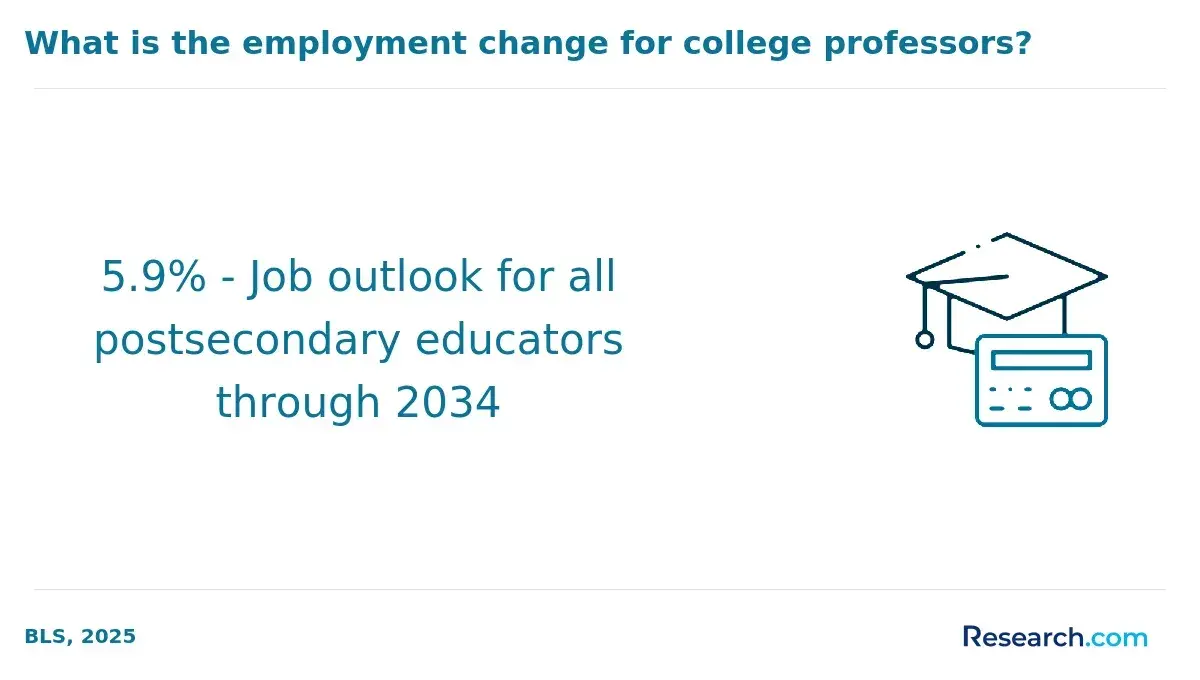
- Reading and literacy graduates may also work in teaching roles. Preschool teachers have a 3% job outlook, while postsecondary teachers have an 8% job outlook.
- Special education, language arts, world languages, and English as a Second Language remain important teacher shortage areas where literacy-trained educators can contribute.
How long does it take to complete a master’s in reading and literacy program?
Most full-time students finish a master’s in reading and literacy in about one to two years. Part-time students commonly take about two to three years or more because they often continue teaching while enrolled. Students who have already earned an associate’s degree in education or completed relevant education prerequisites may have a more efficient path into graduate study, although transfer and prerequisite rules vary by school.
Accelerated formats can shorten the timeline. Some pathways combine teacher preparation and graduate work, which can affect how many years do you have to go to college to be a teacher and may allow students to complete bachelor’s and master’s studies in five years. Your actual timeline depends on transfer credits, course load, practicum requirements, licensure requirements, and whether the program runs year-round.
How does an online master’s in reading and literacy program compare to an on-campus program?
The main difference between campus-based and online colleges for education degrees is delivery format. The better choice depends on your schedule, location, learning style, need for in-person mentoring, and fieldwork requirements.
| Factor | Online program | On-campus program |
| Schedule | Often more flexible, especially for working teachers | Usually follows fixed class meeting times |
| Location | Accessible from outside the school’s region, depending on state authorization | Requires travel or relocation near campus |
| Networking | Uses virtual discussions, webinars, group projects, and online mentoring | Offers face-to-face interaction with faculty, peers, and local school partners |
| Support services | Provides online advising, tech support, tutoring, and career resources | May include in-person advising, labs, libraries, and campus offices |
| Field experience | May allow practicum work in your local school or district | May place students through established campus-area partnerships |
| Best for | Educators balancing teaching, family, and graduate school | Students who prefer structured in-person learning and campus access |
Online learning has also become common for reskilling and professional development. One report noted that the U.S. emerged as the top country with the most online learners on Coursera. For reading and literacy students, however, convenience should not outweigh quality. Always confirm accreditation, clinical requirements, faculty access, and state approval before enrolling.
What is the average cost of an online master’s in reading and literacy program?
Online master’s in reading and literacy tuition varies by school type, credit requirement, residency status, fees, and delivery format. Recent estimates show that the average online graduate student pays about $1,099 per class, or roughly $366 per credit hour. A typical 30‑ to 36‑credit master’s program could therefore range from about $8,640 to $22,932 in total tuition depending on school and format (EducationData.org, 2025).
Broader graduate tuition trends show average annual graduate tuition and fees typically between $12,000 and $28,000 for public institutions and higher at private universities (UnivStats.com, 2025). Many online master’s in reading and literacy programs fall between $9,000 and $35,000 overall, but your final cost depends on tuition rules, fees, transfer credits, course load, and residency policy.
| Cost factor | Why it matters |
| Per-credit tuition | Small differences add up across 30 to 45 credits. |
| Residency status | Some public universities charge different rates for in-state and out-of-state students. |
| Online fees | Technology, digital resource, and distance learning fees may increase the total cost. |
| Practicum expenses | Fieldwork may require background checks, testing, travel, or supervision fees. |
| Licensure exams | Students seeking endorsements may need to pay for state-required exams or applications. |
| Time to completion | Part-time study can affect total fees and delay salary or promotion benefits. |
Online programs can be less expensive than campus-based options because they may reduce commuting, relocation, and housing costs. They may also cost less than advanced programs such as a PhD in higher education. Still, students should compare total program price rather than tuition alone.
What are the financial aid options for students enrolling in a master’s in reading and literacy program?
Graduate students in reading and literacy may be able to use institutional scholarships, grants, employer tuition assistance, federal financial aid, teacher-focused aid programs, assistantships, and loan forgiveness options. Availability depends on enrollment status, school policy, financial need, and career plans.
The International Reading Association (IRA) offers grants that may support graduate-level literacy research:
- Jeanne S. Chall Research Fellowship - Supports graduate students whose dissertations focus on reading.
- Steven A. Stahl Research Grant - Supports graduate students with at least three years of K-12 teaching experience who plan classroom-based reading research.
- Elva Knight Research Grant - Supports students conducting research related to reading/literacy practice and scholarship.
Eligible students may also consider the TEACH Grant and other federal aid programs for teachers. Graduates employed in qualifying public service roles, including education, may be eligible for federal loan forgiveness programs. Some universities also offer assistantships that provide stipends, tuition remission, and/or health insurance benefits in exchange for teaching, research, or administrative work.
What are the prerequisites for enrolling in a master’s in reading and literacy program?
Admission requirements differ by institution, but most online master’s in reading and literacy programs expect applicants to show academic preparation, teaching interest, and readiness for graduate-level education. Common requirements include:
- Bachelor’s degree in education or English
- Official transcripts with a minimum GPA of 3.0+
- Personal essay or statement of purpose
- Resume or CV
- Teaching license (if applicable)
- Teaching experience (at least one year)
- GRE/GMAT test scores (if applicable)
- Proof of English language proficiency (for international students)
If you are still determining what degree do you need to be a teacher, remember that some reading and literacy programs are designed for already licensed educators, while others are broader graduate programs. Applicants without an education or English background may need prerequisite coursework in literacy, reading instruction, classroom management, or educational foundations. Some schools also require an admissions interview.
Use the statement of purpose to connect your classroom experience, student support work, assessment skills, leadership goals, or community literacy interests to the program’s focus. If you have observed reading interventions, supported multilingual learners, designed lessons, or evaluated student progress, those experiences can strengthen your application.
What courses are typically in a master’s in reading and literacy program?
Like many elementary education degree online programs, reading and literacy master’s degrees focus on instruction, language development, assessment, and student learning across grade levels. Common courses include:
- Foundations of Literacy Instruction. Students examine major theories, research, and instructional practices in reading development, including phonics, vocabulary, fluency, comprehension, and assessment.
- Literacy Assessment and Intervention. This course teaches educators how to identify reading difficulties, analyze assessment data, and select evidence-based supports for struggling readers.
- Literacy Coaching and Leadership. Students learn coaching models, collaborative planning, teacher support strategies, and leadership practices for school or district literacy improvement.
- Reading Across the Curriculum. This course focuses on helping students build comprehension, vocabulary, and critical thinking in subjects such as science, mathematics, and social studies.
- Literacy Research and Inquiry. Students learn to evaluate literacy research, design small-scale studies, interpret findings, and apply research to instructional decisions.
| Course area | Skills developed |
| Reading foundations | Understanding how students acquire language, decoding, fluency, vocabulary, and comprehension skills |
| Assessment | Using screening, diagnostic, formative, and progress-monitoring tools |
| Intervention | Planning targeted instruction for readers who need additional support |
| Leadership | Coaching teachers, leading professional learning, and improving school literacy systems |
| Research | Evaluating evidence and applying findings to classroom and program decisions |
What types of specializations are available in master’s in reading and literacy programs?
Specializations help students match coursework to a specific role or learner population. Common options include:
- Literacy Coaching - Prepares educators to guide teachers, support literacy instruction, and help implement schoolwide intervention strategies.
- Reading Intervention - Focuses on targeted support for students with reading challenges, including phonics, fluency, comprehension, and progress monitoring.
- Adolescent and Adult Literacy - Emphasizes literacy development for older learners, disciplinary reading, writing across content areas, and lifelong literacy skills.
- Special Education Literacy - Trains educators to adapt literacy instruction for students with diverse learning needs in inclusive or specialized classrooms.
- Technology Integration in Literacy Instruction - Develops skills in digital tools, multimedia resources, educational technology, and digital literacy instruction.
Students should also understand the difference between an MEd and an MS in Reading and Literacy. An MEd usually emphasizes classroom practice, teaching methods, and leadership in K-12 schools. It may be a better fit for educators seeking classroom, coaching, or curriculum roles. Some online teaching degrees in this field also include pathways connected to teacher licensure. An MS may place more emphasis on research, data analysis, assessment, or preparation for higher education and research-oriented roles.
What are the advantages of accelerated master’s in reading and literacy programs?
Accelerated reading and literacy master’s programs are designed for students who want to earn the credential faster, often while continuing to work. Some can be completed in as little as one year, depending on the school, credit load, start dates, and field requirements. These programs can be appealing to teachers pursuing reading specialist roles, literacy coaching positions, or salary advancement on a shorter timeline.
Many universities now offer fast track college programs that help students finish efficiently. The trade-off is intensity: accelerated formats may require heavier weekly reading, faster assignment cycles, and less downtime between courses. They are best for organized students with stable schedules and strong academic preparation.
| Accelerated program advantage | Potential drawback |
| Faster completion | Less time to absorb complex assessment and intervention concepts |
| Quicker path to career advancement | More demanding weekly workload |
| Potentially lower indirect costs | May be difficult while teaching full time |
| Efficient pathway for experienced educators | May offer fewer elective or pacing options |
How to choose the best master’s in reading and literacy program?
The best program is the one that fits your career goal, state requirements, budget, schedule, and learning needs. Before applying, compare programs using these factors:
- Accreditation. Verify institutional accreditation and, when relevant, educator preparation accreditation. This affects credibility, transferability, and sometimes licensure eligibility.
- Licensure or endorsement alignment. Confirm whether the program leads to, supports, or does not support reading specialist certification in your state.
- Curriculum and specializations. Choose a program that includes assessment, intervention, literacy leadership, research, and the learner population you want to serve.
- Faculty expertise. Review faculty backgrounds in literacy research, K-12 teaching, dyslexia, multilingual education, assessment, coaching, or curriculum development.
- Delivery format. Decide whether you need asynchronous coursework, live online classes, part-time pacing, or cohort-based structure.
- Technology and student support. Ask about online learning platforms, technical support, academic advising, tutoring, library access, and career services.
- Field experience. Determine whether practicums, internships, or clinical experiences are required and whether they can be completed locally.
- Total cost and financial aid. Compare tuition, fees, books, testing costs, travel, and potential employer reimbursement.
- Career services and alumni network. Look for job search support, district connections, mentoring, resume help, and literacy professional networks.
This decision matters because many roles connected to literacy leadership require graduate-level preparation. For example, 60% of instructional coordinator positions require a master’s degree (O*NET OnLine, 2024). A careful program comparison can help you avoid paying for a degree that does not match your state, role, or salary goals.
| Question to ask | Why it matters |
| Is the school institutionally accredited? | Accreditation affects recognition by employers and other schools. |
| Does the program meet my state’s reading specialist or endorsement requirements? | Licensure rules are state-specific and may not transfer automatically. |
| Is the program licensure, endorsement, or non-licensure? | A non-licensure degree may not qualify you for regulated school roles. |
| How is fieldwork arranged for online students? | Clinical requirements can affect time, location, and eligibility. |
| What is the total cost after fees? | Tuition alone rarely reflects the full price. |
| What jobs have recent graduates obtained? | Outcomes help you judge whether the program aligns with your goal. |
How do online master’s programs foster comprehensive student support and professional networking?
Strong online reading and literacy programs do more than post assignments in a learning platform. They provide academic advising, faculty access, technical support, library resources, career guidance, writing help, and opportunities to collaborate with other educators. Virtual mentoring, webinars, discussion boards, and cohort projects can help online students build professional relationships even without campus attendance.
Some programs also encourage interdisciplinary connections with related education fields. For example, students comparing literacy education with early learning may find it useful to review an early childhood education degree online to understand how literacy development begins before elementary school.
Accreditation and Program Quality in Online Master’s in Reading and Literacy
Accreditation should be one of the first items you verify. It indicates that an outside accreditor has reviewed the school or program for quality standards. For reading and literacy students, two forms are especially important:
- Regional Accreditation: This applies to the institution as a whole and is widely recognized by employers and higher education institutions. It can affect transfer credits, financial aid eligibility, and degree credibility.
- Programmatic Accreditation: This applies to specific educator preparation programs. Agencies such as the National Council for Accreditation of Teacher Education (NCATE) or the Council for the Accreditation of Educator Preparation (CAEP) evaluate teacher education programs, including reading and literacy programs, for curriculum quality, faculty preparation, and alignment with professional standards.
Accreditation is important, but it is not the only quality marker. Students should also review faculty qualifications, fieldwork structure, assessment training, student support, technology integration, graduate outcomes, and state approval for licensure or endorsement.
If affordability is a major concern, compare several accredited education pathways. For example, an affordable early childhood education degree online can provide a useful cost comparison for students weighing different education-related credentials.
How do online master’s programs showcase measurable success in literacy education?
Reputable programs should be able to explain how they measure student learning and graduate success. Useful indicators include graduation rates, employment outcomes, alumni surveys, field supervisor feedback, assessment performance, and evidence that the curriculum is regularly updated. Some programs also highlight partnerships with K-12 schools or community organizations where students apply literacy interventions in authentic settings.
Outcome data should be interpreted carefully. A program may report strong satisfaction or career advancement, but that does not guarantee the same result for every student. Applicants interested in long-term leadership or research may also compare doctoral options, including a doctorate organizational leadership program, after evaluating whether a master’s degree provides the right foundation.
What challenges might you face during an online master’s in reading and literacy program?
Online study can be flexible, but it is not effortless. Students may struggle with time management, limited in-person contact, technology problems, fieldwork logistics, and balancing coursework with teaching responsibilities. Programs with clear advising, responsive faculty, virtual workshops, interactive modules, and reliable technical support can make these challenges easier to manage.
| Common mistake | Better approach |
| Choosing a program only because it is cheap | Compare accreditation, licensure alignment, practicum quality, and total cost. |
| Assuming online means self-paced | Check whether courses are asynchronous, synchronous, cohort-based, or accelerated. |
| Ignoring state endorsement rules | Contact your state education agency and the program advisor before enrolling. |
| Underestimating fieldwork requirements | Ask how placements are approved and whether your current school can serve as a site. |
| Relying only on rankings | Use rankings as a starting point, then verify fit, cost, support, and outcomes. |
Students who want to broaden literacy-related expertise beyond schools may also compare affordable library pathways, including the cheapest online MLIS programs.
How can a master’s in reading and literacy intersect with library science careers?
Reading and literacy training can transfer well to library environments because both fields involve literacy development, reader engagement, digital resources, community outreach, and educational programming. Graduates may support family literacy events, adult reading initiatives, children’s programming, digital literacy instruction, or school-library collaboration.
Students interested in a stronger library science credential can compare the best master of library science programs with reading and literacy degrees. The best choice depends on whether your target role is classroom-based literacy instruction, public library programming, school librarianship, or information services.
How does integrating creative writing benefit literacy programs?
Creative writing can strengthen literacy instruction by helping students analyze language, build vocabulary, understand narrative structure, and develop confidence as writers. In reading and literacy programs, creative writing activities can help educators connect comprehension, expression, interpretation, and student voice.
Teachers who want deeper creative writing preparation may find an accredited online creative writing degree useful as a complementary option, especially if they teach language arts, writing workshops, or interdisciplinary literacy courses.
How can integrating creative writing enhance literacy education?
Creative writing supports literacy education when it is used intentionally rather than as an unrelated activity. Narrative writing, poetry, personal essays, and digital storytelling can help students practice reading comprehension, grammar, structure, audience awareness, and critical thinking. For educators, these techniques can make literacy instruction more engaging and more connected to students’ experiences.
Those looking for a shorter creative writing pathway may compare a fast creative writing degree online with literacy-focused graduate options to decide which credential best supports their teaching goals.
How do online master’s programs integrate applied research and community engagement?
Many online reading and literacy programs include applied research, action research, or community-based projects. These experiences ask students to identify a literacy challenge, review evidence, design an intervention, collect data, and reflect on results. Projects may take place in local schools, classrooms, libraries, after-school programs, or community organizations.
Applied research can strengthen a graduate portfolio because it demonstrates practical problem-solving, not just course completion. Students considering broader graduate study can explore the master degree resource to understand how master’s-level education can support professional specialization and advancement.
What career paths are available for graduates of master’s in reading and literacy programs?
A master’s in reading and literacy can prepare graduates for traditional school-based roles and related positions in curriculum, research, policy, nonprofit education, and digital learning. Common options include:
- Educational Consultants. These professionals advise schools, districts, or education organizations on literacy programs, curriculum design, interventions, and instructional improvement.
- Literacy Coach Coordinators. They manage coaching programs, train literacy coaches, support school leadership teams, and help implement broad literacy initiatives.
- Program Directors. These leaders oversee literacy programs in schools, nonprofits, agencies, or community organizations, including planning, budgeting, staffing, and compliance.
- Content Developer/Instructional Designers. They create textbooks, lesson plans, digital learning modules, assessments, online courses, and multimedia resources for literacy instruction.
- Researcher/Educational Policy Analysts. These professionals study literacy instruction, education equity, student achievement, and policies designed to improve reading outcomes.
- Principals and Educational Administrators. Graduates of reading and literacy programs, as well as students in an online master’s program in education administration, may move into leadership roles where literacy improvement is a central school priority.
| Career goal | Recommended program features |
| Reading specialist | State-aligned endorsement pathway, assessment coursework, intervention training, supervised practicum |
| Literacy coach | Coaching, adult learning, leadership, data-based decision-making, teacher collaboration |
| Curriculum developer | Curriculum design, standards alignment, digital literacy, instructional materials development |
| Adult literacy or ESL educator | Adult learning, language acquisition, culturally responsive instruction, assessment |
| Research or policy role | Research methods, program evaluation, data analysis, policy coursework |
What is the job market for graduates with a master’s in reading and literacy?
The job market depends on location, school funding, certification requirements, grade level, and the specific role. Current projections show that overall teacher employment in the United States is expected to remain relatively flat, though demand varies by position and subject area (U.S. Bureau of Labor Statistics, 2025).
Preschool teacher employment is projected to grow about 4 % from 2024 to 2034, while postsecondary teacher employment is projected to grow about 7 % over the same period (U.S. Bureau of Labor Statistics, 2025a; 2025b).
Teacher retention data show that 84 % of public school teachers and 82 % of private school teachers stayed at the same school between academic years, suggesting relatively high year-to-year retention despite broader workforce challenges (National Center for Education Statistics, 2024).
Literacy-trained educators may be especially valuable where schools need stronger reading interventions, special education support, English language learning services, and evidence-based instruction across content areas. Still, students should research local postings before enrolling because demand and pay can differ sharply by district and state.
Can a master’s in reading and literacy open doors to affordable doctoral opportunities?
Yes. A master’s in reading and literacy can support future doctoral study, especially for educators interested in research, school leadership, curriculum leadership, teacher education, or education policy. Graduate coursework in research methods, literacy theory, assessment, and applied intervention can help prepare students for advanced study.
Students planning to continue should choose a master’s program with research opportunities, faculty mentorship, strong academic writing expectations, and transferable graduate credits when possible. Those seeking efficient doctoral options may review cheap EdD programs, while confirming admission requirements, dissertation or capstone expectations, and total cost.
What are the emerging trends in reading and literacy education?
Reading and literacy education continues to shift as schools respond to technology, policy changes, student diversity, and the need for evidence-based instruction. Important trends include:
- Integration of Digital Literacy: Students need to read, evaluate, and create information across digital platforms. Literacy educators increasingly use multimedia resources, online texts, and digital tools to teach comprehension, credibility evaluation, and communication. Programs such as a doctorate in educational leadership online may also examine how digital tools shape education systems.
- Focus on Culturally Responsive Literacy: Literacy instruction is more effective when texts, discussions, and teaching methods reflect students’ identities, languages, communities, and experiences. This approach can improve engagement and support inclusive classrooms.
- Growth of Evidence-Based Literacy Intervention: Schools are placing greater emphasis on research-supported strategies, assessment data, progress monitoring, and targeted intervention for students who need reading support.
- Expansion of Family and Community Literacy Programs: Schools and community organizations increasingly recognize that literacy development extends beyond the classroom. Family literacy programs provide tools and activities that encourage reading at home and in the community.
- Increased Attention to Social and Emotional Learning (SEL) in Literacy: Educators are connecting literacy instruction with empathy, resilience, self-awareness, and student well-being through carefully selected texts and reflective activities.
Graduates who understand these trends can make better instructional decisions, evaluate new tools more critically, and support a wider range of learners.
Key Insights
- An online master’s in reading and literacy is best for educators who want specialized preparation in reading assessment, intervention, coaching, curriculum, or literacy leadership.
- Accreditation and state licensure alignment matter more than the online format. A respected online degree can be valuable, but a non-licensure program may not qualify you for regulated school roles.
- Most programs take one to two years full time, while part-time study may take two to three years or more.
- Total cost should include tuition, online fees, books, fieldwork expenses, testing, and endorsement application costs—not just the advertised per-credit rate.
- Career options include reading specialist, literacy coach, interventionist, instructional designer, curriculum developer, adult literacy instructor, education consultant, and policy or research roles.
- Before enrolling, ask whether the program meets your state requirements, how fieldwork is arranged, what support online students receive, and what outcomes recent graduates report.
References:
- National Center for Education Statistics. (n.d.). Postbaccalaureate enrollment by distance education enrollment. Condition of Education. https://nces.ed.gov/programs/coe/indicator/chb/postbaccalaureate-enrollment
- O*NET OnLine. (2024, February 20). Instructional coordinators. Retrieved February 27, 2024, from https://www.onetonline.org/link/summary/25-9031.00
- Payscale. (2024, January 31). Average reading specialist salary. Retrieved February 27, 2024, from https://www.payscale.com/research/US/Job=Reading_Specialist/Salary
- National Center for Education Statistics. (2024). Teacher attrition and mobility: Public and private K–12 teachers staying at the same school https://nces.ed.gov/whatsnew/press_releases/12_13_2023.asp
- U.S. Bureau of Labor Statistics. (2025a). Preschool teachers: Occupational outlook handbook. https://www.bls.gov/ooh/education-training-and-library/preschool-teachers.htm
- U.S. Bureau of Labor Statistics. (2025b). Postsecondary teachers: Occupational outlook handbook. https://www.bls.gov/ooh/Education-Training-and-Library/Postsecondary-teachers.htm
- EducationData.org. (2025). Average cost of online college: Yearly tuition and fees. https://educationdata.org/average-cost-of-online-college
- UnivStats.com. (2025). Graduate tuition and fees (2024–2025 academic year). https://www.univstats.com/academic/graduate-tuition-and-fees/
- National Center for Education Statistics. (2025). Number and percentage distribution of students enrolled exclusively in distance education courses: Fall 2024. U.S. Department of Education. https://nces.ed.gov/ipeds/search/viewtable?tableId=36544
Other Things You Should Know About Master’s in Reading and Literacy Programs
Yes, but only if the program is approved by the state education agency or aligned with that state’s endorsement rules. Many licensure-track programs require at least 30 credit hours, supervised practicum or internship hours, and completion of standards set by the state department of education.
Most top programs require GRE scores for admission, although some may waive this if applicants have substantial professional experience. Check individual program requirements for specific testing criteria and minimum score expectations.


