2027 Fastest Online Audio and Music Degree Programs

Co-Founder and Chief Data Scientist
Choosing an online audio or music degree is not just a creative decision. It is also a time, cost, equipment, and career strategy decision. Students often want to know whether they should earn a full degree, complete a shorter certificate, build a portfolio independently, or choose a related path such as music business, game audio, sound design, or media production.
This guide is designed for aspiring music producers, audio engineers, composers, sound designers, working musicians, and career changers who want a flexible online route into audio and music careers. It explains what online audio and music programs teach, how long they take, what they cost, where graduates can work, and how to compare programs without relying only on rankings or marketing claims.
The labor market is competitive but active. Employment of musicians and singers is projected to grow by 2% from 2023 to 2033, while jobs for music directors and composers are expected to grow by 3% over the same period. A degree can help, but in this field, employers and clients also look closely at your portfolio, technical fluency, reliability, credits, and professional network.
Quick answer: Are online audio and music degree programs worth it?
An online audio and music degree can be worth it if the program helps you build a strong portfolio, teaches current production tools, offers useful feedback from experienced instructors, and fits your budget. It is less likely to pay off if you choose a costly program without checking accreditation, equipment requirements, career support, transfer policies, and whether the curriculum matches your intended career path.
| Best fit | Consider carefully |
| Students who need flexibility because of work, family, touring, or location constraints | Students who need daily in-person studio access, live ensemble work, or frequent face-to-face mentorship |
| Self-directed learners who can complete recording, editing, mixing, and portfolio projects at home | Learners who struggle without structured studio time or immediate hands-on supervision |
| Career goals in music production, audio post-production, sound design, songwriting, media scoring, or music business | Goals that require state-specific teaching licensure or credentials not covered by the online program |
What are the main benefits of getting an online audio and music degree program?
- An online audio and music degree can prepare students for roles such as music producer, sound engineer, audio technician, sound designer, composer, arranger, or music business professional.
- The median annual wage for music directors and composers was $63,670 in 2024, although pay varies widely by role, market, experience, and whether a professional works as an employee, contractor, or entrepreneur.
- Online delivery gives students more control over when and where they study, which can reduce disruption for working adults, musicians, caregivers, and students outside major music markets.
What can I expect from an online audio and music degree program?
Online audio and music programs usually combine musicianship, recording technology, digital production, and portfolio development. A typical curriculum may include music theory, ear training, songwriting, recording techniques, mixing, mastering, digital audio workstations, music history, sound design, and business fundamentals. Many programs also require a capstone, demo reel, final production project, or professional portfolio.
Delivery varies by school. Some programs use asynchronous video lessons and project submissions, while others include live critiques, virtual studio sessions, collaborative assignments, or scheduled instructor feedback. Students should expect to spend significant time outside class working with audio software, recording equipment, virtual instruments, MIDI tools, plug-ins, and file-sharing platforms.
Tuition for these programs generally ranges from $15,000 to $50,000, depending on the institution. That figure may not include software, hardware, studio equipment, books, fees, portfolio costs, or travel for optional residencies, internships, or live events.
Where can I work with an online audio and music degree program?
Graduates may work in recording studios, live event production, broadcasting, film and television post-production, gaming, advertising, podcasting, education, worship organizations, performing arts companies, corporate media departments, or independent production businesses. Some graduates work as employees, but many audio and music professionals build hybrid careers that combine freelance projects, contract work, teaching, performance, and entrepreneurship.
Among music directors and composers, performing arts companies employ 2.81%, religious organizations account for 1.72%, and sound recording industries employ 2.44%. Elementary and secondary schools and colleges, universities, and professional schools each employ 0.01% of these professionals.
Because audio work increasingly overlaps with media, technology, and content production, graduates who can communicate clearly, manage projects, solve technical problems, and deliver polished work on deadline often have more career flexibility than those who rely on musical ability alone.
How much can I make with an online audio and music degree program?
Income in audio and music careers is highly variable. Professionals with an online audio and music degree can see average salaries around $84,000 per year, while entry-level roles often start near $40,000 to $50,000 annually. Audio engineers in major markets or specialized positions can earn over $100,000 annually, but those outcomes are not guaranteed and often depend on experience, credits, reputation, location, and client base.
Experienced music producers earn an average of about $61,000 per year. Advanced degrees, certifications, strong portfolios, repeat clients, and professional referrals can support higher earnings, but the strongest income growth in this field usually comes from a combination of technical skill, business discipline, networking, and consistent project delivery.
- Best online audio and music degree programs for 2027
- How long online audio and music programs usually take
- Online vs. campus audio and music degrees
- Average cost of online audio and music degrees
- Financial aid options for online music and audio students
- Admissions requirements and prerequisites
- Common courses in online audio and music programs
- Popular specializations in audio and music degrees
- Why accreditation matters
- Challenges of studying audio and music online
- Trends affecting online audio and music education
- How to choose the right online audio and music degree
- Career paths for graduates
- Job market outlook for audio and music graduatesGraduate perspectives and review questions
List of the Best Online Audio and Music Degree Programs for 2027
This list is meant to help students compare online programs by fit, cost, credits, and accreditation rather than by name recognition alone. Research.com evaluates programs using data from the IPEDS database, Peterson's database, the College Scorecard database, and the National Center for Education Statistics.
These sources support a more transparent review of online audio and music degree options. Students who want to understand how Research.com evaluates institutions can review the Research.com ranking methodology.
1. Valley City State University
Valley City State University offers an online Bachelor’s in Music with a General Studies concentration. The program is designed for students who want a broad music degree with flexibility, including core music study, performance instruction, and elective choices that allow some customization.
- Required Credits to Graduate: 120 credits
- Cost: Approximately $8,729 per year for 30 credits (2025-2026), plus additional fees.
- Accreditation: National Association of Schools of Music (NASM).
2. Berklee College of Music
Berklee College of Music, through Berklee Online, offers flexible Bachelor of Arts degree pathways in areas such as production, performance, business, and other music-related fields. The programs may appeal to students seeking an industry-connected music school with online delivery.
- Required Credits to Graduate: 120 credits
- Cost: Approximately $16,920 for full-time undergraduate tuition per year
- Accreditation: NASM
3. University of Maine at Augusta
The University of Maine at Augusta offers music programs that include a Bachelor of Music in Contemporary and Popular Music and a Bachelor of Arts in Music Technology, with campus and online options. UMA emphasizes applied learning, flexibility, and practical preparation for contemporary music work.
- Required Credits to Graduate: 121 credits
- Cost: $245 per credit hour for in-state tuition; $314 per credit hour for out-of-state tuition
- Accreditation: NASM
4. Atlanta Institute of Music & Media
The Atlanta Institute of Music & Media offers an online Associate of Applied Science in Music Production and Audio for Media. The program is built for students interested in production, audio engineering, media audio, AVID Pro Tools Certification, and Ableton Live Training.
- Required Credits to Graduate: 92
- Cost: $425 per credit hour
- Accreditation: Council on Occupational Education (COE)
5. Academy of Art University
Academy of Art University offers an online Music Production & Sound Design for Visual Media degree. The program focuses on music creation for visual media and uses online coursework, production assignments, and collaboration opportunities to help students build technical and creative skills from a home studio setup.
- Required Credits to Graduate: 132 credits
- Cost: Approximately $28,704 per year for full-time undergraduate tuition
- Accreditation: WASC Senior College and University Commission (WSCUC) and National Association of Schools of Art and Design (NASAD).
6. Full Sail University
Full Sail University offers an online Bachelor of Science in Audio Production. The curriculum covers music business, recording, production, and post-production concepts for students who want to work in modern audio environments, including independent and project-based creative settings.
- Required Credits to Graduate: 120 credits
- Cost: Approximately $66,500 total
- Accreditation: Accrediting Commission of Career Schools and Colleges (ACCSC)
7. The Los Angeles Film School
The Los Angeles Film School offers an online Bachelor of Science in Audio Production. The accelerated program covers audio engineering and production for media contexts such as live events, games, film, television, and post-production sound.
- Required Credits to Graduate: 120 credit hours
- Cost: Approximately $20,350 per year
- Accreditation: ACCSC
8. Virginia Wesleyan University
Virginia Wesleyan University offers a Bachelor of Arts in Music Production. The online program emphasizes digital technology, piano, musicianship, music history, digital composition, and sound recording, with project-based assessments and tools such as Ableton Live.
- Required Credits to Graduate: 120 total degree credit hours
- Cost: $410 per credit hour
- Accreditation: Southern Association of Colleges and Schools Commission on Colleges (SACSCOC)
9. Rocky Mountain College of Art + Design (RMCAD)
Rocky Mountain College of Art + Design (RMCAD) offers an online Bachelor of Fine Arts in Music Production. The program blends creative production, music theory, digital tools, and professional ethics for students who want an arts-focused music production education.
- Required Credits to Graduate: 120 credits
- Cost: $740 per credit
- Accreditation: Higher Learning Commission (HLC) and National Association of Schools of Art and Design (NASAD)
10. Liberty University
Liberty University offers a 100% online Bachelor of Science in Commercial Music with a Music Production specialization. The program uses flexible 8-week courses and covers digital audio workstations, studio mixing, audio engineering, and commercial music foundations.
- Required Credits to Graduate: 120 credit hours
- Cost: $390 per credit hour for full-time undergraduate students; $455 per credit hour for part-time undergraduate students; $250 per credit hour for military undergraduate students
- Accreditation: SACSCOC and NASM
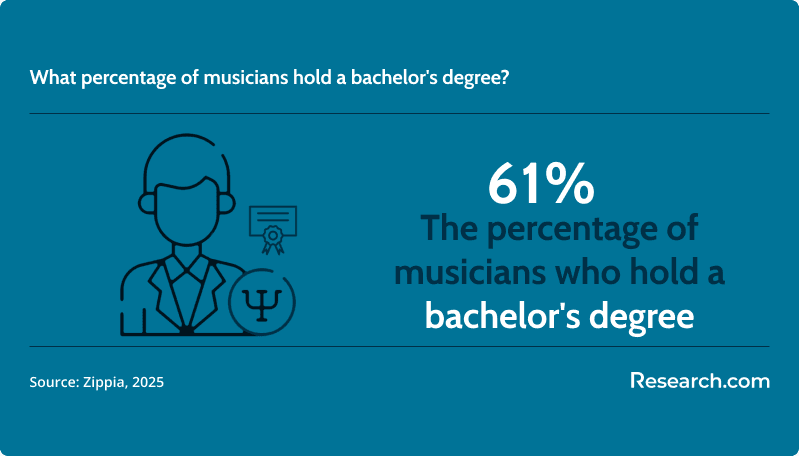
The chart below shows the most common degrees among musicians.
How long does it take to complete an online audio and music degree program?
Completion time depends on credential level, transfer credits, course load, and whether the program uses a standard semester calendar or accelerated terms.
| Credential | Typical completion time | Best for |
| Certificate | 5 to 6 months, or about two quarters | Students who want focused training in audio, recording, or production software without committing to a degree |
| Diploma | About a year of full-time study | Learners seeking practical audio technology training in a shorter format |
| Associate degree | About 18 months | Students who want an entry-level credential or a possible transfer pathway |
| Bachelor’s degree | 3 to 4 years of full-time study and around 120 credit hours | Students seeking broader academic preparation, portfolio development, and more career flexibility |
| Master’s degree | 30 to 50 credits and 1 to 2 years | Professionals pursuing advanced study, leadership roles, or specialized teaching and composition goals |
Students more interested in management, artist development, promotion, or production leadership may also compare audio programs with the fastest online entertainment business degree programs. That path may make more sense for students who want to work around music and media but do not want their primary training to be technical audio production.
How does an online audio and music degree compare to an on-campus program?
The right format depends on how you learn, what equipment you can access, and whether your career goal requires studio-heavy training or flexible project-based study.
| Factor | Online program | On-campus program |
| Studio access | Often depends on your home setup, software access, local studios, or optional residencies | Usually provides direct access to campus studios, labs, performance spaces, and equipment |
| Schedule | More flexible for working adults, parents, touring musicians, or students outside major cities | More structured, with fixed class, lab, rehearsal, or studio times |
| Networking | Requires intentional effort through online critiques, forums, internships, and local industry events | Often easier through in-person collaboration, ensembles, studio sessions, and faculty introductions |
| Learning style | Works best for independent learners who can troubleshoot and complete projects without constant supervision | Works best for students who benefit from immediate feedback and hands-on coaching |
| Cost and access | May reduce relocation and commuting expenses and can be accessible from more locations | May involve higher living, commuting, facility, or campus-related costs |
Hands-on training and networking
Campus programs can offer stronger access to professional studios, live performance spaces, ensemble work, and spontaneous collaboration. That matters for students who need frequent in-person coaching, real-time troubleshooting, or direct exposure to studio workflows.
Online programs can still be effective, but students must be proactive. You may need to build a home studio, seek local internships, collaborate remotely, attend industry events, or book time in professional studios to gain the same kind of practical experience.
Curriculum and flexibility
Online programs commonly emphasize digital production tools, file-based collaboration, project critiques, and portfolio assignments. This can be a strong match for students focused on bedroom production, podcasting, electronic music, remote session work, or media audio.
Campus programs may offer broader access to acoustics labs, ensembles, recording rooms, advanced microphones, live sound rigs, interdisciplinary electives, and performance experiences. Students interested in deeper technical systems may also benefit from understanding the difference between information technology and computer science, especially when audio work intersects with software, signal processing, networks, or interactive media.
Cost and accessibility
Online study may help students avoid relocation, housing, and commuting expenses. Students comparing formats should look beyond tuition and estimate software, plug-ins, microphones, interfaces, headphones, acoustic treatment, computer upgrades, and internet requirements. External cost comparisons, such as the cost of online education versus traditional education, can provide context, but the final value depends on each school’s total cost and student support.
Industry perception and career impact
In audio and music, a degree alone rarely secures work. Employers, collaborators, and clients usually want proof that you can produce clean, creative, deadline-ready audio. A degree can still be valuable when it provides structured training, feedback, credentials, internships, and a portfolio that clearly demonstrates your abilities.
What is the average cost of an online audio and music degree program?
Costs vary widely by institution, degree level, and program structure. Annual tuition for online bachelor’s degrees in music or audio typically ranges from about $7,470 to $35,000. Across a full bachelor’s program, total tuition can range from approximately $30,000 to over $90,000, depending on credits required, tuition rate, fees, and transfer credit policies.
Students who are cost-sensitive should compare total program price, not just per-credit tuition. Transfer credits, military rates, employer reimbursement, scholarships, equipment requirements, and course load can change the real cost. Those prioritizing affordability can also review affordable online audio and music degree options.
Certificates and associate degrees are generally lower-cost alternatives to a bachelor’s degree. For graduate study, online master’s degrees in music have a tuition of around $34,000 for a 36-credit program.
What are the financial aid options for students enrolling in an online audio and music degree program?
Financial aid depends on the school’s eligibility, accreditation, program type, and student circumstances. Before enrolling, confirm whether the specific online program—not just the institution—qualifies for the aid you plan to use.
- Federal financial aid: Some online music schools, including AIMM, participate in Title IV federal aid programs. Eligible students may apply for federal grants and loans, often by submitting required documentation at least 30 days before classes begin.
- Institutional scholarships and grants: Schools may offer need-based or merit-based funding. Applications can require tax documents, bank statements, a personal statement, or other supporting materials.
- Private educational loans: Some institutions work with private lenders or provide guidance on private loan options. Students should compare interest rates, repayment terms, and total repayment cost carefully.
- Employer tuition assistance and military benefits: Some online programs accept employer reimbursement or military education benefits.
- Payment plans: Installment plans by course, term, or semester can make tuition easier to manage, but students should still calculate the total obligation.
- Portfolio-based scholarships: Some schools consider talent, creative work, and personal statements when awarding scholarships.
What are the prerequisites for enrolling in an online audio and music degree program?
Admissions requirements vary by school and degree level, but undergraduate online audio and music programs commonly ask for the following:
- Proof of high school completion or equivalent secondary education.
- English proficiency for reading, writing, speaking, and course participation.
- An online application, official or unofficial transcripts, recommendation letters, and a personal statement.
- A demonstration of musicianship, which may be a written response, video submission, audition material, or portfolio.
- Supplemental materials showing music, production, composition, or technical skills, depending on the program.
- An application fee, although some institutions waive fees for early applicants or certain applicant groups.
Students with related creative backgrounds may be able to strengthen their applications. For example, graduates of a fast-track online creative writing degree may bring useful storytelling, lyric writing, scriptwriting, or narrative skills to multimedia scoring, songwriting, podcast production, or audio drama projects.
What courses are typically in an online audio and music degree program?
Course titles differ by institution, but most online audio and music degrees include a mix of theory, technology, production, and portfolio work.
- Music theory and aural skills: Students study harmony, rhythm, melody, notation, structure, and ear training.
- Music history and styles: Coursework may examine genres such as jazz, rock, world music, contemporary commercial music, and other traditions.
- Music production and recording techniques: Students learn to record, edit, mix, master, and produce audio using digital audio workstations.
- Songwriting and composition: Classes may cover melody, harmony, arrangement, scoring, and original music creation.
- Performance and instrumental skills: Programs may include keyboard work, applied lessons, ensemble concepts, or performance practice, though online ensemble experiences can be limited.
- Music technology and digital tools: Students work with software, MIDI, plug-ins, virtual instruments, controllers, microphones, interfaces, and other production tools.
- Capstone or final portfolio: Many programs end with a demo reel, recital, thesis, production portfolio, or applied project.
Students planning careers in multimedia may also compare audio training with accelerated online graphic design degrees. Combining audio and visual communication skills can be useful in advertising, content creation, entertainment media, and brand storytelling.
What types of specializations are available in an online audio and music degree program?
Specializations help students align coursework with a specific career direction. The best choice depends on whether you want to create music, engineer sound, manage artists, design audio for media, or build a business.
Music business and entertainment business
This concentration focuses on the commercial side of music, including artist management, publishing, licensing, promotion, record label operations, touring, marketing, and entertainment law. Students who want a business-first route may compare this option with a low-cost online entertainment business degree.
Film scoring and music for visual media
This path prepares students to compose, arrange, and produce music for film, television, games, advertising, and other visual formats. It is a strong fit for students who want to support storytelling through music, cues, timing, and emotional tone. Students drawn to cinematic collaboration may also explore accelerated online cinematography degrees to understand how sound and image work together.
Sound design for games and technology
Sound design focuses on creating, editing, layering, and implementing audio elements for film, television, games, virtual environments, apps, and interactive platforms. Students interested in technical problem-solving may find that audio troubleshooting has some overlap with software testing career skills, such as identifying defects, documenting issues, and improving user experience.
Audio post-production
This specialization centers on dialogue editing, Foley, sound effects, mixing, mastering, and preparing audio for film, television, podcasts, commercials, and broadcast formats.
Electronic music production and performance
Students in this area study synthesis, sampling, beat-making, sequencing, performance controllers, live electronic setups, and genre-specific production techniques.
Live sound engineering
Live sound students learn sound reinforcement, signal flow, stage setup, monitor mixing, microphones, troubleshooting, acoustics, and real-time event production. As live events become more digitally connected, students may also benefit from broader technology awareness, including concepts found in affordable cloud engineering online training, especially for AV systems, remote collaboration, and event technology workflows.
The chart below shows the common majors for musicians.
How important is accreditation for online audio and music degree programs?
Accreditation is one of the first items students should verify. It can affect financial aid eligibility, credit transfer, graduate school options, employer recognition, and overall confidence in academic quality. Music-specific accreditation, such as NASM, may be especially relevant for certain music programs, while regional or institutional accreditation also matters for degree credibility.
Do not assume that every online program at a known school carries the same approvals or meets the same requirements. Confirm the institution’s accreditation, the program’s accreditation if applicable, and whether credits will transfer to other schools. When comparing costs across creative fields, use relevant benchmarks carefully; for example, affordable online creative writing programs can provide broad context for online creative education, but audio programs may have different equipment and software expenses.
What are the potential challenges of pursuing an online audio and music degree program?
Online study can be convenient, but audio training has real practical demands. Students should plan for the following challenges before enrolling:
- Equipment gaps: You may need your own computer, audio interface, microphones, headphones, MIDI controller, software, plug-ins, and reliable storage.
- Limited studio access: Online students may not get the same daily access to professional rooms, consoles, live rooms, or campus performance spaces.
- Less immediate feedback: Critiques may happen through uploads, scheduled meetings, or asynchronous comments rather than in-the-moment studio coaching.
- Networking requires more effort: You may need to seek internships, local studio relationships, online collaborations, and industry communities on your own.
- Self-management is essential: Production projects take time, and students must be disciplined about deadlines, file organization, revisions, and practice.
Students comparing overall value should avoid using unrelated fields as direct cost substitutes. A low-cost online master's degree in architecture, for example, may be useful only as a broad reminder that online programs vary widely in price; it does not replace a program-specific audio cost analysis.
What emerging trends are influencing online audio and music degree programs?
Several trends are reshaping what students should expect from online music and audio education. Programs are increasingly emphasizing remote collaboration, cloud-based workflows, project portfolios, multimedia production, and industry-standard digital audio workstations. Students may also see more instruction related to immersive audio, game sound, podcast production, creator economy business models, and AI-assisted tools.
AI and automation can speed up editing, mastering assistance, transcription, sound organization, and idea generation, but they do not remove the need for musical judgment, taste, technical listening, rights awareness, and creative direction. Students should look for programs that teach responsible tool use rather than treating technology as a shortcut.
Cross-disciplinary training is also becoming more valuable. Lessons from fields such as the best online architecture degree programs can illustrate how design, spatial thinking, software workflows, and project critique models influence creative education, even though audio students should still evaluate programs based on music-specific outcomes.
How to Choose the Best Online Audio and Music Degree Programs
The best program is not automatically the cheapest, fastest, or most recognizable. It is the one that matches your career goal, teaches the tools you will actually use, supports portfolio development, and leaves you with manageable debt.
| Question to ask | Why it matters |
| Is the institution accredited, and does the program have music-specific accreditation when relevant? | Accreditation can affect aid, transfer credit, graduate study, and credibility. |
| What software, hardware, and studio resources are included? | Audio programs can shift major equipment costs to students. |
| Will I graduate with a portfolio, demo reel, credits, or publishable work? | Employers and clients need proof of skill, not just a transcript. |
| Who teaches the courses? | Faculty with current industry experience can provide more relevant critique and career advice. |
| Are internships, mentorships, or networking opportunities available online? | Relationships are important in music, production, and media work. |
| How many transfer credits will the school accept? | Transfer credit can shorten time to graduation and reduce cost. |
| What is the total cost, including fees and required technology? | Tuition alone rarely reflects the full investment. |
Common mistakes to avoid
- Choosing a program before checking accreditation and financial aid eligibility.
- Comparing schools only by tuition while ignoring software, gear, fees, and required technology.
- Assuming an online program will provide the same studio access as a campus program.
- Ignoring portfolio requirements and graduating without strong examples of finished work.
- Assuming salary outcomes are guaranteed because a program advertises industry connections.
- Relying only on rankings instead of checking curriculum, faculty, equipment, and student support.
- Enrolling in a music program when a related field would better match the career goal.
Students interested in audio for visual media should compare adjacent creative paths. For example, the fastest online animation degree programs may fit students who want to pair music production with animated films, games, advertising, or digital content.
What career paths are available for graduates of an online audio and music degree program?
Graduates can pursue creative, technical, educational, and entrepreneurial roles. The strongest candidates usually pair a degree with a portfolio that shows finished work in the specific area they want to enter.
- Sound engineer: Records, edits, mixes, and masters audio for music, film, podcasts, broadcast, events, or multimedia productions.
- Music producer: Guides the creative and technical direction of recordings, working with artists from concept through final mix.
- Sound designer: Builds audio elements, effects, ambiences, and sonic identities for film, television, games, apps, and other media. Students focused on games may also explore fast-track game design degrees online to understand interactive environments and player experience.
- Audio technician or technologist: Sets up, operates, and troubleshoots audio equipment for live events, broadcasts, studios, or corporate media settings.
- Composer or arranger: Writes, adapts, and produces music for film, television, games, commercials, worship, education, or performance.
- Music entrepreneur: Builds a studio, production company, label, licensing catalog, teaching business, or freelance practice.
Students who want to own or scale a music-related business may eventually consider one of the shortest online entrepreneurship MBA programs to strengthen skills in finance, marketing, operations, leadership, and business planning.
What is the job market for graduates of an online audio and music degree program?
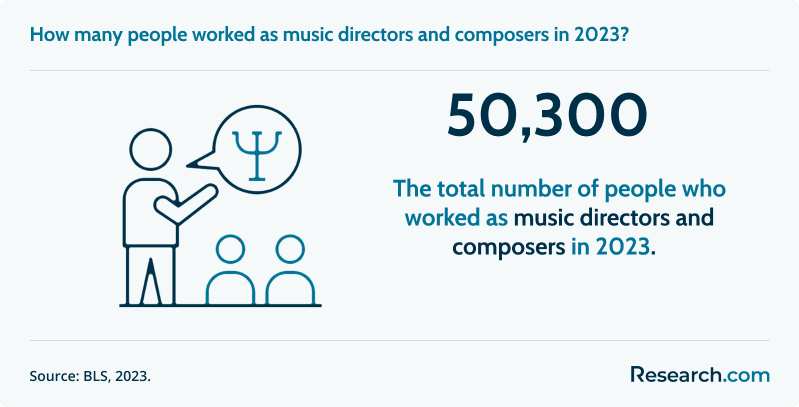
The U.S. Bureau of Labor Statistics projects modest growth for music-related occupations. Employment of musicians and singers is expected to grow by 2% from 2023 to 2033. Employment for music directors and composers is projected to grow by 3% over the same period, which is about average compared with all occupations. In 2023, approximately 50,300 people worked as music directors and composers.
Students should interpret these figures realistically. Music and audio careers often include part-time, contract, freelance, seasonal, or project-based work. A graduate’s outcomes can depend heavily on location, portfolio strength, credits, professional relationships, business skills, and willingness to work across multiple types of media.
Audio is also becoming more important in digital experiences. Students interested in app design, interactive media, accessibility, and product sound may compare audio training with the shortest online user experience programs, especially if they want to work in UX audio, notification design, games, or digital product environments.
The chart below shows the industries with the highest levels of employment in music directors and composers.
Here’s What Graduates Should Look for in Online Audio and Music Degree Reviews
Student testimonials can be useful, but they should not be your only evidence. When reading reviews, look for specific comments about instructor feedback, software access, workload, career services, portfolio support, responsiveness, and whether graduates felt prepared for real production work.
Strong reviews usually mention concrete outcomes, such as completed mixes, demo reels, internships, collaborations, improved technical skills, or career support. Be cautious with reviews that only praise flexibility without explaining the quality of instruction or the amount of hands-on work required.
If possible, ask admissions representatives to connect you with current students or alumni in your intended specialization. Ask what they wish they had known before enrolling, how much equipment they had to buy, and whether the program helped them build industry-ready work.
Key Insights
- An online audio and music degree can be valuable, but the return depends on portfolio quality, technical skill, networking, program cost, and career focus.
- The fastest route is not always a bachelor’s degree. Certificates can take 5 to 6 months, diplomas about a year, associate degrees about 18 months, and bachelor’s degrees typically 3 to 4 years.
- Online programs work best for disciplined students who can build or access a suitable recording setup and complete production projects independently.
- Accreditation matters for financial aid, credit transfer, graduate school options, and degree credibility. Always verify both institutional and program-specific accreditation when applicable.
- Costs can vary substantially. Annual tuition for online bachelor’s degrees in music or audio typically ranges from about $7,470 to $35,000, and total bachelor’s costs can range from approximately $30,000 to over $90,000.
- The employment of musicians and singers is projected to grow by 2% from 2023 to 2033, while music directors and composers are projected to grow by 3% during the same period.
- In 2023, approximately 50,300 people worked as music directors and composers.
- Performing arts companies employ 2.81% of music directors and composers, religious organizations account for 1.72%, and sound recording industries employ 2.44%.
- The median annual wage for music directors and composers was $63,670 in 2024, but individual earnings vary widely by role, market, experience, and employment model.
- Before enrolling, ask whether the program will help you graduate with finished, polished work that matches the jobs or clients you want.
References:
- 21 jobs in the music technology Industry (With salaries). (2025, June 9). Indeed. Retrieved June 20, 2025, from Indeed music technology jobs guide
- Best Colleges and Degrees for Musicians - Zippia. (2025, January 8). Zippia musician education data
- Music Audio Engineer Salary. (2025). ZipRecruiter. Retrieved June 20, 2025, from ZipRecruiter music audio engineer salary data
- Music directors and composers. (2023, April 25). Bureau of Labor Statistics. BLS occupational employment statistics for music directors and composers
- Music Producer salary in 2025 | PayScale. (n.d.). PayScale music producer salary data
- Musicians and singers. (2025, April 18). Bureau of Labor Statistics. BLS musicians and singers job outlook
Other Things You Should Know About Online Audio and Music Degree Programs
Most programs require a computer with at least 16 GB of RAM, a reliable broadband connection, headphones, and a USB audio interface. Many also expect access to a digital audio workstation such as Pro Tools, Logic Pro, or Ableton Live for assignments, editing, and mixing.
In 2027, the fastest online audio and music degree programs can be completed in as little as 18 months. These accelerated programs offer intensive courses, allowing students to graduate more quickly while maintaining a robust curriculum that covers essential topics in audio engineering, music production, and sound design.