2027 Fastest Online Architecture Degree Programs

Co-Founder and Chief Data Scientist
An online architecture degree can shorten the path into design, drafting, construction, planning, or graduate architecture study, but “fastest” does not always mean “best.” Architecture is a regulated profession, and the program you choose can affect whether you qualify for licensure, transfer into a Master of Architecture program, receive financial aid, or compete for technical design roles.
This guide is for students who want a quicker architecture-related credential without overlooking accreditation, studio requirements, cost, software expectations, and career outcomes. You will learn how accelerated online architecture programs work, which options may lead toward licensure, how long they take, what they cost, and when an architecture-adjacent degree may be a smarter choice.
Quick Answer: What Is the Fastest Online Architecture Degree?
The fastest online architecture degree is usually a degree-completion program for students who already have an associate degree or substantial transfer credits in drafting, design, architecture, or construction. These pathways can often be completed faster than a full four-year bachelor’s program. However, students who want to become licensed architects should prioritize NAAB-accredited B.Arch or M.Arch options, even if those programs take longer or include hybrid studio requirements.
Why consider an accelerated online architecture degree?
- Faster entry into related roles: Graduates may qualify for jobs such as architectural designer, BIM technician, CAD drafter, interior design assistant, construction coordinator, or construction manager, depending on the degree level and experience.
- Competitive earning potential: According to the U.S. Bureau of Labor Statistics, professionals in architecture and related fields earn a median salary of around $82,840, with higher compensation often tied to management responsibility, licensure, technical software expertise, or specialized project experience.
- More flexibility than campus-only study: Accelerated online formats can help working adults, transfer students, military learners, and career changers continue their education without relocating or attending daytime studio classes on campus every week.
What can I expect from the fastest online architecture degree?
Accelerated online architecture programs are designed to move students through design, technical, and professional coursework more quickly than a standard campus-based sequence. The format may include asynchronous lectures, virtual critiques, digital studio submissions, software-based assignments, and occasional live sessions with faculty or classmates.
Students should understand the difference between a professional architecture degree and an architecture-related degree. A NAAB-accredited B.Arch or M.Arch can support the path to architectural licensure. A pre-professional bachelor’s degree, design studies degree, construction management degree, or CAD-focused program can still lead to valuable jobs, but it may not satisfy licensure education requirements by itself.
Typical coursework covers design principles, architectural history, building systems, construction methods, environmental design, codes, drafting, digital modeling, and professional practice. Many programs expect students to use tools such as AutoCAD, Revit, Rhino, SketchUp, or other design platforms. Before enrolling, confirm whether software is included, discounted, or purchased separately.
| Program type | Best for | Licensure relevance | Typical speed advantage |
| Pre-professional online bachelor’s in architecture or design | First-time students or transfer students seeking a broad design foundation | Usually requires a later professional M.Arch for licensure | May be faster with transfer credits, year-round courses, or condensed terms |
| Online B.Arch completion program | Students with prior architecture, drafting, or design coursework | Can support licensure if NAAB-accredited | Often shorter because prior associate-level credits apply |
| Online or hybrid M.Arch | Students pursuing a professional architecture credential | Strongest online route when NAAB-accredited | Advanced standing may shorten the degree for students with a design background |
| Architecture-adjacent degree | Students focused on construction, drafting, project management, BIM, or design support roles | Usually not sufficient for architect licensure | Often faster because it has fewer studio and licensure-focused requirements |
Where can I work with the fastest online architecture degree?
Graduates of accelerated online architecture and architecture-related programs can work wherever design documentation, building technology, spatial planning, and construction coordination are needed. The strongest fit depends on the degree type, portfolio, software skills, internships, and whether the graduate is pursuing licensure.
- Architecture and design firms: supporting schematic design, presentation drawings, construction documents, BIM models, and project coordination.
- Construction companies: assisting with schedules, budgets, site coordination, estimating, and communication between design and field teams.
- Engineering firms: preparing technical drawings, coordinating building systems, and supporting multidisciplinary project teams.
- Real estate development firms: helping evaluate sites, review building concepts, coordinate consultants, and assess renovation potential.
- Public agencies and planning departments: contributing to zoning, infrastructure, community development, land use, and urban design projects.
Some graduates also move into sustainable design consulting, interior architecture, historic preservation, facilities planning, or freelance drafting and visualization. Full architectural licensure generally opens more authority and responsibility, but many support and technical roles are available before licensure.
How much can I make with the fastest online architecture degree?
Pay varies widely because architecture-related graduates enter different roles. Location, licensure status, portfolio quality, software proficiency, employer type, and construction experience all influence earnings.
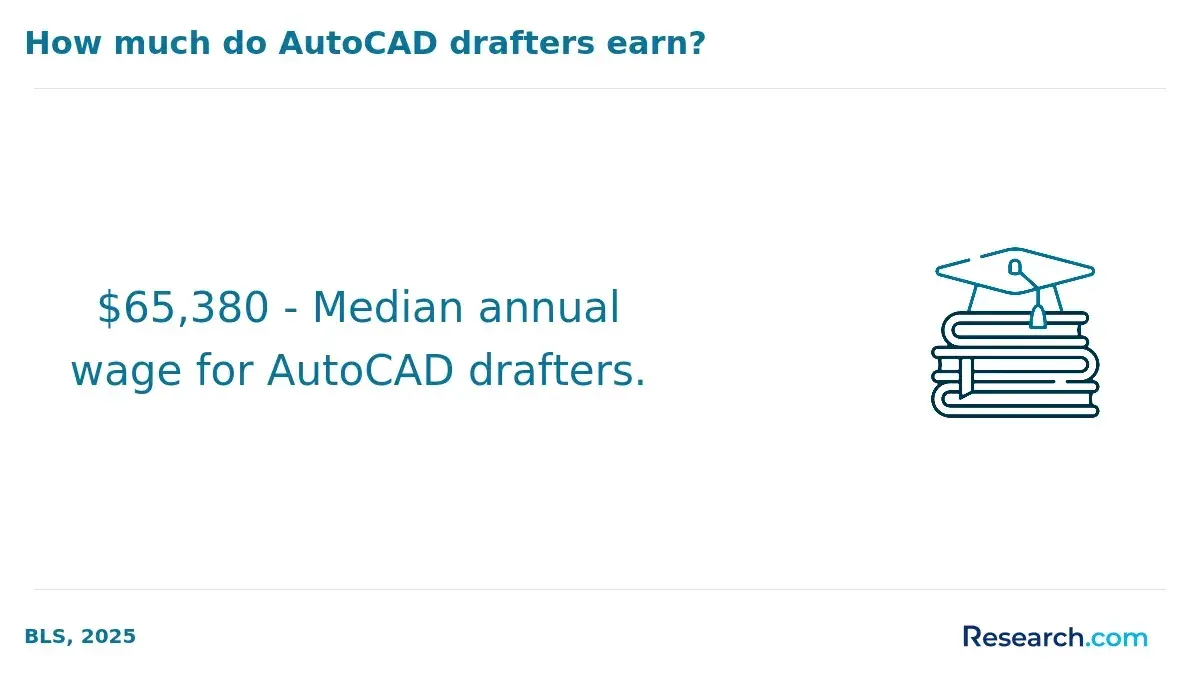
According to the U.S. Bureau of Labor Statistics, architectural designers and drafters earn a median salary of around $60,000 to $90,000 per year, depending on experience and location. More senior or project-focused roles can pay more when they involve management responsibility, cost control, or advanced technical coordination.
Construction managers earn a median salary of approximately $101,480, while urban and regional planners average $79,540 annually. BIM specialist and CAD technician roles can fall in the $55,000 to $75,000 range for candidates with strong modeling and documentation skills. Licensed architects typically earn over $85,000 per year, though salaries are never guaranteed and can differ by market, firm size, and specialization.
- Fastest Online Architecture Degree Programs for 2027
- How long does the fastest online architecture degree take?
- Online vs. on-campus architecture programs
- Average cost of accelerated online architecture programs
- Financial aid options for online architecture students
- Admission requirements and prerequisites
- Common courses in online architecture programs
- Architecture specializations available online
- Student support services in accelerated online programs
- Challenges of fast online architecture study
- Accreditation, NAAB, and licensure considerations
- How to choose the right fast online architecture degree
- Career paths after an accelerated online architecture degree
- Job market outlook for architecture-related graduates
- Digital and interdisciplinary design in online architecture programs
Fastest Online Architecture Degree Programs for 2027
How do we rank schools?
Choosing an accelerated online architecture program requires more than finding the shortest timeline. Students need to compare accreditation, credit transfer policies, tuition, online delivery, studio expectations, and career alignment before committing.
Research.com uses a transparent ranking methodology informed by recognized education data sources, including the Integrated Postsecondary Education Data System (IPEDS), Peterson's databases and its Distance Learning Licensed Data Set, and the College Scorecard from the National Center for Education Statistics. These sources help evaluate programs using comparable information rather than marketing claims alone.
| School | Program | Length | Credits | Accreditation noted |
| Southern Illinois University | Online Master of Architecture with IPAL option | 16 months for students with a relevant undergraduate degree | 42 credits | NAAB |
| Academy of Art University | Online BFA in Architecture | Typically 3 to 4 years | 120 credits | WSCUC |
| Dunwoody College of Technology | Online Bachelor of Architecture completion program | 3 years, or 6 semesters, for the completion program | 150 semester credits, including prior associate degree credits | NAAB |
| Boston Architectural College | Online Master of Architecture | 2 years with an undergraduate degree in design, or 3.5 years for students without a design background | 90 academic credits | NAAB |
| Franklin University | Online BS in Construction Management | 3 to 4 years | 120 credits | ACCE |
| Arizona State University | Online BS in Design in Architectural Studies | 4 years | 120 credits | NAAB |
Southern Illinois University – Online Bachelor of Science in Architecture
Southern Illinois University offers an online Master of Architecture pathway, including an Integrated Path to Architectural Licensure option. The online BS in Architecture start year was not readily available, but the M.Arch option uses a cohort structure that allows students to progress with peers while studying at a distance.
The program is designed for working architectural professionals who want an accredited graduate degree and a more direct licensure-oriented pathway. Online studios and lecture courses are intended to parallel the campus curriculum while developing design judgment, communication, collaboration, and professional reasoning.
- Program length: 16 months for those with a relevant undergraduate degree
- Tracks or concentrations: Master of Architecture with an Integrated Path to Architectural Licensure option
- Cost per credit: $469.50 per credit
- Required credits: 42 credits
- Accreditation: National Architectural Accrediting Board
Academy of Art University – Online BFA in Architecture
The Academy of Art University offers an online Bachelor of Fine Arts in Architecture for students seeking a flexible design-focused education. The curriculum blends architectural design, theory, technology, and visual communication through a custom learning platform that includes videos, narrated presentations, interactive materials, and instructor feedback.
This option is a strong fit for students who want a broad undergraduate architecture education online and who can manage a self-directed design workload. Students should confirm how the degree fits with any future licensure plan, especially if they intend to pursue a professional M.Arch later.
- Program length: Typically 3 to 4 years
- Tracks or concentrations: Comprehensive architectural design education
- Cost per credit: $1,239 per unit
- Required credits: 120 credits
- Accreditation: WASC Senior College & University Commission
Dunwoody College of Technology – Online Bachelor of Architecture
Dunwoody College of Technology provides an online Bachelor of Architecture completion program for students who already hold a two-year associate degree in architectural drafting or a related area. Because the program builds on previous technical coursework, it can shorten the route to a professional architecture degree.
The practice-based curriculum emphasizes digital design, building technologies, civic engagement, and climate action. Students receive a dedicated touch-screen laptop and access to industry-standard software, which can help reduce technology uncertainty for online learners.
- Program length: 3 years, or 6 semesters, for the completion program
- Tracks or concentrations: Practice-based learning with an emphasis on civic engagement and climate action
- Cost per credit: $796 per credit hour
- Required credits: 150 semester credits, including prior associate degree credits
- Accreditation: National Architectural Accrediting Board
Boston Architectural College – Online Master of Architecture
The Boston Architectural College offers an online Master of Architecture and is noted for having the first online offering to receive National Architectural Accrediting Board accreditation. The program serves students pursuing a first professional degree and offers accelerated options for applicants with previous design education.
The curriculum combines online design learning with real-world practice, building systems, technology, history, and theory. Its structure includes an eight-day intensive component, initially in Boston, with later years shifting to a remote format, giving students both flexibility and structured interaction.
- Program length: 2 years for individuals with an undergraduate degree in design, or 3.5 years, equal to 7 semesters, for those without a design background
- Tracks or concentrations: Master of Architecture with an Integrated Path to Architectural Licensure option
- Cost per credit: $1,464 per 1credit
- Required credits: 90 academic credits
- Accreditation: National Architectural Accrediting Board
Franklin University – Online BS in Construction Management
Franklin University offers an online Bachelor of Science in Construction Management. This is not a direct architecture degree, but it can be a practical alternative for students who want to work in project delivery, construction operations, estimating, scheduling, or facilities management.
The program is accredited by the American Council for Construction Education and includes Industry Emphasis Areas in industrial, commercial, residential, heavy highway construction, and facilities management. It is especially relevant for students who want the business and management side of the built environment rather than a studio-intensive architecture route.
- Program length: 3 to 4 years
- Tracks or concentrations: Industry Emphasis Areas in industrial, commercial, residential, heavy highway construction, and facilities management
- Cost per credit: $570 per credit
- Required credits: 120 credits
- Accreditation: American Council for Construction Education
Arizona State University – Online BS in Design in Architectural Studies
Arizona State University offers an online Bachelor of Science in Design in Architectural Studies. This pre-professional program introduces architecture as both a cultural practice and a technical discipline, making it suitable for students interested in design foundations, graduate study, or architecture-related careers.
The program includes two possible directions: a cross-disciplinary focus and a professional focus for students who plan to continue toward a Master of Architecture. Students interested in licensure should verify how this undergraduate program connects to a future NAAB-accredited professional degree.
- Program length: 4 years
- Tracks or concentrations: Cross-disciplinary focus or professional focus for students intending to continue toward architectural licensure through a Master of Architecture
- Cost per credit: Specific online cost per credit for this program was not immediately available, but ASU online costs generally vary
- Required credits: 120 credits
- Accreditation: National Architectural Accrediting Board
How long does it take to complete the fastest online architecture degree program?
Completion time depends on degree level, transfer credits, studio sequencing, whether the program is professional or pre-professional, and whether the school offers condensed terms. Like other accelerated online bachelor’s degree options, architecture programs are fastest for students who enter with applicable credits and can enroll continuously.
Pre-professional bachelor’s degrees
Online bachelor’s programs in architecture or architectural studies usually take 3 to 4 years. Students with an associate degree or previous college coursework may finish in as little as 2 years if many general education, drafting, or studio credits transfer. Programs with 7–8 week courses, year-round starts, and asynchronous lectures can further reduce calendar time.
Degree-completion BS or B.Arch programs
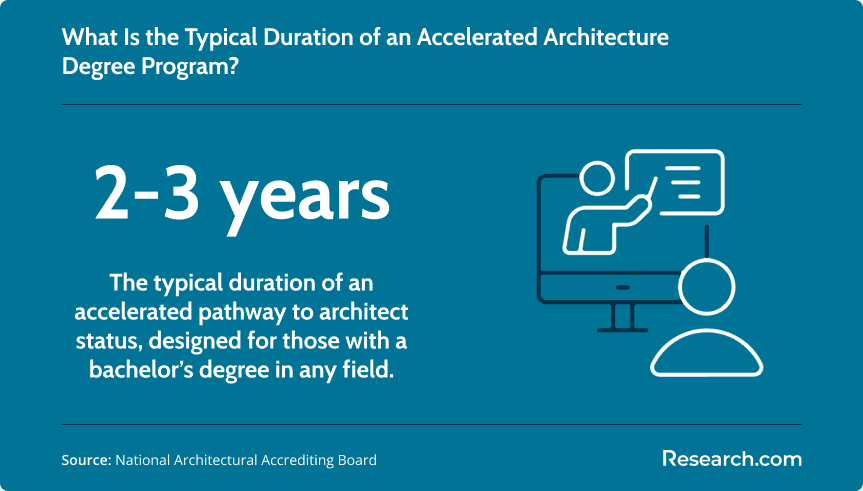
Students who already completed an associate degree in drafting, architecture, or design can often finish a completion pathway in about 2 to 3 years. These programs typically focus on upper-division studios, architectural theory, building technology, and professional practice. The final timeline depends on transfer evaluation, residency credit rules, portfolio placement, and full-time versus part-time enrollment.
Online or hybrid Master of Architecture programs
An online or hybrid M.Arch can take 2.5 to 3 years for students with a pre-professional architecture background. Advanced standing may reduce required credits when previous coursework meets the school’s expectations.
Some students combine credentials or structured pathways, similar in planning complexity to dual degree programs. M.Arch students should pay close attention to studio delivery, residency requirements, and whether the program supports licensure requirements in the state where they plan to practice.
Architecture-adjacent degrees
Construction management, design studies, CAD, or technical design programs may be completed in 18 months to 2 years when transfer credits apply. These programs are often faster because they may not include the same sequence of professional design studios required in accredited architecture degrees.
| Path | Possible completion time | What can slow it down? | What can speed it up? |
| Full bachelor’s | 3 to 4 years | Studio prerequisites, limited course availability, few transfer credits | Prior credits, summer study, accelerated terms |
| Degree completion | 2 to 3 years | Credit residency rules, portfolio gaps, missing prerequisites | Architecture-related associate degree, strong transfer match |
| Online or hybrid M.Arch | 2.5 to 3 years | Foundation courses, residencies, studio sequencing | Advanced standing from a prior design degree |
| Architecture-adjacent degree | 18 months to 2 years with transfer credits | Part-time enrollment, limited transfer acceptance | Continuous enrollment and flexible start dates |
How does the fastest online architecture degree program compare to an on-campus program?
Online and campus-based architecture programs can cover similar subjects, but they differ in pace, studio culture, networking, access to facilities, and licensure preparation. Students comparing fast-track college programs should focus on fit rather than speed alone.
| Factor | Accelerated online program | Traditional on-campus program |
| Schedule | Often more flexible, with asynchronous work, condensed terms, or year-round study | Usually follows a fixed semester or quarter calendar |
| Studio experience | Virtual critiques, digital pinups, online collaboration, software-based submissions | In-person studio culture, physical models, workshops, and live critiques |
| Time to completion | Can be shorter for transfer students or completion-program students | Often 4 to 5 years for a bachelor’s degree or 2 to 3.5 years for a master’s degree |
| Networking | Remote networking, online portfolios, digital career services, possible local internships | More face-to-face faculty access, campus events, studio peers, and employer visits |
| Licensure pathway | Must be verified carefully, especially for NAAB accreditation and residencies | More professional programs are campus-based or hybrid because of studio requirements |
Duration and flexibility
Accelerated online options may take 12 to 36 months when students bring transfer credits, enroll full time, and use compressed terms. Campus programs are typically less flexible because studios and required sequences are scheduled around traditional academic calendars.
Learning environment
Online architecture students complete critiques, drawings, models, and presentations through digital platforms. Campus students benefit from physical studio spaces, fabrication labs, materials shops, and constant peer interaction. The online route can be efficient, but students need discipline and reliable technology.
Accreditation and professional outcomes
Many NAAB-accredited professional programs remain campus-based or hybrid because licensure-oriented architecture education relies heavily on studio work. Some online M.Arch options are NAAB-accredited, but they may include residencies or intensive sessions. Non-accredited online programs may still be useful for employment or graduate preparation, but they should not be mistaken for a direct licensure route.
What is the average cost of the fastest online architecture degree program?
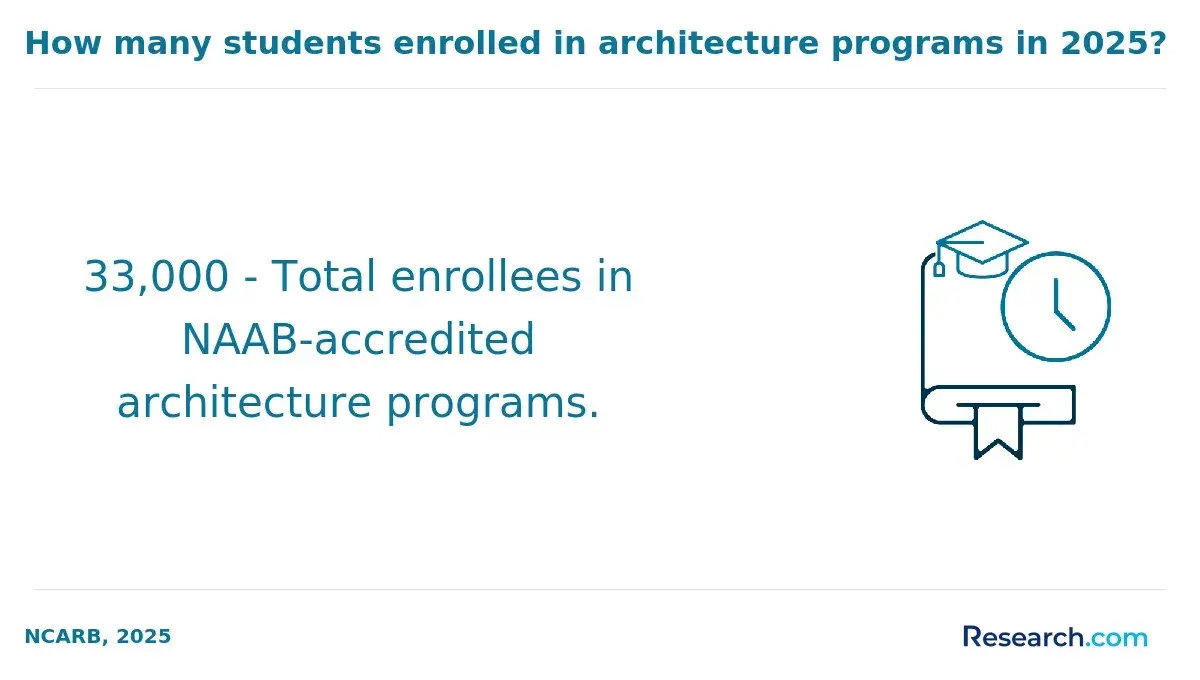
The average cost of the fastest online architecture degree programs ranges from $15,000 to $45,000, depending on school type, degree level, tuition rate, transfer credits, residency status, software costs, and fees. With a total of 29,195 students in NAAB-accredited programs in 2024, Bachelor of Architecture degrees account for 17,998 students (62%), and Master/Doctor of Architecture degrees make up 11,197 students (38%).
Pre-professional or design-focused bachelor’s degrees
These programs commonly cost $300 to $600 per credit hour, or about $30,000 to $45,000 for a full four-year degree. Students who transfer substantial credits may reduce total cost to $15,000 to $25,000. Online options from institutions such as Arizona State or Academy of Art University may fall within this general range, depending on the student’s final tuition assessment.
Students who want shorter, more hands-on training tied to construction may also compare affordable online carpentry programs, especially if their goal is field-based building work rather than an architecture licensure pathway.
Degree-completion or technical-focused B.Arch and BS programs
Degree-completion routes often cost about $350 to $550 per credit, with many students paying about $20,000 to $35,000 for a 2- to 3-year path. The main cost advantage comes from transferring an associate degree or previous architecture-related coursework.
Online Master of Architecture programs
NAAB-accredited online or hybrid M.Arch programs often cost between $25,000 to $50,000 total. Students with advanced standing may need fewer credits, while students without an architecture background may need a longer and more expensive course sequence.
Architecture-adjacent degrees
Construction management and design-related programs may cost roughly $15,000 to $30,000 total, and some accelerated bachelor’s programs may be under $20,000. These degrees may be cheaper because they generally do not include the same studio-intensive professional architecture curriculum.
For learners comparing technical building trades, affordable online locksmith and home security technician training may offer a lower-cost route into building systems, security, and construction-adjacent work.
| Cost item | Why it matters | Question to ask |
| Tuition per credit | Per-credit rates can hide the true cost if the program requires many credits | What is the full tuition estimate after transfer credits? |
| Software and equipment | Architecture students may need high-performance computers and design software | Are software licenses included, discounted, or separate? |
| Residencies or intensives | Hybrid programs can require travel, lodging, and missed work | How often must students attend in person? |
| Transfer policy | Accepted credits can cut both time and cost | How many credits will transfer before I enroll? |
| Fees | Online, technology, studio, portfolio, or graduation fees can add up | Can the school provide a complete fee sheet? |
What are the financial aid options for students enrolling in the fastest online architecture degree program?
Architecture education can be expensive, and students should build a funding plan before enrolling. As of 2024, there were 134,700 architects employed across the U.S., reflecting the profession’s continued role in designing buildings and communities. Still, education and licensure costs can be substantial, so aid eligibility matters.
Students should first confirm whether the school participates in federal aid and whether the program is properly accredited. Research.com’s guide to accredited online degree programs can help learners understand why institutional accreditation matters for aid, transfer, and employer recognition.
1. Federal financial aid
Students in eligible accredited online programs can complete the FAFSA to be considered for federal aid. Possible options include:
- Pell Grants: Need-based undergraduate aid that does not have to be repaid.
- Federal Direct Loans: Subsidized and unsubsidized loans for eligible undergraduate and graduate students.
- PLUS Loans: Federal loans available to graduate students or parents of dependent undergraduates.
Eligibility depends on the institution, program, enrollment level, citizenship or eligible noncitizen status, and satisfactory academic progress.
2. State grants and scholarships
Some states provide aid for residents who enroll in participating institutions, including online programs. Examples may include California's Cal Grant or New York's TAP, depending on school participation and student eligibility. Some states also support learners in high-demand areas such as construction, design, or infrastructure-related fields.
3. Institutional scholarships
Online architecture students may qualify for scholarships from the college itself. Awards may be based on academic achievement, financial need, transfer status, portfolio quality, professional goals, or enrollment in a specific program.
4. Employer tuition reimbursement
Students already working in architecture, engineering, construction, real estate, or facilities management should ask whether their employer offers tuition reimbursement. Employers may support degrees that improve job performance, support promotion, or meet workforce development goals.
5. Military and veteran benefits
VA-approved online architecture and construction-related programs may qualify for:
- GI Bill® benefits
- Yellow Ribbon Program participation
- Tuition assistance for active-duty service members
6. Private scholarships and grants
Students can also search for outside awards from professional organizations and scholarship platforms. Potential sources include architecture associations, design foundations, diversity-focused funds, Fastweb, Bold.org, and Scholarships.com.
7. Payment plans and employer partnerships
Some colleges offer tuition payment plans that spread charges across a term. Students should ask whether these plans charge enrollment fees, late fees, or other costs, and whether the school has employer or association discount partnerships.
What are the prerequisites for enrolling in the fastest online architecture degree program?
Admission requirements depend on whether the applicant is entering a first bachelor’s program, a degree-completion program, a professional master’s program, or an architecture-adjacent program.
Full online bachelor’s in architecture or design
- High school diploma or GED
- Minimum GPA, often 2.5 or higher
- Standardized test scores, though many online schools make them optional or do not require them
- Portfolio, sometimes optional depending on the program
- Computer access, digital literacy, and the ability to use design software
This route fits first-time college students and transfer students who want a structured undergraduate design education.
Degree-completion B.Arch or BS programs
- Associate degree or equivalent transfer credits in architecture, drafting, design, or a closely related field
- Minimum number of completed college credits, often 60+
- College GPA of 2.0–2.5 or higher
- Official transcript review to determine transferable credits
- Portfolio for studio placement or course equivalency, when required
These programs are intended for students who already completed technical or lower-division coursework. Learners with backgrounds in planning, development, property analysis, or a fast online real estate degree may have some transferable knowledge, but each school decides which credits apply.
Online Master of Architecture programs
- Bachelor’s degree, ideally a pre-professional architecture degree for advanced standing
- Minimum GPA, commonly 3.0 for more selective programs
- Portfolio of design work
- Letters of recommendation and statement of purpose
- Prerequisite coursework in design, structures, history, or related areas if not already completed
Students without an architecture background may still qualify for some M.Arch programs, but they should expect a longer curriculum that includes foundational design work.
Architecture-adjacent degrees
- High school diploma or prior college credits
- Basic math and computer proficiency
- Usually no portfolio requirement
- Interest in construction, drafting, facilities, design technology, or project management
What courses are typically in the fastest online architecture degree program?
Fast online architecture programs compress the learning format, but they still need to build core design, technical, and professional competencies. Course names differ by school, but most programs include the following areas.
1. Architectural design studios
Studio courses require students to create design concepts, drawings, models, and presentations. In online programs, students usually submit digital work and receive critique through video, discussion boards, screen sharing, or collaborative platforms.
Students who want direct job-focused building skills may also explore affordable online floor installer trade school programs, which emphasize practical spatial and materials knowledge in a construction setting.
2. Architectural history and theory
These courses examine how buildings, cities, cultures, technologies, and design movements have changed over time. They help students understand why design decisions are shaped by context, history, politics, climate, and culture.
3. Building systems and construction methods
Students study how buildings are assembled, including structures, materials, envelopes, HVAC, lighting, plumbing, and environmental systems. This coursework connects design intent with construction reality.
4. Digital design and drafting
Students learn to prepare technical drawings, models, and visualizations using software such as AutoCAD, Revit, SketchUp, Rhino, or similar tools. Learners who want a quicker credential before or during a degree may consider an accelerated online AutoCAD certificate program to strengthen drafting employability.
5. Environmental and sustainable design
Sustainability courses cover energy-efficient buildings, climate-responsive design, green materials, site planning, and environmental performance. Students interested in outdoor ecological design may also compare affordable online landscaping technology certificate options.
6. Structures and materials
These classes introduce how loads, structural systems, and material properties affect building form and performance. Students learn enough engineering logic to communicate with consultants and make realistic design decisions.
7. Codes, regulations, and professional practice
Professional practice coursework covers building codes, accessibility rules, zoning, contracts, ethics, documentation, client communication, and the responsibilities of architects and design teams.
What types of specializations are available in the fastest online architecture degree programs?
Not every accelerated online architecture program offers formal concentrations, but many let students shape a portfolio through electives, studios, certificates, or project themes. Employment of architects is projected to grow by 8% through 2033, so specialization can help students align their skills with areas of demand.
| Specialization | Focus | Good fit for |
| Sustainable or green design | Energy performance, climate-responsive buildings, green materials, LEED concepts | Students interested in environmental design and resilient buildings |
| Interior architecture | Space planning, lighting, acoustics, human-centered interiors, furniture systems | Students drawn to commercial, residential, workplace, or institutional interiors |
| Digital design and BIM | Revit, Rhino, 3D modeling, coordination workflows, visualization | Students who want technical roles in architecture, engineering, or construction firms |
| Construction management | Scheduling, estimating, construction law, project delivery, team coordination | Students who want to manage building projects rather than focus only on design |
Sustainable or green design
This track emphasizes energy efficiency, environmental systems, low-impact materials, and climate-aware design strategies. It is increasingly relevant as owners, governments, and communities focus on building performance and resilience.
Interior architecture
Interior architecture combines spatial design with building systems and human experience. Students may study lighting, circulation, furniture systems, acoustics, finish materials, and adaptive reuse. For hands-on residential work, affordable online home remodeling and repair programs can complement design training with practical renovation skills.
Digital design and Building Information Modeling
BIM-focused students build advanced skills in modeling, documentation, clash coordination, visualization, and data-rich project delivery. This specialization can be useful for students seeking CAD technician, BIM coordinator, or digital design roles.
Construction management
This focus connects architectural knowledge with budgets, schedules, contracts, site logistics, and project execution. Students more interested in project leadership may compare the fastest online construction management degree programs with architecture programs before deciding.
What student support services are available in accelerated online architecture programs?
Strong online architecture programs provide more than basic advising. Students should look for software support, virtual studio tutoring, portfolio reviews, online library access, career coaching, internship guidance, faculty office hours, writing assistance, and technical help for design platforms.
Communication support also matters because architecture students must explain design intent clearly in writing, presentations, drawings, and critiques. Students who want to strengthen narrative and documentation skills may find value in related writing resources such as an online creative writing degree guide, though this should supplement rather than replace architecture-specific portfolio coaching.
What challenges might students encounter in accelerated online architecture degree programs?
Accelerated online architecture study is demanding. Students often underestimate how much time studio projects require, especially when assignments involve iterative design, model revisions, critique responses, and software troubleshooting.
- Time pressure: Condensed terms leave less room to fall behind.
- Studio isolation: Online learners may need to work harder to build peer critique networks.
- Technology demands: Architecture software can require strong hardware, stable internet, and regular troubleshooting.
- Portfolio development: Fast programs may move quickly, so students must save, refine, and document work throughout the degree.
- Licensure confusion: Not every architecture-related online degree meets professional licensing expectations.
Students who enjoy creative documentation, professional writing, or visual storytelling may also explore adjacent fields such as MFA writing jobs, but architecture students should prioritize building a design portfolio and technical competency first.
How do accreditation and licensure processes impact your professional trajectory?
Accreditation is one of the most important factors in architecture education. In the United States, students who want to become licensed architects usually need to complete a professional degree from a NAAB-accredited program, gain documented experience, pass the Architect Registration Examination, and meet state board requirements.
An accelerated online degree can be valuable, but it does not automatically make a graduate eligible for licensure. Before enrolling, confirm whether the program is NAAB-accredited, whether it is pre-professional or professional, whether it requires in-person residencies, and how it supports experience documentation and exam preparation.
Students considering broader creative design credentials may compare programs such as the most affordable online MFA programs, but those credentials serve different career goals and should not be confused with architecture licensure preparation.
How do you choose the fastest online architecture degree program?
The best fast online architecture degree is the one that matches your career goal without creating accreditation, licensure, or transfer problems later. Use Research.com’s guide to the best online architecture degree programs as a starting point, then verify details directly with each school.
1. Decide whether you need a licensure pathway
If your goal is to become a licensed architect, prioritize a NAAB-accredited B.Arch or M.Arch. If your goal is drafting, BIM, construction management, interior design support, or development coordination, an architecture-adjacent degree may be faster and more cost-effective.
2. Get a transfer credit review before enrolling
Do not rely on advertised completion times. Ask the school to evaluate your transcripts and provide a written estimate of accepted credits, remaining courses, and expected graduation timeline.
3. Verify online studio and residency requirements
Ask whether critiques are synchronous, whether model-making materials are required, whether intensives are mandatory, and whether you must travel. Hybrid requirements can affect cost and work schedules.
4. Compare total cost, not only tuition
Include tuition, fees, software, hardware, travel, studio supplies, portfolio expenses, and lost work time. A cheaper per-credit program may cost more overall if it accepts fewer transfer credits.
5. Match the curriculum to your intended role
Students targeting BIM roles should look for strong Revit and digital coordination coursework. Those pursuing construction leadership should compare estimating, scheduling, contracts, and project management content. Learners interested in large-scale project delivery may also benefit from an accelerated graduate certificate in supply chain and logistics management online, especially when procurement and materials coordination are part of the job.
Questions to ask before applying
- Is the program NAAB-accredited, regionally accredited, professionally accredited, or architecture-adjacent?
- Will this degree satisfy education requirements in the state where I want to seek licensure?
- How many of my credits will transfer, and can I get that in writing?
- Are studios fully online, hybrid, synchronous, or residency-based?
- What software, computer specifications, and supplies are required?
- What percentage of students complete the program on the advertised accelerated timeline?
- Does the school help with internships, AXP planning, portfolio reviews, or job placement?
Common mistakes to avoid
| Mistake | Why it creates problems | Better approach |
| Choosing the shortest program without checking accreditation | The degree may not support licensure or graduate admission goals | Confirm NAAB and institutional accreditation before applying |
| Comparing only tuition per credit | Total cost depends on credits required, fees, software, and travel | Request a full cost estimate after transfer review |
| Assuming online means self-paced | Many studios have fixed deadlines and live critiques | Review course format and weekly workload expectations |
| Ignoring portfolio development | Weak portfolios can limit internships, jobs, and graduate admission | Save and refine work from every studio and technical course |
| Assuming salary outcomes are guaranteed | Pay depends on location, experience, licensure, and role | Compare target job postings in your region before enrolling |
What career paths are available for graduates of the fastest online architecture degree program?
The median annual wage of architects in 2024 was around $96,690. Graduates of accelerated online architecture programs can pursue design, technical, planning, and construction roles, though licensed architect positions require additional steps beyond graduation.
Students who want to broaden their practical building operations skills may also compare affordable online maintenance technician trade school programs, especially if they are interested in facilities, repairs, or building systems management.
Architectural designer
Architectural designers support licensed architects by creating drawings, models, presentation boards, design studies, and construction documentation. This role is a common early step for graduates with a pre-professional architecture background who are building experience toward licensure or graduate study.
BIM specialist or CAD technician
BIM and CAD professionals create precise technical drawings and digital building models. Employers often value software fluency, attention to detail, and the ability to coordinate with architects, engineers, contractors, and owners.
Interior designer with an architecture background
Graduates with strong spatial planning, building systems knowledge, and design presentation skills may work in commercial, residential, institutional, or workplace interiors. Some states may require licensure or certification for specific scopes of interior design work.
Construction manager
Construction managers coordinate schedules, budgets, teams, subcontractors, documentation, and site activity. Architecture graduates with project management coursework and field experience can be well positioned for this path, particularly when they understand both design intent and buildability.
Urban or regional planner
Urban planning roles involve land use, community development, zoning, transportation, housing, infrastructure, and resilience planning. Senior planning roles often require a master’s degree, but an architecture background can support entry-level assistant or technician positions.
Professionals focused on building performance may also benefit from affordable online HVAC certifications, since heating, ventilation, and cooling systems are central to sustainable building design and operations.
Design-focused graduates who want to add branding, visual communication, or digital media skills may compare the shortest online graphic design degree programs as a complementary path, especially for visualization, marketing, or creative consulting roles.
What is the job market like for graduates with the fastest online architecture degree program?
The job market for architecture-related graduates is shaped by construction activity, infrastructure investment, sustainability goals, housing needs, and the continued use of digital design tools. An online degree can support employment when it is paired with a strong portfolio, software proficiency, internships, and clear career targeting.
Demand across design and construction fields
The U.S. Bureau of Labor Statistics projects several architecture-related fields to remain stable or grow:
- Architectural and engineering occupations: Expected to grow 9% from 2024 to 2034, with nearly 184,800 job openings each year from turnover and new demand.
- Construction managers: Projected to grow 5%, supported by commercial, residential, infrastructure, and green building activity.
- Urban planners: Expected to grow 4%, with demand connected to infrastructure, development, and sustainable community planning.
Trends affecting graduates in 2026
- BIM and digital coordination are now baseline skills: Employers increasingly expect graduates to use digital modeling, documentation, and collaboration tools.
- Sustainability knowledge improves marketability: Energy-efficient design, climate resilience, and green building practices are relevant across architecture and construction.
- Remote collaboration is common: Online graduates who are comfortable with digital workflows may be prepared for distributed design teams.
- Licensure remains a differentiator: Non-licensed design and technical roles are available, but licensure can expand responsibility and career mobility.
- Interdisciplinary planning is growing: Architecture overlaps with real estate, economics, infrastructure, and public policy. Graduates from the fastest online economics degree programs may find complementary roles in development analysis, infrastructure planning, and policy work when paired with built-environment knowledge.
How does integrated digital and interdisciplinary design enhance online architecture programs?
Online architecture programs increasingly incorporate digital visualization, user-centered thinking, interactive media, and interdisciplinary collaboration. These skills help students communicate design ideas clearly and work with professionals in construction, planning, engineering, product design, and digital experience fields.
Architecture students who enjoy human-centered design may also explore concepts found in online UX design degree programs. While UX and architecture lead to different careers, both fields involve research, usability, spatial or interface logic, iteration, and presenting design solutions to stakeholders.
What do graduates say about accelerated online architecture study?
-
: "
Completing an accelerated online architecture degree helped me move into a new field without leaving my job. The schedule was flexible, but the studio deadlines were serious and forced me to become more disciplined. Jenna
"
-
: "
The virtual critiques were more interactive than I expected. I still had to work hard to build peer connections, but the faculty feedback helped me improve my portfolio. Marcus
"
-
: "
The pace was intense, but I could apply class projects to my internship almost immediately. Studying online worked because I planned my week carefully and treated studio time like a job. Sophia
"
References
- Association of Collegiate Schools of Architecture. (2025). Research.
- Zippia. (2025). Architect demographics and statistics in the US. https://www.zippia.com/architect-jobs/education/
- Data USA. (2026). CIP Code 04.0201 - Architecture (B.Arch., M.Arch., Ph.D.).
- National Council of Architectural Registration Boards. (2025). NCARB by the numbers: 2025 edition. https://www.ncarb.org/sites/default/files/NBTN-2025.pdf
- National Architectural Accrediting Board. (2025). 2024 NAAB Report on Architecture Education. https://www.naab.org/wp-content/uploads/2024-NAAB-Report.pdf
- Bureau of Labor Statistics. (2025, August 27). Drafters: Occupational Outlook Handbook. https://www.bls.gov/ooh/architecture-and-engineering/drafters.htm
- Bureau of Labor Statistics. (2025). Architects: Occupational Outlook Handbook. https://www.bls.gov/ooh/architecture-and-engineering/architects.htm
- National Council of Architectural Registration Boards. (2024). NCARB by the Numbers 2024.
- U.S. Bureau of Labor Statistics. (2024, April 17). Architects: Occupational Outlook Handbook.
Key Insights
- The fastest route is usually not a first-time freshman pathway. Students who already have an associate degree, drafting background, or substantial transfer credits are best positioned to finish quickly.
- Licensure depends on accreditation and state rules. If you want to become a licensed architect, prioritize NAAB-accredited professional degrees and confirm requirements with the licensing board in the state where you plan to practice.
- Architecture-adjacent degrees can be practical but serve different goals. Construction management, CAD, BIM, and design studies programs may be faster and less expensive, but they usually do not replace a professional architecture degree.
- Cost should be calculated after transfer review. The cheapest and fastest path is often a degree-completion program with transfer credit, costing around $15,000–$25,000, while professional online architecture degrees tend to cost more because of accreditation and studio requirements.
- NAAB enrollment data cited for 2024 includes 31,343 students in NAAB-accredited programs, with Bachelor of Architecture degrees accounting for 19,536 students (62%) and Master/Doctor of Architecture degrees accounting for 11,807 students (38%).
- The architecture workforce remains substantial. As of 2024, there were 132,300 architects employed across the U.S., and graduates with strong digital modeling, sustainability, and project coordination skills may find opportunities in several built-environment roles.
- Before enrolling, ask three questions: Will this program support my career goal, will my credits transfer, and will the degree meet licensure or graduate school expectations if I need them later?
Other Things You Should Know About The Fastest Online Architecture Degree Programs
In 2027, the fastest online architecture degree programs often include structured, accelerated courses and flexible scheduling. Institutions like Southern New Hampshire University and the Academy of Art University offer programs designed to finish in less time compared to traditional paths, sometimes within two to three years, depending on prior credits and student dedication.
Only programs with NAAB accreditation, or a professional degree path that meets state licensure rules, are directly relevant for becoming a licensed architect. In the United States, most states require a NAAB-accredited M.Arch. plus completion of the Architect Registration Examination.