
2027 Best Online Bachelor’s Degrees in Web Design Programs

Co-Founder and Chief Data Scientist
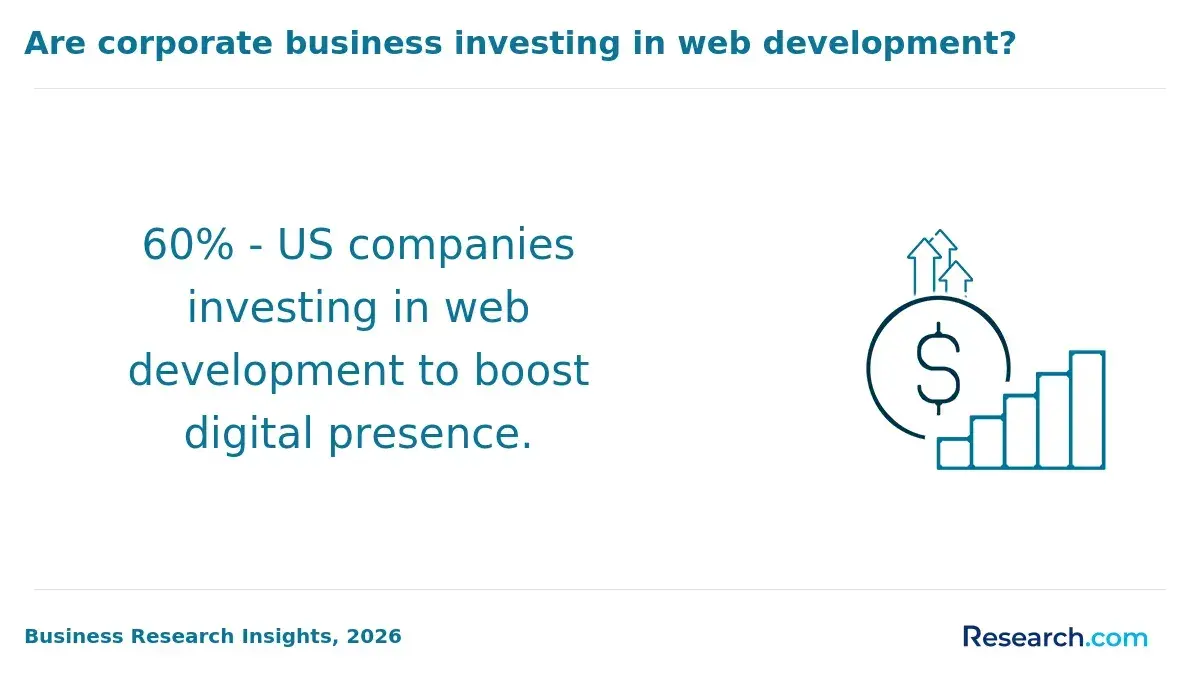
Choosing an online bachelor’s degree in web design is really a decision about how you want to enter the digital design workforce: through a full degree, a shorter technical credential, self-directed portfolio building, or a mix of all three. More than half of U.S. companies use web development and design to strengthen their online presence, and 73% of businesses are investing in web design to attract more customers. That demand creates opportunity, but it also raises important questions about cost, accreditation, employer acceptance, software requirements, portfolio expectations, and long-term return on investment.
This guide is for students, career changers, working adults, and creative professionals comparing an online bachelor’s degree in web design with other routes into web design, UX/UI, front-end development, digital media, and freelance work. You will learn what online web design programs usually include, how much they cost, what employers may value most, how online study compares with campus programs and boot camps, and how to choose a program that supports your career goals.
Quick Answer: Is an Online Bachelor’s Degree in Web Design Worth Considering?
Yes, an online bachelor’s degree in web design can be worth considering if you want a structured four-year education that combines visual design, coding, user experience, web development, accessibility, and portfolio-building. The strongest programs are accredited, project-based, taught by experienced faculty, and designed to help students graduate with work samples they can show employers or clients.
- Best fit: Students who want a broad design-and-technology education, need flexibility, and value a bachelor’s credential.
- Less ideal fit: Learners who only need one narrow coding skill quickly or who already have a strong degree and professional portfolio.
- Typical cost range: Online web design bachelor’s tuition is commonly listed between $40,000 and $70,000, with per-credit costs ranging from $320 to $500.
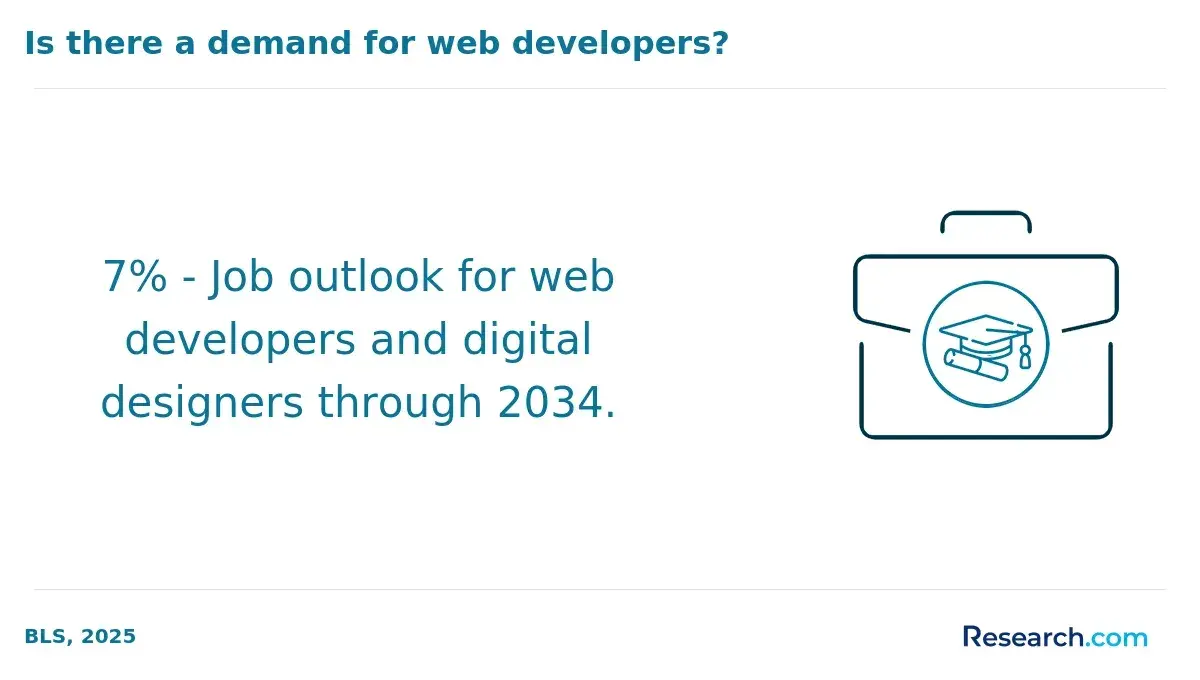
- Career outlook: Employment for web developers and digital designers is projected to grow by 7% through 2034, according to the Bureau of Labor Statistics.
- Key decision factor: Employers often care as much about your portfolio, technical skills, and ability to solve design problems as they do about the delivery format of your degree.
Online Degree in Web Design Table of Contents
- Can you complete a web design bachelor’s degree fully online?
- Do employers respect online web design degrees?
- Are online web design degrees recognized internationally?
- Online vs. Traditional Bachelor’s Degree in Web Design
- How much does an online bachelor’s degree in web design cost?
- What are the requirements of an online bachelor’s degree in web design?
- Courses to Expect in an Online Bachelor’s Degree in Web Design
- Things to Look for in an Online Bachelor’s Degree in Web Design
- What career advancement opportunities can I pursue after earning an online bachelor's degree in web design?
- How do online bachelor's degrees in web design compare to coding boot camps?
- Can an accelerated bachelor's degree fast-track your web design career?
- Skills Beyond the Degree: Gaining a Competitive Edge in Web Design
- Emerging Trends in Online Web Design Education
- Should I Pursue an Advanced Degree in Web Design?
- How Do Online Web Design Programs Bridge Theory and Practice?
- How Can I Verify the Accreditation and Quality of an Online Web Design Degree Program?
- Can Emerging Technologies Enhance Web Design Career Prospects?
- How Do Web Design Skills Translate to Game Development?
- What Is the Long-Term ROI of an Online Web Design Degree?
- Can Complementary AI Credentials Boost My Web Design Career?
Can you get a degree completely online?
Yes. Many colleges and universities now offer fully online bachelor’s programs in web design or closely related areas such as digital media, web development, interactive design, graphic design, and user experience design. A well-designed online program can teach students how to plan, design, build, test, launch, and maintain websites without requiring regular campus attendance.
Students comparing web design programs may also want to review related options, including a graphic design online degree, because some programs emphasize visual communication while others focus more heavily on coding, interface design, or front-end development.
Online program availability continues to expand. In the United States, Quality Matters’ CHLOE 10 report projects 88% growth for new online programs across higher education institutions. That growth matters for web design students because it gives learners more choices, but it also makes careful program comparison more important.
Will employers take my online degree seriously?
Many employers will take an online web design degree seriously when it comes from an accredited institution and is backed by a strong portfolio. In web design, the degree format is only one part of the hiring decision. Employers commonly review live projects, code samples, design systems, case studies, collaboration experience, and your ability to explain design decisions.
Employer views still vary. According to a Graduate Management Admission Council report, 55% of global employers value graduates of online and in-person programs equally. The figure is slightly higher in the technology sector, where 57% of employers report treating both formats the same. This aligns with the skills-based nature of many digital roles: hiring managers want evidence that a candidate can create usable, attractive, accessible, and technically sound digital products.
Regional differences are important. In the United States, 28% of companies report viewing online and traditional graduates equally. In other regions, acceptance is higher: Latin America and East and Southeast Asia are both at 67%, Canada is at 63%, Western Europe is at 58%, and Eastern Europe is at 56%. For students hoping to work internationally, this means degree recognition may depend on the country, employer type, institution reputation, and whether the program is properly accredited.
| What employers may evaluate | Why it matters in web design hiring | How to strengthen your application |
| Accreditation | Shows the institution has gone through recognized quality review | Verify institutional accreditation before enrolling |
| Portfolio | Demonstrates what you can actually design and build | Include live sites, prototypes, before-and-after redesigns, and case studies |
| Technical ability | Web designers often need HTML, CSS, JavaScript, CMS, and responsive design skills | Document tools used, code decisions, and testing methods |
| User-centered thinking | Employers want designs that solve real problems, not only attractive layouts | Show research, accessibility checks, usability findings, and iteration |
| Work readiness | Design teams depend on communication, deadlines, and collaboration | Highlight internships, freelance projects, team assignments, or client work |
Are online degrees recognized all over the world?
Online degrees are more widely accepted than they were before the pandemic, but recognition is not automatic in every country, industry, or employer setting. Hamilton and Quintan reported that the COVID-19 pandemic accelerated global adoption of digital technologies by at least two years, and education was one of the sectors affected by that shift.
In the United States, 72% of chief online learning officers at higher education institutions say rising online enrollment is the main reason institutions are expanding online programs. Another 28% connect online growth to efforts to broaden and diversify academic offerings. For web design students, this means online learning is no longer an unusual format, but program quality still varies widely.
Web designers also help power the digital education ecosystem itself. They contribute to online course platforms, university websites, student portals, web-based learning resources, and learning management systems. Because institutional credibility is often judged through digital experience, web design has become part of how colleges communicate trust, accessibility, and academic quality online.
Online vs. Traditional Bachelor’s Degree in Web Design
An online and a campus-based bachelor’s degree in web design can lead to similar outcomes when both are accredited and academically rigorous. The better choice depends on your learning style, schedule, budget, location, need for in-person studio access, and preference for independent work.
The CHLOE 10 report found that many higher education institutions expand online offerings in response to student demand (65%) and industry demand (46%). That suggests online web design programs are not simply convenience products; they are increasingly shaped by what learners need and what employers expect from digital talent.
| Factor | Online bachelor’s in web design | Traditional campus bachelor’s in web design |
| Schedule | Often better for working adults, caregivers, and students who need flexibility | Best for students who prefer fixed class times and in-person accountability |
| Cost structure | May reduce commuting, housing, and campus-related costs | May include more campus fees, housing, transportation, or relocation expenses |
| Studio experience | Relies on digital tools, remote critiques, and online collaboration | May provide physical studios, labs, and face-to-face critiques |
| Networking | Requires intentional networking through virtual events, internships, and online communities | Can make peer and faculty interaction easier through campus activities |
| Portfolio development | Can be strong if coursework is project-based and includes feedback | Can be strong if the program emphasizes studio work and industry projects |
| Best for | Self-directed learners who need location flexibility | Students who learn best through in-person interaction and campus resources |
Is an online degree cheaper?
Often, yes. SR Education Group reports a total education cost of $59,400 for an online route and $120,000 for a traditional bachelor’s degree in web design. Based on those figures, students may save as much as $82,000 by choosing the online option.
The tuition sticker price is only part of the calculation. Online students may also avoid or reduce costs tied to commuting, parking, campus housing, meal plans, relocation, and some campus-based services. However, they may need to budget for a capable computer, design software, internet access, external storage, and upgraded equipment.
Is an online degree as good as a regular degree?
An online degree can be academically comparable to a campus degree when it is offered by an accredited institution, taught by qualified faculty, and built around meaningful assignments rather than passive content. Around 28% of U.S. employers believe online and in-person graduates have equal value. Student attitudes have also shifted; a survey reported by Inside Higher Ed found a positive post-pandemic outlook toward fully online instruction.
For web design, program format is less important than evidence of competency. Employers hiring web developers and digital designers often look for coding knowledge, design judgment, responsive layouts, accessibility awareness, collaboration skills, and completed projects. With employment for web developers and digital designers projected to grow by 7% through 2034, students should focus on graduating with both a credential and a professional-quality portfolio.
How much does an online bachelor’s degree in web design cost?
Online bachelor’s programs in web design commonly charge $320 to $500 per credit, with total tuition often falling between $40,000 and $70,000. College Tuition Compare lists tuition and fees for Web Page, Digital/Multimedia and Information Resources Design Programs at $9,633 for in-state students and $30,692 for out-of-state students.
Before deciding whether a program is affordable, compare the full cost of attendance rather than tuition alone. Ask whether software subscriptions, hardware, portfolio hosting, technology fees, books, graduation fees, and proctored exam fees are included or billed separately.
| Cost item | Why students should check it |
| Tuition per credit | Small per-credit differences can add up across a 120-credit bachelor’s program |
| Technology fees | Online students may pay platform, support, or course delivery fees |
| Software | Design, prototyping, development, and editing tools may require subscriptions |
| Hardware | Web design students may need a high-performance computer, large monitor, and mobile testing devices |
| Transfer credit policy | Accepted transfer credits can reduce both time and cost |
| Financial aid eligibility | Accreditation affects access to federal financial aid and some employer tuition benefits |
Is an online degree worth it?
An online bachelor’s degree in web design may be worth it if it helps you build marketable skills, a credible portfolio, and access to jobs that would otherwise be harder to reach. The Bureau of Labor Statistics projects 7% growth in web developers and digital designers through 2034, and BLS wage data show strong earning potential in some parts of the field.
Students can review BLS wage information for web and digital interface designers when estimating potential outcomes. The latest BLS data show that web and digital interface designers earned a median annual wage of $98,090. Web portals and other information services are listed as the highest-paying employers for these professionals, with an average salary of $188,670.
Experienced professionals with bachelor’s degrees in web design may move into senior web design roles, UX/UI specialization, digital product design, or design leadership. UX design is one possible specialization, with reported annual earnings as high as $108,008. Salary outcomes are not guaranteed, so students should evaluate local job markets, portfolio strength, internships, and prior experience.
What are the requirements of an online bachelor’s degree in web design?
Admission requirements for online web design bachelor’s programs are usually similar to those for campus programs. Students need academic records for admission and sufficient technology for coursework. Some programs may also request a portfolio, especially if the degree is housed in an art, design, or digital media department.
What are the Admission Requirements of Students for Online Learning?
Most applicants should be prepared to submit the following materials:
- High school diploma or equivalent
- Official transcripts, with many universities expecting at least a 2.0 GPA
- SAT or ACT scores, if the school still requires standardized testing
- Letters of recommendation from teachers, counselors, or previous instructors
- Completed application and application fee
Transfer students should also ask how many previously earned credits can apply toward the degree. This is especially important for students who already completed general education courses, an associate degree, or design-related coursework.
What are the Technological Requirements of Students for Online Learning?
Web design is software-intensive, so students should confirm technical requirements before enrolling. A program that looks affordable can become more expensive if the required equipment is not included in the advertised cost.
- A current computer capable of running web-authoring tools, design programs, image editors, video tools, and browser-based development environments; extra memory and a large monitor are helpful
- Mobile devices or access to mobile testing tools for checking layouts across screen sizes and browsers
- Required web design, prototyping, coding, and creative software
- Reliable high-speed internet for file uploads, video meetings, critiques, and cloud-based collaboration
- A digital camera or comparable image-capture device for producing original visual assets when needed
Courses to Expect in an Online Bachelor’s Degree in Web Design
Most bachelor’s programs require about 120 credits. Full-time students commonly finish in four years or less, while part-time students may take longer. A strong curriculum should cover both design thinking and technical implementation, because modern web designers often work between visual design, user experience, content strategy, front-end code, and accessibility.
| Course area | What students usually learn | Why it matters professionally |
| Web languages | HTML, CSS, JavaScript, semantic structure, styling, interactivity, and browser behavior | These are core building blocks for websites and front-end collaboration |
| Graphic design | Typography, layout, image use, composition, branding, and design software | Strong visual communication helps websites look polished and trustworthy |
| Color theory | Color systems, contrast, emotional impact, accessibility, and visual hierarchy | Color choices influence readability, usability, and brand perception; students interested in broader creative paths may also explore careers in art |
| Animation techniques | Motion principles, microinteractions, animated assets, and timing | Purposeful animation can clarify feedback and improve user experience; related creative pathways include an animation career |
| Web navigation | Information architecture, menus, site maps, user flows, and usability testing | Clear navigation helps users find information quickly and complete tasks |
| UX/UI design | User research, wireframes, prototypes, interface patterns, and design validation | UX/UI skills are central to product design, app design, and digital service roles |
| Accessibility | Inclusive design, readable content, keyboard navigation, contrast, and assistive technology considerations | Accessible sites serve more users and reduce barriers in digital experiences |
| Portfolio or capstone | End-to-end projects, case studies, critiques, and final presentation | Portfolio work is often the most important evidence in hiring or freelance pitching |
Things to Look for in an Online Bachelor’s Degree in Web Design
The best online web design program is not simply the cheapest or the most familiar name. It is the program that fits your career target, budget, schedule, learning style, and need for portfolio development.
- Recognized accreditation. Confirm that the institution is accredited by an agency recognized through the U.S. Department of Education system. Accreditation affects federal financial aid eligibility, credit transfer, graduate school options, and employer confidence.
- Relevant institutional reputation. Look beyond broad reputation and ask whether the school has strength in design, technology, digital media, computer science, or applied arts. Be careful with programs that make broad career promises without showing student work or outcomes.
- Qualified faculty. Review faculty bios for professional design experience, current technical knowledge, published work, industry projects, or research in human-computer interaction, UX, accessibility, or digital media.
- Project-based coursework. Employers often want to see what applicants can create. Prioritize programs that require websites, prototypes, usability testing, redesigns, code projects, and a final portfolio.
- Career and student support. Ask about academic advising, technical help, tutoring, internship support, resume review, portfolio critique, alumni networks, and job-search coaching.
- Transfer and prior learning policies. If you have previous college credit, military training, professional certificates, or an associate degree, generous transfer policies may reduce your total cost.
- Software and hardware transparency. The program should clearly list required tools before enrollment so you can budget accurately.
Questions to Ask Before Enrolling
| Question | Why it matters |
| Is the institution accredited, and by whom? | Accreditation is central to financial aid, transferability, and credibility |
| Will I graduate with a portfolio? | Portfolio quality can strongly influence web design hiring |
| Are courses taught by faculty with current industry experience? | Web tools and employer expectations change quickly |
| Does the curriculum include accessibility and responsive design? | Modern websites must work for different users, devices, and contexts |
| Can I transfer credits? | Transfer credit can shorten the degree and lower cost |
| Are internships, capstones, or client projects available? | Applied experience helps students show job readiness |
| What career support is available to online students? | Online learners should receive support comparable to campus students |
What career advancement opportunities can I pursue after earning an online bachelor’s degree in web design?
An online bachelor’s degree in web design can support several career directions, but advancement usually depends on experience, portfolio depth, tool fluency, and specialization. Entry-level graduates may begin in production design, junior web design, front-end support, content design, or freelance work, then move into more specialized or senior roles.
- UX designer. Web designers who add user research, usability testing, journey mapping, and interaction design can move toward UX roles focused on making digital products easier and more satisfying to use.
- UI designer. Designers who enjoy visual systems, components, layout, branding, and interactive interface patterns may specialize in user interface design.
- Front-end developer. Students with strong HTML, CSS, JavaScript, and responsive development skills can shift toward building production-ready interfaces from design files.
- Digital project manager. Designers who develop communication, scheduling, budgeting, and stakeholder management skills can lead website builds, redesigns, and product launches.
- Creative director. With substantial experience and a strong record of finished work, web designers may supervise teams, set digital brand direction, and oversee design quality across channels.
- Freelance consultant. Experienced designers may specialize in e-commerce, accessibility, SEO-informed design, CMS implementation, landing pages, or small-business websites.
- Graduate study or advanced credentials. Some professionals continue into UX/UI, digital media, human-computer interaction, interactive design, or related graduate-level work.
| Career direction | Additional skills to build | Best evidence to show employers or clients |
| UX/UI design | User research, prototyping, usability testing, design systems | Case studies explaining the problem, process, decisions, and results |
| Front-end development | JavaScript, version control, responsive frameworks, browser testing | Live websites, GitHub samples, and technical explanations |
| Freelancing | Client communication, pricing, contracts, CMS tools, SEO basics | Client testimonials, before-and-after examples, and measurable improvements |
| Design leadership | Brand strategy, mentoring, project planning, cross-functional collaboration | Team projects, design standards, campaign outcomes, and leadership examples |
How do online bachelor's degrees in web design compare to coding boot camps?
An online bachelor’s degree and a coding boot camp serve different goals. A bachelor’s degree is broader, longer, and usually better for students who want a complete academic credential with design, technology, general education, and portfolio development. A boot camp is shorter and more intensive, usually designed to teach a narrow set of job-focused technical skills quickly.
| Comparison point | Online bachelor’s degree in web design | Coding boot camp |
| Typical length | Usually 3 to 4 years | Often 8 to 12 weeks |
| Academic scope | Broad study of design, coding, UX, visual communication, usability, and general education | Focused technical training, usually centered on specific coding tools or languages |
| Credential | Bachelor’s degree | Certificate or completion credential |
| Typical cost | Often between $40,000 and $60,000 in the comparison commonly cited for degree programs | Commonly between $7,000 and $20,000 for the full program |
| Financial aid | Accredited degree programs may qualify for federal financial aid | Boot camps generally do not offer the same federal aid access |
| Best for | Students who want a durable academic credential and broad career options | Learners who need targeted coding skills quickly and can build a portfolio independently |
Choose a bachelor’s degree if you want structured learning, a recognized academic credential, and broader preparation for web design, UX/UI, front-end development, or digital media. Choose a boot camp if you already have a degree or design background and mainly need concentrated technical training. Students leaning toward more technical roles can also compare online bachelor degree web development programs.
Can an accelerated bachelor's degree fast-track your web design career?
An accelerated bachelor’s program may help motivated students finish faster, especially if they bring transfer credits or can handle a heavier course load. This route can be useful for career changers, working adults with prior college experience, or students who want to reduce time away from the labor market.
The trade-off is intensity. Faster programs may require shorter terms, compressed assignments, and consistent weekly study time. Before enrolling in an accelerated bachelor's degree program, ask whether the pace still allows enough time for portfolio-quality work, feedback, revision, and internships or applied projects.
| Accelerated degree may make sense if... | It may be risky if... |
| You already have transferable credits | You are new to both design and coding and need more practice time |
| You can commit consistent weekly hours | Your work or caregiving schedule is unpredictable |
| The program still includes portfolio development | The curriculum compresses projects so much that quality suffers |
| You want to enter or advance in the workforce sooner | You need extensive mentoring, tutoring, or studio critique |
Skills Beyond the Degree: Gaining a Competitive Edge in Web Design
A bachelor’s program can provide the foundation, but web design careers are often shaped by the skills students build outside required coursework. Employers and clients want designers who understand users, business goals, accessibility, performance, content, and technology constraints.
- SEO and analytics. Designers who understand search behavior, page structure, metadata, site speed, and analytics can create websites that are easier to find and measure.
- Modern design tools. Experience with prototyping, collaboration, and handoff tools can improve teamwork with developers and product managers.
- UX research. Interviewing users, testing prototypes, and interpreting behavior helps designers create more effective interfaces.
- Accessibility. Inclusive design is no longer optional. Designers should understand contrast, keyboard navigation, readable structure, captions, alt text, and assistive technology basics.
- Content strategy. Good web design depends on clear messaging, information hierarchy, and user-focused content.
- Freelance and business skills. Pricing, contracts, scope management, client communication, and project documentation are essential for independent designers.
Students who are not ready for a bachelor’s program may consider starting with a lower-cost credential or associate-level pathway. Researching the cheapest online AA degree options can help some learners build foundational credits before transferring into a bachelor’s program.
Your portfolio should not be a gallery of screenshots. It should explain the problem, audience, research, constraints, design decisions, revisions, and final outcome. Include live websites, interactive prototypes, redesign case studies, accessibility improvements, and any measurable results when available.
Emerging Trends in Online Web Design Education
Online web design education is changing as employers expect graduates to work with more complex tools, audiences, and platforms. Students should look for programs that teach durable design principles while also exposing them to current practices.
- AI-assisted design workflows. Artificial intelligence can support ideation, content drafting, layout exploration, testing, and personalization, but students still need judgment, ethics, accessibility knowledge, and human-centered decision-making.
- Accessibility and inclusive design. Programs should prepare students to design for users with different abilities, devices, languages, and digital contexts.
- Responsive and cross-platform design. Websites must work across phones, tablets, desktops, embedded browsers, and emerging interfaces.
- E-commerce and conversion-focused design. As more businesses compete online, designers need to understand product pages, checkout flows, trust signals, performance, and user friction.
- Sustainable web design. Some programs are beginning to discuss efficient websites, reduced data transfer, optimized media, and performance-conscious design.
- Global audiences. Web designers increasingly need to think about cultural context, localization, readability, and international usability.
Students still exploring academic directions can compare web design with other fields by reviewing guidance on what is the best course in college. The right major should match your strengths, financial situation, career goals, and tolerance for rapid technology change.
Design the Digital Future
Web design affects how people judge credibility, complete tasks, learn online, shop, apply for services, and interact with organizations. Research has examined how quickly users form impressions of websites, including work on first impressions formed in 50 milliseconds. With 1.8 billion active websites and five billion internet users in the world, the reach of web design decisions is enormous.
Good web design is not only about aesthetics. It can reduce exclusion, improve access, and help users feel that digital spaces were built with them in mind. Metaxa-Kakavouli and colleagues emphasized the importance of inclusive web design, noting that subjective interface standards can leave room for bias and may cause users from marginalized identity groups to feel excluded or alienated online.
For many students, higher education is now inseparable from digital learning. Web design students are not only using e-learning; they may eventually help design the digital environments where future students learn.
Should I Pursue an Advanced Degree in Web Design?
An advanced degree is not required for every web design career. Many designers advance through experience, portfolios, certifications, specialized projects, and leadership roles. However, graduate study may make sense if you want to move into UX research, human-computer interaction, digital media leadership, academia, design strategy, or interdisciplinary technology work.
Before pursuing graduate education, compare the cost, time commitment, and likely career benefit with shorter credentials or professional experience. Students considering research-heavy or academic pathways can also compare alternative doctoral routes, including discussions of the easiest PhD to get, while remembering that “easy” should never be the main reason to choose an advanced degree.
How Do Online Web Design Programs Bridge Theory and Practice?
Strong online web design programs connect theory to practice through projects, critique, prototyping, usability testing, collaborative assignments, and portfolio reviews. Instead of only reading about design principles, students should apply them to real or realistic problems: redesigning a nonprofit website, building an accessible landing page, creating a product prototype, or improving a mobile checkout flow.
Some students also combine web design with technical specializations such as artificial intelligence. Those interested in deeper AI study can review AI degree programs online, but for most web designers, the immediate priority should be learning how AI tools affect workflows, ethics, content, personalization, and user experience.
How Can I Verify the Accreditation and Quality of an Online Web Design Degree Program?
Start by confirming institutional accreditation through official accreditation databases and the school’s own accreditation disclosures. Then look for evidence that the web design curriculum is current, applied, and aligned with employer expectations.
- Confirm the institution’s accreditation status before applying.
- Ask whether online students qualify for the same academic and career services as campus students.
- Review the curriculum for HTML, CSS, JavaScript, UX/UI, accessibility, responsive design, visual design, and portfolio development.
- Look for examples of student work, capstone projects, internships, or employer partnerships.
- Check faculty qualifications and whether instructors have current professional experience.
- Compare graduation requirements, transfer policies, tuition, fees, and software costs.
- Speak with admissions, faculty, or current students if possible before committing.
Students comparing broader technology pathways can benchmark web design programs against related options such as computer science online courses. The right choice depends on whether you want a design-centered, development-centered, or computing-centered education.
Can Emerging Technologies Enhance Web Design Career Prospects?
Yes, but only when new tools are paired with strong fundamentals. AI, augmented reality, automation, data-driven personalization, and connected devices can expand what web designers create, but employers still expect clear information architecture, accessible interfaces, responsive layouts, ethical judgment, and effective collaboration.
Emerging technology also creates opportunities in adjacent industries. For example, digital design skills can support health, science, and research communication, including specialized areas connected to biotech careers. Students should treat these as possible intersections, not as guaranteed outcomes, and choose electives or projects that align with the industries they want to enter.
How Do Web Design Skills Translate to Game Development?
Web design and game development overlap in interface design, visual hierarchy, interaction patterns, user feedback, responsive layouts, accessibility, and storytelling. A web designer who understands how users move through menus, screens, prompts, and tasks may adapt well to game UI or interactive media work.
However, game development usually requires additional skills, such as game engines, animation pipelines, real-time interaction, level design, gameplay systems, and performance optimization. Students who want that direction should compare specialized programs such as the best online game development degree options.
What Is the Long-Term ROI of an Online Web Design Degree?
The long-term return on investment of an online web design degree depends on total cost, debt, transfer credits, time to graduation, portfolio quality, internships, local labor market conditions, and career progression. A lower-cost degree with strong project work may offer better value than a more expensive program with weak career support.
Students should not calculate ROI using salary numbers alone. Consider whether the program helps you build skills that can adapt as tools change: accessibility, UX thinking, front-end literacy, visual systems, content structure, analytics, and collaboration. Some professionals later add specialized graduate credentials in other technical areas, such as an affordable bioinformatics online masters, but that path only makes sense if it supports a clearly defined career shift or interdisciplinary goal.
Common Mistakes to Avoid
| Mistake | Better approach |
| Choosing a program without checking accreditation | Verify accreditation before applying or paying deposits |
| Looking only at tuition | Compare total cost, software, fees, equipment, and transfer credits |
| Assuming an online degree alone guarantees a job | Build a portfolio, seek feedback, complete projects, and network early |
| Ignoring accessibility | Learn inclusive design and test work with different users and devices |
| Relying only on rankings | Match the program to your goals, budget, schedule, and support needs |
| Waiting until senior year to build a portfolio | Save and improve projects from the first year onward |
Can Complementary AI Credentials Boost My Web Design Career?
AI credentials can help web designers if they are tied to practical design problems: automating repetitive tasks, generating content drafts responsibly, analyzing user behavior, personalizing experiences, improving accessibility workflows, or prototyping faster. They are less useful if they distract from core design, coding, and portfolio development.
Designers who want structured AI study can explore options such as accelerated artificial intelligence degrees online. The strongest career strategy is to combine AI literacy with human-centered design judgment, because tools can generate options, but designers are still responsible for user needs, ethics, usability, and final quality.
Sources and References
- Business Research Insights. (2026). Web development market size. https://www.businessresearchinsights.com/market-reports/web-development-market-109039
- College Tuition Compare. (2025). Web Page, Digital/Multimedia and Information Resources Design Program 2025 Tuition. Retrieved February 2026, from https://www.collegetuitioncompare.com/majors/11.0801/web-page-digital-multimedia-and-information-resources-design/
- Graduate Management Admission Council. (2025). 2025 Corporate Recruiters Survey. https://www.gmac.com/-/media/files/gmac/research/employment-outlook/2025-corporate-recruiters-survey/summary-report.pdf
- Hamilton, D. & Quintan, J. (2021). The Transatlantic Economy 2021. Retrieved from https://transatlanticrelations.org/publications/transatlantic-economy-2021/
- Metaxa-Kakavouli, D., Wang, K., Landay, J. A., & Hancock, J. (2018). Gender-Inclusive Design. Proceedings of the 2018 CHI Conference on Human Factors in Computing Systems CHI ’18. Retrieved from https://doi.org/10.1145/3173574.3174188
- O*NET Online (n.d). Web and Digital Interfaces Designers. Retrieved from https://www.onetonline.org/link/summary/15-1255.00
- Simunich, B., Garrett, R., Fredericksen, E. E., & Gay, K. (2025). CHLOE 10 Meeting the Moment: Navigating Growth, Competition, and AI in Online Higher Education, 2025. Quality Matters. https://qualitymatters.org/qa-resources/resource-center/articles-resources/CHLOE-10-report-2025
- U.S. Bureau of Labor Statistics. (2024). Occupational Employment and Wage Statistics (OEWS) Profiles. Retrieved February 2026, from https://data.bls.gov/oesprofile/
- U.S. Bureau of Labor Statistics. (2025, August 28). Web developers and digital designers. Occupational Outlook Handbook. https://www.bls.gov/ooh/computer-and-information-technology/web-developers.htm
- ZipRecruiter. (2026). App developer salary overview. https://www.ziprecruiter.com/Salaries/App-Developer-Salary
- ZipRecruiter. (2026). Ui Ux Designer salary. https://www.ziprecruiter.com/Salaries/Ui-Ux-Designer-Salary
Key Insights
- An online web design bachelor’s degree can be credible, but accreditation and portfolio quality matter most. Employers may value online and campus credentials similarly when the institution is reputable and the graduate can demonstrate real skills.
- Cost varies widely, so compare total cost rather than tuition alone. Online programs commonly list per-credit costs of $320 to $500 and total tuition between $40,000 and $70,000, but software, equipment, fees, and transfer credits can change the true price.
- The degree should produce job-ready evidence. Prioritize programs with capstones, portfolio reviews, live projects, UX/UI work, responsive design, accessibility, and front-end coding practice.
- Online is not automatically easier. Web design students need self-discipline, reliable technology, regular practice, and enough time to revise projects after critique.
- Boot camps and bachelor’s degrees solve different problems. Boot camps can be faster for targeted coding skills, while a bachelor’s degree offers a broader credential and more complete design education.
- AI is changing workflows, not replacing fundamentals. Designers who understand accessibility, usability, visual communication, code, and ethical AI use will be better positioned than those who rely only on tools.
- Career outcomes are not guaranteed by the degree alone. Internships, freelance work, networking, case studies, and continuous skill development strongly affect employability and earning potential.
- The best program is the one that fits your goal. Choose differently if you want UX design, front-end development, freelance business ownership, game UI, graduate study, or a faster career transition.
Other Things You Should Know About Online Bachelor’s Degrees in Web Design Programs
In 2027, an online bachelor’s degree in web design typically includes courses such as HTML/CSS, JavaScript programming, UI/UX design, graphic design principles, and digital marketing. Additionally, students may engage in projects that emphasize responsive design, accessibility, and content management systems.
Yes, employers increasingly recognize the legitimacy and quality of online degrees, especially those from accredited institutions. An online bachelor’s degree in web design can put graduates in a favorable position in the job market.
Requirements for an online bachelor’s degree in web design often include a high school diploma or GED, a portfolio showcasing creative work, and sometimes SAT or ACT scores. Specific requirements vary by program. Applicants may also need to demonstrate a commitment to technological proficiency and creative design skills.
Yes, online degrees can be more cost-effective than traditional degrees, reducing expenses related to travel, room and board, and campus facilities.
Yes, the quality of online education is often considered equal to that of traditional, campus-based learning. Online degrees from accredited institutions hold the same credibility as traditional degrees.
In 2027, aspiring web designers can indeed obtain a bachelor's degree entirely online. Many accredited programs are designed to offer comprehensive coursework, hands-on projects, and interactive sessions, all accessible through virtual platforms. These programs provide a flexible and accessible path to education without compromising on quality.


