2027 Most Affordable Online Graphic Design Degrees

Co-Founder and Chief Data Scientist
Choosing an affordable online graphic design degree is not just a tuition decision. It is a career investment that should help you build a portfolio, learn current design tools, qualify for entry-level roles, and avoid unnecessary student debt. The challenge is that online programs can look similar on the surface, even though they may differ sharply in accreditation, software training, faculty feedback, project quality, transfer policies, and career support.
This guide is for students comparing low-cost online graphic design degrees, working adults who need flexible study options, and career changers who want practical design skills without relocating. You will learn what these programs usually include, how much they may cost, how long they take, which schools appear in this affordability-focused list, what career paths may be available, and how to evaluate whether a program is worth your time and money.
Quick answer: Is an affordable online graphic design degree worth considering?
- An affordable online graphic design degree can be worthwhile if it is accredited, includes strong portfolio-based coursework, teaches current design software, and fits your budget without excessive borrowing.
- The median annual wage for graphic designers in May 2024 was $61,300, according to BLS data cited in this guide.
- Graduates may pursue in-house, agency, freelance, remote, web design, branding, UI/UX, and motion graphics roles, but employers will usually judge candidates heavily on portfolio quality and software fluency.
- Online study can be especially useful for working adults because many programs use asynchronous coursework and allow students to complete design projects around job and family responsibilities.
What should you expect from an affordable online graphic design degree?
An affordable online graphic design degree should teach more than how to use design software. A strong program introduces the principles behind effective visual communication, including color, typography, layout, composition, branding, image-making, and audience-centered design. Students usually complete projects that can become portfolio pieces, such as logos, posters, websites, advertising layouts, packaging concepts, social media graphics, and brand identity systems.
You should also expect structured training in commonly used tools such as Adobe Photoshop, Illustrator, and InDesign. Many programs now add digital design platforms and production tools used in web, UX, motion, and interactive design work. The best online programs combine technical instruction with critique, revision, and real-world project expectations because graphic design is learned through practice, feedback, and iteration.
Where can graduates work with an affordable online graphic design degree?
Graduates can work in several design settings, including corporate marketing departments, advertising agencies, design studios, publishing teams, nonprofit communications offices, software companies, ecommerce businesses, and freelance client work. The online format of the degree does not automatically make a graduate more employable, but it can help students build remote collaboration habits that are useful in distributed design teams.
Common workplaces include in-house creative teams that produce brand assets, agencies that serve multiple clients, startups that need digital and marketing design, and freelance platforms where designers sell specialized services. Students who want remote roles should pay close attention to whether a program teaches collaborative tools, presentation skills, client communication, file management, and portfolio development.
How much can you make with an affordable online graphic design degree?
According to the BLS, the median annual wage for graphic designers in May 2024 was $61,300. Entry-level earnings can be lower; with an affordable online graphic design degree, some graduates might begin around $35,000 to $45,000 annually, depending on location, employer, portfolio strength, internship experience, software skills, and whether the role is full-time, freelance, agency-based, or in-house.
A lower-cost degree can improve the financial side of the decision because it may reduce debt. However, salary outcomes are not guaranteed by the degree alone. In graphic design, a focused portfolio, evidence of problem-solving, skill with current tools, and the ability to explain design decisions often matter as much as the credential itself.
- 2027 most affordable online graphic design degrees
- How long does it take to complete an affordable online graphic design degree?
- How does an affordable online graphic design degree compare with an on-campus program?
- What is the average cost of an affordable online graphic design degree program?
- What financial aid options are available?
- What are the usual admissions requirements?
- What courses are commonly included?
- How is technology changing online graphic design programs?
- How does freelancing affect opportunities for graduates?
- What specializations are available?
- Are affordable online graphic design degrees accredited and recognized?
- Can interactive media skills improve career options?
- Which student support services matter most?
- What challenges should online graphic design students expect?
- How can AI and emerging tools strengthen design skills?
- How can interdisciplinary study support a graphic design degree?
- Can health informatics pair with graphic design?
- How do you choose the best affordable online graphic design degree program?
- What career paths are available after graduation?
- What steps can help you advance after earning the degree?
- What is the return on investment of an affordable online graphic design degree?
- What is the job market for affordable online graphic design degree graduates?
2027 Most Affordable Online Graphic Design Degrees
How Research.com ranks schools
Affordability matters, but it should never be the only reason to choose a graphic design program. A low-cost degree is most valuable when it also offers credible accreditation, relevant coursework, strong design feedback, portfolio development, and student support. Research.com's ranking team uses its established methodology to help students compare options more clearly.
The ranking draws on trusted education datasets, including the U.S. Department of Education's Integrated Postsecondary Education Data System (IPEDS), Peterson's database and its Distance Learning Licensed Data Set, the College Scorecard, and the National Center for Education Statistics (NCES).
Use the list below as a starting point, not as an automatic final answer. Compare each program's total cost, transfer credit rules, online format, portfolio requirements, software access, faculty feedback model, and career services before applying.
| School | Online program | Cost per credit | Credits | Accreditation |
| Arkansas State University | Bachelor of Science in Graphic Design | $346 | 120 | The Higher Learning Commission (HLC) |
| Southern New Hampshire University Online | Bachelor of Arts in Graphic Design and Media Arts | $320 | 120 | New England Association of Schools and Colleges (NEASC) |
| Liberty University | Bachelor of Science in Graphic Design | $460 | 120 | Southern Association of Colleges and Schools Commission on Colleges (SACSCOC) |
| Regent University Online | Bachelor of Arts in Graphic Design | $520 | 120 | Southern Association of Colleges and Schools Commission on Colleges (SACSCOC) |
| Wilmington University | Bachelor of Fine Arts in Graphic Design | $495 | 120 | Middle States Commission on Higher Education (MSCHE) |
| University of West Alabama | Bachelor of Fine Arts in Graphic Design | $300 | 120 | Southern Association of Colleges and Schools Commission on Colleges (SACSCOC) |
| Bellevue University | Bachelor of Science in Graphic Design | $420 | 120 | The Higher Learning Commission (HLC) |
| Lindenwood University | Bachelor of Arts in Graphic Design | $590 | 120 | Higher Learning Commission (HLC) |
| University of Maryland Global Campus | Bachelor of Science in Graphic Design | $450 | 120 | Middle States Commission on Higher Education (MSCHE) |
| University of Arizona | Bachelor of Arts in Design Arts and Practices | $510 | 120 | Higher Learning Commission (HLC) |
1. Arkansas State University
Arkansas State University offers an online Bachelor of Science in Graphic Design designed for students who need a flexible route into visual communication work. The program emphasizes applied design projects and industry software skills through online coursework that can suit working adults.
- Program length: 4 years
- Tracks/concentrations: Graphic Design
- Cost per credit: $346
- Required credits to graduate: 120
- Accreditation: The Higher Learning Commission (HLC)
2. Southern New Hampshire University Online
Southern New Hampshire University offers an online Bachelor of Arts in Graphic Design and Media Arts, established in 2013. The curriculum combines design foundations with media arts topics and is delivered through online coursework that may include both asynchronous work and live online engagement.
- Program length: 4 years
- Tracks/concentrations: 3D Modeling & Animation, Web Design
- Cost per credit: $320
- Required credits to graduate: 120
- Accreditation: New England Association of Schools and Colleges (NEASC)
3. Liberty University
Liberty University provides an online Bachelor of Science in Graphic Design for students seeking a design education with a faith-based perspective. The program includes graphic design skill development, software training, and coursework delivered online with opportunities for instructor interaction.
- Program length: 4 years
- Tracks/concentrations: Graphic Design
- Cost per credit: $460
- Required credits to graduate: 120
- Accreditation: Southern Association of Colleges and Schools Commission on Colleges (SACSCOC)
4. Regent University Online
Regent University offers an online Bachelor of Arts in Graphic Design, established in 2015, with a Christ-centered approach to visual communication. Students complete online coursework focused on design principles, practical production skills, and faculty-guided feedback.
- Program length: 4 years
- Tracks/concentrations: Graphic Design
- Cost per credit: $520
- Required credits to graduate: 120
- Accreditation: Southern Association of Colleges and Schools Commission on Colleges (SACSCOC)
5. Wilmington University
Wilmington University offers an online Bachelor of Fine Arts in Graphic Design that emphasizes studio practice, creative development, design process, and software proficiency. The program may appeal to students who want an online degree with substantial project-based work and faculty critique.
- Program length: 4 years
- Tracks/concentrations: Graphic Design
- Cost per credit: $495
- Required credits to graduate: 120
- Accreditation: Middle States Commission on Higher Education (MSCHE)
6. University of West Alabama
The University of West Alabama offers an online Bachelor of Fine Arts in Graphic Design with a studio-oriented curriculum. Students can expect coursework that develops visual problem-solving, design production, and software skills through online projects and critique.
- Program length: 4 years
- Tracks/concentrations: Graphic Design
- Cost per credit: $300
- Required credits to graduate: 120
- Accreditation: Southern Association of Colleges and Schools Commission on Colleges (SACSCOC)
7. Bellevue University
Bellevue University offers an online Bachelor of Science in Graphic Design, established in 2012, with a career-focused structure for working adults. The curriculum emphasizes applied design skills, software use, and online access to instructor and career support resources.
- Program length: 4 years
- Tracks/concentrations: Graphic Design
- Cost per credit: $420
- Required credits to graduate: 120
- Accreditation: The Higher Learning Commission (HLC)
8. Lindenwood University
Lindenwood University offers an online Bachelor of Arts in Graphic Design that combines design fundamentals with software-based production. The flexible online format may fit students who want a broad foundation for design careers.
- Program length: 4 years
- Tracks/concentrations: Graphic Design
- Cost per credit: $590
- Required credits to graduate: 120
- Accreditation: Higher Learning Commission (HLC)
9. University of Maryland Global Campus
University of Maryland Global Campus offers an online Bachelor of Science in Graphic Design for students seeking practical design training and career advancement. The program emphasizes real-world design applications, faculty support, and online flexibility for working professionals.
- Program length: 4 years
- Tracks/concentrations: User Experience (UX) Design
- Cost per credit: $450
- Required credits to graduate: 120
- Accreditation: Middle States Commission on Higher Education (MSCHE)
10. University of Arizona
The University of Arizona offers an online Bachelor of Arts in Design Arts and Practices for students who want a broad design education. The program includes online coursework with opportunities for interaction, collaboration, and development of visual communication skills.
- Program length: 4 years
- Tracks/concentrations: Visual Communication Design
- Cost per credit: $510
- Required credits to graduate: 120
- Accreditation: Higher Learning Commission (HLC)
What graduates say about affordable online graphic design degrees
-
: "
"A campus program did not fit my work and family schedule, but online study gave me a way to move toward graphic design without pausing everything else. Class discussions introduced me to students from different places, and regular project feedback helped me improve. I now freelance for several clients, and the online program gave me the access I needed." -Sarah
"
-
: "
"I thought a design degree would be out of reach financially, but the online route made it possible. The software lessons were useful, instructors answered questions during virtual office hours, and I graduated with portfolio work I could show employers. That portfolio helped me secure a design role at a growing startup." -David
"
-
: "
"The convenience of online lectures was helpful, but the strongest part of my program was the emphasis on client-style projects. We worked through briefs, deadlines, and revisions, which prepared me for agency work. I now work as a junior designer and feel more confident because of that practical experience." -Molly
"
Key findings for students comparing affordable online graphic design degrees
- The software publishing industry posted the highest increase in graphic designer hiring at 30% in the IT sector in 2025.
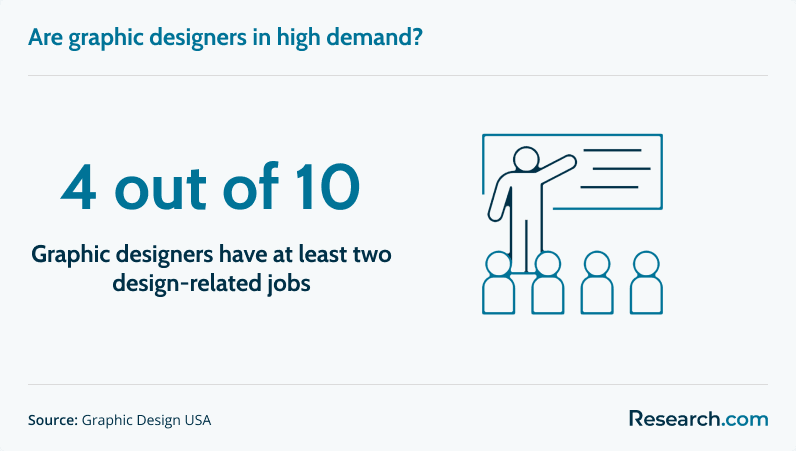
- Four out of 10 graphic designers have at least two income sources, which shows why freelance, contract, and side-client work can be part of a design career plan.
- In 2025, about 19% of graphic designers were self-employed, according to U.S. Bureau of Labor Statistics (BLS) data cited in industry analyses.
- Associate degrees typically take two years for full-time programs, while bachelor's degrees can be completed in four years.
- Affordable bachelor's degree options can range from $15,000 to $40,000, although total cost depends on institution type, credits transferred, fees, and required software or equipment.
How long does it take to complete an affordable online graphic design degree?
Program length depends on the credential, transfer credits, course load, and whether the school offers accelerated or self-paced formats. Associate's degrees in graphic design typically take around 15 to 18 months to complete, while bachelor's degrees take about four years.
Students who enroll full time usually finish faster than students who take one or two courses at a time. If you have prior college credit, ask each school for an official transfer evaluation before estimating your timeline. Transfer policies can significantly reduce the number of courses you need to complete.
Working adults should also look at course length, weekly workload, and whether the program uses fixed deadlines or more flexible pacing. If speed is a priority, compare graphic design options with broader accelerated online degree programs to understand how intensive formats work.
| Degree path | Typical completion time | Best for | Decision note |
| Associate degree | 15 to 18 months or about two years, depending on format | Students seeking entry-level skills or a lower-cost starting point | Check whether credits transfer into a bachelor's program later. |
| Bachelor's degree | About four years | Students seeking broader career preparation and a full undergraduate credential | Compare total program cost, not just cost per credit. |
| Accelerated online path | Varies by school and transfer credits | Working adults who can handle a heavier pace | Faster does not always mean easier; confirm weekly workload expectations. |
How does an affordable online graphic design degree compare with an on-campus program?
Based on a 2025 BLS Occupational Outlook Handbook update, many graphic designers hold multiple roles, often combining freelance and full-time work. That flexible career model can align well with online learning, especially for students who need to continue working while studying.
Online programs often reduce costs tied to housing, campus meal plans, commuting, and relocation. However, students should still budget for technology, software subscriptions, course materials, and possible portfolio or printing expenses.
The biggest trade-off is learning environment. Online students gain flexibility and location independence, but they must be disciplined about deadlines, critique participation, and project revisions. Campus students may have easier access to studios, in-person critique, equipment labs, and local networking, but they usually have less scheduling flexibility.
| Factor | Affordable online degree | On-campus degree |
| Schedule | Often asynchronous or flexible, which can suit working adults | Usually tied to set class times and campus attendance |
| Location | Can be completed from anywhere with reliable internet | Requires living near campus or relocating |
| Cost structure | May reduce housing, meal, and commuting expenses | Can include higher living and campus-based costs |
| Critique and collaboration | Usually handled through online discussion boards, video, and digital submissions | Often includes in-person studio critique and lab collaboration |
| Best fit | Self-directed students who need flexibility | Students who learn best in face-to-face studio settings |
What is the average cost of an affordable online graphic design degree program?
"Affordable" depends on your financial situation, but the range in this guide provides a practical benchmark. While the most expensive online graphic design degree programs can reach over $150,000, affordable bachelor's options can range from $15,000 to $40,000. That equals an average of $3,750 to $10,000 per year.
Several factors can change the final price. Public online universities often cost less than private institutions, and public schools may charge lower rates for in-state students. Some programs charge by credit, while others use flat tuition. Transfer credits, course load, fees, software, and equipment can also change the true cost.
Costs to check before enrolling
- Tuition model: Confirm whether the school charges by credit, by term, or by flat program rate.
- Required credits: A lower per-credit rate may still be expensive if the program requires more credits or accepts fewer transfer credits.
- Technology expenses: Ask about computer specifications, design tablets, storage, software subscriptions, and printing requirements.
- Fees: Online learning fees, graduation fees, portfolio fees, and course-specific fees can affect total cost.
- Residency rules: Public universities may price in-state and out-of-state students differently.
What financial aid options are available for affordable online graphic design degree students?
State grant aid per full-time undergraduate student varied between less than $200 in some states and more than $2,000 in others during the 2025-26 academic year. Even when a program is relatively low cost, financial aid can reduce the amount students pay out of pocket. Students may also review school-specific aid information, such as the Sessions College financial aid overview, while comparing program funding options.
Federal and state grants
- Federal Pell Grant: A need-based grant for undergraduate students with exceptional financial need. Grants generally do not need to be repaid.
- Federal Supplemental Educational Opportunity Grant (FSEOG): A need-based grant for undergraduates with exceptional financial need. Award amounts are usually smaller than Pell Grants.
- State grants: Many states offer aid programs for eligible students, and some may apply to online study. Check your state education agency for current rules.
Federal student loans
- Federal Direct Subsidized Loans: Need-based loans that do not accrue interest while the student is enrolled at least half-time, during grace periods, and during deferment periods.
- Federal Direct Unsubsidized Loans: Loans that are not based on financial need. Borrowers are responsible for interest during all loan periods.
Other funding sources
- Scholarships: Search for awards from colleges, design associations, private organizations, local foundations, and community groups.
- Federal Work-Study: Eligible students with financial need may work part time through approved employment arrangements to help pay education costs.
- Employer assistance: Some employers reimburse tuition when the program supports an employee's current or future job responsibilities.
What are the prerequisites for enrolling in an affordable online graphic design degree program?
Admissions requirements vary by school, degree level, and selectivity. A 2025 graphic design occupations report from BLS and industry analyses noted that the software publishing industry posted the highest increase in graphic designer hiring at 30%, followed by data processing, hosting, and related services at 26%, and internet publishing at 22%. Students can review related industry summaries such as graphic design statistics when researching demand signals, but admissions decisions are still set by each institution.
- High school diploma or GED: Most undergraduate programs require proof of high school completion or an equivalent credential.
- Minimum GPA: Some programs set a minimum GPA, often around 2.0 to 2.75.
- Official transcripts: Applicants generally submit high school transcripts and transcripts from any colleges previously attended.
- SAT or ACT scores: Some bachelor's programs may still request standardized test scores, although many online programs have moved away from requiring them.
- Optional portfolio: A portfolio may be required or encouraged. Even if it is optional, it can help demonstrate visual ability, curiosity, and creative potential.
What courses are typically included in an affordable online graphic design degree?
Design influences how organizations communicate credibility and value. In this guide's source material, 54% of organizations believe that design differentiates them from competitors. A good online graphic design curriculum should therefore connect visual choices to communication goals, users, brands, and business needs.
Most programs include foundation courses, software courses, and applied studio projects. Some also include web design, UX, motion graphics, branding, portfolio preparation, and professional practice.
- Design principles and elements: Students learn composition, color theory, hierarchy, layout, contrast, and the core vocabulary of visual communication.
- Graphic design software: Coursework commonly covers Adobe Photoshop, Illustrator, and InDesign for image editing, vector design, and page layout.
- Typography: Students study type selection, spacing, readability, hierarchy, and the role of type in brand and editorial communication.
- Branding and identity design: Similar to topics found in the best degrees in marketing, this area covers logos, brand systems, campaign consistency, and visual identity guidelines.
- Web design: Students learn interface layout, responsive design basics, visual structure, and user-centered digital presentation.
- Design thinking: This coursework teaches students to define user needs, test ideas, revise concepts, and solve communication problems through design.
How is technology changing online graphic design degree programs?
Online graphic design programs increasingly need to prepare students for digital-first design work. Many programs now include motion graphics, 3D design, UX/UI design, web design, interactive media, and portfolio presentation for online hiring environments. Students comparing programs should look for evidence that coursework reflects current employer expectations rather than outdated print-only training.
Software exposure is important. Programs may include Adobe Creative Cloud, Figma, Blender, and other production tools, depending on the curriculum. Students should ask whether software is included in tuition, discounted through the school, or purchased separately.
If you want a broader comparison of program quality and digital design preparation, review Research.com's guide to an online graphic design degree. The strongest programs teach tools, but they also teach judgment: how to choose the right tool, defend design decisions, and adapt when technology changes.
How does freelancing affect opportunities for graduates with affordable online graphic design degrees?
Freelancing can expand opportunities for graphic design graduates, but it also requires business discipline. Designers may use platforms such as Upwork, Behance, or Fiverr to find clients, but success depends on portfolio quality, communication, pricing, deadlines, revisions, and client trust.
A student can begin building freelance readiness while still in school by turning coursework into case studies. A strong case study explains the design problem, audience, process, tools used, revisions made, and final result. Client reviews, a consistent personal brand, and a clear niche can help graduates stand out in a crowded market.
Freelancers may specialize in branding, web design, social media design, illustration, packaging, or UX-related visuals. Students exploring different creative roles can compare options with Research.com's art careers list and salaries to see how design niches differ.
What specializations are available in affordable online graphic design degree programs?
Not every affordable online program offers formal concentrations, but many allow students to focus projects or electives in a specific area. Specialization can help when applying for roles because employers often want to see evidence of relevant project experience.
Some options overlap with the best online graphic design programs and may include the following:
- Web design: Focuses on website layout, responsive design, information architecture, user interaction, and digital presentation.
- User experience (UX) design: Covers user research, interface planning, usability testing, information structure, and human-centered digital design.
- Motion graphics: Emphasizes animation principles, storyboarding, movement, timing, and dynamic visuals. Related concepts may also appear in video game designer education.
- Branding and identity design: Centers on logos, brand guidelines, visual systems, collateral, and brand consistency.
- Marketing materials design: Connects visual communication to advertising, social graphics, campaigns, packaging, and promotional strategy. Students wondering what is a digital marketing degree may find this specialization especially relevant.
Are affordable online graphic design degrees accredited and industry recognized?
Accreditation is one of the first quality checks students should make. It helps verify that the institution meets recognized educational standards and can affect credit transfer, financial aid eligibility, graduate study options, and employer confidence. Students should confirm institutional accreditation directly through the school's website and the accreditor's database before enrolling.
Industry recognition is broader than accreditation. Employers may care about the reputation of the school, but in graphic design they also look closely at portfolio quality, software fluency, project experience, internships, and communication skills. When comparing long-term value across fields, students can also review how credentials are evaluated in areas such as an MIS degree, where accreditation, technical preparation, and career outcomes all matter.
Can combining graphic design with interactive media skills improve career prospects?
Interactive media skills can make a graphic design portfolio more versatile. Motion graphics, interface design, digital storytelling, user engagement, and interactive prototypes can help designers compete for roles beyond traditional print or static digital graphics.
Students interested in games, interactive experiences, or dynamic visual storytelling may benefit from studying concepts used in an online game development degree. The goal is not to collect unrelated credentials, but to build a coherent skill set that supports the kind of design work you want to do.
What student support services help online graphic design students succeed?
Support services can strongly influence whether an online student completes the program and graduates with a usable portfolio. Look for programs that provide academic advising, accessible faculty feedback, technical help, career coaching, portfolio review, internship guidance, and responsive online learning support.
Also ask how the school supports students financially. Scholarships, payment plans, clear fee disclosures, and software access can all affect affordability. Reviewing cost structures in other online technical fields, such as AI course fees, can help students understand why tuition alone rarely tells the full cost story.
What challenges do students face in affordable online graphic design degree programs?
Online graphic design students often have to manage self-paced work, limited face-to-face critique, technology problems, and the challenge of staying motivated through multiple design revisions. These issues are manageable, but students should be honest about their learning habits before enrolling.
Programs with stronger support systems reduce these risks. Look for reliable technical assistance, clear communication channels, instructor feedback, peer critique opportunities, and digital collaboration tools. Students comparing affordability across fields can also examine how quality and cost trade-offs appear in programs such as the cheapest online masters electrical engineering.
How can AI and emerging technologies strengthen graphic design skills?
AI-powered tools are changing parts of the design workflow, especially ideation, image generation, layout exploration, background removal, content variation, and rapid prototyping. These tools can speed up production, but they do not replace design judgment, typography skill, brand thinking, ethics, or the ability to solve client problems.
Students should choose programs that teach responsible use of emerging tools, including copyright awareness, prompt strategy, editing, quality control, and when not to use automation. Those who want deeper technical context may explore adjacent education options such as an accelerated AI masters degree online, especially if they want to work at the intersection of creative production and AI-enabled workflows.
How can interdisciplinary studies complement an online graphic design degree?
Graphic design becomes more powerful when paired with another area of expertise. Business, marketing, data analytics, user research, accessibility, psychology, and interactive media can help designers create work that is not only attractive but also useful and measurable.
For example, data skills can help designers interpret user behavior, test content, and communicate complex information visually. Students interested in that direction may compare related options such as the cheapest data science masters in USA to understand how analytical skills can support creative decision-making.
Can combining graphic design with health informatics boost your career?
Graphic design and health informatics can intersect in digital health communication, patient education, dashboard design, health app interfaces, public health campaigns, and data visualization. This combination may fit students who want to make complex health information easier to understand.
Designers who understand health information systems, privacy-sensitive communication, and user needs in healthcare settings may be able to build specialized portfolios. Students considering this direction can explore an online health informatics degree to see how health data, technology, and communication overlap.
How do you choose the best affordable online graphic design degree program?
A study focused on new customers found that 46.1% agree that a website's design is the most important factor in determining a company's legitimacy. That finding reinforces why design skills matter, but it does not mean every program offers the same career value. The best choice is the program that fits your goals, budget, schedule, and portfolio needs.
Use Research.com's guide to the best graphic design school online as a comparison point, then evaluate each school using the criteria below.
Define your goals before comparing schools
- Budget: Set a realistic tuition and fee range, then estimate debt after grants, scholarships, employer aid, and transfer credits.
- Learning style: Decide whether you need flexible asynchronous learning or prefer live sessions and structured deadlines.
- Career target: Identify whether you want branding, UX, web, motion, illustration, marketing design, or a broad graphic design role.
- Time commitment: Estimate how many hours you can spend weekly on coursework, software practice, critique, and portfolio revision.
Compare program quality
- Accreditation: Verify the school is accredited by a recognized accrediting body.
- Curriculum: Look for a balance of design foundations, software, portfolio projects, professional practice, and digital design.
- Specializations: Prioritize programs with electives or concentrations related to your intended career path.
- Faculty: Review instructor experience, professional design background, and availability for feedback.
- Career support: Ask about portfolio reviews, internships, resume support, networking, and job search assistance.
- Financial aid: Contact the financial aid office and ask which aid types apply to online students.
Ask practical questions before applying
- How many portfolio-ready projects will I complete before graduation?
- How often will instructors critique my work?
- Which software programs are required, and are they included in tuition?
- Can I transfer previous college credits?
- Are there internship, capstone, or client-based project opportunities?
- What are the graduation, retention, and career support services for online students?
What career paths are available for graduates of affordable online graphic design degree programs?
There are more than 270,900 graphic designers in the U.S., which reflects a large but competitive field. Graduates should expect to compete through portfolio quality, technical range, communication skills, and relevant project examples.
| Career path | Typical work | Portfolio evidence employers may want |
| Graphic designer | Marketing materials, reports, social media graphics, layouts, presentations, and visual assets | Print and digital projects, typography, layout, brand consistency, and production-ready files |
| Web designer | Website layouts, landing pages, responsive visuals, and digital interfaces | Website mockups, responsive design examples, basic UX thinking, and visual hierarchy |
| Branding and identity designer | Logos, visual systems, brand guidelines, and campaign assets | Logo systems, brand books, application examples, and rationale for design choices |
| UI/UX designer | User interfaces, wireframes, prototypes, usability-focused layouts, and design systems | Case studies showing user needs, wireframes, prototypes, testing, and revisions |
| Motion graphics designer | Animated ads, explainer videos, title sequences, social video graphics, and presentation motion | Motion reels, storyboards, animation samples, timing, and visual storytelling |
What steps can help you advance your career with an affordable online graphic design degree?
The degree can open the door, but career growth depends on continuous practice and strategic positioning. Graphic design is a portfolio-driven field, so graduates should keep improving their strongest projects, remove weaker work, and tailor their portfolio to the roles they want.
Start by choosing a direction. UX, branding, web design, motion graphics, and marketing design require overlapping but distinct skills. Research.com's guide to graphic designer career paths can help you compare roles and identify the skills employers expect.
- Build a focused portfolio: Include case studies, not just final images. Explain the problem, process, tools, audience, and outcome.
- Practice current tools: Keep improving in Adobe tools and learn platforms relevant to your niche, such as Figma for interface design.
- Seek critique: Use instructors, peers, mentors, design communities, and professional reviews to improve your work.
- Gain experience early: Pursue internships, freelance work, volunteer projects, campus projects, or client simulations.
- Network intentionally: Connect with designers, alumni, local creative groups, online communities, and employers in your target niche.
- Track outcomes: Save metrics, client feedback, campaign results, or usability findings when possible to strengthen case studies.
What is the return on investment of an affordable online graphic design degree?
ROI depends on total cost, debt, time to completion, portfolio strength, job placement support, and the type of work you pursue after graduation. A lower-cost degree may improve ROI by reducing borrowing, but only if the program gives you marketable skills and enough portfolio-quality work to compete.
When evaluating ROI, compare tuition with likely career paths, not just the name of the degree. Ask whether the program includes internships, capstone projects, software training, portfolio review, and career coaching. Students considering advanced education later can review graphics design master's degree careers to understand how graduate study may fit into long-term advancement.
What is the job market for graduates with an affordable online graphic design degree?
By 2025, the market for graphic design services is anticipated to grow to $44.647 billion. The job market for graduates with affordable online graphic design degrees offers promising opportunities, but it is also competitive.
The Bureau of Labor Statistics (BLS) projects a 2% growth rate for graphic designers between 2024 and 2034. Graduates may improve their prospects by building skills in areas such as UX design, web design, motion graphics, branding, and digital marketing design.
Some employers may still favor well-known campus programs, but in many hiring situations the portfolio carries the most weight. A strong online graduate should be able to show polished work, explain design choices, work with feedback, meet deadlines, and use industry-standard software confidently.
Common mistakes to avoid when choosing an affordable online graphic design degree
| Mistake | Why it matters | Better approach |
| Choosing only by lowest tuition | The cheapest program may not include enough feedback, portfolio support, or current software training. | Compare total value: accreditation, curriculum, portfolio outcomes, support, and cost. |
| Ignoring accreditation | Accreditation can affect aid, transfer credits, employer confidence, and graduate study options. | Verify accreditation directly before applying. |
| Assuming all online programs are equal | Online formats vary widely in interaction, critique, deadlines, and student support. | Ask how projects are reviewed and how often students receive instructor feedback. |
| Underestimating software and equipment costs | Design programs may require paid software, capable hardware, storage, or drawing tools. | Request a complete technology and materials list. |
| Graduating with a weak portfolio | Employers usually need evidence of skill, not just a transcript. | Choose programs with portfolio courses, capstones, and critique-heavy assignments. |
Key Insights
- An affordable online graphic design degree is most valuable when it combines recognized accreditation, current software training, design critique, and portfolio-ready projects.
- Cost should be measured as total program cost, not only cost per credit. Include fees, software, hardware, transfer credits, and financial aid in your calculation.
- The median annual wage for graphic designers in May 2024 was $61,300, but early-career pay may be closer to $35,000 to $45,000 annually depending on role, location, experience, and portfolio quality.
- Online programs can work well for working adults and future remote designers, but students must be self-directed and proactive about critique, networking, and portfolio development.
- Specializations such as UX, web design, branding, motion graphics, and interactive media can help graduates compete in a job market where general design skills alone may not be enough.
- The best next step is to shortlist three to five accredited programs, request total cost and transfer evaluations, review student work samples if available, and ask how the program helps students graduate with a professional portfolio.
References:
- Mordor Intelligence. (2025). Graphic Design Market Size & Share Analysis 2025-2030. https://www.mordorintelligence.com/industry-reports/graphic-design-market
- TOPS Technologies. (2025). Graphic Design Salaries: In-House vs. Agency vs. Freelance. https://www.tops-int.com/blog/graphic-design-salaries-inhouse-vs-agency-vs-freelance
- U.S. Bureau of Labor Statistics. (2025). Arts and Design Occupations. https://www.bls.gov/ooh/arts-and-design/graphic-designers.htm
- U.S. Bureau of Labor Statistics. (2025). Graphic designers (Pay section). In Occupational Outlook Handbook. U.S. Department of Labor. Retrieved February 5, 2026, from https://www.bls.gov/ooh/arts-and-design/graphic-designers.htm#tab-6
- ZipRecruiter. (2026). Graphic Designer Salary by State. https://www.ziprecruiter.com/Salaries/What-Is-the-Average-Graphic-Designer-Salary-by-State
Other Things You Should Know About Affordable Online Graphic Design Degree Programs
Yes. Many accredited online graphic design programs accept up to 90 transfer credits toward a 120-credit bachelor’s degree. Schools usually require official transcripts and a minimum 2.0 GPA for transfer courses. Art and design studio credits are reviewed individually for portfolio and course equivalency.
In 2027, several universities offer affordable online graphic design degrees with tuition costs typically ranging from $6,000 to $15,000 per year. These programs often provide quality education while allowing students to study at their own pace.