Becoming a speech-language pathologist in Tennessee requires more than choosing a graduate program. You need the right master’s degree, supervised clinical training, a passing Praxis score, state licensure, and a clear plan for where you want to work after graduation. This guide is for students, career changers, and out-of-state clinicians who want to understand the Tennessee pathway before investing time and money in the profession.
You will learn the education requirements, licensing steps, salary expectations, work settings, ethical responsibilities, advancement options, and practical questions to ask before committing to an SLP career in Tennessee.
Quick Answer: How to Become a Speech-Language Pathologist in Tennessee
To become a speech-language pathologist in Tennessee, you generally need a master’s degree in speech-language pathology from an accredited program, supervised clinical experience, a passing score on the Praxis speech-language pathology exam, and a license from the Tennessee Board of Communication Disorders and Sciences. Many professionals also pursue ASHA’s Certificate of Clinical Competence in Speech-Language Pathology, known as the CCC-SLP, to strengthen employment mobility and professional credibility.
Tennessee is expected to need more SLPs, with a projected shortage expected to reach over 1,000 professionals by 2025.
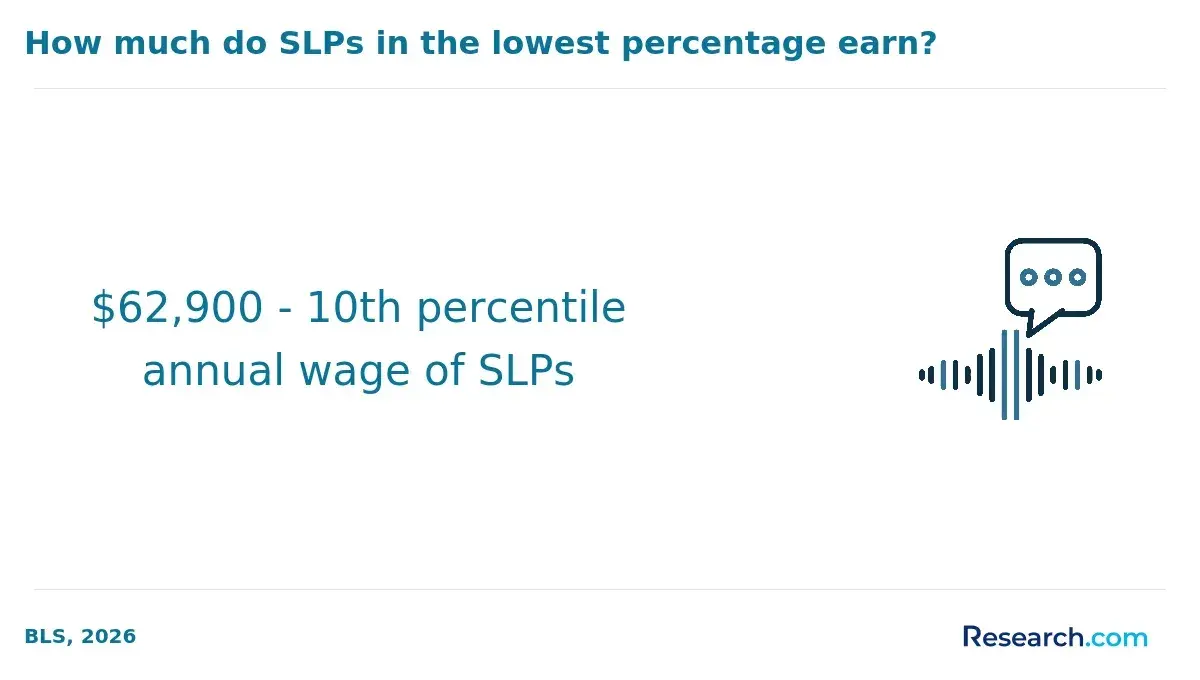
Speech-language pathologists in Tennessee earn an average salary of approximately $78,000 per year, while entry-level roles may start around $60,000.
The employment outlook remains strong, with projected growth of 25% from 2020 to 2030, supported by demand in schools, healthcare, rehabilitation, and aging-related services.
Tennessee’s cost of living index is around 87.6, compared with 100 as the national average, which can make the state appealing for SLPs comparing income and affordability.
How can you become a speech language pathologist in Tennessee?
The Tennessee pathway is best understood as a sequence: complete the required education, gain supervised clinical experience, pass the national exam, apply for state licensure, and then choose a practice setting. Planning early matters because graduate admission, clinical placements, Praxis preparation, and licensing paperwork can affect your timeline.
Step
What you need to do
Why it matters
1. Build the academic foundation
Earn a bachelor’s degree and complete prerequisite coursework required by graduate programs.
Graduate programs may require communication sciences and disorders courses before admission.
2. Complete a master’s degree
Enroll in an accredited speech-language pathology graduate program.
A master’s degree is the core educational requirement for professional practice.
3. Finish supervised clinical training
Complete clinical practica and a post-graduate clinical fellowship under qualified supervision.
Supervised practice helps you apply assessment, diagnosis, treatment planning, documentation, and family consultation skills.
4. Pass the Praxis exam
Take the national speech-language pathology examination, which includes 132 multiple-choice questions. A minimum score of 162 is required to pass.
The exam verifies readiness for entry-level professional practice.
5. Apply for Tennessee licensure
Submit the required application materials to the Tennessee Board of Communication Disorders and Sciences.
You cannot practice independently as an SLP in Tennessee without the appropriate license.
6. Consider national certification
Apply for the CCC-SLP through ASHA if it fits your career goals.
The credential is not the same as state licensure, but many employers recognize it as a professional standard.
7. Target the right job setting
Apply to schools, hospitals, rehabilitation centers, private practices, early intervention providers, or long-term care facilities.
Your setting affects caseload, schedule, pay structure, supervision, documentation, and advancement options.
If cost or flexibility is a major concern, compare campus-based programs with low-cost online speech pathology degrees. Online programs can be useful, but you still need to confirm accreditation, clinical placement support, state authorization, and whether the curriculum aligns with Tennessee licensure expectations.
What is the minimum educational requirement to become a speech language pathologist in Tennessee?
The minimum education needed to become a licensed speech-language pathologist in Tennessee is a master’s degree in speech-language pathology. A bachelor’s degree is typically the starting point, but the graduate degree is the credential that prepares you for licensure-level clinical practice.
Degree requirement: You need a master’s degree in speech-language pathology for professional licensure. Students without an undergraduate background in communication disorders may need leveling or prerequisite courses before beginning graduate-level clinical coursework.
Typical timeline: Many students complete a four-year bachelor’s degree followed by a two-year master’s program, creating a common six-year academic pathway.
Graduate coursework: Programs generally cover speech and hearing science, anatomy and physiology, language development, speech sound disorders, fluency, voice, swallowing, diagnostics, treatment design, and clinical methods.
Clinical preparation: Strong programs include supervised clinical practice with children and adults across multiple communication and swallowing disorders.
Program cost: A master’s degree in speech-language pathology can cost between $20,000 and $60,000, depending on the school, residency status, fees, format, and clinical requirements.
Accreditation: Choose a program accredited by the Council on Academic Accreditation in Audiology and Speech-Language Pathology. Accreditation is one of the most important safeguards when evaluating whether a program can support licensure and certification goals.
Tennessee option: The University of Tennessee, Knoxville is one Tennessee institution offering graduate study in speech-language pathology.
Program feature
What to check before enrolling
Accreditation
Confirm CAA accreditation status before applying or accepting admission.
Clinical placements
Ask whether the school arranges placements in Tennessee or expects you to find your own sites.
Licensure alignment
Ask whether graduates meet Tennessee requirements and whether the program supports out-of-state applicants.
Praxis preparation
Review pass-rate support, exam preparation resources, and faculty advising.
Speech-language pathologists evaluate and treat communication, language, speech, voice, fluency, cognitive-communication, social communication, and swallowing disorders. Their clients may include toddlers with delayed language, school-age children with articulation or literacy-related needs, adults recovering from stroke or brain injury, and older adults with swallowing disorders.
Responsibility
What it looks like in practice
Assessment
Use formal tests, observation, interviews, medical history, school data, and functional communication samples to identify needs.
Diagnosis
Interpret assessment results and determine whether a speech, language, communication, or swallowing disorder is present.
Treatment planning
Create measurable goals and therapy plans tailored to the client’s age, condition, environment, and priorities.
Therapy delivery
Provide individual or group intervention to improve communication, speech clarity, language use, feeding, swallowing, or functional participation.
Family and caregiver education
Teach strategies that can be used at home, in classrooms, in healthcare settings, or in the community.
Documentation
Record evaluations, progress, treatment notes, eligibility reports, medical documentation, or school-based service records.
Collaboration
Coordinate with teachers, physicians, nurses, occupational therapists, physical therapists, psychologists, counselors, and families.
Strong SLPs combine scientific reasoning with interpersonal skill. They need clear communication, patience, cultural awareness, clinical judgment, creativity, accurate documentation habits, and the ability to adjust treatment when progress stalls.
The role is especially decision-heavy. An SLP must decide which assessment tools are appropriate, whether a client qualifies for services, what goals are realistic, how to involve caregivers, and when to refer to another professional.
What is the certification and licensing process for a speech language pathologist in Tennessee?
Tennessee licensure is handled through the Tennessee Board of Communication Disorders and Sciences. Applicants should verify the most current requirements directly with the state board before submitting materials, because forms, fees, and procedures can change.
The licensing process generally includes the following components:
Application and fee: Submit the completed application and the non-refundable fee of $160.
Official transcript: Arrange for the graduate institution to send your official transcript directly to the Board.
Licensure verification: If you hold or have held a license in another state, provide the required verification documentation.
Photograph: Include a recent passport-sized photo taken within the last year.
Tennessee Jurisprudence Exam: Complete the exam covering Tennessee rules and statutes for the profession. The exam is emailed after the application is received.
Identity documentation: Submit a certified birth certificate or notarized copy as required.
Declaration of Citizenship: Complete the state’s citizenship declaration form.
Background check: Follow the Board’s instructions for the required criminal background check, which typically includes fingerprinting.
Mandatory Profile Questionnaire: Complete this required profile document as part of the application process.
CCC-SLP route, if applicable: If applying through the Certificate of Clinical Competence route, request official ASHA verification showing that the CCC has been awarded.
Character recommendation: Provide a letter of recommendation confirming moral character, signed and submitted on official letterhead.
Reciprocity materials: If applying by reciprocity, submit documentation of licensure requirements from other states and a copy of your renewal certificate with expiration information.
The average processing time is around four to six weeks when all documents are complete and correctly submitted. Delays often happen when transcripts, background checks, verification forms, or exam materials are missing.
Common licensing mistake
Better approach
Starting the application before confirming all required documents
Create a checklist from the current Board instructions and track each item.
Assuming a graduate degree automatically grants the right to practice
Wait for Tennessee licensure approval before practicing independently.
Ignoring state-specific rules after earning national certification
Remember that ASHA certification and Tennessee licensure are related but separate.
Waiting until the last minute to request transcripts
Request official documents early, especially if graduation has just occurred.
Not checking the latest fee schedule
Confirm current application and background check costs before budgeting.
Students still comparing graduate options can use this overview of speech therapy graduate programs to understand how program choice connects to licensure readiness.
What ethical and legal guidelines should you observe as a speech language pathologist in Tennessee?
SLPs in Tennessee must practice within state law, federal privacy rules, educational regulations, employer policies, and professional ethics. This is not just a compliance issue. Ethical practice protects clients, families, schools, healthcare teams, and the clinician’s license.
Legal responsibilities in Tennessee
Licensure: SLPs must hold the appropriate license from the Tennessee Board of Communication Disorders and Sciences before practicing independently.
Continuing education: License renewal every two years requires 30 hours of continuing education.
Scope of practice: SLPs should only provide services they are trained and competent to deliver.
Documentation: Records must accurately reflect assessments, services provided, progress, and professional decisions.
Confidentiality and informed consent
Confidentiality is central to SLP practice. In healthcare settings, SLPs must follow privacy expectations aligned with HIPAA. In school settings, educational privacy rules and district procedures also affect how records and student information are handled.
Share client or student information only with authorized individuals.
Obtain appropriate consent before releasing protected information.
Keep treatment discussions, records, and digital communications secure.
Explain services, risks, goals, and alternatives in clear language clients and families can understand.
Ethical issues SLPs may face
Dual relationships: In smaller communities, personal and professional relationships can overlap. SLPs need clear boundaries.
Caseload pressure: Heavy workloads can make it difficult to provide individualized care, but ethical standards still require appropriate service planning.
Resource gaps: Limited materials or staffing should not lead to misleading documentation or unsupported service decisions.
Competence: Clinicians should seek supervision, training, or referral when a case falls outside their expertise.
Federal and state compliance
School-based SLPs must understand requirements connected to the Individuals with Disabilities Education Act, while all Tennessee practitioners should be familiar with applicable Tennessee statutes and board rules. The best habit is to treat legal and ethical learning as an ongoing part of clinical practice, not a one-time licensing hurdle.
How does collaboration with other professionals benefit a speech language pathologist in Tennessee?
Speech-language pathology is rarely a solo profession. In Tennessee schools, hospitals, rehabilitation centers, and private practices, SLPs often work with professionals who see different parts of the client’s life and functioning. Collaboration helps the SLP design treatment that is clinically sound and practical in real-world settings.
Professional partner
How collaboration helps the SLP
Teachers and special education staff
Connects communication goals to classroom participation, literacy, behavior, and academic access.
Occupational therapists
Supports clients with sensory, feeding, motor, or self-regulation needs that affect communication and therapy participation.
Physical therapists
Coordinates care when posture, mobility, endurance, or neurological recovery affects communication or swallowing.
Physicians and nurses
Clarifies medical history, swallowing risk, medication issues, and rehabilitation priorities.
Mental health professionals
Helps address emotional, behavioral, family, or trauma-related factors that influence communication.
Families and caregivers
Improves carryover of strategies outside therapy sessions.
SLPs who work in schools may benefit from understanding related education roles, especially when coordinating services for students with disabilities. This guide on how to become a special education teacher in Tennessee explains a closely connected professional pathway.
How much can you earn as a speech language pathologist in Tennessee?
Salary depends on setting, location, experience, contract length, supervision responsibilities, specialization, and whether compensation includes school-year schedules, healthcare shifts, productivity expectations, or benefits. Recent figures cited for Tennessee place the average salary for speech language pathologists at approximately $76,000 per year, with a median salary around $73,000. Nationally, the average is around $83,000 and the median is around $80,000.
Other Tennessee salary references put average annual pay around $75,000, while broader career-outlook figures cite a median annual salary of around $89,290. Because salary figures vary by source and method, use them as benchmarks rather than guarantees.
Factor
How it can affect earnings
Work setting
Healthcare, schools, private practice, residential care, and rehabilitation settings may use different pay structures.
Geographic area
Nashville, Memphis, and Knoxville may offer different opportunities because of healthcare systems, school districts, and population demand.
Experience level
Entry-level roles may start around $60,000, while experienced clinicians may earn more through specialization or leadership.
Specialization
Pediatric feeding, dysphagia, voice, fluency, neurogenic disorders, or bilingual services may affect job options.
Schedule and contract type
A school-year contract may look different from a full-year healthcare role when comparing annual pay and benefits.
Total compensation
Health insurance, retirement contributions, paid time off, continuing education funds, and loan repayment options can change the true value of an offer.
Top-earning industries to compare
Healthcare and social assistance: This sector often employs many SLPs and may provide opportunities in hospitals, outpatient centers, rehabilitation, and medical specialty services.
Educational services: Schools can offer stable schedules, benefits, and strong demand, especially for clinicians interested in children and disability services.
Residential care facilities: These settings may need SLPs for swallowing, cognitive-communication, and rehabilitation-related services.
Top Tennessee locations to research
Nashville: A major healthcare and education market with a broad range of employers.
Memphis: A large healthcare hub with opportunities across clinical and educational settings.
Knoxville: A growing area with schools, healthcare providers, and university-connected opportunities.
How Do Continuing Education and Professional Development Opportunities Elevate Your SLP Career in Tennessee?
Continuing education is required for Tennessee license renewal, but it is also one of the most practical ways to improve client outcomes and expand career options. Since license renewal every two years requires 30 hours of continuing education, SLPs should choose training that supports their current caseload and future goals.
School-based SLPs may prioritize literacy, autism support, AAC, eligibility documentation, and IEP-related practices.
Medical SLPs may focus on dysphagia, neurological disorders, cognitive-communication, tracheostomy and ventilation considerations, and interdisciplinary care.
Private practice owners may need training in billing, compliance, supervision, telepractice, documentation, and business operations.
Technology is also changing professional development. Telepractice tools, digital assessment supports, documentation platforms, and AI-assisted administrative workflows can save time, but clinicians remain responsible for privacy, accuracy, clinical judgment, and ethical use.
What is the job market like for a speech language pathologist in Tennessee?
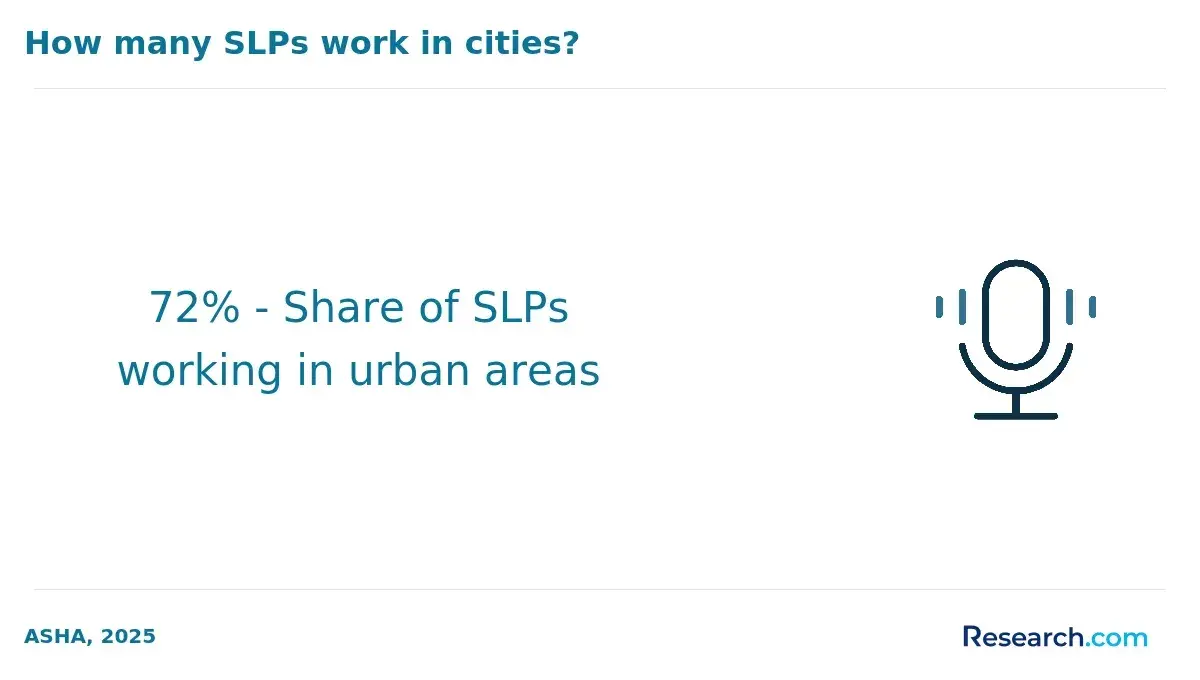
The Tennessee SLP job market is supported by demand in schools, healthcare systems, rehabilitation providers, private practices, and services for older adults. The U.S. Bureau of Labor Statistics projects employment for SLPs to grow by 25% from 2019 to 2029, and Tennessee-specific demand is also described as strong, with a projected shortage expected to reach over 1,000 professionals by 2025.
Urban opportunities: Nashville and Memphis tend to have more large healthcare systems, specialized clinics, and district-level school opportunities.
School demand: Public schools often need SLPs for evaluation, IEP services, speech and language intervention, and collaboration with special education teams.
Healthcare demand: Hospitals, outpatient clinics, rehabilitation facilities, and residential care providers need SLPs for swallowing, cognition, language, and speech services.
Competition: The market can still be competitive in desirable metropolitan areas or specialized clinical settings.
Cost-of-living context: Tennessee’s cost of living can make some positions more attractive when compared with higher-cost states.
If you want...
Consider this setting
Watch for this trade-off
A predictable academic calendar
Public or private schools
Caseload size, paperwork, IEP meetings, and district staffing levels vary.
Medical complexity
Hospitals or rehabilitation centers
May require stronger medical knowledge, productivity expectations, and fast documentation.
Autonomy and niche services
Private practice
Business operations, referrals, insurance, and scheduling can become major responsibilities.
Work with older adults
Residential care or skilled rehabilitation settings
Swallowing and cognitive-communication needs may be central to the role.
Early childhood impact
Early intervention or pediatric clinics
Family coaching, travel, and developmental knowledge may be essential.
How can professional associations and mentorship programs accelerate your career growth in Tennessee?
Professional associations and mentorship can shorten the learning curve for new SLPs. They help clinicians understand state practice expectations, find continuing education, build referral networks, compare job settings, and learn how experienced professionals manage caseloads and documentation.
New graduates can use mentors to prepare for interviews, negotiate supervision expectations, and handle the transition from student clinician to licensed professional.
Mid-career SLPs can use professional networks to explore specialty areas, leadership roles, supervision, private practice, or academic teaching.
Out-of-state clinicians can benefit from state-specific guidance on Tennessee licensure, school service delivery, and employer expectations.
If you are comparing career changes outside clinical services, this overview of how to become a librarian in Tennessee can help you evaluate another public-service profession with different education and credential requirements.
What is the salary progression and long-term career outlook for SLPs in Tennessee?
SLP salary growth usually comes from experience, specialization, supervision, leadership, setting changes, or private practice development. A new clinician may begin in a school, clinic, or fellowship role, then move into a higher-paying or more specialized position after building competence and credentials.
Career stage
Common focus
Potential next move
Entry level
Completing fellowship requirements, building core therapy and documentation skills
Full licensure, CCC-SLP, broader caseload experience
Early career
Strengthening assessment, treatment planning, and collaboration
Specialization in pediatrics, dysphagia, AAC, voice, fluency, or neurogenic disorders
Mid-career
Managing complex cases, mentoring others, improving service systems
Lead SLP, clinical supervisor, program coordinator, or private practice development
Advanced career
Leadership, administration, teaching, consulting, or research
Director roles, university instruction, policy work, advanced certification, or business ownership
To compare national credential-related earnings and career context, review the CCC-SLP salary report.
What career and advancement opportunities are available for a speech language pathologist in Tennessee?
Tennessee SLPs can build careers in education, healthcare, rehabilitation, private practice, research, administration, and consulting. The best path depends on whether you prefer children or adults, medical or educational systems, direct service or leadership, and stable employment or entrepreneurial flexibility.
Entry-level opportunities
School-based SLP serving students with speech and language needs.
Clinical fellow in a hospital, outpatient clinic, rehabilitation center, or private practice.
Pediatric clinic clinician working with developmental communication disorders.
Rehabilitation provider supporting speech, language, swallowing, and cognitive-communication recovery.
Mid-level advancement
Lead SLP overseeing caseload coordination or therapy quality.
Clinical supervisor for graduate students, assistants, or new clinicians.
Program coordinator for speech-language services in a school district or healthcare organization.
Specialist in an area such as pediatric speech therapy, voice disorders, dysphagia, fluency, or AAC.
Senior and alternative career paths
Director of rehabilitation or communication disorders services.
University instructor or clinical educator.
Consultant for schools, healthcare organizations, assistive technology providers, or legal cases.
Researcher in academic, clinical, or applied settings.
Private practice owner or multi-site clinic leader.
One career outlook source cites projected job growth of 18% from 2023 to 2033 and a median annual salary of around $89,290. Use those figures as general planning context, not as a guarantee of Tennessee-specific earnings. Students comparing degree options can review the best online audiology and speech pathology degrees to understand different academic routes into the field.
What challenges should you consider as a speech language pathologist in Tennessee?
Speech-language pathology can be meaningful work, but it is not an easy profession. Before investing in graduate school, understand the day-to-day pressures that may affect job satisfaction.
Challenge
Why it matters
How to evaluate it before accepting a job
High caseloads
Some practitioners report caseloads between 80 to 100 students, which can limit planning time and increase stress.
Ask about average caseload, workload model, evaluation volume, and support staff.
Administrative burden
Documentation, meetings, billing, IEPs, and compliance tasks can reduce direct therapy time.
Ask how documentation time is scheduled and what software or templates are provided.
Limited resources
Underfunded settings may lack therapy materials, technology, assessment tools, or adequate space.
Ask about the materials budget, testing kits, AAC tools, and workspace.
Diverse client needs
SLPs may serve clients across many ages, diagnoses, languages, and cultural backgrounds.
Ask what training, mentorship, and referral procedures are available for complex cases.
Burnout risk
Emotional labor, productivity pressure, and heavy workloads can affect retention.
Ask about scheduling, supervision, team support, and expectations for unpaid work.
Unqualified providers
Clients may encounter speech-related services from individuals without formal SLP training.
Choose employers that respect licensure, scope of practice, and evidence-based care.
Cost is another challenge. Graduate school can be expensive, and unpaid clinical training may limit work hours. Comparing affordable speech-language pathology degrees can help you reduce debt, but affordability should never replace accreditation, clinical quality, and licensure alignment.
What Options Are Available for Teaching Certifications for Speech Language Pathologists in Tennessee?
Some SLPs in Tennessee consider education-related credentials because many SLP jobs are based in schools. A teaching credential may be useful for professionals who want to move into classroom instruction, curriculum work, school leadership, or broader educational support roles. It is not a substitute for SLP licensure, but it can complement school-based practice.
If you are weighing education credentials alongside clinical licensure, review the types of teaching certificates in Tennessee and compare requirements, cost, timeline, and the roles each credential permits.
Can integrating mental health approaches, such as marriage and family therapy, enhance SLP practice in Tennessee?
Mental health and communication often overlap. Family stress, trauma, anxiety, behavior, and relationship dynamics can affect therapy participation and communication outcomes. SLPs do not become marriage and family therapists by using family-centered strategies, but understanding family systems can improve collaboration, counseling boundaries, and carryover of communication strategies.
SLPs interested in deeper clinical knowledge of family systems can compare the separate pathway for how to become a MFT in Tennessee.
Is mental health counseling expertise beneficial for enhancing SLP practice in Tennessee?
Mental health counseling expertise can help SLPs recognize when emotional or behavioral factors are affecting communication, attendance, motivation, or family follow-through. The key is professional boundary-setting. SLPs can use counseling-informed communication and referral skills, but they should refer clients to licensed mental health professionals when needs fall outside the SLP scope of practice.
Should speech language pathologists consider dual roles in school counseling to broaden their professional impact in Tennessee?
A school counseling background may help an SLP better understand student well-being, family communication, academic planning, and social-emotional barriers. However, school counseling and speech-language pathology are distinct professions with different training, ethics, and credentialing requirements. A dual-role path makes the most sense for professionals who want to move beyond speech and language services into broader student support.
How do advanced certifications bolster your professional practice in Tennessee?
Advanced certifications can help SLPs demonstrate specialized knowledge, pursue leadership roles, and improve confidence with complex cases. They may be especially useful in competitive healthcare markets, specialized clinics, supervisory roles, or private practice niches.
Choose certifications that match your caseload, not just your resume goals.
Can speech language pathologists leverage their skills for a transition into school psychology in Tennessee?
SLPs and school psychologists both use assessment, intervention planning, collaboration, and student support skills. However, school psychology requires separate preparation focused on learning, behavior, mental health, consultation, and psychoeducational assessment. An SLP background can be helpful, but it does not replace school psychology training or credentialing.
How can acquiring an additional teaching certification enhance your professional impact in Tennessee?
An additional teaching certification can be valuable for SLPs who want to work more deeply in curriculum, literacy instruction, classroom intervention, teacher training, or education leadership. The strongest fit is usually for school-based SLPs who already collaborate closely with teachers and want a broader role in student learning.
Before pursuing another credential, compare the cost, required coursework, student-teaching expectations, salary impact, and whether it qualifies you for roles you actually want. For a related example, see how to become an English teacher in Tennessee.
Can insights from behavioral science improve SLP interventions in Tennessee?
Behavioral science can strengthen SLP practice when used carefully. Motivation, reinforcement, attention, executive functioning, caregiver behavior, and environmental design can all affect communication therapy. These concepts are especially relevant in pediatric therapy, autism support, AAC implementation, fluency work, and school-based intervention.
SLPs interested in psychology-informed practice can explore academic options through the best psychology schools in Tennessee, while remembering that psychology degrees and SLP licensure lead to different professional scopes.
Questions to Ask Before Choosing an SLP Program or Job in Tennessee
Is the graduate program accredited by the appropriate accrediting body?
Does the program disclose whether it meets Tennessee licensure expectations?
Who arranges clinical placements, and where are they located?
What is the total cost after fees, travel, materials, background checks, and clinical expenses?
How does the program prepare students for the Praxis exam?
What percentage of graduates obtain licensure or employment in the settings you prefer?
For jobs, what is the actual caseload or workload expectation?
How much time is protected for documentation, meetings, and evaluations?
Will you receive mentorship if you are a new clinician or clinical fellow?
Does the employer support continuing education and specialty training?
Common Mistakes to Avoid
Choosing a program based only on tuition: Low cost matters, but accreditation, clinical support, licensure alignment, and graduate outcomes matter just as much.
Assuming online means easier: Online SLP programs can be rigorous and still require clinical placements, exams, and supervised experience.
Confusing certification with licensure: The CCC-SLP and Tennessee licensure are not identical. Understand both.
Ignoring state rules if moving to Tennessee: Reciprocity still requires documentation and Board approval.
Underestimating paperwork: Documentation is a major part of school and healthcare SLP work.
Accepting a job without asking about caseload: Salary alone does not tell you whether a role is sustainable.
Assuming salary averages apply to every setting: Pay varies by location, schedule, employer, benefits, and experience.
What do speech language pathologists say about their careers in Tennessee?
SLPs in Tennessee often describe the profession as rewarding because it allows them to help children, adults, and families communicate more effectively. Many also point to the value of working across schools, hospitals, clinics, and community settings.
The most satisfied clinicians tend to have strong mentorship, realistic caseloads, supportive teams, and opportunities for continuing education. The most common frustrations involve paperwork, limited resources, high workload, and the need to balance direct therapy with compliance requirements.
Key Insights
The standard route to becoming an SLP in Tennessee includes a master’s degree, supervised clinical training, a passing Praxis score, and state licensure.

Accreditation should be one of your first checks when comparing graduate programs; cost and convenience should not override licensure readiness.
Tennessee offers opportunities in schools, healthcare, rehabilitation, private practice, and residential care, but work conditions vary widely by employer.
Salary benchmarks in Tennessee are useful for planning, but actual compensation depends on setting, location, schedule, experience, benefits, and specialization.
Ethics, confidentiality, documentation, and continuing education are ongoing responsibilities, not just licensing requirements.
Before accepting a job, ask about caseload size, documentation expectations, supervision, materials, continuing education support, and total compensation.
Advanced certifications, teaching credentials, counseling knowledge, or behavioral science training can strengthen practice when they match your career goals and remain within professional scope.
Other Things You Should Know About Becoming a Speech Language Pathologist in Tennessee
What are the requirements to become a speech-language pathologist in Tennessee in 2026?
To become a speech-language pathologist in Tennessee in 2026, candidates must earn a master's degree from an accredited program, complete a clinical fellowship, and pass the Praxis exam. Additionally, they must obtain state licensure, which includes submitting transcripts and passing a background check.
What is the process to obtain a speech-language pathologist license in Tennessee in 2026?
To obtain a speech-language pathologist license in Tennessee in 2026, candidates must complete a master's degree in speech-language pathology, pass the Praxis examination, complete a Clinical Fellowship, and apply for licensure with the Tennessee Board of Communications Disorders and Sciences.
What are the application requirements for speech-language pathology certification in Tennessee in 2026?
In 2026, Tennessee requires a master's degree in speech-language pathology from an accredited program, completion of a Clinical Fellowship, passing the Praxis exam, and ASHA certification. Obtaining a state license from the Tennessee Board of Communication Disorders and Sciences is also necessary.