Becoming a speech-language pathologist in Mississippi is a regulated career path that requires graduate education, supervised clinical training, national examination, and state licensure. The decision matters because SLPs work directly with children and adults who have communication, language, cognitive-communication, voice, fluency, and swallowing disorders—and Mississippi continues to report strong need for qualified providers, especially in schools and rural communities.
This guide explains how to become a speech-language pathologist in Mississippi, what education and licensing steps are required, how long the process usually takes, what salaries and job opportunities may look like, and how to choose the right preparation path. It is designed for college students, career changers, graduate applicants, and current educators or healthcare professionals considering speech-language pathology as a long-term career.
Quick answer: How do you become a speech-language pathologist in Mississippi?
To become a speech-language pathologist in Mississippi, you generally need a master’s degree in speech-language pathology from an accredited program, supervised clinical experience, a temporary license, a nine-month clinical fellowship, a passing score on the national Praxis exam, and full licensure through the Mississippi State Department of Health. Candidates should also confirm that their program meets ASHA standards and Mississippi licensing requirements before enrolling.
Typical minimum degree: Master’s degree in speech-language pathology or a closely related field.
Common timeline: About six years of higher education, including a four-year bachelor’s degree and a two-year master’s program.
Required clinical preparation: At least 25 hours of clinical observation plus supervised professional practice and a nine-month clinical fellowship.
Required exam: National SLP Exam/Praxis II in Speech-Language Pathology, with 132 questions and a minimum passing score of 162.
Licensing authority: Mississippi State Department of Health, Professional Licensure Division.
Reported salary range in this article’s source data: Mississippi figures are cited as approximately $66,000 average annual salary, around $64,000 median salary, and approximately $70,000 as of 2023, compared with a national average of around $83,000.
How can you become a speech language pathologist in Mississippi?
The path to becoming a speech-language pathologist in Mississippi is sequential. You need the right degree first, then clinical training, examination, and licensure. Skipping any step can delay employment eligibility, so students should plan backward from Mississippi’s licensing requirements before choosing a graduate program.
Step
What to complete
Why it matters
1. Complete an appropriate bachelor’s degree
Earn an undergraduate degree and complete prerequisite coursework if your major is not communication sciences and disorders.
Graduate SLP programs usually expect foundational knowledge in areas such as phonetics, language development, and anatomy of the speech mechanism.
2. Apply to an accredited master’s program
Pursue a Master of Science in Speech-Language Pathology or a related graduate degree from an accredited institution.
A master’s degree is the standard academic requirement for Mississippi SLP licensure.
3. Meet graduate admissions requirements
Submit a strong academic record, official GRE scores that are valid for five years, three letters of recommendation from relevant academic professionals, and a personal statement.
Admission is competitive, and programs look for evidence that applicants can handle rigorous clinical and academic training.
4. Complete clinical observation and practicum
Finish required clinical experiences, including a minimum of 25 hours of clinical observation at an accredited facility.
Clinical exposure helps students connect assessment and treatment theory with real client needs.
5. Pass the required national exam
Take and pass the Praxis II/National SLP Exam after completing the necessary academic preparation.
Mississippi uses this exam as part of the licensing process to verify entry-level competence.
6. Apply for Mississippi licensure
Submit documentation to the Mississippi Department of Health, including proof of education, examination results, clinical fellowship documentation, and required fees.
You cannot practice independently as an SLP in Mississippi without meeting state licensing requirements.
7. Prepare for employment
Create a resume that highlights graduate training, practicum experience, certifications, and preferred practice settings.
SLPs work in schools, hospitals, rehabilitation centers, private practices, and community-based settings.
In Mississippi, programs associated with institutions such as Mississippi University for Women, the University of Southern Mississippi, and the University of Mississippi are commonly discussed by prospective students. Applicants who need more flexibility may also compare online speech pathology graduate degree options, but they should confirm accreditation, clinical placement support, and Mississippi licensure alignment before enrolling.
What is the minimum educational requirement to become a speech language pathologist in Mississippi?
The minimum educational requirement to become a licensed speech-language pathologist in Mississippi is a master’s degree in speech-language pathology or a closely related field. A bachelor’s degree is usually the entry point into graduate study, but it is not enough by itself for full SLP licensure in the state.
Degree level: Mississippi candidates need a master’s degree for professional practice. A doctoral degree may support research, university teaching, or specialized leadership roles, but it is not required for standard SLP practice in Mississippi.
Typical length: The common education timeline is a four-year bachelor’s degree followed by a two-year master’s program, totaling approximately six years of higher education. Individual timelines can change based on course load, prerequisite needs, transfer credits, and program format.
Core academic areas: Graduate coursework generally covers anatomy and physiology of speech and hearing, language development, speech disorders, assessment, clinical methods, and evidence-based intervention.
Prerequisite coursework: Students without an undergraduate background in communicative disorders may need additional foundation courses before or during graduate admission.
Cost consideration: Tuition for a master’s degree in speech-language pathology is cited as ranging from $20,000 to $50,000, depending on factors such as public or private status and whether the student pays in-state or out-of-state tuition.
Accreditation: Students should prioritize programs accredited by the American Speech-Language-Hearing Association (ASHA) or another recognized accrediting body because accreditation affects licensure readiness and professional mobility.
A speech-language pathologist evaluates and treats people with communication and swallowing disorders. SLPs may work with infants, school-age children, adults recovering from injury or illness, and older adults experiencing changes related to neurological conditions or aging.
Area of practice
Examples of SLP responsibilities
Speech sound and articulation
Assess how a person produces sounds and design therapy to improve clarity and intelligibility.
Language development
Support children or adults who have difficulty understanding language, expressing ideas, following directions, or using grammar and vocabulary effectively.
Fluency
Work with clients who stutter or have other fluency-related communication concerns.
Voice
Help clients address vocal quality, pitch, volume, or vocal strain when clinically appropriate.
Cognitive-communication
Assist clients with communication affected by attention, memory, problem-solving, or executive functioning challenges.
Swallowing
Evaluate and treat swallowing disorders, often in medical or rehabilitation settings.
Family and team education
Teach families, caregivers, educators, and other professionals how to support communication outside therapy sessions.
Strong SLPs combine clinical judgment with interpersonal skill. They must communicate clearly, show patience, interpret assessment results accurately, adjust treatment strategies when progress is slow, and document services carefully. In Mississippi, these skills are especially important in school districts and rural communities where SLPs may serve clients with varied needs and limited local resources.
What is the certification and licensing process for a speech language pathologist in Mississippi?
Mississippi’s licensing process moves from graduate education to temporary licensure, supervised clinical fellowship, national examination, and full state licensure. Candidates comparing graduate options can start with Research.com’s list of best master’s in speech-language pathology programs, then verify each program’s fit with Mississippi requirements.
Earn the required master’s degree. Complete a master’s program in speech-language pathology from an ASHA-accredited program or another qualifying accredited pathway.
Apply for a temporary license. After finishing the master’s degree, candidates typically obtain a temporary license so they can complete supervised professional practice.
Complete the clinical fellowship. Mississippi candidates are required to complete a nine-month clinical fellowship under the supervision of a licensed SLP.
Pass the national exam. The National SLP Exam includes 132 questions, and candidates must earn a minimum score of 162 to pass.
Submit the full licensure application. Applicants provide a notarized application form, an official graduate transcript, proof of clinical fellowship completion, exam results, and other required documentation.
Pay required fees. The licensing process includes a $100 application fee and an additional $100 licensing fee. Candidates should also budget for exam and background check expenses.
Complete the background check. Mississippi requires a background check, generally including fingerprinting, to confirm that applicants meet professional and legal standards.
Maintain the license. Licensed SLPs must complete continuing education within the required timeframe to keep their Mississippi license current.
Applications and supporting materials are submitted to the Professional Licensure Division of the Mississippi State Department of Health. Processing times are described as typically taking a few weeks, but applicants should check directly with the department for current instructions, forms, fee updates, and deadlines.
Mississippi also offers a loan forgiveness program for graduates who agree to work in public schools for at least two years. For candidates planning school-based careers, this may help reduce the financial burden of graduate education.
What ethical and legal guidelines should you observe as a speech language pathologist in Mississippi?
Speech-language pathologists in Mississippi are responsible not only for clinical quality but also for legal compliance, confidentiality, ethical boundaries, and accurate documentation. These obligations apply across schools, healthcare facilities, private practices, and community settings.
Core legal responsibilities
Maintain proper licensure: SLPs must hold the appropriate Mississippi license through the Mississippi Department of Health before practicing independently.
Practice within scope: Services should remain within the scope defined by Mississippi rules and professional standards, including assessment, diagnosis, intervention, consultation, and documentation related to communication and swallowing disorders.
Follow school and healthcare laws: SLPs working in schools must understand laws affecting students with disabilities, including the Individuals with Disabilities Education Act (IDEA). Medical SLPs must also follow healthcare documentation and privacy rules.
Confidentiality and records
Protect client information: SLPs must follow HIPAA where applicable and maintain confidentiality for health records, treatment plans, and assessment results.
Safeguard student records: School-based SLPs must treat student information carefully, especially when working with IEP teams, families, teachers, and administrators.
Document accurately: Progress notes, evaluations, service minutes, and treatment plans should be truthful, timely, and clinically defensible.
Common ethical risks
Dual relationships: In smaller Mississippi communities, an SLP may know clients or families personally. Professional boundaries are essential.
Cultural responsiveness: Services should account for language background, dialect, family culture, disability status, and community context without confusing difference with disorder.
Unqualified service delivery: SLPs should be careful when delegating tasks and should not allow unqualified individuals to present themselves as licensed providers.
Caseload pressure: Heavy workloads do not remove the obligation to provide appropriate, individualized, and ethical care.
How much can you earn as a speech language pathologist in Mississippi?
Speech-language pathologist salary estimates for Mississippi vary by source, year, setting, and methodology. The article’s cited figures include an average annual salary of approximately $66,000, a median salary around $64,000, and an average annual salary of approximately $70,000 as of 2023. These figures are below the cited national average of around $83,000, but Mississippi’s lower cost of living may affect real purchasing power.
Salary or cost figure
Amount cited
How to interpret it
Average salary in Mississippi
Approximately $66,000
A general statewide estimate that may differ by employer type, location, and experience level.
Median salary in Mississippi
Around $64,000
A midpoint estimate, useful because it is less affected by very high or very low salaries.
Average salary in Mississippi as of 2023
Approximately $70,000
Another cited estimate that reflects how salary data can vary by reporting source and year.
National average salary
Around $83,000
A comparison point, not a guarantee of earnings in any specific state or setting.
Mississippi cost of living index
86.1 compared to the national average of 100
Lower living costs may help offset lower wages for some professionals.
Where SLPs may earn more in Mississippi
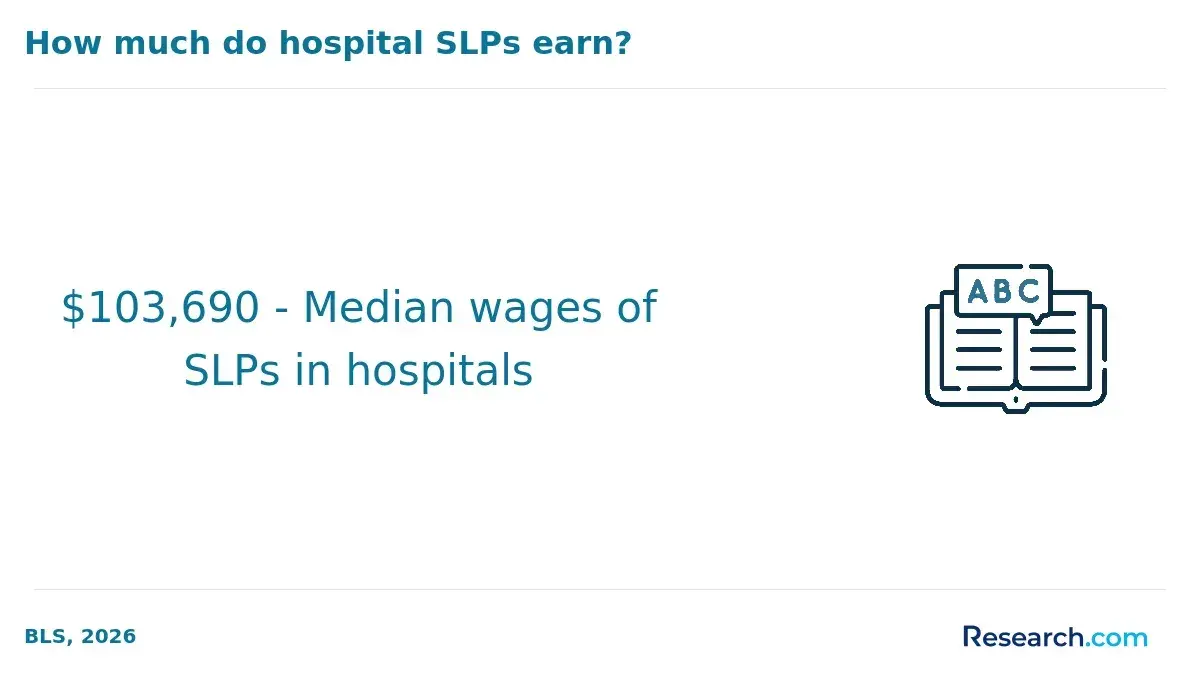
Healthcare and social assistance: Hospitals, rehabilitation centers, and medical facilities may offer higher compensation, particularly for SLPs with swallowing, adult neurogenic, or acute-care experience.
Educational services: School districts are major employers and may offer predictable schedules, public-sector benefits, and loan forgiveness opportunities for eligible professionals.
Government roles: State and local agencies may hire SLPs for public health, education, and community service programs.
Locations often associated with stronger opportunities
Jackson: The state capital has healthcare systems, public agencies, and school-based employment opportunities.
Gulfport: Demand may come from both schools and healthcare providers serving coastal communities.
Hattiesburg: Universities and medical institutions can create a broader professional ecosystem for SLPs.
Salary should not be evaluated in isolation. Before accepting a role, compare caseload expectations, benefits, supervision quality, continuing education support, travel requirements, and whether the employer uses licensed SLPs appropriately.
What is the job market like for a speech language pathologist in Mississippi?
The Mississippi job market for speech-language pathologists is shaped by demand in schools, healthcare facilities, private practices, and underserved rural areas. The U.S. Bureau of Labor Statistics estimate cited in this article projects a 25% increase in SLP employment opportunities from 2021 to 2031. Another cited outlook states that employment for SLPs is projected to grow by 25% from 2019 to 2029. In both cases, the key takeaway is that demand is expected to remain strong compared with many other occupations.
Rural need is significant: Mississippi faces a shortage of speech-language pathologists in rural areas, and the Mississippi Department of Education has reported that many schools have difficulty filling SLP positions.
Schools are major employers: Students with speech and language needs require evaluation, IEP support, direct therapy, consultation, and progress monitoring.
Healthcare demand remains important: Hospitals, outpatient clinics, and rehabilitation centers need SLPs for clients recovering from stroke, traumatic brain injury, surgery, neurological disease, or swallowing disorders.
Urban competition can be stronger: Candidates seeking positions in Jackson, Gulfport, or other more populated areas may face more competition than those willing to work in rural districts or high-need settings.
Local networks matter: Graduates from Mississippi programs may benefit from practicum placements, faculty contacts, and familiarity with local school and healthcare systems.
For job seekers, the best approach is to compare roles by work setting rather than salary alone. A school position may offer a predictable academic-year schedule but larger caseloads. A medical role may offer more specialized clinical experience but require different hours, productivity expectations, and documentation standards.
What types of educational credentials can help aspiring speech language pathologists in Mississippi?
The most important credential for future Mississippi SLPs is the qualifying master’s degree. However, additional education-related credentials can be useful for students planning to work in schools, collaborate with educators, or understand Mississippi’s student support systems.
Credential or preparation area
Best fit
Important caution
Master’s degree in speech-language pathology
Required pathway for aspiring licensed SLPs.
Confirm accreditation and Mississippi licensure alignment before enrolling.
Communication sciences and disorders undergraduate major
Students who want a direct foundation before graduate school.
A bachelor’s degree alone does not qualify someone for full SLP licensure.
Teaching-related credential knowledge
SLPs who expect to work in schools and participate in IEP teams.
Teaching credentials do not replace SLP licensure.
Special education coursework
School-based SLPs serving students with disabilities.
Use it as complementary preparation, not as a substitute for clinical SLP training.
Students exploring school-based careers may find it useful to understand types of teaching certificates in Mississippi, especially when comparing how SLPs, teachers, and special education professionals support students differently.
What career and advancement opportunities are available for a speech language pathologist in Mississippi?
Speech-language pathologists in Mississippi can build careers across education, healthcare, rehabilitation, private practice, consulting, and higher education. The article’s cited advancement outlook reports a projected job growth rate of 28% by 2030, compared with a national average of 19%, and approximately 130 new positions annually. These figures point to meaningful opportunity, but actual hiring will depend on geography, specialization, employer budgets, and licensure status.
Common entry-level settings
Schools: Support students with speech, language, fluency, voice, and communication needs through evaluations, IEP services, and collaboration with educators.
Hospitals: Treat patients with communication and swallowing disorders related to acute medical conditions.
Rehabilitation centers: Help clients regain or adapt communication and swallowing abilities after injury, illness, or neurological change.
Private practices: Provide therapy to children or adults, often with room to specialize in dyslexia-related services, pediatric language, adult rehabilitation, or other focus areas.
Advancement options
Clinical specialist: Develop expertise in pediatric feeding, dysphagia, autism-related communication support, voice, fluency, or neurogenic communication disorders.
Lead SLP or supervisor: Mentor newer clinicians, coordinate services, review documentation, and support quality improvement.
Program coordinator: Manage service delivery, referral systems, evaluation processes, or district-level speech-language programs.
Clinical manager or director: Oversee teams, budgets, staffing, compliance, and strategic planning.
Researcher or educator: Work in academic or clinical research, teach future SLPs, or contribute to evidence-based practice.
The article’s source data also cites an average salary of around $76,680 with potential earnings reaching up to $107,660 for some SLP-related career pathways. Professionals who want to broaden their qualifications may compare advanced options such as an online master’s in audiology and speech pathology, while confirming that the degree supports their intended licensure and career goals.
What challenges should you consider as a speech language pathologist in Mississippi?
Speech-language pathology can be highly meaningful work, but Mississippi SLPs may face workload, resource, and service-access challenges. Knowing these issues before entering the field helps students choose better placements, ask stronger employer questions, and prepare for sustainable practice.
Challenge
Why it matters
What to ask before accepting a role
High caseloads
Some practitioners report serving over 70 students, which can make individualized service delivery difficult.
What is the average caseload, and how are service minutes, evaluations, meetings, and paperwork counted?
Administrative workload
Documentation, progress reports, IEP meetings, billing, and treatment plans can reduce direct therapy time.
Is documentation time built into the schedule, or is it expected outside service hours?
Limited therapy resources
Some schools and rural settings may not have adequate materials, technology, or assessment tools.
What materials, testing instruments, workspace, and technology are provided?
Unqualified service delivery
When speech services are provided by individuals without proper credentials, care quality and professional standards can suffer.
Who provides direct services, and how are assistants or support staff supervised?
Diverse client needs
SLPs may work with a wide range of ages, disorders, languages, dialects, disabilities, and family contexts.
What mentoring, continuing education, and referral support are available for complex cases?
Cost can also be a barrier because graduate education requires a substantial investment. Students looking for lower-cost options can compare affordable speech pathology programs, but affordability should be weighed alongside accreditation, clinical placement quality, graduation support, and licensure outcomes.
How do speech language pathologists collaborate with other professionals in Mississippi?
SLPs rarely work alone. Their clients often need academic, medical, behavioral, emotional, and family support, so collaboration is central to effective practice in Mississippi.
Teachers and special education professionals: In schools, SLPs help identify communication barriers that affect learning, participate in IEP development, support classroom strategies, and coordinate services with special education teams. Readers interested in this adjacent role can review how to become a special education teacher in Mississippi.
Physicians and medical providers: In hospitals and clinics, SLPs coordinate with physicians, nurses, occupational therapists, physical therapists, dietitians, and other providers, especially for stroke, traumatic brain injury, surgery recovery, and swallowing concerns.
Social workers and counselors: Clients and families may need help with emotional adjustment, access to services, transportation barriers, or care coordination.
Families and caregivers: Therapy is more effective when strategies are practiced beyond the clinic or classroom, making caregiver education a major part of the SLP role.
Can additional teaching certifications enhance your impact as a speech language pathologist in Mississippi?
Teaching credentials are not a replacement for SLP licensure, but knowledge of classroom instruction can make school-based SLPs more effective collaborators. Understanding lesson planning, classroom management, literacy instruction, and child development can help an SLP design interventions that fit real classroom routines.
This is especially useful for SLPs who want to work with younger children, support early literacy, or coordinate closely with elementary educators. For context on teacher preparation, see Research.com’s guide on how to become an elementary school teacher in Mississippi.
Is leveraging online SLP programs a viable option for advancing your practice in Mississippi?
Online SLP programs can be a practical option for Mississippi students who need flexibility, but only if the program supports the clinical and licensing requirements students must meet. A convenient online format is not enough; the program must provide the right academic foundation, supervised clinical experiences, and preparation for Mississippi licensure.
What to check before choosing an online SLP program
Accreditation: Confirm whether the program is ASHA-accredited or otherwise recognized for licensure preparation.
Clinical placement support: Ask whether the school helps secure placements in Mississippi or expects students to find sites independently.
State authorization: Confirm that the program can enroll Mississippi residents and that its curriculum aligns with Mississippi licensing requirements.
Total cost: Compare tuition, fees, travel for residencies, background checks, clinical expenses, and lost work time.
Students who are comparing accessibility and admissions competitiveness may review easiest online SLP programs to get into, while still prioritizing licensure fit over convenience alone.
How can interdisciplinary expertise boost your SLP career in Mississippi?
Interdisciplinary skills can help Mississippi SLPs serve clients more effectively, especially in schools and healthcare systems where communication challenges intersect with literacy, cognition, behavior, culture, family needs, and technology.
Research and information skills: SLPs who know how to locate, evaluate, and organize evidence-based resources can make stronger clinical decisions. Research-oriented readers may find useful parallels in how to become a librarian in Mississippi.
Education knowledge: Understanding curriculum, literacy, and classroom expectations helps school SLPs connect therapy goals to academic participation.
Behavioral and mental health awareness: Communication difficulties can affect frustration tolerance, participation, confidence, and peer relationships.
Technology skills: Telepractice tools, digital assessments, augmentative and alternative communication systems, and electronic documentation are increasingly relevant in service delivery.
What benefits does obtaining a CCC-SLP credential offer in Mississippi?
The CCC-SLP credential signals that a speech-language pathologist has met nationally recognized standards for academic preparation, supervised clinical experience, examination, and ongoing professional practice. In Mississippi, it can strengthen credibility with employers, support mobility across settings, and show commitment to professional development and ethical standards.
The credential may be especially valuable for SLPs pursuing specialized clinical roles, leadership positions, telepractice opportunities, or employment with organizations that prefer or require nationally recognized certification. For a fuller explanation, review Research.com’s guide to what a CCC-SLP is and why it matters.
How can mentorship and leadership roles accelerate your growth as a speech language pathologist in Mississippi?
Mentorship can shorten the learning curve for new Mississippi SLPs. A strong mentor helps early-career clinicians improve assessment decisions, therapy planning, family communication, documentation, ethical judgment, and workload management.
During the clinical fellowship: Choose a supervisor who provides regular feedback, models clinical reasoning, and supports professional independence.
In schools: Seek mentors who understand IEP compliance, caseload organization, classroom collaboration, and special education processes.
In medical settings: Look for supervisors with experience in dysphagia, neurological rehabilitation, interdisciplinary care, and documentation standards.
For advancement: Volunteer for committees, quality improvement projects, mentoring roles, or program coordination when you have enough experience to contribute responsibly.
SLPs interested in interdisciplinary school leadership may also explore related student support roles, including how to become a school psychologist in Mississippi, to better understand how evaluation, learning, behavior, and communication services intersect.
What emerging trends are shaping the future of speech language pathology in Mississippi?
Several trends are changing how SLPs prepare for and deliver services in Mississippi. These trends do not remove the need for strong clinical fundamentals, but they do influence employer expectations and service models.
Telepractice: Remote service delivery can expand access, particularly in areas where clients have limited local providers, although clinicians must still follow licensure, privacy, and service-quality rules.
Digital assessment and documentation tools: SLPs increasingly use technology for screening, progress monitoring, recordkeeping, and collaboration.
Greater attention to school-based needs: Shortages in schools make it important for SLPs to understand IEPs, literacy, classroom participation, and teacher collaboration.
Interdisciplinary care: Employers may value SLPs who can work effectively with educators, psychologists, counselors, social workers, physicians, and rehabilitation professionals.
Workforce pressure in rural areas: Mississippi’s rural service gaps may create opportunities for SLPs willing to work in high-need communities.
How can acquiring school counseling skills complement your SLP practice in Mississippi?
School counseling skills can help SLPs communicate more effectively with students, families, and educators. While an SLP should not practice as a counselor without the proper credential, basic knowledge of student well-being, motivation, behavior, and family stress can improve collaboration and referral decisions.
Student engagement: Counseling-informed communication can help students feel safer and more willing to participate in therapy.
Family collaboration: Understanding family concerns can improve treatment follow-through and realistic goal setting.
Team-based support: SLPs can coordinate more effectively with counselors when communication needs overlap with anxiety, social difficulties, behavior concerns, or school adjustment.
How does collaboration with psychology benefit speech language pathology in Mississippi?
Collaboration with psychology professionals can improve speech-language services when communication concerns overlap with cognition, behavior, learning, emotional regulation, or developmental conditions. Psychologists may contribute assessment data that helps an SLP understand attention, memory, executive functioning, adaptive behavior, and learning patterns.
For Mississippi SLPs, this collaboration can be especially valuable in schools, pediatric clinics, autism-related services, rehabilitation settings, and cases involving complex diagnostic questions. Students interested in the academic side of this collaboration can explore the best psychology schools in Mississippi for context on psychology training pathways.
How can integrating family therapy approaches enhance speech language pathology services in Mississippi?
Family-centered thinking can strengthen SLP services because communication happens within daily relationships. SLPs do not need to become family therapists to use family-aware practices, but they should understand how routines, stress, caregiver communication styles, and home support affect progress.
Better carryover: Families who understand therapy goals can practice communication strategies at home.
More realistic planning: Treatment plans work better when they fit the family’s schedule, resources, and priorities.
Stronger trust: Families are more likely to participate when they feel respected and included.
How can integrating mental health training enhance your clinical toolkit in Mississippi?
Mental health training can help SLPs recognize when communication difficulties are interacting with anxiety, trauma, depression, behavior concerns, or family stress. This does not mean SLPs should provide mental health counseling without appropriate credentials, but it does help them make better referrals, collaborate with licensed professionals, and communicate with clients compassionately.
In schools and healthcare settings, this awareness can improve treatment planning for clients who struggle with participation, frustration, social communication, or adjustment after injury or illness. To compare regulatory expectations for a related profession, review mental health counselor requirements in Mississippi.
Common mistakes to avoid when becoming an SLP in Mississippi
Mistake
Why it can hurt your career plan
Better approach
Choosing a program without checking accreditation
A nonqualifying program can delay or prevent licensure.
Confirm accreditation and Mississippi licensure alignment before applying.
Looking only at tuition
The lowest tuition may not include clinical support, exam preparation, or local placement help.
Compare total cost, clinical placements, graduation support, and licensure preparation.
State authorization and clinical requirements can vary.

Ask the program and Mississippi licensing board direct questions before enrolling.
Ignoring rural opportunities
Urban jobs may be more competitive, while rural communities may have greater need.
Compare both location preference and service impact when job searching.
Underestimating paperwork
Documentation is a major part of school and healthcare practice.
Build organization systems early during practicum and fellowship training.
Assuming salary estimates are guaranteed
Pay varies by setting, location, contract length, benefits, and experience.
Evaluate full compensation, workload, schedule, supervision, and advancement potential.
What do speech language pathologists say about their careers in Mississippi?
Fiona describes Mississippi SLP work as deeply meaningful because she can build strong community relationships while supporting children who are developing clearer and more confident communication skills.Fiona
Justin emphasizes the importance of serving rural communities, noting that SLPs can have a major impact when clients have limited access to communication services, including children with autism and adults recovering speech after stroke.Justin
Jennie values the flexibility of the profession, including opportunities to work across schools and private practice, and notes that Mississippi’s lower cost of living can make the career feel more sustainable.Jennie
Key Insights
Mississippi SLPs need a master’s degree in speech-language pathology or a closely related field, followed by clinical training, examination, and state licensure.
The usual education path takes approximately six years: a four-year bachelor’s degree plus a two-year master’s program.
Candidates must complete at least 25 hours of clinical observation, a nine-month clinical fellowship, and the National SLP Exam with 132 questions and a minimum passing score of 162.
Salary data varies by source: Mississippi figures cited in this article include approximately $66,000 average salary, around $64,000 median salary, and approximately $70,000 as of 2023, compared with a national average of around $83,000.
Demand is strong in schools and rural areas, where the Mississippi Department of Education has reported difficulty filling SLP positions.
Program choice should focus on accreditation, clinical placement support, Mississippi licensure alignment, total cost, and graduate outcomes—not convenience or tuition alone.
The biggest professional challenges include high caseloads, paperwork, limited resources, unqualified service delivery, and the need to support diverse client needs.
SLPs who build skills in education, psychology, counseling awareness, family collaboration, technology, and leadership may be better positioned for advancement and interdisciplinary practice.
speechpathologydegrees.com (09 Oct 2023). Mississippi Speech Pathology Degrees. speechpathologydegrees.com.
speechpathologygraduateprograms.org (16 Aug 2016). How to Become a Speech-Language Pathologist in Mississippi. speechpathologygraduateprograms.org.
speechpathologymastersprograms.com (16 Aug 2021). State-by-State Guide for Speech Pathology License Requirements. speechpathologymastersprograms.com.
usm.edu (27 Dec 2023). The University of Southern Mississippi. usm.edu.
Other Things You Should Know About Becoming a Speech Language Pathologist in Mississippi
What are the steps to becoming a licensed speech language pathologist in Mississippi in 2026?
To become a licensed speech language pathologist in Mississippi in 2026, earn a master's degree in speech-language pathology, complete a clinical fellowship, and pass the Praxis exam. After these steps, apply for a license with the Mississippi Department of Health, fulfilling all state-specific requirements.
How do you obtain a license to become a speech language pathologist in Mississippi in 2026?
To obtain a license in Mississippi in 2026, you must earn a master's degree from an accredited program, complete a clinical fellowship, and pass the Praxis Examination in Speech-Language Pathology. Additionally, you must apply for licensure through the Mississippi Council of Advisors in Speech-Language Pathology and Audiology.
What are the continuing education requirements for speech language pathologists in Mississippi in 2026?
In 2026, speech language pathologists in Mississippi are required to complete 20 hours of continuing education every two years to maintain their license. These hours may include workshops, courses, or seminars relevant to the field and must be approved by the Mississippi Board of Examiners for Speech-Language Pathology and Audiology.