Research.com is an editorially independent organization with a carefully engineered commission system that’s both transparent and fair. Our primary source of income stems from collaborating with affiliates who compensate us for advertising their services on our site, and we earn a referral fee when prospective clients decided to use those services. We ensure that no affiliates can influence our content or school rankings with their compensations. We also work together with Google AdSense which provides us with a base of revenue that runs independently from our affiliate partnerships. It’s important to us that you understand which content is sponsored and which isn’t, so we’ve implemented clear advertising disclosures throughout our site. Our intention is to make sure you never feel misled, and always know exactly what you’re viewing on our platform. We also maintain a steadfast editorial independence despite operating as a for-profit website. Our core objective is to provide accurate, unbiased, and comprehensive guides and resources to assist our readers in making informed decisions.

2026 How to Become a Speech Language Pathologist in Nebraska: Requirements & Certification

Imed Bouchrika, PhD

by Imed Bouchrika, PhD

Co-Founder and Chief Data Scientist

Contents

  1. Steps to becoming a speech-language pathologist in Nebraska
  2. Minimum education required for Nebraska SLP licensure
  3. What speech-language pathologists do day to day
  4. Nebraska certification and licensing process
  5. Legal, ethical, and confidentiality rules for Nebraska SLPs
  6. Speech-language pathologist salary in Nebraska
  7. Nebraska SLP job market and hiring outlook
  8. Education, credentials, and certifications that improve career readiness
  9. Career paths and advancement options for Nebraska SLPs
  10. Telepractice, AI, and technology in Nebraska SLP work
  11. Challenges to consider before entering the field
  12. Why collaboration matters in schools and healthcare
  13. Insurance, reimbursement, and billing realities
  14. Financing, loan repayment, and career trade-offs
  15. Professional development resources for SLPs
  16. Research and technology trends shaping the profession
  17. Mentorship and networking for career growth
  18. How school counseling knowledge can complement SLP work
  19. Using psychology insights in speech-language pathology
  20. Allied health roles that can broaden SLP career resilience
  21. Mental health practices that can strengthen SLP care
  22. Key insights for future Nebraska SLPs

How can you become a speech-language pathologist in Nebraska?

The Nebraska SLP pathway is sequential: graduate education first, supervised practice next, then examination, state licensure, and ongoing professional development. The process is demanding, but it is also predictable if you plan early.

StepWhat you need to doWhy it matters
1. Complete prerequisite preparationBuild a strong academic background in communication sciences, psychology, biology, linguistics, or related coursework before applying to graduate school.Graduate programs are selective and usually expect evidence that you can handle clinical and scientific coursework.
2. Earn an accredited master’s degreeComplete a master’s degree in speech-language pathology from an accredited institution. Nebraska options commonly discussed by students include the University of Nebraska at Omaha and the University of Nebraska-Lincoln. Students who need flexibility may also compare speech pathology graduate degrees online.A master’s degree is the standard entry credential for professional SLP practice.
3. Complete clinical experienceFinish supervised clinical requirements during graduate school and then complete a 36-week clinical fellowship.Clinical training turns classroom knowledge into practical assessment, treatment planning, documentation, and client-care skills.
4. Pass the national examTake and pass the National Examination in Speech-Language Pathology.The exam verifies that you have the professional knowledge expected of entry-level SLPs.
5. Apply for Nebraska licensureSubmit required materials to the Nebraska Board of Audiology & Speech-Language Pathology.You must hold the proper Nebraska license before practicing independently in the state.
6. Consider CCC-SLP certificationApply for the Certificate of Clinical Competence in Speech-Language Pathology from ASHA if it fits your career goals.Although state licensure is the legal requirement, CCC-SLP can strengthen credibility with employers and clients.

Before starting, ask yourself three practical questions: Can you commit to graduate-level study? Are you ready for supervised clinical work with children, adults, or medical patients? And do you understand the salary, loan, and job-setting trade-offs in Nebraska?

What is the minimum educational requirement to become a speech-language pathologist in Nebraska?

The minimum professional education for a speech-language pathologist in Nebraska is a master’s degree in speech-language pathology. A bachelor’s degree in a related field can help, but graduate programs may admit students from other majors if they complete required prerequisite coursework.

Education factorWhat Nebraska SLP candidates should know
Required degreeA master’s degree in speech-language pathology is the entry-level professional requirement. A doctoral degree may support research, university teaching, or advanced specialization, but it is not required for most entry-level SLP roles.
Typical timelineA bachelor’s degree generally takes about four years, followed by about two additional years for a master’s program.
Graduate courseworkPrograms commonly cover communication disorders, speech and language development, assessment methods, intervention planning, swallowing, and clinical practice.
Clinical preparationGraduate students must complete at least 400 hours of supervised clinical experience.
Approximate costAverage tuition for a master’s degree in speech-language pathology can range from $20,000 to $50,000.
AccreditationChoose a program accredited by the Council on Academic Accreditation in Audiology and Speech-Language Pathology.
Nebraska program exampleThe University of Nebraska Omaha is recognized for its accredited Master of Science program in speech-language pathology.

When comparing programs, do not focus only on tuition. Review accreditation, clinical placement support, Praxis preparation, graduation requirements, online or campus format, faculty expertise, and whether the program’s clinical experiences align with your preferred work setting. For a broader overview, Research.com’s guide to the steps for becoming a speech therapist can help you understand the national pathway.

What does a speech-language pathologist do?

Speech-language pathologists assess, diagnose, and treat communication and swallowing disorders. Their work may involve children with language delays, students with articulation or fluency challenges, adults recovering from stroke or brain injury, patients with swallowing difficulties, or clients who use alternative and augmentative communication tools.

Common responsibilities

  • Evaluate speech, language, voice, fluency, cognitive-communication, social communication, and swallowing needs.
  • Create individualized treatment plans based on clinical findings and client goals.
  • Deliver therapy in schools, hospitals, outpatient clinics, rehabilitation centers, nursing homes, private practices, or telepractice settings.
  • Work with families, teachers, physicians, psychologists, occupational therapists, physical therapists, and other professionals.
  • Document progress, update treatment plans, and explain results in clear language to clients and care teams.
  • Advocate for early intervention, accessible communication, and evidence-based services.

Skills that matter most

  • Clinical judgment: SLPs must connect assessment results with practical treatment decisions.
  • Empathy: Communication disorders often affect confidence, relationships, school performance, and independence.
  • Clear communication: SLPs need to explain complex information to clients, families, educators, and healthcare teams.
  • Adaptability: Treatment plans often change as clients progress, plateau, or develop new needs.
  • Cultural responsiveness: Nebraska SLPs may serve clients from different linguistic, cultural, and rural or urban backgrounds.
  • : "

    “Graduating from the University of Nebraska-Lincoln was just the beginning. I remember working with a young boy who struggled to articulate his thoughts; seeing him finally express himself was life-changing. It’s not just about speech; it’s about giving people a voice.”

    "
What race/ethnicity makes up the majority of SLPs?

What is the certification and licensing process for a speech-language pathologist in Nebraska?

After completing your graduate degree, clinical requirements, and national examination, you must apply for licensure through the Nebraska Board of Audiology & Speech-Language Pathology. The Nebraska Department of Health and Human Services, through its Division of Public Health, oversees licensure for speech-language pathologists in the state.

Documents commonly needed for Nebraska SLP licensure

  • Official graduate transcript from your speech-language pathology program.
  • Proof that you passed the national examination.
  • Verification that you completed the required clinical fellowship experience.
  • Completed state licensure application.
  • Any additional documentation requested by the Nebraska Department of Health and Human Services.

Application costs can include exam fees, transcript fees, licensing fees, and charges for required documents. Specific fee amounts can change, so candidates should check current Nebraska DHHS instructions before applying. Although the original licensing discussion does not explicitly list fingerprinting or background-check requirements, applicants should be prepared for any state-required screening steps.

The CCC-SLP credential from the American Speech-Language-Hearing Association is not the same as Nebraska state licensure. Licensure gives you legal authority to practice in Nebraska; CCC-SLP is a professional certification that may improve portability, employer recognition, and competitiveness. If you are still comparing graduate options, review accredited SLP master’s programs before committing to a school.

What ethical and legal guidelines should you observe as a speech-language pathologist in Nebraska?

SLP practice in Nebraska involves clinical responsibility, legal compliance, confidentiality, accurate documentation, and ethical decision-making. These obligations matter whether you work in a school, hospital, clinic, private practice, long-term care facility, or telepractice model.

Core legal responsibilities

  • Licensure: Nebraska SLPs must hold a license from the Nebraska Department of Health and Human Services. The pathway includes a master’s degree in speech-language pathology, a clinical fellowship, and the Praxis exam.
  • Continuing education: Nebraska requires licensed SLPs to complete 30 hours of continuing education every two years to maintain licensure.
  • Scope of practice: Nebraska law defines what speech-language pathologists may assess, diagnose, and treat. Staying within that scope protects clients and the clinician.

Confidentiality and records

  • HIPAA compliance: SLPs in healthcare settings must protect patient information and use secure communication and recordkeeping practices.
  • Student privacy: School-based SLPs must handle student records carefully and coordinate with education teams only within appropriate privacy rules.
  • State-specific rules: Nebraska statutes and employer policies may affect how records are stored, shared, and released.

Common ethical pressure points

  • Informed consent: Clients and families should understand the purpose, risks, benefits, and limits of assessment and treatment.
  • Caseload quality: Heavy workloads can create tension between service volume and individualized care.
  • Billing accuracy: Medicaid and insurance rules require honest, complete, and compliant documentation.
  • Cultural and linguistic fairness: Assessment tools and therapy goals should be appropriate for the client’s background and communication context.

How much can you earn as a speech-language pathologist in Nebraska?

Speech-language pathologist pay in Nebraska varies by setting, experience, location, schedule, specialization, and employer. The available figures cited for Nebraska differ slightly across sections of the source material, so candidates should treat salary numbers as planning estimates rather than guarantees.

Salary or cost figureWhat it means for Nebraska SLPs
Approximately $66,000Cited average annual salary for speech-language pathologists in Nebraska.
Around $63,000Cited median salary for speech-language pathologists in Nebraska.
Around $70,000Another cited average annual salary for Nebraska SLPs, with variation by experience, location, and setting.
Around $80,000Cited national average salary figure for comparison.
Around $79,000Cited national median salary figure for comparison.
Around $82,000Another cited national average comparison figure.
88.6 cost-of-living indexNebraska’s cited cost-of-living index compared with the national average of 100.

Where Nebraska SLPs may find stronger earnings

  • Healthcare and social assistance: Hospitals, rehabilitation centers, and outpatient settings may pay more for specialized clinical skills.
  • Educational services: Schools employ many SLPs and may offer stable schedules, benefits, and public-sector retirement options.
  • Government: State and local positions may include structured pay scales and benefits.
  • Urban markets: Omaha and Lincoln typically offer broader job options because of their larger healthcare and education systems.
  • Growing regional hubs: Grand Island is noted as a location where healthcare services may support demand.

The right salary decision is not always the highest hourly rate. Compare benefits, commute, caseload, documentation expectations, continuing education support, supervision quality, and opportunities for specialization.

Which healthcare facility pay SLPs the most?

What is the job market like for a speech-language pathologist in Nebraska?

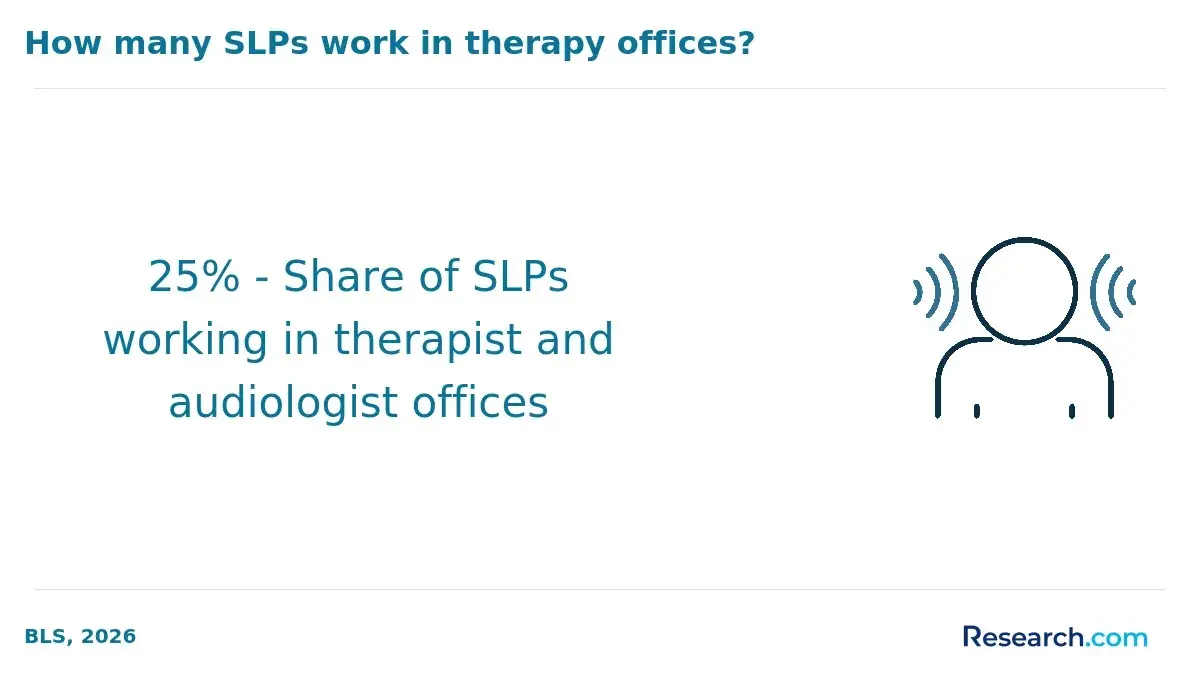
The Nebraska job market for SLPs is generally favorable, especially for candidates open to schools, healthcare settings, rural communities, or telepractice-supported roles. The U.S. Bureau of Labor Statistics projected 25% growth for speech-language pathologists from 2021 to 2031, and the source material also cites a projected job growth of 19% for speech-language pathologists in Nebraska.

Job market factorWhat to consider
Demand driversGreater awareness of communication disorders, early intervention needs, aging-related conditions, and rural service gaps can all support demand.
CompetitionGraduates from local programs, including the University of Nebraska-Lincoln and the University of Nebraska at Omaha, may compete for positions in popular urban areas.
Rural opportunitiesRural areas may offer meaningful community impact and strong need, but candidates should evaluate support, supervision, travel, and caseload expectations.
Urban opportunitiesOmaha and Lincoln may provide more employer variety, specialty teams, and advancement options.
Work settingsSchools, hospitals, outpatient clinics, private practices, nursing homes, rehabilitation centers, and telepractice providers all hire SLPs.
  • : "

    “I graduated from the University of Nebraska at Omaha and was initially drawn to the job market because of the demand. I had to weigh the pros and cons of working in a rural area versus a city. While the salary was appealing, I realized that the community support in a smaller town was invaluable for my practice.”

    "

What education requirements and certifications are necessary for a successful Nebraska SLP career?

A strong Nebraska SLP career starts with the required master’s degree, but employability often depends on more than minimum credentials. Employers may look for strong clinical evaluations, school or medical placement experience, knowledge of IEPs or healthcare documentation, comfort with telepractice tools, and readiness to work with diverse populations. For a complete overview of the Nebraska pathway, Research.com also provides a related guide on Nebraska SLP career requirements.

Credential decisions: what is required and what is optional?

Credential or requirementRequired for Nebraska practice?When it helps
Accredited master’s degreeYesRequired for entry into professional SLP practice.
Supervised clinical experienceYesBuilds assessment, treatment, documentation, and client-care skills.
36-week clinical fellowshipYesProvides supervised transition from student clinician to independent practitioner.
National Examination in Speech-Language PathologyYesRequired for licensure and professional readiness verification.
Nebraska state licenseYesLegal authorization to practice in Nebraska.
CCC-SLPNo, but valuableCan improve professional credibility, mobility, and competitiveness.

What career and advancement opportunities are available for a speech-language pathologist in Nebraska?

Nebraska SLPs can build careers in education, healthcare, private practice, public agencies, telepractice, supervision, consulting, research, and higher education. The best path depends on whether you prefer predictable school schedules, complex medical cases, entrepreneurial flexibility, or leadership roles.

Career options by stage

Career stageCommon rolesGood fit for
Entry levelSchool SLP, clinical fellow, outpatient clinic SLP, rehabilitation or nursing home SLPNew graduates building supervised experience and core clinical confidence.
Early to mid-careerPediatric specialist, adult rehabilitation SLP, teletherapy provider, bilingual or AAC-focused clinicianSLPs ready to specialize or move into higher-need service areas.
Mid-career leadershipLead clinician, school district program coordinator, clinical supervisor, department leadClinicians who enjoy mentoring, service design, and quality improvement.
Advanced careerPrivate practice owner, healthcare administrator, university instructor, researcher, consultantSLPs seeking autonomy, policy influence, teaching, or program development.

If graduate cost is a major concern, compare tuition, placement quality, and completion requirements carefully. Research.com’s resource on a cheap online speech pathology master’s can be useful for students who need a lower-cost or more flexible route.

How do telepractice and technology advancements influence speech-language pathology careers in Nebraska?

Telepractice can expand access to speech-language services, especially in rural and underserved Nebraska communities. Secure video platforms, digital therapy tools, communication devices, interactive software, and remote collaboration systems can help SLPs assess, treat, and monitor clients when in-person services are difficult to access.

Technology does not remove the need for clinical judgment. SLPs must still follow licensure rules, protect privacy, choose appropriate tools, document accurately, and determine when in-person assessment or intervention is clinically necessary. Students who want early exposure to communication sciences and digital service models may compare an online communication disorders degree as part of their long-term preparation.

What challenges should you consider as a speech-language pathologist in Nebraska?

Speech-language pathology can be highly rewarding, but candidates should enter the profession with a realistic view of workload, documentation, resource limits, and emotional demands. These challenges are especially important for school-based SLPs and professionals serving rural or high-need communities.

Common challengeWhy it mattersHow to evaluate it before accepting a job
High caseloadsReports indicate that many professionals handle caseloads exceeding 80 to 100 students, which can make individualized service difficult.Ask about average caseload, workload model, evaluation volume, and support staff.
Administrative burdenTherapy notes, reports, IEP meetings, billing documentation, and compliance tasks can reduce direct client time.Ask what documentation system is used and how much protected paperwork time is provided.
Limited resourcesSome SLPs lack sufficient materials, testing tools, or funding and may feel pressure to purchase supplies personally.Ask about therapy materials, assessment kits, technology, reimbursement for supplies, and professional development budgets.
Diverse client needsSLPs may serve clients with different languages, disabilities, medical histories, cultural contexts, and family needs.Ask about interpreter access, bilingual resources, mentoring, and referral networks.
Rural service barriersTravel, limited specialists, and fewer peer clinicians can make practice more isolated.Ask about supervision, telepractice support, mileage expectations, and interdisciplinary team access.

Students comparing programs should ask how each school prepares graduates for these real conditions. Clinical placements, mentorship, Praxis preparation, and school or medical documentation training can make a major difference. For broader program comparisons, see Research.com’s guide to speech-language pathology degrees.

How does collaboration with other education and healthcare professionals enhance the role of a speech-language pathologist in Nebraska?

SLPs rarely work in isolation. In schools, they collaborate with special education teachers, classroom teachers, occupational therapists, school psychologists, counselors, administrators, and families to support students through individualized education programs and classroom-based strategies. In healthcare, they may coordinate with physicians, nurses, physical therapists, occupational therapists, dietitians, social workers, and caregivers.

For example, an SLP supporting a stroke survivor may work with a physical therapist on motor recovery, a dietitian on swallowing-related nutrition concerns, and a physician on medical status. In schools, an SLP may coordinate with special education staff to align communication goals with reading, behavior, and classroom participation. If you want to understand a closely related school-based role, review Research.com’s guide on how to become a special education teacher in Nebraska.

How do reimbursement policies and insurance complexities affect SLP careers in Nebraska?

Insurance, Medicaid, documentation, and reimbursement rules can directly affect SLP workloads and employer expectations. Healthcare-based SLPs often need to document medical necessity, treatment progress, plan-of-care updates, and billable services. School-based SLPs may also encounter Medicaid-related documentation when services qualify for reimbursement.

These systems affect more than paperwork. They can influence productivity targets, appointment length, service frequency, staffing models, and the financial sustainability of private practice or clinic-based work. SLPs who want to compare compensation and credential value can use Research.com’s CCC SLP career salary resource as one part of their planning.

How do financing options and loan repayment plans impact career decisions for SLPs in Nebraska?

Because a master’s degree in speech-language pathology can cost $20,000 to $50,000 in average tuition, students should plan financing before enrolling. Loan repayment, scholarships, assistantships, employer support, public service options, and living expenses can all influence whether a program is financially workable.

Questions to ask before borrowing for an SLP degree

  • What is the full cost, including tuition, fees, books, clinical placement expenses, commuting, and exam costs?
  • Does the program offer scholarships, graduate assistantships, or tuition support?
  • Can you work while enrolled, or will clinical schedules make employment difficult?
  • What salary range is realistic in your preferred Nebraska setting?
  • Would a school, rural, nonprofit, or public-sector role support a better long-term repayment strategy?
  • How does the SLP path compare financially with related education careers, such as how to become an English teacher in Nebraska?

What professional development resources support career growth for speech-language pathologists in Nebraska?

Professional development is not optional for Nebraska SLPs. Licensed SLPs must complete 30 hours of continuing education every two years, and the field changes quickly as new research, therapy tools, service models, and documentation expectations emerge.

Useful professional development areas

  • Autism and social communication intervention.
  • Augmentative and alternative communication.
  • Swallowing and feeding disorders.
  • Literacy and language intervention for school-age students.
  • Traumatic brain injury, stroke recovery, and adult rehabilitation.
  • Telepractice ethics, privacy, and clinical effectiveness.
  • Supervision, mentoring, and leadership.

SLPs working in schools may also benefit from understanding classroom instruction, child development, and teacher collaboration. Research.com’s guide on how to become an elementary school teacher in Nebraska can provide useful context for professionals serving young students.

How will emerging research and technological innovations transform speech-language pathology careers in Nebraska?

SLP practice is being shaped by digital assessment tools, telepractice platforms, data-informed progress monitoring, virtual simulation, AI-supported documentation, and new research on communication, cognition, language development, and swallowing. These tools can support efficiency, but they should not replace clinician expertise or evidence-based decision-making.

For Nebraska SLPs, the practical question is not whether technology will appear in practice; it already has. The question is how to use it responsibly. Clinicians should evaluate privacy, accessibility, validity, client fit, employer policies, and whether a tool improves care rather than simply adding another system to manage. Professionals who want to think more broadly about information access and digital systems may find parallels in Research.com’s guide on how to become a librarian in Nebraska.

How do mentorship and professional networks influence career advancement for SLPs in Nebraska?

Mentorship can make the difference between surviving the early years and building a sustainable career. New SLPs benefit from supervisors who can help with treatment planning, caseload management, documentation, ethical questions, parent communication, and interdisciplinary collaboration.

Where mentorship helps most

  • Transitioning from graduate clinician to clinical fellow.
  • Preparing for independent licensure and CCC-SLP requirements.
  • Managing high school-based caseloads.
  • Learning medical documentation and reimbursement expectations.
  • Developing a specialty, such as AAC, dysphagia, fluency, autism, or adult neurogenic communication disorders.
  • Moving into leadership, supervision, or private practice.

SLPs who collaborate closely with mental health and education professionals may also benefit from understanding related school roles, including how to become a school psychologist in Nebraska.

How could exploring school counseling complement your SLP career in Nebraska?

School-based SLPs often support students whose communication needs overlap with social, emotional, behavioral, and academic challenges. Understanding school counseling concepts can help SLPs communicate more effectively with counseling teams, recognize when students need additional support, and design therapy goals that connect to classroom participation and peer interaction.

This does not mean an SLP becomes a counselor without proper training and licensure. Instead, it means SLPs can become stronger collaborators by understanding how counseling, behavior support, and communication intervention intersect. To compare the pathway, read Research.com’s guide on how to become a school counselor in Nebraska.

Can cross-disciplinary insights from psychology enhance SLP practice in Nebraska?

Psychology can strengthen SLP practice by improving understanding of cognition, attention, motivation, behavior, trauma, emotional regulation, and learning. These factors often influence how clients participate in assessment and therapy.

In Nebraska schools and clinics, SLPs may collaborate with psychologists on autism evaluations, cognitive-communication concerns, developmental delays, behavioral supports, and social communication goals. Students interested in deeper interdisciplinary study can explore the best psychology schools in Nebraska to understand related academic pathways.

Could diversifying into allied health roles boost career resilience for SLPs in Nebraska?

Some SLPs build career resilience by developing expertise in adjacent fields or collaborating more closely with allied health professionals. This can be useful for clinicians interested in family systems, counseling-informed communication support, rehabilitation, or private practice services.

Diversification should be strategic. Additional credentials take time and money, and they may involve separate licensure requirements. However, understanding related fields can improve referral decisions and collaborative care. For example, SLPs interested in family communication dynamics may compare their work with the pathway described in Research.com’s guide on how to become a MFT in Nebraska.

How can integrating mental health practices elevate SLP care in Nebraska?

Communication disorders can affect confidence, relationships, academic performance, employment, and independence. While SLPs are not mental health counselors unless they hold the proper credentials, they can use trauma-informed communication, supportive coaching, referral awareness, and interdisciplinary collaboration to better serve clients.

SLPs should know when a client’s needs extend beyond speech-language pathology and when referral to a licensed mental health professional is appropriate. Learning about mental health counselor requirements in Nebraska can help SLPs understand boundaries, collaboration opportunities, and referral pathways.

What do speech-language pathologists say about their careers in Nebraska?

  • : "

    “Working as a speech-language pathologist in Nebraska offers unique rewards that often go unrecognized. The sense of community in rural areas allows for deeper connections with clients and their families, fostering a supportive environment for growth and healing.” Lenna

    "
  • : "

    “Working with children in schools not only enhances my professional skills but also brings immense satisfaction as I witness the transformative impact of therapy on a child's communication abilities.” Luke

    "
  • : "

    “Teamwork with educators, psychologists, and other therapists enriches my practice, creating a holistic approach to patient care that ultimately benefits the community as a whole.” Reese

    "

Common mistakes to avoid when planning an SLP career in Nebraska

MistakeWhy it can hurt youBetter approach
Choosing a program without checking accreditationLicensure and certification pathways depend on meeting professional education standards.Confirm accreditation through the Council on Academic Accreditation in Audiology and Speech-Language Pathology.
Looking only at tuitionFees, clinical travel, books, exam costs, and lost income can change the real cost.Calculate total cost of attendance and compare it with realistic Nebraska salary expectations.
Assuming online programs are automatically easierOnline coursework may still require intensive clinical placements and strict schedules.Ask how clinical placements are arranged and whether the school supports students in Nebraska.
Ignoring caseload and workload questionsA good salary can feel less attractive if paperwork, travel, or caseloads are unsustainable.Ask employers about average caseloads, documentation time, supervision, and support staff.
Waiting until graduation to think about specializationClinical placements and electives can shape your first job options.Use graduate school to test settings such as schools, hospitals, pediatrics, adult rehab, telepractice, or AAC.
Assuming salary outcomes are guaranteedPay varies by employer, region, experience, benefits, and setting.Compare salary with benefits, loan burden, cost of living, and advancement opportunities.

Key insights

  • To practice as a speech-language pathologist in Nebraska, you need a master’s degree in speech-language pathology, supervised clinical experience, a 36-week clinical fellowship, a passing national examination score, and state licensure.
  • Program choice matters. Prioritize accreditation, clinical placement quality, Praxis preparation, faculty support, total cost, and fit with your preferred work setting.
  • Nebraska SLP salary figures cited in the source material include approximately $66,000, around $63,000 median pay, and around $70,000 depending on the data point used. Compare these figures with Nebraska’s 88.6 cost-of-living index.
  • Demand is promising, with a 25% national employment growth projection from 2021 to 2031 and a cited 19% projected job growth figure for Nebraska.
  • Schools, healthcare organizations, government agencies, rehabilitation centers, private practices, and telepractice providers all offer potential career paths, but each comes with different documentation, caseload, and reimbursement realities.
  • High caseloads, administrative work, limited resources, and rural access issues can affect job satisfaction. Ask detailed workload questions before accepting a position.
  • Technology and telepractice can expand access in Nebraska, but SLPs must use digital tools ethically, securely, and within licensure and privacy requirements.
  • Continuing education is required: Nebraska licensed SLPs must complete 30 hours of continuing education every two years.
  • The best career decision balances mission and math: the population you want to serve, the setting you prefer, the debt you can manage, and the lifestyle you want in Nebraska.

References:

  • ASHA. (2023). Education and certification trends in communication sciences and disorders (CSD). asha.org.
  • ASHA. (n.d.). Nebraska Teacher Requirements for Audiologists and Speech-Language Pathologists. asha.org.
  • BLS. (29 Aug 2024). Speech-Language Pathologists. bls.gov.
  • campusexplorer.com (22 Sep 2021). Speech-Language Pathologists Overview. campusexplorer.com.
  • dhhs.ne.gov (30 Nov 2023). Audiologist or Speech-Language Pathologist License Instructions. dhhs.ne.gov.
  • dhhs.ne.gov (n.d.). Audiology and Speech Language Pathology. dhhs.ne.gov.
  • invocompanies.com (18 Sep 2024). How to Navigate 6 Common Challenges for School-Based Speech-Language Pathologists. invocompanies.com.
  • quora.com (17 Aug 2024). What challenges do speech pathologists face?. quora.com.
  • speechpathologygraduateprograms.org (05 Aug 2016). How to Become a Speech Therapist in Nebraska. speechpathologygraduateprograms.org.
  • theraexstaffing.com (04 Jan 2024). The 12 Biggest Challenges of being a Speech Pathologist. theraexstaffing.com.

Other Things You Should Know About Becoming a Speech Language Pathologist in Nebraska

What are the main requirements to become licensed as a speech-language pathologist in Nebraska in 2026?

In 2026, to become licensed as a speech-language pathologist in Nebraska, candidates must complete a master's degree in speech-language pathology from an accredited program, pass the Praxis SLP Exam, complete a clinical fellowship, and apply for a license through the Nebraska Department of Health and Human Services.

What are the steps to become a speech-language pathologist in Nebraska in 2026?

In 2026, to become a speech-language pathologist in Nebraska, you must earn a master's degree in speech-language pathology, complete a clinical fellowship, and pass the Praxis exam. Then, apply for a state license through the Nebraska Department of Health and Human Services.

Is licensure required to practice as a speech-language pathologist in Nebraska in 2026?

Yes, licensure is required to practice as a speech-language pathologist in Nebraska in 2026. Aspiring professionals must obtain a license from the Nebraska Department of Health and Human Services, which typically involves completing specific educational and supervised clinical experience requirements.

Related Articles
2026 How to Become a Speech Language Pathologist in South Dakota: Requirements & Certification thumbnail
2026 How to Become a Speech Language Pathologist in Rhode Island: Requirements & Certification thumbnail
2026 Highest Paying Speech Pathology Jobs and Careers thumbnail
Careers JUN 16, 2026

2026 Highest Paying Speech Pathology Jobs and Careers

by Imed Bouchrika, PhD
2026 How to Make a Career Change from Teacher to SLP Speech Pathologist thumbnail
2026 How to Become a Speech Language Pathologist in Arizona thumbnail
Careers JUN 17, 2026

2026 How to Become a Speech Language Pathologist in Arizona

by Imed Bouchrika, PhD
2026 How to Become a Speech Language Pathologist in Maine: Requirements & Certification thumbnail

Recently Published Articles

Newsletter & Conference Alerts

Research.com uses the information to contact you about our relevant content.
For more information, check out our privacy policy.

Newsletter confirmation

Thank you for subscribing!

Confirmation email sent. Please click the link in the email to confirm your subscription.