To become a speech-language pathologist in Arkansas, you need to plan for graduate education, supervised clinical training, state licensure, and ongoing professional development. The path is structured, but the choices you make early—such as which master’s program you attend, where you complete clinical hours, and whether you want to work in schools, healthcare, telepractice, or private practice—can affect your timeline, cost, job options, and long-term career direction.
This guide is for students, career changers, and early-career professionals who want a practical roadmap to becoming an SLP in Arkansas. You will learn the education and licensing requirements, what SLPs do day to day, how much they can earn, where jobs are available, what challenges to expect, and how to compare career paths before investing in a graduate degree.
Quick answer: How do you become a speech-language pathologist in Arkansas?
In Arkansas, you generally need a master’s degree in speech-language pathology from an appropriate accredited program, supervised clinical experience, a passing score on the national Praxis exam, and a license from the Arkansas Board of Examiners in Speech-Language Pathology and Audiology. You should also plan for continuing education after licensure, since Arkansas requires 30 hours of continuing education every two years to maintain an SLP license.
Key things to know before choosing this career in Arkansas
Demand is strong. Employment for SLPs in Arkansas is projected to grow by 24.6% from 2022 to 2032, compared with 6.2% growth across all professions in the state. Rural communities and school districts can be especially important employment markets.
Pay can be competitive for the state. Arkansas SLPs earn an average annual salary of approximately $96,870 as of 2023. The state’s median salary for all occupations is around $69,880, so the role can offer stronger earning potential than many other careers in Arkansas.
Living costs matter when evaluating salary. Arkansas has a cost of living index about 12% lower than the national average. Lower housing, grocery, and healthcare costs may improve the practical value of an SLP salary, especially compared with higher-cost states.
Work settings shape the job. Many Arkansas SLPs work in schools, healthcare facilities, rehabilitation centers, clinics, or private practices. School-based SLPs often focus on children’s language, articulation, fluency, and communication needs, while medical SLPs may treat swallowing disorders, voice disorders, neurological conditions, and cognitive-communication challenges.
How can you become a speech language pathologist in Arkansas?
The Arkansas SLP pathway is best understood as a sequence: complete the right graduate education, meet clinical training requirements, pass the national exam, apply for licensure, and then choose a work setting that fits your goals. You should confirm requirements with the Arkansas Board of Examiners in Speech-Language Pathology and Audiology before applying, since licensure rules and forms can change.
Step
What you need to do
Why it matters
1. Complete prerequisite education
Earn a bachelor’s degree, ideally with coursework related to communication sciences, linguistics, psychology, biology, education, or human development.
Graduate programs may require specific prerequisite courses before admission.
2. Earn a master’s degree
Complete a master’s program in speech-language pathology or a closely related field from an institution recognized for Arkansas licensure purposes.
A master’s degree is the core academic requirement for independent SLP practice.
3. Build clinical experience
Complete supervised practicum during graduate school and 36 weeks of supervised, paid professional experience after the degree.
Supervision helps you move from classroom knowledge to safe, competent clinical practice.
4. Pass the Praxis exam
Take the national Praxis exam in speech-language pathology and meet the passing score requirement.
The exam verifies that you have the professional knowledge expected for entry-level practice.
5. Apply for Arkansas licensure
Submit transcripts, clinical documentation, exam scores, fees, and other required materials to the state board.
You cannot practice independently as an Arkansas SLP without the required license.
6. Choose an employment setting
Apply to schools, hospitals, rehabilitation centers, clinics, private practices, or telepractice organizations.
Your first role will influence your caseload, schedule, supervision, pay structure, and specialization options.
If cost is a concern, compare tuition, clinical placement support, graduation requirements, and accreditation before enrolling. Research.com’s guide to affordable accredited speech pathology master’s can help you begin comparing lower-cost options, but you should still verify whether each program supports Arkansas licensure.
In-state options to research include the University of Arkansas for Medical Sciences and the University of Arkansas at Little Rock, both of which offer accredited master’s degrees in speech-language pathology. Before applying, ask each program how it supports clinical placements, Praxis preparation, and graduates seeking Arkansas licensure.
What is the minimum educational requirement to become a speech language pathologist in in Arkansas?
The minimum professional education for an Arkansas SLP is a master’s degree in speech-language pathology. A bachelor’s degree is usually the starting point, but it does not qualify you for full independent SLP licensure. A PhD may be useful for university teaching, research, or advanced leadership roles, but it is not required for licensure.
Education stage
Typical time frame
What to evaluate before enrolling
Bachelor’s degree
About four years
Check whether the major includes communication sciences prerequisites or whether you will need leveling courses before graduate school.
Consider only if your goals include research, university faculty work, administration, or advanced specialization.
Most students should expect about six years of higher education before entering the profession: roughly four years for the bachelor’s degree and another two years for the master’s degree. Master’s degree costs vary by school and residency status, but the original estimate for these programs ranges from $20,000 to $50,000 depending on whether you enroll in an in-state or out-of-state institution.
Graduate coursework typically covers communication disorders, speech and language development, anatomy and physiology of speech, assessment, intervention planning, swallowing, clinical methods, and professional ethics. Programs also include supervised clinical practice so students can work with clients under faculty or licensed clinician supervision.
Accreditation is one of the most important checks. Look for a program accredited by the Council on Academic Accreditation (CAA) of the American Speech-Language-Hearing Association (ASHA). If you want to compare recognized graduate options, Research.com’s overview of the best SLP master’s programs can be a useful starting point, but always confirm current accreditation and state eligibility directly with the school and licensing board.
Questions to ask before choosing an SLP master’s program
Is the program accredited by the Council on Academic Accreditation?
Does the curriculum meet Arkansas licensure expectations?
Where are clinical placements located, and are rural, school, medical, and telepractice placements available?
What Praxis preparation resources are included?
How does the program support students who need prerequisite or leveling coursework?
What is the total cost after tuition, fees, travel, clinical requirements, technology, and books?
Can online students complete supervised clinical hours near where they live?
What does a speech language pathologist do?
A speech-language pathologist evaluates and treats communication, speech, language, voice, fluency, cognitive-communication, and swallowing disorders. SLPs work with infants, school-age children, adults, and older adults, so the job can look very different depending on the setting.
According to the Bureau of Labor Statistics, SLPs help people with concerns such as stuttering, voice disorders, and cognitive-communication challenges. In Arkansas, this work may happen in schools, hospitals, outpatient clinics, rehabilitation facilities, private practices, homes, or through telepractice.
Work setting
Common clients
Typical responsibilities
Schools
Children and adolescents
Evaluate speech and language needs, provide therapy, contribute to IEPs, consult with teachers and families, and document student progress.
Hospitals
Patients with acute medical needs
Assess swallowing, communication, cognition, and speech after stroke, injury, surgery, or illness.
Rehabilitation centers
Adults recovering from injury or neurological conditions
Support recovery in speech, language, cognition, voice, and swallowing as part of a therapy team.
Private practice
Children, adults, and families
Provide evaluations and therapy, manage scheduling, handle documentation, and sometimes oversee billing or insurance processes.
Telepractice
Clients who can be served remotely
Deliver secure online assessments, therapy sessions, consultations, and follow-ups when clinically appropriate.
Core responsibilities of an SLP
Assess communication and swallowing needs. SLPs use formal and informal tools to identify speech, language, fluency, voice, cognition, and swallowing concerns.
Create individualized treatment plans. Therapy goals are based on evaluation results, client needs, setting requirements, and family or care-team input.
Provide direct therapy. Treatment may involve speech sound practice, language intervention, fluency strategies, voice therapy, swallowing support, or cognitive-communication exercises.
Educate families and caregivers. SLPs teach strategies that clients can use outside sessions, which can improve consistency and progress.
Collaborate with other professionals. Many cases require coordination with teachers, physicians, audiologists, occupational therapists, physical therapists, counselors, psychologists, or special education teams.
Document services carefully. Clinical notes, IEP documentation, progress reports, evaluation reports, and billing records are a major part of the job.
Skills that matter most
Clear communication: SLPs must explain technical findings in language that clients, families, teachers, and medical teams can understand.
Clinical judgment: Treatment decisions require assessment skills, evidence-based thinking, and the ability to adapt when a strategy is not working.
Patience and empathy: Progress can be slow, and clients may experience frustration, anxiety, or fatigue.
Attention to detail: Small changes in articulation, swallowing safety, language use, or cognitive function can affect diagnosis and treatment.
Organization: Managing caseloads, reports, meetings, therapy plans, and compliance deadlines is essential.
One Arkansas SLP described the impact of the work this way: after completing training at the University of Arkansas, she found her strongest motivation in helping children with speech delays. Seeing a child use a first word after therapy, she explained, can feel like a major milestone for the child, the family, and the clinician.
What is the certification and licensing process for a speech language pathologist in Arkansas?
Licensure is the step that turns your graduate training into legal authority to practice in Arkansas. The process includes supervised experience, examination, documentation, fees, and review by the Arkansas Board of Examiners in Speech-Language Pathology and Audiology.
Arkansas SLP licensing checklist
Complete the graduate degree. Finish the required master’s education and clinical practicum hours.
Obtain the appropriate provisional license before supervised practice. A provisional license allows you to complete supervised professional experience under a licensed SLP.
Complete supervised professional experience. Arkansas requires 36 weeks of supervised experience and 1,260 hours of direct patient contact. This may be completed full-time or part-time.
Pass the national Praxis exam. Praxis scores range between 100 and 200, and the required passing score is at least a 162.
Prepare the state application. Documentation typically includes a completed application, a fee of $140, official undergraduate and graduate transcripts, proof of clinical practicum hours signed by the university director, evidence of completing the nine-month clinical fellowship, and the national exam score.
Complete background requirements. Applicants should expect fingerprinting and a background check as part of the review process.
Wait for board approval. After the state board reviews and approves the file, you can receive the license needed to practice as an SLP in Arkansas.
Many new clinicians seek positions at the same clinics, schools, or healthcare facilities where they completed supervised experience. This can make the transition easier because the employer already understands your strengths, documentation habits, and clinical interests.
If you are still comparing graduate options, Research.com’s guide to audiology master’s degree programs can help you understand related academic pathways, although audiology and speech-language pathology have distinct licensure routes and professional scopes.
Common licensing mistakes to avoid
Mistake
Why it creates problems
Better approach
Choosing a program without confirming accreditation
You may complete coursework that does not support licensure.
Verify accreditation and Arkansas eligibility before enrolling.
Clinical placement and state authorization issues can delay licensure.
Ask the program how Arkansas students complete required clinical experiences.
Waiting too long to prepare for the Praxis
A delayed or failed exam can slow the licensing timeline.
Use study guides, practice exams, and program resources early.
Submitting incomplete documentation
Missing transcripts, signatures, hours, or fees can delay board review.
Use the board’s current checklist and keep copies of every required document.
Ignoring renewal requirements
Failure to complete continuing education can place your license at risk.
Track continuing education throughout the renewal cycle, not at the last minute.
What ethical and legal guidelines should you observe as a speech language pathologist in Arkansas?
SLPs work with protected health information, vulnerable clients, children, adults with medical conditions, and families making high-stakes decisions. Ethical practice in Arkansas requires more than good intentions. You must understand licensure rules, confidentiality, documentation standards, professional boundaries, mandatory reporting, and the limits of your scope of practice.
Legal duties for Arkansas SLPs
Maintain an active license. SLPs must hold the appropriate license from the Arkansas Board of Examiners in Speech-Language Pathology and Audiology before practicing independently.
Stay within scope of practice. Provide only services you are trained and legally authorized to deliver.
Complete continuing education. Arkansas requires 30 hours of continuing education every two years for license maintenance.
Document services accurately. Clinical notes, evaluations, progress reports, IEP documents, and billing records should clearly reflect what was assessed, provided, and recommended.
Meet reporting obligations. SLPs are mandated reporters and must report suspected abuse or neglect when required by law.
Confidentiality and client privacy
SLPs must protect client information under applicable state requirements and federal rules such as HIPAA when they apply. In practice, this means securing records, limiting disclosures, obtaining consent before sharing information, and using privacy-conscious communication methods for email, telepractice, and interprofessional collaboration.
Ethical pressure points in everyday practice
Insurance limits: Coverage rules may not match what a clinician believes a client needs, creating tension between clinical judgment and payer restrictions.
School caseload demands: High caseloads can make it difficult to provide individualized services without strong time management and documentation systems.
Dual relationships in smaller communities: Rural practice may involve serving clients you also know socially, so boundaries are important.
Competence with specialized cases: Feeding, swallowing, augmentative communication, neurological disorders, and complex medical cases may require advanced training or referral.
For state-specific resources, practitioners and students can look to the Arkansas Speech-Language-Hearing Association and the Arkansas Speech-Language Pathology Practice Act. When in doubt, ask the licensing board, a supervisor, or an experienced mentor before taking action.
How does collaboration with related professionals impact your role as a speech language pathologist in Arkansas?
Speech-language pathology is rarely isolated work. In Arkansas schools, SLPs coordinate with teachers, special education staff, school psychologists, counselors, administrators, parents, and related service providers. In healthcare settings, they may work with physicians, nurses, occupational therapists, physical therapists, dietitians, audiologists, social workers, and case managers.
Collaboration is especially important for students with individualized education programs. SLPs and special education teachers often coordinate goals, accommodations, classroom strategies, and family communication. Understanding how to become a special education teacher in Arkansas can help SLPs appreciate the training, responsibilities, and constraints of their closest school-based partners.
Professional partner
How collaboration helps the client
Special education teacher
Aligns therapy goals with classroom instruction, IEP supports, and academic access.
Occupational therapist
Supports feeding, sensory needs, motor planning, and functional participation when communication and physical skills overlap.
Audiologist
Clarifies hearing-related factors that may affect speech, language, and listening development.
Physician or nurse
Provides medical context for swallowing, neurological, respiratory, or developmental concerns.
School counselor or psychologist
Helps address emotional, behavioral, cognitive, or social factors that influence communication.
The best collaborative teams define roles clearly. That prevents duplicated services, missed responsibilities, and conflicting recommendations. It also helps families receive one coordinated plan instead of disconnected advice from multiple providers.
How much can you earn as a speech language pathologist in Arkansas?
Arkansas SLPs earn an average annual salary of approximately $96,870 as of 2023. The national average salary is $92,630, and the estimated salary range for SLPs in the U.S. in 2023 spans from $57,910 to $129,930. Actual earnings depend on setting, experience, geographic area, contract structure, caseload complexity, and whether the role is school-based, medical, private practice, or remote.
Salary or labor market measure
Figure stated
How to interpret it
Average salary in Arkansas
$96,870
A useful benchmark, but not a guarantee for entry-level or part-time roles.
National average salary
$92,630
Allows comparison with national labor market compensation.
Estimated U.S. salary range for SLPs in 2023
$57,910 to $129,930
Shows how much pay can vary by setting, region, seniority, and specialization.
Arkansas projected SLP job growth
24.6% from 2022 to 2032
Indicates strong expected demand within the state.
Projected growth for all Arkansas occupations
6.2%
Shows that SLP growth is projected to be much faster than overall statewide job growth.
Settings that may influence earnings
Healthcare and hospitals: Medical settings may pay more because clinicians often handle swallowing, neurological, acute care, and complex rehabilitation cases.
Educational services: School roles may offer structured schedules, public benefits, and steady demand, especially for special education services.
Private practice: Practice owners or contractors may have more control over rates, but they also face billing, marketing, scheduling, insurance, and business risks.
Location can also affect pay. Larger cities such as Little Rock may have more employers and higher competition. Growing areas such as Fayetteville and Jonesboro may also offer opportunities, especially when schools, clinics, and healthcare systems expand services.
What is the job market like for a speech language pathologist in Arkansas?
The Arkansas job market for SLPs is favorable compared with many occupations because the profession is projected to grow faster than the statewide average. The U.S. Bureau of Labor Statistics projects 18% national employment growth for SLPs from 2023 to 2033, while Arkansas is projected to grow by 24.6% from 2022 to 2032.
What is driving demand?
School service needs: Children with speech, language, fluency, and communication disorders often receive services through public schools.
Healthcare demand: Adults recovering from stroke, brain injury, illness, surgery, or age-related conditions may need SLP evaluation and treatment.
Rural access gaps: Some Arkansas communities have fewer providers, which can increase demand for clinicians willing to work outside major urban areas.
Telepractice expansion: Remote services can help connect clients with clinicians when geography, transportation, or staffing limits access.
How competitive is the market?
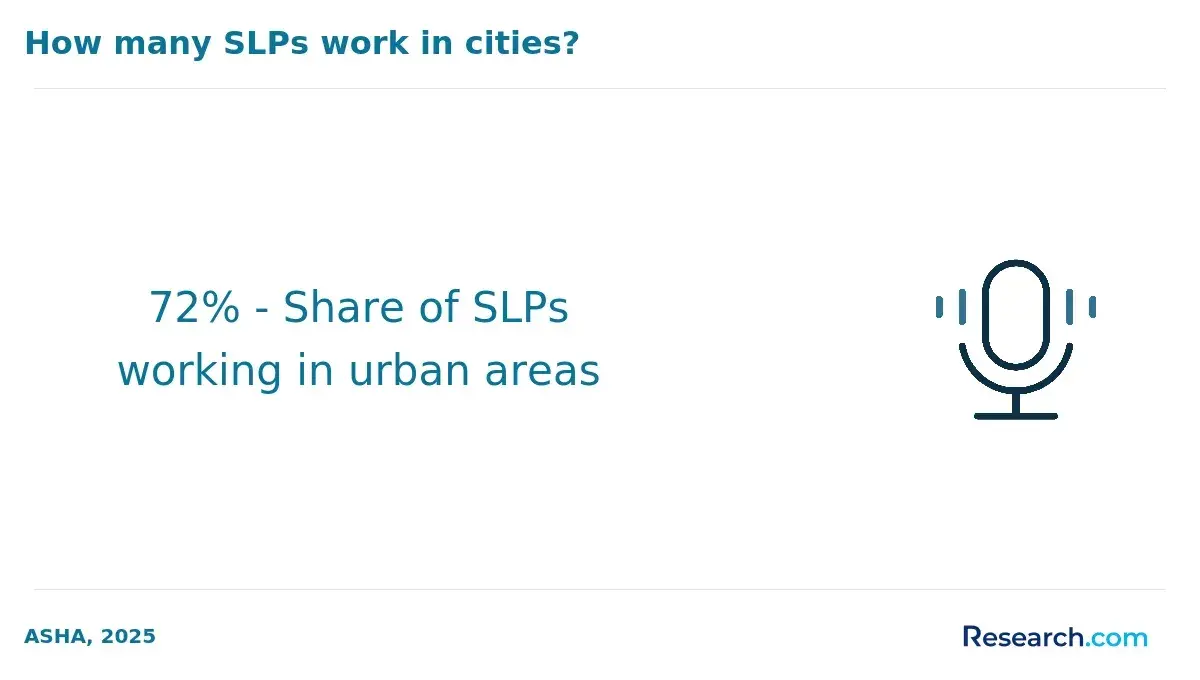
Competition may be stronger in Little Rock and other larger employment centers because more candidates prefer urban areas. Rural districts, smaller clinics, and underserved regions may have fewer applicants. New graduates can improve their prospects by gaining strong clinical references, developing documentation skills, preparing for school and medical interviews, and being flexible about location.
How to improve your first SLP job search in Arkansas
Complete clinical placements in the setting where you want to work after graduation.
Ask supervisors for specific feedback you can cite in interviews.
Prepare examples of evaluation, therapy planning, family education, and collaboration.
Build comfort with IEP documentation if you want school roles.
Develop swallowing, cognitive-communication, or adult neuro experience if you want medical roles.
Consider rural opportunities if you want less competition and high community impact.
One Arkansas clinician described choosing the state because school demand was strong, even though Little Rock roles could be competitive. For her, the combination of community support, lower living costs, and opportunities to help children communicate made the decision worthwhile.
What career and advancement opportunities are available for a speech language pathologist in Arkansas?
Speech-language pathology offers several advancement routes in Arkansas. Some SLPs remain in direct clinical care and develop deep expertise with specific populations. Others move into supervision, program coordination, private practice ownership, research, consulting, or higher education.
Career stage
Typical roles
Advancement focus
Entry level
School SLP, clinical fellow, rehabilitation SLP, outpatient clinician
Build assessment skills, therapy planning, documentation habits, and confidence with caseload management.
Experienced clinician
Lead SLP, specialist clinician, telepractice provider, private practice clinician
Develop expertise in areas such as literacy, augmentative communication, swallowing, autism, fluency, or adult neurogenic communication disorders.
Leadership
Clinical supervisor, department lead, program coordinator, special services administrator
Supervise clinicians, manage programs, oversee compliance, guide service delivery, and improve systems.
Use SLP expertise outside a traditional full-time therapy caseload.
School-based SLPs may manage a caseload of around 45 students, while clinicians in other settings may have different productivity expectations. As you gain experience, you can pursue specialized responsibilities in literacy, augmentative and alternative communication, swallowing, voice, early intervention, autism services, adult rehabilitation, or telepractice.
If your long-term goal includes teaching future clinicians, conducting research, or moving into academic leadership, compare advanced study options carefully. Related graduate pathways, including audiology master’s degree programs, can also help you understand how communication sciences careers differ before committing to one direction.
What professional associations and support networks can boost your SLP career in Arkansas?
Professional associations can help Arkansas SLPs stay current, find mentors, learn about continuing education, and build referral networks. Local and state organizations may offer conferences, workshops, advocacy updates, peer support, and leadership opportunities.
Networking is not only useful for job hunting. It can also help clinicians compare documentation systems, understand school district expectations, learn about payer changes, and find supervision or consultation for difficult cases. Some SLPs also benefit from looking at adjacent professions. For example, exploring how to become a librarian in Arkansas may be relevant for clinicians interested in literacy, language development, community programming, and educational access.
How can SLP certifications propel your career growth in Arkansas?
Advanced certifications can help an Arkansas SLP demonstrate focused expertise, but they should be chosen strategically. A credential is most valuable when it aligns with your caseload, employer needs, and long-term goals. For example, a school-based clinician may prioritize literacy, autism, or augmentative communication training, while a medical SLP may focus on swallowing, voice, or neurological rehabilitation.
Before paying for a certification, ask whether employers in your target setting recognize it, whether it qualifies for continuing education, and whether it will improve clinical competence—not just resume appearance. Research.com’s guide to SLP certifications can help you compare options for career development.
How can telepractice and digital innovation benefit your SLP career in Arkansas?
Telepractice can expand access to speech-language services in Arkansas, particularly for rural communities, clients with transportation barriers, and organizations facing provider shortages. Through secure platforms, SLPs may provide remote assessment, therapy, consultation, progress monitoring, and caregiver coaching when telepractice is clinically appropriate and permitted by applicable rules.
Digital tools can also improve scheduling, data tracking, documentation, and collaboration. However, telepractice requires careful attention to privacy, consent, client suitability, emergency procedures, technology access, and payer rules. SLPs interested in school-based mental and behavioral collaboration may also find it useful to understand how to become a school psychologist in Arkansas, since both roles may support students with complex learning and communication needs.
How can interdisciplinary expertise enhance your SLP career in Arkansas?
SLPs often work at the intersection of language, learning, behavior, health, and family systems. Building knowledge outside speech-language pathology can make your therapy more practical and your collaboration stronger. Educational methods, for example, are especially useful for school-based SLPs who support reading, writing, classroom participation, and academic language.
Clinicians who want to strengthen their instructional approach may benefit from studying teaching methods, curriculum design, and classroom communication. Research.com’s guide on how to become an English teacher in Arkansas can provide useful context for SLPs who work closely with language, literacy, and academic communication.
How can a background in psychology enhance your success as a speech language pathologist in Arkansas?
Psychology can strengthen SLP practice because communication is connected to cognition, development, behavior, emotion, attention, memory, and social interaction. A clinician who understands developmental and behavioral principles may be better prepared to engage clients, adapt therapy, support families, and coordinate with mental health or school teams.
This does not mean an SLP should practice outside the speech-language pathology scope. Rather, psychology knowledge can improve referral judgment, collaboration, and treatment planning. Students who want a stronger foundation in human behavior can compare programs through Research.com’s guide to the best psychology schools in Arkansas.
How can integrating mental health perspectives enhance your SLP practice in Arkansas?
Communication challenges can affect confidence, relationships, school participation, employment, and family stress. For some clients, anxiety, trauma, depression, behavioral needs, or family dynamics may influence therapy engagement and progress. SLPs do not replace mental health providers, but they often collaborate with them.
An integrated care mindset helps SLPs recognize when communication concerns overlap with emotional or relational factors. Understanding adjacent fields, such as how to become a MFT in Arkansas, can clarify when referral or collaboration may improve client support.
What challenges should you consider as a speech language pathologist in Arkansas?
SLP work can be meaningful, but it is not low-pressure. Before entering the field, consider the workload, documentation, emotional demands, resource limitations, and administrative responsibilities that may come with the job.
Challenge
How it can affect SLPs
How to prepare
High caseloads
Some SLPs report serving 40 to 50 clients at once, which can make individualized planning and follow-up difficult.
Build systems for scheduling, prioritizing, grouping when appropriate, and tracking goals.
Paperwork and meetings
Documentation, IEP meetings, evaluation reports, treatment plans, and compliance tasks can reduce direct therapy time.
Learn efficient documentation habits during graduate training and supervised practice.
Limited materials
Underfunded schools or clinics may not have enough therapy tools, tests, or technology.
Develop adaptable therapy strategies and ask employers about resources before accepting a position.
Diverse client needs
SLPs may serve clients with very different diagnoses, ages, communication profiles, and family situations.
Pursue continuing education and consultation in areas where your caseload is expanding.
Unqualified service providers
Families may encounter people offering “speech” services without appropriate SLP training or licensure.
Educate clients about licensed services, scope of practice, and evidence-based care.
Billing and insurance complexity
Private practice and medical roles may involve payer rules, authorizations, denials, and detailed documentation requirements.
Learn reimbursement basics and ask employers what administrative support is available.
These challenges do not mean the career is a poor choice. They mean you should choose programs and employers carefully. If affordability is a major concern, comparing best value online speech pathology degrees may help reduce education costs, but accreditation and licensure alignment should remain the top priority.
How can mentorship accelerate your career transition for SLPs in Arkansas?
Mentorship can shorten the learning curve between graduate school and independent practice. A strong mentor can help you understand Arkansas licensure steps, manage first-year caseloads, prepare for difficult conversations with families, improve documentation, and decide which specialties are worth pursuing.
Good mentors do more than answer questions. They model clinical reasoning, ethical decision-making, workplace communication, and professional boundaries. School-based SLPs may also benefit from learning how related student support roles operate. For example, Research.com’s guide to how to become a school counselor in Arkansas can help SLPs understand another key role in student wellness and support.
How to find a useful SLP mentor
Ask graduate faculty or clinical supervisors for introductions.
Join Arkansas professional associations or continuing education events.
Seek mentors in your target setting, such as schools, hospitals, private practice, or telepractice.
Look for someone who gives practical feedback, not just encouragement.
Clarify expectations, meeting frequency, confidentiality, and goals at the start.
What other career paths can you consider if you're interested in speech-language pathology in Arkansas?
If you are drawn to communication, child development, healthcare, disability services, or counseling but are unsure about becoming an SLP, compare related careers before committing to a master’s degree. Some paths require less graduate training, while others require different licensure.
Career path
Why it may appeal to future SLPs
Key difference from SLP
Special education teacher
Works with students who have learning, developmental, or communication-related needs.
Focuses on classroom instruction and educational programming rather than clinical speech-language diagnosis and treatment.
Audiologist
Serves people with hearing and balance concerns that may affect communication.
Requires a different clinical training and licensure pathway.
Occupational therapist
Supports daily living, sensory, motor, feeding, and functional participation needs.
Focuses on occupation and functional independence rather than speech-language treatment.
School counselor
Supports students’ academic, emotional, social, and career development.
Provides counseling and school support rather than communication therapy.
Mental health counselor
Helps clients with emotional, behavioral, and psychological concerns.
Uses counseling and mental health treatment rather than SLP assessment and therapy.
If teaching interests you, Research.com’s guide to the types of teaching certificates in Arkansas can help you understand education-related alternatives. Comparing these options early can prevent you from investing in a graduate path that does not match your preferred day-to-day work.
What is the work-life balance like for a speech language pathologist in Arkansas?
Work-life balance depends heavily on setting. School-based SLPs often have more predictable schedules aligned with the academic calendar, while medical and private practice roles may involve variable hours, productivity expectations, documentation after sessions, or client scheduling demands. Telepractice and part-time roles may offer flexibility, but they still require careful boundaries and compliance with privacy and documentation standards.
Setting
Potential work-life balance advantages
Potential drawbacks
Schools
Structured calendar, predictable daytime schedule, collaboration with education teams.
High caseloads, IEP deadlines, meetings, and school-year workload peaks.
Hospitals and rehabilitation
Team-based clinical work and varied cases.
Medical complexity, documentation pressure, weekend coverage in some settings, and emotional intensity.
Private practice
More control over niche, schedule, and business model.
Billing, marketing, cancellations, administrative work, and income variability.
Telepractice
Reduced commute and access to clients across locations.
Technology issues, privacy requirements, client suitability limits, and screen fatigue.
Students who value a school-year rhythm may also want to compare related education careers. For example, Research.com’s guide to how to become an elementary school teacher in Arkansas can help readers understand another structured school-based profession.
What are the continuing education and professional development requirements for SLPs in Arkansas?
Arkansas SLPs must complete 30 hours of continuing education every two years to maintain licensure. Continuing education helps clinicians stay current with evidence-based practice, ethical standards, legal updates, technology changes, and specialized treatment methods.
CE options may include workshops, webinars, conferences, university coursework, professional association training, and specialized clinical programs. The strongest CE plan is tied to your caseload. For example, school clinicians may prioritize language, literacy, autism, AAC, and IEP compliance, while medical clinicians may focus on dysphagia, cognitive-communication, neurological rehabilitation, and voice.
If you are still at the program-selection stage and want to understand admissions flexibility, Research.com’s guide to the easiest SLP programs to get into can help you compare options. Do not choose a program only because it appears easier to enter; confirm accreditation, clinical training quality, licensure alignment, and total cost.
How do billing and insurance challenges impact your practice in Arkansas?
Billing and insurance can affect how services are authorized, documented, reimbursed, and continued. This is especially important in private practice, outpatient clinics, and healthcare settings. Even when SLPs are not responsible for submitting claims themselves, their documentation often determines whether services are approved or denied.
Billing issues SLPs should understand
Prior authorization: Some payers may require approval before therapy begins or continues.
Medical necessity documentation: Notes must clearly show why services are needed and how therapy supports measurable goals.
Coverage limits: Insurance may restrict visit numbers, diagnoses, or therapy types.
Claim denials: Incomplete or unclear documentation can delay payment or interrupt services.
Ethical advocacy: SLPs may need to explain clinical recommendations while respecting payer rules and client financial realities.
Administrative complexity is not unique to SLPs. Professionals studying mental health counselor requirements in Arkansas face similar issues around documentation, reimbursement, confidentiality, and client access.
What do speech language pathologists say about their careers in Arkansas?
One of the best parts of this career is the range of people I get to serve. I may spend the morning supporting a child with delayed speech in a school and the afternoon helping an adult regain communication after a stroke. The work changes every day, and Arkansas has a professional community that makes me feel connected rather than isolated.Kate
The demand for SLPs has allowed me to build a schedule that supports both my clients and my family. I still get to do work that matters, but I also have room for life outside the job. Watching clients make progress keeps me committed to the field.Sam
I value the community feel here. In schools, I work closely with families and teachers, and everyone is focused on helping children communicate more confidently. The lower cost of living also makes it easier to enjoy life outside of work.Christine
Arkansas has a clear SLP pathway: earn the graduate degree, complete supervised experience, pass Praxis, apply for licensure, and maintain continuing education.
A master’s degree is the key academic requirement: a bachelor’s degree alone is not enough for independent SLP practice in Arkansas.
Demand is strong: Arkansas projects 24.6% employment growth for SLPs from 2022 to 2032, much higher than the 6.2% projected statewide growth for all occupations.
Salary should be evaluated in context: the stated Arkansas average is $96,870 as of 2023, and the state’s cost of living index is about 12% lower than the national average.
Setting matters: schools, hospitals, rehabilitation centers, private practices, and telepractice roles differ in schedule, caseload, documentation, pay structure, and stress level.
Accreditation is non-negotiable: choose a CAA-accredited program and confirm that it supports Arkansas licensure before enrolling.
Do not overlook the practical realities: high caseloads, paperwork, limited materials, billing rules, and insurance restrictions can shape the daily job as much as therapy itself.
The strongest candidates prepare early: build clinical experience in your target setting, find mentors, study for Praxis before deadlines, and keep careful licensure documentation.
References:
American Speech-Language-Hearing Association. (2024, May 16). Arkansas teacher requirements for audiologists and speech-language pathologists. ASHA.
Arkansas Department of Education. (1997, August 1). Arkansas Department of Education guidelines for registration, training, scope of responsibilities, supervision and review of speech-language. Arkansas Department of Education.
Arkansas Board of Examiners in Speech-Language Pathology and Audiology. (2023, November 7). Examiners in speech-language pathology and audiology. Arkansas Department of Health.
Bureau of Labor Statistics. (2024). Occupational employment and wages, May 2023 - 29-1127 speech-language pathologists. BLS.
Bureau of Labor Statistics. (2024). Speech-language pathologists. BLS.
Healthy Arkansas. (2023, November 7). Examiners in speech-language pathology and audiology, Arkansas Board. Arkansas Department of Health.
Transform Arkansas. (2022, March 22). School speech pathologist. Transform Arkansas.
Other Things You Should Know About Becoming a Speech Language Pathologist in Arkansas
What are the licensing requirements for becoming a speech-language pathologist in Arkansas in 2026?
To become a speech-language pathologist in Arkansas in 2026, you must complete a master's degree in speech-language pathology, pass the Praxis exam, complete a clinical fellowship, and apply for licensure through the Arkansas Board of Examiners in Speech-Language Pathology and Audiology.
What are the educational requirements to become a speech-language pathologist in Arkansas in 2026?
To become a speech-language pathologist in Arkansas in 2026, you must earn a master's degree in Speech-Language Pathology from an accredited program, complete a clinical fellowship, and pass the Praxis Examination in Speech-Language Pathology to obtain licensure.