2027 Speech-Language Pathologist vs. Speech Therapist: Explaining the Difference

Co-Founder and Chief Data Scientist

Reviewed by Rhea Paul, PhD
SLP Education & Research Expert
If you are looking for care—or considering a career—the difference between a speech-language pathologist and a speech therapist can seem consequential. In most U.S. settings, they are two names for the same professional, but job titles alone do not establish someone's qualifications.
This guide explains what these clinicians do, how they differ from assistants and audiologists, and what training and credentials to check. You will leave knowing whom to contact for a communication or swallowing concern and which education path matches the work you want to do.
Key Things You Should Know
- Usually the same role: "Speech therapist" is a common name for a speech-language pathologist (SLP), not a separate, lower-level profession. Verify the person's license rather than relying on the title.
- Different from an assistant: SLPs independently evaluate, diagnose, and plan treatment; speech-language pathology assistants deliver assigned services under supervision, subject to state rules.
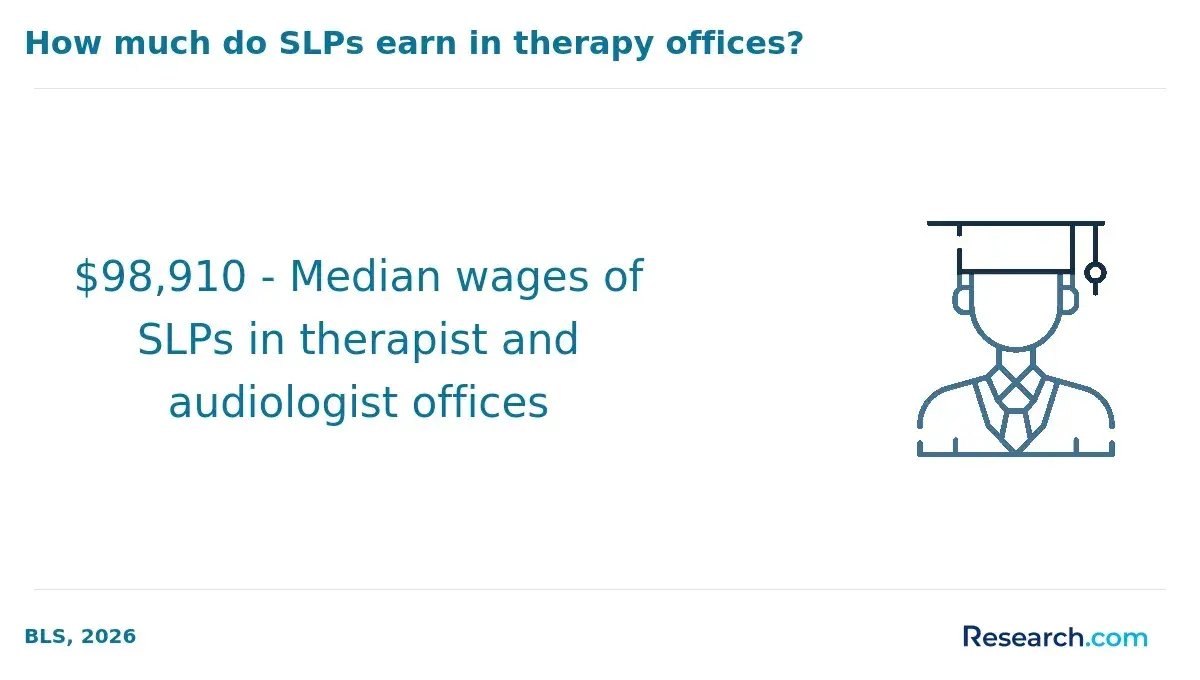
- Career commitment: The SLP route generally requires a master's degree and state licensure. The U.S. Bureau of Labor Statistics reports a $97,870 median annual wage in May 2025 and projects 17% employment growth from 2025 to 2035; neither figure predicts an individual's outcome.
- What is the difference between a speech-language pathologist and a speech therapist? Speech Therapist vs SLP
- Why do professionals use the terms speech-language pathologist and speech therapist interchangeably? Shared Professional Terms
- What conditions do speech-language pathologists evaluate and treat? Conditions SLPs Treat
- How do speech-language pathologists differ from speech-language pathology assistants? SLPs vs Assistants
- How can patients verify a speech-language pathologist's credentials and scope of practice? Verifying SLP Credentials
What is the difference between a speech-language pathologist and a speech therapist?
In ordinary U.S. usage, there is usually no difference. "Speech-language pathologist" is the formal professional title, commonly shortened to SLP. "Speech therapist" is a familiar alternative used by patients, families, and some employers. Either term can describe a licensed clinician who evaluates and treats communication and swallowing disorders.
The distinction that matters is credential versus job label. A posting or provider profile that says "speech therapist" does not, by itself, prove the person is licensed as an SLP. Check the individual's state license, role, and supervision arrangement—especially when a service is described broadly as "speech therapy."
Why do professionals use the terms speech-language pathologist and speech therapist interchangeably?
"Speech therapist" is shorter and familiar to the public. "Speech-language pathologist" better reflects the profession's full scope: clinicians work on language, voice, fluency, cognition-related communication, and swallowing as well as speech sounds. A clinician may use the familiar term when explaining services while using SLP on a license or professional record.
Do not infer that one title signals a different degree, specialty, or pay grade. Instead, ask what the clinician is licensed to do and whether their experience matches the concern—for example, pediatric language development or adult swallowing rehabilitation.
What conditions do speech-language pathologists evaluate and treat?
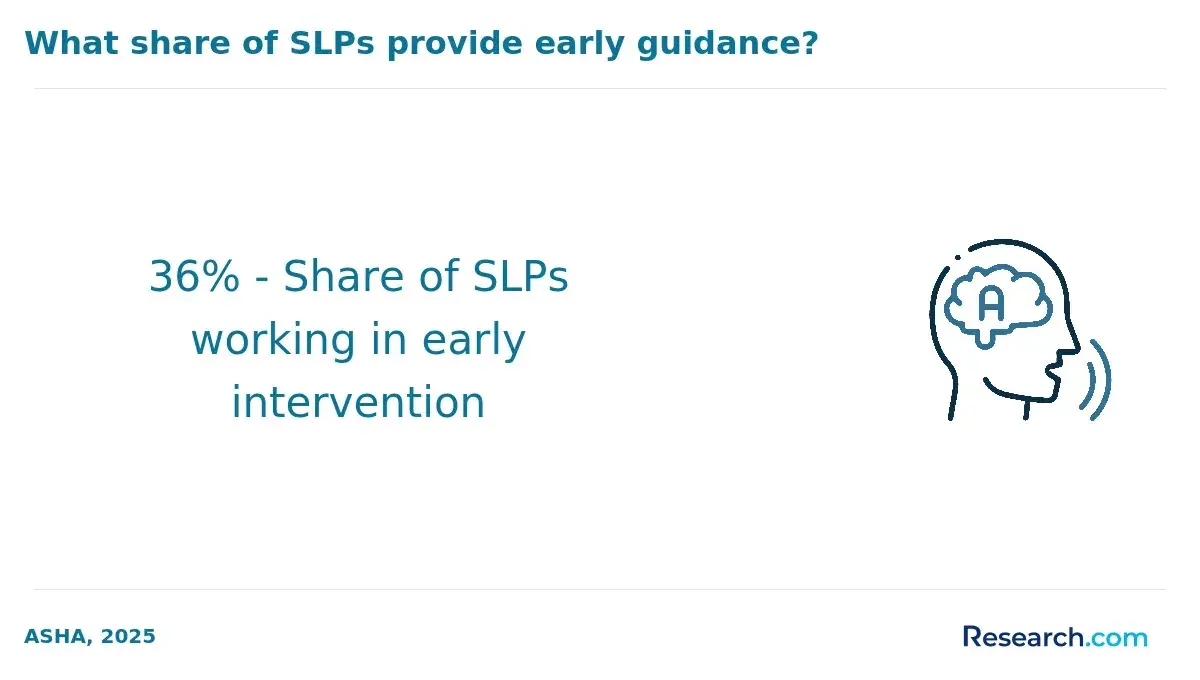
SLPs serve children and adults whose communication or swallowing abilities affect daily life. The clinician's work depends on their training, setting, and the patient's needs. Common areas include:
- Speech and fluency: Speech-sound difficulties, motor speech disorders, and stuttering.
- Language and communication: Difficulty understanding or expressing language, including communication needs associated with developmental conditions or brain injury.
- Voice and cognitive communication: Voice difficulties and problems using attention or memory to communicate effectively.
- Feeding and swallowing: Swallowing difficulties and, where within the clinician's competence and setting, feeding concerns.
An SLP may assess communication needs associated with autism, but an SLP evaluation is not necessarily a comprehensive autism diagnosis. Likewise, swallowing care may involve physicians, dietitians, or other specialists. If you need care for a particular condition, ask whether the SLP has relevant experience rather than assuming every clinician treats every area.
How do speech-language pathologists differ from speech-language pathology assistants?
A speech-language pathology assistant (SLPA) supports services planned and supervised by an SLP. The assistant route can appeal to someone who wants earlier entry into hands-on work, but it does not confer the SLP's independent clinical responsibilities. State rules determine an assistant's permitted tasks, qualifications, and supervision.
This comparison helps clarify which role matches the decisions you want to make at work:
| Decision factor | Speech-language pathologist | Speech-language pathology assistant |
| Clinical responsibility | Evaluates, diagnoses, develops treatment plans, and oversees care | Carries out assigned activities under required SLP supervision |
| Typical education path | Graduate-level SLP education and clinical training | State-dependent preparation; may include associate, bachelor's, or other qualifying coursework |
| Independent practice | Possible within license and employer rules | No independent SLP practice |
Working as an SLPA can help you test your interest in the field, but it is not a substitute for a qualifying SLP master's degree. If your undergraduate major is unrelated, investigate speech pathology master's programs with built-in leveling; compare their prerequisite, clinical placement, and total-cost requirements before enrolling.
What education and clinical training does a speech-language pathologist need?
The usual U.S. path is a bachelor's degree or equivalent prerequisite preparation, followed by a master's program in speech-language pathology that includes supervised clinical training. Applicants without a communication sciences and disorders background may need leveling courses before or during graduate study. Graduates then complete any state-required postgraduate supervised experience and meet other licensing conditions.
When comparing master's programs, check the Council on Academic Accreditation in Audiology and Speech-Language Pathology (CAA) accreditation status, how placements are arranged, and whether the program's disclosures address the state where you plan to practice. Online coursework does not eliminate in-person clinical training. An accelerated schedule can also compress, rather than remove, the workload; assess the weekly study hours for accelerated speech pathology alongside placement and employment commitments.
Before accepting an offer, request a written estimate of tuition, mandatory fees, prerequisite costs, and likely placement-related expenses. That gives you a more useful comparison than program length or advertised tuition alone.
What licenses and certifications are required to practice as an SLP?
State licensure is the central legal requirement for clinical practice. Requirements vary but commonly address qualifying graduate education, supervised clinical experience, an examination, and an application to the relevant state board. School-based SLPs may also need a separate credential from a state education agency. Check the rules for the state and setting where you intend to work.
ASHA's Certificate of Clinical Competence in Speech-Language Pathology (CCC-SLP) is a professional certification, not a universal substitute for a state license. Some states or employers incorporate it into their requirements; others set different conditions. If you are still planning graduate study, review SLP master's application requirements, then confirm that each prospective program supports your intended licensure path. Do not assume admission—or graduation alone—authorizes practice.
How does a speech-language pathologist differ from an audiologist?
SLPs focus on communication and swallowing; audiologists focus on hearing and balance. The professions may collaborate—for example, when hearing loss affects a child's language development—but their training and clinical responsibilities are distinct.
The comparison below identifies the main difference for someone choosing a clinician or a career:
| Career | Primary focus | Typical qualifying degree | Example of when to seek care |
| Speech-language pathologist | Communication and swallowing assessment and treatment | Master's degree | Difficulty speaking, understanding language, or swallowing |
| Audiologist | Hearing and balance assessment and management | Doctor of Audiology (AuD) or other qualifying doctoral degree | Hearing concerns, hearing-device needs, or balance symptoms |
If both paths interest you, compare the work you want to perform before comparing degree prices. For the SLP route, affordable online speech pathology programs with student support can be a starting point, but confirm each program's full costs and clinical requirements; an SLP master's is not a route to audiology licensure.
Where do speech-language pathologists work with children and adults?
SLPs work in schools, hospitals, outpatient clinics, rehabilitation facilities, and other care settings. Some provide services through telepractice where licensing and workplace rules allow it. A school-based clinician might support a student's communication in class; a hospital-based clinician might evaluate swallowing after a stroke. Setting therefore shapes both the daily work and the experience an employer may seek.
For career planning, the Bureau of Labor Statistics projects about 12,500 SLP openings per year on average from 2025 to 2035. That national projection signals opportunities across the profession, not guaranteed openings in a particular location or specialty. The reported national median wage also should not be treated as an entry-level offer: setting, location, experience, and hours worked affect compensation. Explore factors affecting speech pathologist pay when weighing roles against education costs.
When should someone see a speech-language pathologist for communication or swallowing concerns?
Consider an SLP evaluation when communication difficulties persist, interfere with participation, or raise concerns for a child's development. Adults may benefit after a stroke, brain injury, or other change in speech, language, voice, or swallowing. A primary care clinician or relevant specialist can help identify the appropriate referral, particularly when several conditions may be involved.
For swallowing concerns, do not wait for routine therapy if someone has trouble breathing or is choking—seek emergency help. Sudden speech or language difficulty can also be a sign of stroke and warrants immediate emergency evaluation. For nonemergency concerns, tell the prospective SLP what has changed, when it began, and which activities are affected; that helps determine whether their expertise and setting fit your needs.
How can patients verify a speech-language pathologist's credentials and scope of practice?
Start with the state licensing board's public lookup and match the clinician's name to an active SLP license. If care will occur in a school, ask about any required school credential. You can also ask about CCC-SLP certification, but a certification claim should not replace checking legal authorization to practice.
Before booking care or committing to a training program, make these checks:
- Confirm the clinician's license and ask whether an assistant will deliver any services under supervision.
- Ask about experience with the specific communication or swallowing concern and who will perform the evaluation.
- For telepractice, confirm that the clinician may serve a patient located in your state and ask about coverage or payment before the appointment.
- If you are a prospective student, verify program accreditation and state licensure disclosures directly, then ask who arranges clinical placements and where required travel occurs.
A common mistake is assuming "online" means no site-based obligations. When assessing residency scheduling in fast online SLP programs, distinguish campus visits from clinical placements and get both requirements in writing. Neither a convenient format nor a professional-sounding title removes the need to verify the relevant credential.
References:
- U.S. Bureau of Labor Statistics - Speech-Language Pathologists https://www.bls.gov/ooh/healthcare/speech-language-pathologists.htm
- ASHA EdFind - Accredited Speech-Language Pathology Programs https://find.asha.org/ed/
- Audiology and Speech-Language Pathology Interstate Compact https://aslpcompact.com/compact-map/
- University of Scranton - Master of Science (M.S.) in Speech-Language Pathology https://www.scranton.edu/academics/pcps/health-and-human-performance/programs/speech-language-pathology/index.shtml
- University of Nebraska at Kearney - Speech-Language Pathology, Master of Science in Education (Online Track) https://www.unk.edu/online/degrees-programs/speech-language-pathology-online.php
- Pepperdine University - Master of Science in Speech-Language Pathology https://healthscience.pepperdine.edu/online-masters-in-speech-language-pathology/
- Idaho State University - Master of Science in Speech-Language Pathology (Online/Distance Education) https://www.isu.edu/slp/programs-offered/slp-graduate-program/
- Pennsylvania Western University - Master of Science in Speech-Language Pathology https://online.pennwest.edu/programs/speech-language-pathology-grad/index.php
Other Things You Should Know About Speech Pathology
A bachelor's degree alone generally does not qualify someone for independent SLP practice. Because titles and protected terms vary by state, check the person's actual license and role rather than treating "speech therapist" as proof of qualifications.
An SLP can evaluate communication and social communication and may contribute to a multidisciplinary autism assessment. Ask who provides a formal autism diagnosis in your area; an SLP communication evaluation does not necessarily replace that assessment.
A speech-language pathologist must hold a state license, and most states require the CCC-SLP from the American Speech-Language-Hearing Association for full professional recognition. To diagnose and treat independently, the clinician must also meet that state’s supervised clinical practicum and passing exam requirements.
It depends on the setting, insurer, and reason for care. Ask the provider and your health plan whether a referral, medical order, or prior authorization is needed. School-based evaluation follows a different process through the school system.