Research.com is an editorially independent organization with a carefully engineered commission system that’s both transparent and fair. Our primary source of income stems from collaborating with affiliates who compensate us for advertising their services on our site, and we earn a referral fee when prospective clients decided to use those services. We ensure that no affiliates can influence our content or school rankings with their compensations. We also work together with Google AdSense which provides us with a base of revenue that runs independently from our affiliate partnerships. It’s important to us that you understand which content is sponsored and which isn’t, so we’ve implemented clear advertising disclosures throughout our site. Our intention is to make sure you never feel misled, and always know exactly what you’re viewing on our platform. We also maintain a steadfast editorial independence despite operating as a for-profit website. Our core objective is to provide accurate, unbiased, and comprehensive guides and resources to assist our readers in making informed decisions.

2026 How to Become a Speech Langage Pathologist in New Jersey: Requirements & Certification

Imed Bouchrika, PhD

by Imed Bouchrika, PhD

Co-Founder and Chief Data Scientist

Table of Contents
  1. How can you become a speech language pathologist in New Jersey?
  2. What is the minimum educational requirement to become a speech language pathologist in in New Jersey?
  3. What does a speech language pathologist do?
  4. What is the certification and licensing process for a speech language pathologist in New Jersey?
  5. What ethical and legal guidelines should you observe as a speech language pathologist in New Jersey?
  6. How much can you earn as a speech language pathologist in New Jersey?
  7. How does collaboration with special education teachers impact the role of a speech language pathologist in New Jersey?
  8. What is the job market like for a speech language pathologist in New Jersey?
  9. What career and advancement opportunities are available for a speech language pathologist in New Jersey?
  10. What challenges should you consider as a speech language pathologist in New Jersey?
  11. Are there specific requirements for teaching as a speech language pathologist in New Jersey?
  12. Can obtaining dual certification enhance your career as an SLP in New Jersey?
  13. What emerging trends are shaping the future of speech language pathology in New Jersey?
  14. Can speech-language pathology skills be transferred to related careers in New Jersey?
  15. How Can Ongoing Professional Development Enhance Your SLP Career in New Jersey?
  16. How can collaboration with school counselors enhance SLP practice in New Jersey?
  17. How can collaboration with English teachers boost SLP outcomes in New Jersey?
  18. How can collaboration with marriage and family therapists enhance holistic SLP outcomes in New Jersey?
  19. How can mental health integration refine your SLP practice in New Jersey?
  20. What do speech language pathologists say about their careers in New Jersey?

How can you become a speech language pathologist in New Jersey?

The path to becoming an SLP in New Jersey is sequential: education first, supervised experience next, then examination and licensure. Because each step depends on the one before it, students should map the process before applying to graduate programs.

StepWhat You Need to DoWhy It Matters
1. Complete undergraduate preparationEarn a bachelor’s degree, ideally with coursework related to communication sciences, linguistics, psychology, education, biology, or human development.Graduate programs often expect foundational knowledge before admitting students to a master’s program.
2. Earn a master’s degreeComplete a master’s degree in speech-language pathology from an ASHA-accredited program, such as options available through institutions including Montclair State University and Rutgers University.The master’s degree is the core academic requirement for professional SLP licensure in New Jersey.
3. Gain supervised clinical experienceApply for the appropriate temporary license or supervised practice pathway and complete clinical internship or fellowship requirements, which commonly last around nine months.Supervised practice helps you move from classroom knowledge to independent clinical decision-making.
4. Pass the Praxis® examTake and pass the Praxis® speech-language pathology exam after completing the required academic and clinical preparation.The exam is used to assess whether candidates have the knowledge expected of entry-level SLPs.
5. Apply for New Jersey licensureSubmit required materials to the New Jersey Division of Consumer Affairs, including official documentation such as transcripts and test scores.You cannot practice independently in licensed SLP roles without the proper state credential.
6. Maintain your licenseComplete 20 hours of continuing education every two years and meet any jurisprudence or renewal requirements.Renewal keeps your license active and helps ensure your practice stays current.

Applicants should also build a strong graduate school application. Competitive programs may look for an undergraduate GPA of at least 3.0, strong recommendations, a clear statement of purpose, relevant volunteer or observation experience, and, where required, GRE scores. If you are still exploring the broader path, Research.com’s guide on how to become a speech pathologist explains training and certification in more detail.

One workforce pattern worth noting is the gender distribution of SLPs in the U.S. The profession is heavily female, with 90% of SLPs in the U.S. being women compared with 4.83% men, as shown below.

What is the gender distribution of SLPs in the U.S.?<br>

What is the minimum educational requirement to become a speech language pathologist in in New Jersey?

The minimum education needed to become a licensed speech-language pathologist in New Jersey is a master’s degree in speech-language pathology. A bachelor’s degree is typically the first step, but the graduate degree is the required professional credential for licensure.

Education ComponentTypical RequirementDecision Tip
Bachelor’s degreeUsually takes about four years and may be in communication sciences and disorders or a related field.If your bachelor’s degree is outside the field, ask graduate programs whether you need prerequisite coursework before admission.
Master’s degreeUsually takes about two additional years and must prepare students for clinical practice in speech-language pathology.Choose a program that supports New Jersey licensure and offers strong clinical placement options.
Total timelineAbout six years of higher education before entering professional practice.Part-time study, prerequisite courses, or delayed clinical placements can extend the timeline.
Approximate master’s costProgram costs may range from $20,000 to $60,000 depending on institution type and other factors.Compare total cost, not tuition alone; include fees, commuting, clinical placement costs, and lost income if studying full time.
Core courseworkAnatomy and physiology of speech and hearing, language development, communication disorders, swallowing, assessment, intervention, and clinical methods.Look for coursework aligned with the populations you want to serve, such as children, adults, medical patients, or bilingual clients.
AccreditationStudents should choose an ASHA-accredited graduate program.Accreditation is one of the first items to verify before applying or enrolling.

Montclair State University is one New Jersey example of a master’s program in speech-language pathology that is described as ASHA-accredited. Students who want to compare broader graduate options can also review accredited master’s in audiology and speech pathology programs.

After meeting the academic requirement, the next phase is speech pathology training and certification, including supervised clinical experience, examination, and licensure.

What does a speech language pathologist do?

Speech-language pathologists assess, diagnose, and treat communication and swallowing disorders. Their clients may include toddlers with delayed language, school-age children with articulation or fluency needs, adults recovering from strokes, patients with voice disorders, or older adults with swallowing difficulties.

Common SLP Responsibilities

  • Evaluate speech, language, voice, fluency, cognition, and swallowing. SLPs use formal and informal assessments to understand a client’s abilities and challenges.
  • Create individualized treatment plans. Therapy goals are based on diagnosis, age, setting, family priorities, medical history, and educational or functional needs.
  • Deliver direct therapy. Sessions may target articulation, expressive or receptive language, social communication, augmentative and alternative communication, voice, fluency, cognition, or swallowing.
  • Document progress. SLPs maintain records, write reports, track goals, and communicate outcomes to families, schools, healthcare teams, or insurers.
  • Coach families and caregivers. Effective treatment often requires strategies that continue outside the therapy room.
  • Collaborate with other professionals. Depending on the setting, SLPs may work with teachers, physicians, occupational therapists, psychologists, counselors, nurses, and family therapists.

Skills That Matter Most

  • Clear communication. SLPs must explain complex clinical information in ways clients, parents, teachers, and healthcare teams can use.
  • Clinical reasoning. Strong assessment and treatment decisions depend on careful interpretation of evidence and client response.
  • Patience and empathy. Progress can be slow, especially when clients are frustrated, medically fragile, or anxious.
  • Adaptability. A school caseload, hospital unit, private practice schedule, and telepractice session each require different workflows.
  • Documentation discipline. Accurate records are essential for compliance, reimbursement, IEP services, and continuity of care.

An SLP from New Jersey who graduated from Montclair State University described the work this way: “Every day, I get to help people find their voice again, and that’s incredibly fulfilling.” She recalled helping a young boy produce a difficult sound and said, “Seeing his face light up when he finally said ‘s’ correctly was priceless.” Those moments are one reason many clinicians stay in the field despite the workload.

Pay equity remains an important issue in the profession. Male SLPs were reported to earn more than female SLPs, with average earnings of $92,470 versus $68,533 in 2022.

What is the salary difference between male and female SLPs?<br>

What is the certification and licensing process for a speech language pathologist in New Jersey?

New Jersey’s SLP licensing process verifies that applicants have the education, supervised clinical experience, examination performance, and legal knowledge required to practice safely. You should always confirm current requirements with the New Jersey Audiology and Speech-Language Pathology Advisory Committee before submitting an application, because fees, forms, and procedures can change.

Licensing RequirementWhat It InvolvesWhat to Check
Temporary licenseAfter completing the master’s degree, candidates may need a temporary license to complete supervised clinical internship experience.Confirm the current temporary license rules, supervision requirements, and application timing before starting work.
Supervised clinical experienceThe clinical internship is commonly around nine months under a licensed professional.Ask whether your employer or placement site has qualified supervisors and clear documentation procedures.
Praxis ExamCandidates must pass the Praxis Exam in Speech-Language Pathology.Plan test preparation around your graduation and licensure timeline so exam delays do not postpone employment.
State license applicationApplicants submit materials such as Praxis scores and official graduate transcripts to the New Jersey Audiology and Speech-Language Pathology Advisory Committee.Use the most current application checklist and keep copies of every submitted document.
Jurisprudence orientationNew Jersey requires an online jurisprudence orientation covering laws and regulations for practice.Complete this early if allowed so it does not delay final approval.
Background checksFingerprinting and background checks are typically part of the process.Schedule these promptly because processing times can vary.
FeesApplicants should budget for temporary licensing, Praxis testing, and final license application costs.Check the latest fee schedule before applying.
RenewalNew Jersey SLP licenses must be renewed every two years.Track continuing education throughout the renewal cycle instead of waiting until the deadline.

Some SLPs also pursue the Certificate of Clinical Competence in Speech-Language Pathology, commonly known as the CCC-SLP, through the American Speech-Language-Hearing Association. It is not the same thing as a New Jersey state license, but it can support professional mobility, credibility, supervision opportunities, and employer expectations in some settings.

If you are still comparing graduate pathways, Research.com’s list of master’s programs in audiology and speech pathology can help you evaluate accredited options before committing to a program.

Demand indicators also show why licensure preparation matters. In 2023, the percentage of respondents reporting shortages of speech-language pathologists increased sharply. ASHA data cited in the original article showed 27% in 2018, 29% in 2019, 34% in 2021, 36% in 2022, and 47% in 2023. This pattern points to growing workforce pressure and a need for qualified clinicians.

What ethical and legal guidelines should you observe as a speech language pathologist in New Jersey?

SLPs in New Jersey work with sensitive health, developmental, educational, and family information. Ethical practice is not optional; it affects client safety, legal compliance, professional trust, and licensure status.

Core Legal Responsibilities

  • Hold the appropriate New Jersey license before practicing independently in a licensed SLP role.
  • Complete the required graduate education, Praxis exam, and supervised clinical requirements.
  • Follow New Jersey Administrative Code provisions that govern professional practice standards.
  • Comply with federal laws such as the Individuals with Disabilities Education Act when serving students with disabilities.
  • Understand role boundaries, especially when working in schools, healthcare systems, or multidisciplinary practices.

Confidentiality and Consent

  • Protect client records and therapy documentation under HIPAA and any applicable school privacy rules.
  • Obtain informed consent before sharing information, except when disclosure is legally required.
  • Use caution when communicating about minors, custody issues, school records, and caregiver access to information.
  • Keep digital records, telepractice notes, and email communications secure.

Common Ethical Dilemmas

  • Parent requests versus clinical judgment: Families may want more intensive therapy, while evidence and assessment data may support a different plan.
  • Caseload pressure: School SLPs may struggle to balance service minutes, documentation, and meaningful intervention.
  • Scope of practice: SLPs should not provide services beyond their competence without training, supervision, or referral.
  • Conflicts of interest: Private practice, school referrals, and product recommendations should be handled transparently.

Joining the New Jersey Speech-Language-Hearing Association can help practitioners monitor regulatory updates, continuing education opportunities, and professional issues affecting practice in the state.

How much can you earn as a speech language pathologist in New Jersey?

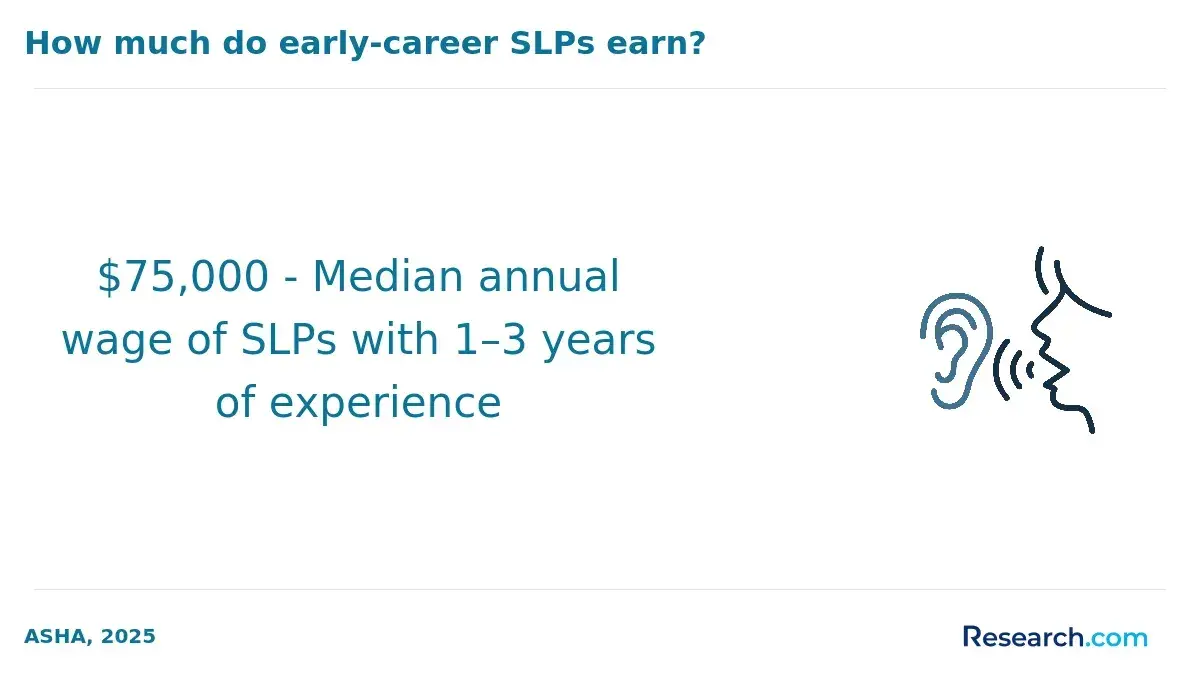
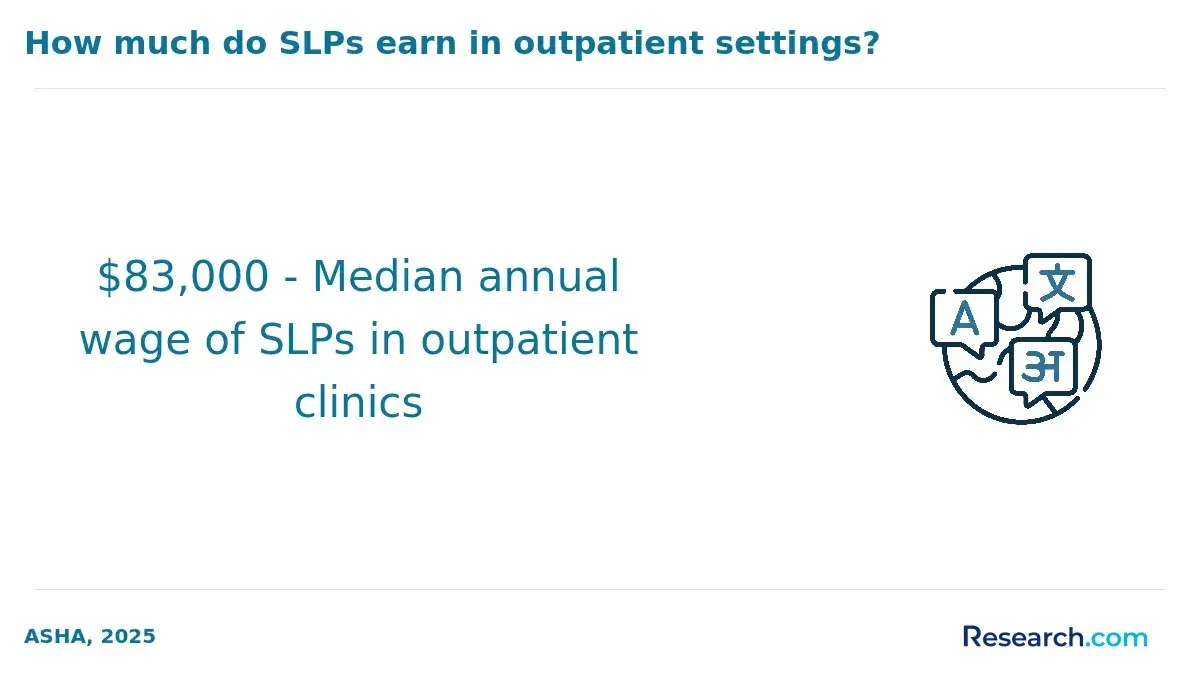
Speech-language pathologists in New Jersey have relatively strong earning potential compared with many education and healthcare support roles. The average salary is around $85,000 per year, while the median salary is about $83,000. The national average is around $80,000, so New Jersey pay can be attractive, especially for clinicians with experience, specialty skills, or high-demand work settings.

Salary FactorHow It Can Affect EarningsWhat to Consider
Work settingHospitals, rehabilitation centers, nursing facilities, schools, private practices, and research organizations may pay differently.Higher pay may come with more complex cases, productivity expectations, weekend coverage, or medical documentation demands.
LocationBergen County SLPs may earn upwards of $90,000, Morris County salaries may exceed $88,000, and Hudson County roles may be around $87,000.Compare pay with commuting time, housing costs, parking, and proximity to New York City or Philadelphia job markets.
ExperienceNew graduates usually earn less than experienced clinicians, supervisors, specialists, or practice owners.Ask employers about salary steps, annual raises, productivity bonuses, and supervision stipends.
SpecializationSkills in medical SLP, dysphagia, bilingual services, AAC, autism support, or complex school cases may improve competitiveness.Specialized work may require continuing education, mentorship, and stronger documentation skills.
Cost of livingNew Jersey’s cost of living index is about 20% higher than the national average.A higher salary may not translate into higher disposable income if housing and transportation costs are high.

Higher-Paying Industries to Explore

  • Healthcare: Hospitals, rehabilitation hospitals, and skilled nursing environments may offer higher compensation for clinicians with medical SLP skills.
  • Educational services: Schools can provide stable schedules and benefits, though pay varies by district and contract.
  • Research and development: Organizations developing therapies, assessments, or communication technologies may offer specialized roles.

Salary should never be evaluated in isolation. Benefits, retirement contributions, health insurance, school-year schedules, loan repayment options, clinical support, and caseload expectations can significantly change the real value of an offer.

How does collaboration with special education teachers impact the role of a speech language pathologist in New Jersey?

In New Jersey schools, SLPs often work closely with special education teachers because many students who receive speech-language services also need academic, behavioral, or developmental support. Collaboration is especially important during IEP development, classroom intervention, progress monitoring, and parent communication.

Collaboration AreaSLP ContributionSpecial Education Teacher Contribution
IEP planningIdentifies communication goals, service delivery needs, and speech-language accommodations.Connects communication goals to academic performance, classroom access, and broader learning objectives.
Classroom supportRecommends strategies for language, articulation, social communication, or AAC use.Implements strategies throughout instruction and classroom routines.
Progress monitoringCollects speech-language data and adjusts therapy goals.Observes whether communication gains carry over to reading, writing, participation, and peer interaction.
Family communicationExplains therapy progress and home practice strategies.Connects speech-language progress with academic and functional classroom outcomes.

Students often make stronger progress when speech goals are not isolated from classroom instruction. For example, a student working on expressive language may benefit when therapy targets are reinforced during reading, writing, and group discussion. SLPs who want to better understand the special education side of school teams may find value in reviewing how professionals become special education teachers in New Jersey.

What is the job market like for a speech language pathologist in New Jersey?

The SLP job market in New Jersey is favorable but not uniform. Demand exists in public schools, private schools, hospitals, outpatient clinics, rehabilitation facilities, skilled nursing settings, early intervention programs, private practices, and telepractice-supported service models. Competition may be stronger in urban or high-paying districts, while underserved areas may have more persistent openings.

  • Job outlook: The U.S. Bureau of Labor Statistics projects 25% employment growth for SLPs from 2019 to 2029, and New Jersey’s aging population and school service needs support continued demand.
  • Compensation: New Jersey SLPs earn around $85,000 on average, although pay changes by region, setting, and experience.
  • Competition: Urban areas such as Newark and Jersey City may attract more applicants, especially for school and medical roles.
  • Advancement: Clinicians can specialize, supervise, manage programs, move into administration, teach, consult, or open a practice.
  • Quality-of-life trade-off: New Jersey offers cultural diversity and proximity to New York City and Philadelphia, but housing and commuting can affect overall satisfaction.

One New Jersey SLP who studied at Montclair State University described the decision as a balance between opportunity and cost: the demand in schools was appealing, but the state’s high living expenses required careful planning. That trade-off is common for new clinicians considering where to work after graduation.

What career and advancement opportunities are available for a speech language pathologist in New Jersey?

SLPs in New Jersey can build careers in direct practice, leadership, education, research, consulting, and related communication-focused fields. Advancement usually depends on clinical experience, specialty training, documentation quality, leadership ability, and, in some settings, additional credentials.

Career StageCommon RolesGood Fit For
Entry-levelSchool SLP, clinical fellow, rehabilitation center clinician, outpatient therapist, private practice associate.New graduates building caseload management, assessment, and treatment planning skills.
Mid-careerLead clinician, mentor, program coordinator, specialist in AAC, dysphagia, fluency, autism, bilingual services, or early intervention.SLPs who want deeper expertise without leaving direct client work.
LeadershipDepartment director, school program manager, clinical supervisor, administrator, consultant.Clinicians interested in systems, staffing, compliance, budgeting, and service design.
Alternative or expanded pathsResearch, academia, corporate communication training, health advocacy, education management, healthcare administration.SLPs who want to use communication, assessment, and coaching skills beyond traditional therapy roles.

If flexibility is important, online graduate pathways may be worth comparing, especially for students balancing work and family obligations. Research.com’s guide to affordable online speech pathology master’s options in the USA can help cost-conscious students evaluate programs.

Industry choice can affect compensation. In 2023, speech-language pathologists working in nursing and residential care facilities earned an average salary of $105,030. Those in hospitals, including state, local, and private hospitals, earned about $100,130. SLPs in offices of therapists and audiologists earned around $94,990. Educational services, including state, local, and private settings, had a lower average salary of $79,960. These U.S. Bureau of Labor Statistics figures show why setting selection can be a major career and salary decision.

What challenges should you consider as a speech language pathologist in New Jersey?

Speech-language pathology can be meaningful work, but prospective SLPs should understand the realities of the job before committing to graduate school. The challenges vary by setting, but several issues appear frequently in New Jersey schools and clinical environments.

Common ChallengeWhy It MattersBetter Strategy
High caseloadsSome school SLPs manage around 47 students each month, making individualized planning difficult.Ask districts about caseload size, workload expectations, service delivery models, and support staff before accepting a role.
Heavy documentationIEPs, progress notes, evaluations, reports, insurance documentation, and meetings can consume large portions of the week.Develop templates, scheduling systems, and documentation routines early in your career.
Resource limitsMaterials, technology, assessment tools, and therapy space may be limited in some schools or clinics.Ask about available assessments, AAC tools, therapy materials, and professional development funding during interviews.
Diverse client needsSLPs may serve clients with articulation, language, cognition, fluency, voice, swallowing, autism-related communication needs, and multilingual backgrounds.Prioritize continuing education in the populations you serve most often.
Role confusionFamilies or schools may not always understand the difference between licensed SLPs and unqualified providers.Communicate your scope, credentials, evidence-based approach, and referral recommendations clearly.
Cost of entryGraduate study can be expensive, with master’s programs ranging from $20,000 to $60,000.Compare accredited programs by total cost, clinical placement support, graduation requirements, and licensure outcomes.

For students trying to manage tuition, online and lower-cost graduate options may be worth researching. Start with accredited choices and compare total expenses using resources such as Research.com’s guide to budget-friendly online speech pathology degrees.

Are there specific requirements for teaching as a speech language pathologist in New Jersey?

Yes. If you want to work as an SLP in New Jersey schools, state licensure alone may not be the only credential you need. School-based roles can require meeting New Jersey Department of Education requirements for the speech-language specialist standard certificate or related school service credentials. Requirements may include graduate education in speech-language pathology, state SLP licensure, and documentation required by the education department.

Before accepting a school role, ask whether the position requires an educational services certificate, a speech-language specialist endorsement, district-specific documentation, or both clinical and school credentials. You can also review Research.com’s related guide to speech-language pathologist requirements in New Jersey for additional context.

How can collaboration with school psychologists boost your SLP practice in New Jersey?

School psychologists can help SLPs interpret how cognition, behavior, attention, emotional regulation, and learning differences affect communication. This collaboration is especially useful when students have complex profiles, inconsistent classroom performance, or overlapping academic and social communication needs.

  • Assessment: Psychologists can provide cognitive, behavioral, and learning data that strengthen SLP interpretation.
  • Intervention planning: Combined recommendations can align speech-language goals with behavioral and academic supports.
  • IEP decision-making: Multidisciplinary input can help teams avoid narrow conclusions based on only one data source.

SLPs who want to understand this partner role more deeply can review how professionals become school psychologists in New Jersey.

Can obtaining dual certification enhance your career as an SLP in New Jersey?

Dual certification can be useful for SLPs who want a broader role in schools, instructional leadership, or education-based intervention. It may help clinicians better connect speech-language goals with classroom instruction, literacy development, and curriculum access. However, additional certification takes time, money, and planning, so it is most worthwhile when it supports a specific career goal.

Dual-Certification GoalWhen It Makes SenseWhen It May Not Be Necessary
School-based leadershipYou want to coordinate programs, support teachers, or move toward administrative influence.You prefer clinical practice in hospitals, rehabilitation, or private practice.
Instructional alignmentYou want deeper knowledge of classroom methods, literacy, and educational standards.Your current school team already provides strong instructional collaboration.
Career flexibilityYou want more options across education, intervention, and support services.You do not plan to work in school settings long term.

If you are considering education credentials beyond SLP practice, Research.com’s guide on how to become an elementary school teacher in New Jersey can help you compare expectations.

How does interdisciplinary collaboration with psychology enhance SLP practices in New Jersey?

Psychology and speech-language pathology overlap when communication issues intersect with cognition, behavior, trauma, developmental conditions, social communication, or learning differences. Collaboration can help SLPs refine evaluations, choose appropriate interventions, and refer clients when concerns extend beyond communication alone.

For students who want to understand the academic psychology landscape in the state, Research.com’s overview of the best psychology schools in New Jersey may provide useful context for interdisciplinary study and collaboration.

What emerging trends are shaping the future of speech language pathology in New Jersey?

Several trends are changing how SLPs work in New Jersey. These shifts do not replace the need for licensed clinical judgment, but they do influence service delivery, employer expectations, and professional development priorities.

  • Telepractice: Virtual service delivery can improve access for clients who face transportation barriers, staffing shortages, or geographic limitations.
  • Digital assessment and therapy tools: Clinicians increasingly use technology to support screening, practice activities, data tracking, and home programs.
  • Interdisciplinary care: SLPs are collaborating more with educators, mental health providers, physicians, therapists, and family support professionals.
  • Data-informed documentation: Schools and healthcare organizations expect clearer progress data, measurable goals, and defensible treatment decisions.
  • Specialization: Employers may value SLPs with focused skills in dysphagia, AAC, bilingual services, autism support, literacy, or medical rehabilitation.

For broader compensation and advancement information, Research.com’s guide to the highest-paying speech pathology jobs and careers can help you compare long-term options.

Can speech-language pathology skills be transferred to related careers in New Jersey?

Yes. SLPs develop skills that can transfer to adjacent roles, especially when they no longer want a traditional therapy caseload or want to combine clinical expertise with education, administration, research, or communication consulting.

SLP SkillTransferable Career UsePossible Direction
Assessment and analysisEvaluating needs, interpreting data, and making evidence-based recommendations.Education administration, healthcare quality, research support, program evaluation.
Communication coachingHelping individuals improve clarity, presentation, language, or interpersonal communication.Corporate training, executive communication, advocacy, professional development.
Documentation and complianceMaintaining accurate records and meeting legal or institutional standards.Healthcare administration, school compliance, case management.
Information organizationManaging resources, teaching information access, and supporting communication-based learning.Library and information management.

For an example of a related information-focused career path, explore Research.com’s guide on how to become a librarian in New Jersey.

How Can Ongoing Professional Development Enhance Your SLP Career in New Jersey?

Continuing education is both a licensure requirement and a career strategy. New Jersey requires 20 hours of continuing education every two years, but strong clinicians often go beyond minimum renewal rules to build specialty knowledge, improve treatment outcomes, and qualify for better roles.

Professional Development That Can Pay Off

  • Medical SLP training: Useful for clinicians interested in hospitals, rehabilitation, skilled nursing, or swallowing disorders.
  • AAC training: Valuable for school and clinical work with clients who use augmentative and alternative communication.
  • Bilingual and multicultural practice: Important in diverse New Jersey communities.
  • Autism and social communication: Helpful for school, early intervention, and private practice roles.
  • Leadership and supervision: Useful for SLPs pursuing management, mentoring, or program coordination.

Additional credentials can help communicate specialized expertise. Research.com’s guide to SLP certification options can help you decide which credentials align with your setting and goals.

How can collaboration with school counselors enhance SLP practice in New Jersey?

School counselors can help SLPs understand social, emotional, academic, and family factors that influence communication. This partnership is useful when students show anxiety, school avoidance, peer conflict, low confidence, or academic stress that affects participation in therapy and the classroom.

  • Early identification: Counselors may notice student concerns that support timely speech-language referral or follow-up.
  • Integrated support plans: SLP goals can be coordinated with academic and emotional support strategies.
  • Family and student context: Counselors may provide insight into attendance, transitions, stressors, and school engagement.

To better understand this role, review Research.com’s guide on how to become a school counselor in New Jersey.

How can collaboration with English teachers boost SLP outcomes in New Jersey?

English teachers can help SLPs connect speech-language goals to reading comprehension, vocabulary, grammar, writing, narrative structure, and classroom discussion. This is especially important for students whose language disorders affect literacy and academic performance.

  • Vocabulary and comprehension: Therapy can reinforce academic language used in English class.
  • Writing support: SLPs can target sentence formulation, organization, and expressive language skills that support written work.
  • Carryover: English teachers can observe whether therapy strategies appear in classroom assignments and discussions.

SLPs interested in the instructional side of language learning may benefit from Research.com’s guide on how to become an English teacher in New Jersey.

How can collaboration with marriage and family therapists enhance holistic SLP outcomes in New Jersey?

Communication challenges often affect the entire family system, especially when a child has long-term language needs, an adult experiences communication changes after illness, or caregivers must support therapy outside sessions. Marriage and family therapists can help address relational stress, caregiver communication patterns, and family dynamics that may influence progress.

This collaboration is not a substitute for speech-language treatment, but it can strengthen carryover and support when emotional or relational concerns interfere with therapy. For related career context, Research.com explains how to become a MFT in New Jersey.

How can mental health integration refine your SLP practice in New Jersey?

Mental health concerns can affect communication, participation, learning, voice, fluency, social interaction, and motivation. SLPs do not replace mental health clinicians, but they should recognize when emotional distress, anxiety, trauma, depression, or behavioral concerns may be affecting treatment response.

  • Screen and refer appropriately: SLPs can observe red flags and connect clients with qualified mental health providers.
  • Coordinate goals: Therapy may be more effective when communication strategies align with counseling or behavioral support.
  • Use trauma-informed communication: A supportive therapy environment can improve client participation and trust.

SLPs who want to better understand interdisciplinary referral pathways can review the mental health counselor requirements in New Jersey.

What do speech language pathologists say about their careers in New Jersey ?

  • : "

    Working as a speech language pathologist in New Jersey has been an incredibly rewarding experience for me. The diverse population here means I get to work with kids from all backgrounds, which keeps my job exciting and fulfilling. I love seeing the progress my clients make, especially when they finally say a word they’ve been struggling with for months. It’s those little victories that make it all worthwhile. Jacinta

    "
  • : "

    I’ve been practicing in New Jersey for over five years now, and I can honestly say it’s one of the best decisions I’ve ever made. The support from local schools and healthcare facilities is amazing, and I feel like I’m part of a community that truly values what we do. Plus, the access to continuing education opportunities is fantastic, helping me stay updated on the latest techniques and therapies. Mike

    "
  • : "

    New Jersey is such a great place to be a speech language pathologist. I work with a variety of clients, from toddlers to seniors, and each day brings something new. The collaboration with other professionals, like occupational therapists and educators, really enhances my practice. I also appreciate the work-life balance here; the flexibility in scheduling allows me to spend quality time with my family. Sandy

    "

Common Mistakes to Avoid When Planning an SLP Career in New Jersey

MistakeWhy It Can Hurt YouWhat to Do Instead
Choosing a program without verifying accreditationA nonaligned program can create licensure problems or limit credentialing options.Confirm ASHA accreditation and New Jersey licensure alignment before applying.
Comparing programs by tuition onlyFees, clinical travel, housing, materials, and lost work hours can change the true cost.Estimate total cost of attendance and compare financial aid options.
Assuming online programs automatically meet New Jersey requirementsClinical placement and state authorization issues can complicate licensure.Ask the program directly whether it prepares graduates for New Jersey licensure.
Ignoring school credential requirementsSchool jobs may require education credentials beyond clinical licensure.Check New Jersey Department of Education requirements early if you want to work in schools.
Waiting to plan Praxis preparationDelayed testing can postpone licensure and employment.Build Praxis study time into your final graduate semester or clinical timeline.
Assuming salary outcomes are guaranteedPay varies by county, setting, experience, contract, and benefits.Review current job postings and ask employers about salary steps and caseload expectations.

Questions to Ask Before Choosing a Speech-Language Pathology Program

  • Is the program ASHA-accredited and designed to meet New Jersey licensure requirements?
  • How are clinical placements arranged, and are placements available in New Jersey?
  • What are the total estimated costs, including fees, commuting, clinical requirements, and materials?
  • Does the program support students who want school-based credentials?
  • What Praxis preparation support is available?
  • How does the program support students interested in medical SLP, school practice, bilingual services, AAC, or dysphagia?
  • What percentage of students complete the program on time, and what support exists for students who need remediation?
  • Can working adults study part time, and how does that affect clinical placement scheduling?

Key Insights

  • New Jersey SLPs generally need a bachelor’s degree, an ASHA-accredited master’s degree, supervised clinical experience, Praxis completion, state licensure, and ongoing continuing education.
  • The career can offer strong demand and competitive pay, with average New Jersey earnings around $85,000 per year as of 2023, but the state’s cost of living index is about 20% higher than the national average.
  • School-based SLPs should verify education credential requirements in addition to clinical licensure, especially if they plan to work under New Jersey Department of Education rules.
  • Work setting strongly affects salary and daily responsibilities. In 2023, nursing and residential care facilities averaged $105,030, hospitals averaged $100,130, offices of therapists and audiologists averaged $94,990, and educational services averaged $79,960.
  • Workforce shortages have increased in reported survey data, rising from 27% in 2018 to 47% in 2023, which may create opportunities for qualified clinicians.
  • The profession remains heavily female, with 90% of U.S. SLPs being women compared with 4.83% men, and reported 2022 earnings showed male SLPs at $92,470 versus female SLPs at $68,533.
  • Before enrolling, compare programs by accreditation, clinical placement support, licensure alignment, total cost, Praxis preparation, and fit with your intended work setting.

References:

Other Things You Should Know About Speech-language Pathologist Degrees

Do you need a license to become a speech language pathologist in New Jersey in 2026?

Yes, to become a speech language pathologist in New Jersey in 2026, you need a license. The New Jersey Division of Consumer Affairs requires candidates to have a master's degree in speech-language pathology, complete a supervised practice period, and pass the Praxis exam to obtain licensure.

How many years does it generally take to complete the educational and certification requirements to become a speech language pathologist in New Jersey in 2026?

In New Jersey, it typically takes 6-7 years to become a speech language pathologist: 4 years for a bachelor's degree, 2 years for a master's degree in speech-language pathology, and additional time for clinical practice and licensure examination preparation.

What are the licensure requirements to become a speech language pathologist in New Jersey in 2026?

To become a speech language pathologist in New Jersey in 2026, you must obtain a license from the New Jersey Division of Consumer Affairs. This includes completing a master's degree in speech-language pathology, passing the national PRAXIS exam, and completing a clinical fellowship year under supervision.

How long does it take to become a speech language pathologist?

In 2026, becoming a speech-language pathologist typically takes six to eight years. This includes a four-year bachelor's degree, followed by a two-year master's degree in speech-language pathology. Additional time may be required to complete a clinical fellowship and obtain required certifications and licensure.

Related Articles
2026 SLP Certifications to Advance Your Career thumbnail
Careers JUN 18, 2026

2026 SLP Certifications to Advance Your Career

by Imed Bouchrika, PhD
2026 How to Become a Speech Language Pathologist in Massachusetts thumbnail
Careers JUN 17, 2026

2026 How to Become a Speech Language Pathologist in Massachusetts

by Imed Bouchrika, PhD
2026 How to Become a Speech Language Pathologist in Alabama: Requirements & Certification thumbnail
2026 How to Become a Speech Language Pathologist in Oregon thumbnail
Careers JUN 17, 2026

2026 How to Become a Speech Language Pathologist in Oregon

by Imed Bouchrika, PhD
June 2026 How to Become an Occupational Therapist – Salary & Requirements thumbnail
2026 Is a Master's Degree in Speech-Language Pathology Worth It? Salary & Career Paths thumbnail

Recently Published Articles

Newsletter & Conference Alerts

Research.com uses the information to contact you about our relevant content.
For more information, check out our privacy policy.

Newsletter confirmation

Thank you for subscribing!

Confirmation email sent. Please click the link in the email to confirm your subscription.