2027 Cheapest Accredited Online Biomedical Engineering Degree Programs: Tuition, Fees, and Financial Aid

Co-Founder and Chief Data Scientist
Choosing an online biomedical engineering degree is really a cost-versus-credibility decision: tuition, fees, accreditation, aid, and career fit all matter. The field remains attractive because the BLS reported a $100,730 median annual wage for bioengineers and biomedical engineers in May 2024, but education costs can vary widely.
This guide is for students comparing accredited online biomedical engineering options, especially master's programs, and explains how to identify lower-cost schools, verify accreditation, calculate total cost, and avoid hidden expenses before enrolling.
Key Things You Should Know
- Among widely available accredited U.S. online biomedical engineering graduate options with published tuition, the University of North Dakota is often one of the lowest-cost choices, with tuition around the high-$500s to low-$600s per credit and a 30-credit curriculum; many competitors exceed $1,000 per credit before fees.
- The cheapest advertised tuition is not always the cheapest degree. Compare tuition, mandatory online fees, engineering course fees, required software, proctoring, books, residency requirements, and the number of credits required for graduation.
- Net price matters more than sticker price because FAFSA-based grants, federal loans, institutional scholarships, employer tuition benefits, military education benefits, and transfer credits can change what a student actually pays out of pocket.
What Are the Cheapest Accredited Online Biomedical Engineering Degree Programs?
Fully online biomedical engineering degrees are much more common at the master's level than at the bachelor's level because the discipline often requires advanced math, engineering design, laboratory methods, and applied biomedical systems coursework.
The table below compares online or mostly online biomedical engineering and closely related bioengineering graduate programs that are offered by institutionally accredited U.S. universities and publish tuition information for online students.
| Rank by advertised tuition | School | Online degree | Published tuition basis | Estimated tuition before fees | Accreditation to verify | Best fit |
| 1 | University of North Dakota | Online M.S. in Biomedical Engineering | Per-credit online graduate engineering tuition, commonly about the high-$500s to low-$600s per credit depending on term and residency rules | About $18,000 for a 30-credit curriculum before mandatory fees | Institutional accreditation through the Higher Learning Commission; confirm program status and Title IV eligibility | Students seeking one of the lowest tuition-only online biomedical engineering master's options |
| 2 | Colorado State University | Online M.E. in Biomedical Engineering | Published online graduate tuition commonly above $1,000 per credit | About the low-$30,000s for a 30-credit curriculum before fees | Institutional accreditation through the Higher Learning Commission; confirm program and aid eligibility | Working engineers who prefer an applied, professional master's format |
| 3 | Purdue University | Online M.S. in Biomedical Engineering or related engineering pathway | Graduate engineering online tuition commonly above $1,000 per credit, with resident and nonresident differences possible | Often in the mid-$30,000s or higher before fees, depending on rate and credits | Institutional accreditation through the Higher Learning Commission; confirm exact program and online delivery status | Students who value a large engineering brand and flexible graduate coursework |
| 4 | University of Illinois Urbana-Champaign | Online M.Eng. in Bioengineering | Professional graduate tuition commonly above $1,000 per credit | Often above $40,000 before fees, depending on credit requirement | Institutional accreditation through the Higher Learning Commission; confirm program-specific details | Students seeking a professional bioengineering credential with strong technical depth |
| 5 | Johns Hopkins University | Online M.S. in Applied Biomedical Engineering | Per-course tuition through Engineering for Professionals; recent tuition is commonly priced by course rather than by credit | Often above $50,000 before fees for a 10-course program | Institutional accreditation through the Middle States Commission on Higher Education; confirm program and aid eligibility | Professionals prioritizing reputation, specialization, and employer-funded study |
This ranking uses advertised tuition as the starting point, not the final answer. Before choosing, ask each school for a written cost sheet that includes mandatory fees, total credits, tuition escalation policies, course sequencing, and whether your intended enrollment pattern changes the price.
Students should also be careful with program names. "Biomedical engineering," "bioengineering," "biomedical technology," and "applied biomedical engineering" can overlap, but they may lead to different curricula, admissions expectations, and employer interpretations.
How Were the Cheapest Online Biomedical Engineering Degree Programs Ranked?
The ranking prioritizes affordability, but only after screening for legitimacy. A low-cost program is not useful if it lacks recognized institutional accreditation, does not disclose costs clearly, or does not fit a student's academic background and career goal.
The ranking considered the following factors in order, because each one affects the actual amount a student may pay and the value of the credential after graduation:
- Institutional accreditation from a U.S. Department of Education-recognized accreditor and evidence that the university participates in federal student aid programs when applicable.
- Published online tuition for the biomedical engineering, bioengineering, or closely related engineering graduate program.
- Total required credits or courses, because a lower per-credit price can be offset by a longer curriculum.
- Mandatory technology, distance learning, engineering, student services, graduation, and proctoring fees that can raise the final bill.
- Availability of FAFSA-based aid, institutional scholarships, employer reimbursement compatibility, military benefits, and payment plans.
- Academic fit, including prerequisites, thesis or non-thesis options, engineering depth, online delivery format, and whether any campus visits are required.
Because schools update tuition annually, this article treats published tuition as a comparison snapshot rather than a permanent price guarantee. The most reliable final number is the school's official cost of attendance or a written estimate from the bursar and financial aid office.
How Can You Verify the Accreditation of an Online Biomedical Engineering Degree Program?
Accreditation is the first affordability filter because it affects credit transfer, employer recognition, graduate school options, and federal financial aid eligibility. For online biomedical engineering programs, students should distinguish between institutional accreditation and programmatic accreditation.
Use this comparison to understand what each type of accreditation does and why it matters before you compare tuition.
| Accreditation type | What it means | Why it matters for cost and value | Common mistake |
| Institutional accreditation | The university is accredited by a recognized regional or national institutional accreditor | Often required for federal aid eligibility, credit transfer, employer tuition assistance, and graduate admission | Assuming an online program is credible just because the school has a professional-looking website |
| Programmatic engineering accreditation | A specific engineering program is accredited by a specialized body such as ABET when applicable | Especially important for many undergraduate engineering degrees and some licensure-sensitive paths | Assuming every online biomedical engineering master's degree must be ABET-accredited |
| State authorization | The institution is allowed to offer distance education to students in your state | Can affect enrollment eligibility and access to complaint-resolution processes | Ignoring state authorization until after admission |
| Title IV participation | The school is approved to participate in federal student aid programs | Required for FAFSA-based federal grants and loans | Assuming accreditation alone automatically means FAFSA eligibility for every program |
To verify a program, do not rely only on marketing pages. Check the institution's accreditor, the school's federal school code, the exact online program page, and the financial aid office's confirmation that the specific degree is eligible for aid if you plan to use FAFSA.
Follow these steps before paying an application fee or enrollment deposit:
- Search the university in the U.S. Department of Education's Database of Accredited Postsecondary Institutions and Programs.
- Confirm the accreditor listed on the school's website matches the accreditor in official accreditation databases.
- Check whether the specific biomedical engineering or bioengineering program is online, hybrid, or only partially online.
- Ask whether the program is eligible for federal student aid, employer reimbursement, military tuition assistance, or veterans education benefits.
- If programmatic accreditation matters for your goal, search the program name in ABET's accredited program database and confirm the degree level.
How Much Does an Accredited Online Biomedical Engineering Degree Really Cost?
The real cost of an online biomedical engineering degree is the sum of tuition, mandatory fees, course materials, required technology, and any travel or residency expenses, minus grants, scholarships, employer benefits, and other aid that does not need to be repaid. For most students, the most useful number is the net price, not the advertised tuition rate.
Here is how the major cost terms differ when you compare programs.
| Cost term | What it includes | Why students should care |
| Tuition | The charge per credit, per course, per term, or per program | This is the easiest number to compare, but it is often incomplete |
| Mandatory fees | Required charges such as technology, distance learning, engineering, student services, transcript, and graduation fees | These can make a lower-tuition program less affordable than it first appears |
| Total program cost | Tuition multiplied by required credits or courses, plus mandatory fees and required academic expenses | This shows the likely sticker price before aid |
| Financial aid | Grants, scholarships, federal loans, work-study when available, employer benefits, and military or veterans benefits | This determines how much may be covered and how much debt may be needed |
| Net price | Total cost minus grants, scholarships, tuition discounts, and other non-loan aid | This is the best affordability measure because it estimates what the student actually pays or finances |
For graduate students, federal grants are more limited than they are for undergraduates, so scholarships, assistantships, employer benefits, military benefits, and careful loan borrowing become more important. For undergraduates, the federal Pell Grant maximum for the 2024-25 award year is $7,395, which can significantly reduce net price for eligible students but may not apply to most standalone graduate biomedical engineering programs.
A practical cost formula is simple: multiply tuition by required credits, add all mandatory fees and required materials, subtract grants and scholarships, then compare the remaining balance across schools. If a program will take longer because courses are offered infrequently, include the financial impact of extra semesters as well.
Which Tuition Models Make Online Biomedical Engineering Degree Programs More Affordable?
Online biomedical engineering programs do not all charge the same way. A school with a higher per-credit rate may still be competitive if it requires fewer credits, offers employer-aligned pacing, or allows students to finish faster without paying extra semester-based fees.
The main tuition models to compare are outlined below:
- Per-credit tuition: Students pay for each credit attempted, which is transparent but can become expensive if prerequisites, repeated courses, or extra electives are required.
- Per-course tuition: Students pay by course, which is common in professional master's programs and requires checking how many courses are needed for graduation.
- Flat-rate tuition: Students pay one price for a credit range during a term, which can reward full-time enrollment but may not help part-time working adults.
- Program-level tuition: Students pay a published total price for the full degree, which is easy to compare but may have strict pacing or refund rules.
- Employer-partner tuition: Students receive a discount or reimbursement through an employer agreement, which can lower net price if the student meets employment and grade requirements.
Affordability also depends on time. A one-year professional master's can reduce opportunity cost, while a part-time three-year path may preserve income and employer benefits. Similar trade-offs appear across health-related online degrees, including accelerated clinical pathways such as the shortest post master's DNP program, where calendar length, tuition structure, and workload all affect real cost.
For biomedical engineering students, the best tuition model is usually the one that matches how many courses they can realistically complete while working. Overloading courses to chase a lower flat-rate price can backfire if it leads to withdrawals, repeat tuition, or delayed graduation.
What Fees and Hidden Costs Should Online Biomedical Engineering Degree Students Expect?
Fees can make a low-tuition online biomedical engineering program more expensive than expected. Engineering programs may also require specialized software, design tools, statistics platforms, laboratory kits, simulation access, or proctored exams.
Before comparing schools, ask for a full list of required and likely costs. These categories are the most common budget surprises for online engineering students:
- Online learning or distance education fees charged per credit, per course, or per term.
- Technology fees, student services fees, library fees, transcript fees, and graduation fees.
- Engineering course fees for design, modeling, laboratory, or project-based courses.
- Software, cloud computing, data analysis platforms, CAD tools, or biomedical simulation tools not included in tuition.
- Books, digital access codes, journal access, and required standards or manuals.
- Proctoring fees, exam identity-verification fees, and secure testing software.
- Travel expenses if the program includes an orientation, lab intensive, final presentation, practicum, or campus-based assessment.
- Prerequisite courses in calculus, physics, biology, chemistry, programming, or engineering fundamentals if the student's prior degree does not meet admissions requirements.
One common red flag is a program page that lists tuition but not total required credits, fees, or course rotation. If the school cannot provide a written estimate, compare it cautiously against programs that publish clearer costs.
Another hidden cost is delay. If required biomedical instrumentation, biomechanics, biomaterials, or systems physiology courses are offered only once per year, a missed course can add time, fees, and loan interest even when tuition per credit looks affordable.
How Does FAFSA and Federal Financial Aid Work for Online Biomedical Engineering Degree Programs?
FAFSA is the gateway to federal student aid for eligible U.S. students, including many online degree programs offered by Title IV-participating institutions. Online format alone does not disqualify a student, but the school and the specific program must be eligible.
The FAFSA process is especially important because the redesigned FAFSA uses the Student Aid Index and has changed how many families experience aid calculations. For students comparing online graduate engineering programs, the key issue is often not grant eligibility but access to federal Direct Unsubsidized Loans and, when appropriate, Graduate PLUS Loans.
Students should follow this sequence before assuming aid will cover the program:
- Confirm the university has a federal school code and participates in Title IV aid programs.
- Ask the financial aid office whether the exact online biomedical engineering degree is aid-eligible.
- Submit the FAFSA for the correct aid year and list the school before priority deadlines.
- Review the aid offer and separate gift aid from loans, because loans reduce upfront cost but must be repaid with interest.
- Ask whether enrollment status affects aid, since half-time, part-time, and full-time definitions can vary by program level.
- Compare the remaining balance after grants, scholarships, assistantships, employer reimbursement, and federal loans.
The same FAFSA principles apply across many accredited online healthcare and health-science programs, including nurse practitioner online programs, but biomedical engineering students should pay close attention to graduate loan limits and whether assistantships are available to online learners.
Federal loans are usually more borrower-protective than private loans because they may offer income-driven repayment options, deferment, forbearance, and federal borrower protections. Private loans may still be used by some students, but they should generally be compared carefully after all grant, scholarship, employer, military, and federal loan options have been reviewed.
Which Scholarships, Grants, and Tuition Benefits Can Help Pay for an Online Biomedical Engineering Degree?
Scholarships and grants reduce net price because they generally do not need to be repaid. For online biomedical engineering students, the best funding mix often combines institutional scholarships, employer tuition assistance, professional association awards, and, for eligible students, military or veterans education benefits.
These funding sources are worth checking before you borrow:
- University scholarships for online graduate engineering students, which may be merit-based, need-based, department-based, or limited to admitted students.
- Graduate assistantships or project roles, although some are campus-based and may not be available to fully online students.
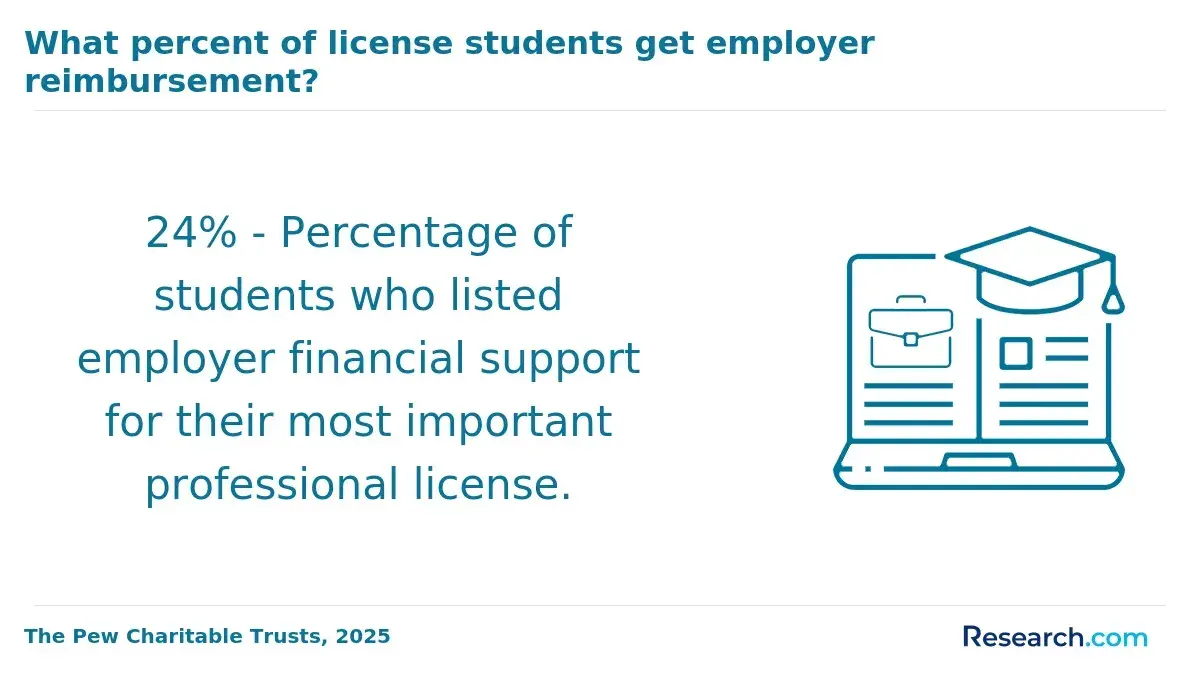
- Employer tuition reimbursement for workers in medical device, biotechnology, pharmaceutical, hospital technology, quality assurance, manufacturing, or research environments.
- Professional and industry scholarships connected to engineering, biomedical innovation, women in STEM, underrepresented engineering students, veterans, and disability-focused technology.
- Military tuition assistance, GI Bill benefits, Yellow Ribbon participation, and veterans education benefits for eligible students.
- State grants or workforce funds, which are more common for undergraduate study but may support selected high-demand fields or reskilling programs.
When evaluating aid, ask whether each award is renewable, whether it applies to online students, whether it requires full-time enrollment, and whether it can be combined with employer reimbursement. These details can change the net price more than a small difference in tuition.
Students comparing lower-cost healthcare credentials may also want to understand how aid packaging works in shorter workforce-oriented programs, such as the best accredited medical billing and coding schools online, because the same distinction between sticker price and aid-adjusted cost applies across online education.
Can Transfer Credits, Prior Learning, and Competency-Based Study Lower the Cost of an Online Biomedical Engineering Degree?
Transfer credits can lower cost by reducing the number of credits a student must pay for, but engineering graduate programs often limit how many credits can be transferred. Prior learning and competency-based options are less common in biomedical engineering than in business, IT, or healthcare administration, but prerequisites and electives can still create savings opportunities.
Students should ask targeted questions before assuming prior coursework will count:
- How many graduate credits can be transferred into the biomedical engineering program?
- Do transfer credits need to come from an ABET-accredited engineering program or an institutionally accredited university?
- Is there a maximum age limit for math, engineering, biology, chemistry, or programming coursework?
- Can professional certifications, military training, research experience, or employer training reduce requirements, or do they only strengthen the application?
- Does the program require a minimum number of credits to be completed at the home institution?
- Will transfer credits reduce tuition only, or will they also reduce fees and time to graduation?
For bachelor's students, a low-cost pathway may involve completing general education and foundational science courses at a community college before transferring into an accredited engineering or engineering-adjacent program.
For example, students exploring healthcare technology routes may compare a health information technology associate degree online with engineering prerequisites to decide whether they want a clinical data, device, or engineering design pathway.
The biggest transfer-credit mistake is assuming that all prior STEM courses apply automatically. Biomedical engineering programs may require specific calculus sequences, physics with labs, biology, physiology, programming, circuits, or materials courses, so students should request a written transfer evaluation before enrolling.
How Should Students Compare the Net Price, Quality, and Return on Investment of Online Biomedical Engineering Degree Programs?
The best-value online biomedical engineering degree is not always the one with the lowest tuition. It is the accredited program that offers the right academic fit, manageable total cost, credible outcomes, and a realistic path to the student's target role.
Use this comparison framework to evaluate value beyond the advertised price.
| Decision factor | What to compare | Why it affects ROI |
| Net price | Total cost after grants, scholarships, tuition discounts, and employer benefits | Lower debt improves financial flexibility after graduation |
| Curriculum fit | Biomechanics, biomaterials, imaging, neural engineering, devices, systems biology, regulatory topics, or data science | A better match can support a more targeted career move |
| Delivery format | Asynchronous courses, live classes, hybrid labs, campus visits, and project requirements | Format affects completion likelihood for working adults |
| Student support | Advising, technical support, career services, faculty access, research/project mentoring | Support can reduce the risk of delayed graduation |
| Career alignment | Medical devices, biotech, pharma, rehabilitation engineering, quality systems, regulatory affairs, research, or doctoral preparation | Different programs prepare students for different opportunities |
| Completion risk | Course availability, prerequisites, thesis expectations, capstone requirements, and time limits | Delays increase cost and reduce ROI |
Biomedical engineering sits at the intersection of engineering, biology, healthcare, software, and regulation. Current trends such as AI-assisted diagnostics, wearable sensors, digital therapeutics, medical robotics, and stricter device-quality expectations can make specialized coursework valuable, but students should not pay for prestige alone if the curriculum does not match their goal.
Opportunity cost also matters. A lower-priced program that takes too long may be less attractive than a somewhat higher-priced program that fits a working schedule and supports timely completion. Students weighing other health leadership routes can compare that logic with programs such as the fastest online master's in healthcare administration, where speed, tuition, and career direction must be considered together.
Before enrolling, ask each school for a written answer to these questions:
- What is the total estimated program cost, including mandatory fees, for my expected start term?
- Is the exact online program eligible for FAFSA-based federal aid?
- How many credits are required, and can any of my prior credits reduce that number?
- Are online students eligible for the same scholarships, assistantships, career services, and academic advising as campus students?
- Are any courses, labs, exams, presentations, or orientations required on campus?
- What are recent completion patterns, typical time to degree, and available career outcome data for online students?
- Does the curriculum align with my target role in medical devices, biotechnology, imaging, biomechanics, regulatory affairs, or research?
A strong final choice should be accredited, transparent about costs, affordable after aid, academically relevant, and realistic for your schedule. If any of those pieces are unclear, get clarification before committing.
Other Things You Should Know About Biomedical Engineering Degrees
No. Fully online bachelor's degrees in biomedical engineering are uncommon because undergraduate engineering programs typically require laboratory, design, and hands-on technical work. Students seeking the lowest-cost route often complete general education and prerequisite STEM courses online or at a community college, then transfer into an accredited engineering program.
Some do, but many professional online master's programs offer a non-thesis option with a capstone, design project, or applied coursework. A thesis is usually better for students considering research or doctoral study, while a non-thesis path may fit working professionals seeking industry advancement.
It can, but it is not a substitute for medical school prerequisites. Students interested in medical school should confirm that their coursework includes required biology, chemistry, physics, math, and lab components, and they should work with a pre-health advisor early.
Employers are more likely to focus on the institution's accreditation, curriculum, technical skills, projects, and the student's experience than on whether courses were online. However, students should choose programs that provide credible engineering depth, faculty interaction, and evidence of applied work.
References
- Transfer Credit Policy - Kettering College https://kc.edu/campus-resources/registrar/transfer-credit-information/transfer-credit-policy/
- ABET https://www.abet.org/
- Biomedical Engineers: Salary, career path, job outlook, education and more - RaiseMe https://www.raise.me/careers/architecture-and-engineering/biomedical-engineers/
- Grad School Grants: Today's Top Grants & How to Apply https://www.onlinemastersdegrees.org/financial-aid/grants/
- ECFMG https://www.ecfmg.org/news/2025/03/14/update-to-ecfmgs-transfer-credit-policy-for-imgs-applying-for-ecfmg-certification-and-usmle/
- 50 Top Scholarships for Students of Medical & Health Programs https://www.edumed.org/financial-aid/scholarships/