2027 Online Biomedical Engineering Degree Programs With No Application Fee and Rolling Admissions

Co-Founder and Chief Data Scientist
Choosing an online biomedical engineering degree is harder when schools advertise "no application fee" and "rolling admissions" without showing the full cost or timeline. The Bureau of Labor Statistics projects 7% employment growth for bioengineers and biomedical engineers from 2023 to 2033, faster than the average for all occupations, which makes program choice more important. This guide is for working adults, transfer students, and graduate applicants who want flexibility without overpaying. You will learn how to compare programs, verify admissions claims, estimate savings, and decide whether a no-fee, rolling-admission option is truly the best fit.
Key Things You Should Know
- A $0 application fee is useful, but it is usually a small savings compared with tuition, online course fees, lab fees, transcript charges, and possible enrollment deposits.
- Rolling admissions can shorten the wait for a decision, but students should still apply 2 to 4 months before the intended start date to protect financial aid, course availability, and transcript-review timelines.
- Most fully online biomedical engineering options are master's-level programs; online bachelor's pathways are less common and should be checked carefully for ABET accreditation if engineering licensure or traditional engineering hiring is a goal.
Which Online Biomedical Engineering Degree Programs Have No Application Fee and Rolling Admissions?
The overlap between fully online biomedical engineering, no application fee, and rolling admissions is narrower than many students expect. Most online biomedical engineering programs are graduate programs, and many universities that offer rolling or flexible admissions still charge a graduate application fee.
The table below shows how students should interpret commonly encountered online biomedical engineering options. Because application-fee waivers and rolling-admission policies can change by term, students should confirm the fee and admissions calendar directly with the program before relying on either feature.
| Program type or example | Typical online format | No-fee and rolling-admission fit | Best for | What to verify before applying |
| Drexel University Online MS in Biomedical Engineering | Online master's program with graduate engineering coursework | Often cited as a strong match because Drexel Online commonly promotes no application fees for online applicants and flexible admissions review | Students seeking a biomedical engineering master's with employer-friendly online scheduling | Current application-fee policy, exact start term, course rotation, and whether the biomedical engineering program is accepting applications for the desired term |
| Online MS in Biomedical Engineering or Bioengineering at public research universities | Usually asynchronous or hybrid graduate coursework | May offer rolling or priority-based review, but application fees often still apply | Students prioritizing lower public-university tuition or research reputation | Whether "rolling" means applications are reviewed continuously or only after priority deadlines |
| Online professional master's in applied biomedical engineering, medical device engineering, or bioengineering | Career-focused graduate format, often designed for working engineers | Some programs have multiple starts, but no-fee applications are not universal | Applicants already working in engineering, medical devices, quality systems, or product development | Whether the degree title matches your career goal and whether application-fee waivers are automatic or promotional |
| Online bachelor's options related to biomedical engineering technology, engineering technology, or health technology | Fully online or degree-completion format | May have free applications and rolling starts, but may not be equivalent to an ABET-accredited biomedical engineering bachelor's degree | Transfer students and working adults seeking applied technical roles | Accreditation, transfer-credit limits, lab requirements, and whether employers view the credential as engineering or engineering technology |
A practical search strategy is to separate the three filters. First, confirm that the degree is actually online. Second, confirm that the biomedical engineering curriculum matches your goal. Third, ask the admissions office whether the application fee is currently waived and whether applications are reviewed continuously for the term you want.
- Ask: "Is the application fee automatically waived for this exact online biomedical engineering program, or do I need a waiver code?"
- Ask: "Are admissions decisions made on a true rolling basis, or are applications held until a priority deadline?"
- Ask: "If I apply after the priority date, can I still receive financial aid, scholarships, and a full course schedule?"
- Ask: "Are there any residency, synchronous lab, or campus-visit requirements that are not obvious on the program page?"
The safest conclusion is that a no-fee, rolling-admission program can be attractive, but it should not be treated as automatically better. For biomedical engineering, curriculum fit, accreditation, lab access, faculty expertise, transfer-credit policy, and total cost matter more than the application fee alone.
How Does Rolling Admission Work for Online Biomedical Engineering Degree Programs?
Rolling admission means a school reviews applications as they arrive instead of waiting for one final deadline. In online biomedical engineering programs, this can be helpful because graduate students often need to coordinate employer tuition benefits, prerequisite review, and course sequencing before enrolling.
The table below compares rolling admissions with fixed-deadline admissions so applicants can understand what flexibility they are actually getting.
| Admissions model | How review usually works | Main advantage | Main risk | Best applicant strategy |
| True rolling admission | Applications are reviewed as they become complete | Faster decisions and more flexibility for working adults | Seats, courses, and scholarships may fill before the final date | Apply early even if the school says applications are accepted continuously |
| Priority deadline plus rolling review | Applications submitted by the priority date receive first review; later applications may be considered if space remains | Some flexibility after the priority deadline | Late applicants may have fewer aid and course options | Treat the priority deadline as the real deadline |
| Fixed deadline | Applications are reviewed after a posted date | Clear planning calendar and predictable review period | Missing the deadline can delay enrollment by a full term | Build a deadline calendar at least one term in advance |
| Open enrollment or monthly start model | Applicants may enter at frequent start dates if they meet requirements | Maximum scheduling flexibility | Course depth, lab access, and engineering rigor should be checked carefully | Verify curriculum, faculty qualifications, and accreditation before enrolling |
Rolling admission does not mean automatic admission. Biomedical engineering programs may still require an engineering, science, or math background; official transcripts; prerequisite coursework; and faculty or department review. It also does not mean there are no deadlines. Financial aid, assistantships, employer reimbursement, transfer-credit evaluation, international documents, and course registration often have separate dates.
Applicants should treat rolling admission as a planning advantage, not a reason to rush. A complete early application is usually stronger than a late or incomplete one because it gives the school enough time to evaluate prerequisites and gives the student enough time to compare cost and aid offers.
How Much Can Students Save by Choosing an Online Biomedical Engineering Degree With No Application Fee?
A no-application-fee biomedical engineering program can reduce upfront risk, especially if you are comparing multiple schools. However, the savings are usually modest compared with the total price of a graduate engineering degree, so the fee waiver should be viewed as a convenience rather than proof of affordability.
The table below uses illustrative application-fee scenarios to show how the savings can add up when a student applies to several programs. These examples are not tuition estimates; they simply show the effect of waived application charges.
| Number of programs applied to | If each application fee is $50 | If each application fee is $75 | If each application fee is $100 | What the savings means |
| 1 program | $50 saved | $75 saved | $100 saved | Helpful, but not enough to determine program value |
| 3 programs | $150 saved | $225 saved | $300 saved | Useful for comparing multiple programs without paying each school upfront |
| 5 programs | $250 saved | $375 saved | $500 saved | Meaningful for budget-conscious applicants, but still small compared with tuition |
The bigger financial question is whether the program's total cost, academic quality, and career relevance justify enrollment. A school with no application fee but higher tuition may cost more overall than a school with a modest application fee and lower per-credit cost.
Students should compare the waived fee against the full enrollment cost. That means looking beyond the application page and asking for a total cost estimate before making a decision.
- Compare tuition per credit and the number of credits required to graduate.
- Ask whether online students pay technology, distance-learning, laboratory, simulation, or proctoring fees.
- Check whether there is an enrollment deposit after admission and whether it is refundable.
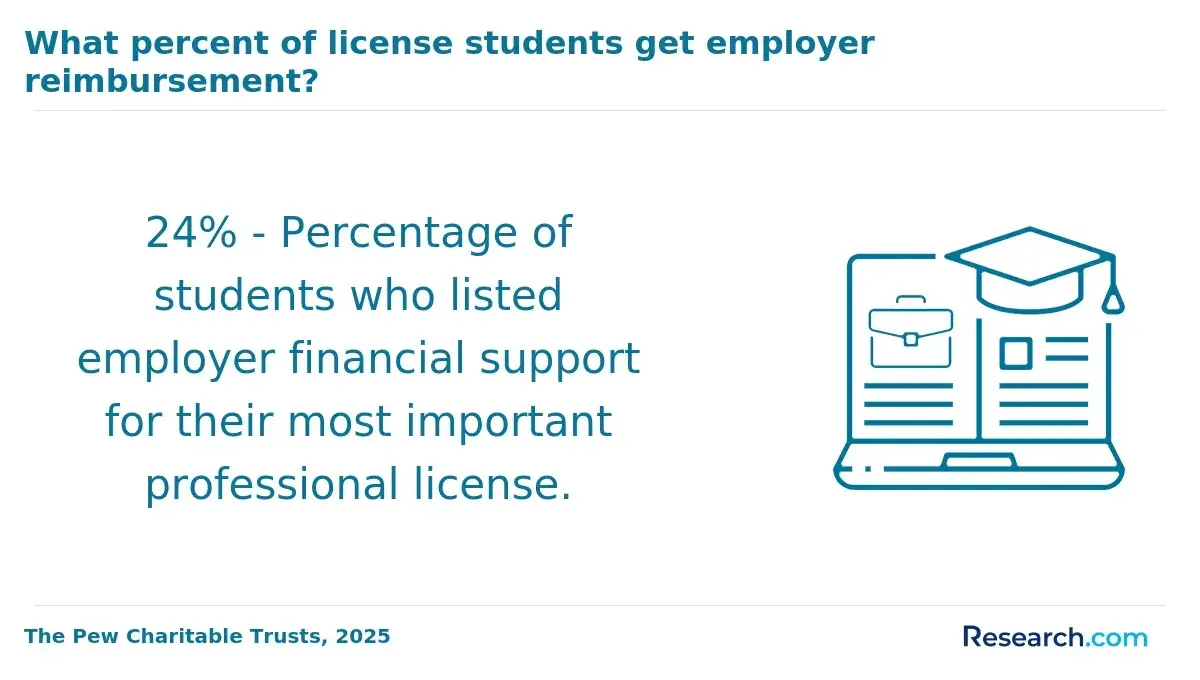
- Confirm whether transfer credits, employer reimbursement, military benefits, or graduate certificates can reduce the number of credits you must pay for.
- Look for scholarship and financial aid deadlines that may come earlier than the rolling admission cutoff.
A no-fee application is most valuable when it lets you compare legitimate programs without spending money before you know whether the curriculum, cost, and schedule fit your goals.
What Are the Admission Requirements for No-Fee Online Biomedical Engineering Degree Programs?
Admission requirements depend heavily on degree level. Online biomedical engineering master's programs usually expect stronger quantitative preparation than general healthcare programs because students may study biomechanics, biomaterials, medical imaging, instrumentation, computational modeling, or regulatory design.
The table below summarizes common requirements by degree type. Individual schools may add program-specific prerequisites, so students should use this as a checklist rather than a universal rule.
| Degree level | Common academic background | Typical application materials | Possible prerequisites | Common flexibility |
| Online bachelor's or degree-completion pathway | High school diploma, GED, or transfer credits | Application, transcripts, placement records, and possibly a personal statement | College algebra, calculus readiness, biology, chemistry, physics, or programming | Transfer-credit review and multiple start dates may be available |
| Online MS in Biomedical Engineering or Bioengineering | Bachelor's degree in engineering, biology, chemistry, physics, computer science, or a related STEM field | Transcripts, resume, statement of purpose, recommendations, and sometimes GRE scores | Calculus, differential equations, physics, biology, physiology, statistics, or programming | GRE waivers, provisional admission, or bridge courses may be available |
| Online professional master's or applied medical device program | Engineering, health technology, life sciences, or industry experience | Transcripts, resume, goals statement, and professional references | Engineering design, quality systems, regulatory knowledge, statistics, or product development experience | Part-time schedules and employer-aligned projects may be available |
| Graduate certificate in biomedical engineering-related topics | Bachelor's degree or relevant technical background | Short application, transcripts, and sometimes a resume | Varies by topic, especially for imaging, biomaterials, or data-heavy courses | Certificate credits may sometimes transfer into a master's program |
Students coming from clinical healthcare rather than engineering should be especially careful. Biomedical engineering focuses on designing, testing, improving, and regulating medical technologies; it is not the same as training for direct patient diagnosis or treatment. If your goal is advanced clinical practice, comparing nurse practitioner online programs may be more aligned with your intended role.
Common mistakes include assuming that a free application means relaxed standards or that rolling admissions means missing prerequisites will not matter. In reality, engineering faculty may still reject or defer applicants who lack math, physics, programming, or lab-science preparation.
- Request a prerequisite review before applying if your bachelor's degree is outside engineering.
- Ask whether missing prerequisites can be completed before enrollment, during the first term, or through bridge coursework.
- Confirm whether the GRE is required, waived, or optional for your applicant category.
- Check whether international transcripts require a course-by-course evaluation, which can add time and cost.
- Ask whether professional experience can strengthen the application but not replace required STEM coursework.
When Should Students Apply to Online Biomedical Engineering Degree Programs With Rolling Admissions?
Students should apply earlier than the advertised rolling deadline whenever possible. A rolling-admission program may continue accepting applications, but late applicants can still run into delays with financial aid, transcript evaluation, prerequisite clearance, course registration, and employer tuition approval.
A good application timeline works backward from the desired start date. The sequence below is useful for applicants who want enough time to compare offers without missing enrollment requirements.
- Four to six months before the start date, shortlist programs and confirm whether each one is fully online, hybrid, or requires campus visits.
- Three to four months before the start date, request unofficial transcript reviews and ask whether prerequisites or bridge courses are needed.
- Two to three months before the start date, submit applications, recommendations, statements, resumes, and any waiver-code requests for the application fee.
- One to two months before the start date, compare admission decisions, total cost estimates, transfer-credit results, and financial aid packages.
- Before registration opens, confirm course availability, technology requirements, lab expectations, and whether the first-term schedule fits your work obligations.
Students should be especially cautious with programs that advertise frequent start dates. More start dates can be convenient, but not every course may be offered every term. Biomedical engineering sequences can depend on calculus, physiology, imaging, electronics, biomaterials, or design courses that are only available at specific times.
Working healthcare professionals who need a shorter route into leadership rather than engineering design may also compare options such as the shortest post master's DNP program, because timing and credential fit can matter more than simply finding the next available start date.
How Can Students Strengthen an Online Biomedical Engineering Degree Application?
A strong biomedical engineering application shows that the student can handle technical coursework and connect the degree to a clear professional goal. This matters even more in rolling admissions because programs may review applications quickly, but they still need enough evidence that the applicant is prepared.
The most useful improvements are specific, evidence-based, and tied to engineering readiness. Applicants should focus on the parts of the file that directly address academic preparation and career fit.
- Use the statement of purpose to explain a focused interest, such as medical devices, imaging, rehabilitation engineering, biomaterials, computational modeling, biomechanics, or regulatory engineering.
- Highlight quantitative coursework, including calculus, physics, statistics, programming, circuits, mechanics, chemistry, biology, or physiology.
- Describe relevant projects, such as capstone design, lab research, quality assurance work, device testing, CAD modeling, data analysis, clinical workflow improvement, or FDA-related documentation.
- Choose recommenders who can comment on technical ability, problem-solving, research readiness, teamwork, and persistence in rigorous coursework.
- Update the resume to show measurable technical responsibilities rather than only job titles.
- If your background is not engineering-heavy, complete or enroll in missing prerequisites before applying and explain the plan clearly.
Applicants should avoid submitting a generic healthcare statement. Biomedical engineering programs want to know why the applicant is prepared for engineering-oriented work, not just why healthcare is meaningful. A statement that connects patient needs to design, testing, data, manufacturing, or regulation is usually stronger than one focused only on broad interest in medicine.
Another common mistake is applying too quickly because there is no fee. A free application is still an academic evaluation. Submitting incomplete transcripts, vague goals, weak recommendations, or unaddressed prerequisite gaps can reduce the value of rolling admissions because the file may be delayed or denied instead of reviewed quickly.
Are Online Biomedical Engineering Degree Programs With No Application Fees Accredited and Legitimate?
A no-fee application does not make a program less legitimate by itself. Many reputable universities waive application fees for online applicants, alumni, military students, partner employers, or promotional periods. The key is to verify accreditation, degree type, and program outcomes rather than judging quality by the application fee.
For U.S. students, institutional accreditation is the baseline. The college or university should be accredited by a recognized institutional accreditor so students can use federal financial aid if eligible and so the credential is more likely to be accepted by employers and other schools.
For bachelor's-level engineering programs, ABET accreditation can be especially important when students want traditional engineering roles, professional engineering pathways, or employer recognition tied to engineering standards.
The strongest verification process is simple but thorough. Students should check the school, the program, and the career pathway separately.
- Confirm institutional accreditation on the university's official accreditation page and through recognized accreditation databases.
- For bachelor's programs, check whether the exact biomedical engineering, bioengineering, or engineering technology program is ABET-accredited, not just whether the university has other ABET programs.
- For master's programs, review faculty expertise, course depth, admissions standards, research or project options, and employer alignment because ABET typically matters more at the undergraduate engineering level.
- Ask whether the transcript and diploma identify the degree as biomedical engineering, bioengineering, medical device engineering, engineering technology, or another related field.
- Confirm whether any required labs, intensives, practicums, exams, or synchronous sessions fit your location and schedule.
Students comparing healthcare-adjacent online credentials should use the same verification habit across fields. For example, lists of the best accredited medical billing and coding schools online are useful only when students still confirm the exact credential, accreditation status, certification alignment, and total cost.
Red flags include vague accreditation language, unclear degree titles, pressure to enroll immediately, promises of guaranteed jobs, missing faculty information, and admissions claims that sound too broad. Rolling admissions should make timing easier; it should not replace academic standards.
How Do Financial Aid and Total Costs Compare Among Online Biomedical Engineering Degree Programs?
Financial aid and total cost can vary more than the application fee. A no-fee application may save money upfront, but tuition structure, credit requirements, course fees, residency costs, transfer credits, and employer reimbursement rules usually have a much larger effect on the final price.
The table below shows the cost categories students should compare before choosing among online biomedical engineering programs. It is designed to help students request comparable estimates from each school.
| Cost or aid factor | Why it matters | Question to ask the school |
| Tuition per credit | Engineering graduate tuition can vary widely by institution and residency policy | Is online tuition the same for in-state and out-of-state students? |
| Total credits required | A lower per-credit rate may not mean lower total cost if the program requires more credits | How many credits are required after transfer or prerequisite review? |
| Mandatory online or technology fees | These can add cost even when the application is free | Are there per-course, per-credit, or per-term fees for online students? |
| Lab, software, or equipment costs | Biomedical engineering may involve simulation tools, design software, lab kits, or proctored exams | What materials are required in the first year? |
| Transfer-credit policy | Accepted credits can reduce both time and cost | How many graduate or undergraduate credits can transfer into this program? |
| Scholarships and assistantships | Rolling admission may continue after scholarship deadlines pass | What is the earliest aid deadline for the term I want? |
| Employer tuition assistance | Working adults may need approval before enrollment | Can the school provide cost documentation before I commit? |
Students should also compare the degree's career value. The Bureau of Labor Statistics reported a median annual wage of $100,730 for bioengineers and biomedical engineers in its 2024 occupational profile, but that figure is not a promise for any graduate. Pay depends on degree level, location, experience, industry, technical skills, and whether the role is in research, manufacturing, software, quality, regulatory affairs, or product development.
Some students interested in healthcare systems, operations, and management may find that a different graduate path has a better ROI for their goals. For instance, a student aiming for hospital administration rather than device design may want to compare a biomedical engineering option with the fastest online master's in healthcare administration before committing to an engineering-heavy curriculum.
The best financial decision is not always the cheapest application. It is the program that offers a credible credential, manageable total cost, relevant technical training, and a realistic path to the roles you actually want.
Which Students Benefit Most From No-Fee, Rolling-Admission Online Biomedical Engineering Degrees?
No-fee, rolling-admission online biomedical engineering degrees are most useful for students who need flexibility but are still prepared for a rigorous technical program. These features are helpful when they reduce friction without lowering academic standards.
The table below identifies who is likely to benefit most and who should be more cautious.
| Student profile | Why the format may help | Potential concern | Best decision rule |
| Working engineers | Rolling admissions and online courses can fit around employment | Course sequencing may still limit speed | Choose based on technical electives and employer relevance |
| Medical device or biotech employees | The degree can support movement into design, quality, regulatory, or product roles | Some programs may be more theoretical than applied | Review course projects and faculty-industry alignment |
| STEM graduates changing into healthcare technology | A no-fee application reduces the cost of exploring options | Prerequisite gaps may delay admission | Request prerequisite review before applying widely |
| Transfer students seeking an online bachelor's pathway | Rolling admissions may speed degree-completion planning | Online biomedical engineering bachelor's options are limited | Verify ABET status and transfer-credit fit before enrolling |
| Applicants choosing mainly because the application is free | Low upfront cost makes applying easy | The total program may still be expensive or poorly matched | Do not enroll until the full cost and curriculum fit are clear |
Students should avoid choosing biomedical engineering solely because it sounds close to healthcare. The field is technical and design-oriented, and it often requires comfort with math, data, materials, mechanics, electronics, software, or biological systems.
The students who benefit most are those who use the free application to compare options carefully, not those who treat it as a shortcut. Rolling admissions can open a door faster, but the student still has to decide whether the program leads to the right professional destination.
How Should Students Choose Among No-Fee Online Biomedical Engineering Degree Programs?
Students should choose among no-fee online biomedical engineering programs by ranking the factors that affect long-term value, not just admissions convenience. A free application and rolling review are useful only if the program is academically credible, affordable, and aligned with the student's target role.
The following decision process helps students compare programs in a practical order. It prevents the common mistake of starting with the application fee and ignoring bigger academic and financial issues.
- Define the target role first, such as biomedical engineer, medical device engineer, quality engineer, regulatory affairs specialist, rehabilitation engineer, imaging specialist, biomaterials researcher, or health technology product manager.
- Confirm the degree level needed for that role, because some jobs require a bachelor's degree, some prefer a master's degree, and some value experience or certifications more than another degree.
- Verify online format details, including asynchronous coursework, synchronous meetings, lab expectations, residencies, proctored exams, and time-zone requirements.
- Check accreditation and degree title, especially if you are considering an online bachelor's or engineering technology pathway.
- Request a total cost estimate that includes tuition, fees, materials, transfer credits, and any enrollment deposit.
- Compare admissions timelines, start dates, financial aid deadlines, and course availability for the exact term you want.
- Ask how the curriculum connects to career outcomes, including capstone projects, industry tools, faculty expertise, alumni roles, and employer partnerships.
- Apply to the programs that remain strong after cost, quality, and fit are clear; do not apply only because the application is free.
It is also smart to compare adjacent healthcare technology paths. A student interested in data, records, coding systems, privacy, and healthcare operations may find a health information technology associate degree online more direct than biomedical engineering, especially if the goal is to enter the healthcare workforce quickly rather than complete an engineering curriculum.
The best choice is the program that answers three questions well: Can you get in with your current background, can you afford to finish, and will the curriculum help you move toward the job you want? If the answer is yes and the application is free with rolling admissions, the admissions features become a real advantage rather than just a marketing claim.
Other Things You Should Know About Biomedical Engineering
No. Biomedical engineering applies engineering design, math, computing, and physical science to healthcare problems. Biomedical science focuses more on biology, disease processes, laboratory research, and preparation for clinical or research careers.
Sometimes. Graduate programs may use simulations, data projects, design assignments, or remote software tools, while some courses may still require hands-on work, approved local facilities, or campus intensives. Students should ask about lab expectations before enrolling.
Not always. Many biomedical engineers work in medical devices, research, software, quality, manufacturing, or regulatory roles where a PE license is not required. Licensure can matter more for certain engineering consulting or public-facing engineering services, and requirements vary by state.
Useful preparation includes calculus, physics, biology, chemistry, statistics, programming, technical writing, data analysis, and design thinking. Students interested in medical devices may also benefit from CAD, circuits, quality systems, and regulatory basics.
References
- Find Programs - ABET https://www.abet.org/accreditation/find-programs/
- B Tech Biomedical Engineering: Career Scope, Salary and Future Opportunities https://shooliniuniversity.com/blog/b-tech-biomedical-engineering-career-scope-salary-and-future-opportunities/
- 10 Biomedical Programs for High School Students https://www.deltainstitute.co/blog-delta-institute/10-biomedical-programs-for-high-school-students
- 2025 Most Affordable Online Master's Programs https://www.onlineu.com/most-affordable-colleges/masters-degrees
- Graduate Engineering Schools That Award Financial Aid to International Students | WorldTrips Travel Insurance https://www.worldtrips.com/resources/graduate-engineering-financial-aid-to-international-students