2027 Accredited Online Biomedical Engineering Degree Programs for Working Adults: Flexible, Part-Time, and Self-Paced Options

Co-Founder and Chief Data Scientist
Choosing an online biomedical engineering degree is really a question of fit: accreditation, lab access, workload, and whether the schedule can survive a full-time job. NCES distance education data released in 2024 show that more than half of U. S. undergraduates took at least one online course, reflecting how normal flexible learning has become. This guide is for working adults comparing accredited online biomedical engineering options, including part-time and self-paced formats, so you can judge cost, time commitment, program quality, and career value before enrolling.
Key Things You Should Know
- Verify institutional accreditation for federal aid and transferability, and look for ABET accreditation when the degree is intended to support engineering employment, graduate study, or future Professional Engineer licensure eligibility.
- A typical 120-credit bachelor's degree may take about 4 years full time or 5 to 6 years part time; working adults often do better with 1 to 2 technical courses at a time because upper-division engineering courses can require roughly 15 to 25 study hours per week.
- College Board's 2024 pricing data put average annual tuition and fees at $11,610 for in-state public four-year colleges and $43,350 for private nonprofit four-year colleges, while transfer-friendly programs may reduce the credits you need to pay for if prior math, science, and general education courses are accepted.
What Is an Accredited Online Biomedical Engineering Degree Program and Why Does Accreditation Matter?
An accredited online biomedical engineering degree is a college program delivered fully or partly online by a school that has been reviewed by a recognized accrediting body. Biomedical engineering combines engineering design, biology, physiology, materials science, computing, and medical technology. Students may study biomechanics, biomaterials, biomedical instrumentation, signal processing, imaging, device design, regulatory considerations, and engineering ethics.
For working adults, accreditation is not a formality. It affects whether you can receive federal financial aid, transfer credits, apply to graduate programs, sit for certain licensure pathways, and present the degree credibly to employers. At minimum, the institution should be accredited by an agency recognized by the U.S. Department of Education or the Council for Higher Education Accreditation. For engineering degrees, programmatic accreditation from ABET is especially important for many bachelor's programs.
The distinction between institutional and programmatic accreditation is central when comparing online options. The table below summarizes what each type usually tells you and why it matters before you commit tuition money.
| Accreditation type | What it evaluates | Why working adults should care |
| Institutional accreditation | The overall college or university, including academic quality, finances, governance, and student services | Usually required for federal financial aid, employer tuition reimbursement, credit transfer, and graduate school recognition |
| ABET programmatic accreditation | Specific engineering or engineering technology programs, including curriculum, faculty, outcomes, labs, and continuous improvement | Often valued by engineering employers and may matter for PE licensure pathways, especially if you want the strongest professional mobility |
| State authorization | Whether the school may enroll online students in your state | Important for online learners because some schools cannot enroll students from every state or may restrict internship placements |
ABET accreditation is more common among campus-based engineering programs than fully online biomedical engineering programs, so read each school's accreditation page carefully. Do not assume that a university's general accreditation means its biomedical engineering program has ABET accreditation.
If the program is not ABET-accredited, ask the department how graduates are positioned for engineering roles, graduate study, and any licensure or certification goals you may have.
If your interests are closer to healthcare technology administration, clinical data, or revenue-cycle systems than engineering design, adjacent online healthcare pathways may be more practical. For example, students seeking a shorter administrative healthcare route sometimes compare engineering programs with best accredited medical billing and coding schools online before deciding how technical they want their education to be.
Which Flexible Biomedical Engineering Degree Formats Are Best for Working Adults: Part-Time, Full-Time, or Self-Paced?
The best format depends on how predictable your work schedule is, how much technical coursework you can handle, and whether you need a structured pace to stay on track. Biomedical engineering is less likely than some business or healthcare administration majors to be completely self-paced because lab work, group design projects, software assignments, and prerequisites often require sequencing.
Use the comparison below to understand how common online formats differ. This is especially important because schools may use the word "flexible" to mean very different things.
| Format | Best for | Common trade-off | Typical working-adult fit |
| Full-time online | Students who can reduce work hours or study on a predictable schedule | Faster progress but heavier weekly workload | Better for adults with employer support, savings, or a short-term career-change plan |
| Part-time online | Adults working full time or managing family responsibilities | Longer completion time | Often the safest format for upper-level engineering courses |
| Asynchronous online | Students who need to study during evenings, weekends, or rotating shifts | Still includes weekly deadlines and exam windows | Strong fit if you are self-directed but need calendar flexibility |
| Synchronous online | Students who want live lectures, peer discussion, and direct instructor interaction | Fixed class meeting times | Good fit if live accountability helps, but difficult for unpredictable shifts |
| Self-paced or competency-based | Students with strong prior knowledge and disciplined study habits | May have completion limits, fewer live supports, or limited availability in engineering | Useful for general education or prerequisite courses, but less common for core biomedical engineering labs and design sequences |
Part-time study is usually the most realistic choice if you are employed full time. A single calculus-based physics, circuits, biomechanics, or systems course can demand more effort than a nontechnical elective, so the question is not just how many credits you can afford; it is how many technical credits you can learn well while keeping your job performance stable.
Before choosing a format, ask the school for concrete scheduling details rather than relying on marketing language. The following questions help reveal whether the program truly fits an adult learner's calendar:
- Are lectures asynchronous, live, or a mix of both?
- Are exams proctored during fixed time windows, and are evening or weekend options available?
- Can upper-division biomedical engineering courses be taken one at a time?
- Are labs completed at home, through simulations, on campus during short residencies, or at approved local sites?
- Does the program allow stop-outs, reduced course loads, or reentry after work or family disruptions?
- Are courses offered every term, or only once per academic year?
A full-time format can make sense if you are trying to move quickly into graduate study or a career transition and can protect 35 to 45 hours per week for coursework.
A self-paced format can make sense for general education, programming refreshers, or math prerequisites, but it is risky for students who need instructor feedback, peer collaboration, or structured milestones. For many working adults, the strongest option is a mostly asynchronous part-time program with clear deadlines, predictable course rotations, and strong advising.
What Are the Admission Requirements for Accredited Online Biomedical Engineering Degree Programs?
Admission requirements vary by degree level, but biomedical engineering programs usually expect stronger math and science preparation than many other online majors. At the bachelor's level, students may enter as first-year applicants, transfer students, or adult learners completing prerequisites before taking upper-division engineering courses. At the master's level, applicants are often expected to have an engineering, physical science, computer science, or closely related background.
The table below summarizes common requirements by program level. Use it to identify gaps early, because missing prerequisites can add time and cost even if you are admitted conditionally.
| Program level | Common academic requirements | What working adults should check |
| Bachelor's degree | High school diploma or equivalent, algebra readiness, placement scores, transcripts, and sometimes calculus or chemistry preparation | Whether you can complete math and science prerequisites online before entering engineering courses |
| Bachelor's completion or transfer pathway | Prior college credits, minimum GPA, completed calculus, chemistry, biology, physics, or programming courses depending on the curriculum | Whether transfer credits apply to major requirements or only electives |
| Master's degree | Bachelor's degree, transcripts, letters of recommendation, statement of purpose, and prerequisite engineering or quantitative coursework | Whether bridge courses are required if your bachelor's degree is not in engineering |
| Graduate certificate | Bachelor's degree and relevant technical background | Whether certificate credits can later transfer into a master's program |
Some adult learners underestimate the importance of prerequisite sequencing. Biomedical engineering courses often build on calculus, differential equations, physics, biology, circuits, statistics, and programming. If you have been away from school for several years, it may be smarter to take one prerequisite first and evaluate your study rhythm before enrolling in a full load.
Prepare for the admissions process by gathering documents and clarifying expectations before you apply. This sequence can reduce delays and help you compare schools more accurately:
- Request official transcripts from every college you attended, even if the credits are old or incomplete.
- Ask each program for a preliminary transfer review before paying an enrollment deposit.
- Confirm whether math, physics, chemistry, biology, and programming prerequisites expire after a certain number of years.
- Ask whether professional experience in medical devices, healthcare technology, manufacturing, lab work, or IT can strengthen your application.
- Verify whether the program requires standardized tests, portfolio materials, or prerequisite bridge courses.
If your academic record is uneven, do not assume you are out of options. Many programs consider recent coursework, upward grade trends, military training, professional experience, and prerequisite performance. However, be cautious of schools that admit you quickly without explaining whether you are academically ready for calculus-based engineering work.
How Much Does an Online Biomedical Engineering Degree Cost, and What Financial Aid Options Are Available?
Cost is one of the biggest decision points for working adults because a longer part-time path can spread payments out but may also extend fees and delay career benefits. College Board's 2024 pricing data show average published tuition and fees of $11,610 for in-state students at public four-year institutions and $43,350 at private nonprofit four-year institutions.
Online biomedical engineering costs may fall below or above those benchmarks depending on residency rules, lab fees, engineering course fees, and technology requirements.
When comparing programs, look beyond the headline tuition rate. The most useful cost estimate is the total remaining cost after transfer credits, grants, employer benefits, and required fees are included.
- Public in-state benchmark: $11,610 in average annual published tuition and fees for four-year institutions in College Board's 2024 data
- Public out-of-state benchmark: $30,780 in average annual published tuition and fees for four-year institutions in College Board's 2024 data
- Private nonprofit benchmark: $43,350 in average annual published tuition and fees for four-year institutions in College Board's 2024 data
- Common extra costs: Engineering lab kits, software, proctoring, books, technology fees, travel for residencies, and graduation fees
Financial aid can reduce out-of-pocket cost, but eligibility depends on the school, your enrollment intensity, and your personal financial situation. Start with the FAFSA if the institution is eligible for federal aid, then compare grants, scholarships, federal loans, employer tuition assistance, military education benefits, payment plans, and professional association scholarships.
Working adults should pay special attention to enrollment intensity. Dropping below half-time can affect loan eligibility, deferment, and some employer benefits. On the other hand, taking too many credits while working full time can lead to withdrawals, repeated courses, and higher total cost. The cheapest option on paper is not always the lowest-risk option.
Use these steps to estimate the real cost before enrolling:
- Ask for a degree audit showing exactly how many credits you still need after transfer evaluation.
- Multiply remaining credits by the tuition rate that applies to your residency and online status.
- Add mandatory fees, lab costs, software, proctoring, books, and any required campus visits.
- Subtract confirmed grants, scholarships, employer reimbursement, military benefits, and tuition discounts.
- Compare the resulting out-of-pocket cost with the salary range and job requirements for the roles you actually want.
If you are interested in healthcare leadership rather than device design or engineering analysis, compare the cost and timeline with adjacent programs such as the fastest online master's in healthcare administration. That comparison can help you avoid overpaying for a highly technical degree if your target role is operational, administrative, or policy-focused.
How Long Does It Take to Complete an Online Biomedical Engineering Degree, and Can Transfer Credits Help You Graduate Faster?
A bachelor's degree in biomedical engineering typically requires about 120 credits, while a master's degree often requires about 30 to 36 credits. The calendar time depends on course load, prerequisite gaps, transfer credits, term length, and whether key engineering courses are offered every term. For working adults, the fastest schedule is not always the best schedule if it creates a high risk of burnout or low grades in technical courses.
The table below gives a practical timeline comparison. These ranges are planning estimates, not promises, because individual programs control course rotations, residency requirements, and transfer policies.
| Enrollment pattern | Common pace | Estimated completion pattern | Best fit |
| Full-time bachelor's | 12 to 15 credits per term | About 4 years for first-time students | Students who can prioritize school like a full-time job |
| Part-time bachelor's | 6 to 9 credits per term | Often about 5 to 6 years, depending on summer enrollment and prerequisites | Adults working full time who need a sustainable pace |
| Transfer bachelor's pathway | Varies after credit evaluation | Can be shorter if prior credits satisfy general education and lower-division STEM requirements | Adults with prior college coursework in math, science, engineering, or general education |
| Master's degree | 1 to 2 courses per term | Often about 2 to 3 years part time | Engineers or science graduates seeking specialization without leaving work |
Transfer credit can make a major difference, but only if the credits fit the degree plan. General education credits are often easier to transfer than calculus, physics, biology, chemistry, circuits, or engineering design courses because technical departments may require course equivalency, recent completion, lab components, or minimum grades.
Before assuming transfer credits will shorten your program, ask for written answers to these points:
- What is the maximum number of transfer credits the program will accept?
- How many transfer credits can apply directly to biomedical engineering major requirements?
- Are old math, science, or engineering courses still accepted, or must they be repeated?
- Does the program accept community college engineering prerequisites?
- Is credit available for military training, professional certifications, prior learning, or industry experience?
- How many credits must be completed in residence at the degree-granting institution?
Transfer-friendly policies are valuable, but cohort-based engineering programs may limit flexibility because upper-level courses are sequenced. If a required course is offered only once per year, missing it can delay graduation even if you have many accepted credits. Ask for a term-by-term plan before you enroll.
What Should You Look for When Comparing Accredited Online Biomedical Engineering Degree Programs?
The strongest online biomedical engineering program for a working adult is not always the cheapest, fastest, or most flexible. It is the program that combines recognized accreditation, rigorous engineering preparation, realistic scheduling, transparent costs, and student support that matches your life outside school.
Use the following criteria to compare programs in a disciplined way. These points help you separate meaningful flexibility from marketing claims.
- Accreditation: Confirm institutional accreditation and whether the specific biomedical engineering program is ABET-accredited.
- Curriculum fit: Review whether courses emphasize medical devices, biomechanics, biomaterials, imaging, computational modeling, instrumentation, or another area aligned with your goals.
- Delivery format: Check whether courses are asynchronous, live, hybrid, cohort-based, self-paced, or term-based.
- Lab model: Ask how online students complete labs, design projects, prototyping, and assessment.
- Course rotation: Confirm how often required courses are offered and whether part-time students can stay on sequence.
- Faculty access: Look for office hours, feedback timelines, research opportunities, and industry experience.
- Career services: Ask about internship support, employer partnerships, alumni outcomes, and medical device or biotech recruiting connections.
- Total cost: Compare net cost after transfer credits, fees, aid, and employer reimbursement.
- Technology requirements: Confirm software, hardware, simulation platforms, proctoring systems, and any lab equipment you must purchase.
Red flags are especially important for adults who cannot afford to restart elsewhere. The table below highlights common mistakes and the risk behind each one.
| Common mistake | Why it can hurt you | Better question to ask |
| Assuming institutional accreditation equals ABET accreditation | The degree may not meet expectations for certain engineering employers, graduate programs, or licensure pathways | Is this exact biomedical engineering program ABET-accredited? |
| Believing "online" means "self-paced" | You may still have weekly deadlines, group projects, live exams, or fixed lab windows | Which parts of the program have fixed times or deadlines? |
| Choosing the lowest tuition without checking fees | Engineering lab kits, software, and proctoring can increase the real cost | What is the total program cost after all required fees? |
| Overestimating transfer credit | Accepted credits may count as electives rather than major requirements | How many credits reduce the actual remaining degree requirements? |
| Ignoring support services | Technical courses are harder to complete without tutoring, advising, and faculty access | What support is available during evenings or weekends? |
Some working adults discover that biomedical engineering is not the most direct route to their target healthcare technology role. If your goal is data systems, patient records, or healthcare informatics rather than device engineering, a health information technology associate degree online may be a more efficient starting point.
What Career Opportunities and Salary Potential Can You Expect With a Biomedical Engineering Degree?
Biomedical engineering can lead to roles in medical device design, product testing, biomechanics, imaging systems, biomaterials, quality engineering, regulatory affairs, clinical engineering, rehabilitation technology, research and development, and manufacturing support. Some roles are highly technical and engineering-focused; others sit at the intersection of engineering, healthcare operations, compliance, and product management.
The U.S. Bureau of Labor Statistics reported a 2024 median annual wage of $100,730 for bioengineers and biomedical engineers. That figure is useful as a labor-market benchmark, but it is not a guarantee for any individual graduate. Salary varies by degree level, location, industry, experience, technical specialization, and whether the role is in research, manufacturing, software, regulatory affairs, or product development.
The table below outlines common career directions and what they usually involve. Use it to connect program curriculum with the work you want to do after graduation.
| Career direction | Typical responsibilities | Useful coursework or skills |
| Medical device engineering | Design, test, document, and improve devices or components | Design controls, CAD, biomechanics, biomaterials, electronics, prototyping |
| Clinical engineering | Support medical technology used in hospitals and healthcare systems | Instrumentation, safety, systems thinking, troubleshooting, clinical workflow knowledge |
| Quality or validation engineering | Test processes, document compliance, investigate failures, and support regulated production | Statistics, quality systems, regulatory basics, manufacturing, documentation |
| Biomedical data or imaging | Analyze signals, images, sensor outputs, or biological datasets | Programming, signal processing, imaging, statistics, machine learning fundamentals |
| Research and development | Build prototypes, run experiments, analyze results, and support innovation | Experimental design, lab methods, modeling, materials, advanced math |
Current trends are expanding the skill set employers may value. AI-assisted imaging, wearable sensors, remote patient monitoring, robotics, 3D printing, digital twins, and connected medical devices are changing how biomedical products are designed and evaluated. That does not mean every student needs to become an AI engineer, but programming, data analysis, statistics, and regulatory awareness can strengthen your competitiveness.
A biomedical engineering degree may be worth it if you want an engineering role tied to healthcare technology and you are prepared for demanding math and science coursework. It may not be the best fit if your primary goal is direct patient care, nursing practice, healthcare administration, or a short credential.
Adults comparing clinical healthcare paths may also research nurse practitioner online programs, but those programs prepare students for a different licensure-based clinical profession.
How Can Working Adults Balance a Biomedical Engineering Degree With Full-Time Work and Family Responsibilities?
Balancing biomedical engineering with full-time work requires more than motivation. It requires a realistic course load, protected study blocks, family communication, and early use of academic support. Engineering courses are cumulative, so falling behind in one week can affect the next several assignments.
A practical schedule starts with the number of technical courses you can sustain, not the number of credits you wish you could finish. For many full-time workers, one technical course plus one lighter general education or elective course is more manageable than two or three intensive engineering courses at once.
Use this planning process before each term to reduce overload:
- Review each syllabus as soon as it opens and mark exams, projects, lab deadlines, and group meetings on one calendar.
- Block recurring study periods before work, after work, or on weekends, and treat them like job commitments.
- Tell family members or housemates which weekly windows are nonnegotiable school time.
- Use office hours early, especially in calculus, physics, circuits, programming, and biomechanics.
- Build a buffer week before major work deadlines, travel, childcare disruptions, or holidays.
- Reassess your course load after the first term instead of committing to an aggressive multi-year pace immediately.
Self-paced learning can help if your job schedule changes frequently, but it can also create procrastination risk. If you choose a self-paced or competency-based option for prerequisites, set artificial deadlines and ask whether instructor feedback is available. In technical subjects, feedback often matters as much as flexibility.
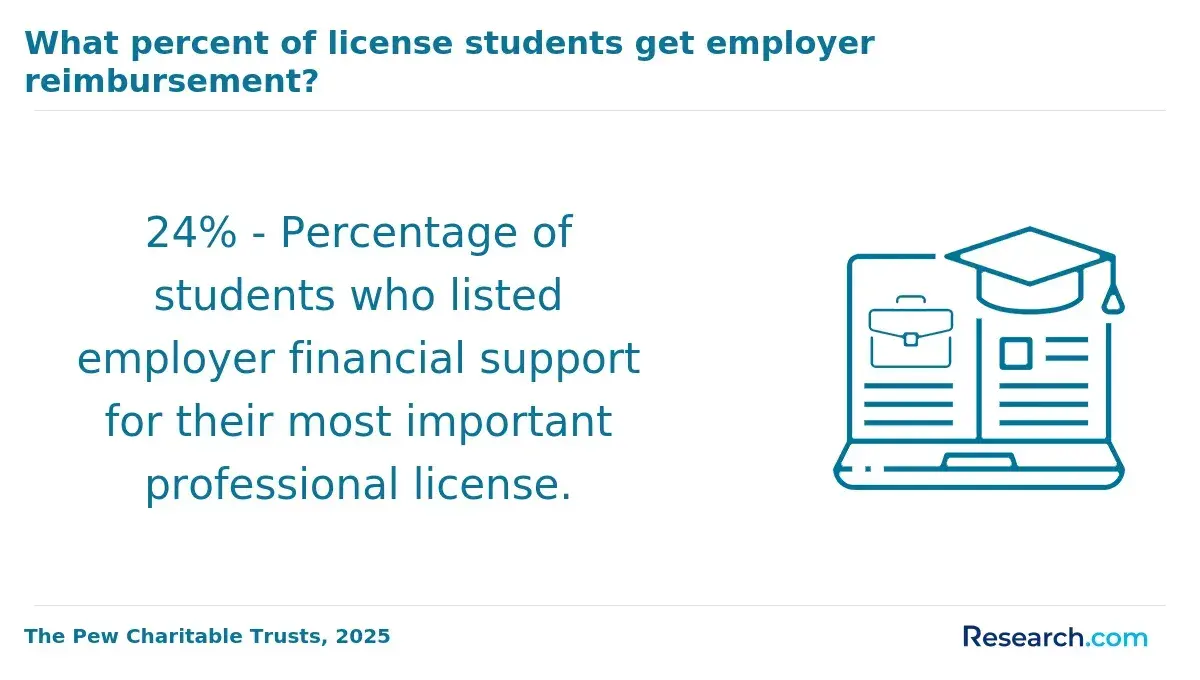
Employer support can also make a major difference. Ask about tuition reimbursement, flexible scheduling during exams, paid study time, professional development funds, and project opportunities related to biomedical technology. If your employer works in healthcare, manufacturing, biotech, or software, you may be able to align school projects with workplace problems, but confirm academic integrity and confidentiality rules first.
What Student Support Services and Online Learning Resources Should You Expect From a Biomedical Engineering Degree Program?
Online support services matter more in biomedical engineering than in many less technical majors because students need help with quantitative problem-solving, labs, software, projects, and career planning. A strong program should make support accessible outside standard business hours, since many online students study at night or on weekends.
Look for support that matches the demands of engineering coursework. The following services are especially valuable for working adults:
- Dedicated academic advising for part-time engineering students
- Online tutoring in calculus, physics, chemistry, statistics, programming, and engineering mechanics
- Faculty office hours with evening, recorded, or appointment-based options
- Remote library access to engineering databases, journals, standards, and citation tools
- Technical support for learning platforms, simulation tools, statistical software, CAD tools, and proctoring systems
- Career services with resume reviews, interview preparation, employer events, and internship guidance
- Disability services and accessibility support for online labs, exams, and course materials
- Writing and communication support for lab reports, design documentation, and technical presentations
Ask how quickly instructors respond to questions and whether tutoring is available for upper-division courses, not just introductory math. Also ask whether online students can join engineering clubs, design teams, research groups, or professional organizations. These experiences can help compensate for the networking limitations of online study.
Student support should also include clear career guidance. Biomedical engineering graduates may pursue device companies, hospital systems, regulatory teams, graduate school, or research labs, and each path values different experiences. A good advisor should help you choose electives and projects that match your target role.
Adults exploring advanced healthcare credentials should compare the support model across program types. For example, clinical graduate programs such as the shortest post master's DNP program may emphasize clinical placement coordination, while biomedical engineering programs should emphasize technical advising, engineering labs, software, and design support.
Do Online Biomedical Engineering Degree Programs Include Internships, Practicums, or Other Hands-On Learning Requirements?
Many biomedical engineering programs include hands-on learning, though the format varies. Engineering education depends on applying theory to real systems, so online students may complete virtual labs, at-home lab kits, simulation assignments, design projects, prototyping work, short campus residencies, local internships, or employer-based projects approved by the department.
The hands-on model is one of the most important questions to ask before enrolling. A program can be online and still require physical materials, scheduled lab participation, team meetings, or travel. This is especially true for biomedical engineering because students may need experience with sensors, circuits, materials, biomechanics testing, imaging data, or design documentation.
Common hands-on components include the following, and each can affect your schedule differently:
- Virtual labs using simulation software or remote instrumentation
- At-home lab kits for electronics, measurement, or basic experimentation
- Campus intensives that compress lab work into weekends or short residencies
- Capstone design projects completed individually or in teams
- Internships with medical device, biotech, healthcare technology, or manufacturing employers
- Employer-sponsored projects that connect coursework to your current job, when approved by faculty
- Research projects involving data analysis, literature review, modeling, or remote collaboration
Internships can be valuable, but not every online program guarantees placement. Ask whether internships are required, optional, or recommended; whether remote internships qualify; whether your current job can satisfy experiential requirements; and whether the school has employer relationships in your region. If you live far from biotech, hospital, or medical device hubs, placement support becomes more important.
Also ask about liability insurance, background checks, health requirements, intellectual property rules, and state authorization for field experiences. These details may sound administrative, but they can determine whether you are allowed to complete a practicum or internship where you live.
Other Things You Should Know About Biomedical Engineering
No. Biomedical engineering applies engineering methods to healthcare problems, such as devices, sensors, imaging, materials, and systems. Biomedical science is usually more focused on biology, disease, laboratory research, and preparation for clinical or research pathways.
You do not need to be an expert before you start, but programming is increasingly useful. Many programs include MATLAB, Python, data analysis, modeling, signal processing, or imaging coursework, so adults returning to school should refresh basic coding and statistics early.
It can, but it is not the simplest pre-med route. Biomedical engineering can cover useful science and problem-solving skills, but medical school applicants must still complete required pre-med courses, maintain strong grades, gain clinical exposure, and prepare for the MCAT.
A certificate may help you add a focused skill, such as medical device regulation, imaging, biomaterials, or data analysis. However, engineering roles often require a full engineering degree or substantial technical experience, so check job postings before relying on a certificate alone.
References
- Guide to Employers Who Subsidize Online Education https://www.onlineeducation.com/features/employers-who-subsidize-higher-ed
- What Flexible Learning Means for Students in Higher Education | Miller-Motte College https://www.miller-motte.edu/blog/general/what-flexible-learning-means-for-students-in-higher-education/
- Biomedical Engineering Internships | The Intern Group | Global Internships https://theinterngroup.com/career-fields/biomedical-engineering
- Best Colleges for Student Support for Mental Health & Academics https://www.collegexpress.com/lists/list/the-best-colleges-and-universities-for-access-to-student-support-services/3124/
- Flexible Learning with Online & Evening Programs https://applymontana.mus.edu/colleges/flexible-learning-options/index.html
- Tuition and Financial Aid - Financing Your Education | SCIT Southern California Institute of Technology https://www.scitech.edu/admissions/tuition-and-financial-aid
- Financial Assistance for Biomedical Equipment Technology Students | CBET https://cbet.edu/financial-assistance/
- Why Study Biomedical Engineering at EIT? https://www.eit-za.com/why-study-biomedical-engineering-at-eit/
- General Campus Support | California College Pathways https://cacollegepathways.org/general-campus-support/
- Student Services - Southern WV Community & Technical College https://www.southernwv.edu/current-students/student-services/