2027 How to Become an Art Teacher in Arkansas: Requirements & Certification

Co-Founder and Chief Data Scientist
Becoming an art teacher in Arkansas is a practical career path for people who want to combine studio practice, creativity, and K-12 education. The opportunity is real: Arkansas has nearly 1,700 art and drama teachers, yet schools continue to report shortages, including a shortage of at least 15% in art teachers for the 2024-2025 school year, according to the Division of Elementary and Secondary Education (DESE). For aspiring teachers, that demand can create openings, but it also makes choosing the right licensure route, preparation program, and classroom experience especially important.
This guide explains how to become an art teacher in Arkansas, including the education requirements, certification process, student teaching expectations, curriculum standards, job outlook, salary considerations, professional development options, and practical steps for launching your career. It is designed for high school students planning a teaching degree, college students considering art education, career changers with art backgrounds, and current educators thinking about adding creative or interdisciplinary credentials.
Quick Answer: How do you become an art teacher in Arkansas?
To become an art teacher in Arkansas, you generally need to earn a bachelor’s degree in art education or a closely related field, complete an approved teacher preparation pathway, pass the required Praxis exams, complete background checks, and apply for licensure through the Arkansas Department of Education. Most traditional bachelor’s programs require around 120 credit hours and include studio art, art history, pedagogy, field experience, and student teaching. After initial licensure, teachers complete mentoring and professional development requirements, including at least 60 hours of professional development every five years to maintain licensure.
- Best fit: Students who enjoy both making art and helping children or adolescents learn visual expression, design thinking, and creative problem-solving.
- Typical degree path: Bachelor’s degree in art education or a related field plus an approved educator preparation program.
- Alternative path: Career changers with a non-education degree may explore the Alternative Certification Program (APPEL), if eligible.
- Salary expectation: Art teachers in Arkansas earn around $50,000 per year on average, with local variation by district, experience, and credentials.
- Licensure maintenance: Arkansas requires ongoing professional development, including at least 60 hours every five years.
- Steps to become an art teacher in Arkansas
- Education requirements for Arkansas art teachers
- Certification and licensing process
- Student teaching, internships, and classroom experience
- Arkansas art standards and curriculum expectations
- Job market and salary expectations
- Professional development and continuing education
- Classroom management and teaching methods
- First steps for aspiring Arkansas art teachers
- Art teacher vs. English teacher certification
- Interdisciplinary career paths for art teachers
- Financial aid and scholarship options
- Leadership education for art teachers
- Complementary credentials for art teachers
- Advancement options and specializations
- Community partnerships in Arkansas art education
- Mentoring and networking
- Resources for new art teachers
- Technology in the art classroom
- Inclusive education practices
- Assessing student progress in art
- Managing art classroom resource and budget challenges
How can you become an art teacher in Arkansas?
The most direct route is to complete an approved art education program, meet Arkansas testing and background-check requirements, and apply for a state teaching license. Because Arkansas schools report ongoing teacher shortages, including a shortage of at least 15% in art teachers for the 2024-2025 school year, candidates who complete the process carefully may find opportunities across public schools, especially where districts have difficulty filling arts positions.
| Step | What you need to do | Why it matters |
| 1. Choose a preparation route | Select a bachelor’s degree in art education or another eligible pathway that leads to licensure. | Your program must prepare you for Arkansas certification, not just provide studio art training. |
| 2. Complete art and education coursework | Study studio methods, art history, curriculum design, child development, assessment, and pedagogy. | Art teachers must know both the subject and how to teach it to different age groups. |
| 3. Gain classroom experience | Complete field placements, observations, practicum work, and student teaching. | Districts want evidence that you can manage materials, safety, behavior, and instruction in a real classroom. |
| 4. Pass required exams | Prepare for and complete the required Praxis assessments for teaching and art content. | Exam results are part of the Arkansas licensure process. |
| 5. Apply for licensure | Submit transcripts, test documentation, background-check materials, and required fees to the state. | You cannot teach in most public school art positions without the proper license. |
| 6. Build a hiring portfolio | Create a portfolio with your artwork, lesson plans, student-teaching reflections, and classroom examples. | A strong portfolio helps principals see how you teach, not just what you create. |
- Earn a relevant degree: Most candidates start with a bachelor’s degree in art education. Many programs require around 120 credit hours and combine studio art, art history, general education, and teacher preparation coursework. Institutions such as the University of Arkansas, Arkansas Tech University, and Arkansas State University are examples of Arkansas schools that offer preparation routes for future teachers.
- Understand the state testing process: Arkansas requires candidates to demonstrate teaching readiness and subject knowledge. Plan exam preparation early instead of waiting until the end of your degree.
- Create a professional portfolio: Include your strongest creative work, sample lesson plans, evidence of student engagement, and a short teaching philosophy. If you are also considering creative industries outside K-12 schools, learning about interior design career growth can help you compare classroom teaching with other art-related career paths.
- Apply through the state: After completing education, testing, and background-check requirements, submit your application materials to the Arkansas Department of Education.
- Prepare for district hiring: Build a resume that highlights student teaching, classroom management, art media experience, technology skills, and your ability to align lessons with Arkansas standards.
What are the educational requirements for becoming an art teacher in Arkansas?
Arkansas art teachers need more than artistic ability. They must complete college-level preparation that covers subject knowledge, teaching methods, classroom practice, assessment, and state standards. For most candidates, that means earning a bachelor’s degree in art education or a related field that includes an approved educator preparation program.
| Requirement | What it usually includes | Decision point for students |
| Bachelor’s degree | Art education or a related field with teacher preparation coursework. | Choose a program designed to lead to Arkansas licensure, not only a studio art degree. |
| Art coursework | Drawing, painting, ceramics, design, digital media, art history, critique, and portfolio development. | Look for programs that match the media you hope to teach or specialize in later. |
| Education coursework | Pedagogy, adolescent or child development, curriculum planning, assessment, classroom management, and inclusive instruction. | Strong pedagogy courses help you translate art skills into lessons students can understand. |
| Field experience | Classroom observations, practicum placements, and student teaching. | Ask schools how early field placements begin and whether placements include elementary, middle, and high school settings. |
| Approved preparation pathway | Traditional Educator Preparation Programs or, for eligible career changers, the Alternative Certification Program (APPEL). | Your path may differ depending on whether you are a first-time college student or already hold a degree. |
- Bachelor’s degree: A bachelor’s degree in art education is the standard starting point. A related education degree may also be useful, especially if it supports licensure goals. Students comparing grade-level options may also want to review the best elementary education degrees online to understand how elementary preparation differs from art-specific preparation.
- Teacher preparation: Arkansas candidates must complete a route that prepares them for state licensure. Traditional Educator Preparation Programs combine coursework with supervised classroom experience. The Alternative Certification Program (APPEL) may serve candidates who already hold a non-education degree and want to teach while completing required training.
- Alternative certification growth: In 2022, 42% of new EPP enrollees chose the alternative program, a notable increase from the last two years according to a report published by the University of Arkansas. That does not mean APPEL is easier; it means more candidates are using nontraditional routes into teaching.
- Accreditation and approval: Before enrolling, confirm that the institution is accredited and that the teacher preparation pathway is approved for Arkansas licensure. A strong studio art program alone may not satisfy teaching-license requirements.
- Advanced degrees: A master’s degree is not usually required for initial entry, but it may support salary advancement, leadership roles, curriculum work, or specialization. A PhD is generally more relevant for university teaching or research-focused positions.
When comparing programs, ask whether graduates are eligible for Arkansas licensure, what exams they must pass, how student teaching is arranged, and whether faculty help students build both an art portfolio and a teaching portfolio.
What is the certification and licensing process for an art teacher in Arkansas?
The Arkansas art teacher licensing process typically includes degree completion, educator preparation, Praxis testing, background checks, application submission, and post-licensure mentoring or professional development. Candidates interested in teaching younger students may also compare art education with broader elementary preparation options, including affordable online teaching degrees elementary programs, but they should confirm that any program they choose meets Arkansas licensure requirements for the role they want.
- Complete an eligible degree and preparation program: Your transcript should show the required coursework, field experiences, and student teaching or approved clinical practice.
- Pass required Praxis exams: Candidates must complete state-required assessments, including the Praxis Core Academic Skills for Educators, which measures reading, writing, and math skills, and the Praxis Subject Assessment for Art, which focuses on art and art education knowledge.
- Submit licensure materials: Apply through the Arkansas Department of Education and provide official transcripts, test documentation, and any additional required forms.
- Complete background checks: Arkansas requires fingerprinting and background checks through the Arkansas State Police and the FBI.
- Budget for fees: The initial license fee is around $100, and the fingerprinting process is approximately $50.
- Move from initial to standard licensure: After receiving an initial license, teachers enter a probationary status for three years. During that period, they complete mentoring and additional professional development before qualifying for a standard license.
- Maintain your license: Arkansas teachers must complete at least 60 hours of professional development every five years.
| Licensure stage | What to prepare | Common mistake to avoid |
| Before applying to a program | Confirm the program is approved for Arkansas teacher licensure. | Assuming any art degree automatically qualifies you to teach in public schools. |
| During college | Track coursework, field hours, portfolio pieces, and exam timelines. | Waiting until the final semester to ask about Praxis requirements. |
| Licensure application | Gather transcripts, exam scores, background-check documentation, and fees. | Submitting incomplete documentation and delaying employment eligibility. |
| Early teaching years | Complete mentoring, professional development, and district requirements. | Treating the initial license as the end of the process rather than the beginning of professional growth. |
How important is teaching experience and what are the internship opportunities for art teachers in Arkansas?
Teaching experience is essential because art classrooms are active, materials-based learning environments. New teachers must manage supplies, safety, cleanup routines, student behavior, demonstrations, critique, group work, and individualized creative feedback. A candidate who has only studied art but has not practiced teaching may struggle with pacing, classroom routines, and adapting lessons for different learners.
- Required experience for standard licensure: Aspiring art teachers in Arkansas are required to complete three years of successful teaching experience in their subject area to qualify for a standard teaching license.
- Student teaching placements: Universities such as the University of Arkansas and Arkansas State University help candidates connect with school placements where they can observe, plan, teach, and receive feedback.
- Internship and practicum options: Local school districts, educator preparation programs, and community arts organizations may provide opportunities for classroom exposure, youth arts programming, or supervised teaching practice.
- Portfolio-building value: Student teaching gives you examples of lesson plans, rubrics, student work samples, and reflective practice that can strengthen job applications.
- Supplemental experience: Volunteering with after-school art clubs, museum programs, summer camps, community art workshops, or youth centers can help you develop confidence before your first full-time teaching job.
| Experience option | Best for | What you can learn |
| Student teaching | Licensure candidates in traditional programs | Full lesson planning, classroom routines, grading, and professional expectations. |
| Practicum or observation | Early-stage education students | How different teachers structure art rooms, demonstrations, critiques, and cleanup. |
| Community art volunteering | Students building youth-teaching experience | How to adapt art activities for age, time, space, and material limits. |
| Teaching assistant roles | Candidates who want more classroom exposure | Student support, small-group instruction, and classroom organization. |
| After-school programs | Future teachers testing lesson ideas | Engagement strategies, project design, and informal assessment. |
What are the standards and curriculum requirements for teaching art in Arkansas?
Arkansas art instruction is shaped by state standards that organize learning around creating, presenting, responding, and connecting with art. These areas help teachers design lessons that develop technical skills while also asking students to interpret, critique, communicate, and understand art in cultural and historical context.
- Creating: Students generate ideas, experiment with materials, revise work, and develop artistic techniques.
- Presenting: Students learn to select, prepare, display, and discuss artwork for an audience.
- Responding: Students analyze images, use art vocabulary, interpret meaning, and evaluate artistic choices.
- Connecting: Students relate art to personal experience, communities, cultures, history, and other disciplines.
- Elementary instruction time: Public elementary schools in Arkansas are required to provide a minimum of 40 minutes of visual art instruction each week.
Effective art teachers use the standards as a planning framework rather than a checklist. For example, a ceramics unit might include clay techniques, historical examples, artist statements, peer critique, and connections to local craft traditions. A digital art unit might combine composition, visual storytelling, copyright awareness, and presentation skills.
| Curriculum area | What students practice | Teacher planning question |
| Creating | Sketching, experimenting, revising, using media, solving visual problems. | What materials and techniques will students use, and how will they revise their work? |
| Presenting | Preparing work for display, writing statements, discussing choices. | How will students share their work with classmates, families, or the community? |
| Responding | Critique, interpretation, vocabulary, comparison, evaluation. | How will students explain what they see and support their interpretation? |
| Connecting | Relating art to culture, history, identity, local communities, and other subjects. | How does the lesson connect to students’ lives or broader knowledge? |

What is the job market like and what are the salary expectations for art teachers in Arkansas?
The Arkansas job market for art teachers is shaped by two forces: teacher shortages that create openings and local competition in districts where many candidates want to work. Schools in larger areas such as Little Rock and Fayetteville may attract more applicants, while rural districts may have greater difficulty filling teaching roles. Candidates who are flexible about location, grade level, and extracurricular responsibilities may have more options.
Art teachers in Arkansas earn around $50,000 per year on average. Pay can vary by district, contract schedule, credentials, and experience. Teachers in urban areas may earn up to $55,000 or more, while some rural district salaries may be closer to $40,000. Compensation should be evaluated with benefits, retirement plans, health insurance, paid time off, classroom supply support, and professional development funding.
Arkansas also has an affordability advantage. The state has a cost of living index of about 86, compared with the national average of 100. That does not guarantee that every teacher will feel financially comfortable, but it means salary comparisons should consider local housing, transportation, childcare, student debt, and district benefits rather than salary alone.
| Factor | How it affects art teacher opportunities | What to ask before accepting a job |
| Location | Urban districts may pay more but attract more applicants; rural districts may have stronger hiring needs. | What is the salary schedule, and how does local housing cost compare? |
| Grade level | Elementary, middle, and high school art roles require different planning styles and classroom routines. | How many grade levels will I teach each day? |
| Classroom resources | Budgets, storage, technology, kilns, sinks, and supplies can differ widely. | What annual budget and equipment are available for visual art? |
| Schedule | Some art teachers teach many classes per week and may serve the entire school. | How many students and sections will I teach? |
| Extracurricular duties | Art shows, clubs, competitions, yearbook, or school displays may add workload. | Which duties are expected, and are stipends available? |
-
: "
One Arkansas teacher described the decision this way: the salary required careful budgeting, but benefits, community support, and the daily experience of helping students grow creatively made the career worthwhile. Anecdotes like this are useful, but candidates should still compare district contracts, benefits, student loan obligations, and local living costs before committing.
"
What professional development and continuing education opportunities are available for art teachers in Arkansas?
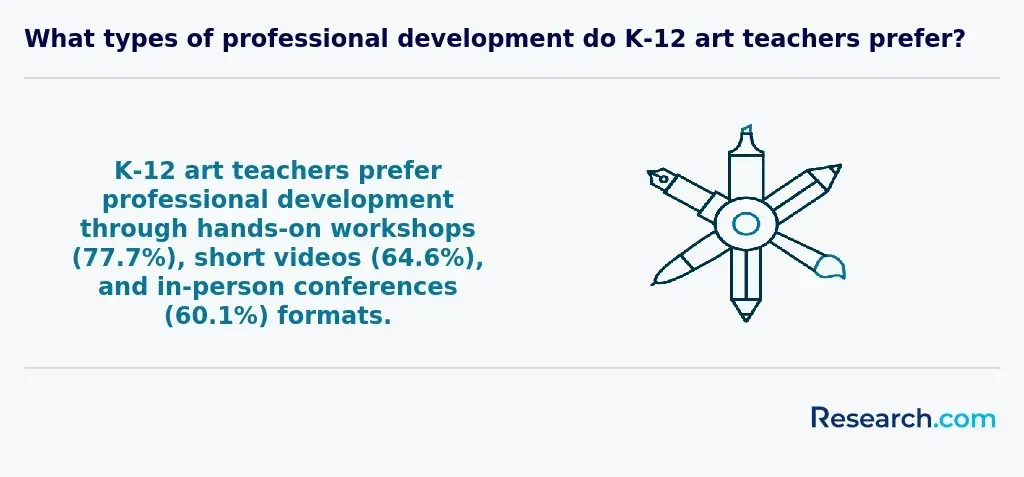
Professional development matters because art education changes with new media, classroom technology, inclusive teaching strategies, and evolving student needs. It is also part of licensure maintenance: Arkansas art educators must complete at least 60 hours of professional development every five years.
- State and district training: Districts often provide required professional development related to curriculum, student safety, assessment, classroom management, and instructional strategies.
- Museum-based learning: The Historic Arkansas Museum, Crystal Bridges Museum of American Art, Walton Arts Center, and Arkansas Museum of Fine Arts offer programs that can support art teachers with standards-aligned resources, arts integration, storytelling, and creative practice.
- Art-specific workshops: Sessions may cover ceramics, printmaking, digital media, critique methods, culturally responsive teaching, and portfolio assessment.
- Windgate Summer Art Launch: Arkansas Tech University’s Windgate Summer Art Launch offers up to 30 hours of free professional development for K-12 art teachers.
- Professional associations: Groups such as the Arkansas Art Education Association can help teachers find workshops, conferences, peer support, and statewide networking.
- Online learning: Webinars and asynchronous courses may help teachers meet requirements while balancing classroom responsibilities.
| Professional development source | Potential benefit | Good fit for |
| Museums and cultural institutions | Access to collections, artist talks, lesson ideas, and cultural context. | Teachers who want richer art history and community-based lessons. |
| District PD | Alignment with school expectations, student supports, and local policies. | New teachers learning district systems. |
| Art education conferences | Networking, new media techniques, and peer-tested classroom strategies. | Teachers seeking fresh curriculum ideas or leadership roles. |
| Online courses | Flexible access to training in technology, inclusion, or assessment. | Teachers in rural areas or those with limited travel time. |
| University workshops | Studio refreshers, graduate-level exposure, and faculty support. | Teachers considering advanced degrees or specialization. |
What are effective classroom management strategies and teaching methods for art teachers in Arkansas?
Art classrooms require management systems that work for movement, tools, materials, cleanup, collaboration, and creative risk-taking. Strong art teachers do not rely only on discipline rules; they design routines that make creativity safer, clearer, and more productive.
- Teach procedures explicitly: Demonstrate how to collect materials, use tools safely, clean stations, store unfinished work, and transition between activities.
- Use short demonstrations: Students often learn best when they can see a technique, try it quickly, and return for feedback.
- Build lessons around choice: Student choice can increase investment, but choices should be structured so the lesson still meets standards.
- Create visible expectations: Post rubrics, project steps, vocabulary, deadlines, and cleanup roles where students can reference them.
- Use positive reinforcement strategically: Praise specific behaviors, such as careful tool use, strong revision, thoughtful critique, or respectful collaboration.
- Differentiate materials and outcomes: Offer modified tools, alternate formats, examples at different skill levels, and flexible ways for students to demonstrate learning.
- Plan for early finishers: Keep sketchbook prompts, reflection questions, peer feedback tasks, or extension challenges ready.
- Assess process as well as product: Art learning includes brainstorming, experimentation, persistence, revision, and reflection, not only the final piece.
- Use technology when it improves learning: Digital portfolios, image databases, drawing tablets, graphic design tools, and classroom platforms can support instruction when they serve clear goals.
Teachers who want broader preparation for adolescent instruction may also compare art education requirements with an online secondary education bachelor's, especially if they are deciding between subject-specific and general secondary teaching routes.
What steps can aspiring art teachers in Arkansas take to begin their career?
If you are early in the process, start by confirming whether you want to teach in public schools, private schools, community arts programs, or another setting. Public school teaching usually requires state licensure, while private and community roles may have different expectations. A broader overview of how to become a teacher in Arkansas can help you understand the state’s general teacher preparation process before you focus on art-specific requirements.
- Research Arkansas-approved educator preparation programs. Do this before choosing a major or transferring credits.
- Compare traditional and alternative certification. Traditional routes are usually best for first-time college students; alternative routes may fit degree-holders changing careers.
- Visit art classrooms if possible. Observe how teachers manage supplies, movement, critiques, and different grade levels.
- Build studio breadth. Develop confidence in drawing, painting, sculpture, design, digital media, and art history.
- Start a teaching portfolio early. Save lesson plans, reflections, assessments, and examples of your instructional thinking.
- Track licensure deadlines. Keep exam, background-check, and application timelines organized.
How do the certification requirements for art and English teachers in Arkansas differ?
Art and English teachers both need to meet Arkansas teacher licensure requirements, but the subject preparation differs. Art candidates must demonstrate visual art knowledge, studio practice, creative process, critique, and portfolio-based teaching skills. English candidates focus more heavily on literature, writing instruction, language, composition, and reading analysis. Students comparing subject areas can review how to become an english teacher in Arkansas to see how another content-area pathway is structured.
| Area | Art teacher preparation | English teacher preparation |
| Subject focus | Studio media, art history, visual culture, design, critique. | Literature, writing, grammar, rhetoric, reading instruction. |
| Evidence of skill | Artwork, lesson demonstrations, creative process, portfolio. | Writing samples, literary analysis, reading and language instruction. |
| Classroom environment | Materials, tools, demonstrations, studio routines, display. | Discussion, writing workshops, text analysis, reading groups. |
| Assessment style | Rubrics, process journals, portfolios, critique, final projects. | Essays, exams, discussions, reading responses, writing portfolios. |
Could art teachers in Arkansas benefit from interdisciplinary career paths?
Yes. Art teachers can strengthen their career options by connecting visual art with museums, libraries, digital media, local history, design, special education, or arts administration. Interdisciplinary skills can help teachers design richer lessons, lead schoolwide projects, write grants, or move into roles outside the traditional K-12 classroom. For example, educators interested in archives, community learning, media collections, or cultural institutions may want to explore library science degree jobs as a related field.
- Art plus technology: Supports digital imaging, animation, multimedia storytelling, and design instruction.
- Art plus history: Helps students connect visual culture to local, national, and global events.
- Art plus library science: Can support museum education, school media centers, digital collections, and community programming.
- Art plus special education: Improves adaptive instruction and access for students with disabilities.
- Art plus leadership: Can lead to curriculum coordination, arts integration, and district-level program development.
What financial aid options and scholarship opportunities are available for art teachers in Arkansas?
Future Arkansas art teachers should look at the full cost of preparation, not only tuition. Expenses may include course fees, studio supplies, transportation to field placements, testing fees, background checks, portfolio materials, and unpaid student teaching time. Financial aid may come from federal aid, state aid, institutional scholarships, department awards, teacher preparation grants, or professional organization opportunities.
| Funding source | What it may help cover | Question to ask |
| Federal financial aid | Tuition, fees, and eligible educational expenses. | Have I completed the required aid forms on time? |
| Institutional scholarships | Merit, need-based, education, or art department awards. | Does the art education department offer separate scholarships? |
| Teacher preparation support | Costs tied to becoming a licensed educator. | Are there awards for shortage-area or high-need teaching fields? |
| Professional organizations | Conference travel, classroom projects, or professional learning. | Do student memberships include scholarship access? |
| Local community funding | Art supplies, student exhibitions, or school projects. | Can local businesses or arts councils support a classroom initiative? |
If you are also comparing education-related careers, reviewing how to become a librarian in Arkansas may help you understand how funding, graduate study, and public-service career planning can differ across education fields.
How can further leadership education empower art teachers in Arkansas?
Leadership education can help experienced art teachers move beyond individual classroom instruction into curriculum design, mentoring, arts program coordination, grant planning, school improvement, or district leadership. It is most useful for teachers who already understand classroom realities and want to influence broader educational decisions.
- Curriculum leadership: Lead visual art curriculum mapping, standards alignment, and cross-grade planning.
- Mentoring: Support new teachers with classroom routines, lesson planning, and professional expectations.
- Program advocacy: Communicate the value of art education to administrators, families, and community partners.
- Change management: Help schools adopt new technology, inclusive practices, or interdisciplinary arts initiatives.
Teachers interested in senior leadership, organizational change, or education administration may evaluate whether an online doctorate in organizational leadership aligns with their long-term goals. This level of study is not necessary for most classroom art teaching roles, so candidates should weigh time, cost, and expected career benefit carefully.
How can complementary subject credentials enhance your art teaching career in Arkansas?
Additional credentials can make an art teacher more flexible, especially in smaller districts where schools may need teachers who can support more than one subject, grade level, or program. However, adding credentials should be strategic. Choose areas that strengthen your teaching goals rather than collecting endorsements without a clear purpose.
| Complementary area | How it can support art teaching | When it makes sense |
| Elementary education | Improves age-appropriate instruction for younger learners. | You want to teach early grades or work in schools where art is integrated across subjects. |
| Special education | Builds skill in accommodations, adaptive materials, and inclusive lesson design. | You want to better support students with diverse learning needs. |
| Mathematics | Supports design, symmetry, geometry, pattern, measurement, and STEAM projects. | You want interdisciplinary teaching options or additional certification flexibility. |
| Music or performing arts | Supports arts integration, productions, performances, and schoolwide creative programming. | You want to contribute to broader arts initiatives. |
| History | Strengthens art history, visual culture, and local heritage projects. | You want lessons that connect art to social, cultural, and historical context. |
For teachers considering a second subject, exploring how to be a middle school math teacher in Arkansas can help clarify how a different content-area credential compares with art education.
What are the career advancement opportunities and specializations for art teachers in Arkansas?
Art teachers can advance by deepening their subject expertise, taking on leadership responsibilities, adding endorsements, or moving into curriculum and administrative roles. Advancement is usually strongest when it grows from demonstrated classroom success rather than credentials alone.
- Media specialization: Teachers may focus on digital art, ceramics, photography, printmaking, sculpture, art history, or design.
- Arts integration: Experienced teachers can help schools connect visual art with literacy, history, science, technology, or community projects.
- Department leadership: Art teachers may become department heads, mentor teachers, or curriculum leads.
- Administrative roles: With additional preparation, teachers may move into positions such as curriculum coordinator or principal.
- Specialized endorsements: Additional credentials in areas such as special education or gifted education may support work with specific student populations.
- Policy and curriculum work: Teachers can contribute to district committees, state standards conversations, school boards, or local arts advocacy.
Some educators also broaden their teaching preparation by studying younger learners. An online degree in early childhood education may be useful for those who want deeper understanding of early learning, though candidates should verify how any degree applies to Arkansas licensure and their intended role.
How Can Art Teachers Cultivate Local Community Partnerships in Arkansas?
Community partnerships can make art education more visible, better resourced, and more connected to students’ lives. Arkansas art teachers can collaborate with museums, galleries, local artists, libraries, cultural centers, colleges, festivals, and businesses to expand learning beyond the classroom.
- Invite local artists: Guest demonstrations can show students real creative careers and regional artistic traditions.
- Plan exhibitions: Student shows in libraries, municipal buildings, galleries, or school events can build pride and public support.
- Coordinate field trips: Museums and cultural sites help students encounter art in professional and historical contexts.
- Develop public art projects: Murals, installations, or community design projects can teach collaboration and civic engagement.
- Seek donations carefully: Local businesses may provide materials, but teachers should follow district policies on donations and purchasing.
Teachers interested in broader arts collaboration may also examine how to become a music teacher in Arkansas to see how another creative teaching field approaches preparation and school-community engagement.
How can mentoring and networking accelerate career success for art teachers in Arkansas?
Mentoring can shorten the learning curve for new art teachers. A strong mentor can help with supply ordering, kiln or tool safety, grading creative work, managing large class loads, preparing student exhibitions, and communicating the value of art to administrators and families.
- Use formal mentoring: Arkansas’s early-career licensure process includes mentoring expectations, so new teachers should take those relationships seriously.
- Join art education networks: Professional groups can provide lesson ideas, policy updates, conference access, and peer troubleshooting.
- Build district relationships: Counselors, special educators, classroom teachers, and administrators can become key allies in supporting students.
- Connect across subjects: Art teachers who collaborate with history, English, science, or math teachers can create stronger interdisciplinary projects.
For example, a teacher who studies become a history teacher in Arkansas pathways may gain ideas for linking art, primary sources, visual culture, and local history in the classroom.
What resources and support are available for new art teachers in Arkansas?
New art teachers should build a support system before the first week of school. Unlike some subjects, art teachers may be the only visual arts educator in a building, so outside networks can be especially valuable.
- Arkansas Art Educators Association: Offers professional learning, networking, and connection with experienced art educators.
- Arkansas Department of Education: Provides curriculum guidance, standards information, educator licensure resources, and state-level updates.
- Arkansas Teacher Corps: Can connect new teachers with mentoring and support structures.
- District mentors: Local schools may provide new-teacher meetings, instructional coaching, or mentor teachers.
- Arkansas Arts Council: May offer grants or arts resources that can support classroom projects.
- University outreach: Colleges with art education programs may host workshops, exhibitions, or teacher support events.
- Online communities: Teacher groups and resource-sharing platforms can provide lesson ideas, though teachers should adapt materials to Arkansas standards and student needs.
| Resource type | Use it for | Caution |
| State education sites | Licensure rules, standards, official updates. | Use official sources for requirements, not social media summaries. |
| Professional associations | Networking, conferences, peer advice. | Check membership costs and event schedules. |
| Museums and arts centers | Lesson enrichment, PD, field trips, guest artists. | Confirm alignment with grade level and standards. |
| Online lesson platforms | Project inspiration and templates. | Modify lessons for your students, budget, and curriculum requirements. |
| District colleagues | Classroom routines, policies, student supports. | Ask early; do not wait until problems become urgent. |
How does technology integration enhance art education in Arkansas?
Technology gives art teachers more ways to teach visual communication, design, documentation, collaboration, and critique. It does not replace drawing, painting, sculpture, or hands-on studio work. Instead, it expands the range of tools students can use to make and discuss art.
- Digital creation: Students can explore graphic design, digital painting, animation, photography, video, and multimedia storytelling.
- Portfolio development: Digital portfolios allow students to document process, revisions, reflections, and final work over time.
- Blended learning: Platforms such as Google Classroom or Moodle can support assignment instructions, demonstrations, resources, and feedback.
- Virtual galleries: Online museum collections can expose students to artwork beyond the local classroom.
- Emerging tools: Tablets, design software, 3D printers, and other creative technologies can connect art instruction with modern creative industries when schools have access and training.
Technology integration works best when the teacher starts with the learning objective. A tablet is useful if it helps students understand layers, composition, revision, or digital mark-making. It is less useful if it becomes a substitute for intentional instruction. Aspiring teachers who want a foundation in general pedagogy may also review how to become an elementary school teacher in Arkansas, especially if they plan to teach younger students who need structured technology routines.
How Can Art Teachers Integrate Inclusive Education Practices in Arkansas?
Inclusive art teaching means designing lessons so students with different abilities, languages, backgrounds, sensory needs, and confidence levels can participate meaningfully. Art can be a powerful access point for students, but only when teachers plan supports intentionally.
- Offer multiple entry points: Provide examples, templates, demonstrations, and optional challenge extensions.
- Adapt tools and materials: Use modified grips, larger paper, alternative media, digital tools, or partner processes when appropriate.
- Collaborate with specialists: Work with special education teachers, occupational therapists, counselors, and multilingual learner specialists.
- Use clear visual directions: Step-by-step visuals can support students who struggle with long verbal instructions.
- Assess growth fairly: Evaluate process, effort, revision, and concept development in addition to technical finish.
Teachers seeking deeper knowledge of accommodations may study special education principles, but they should focus on requirements in their own state. Reviewing special education teacher certification in Arizona can provide a comparison point, but Arkansas candidates must verify Arkansas-specific rules before making licensure decisions.
How can art teachers effectively assess student progress in Arkansas?
Art assessment should capture skill growth, creative thinking, process, reflection, and communication. A single final product rarely shows the full learning journey. Strong assessment systems help students understand expectations without making every artwork look the same.
- Use rubrics: Rubrics can clarify criteria such as craftsmanship, composition, use of media, creativity, revision, and reflection.
- Build portfolios: Portfolios show growth over time and encourage students to compare early attempts with later work.
- Include process evidence: Sketches, planning notes, experiments, and revision records help teachers assess learning before the final piece.
- Use critique carefully: Peer critique should be structured, respectful, and focused on specific artistic choices.
- Add self-assessment: Reflection helps students explain goals, challenges, decisions, and next steps.
- Document digitally when possible: Digital images and portfolio platforms can make progress easier to review and share.
Candidates considering different school types may also review how to become a private school teacher in Arkansas, since assessment expectations, licensure rules, and curriculum flexibility can differ between public and private settings.
What strategies help art teachers overcome resource and budget challenges in Arkansas?
Art classrooms depend on consumable supplies, storage, specialized tools, and sometimes expensive equipment. Budget limitations are common, so teachers need a plan that protects instructional quality without personally funding the classroom beyond what is sustainable.
| Challenge | Better strategy | What to avoid |
| Limited supply budget | Design projects around reusable materials, shared tools, and planned supply cycles. | Building a curriculum that depends on materials you cannot reliably replace. |
| High-cost equipment | Seek grants, shared district resources, donations approved by policy, or phased purchases. | Buying major equipment personally without reimbursement or approval. |
| Large class sizes | Use stations, clear cleanup roles, material managers, and simplified distribution systems. | Starting complex wet-media projects without routines in place. |
| Unequal student access | Keep core materials available in class and avoid requiring expensive at-home supplies. | Assuming every student can purchase specialty materials. |
| Storage constraints | Use drying racks, labeled folders, digital documentation, and smaller-format studies. | Assigning oversized projects without storage or transport plans. |
- Write small grants: Local arts councils, education foundations, and community sponsors may support specific classroom projects.
- Partner locally: Businesses, artists, and cultural groups may donate supplies or expertise when district policies allow.
- Reuse and recycle: Cardboard, magazines, fabric scraps, packaging, and found objects can support design and sculpture lessons.
- Advocate with evidence: Use student work, standards alignment, participation data, and exhibition outcomes to show why materials matter.
- Plan by unit cost: Estimate supply cost per student before launching a project.
Teachers who work with younger students may also find useful planning insights by reviewing how to become a kindergarten teacher in Arkansas, especially for routines, developmental expectations, and material management with early learners.
Common mistakes to avoid when becoming an art teacher in Arkansas
- Choosing a program without checking licensure alignment: A strong art department is not enough if the pathway does not lead to Arkansas teacher certification.
- Focusing only on tuition: Studio fees, testing, fingerprinting, transportation, supplies, and unpaid student teaching can affect the real cost.
- Waiting too long to prepare for Praxis exams: Build exam preparation into your degree timeline.
- Underestimating classroom management: Art teaching involves materials, movement, safety, cleanup, and multiple simultaneous student needs.
- Building a portfolio with only personal artwork: Hiring committees also want lesson plans, student-teaching evidence, assessment examples, and proof that you can teach.
- Assuming online programs automatically qualify you for licensure: Always confirm Arkansas requirements before enrolling.
- Ignoring rural opportunities: Some candidates focus only on larger cities and miss districts with stronger hiring needs.
- Paying for advanced credentials without a goal: Extra degrees or endorsements should connect to salary movement, licensure, specialization, or leadership plans.
Questions to ask before choosing an Arkansas art education program
| Question | Why it matters |
| Is this program approved for Arkansas teacher licensure? | This is the most important question; without approval, you may not qualify for the public school role you want. |
| What Praxis exams do graduates need to pass? | Testing requirements affect your timeline and preparation plan. |
| When do field experiences begin? | Early classroom exposure helps you confirm that teaching is the right fit. |
| Where are student teaching placements located? | Placement distance can affect transportation, schedule, and cost. |
| Does the program support portfolio development? | You need both an art portfolio and a teaching portfolio for job applications. |
| How does the program prepare students for inclusive classrooms? | Art teachers must adapt lessons for diverse learners and collaborate with specialists. |
| What are the total costs beyond tuition? | Supplies, course fees, exams, and background checks can add up. |
| What support is available for job placement? | Career fairs, district contacts, resume review, and mentor networks can help you transition into teaching. |
What do graduates have to say about becoming an art teacher in Arkansas?
- Teaching art in Arkansas has given me a strong sense of purpose. I value the community support, and I enjoy watching students use art to communicate ideas they may not be able to express in other ways. The lower cost of living has also helped me keep my focus on teaching. Chandra
- I was surprised by how active the local arts scene can be. Galleries, festivals, and community events give my students real places to see and share creative work. Seeing their confidence grow has been one of the best parts of the job. Maureen
- Art education in Arkansas has helped me build connections with other teachers who care deeply about creativity. Professional development has introduced me to new ideas, but the most meaningful part is still helping students find their own artistic voice. Trey
Key Insights
- Arkansas continues to need art educators. The state has nearly 1,700 art and drama teachers, and DESE reported a shortage of at least 15% in art teachers for the 2024-2025 school year.
- The standard path is a bachelor’s degree in art education or a related field, an approved teacher preparation program, Praxis exams, background checks, and Arkansas licensure.
- Most programs require around 120 credit hours and combine studio art, art history, pedagogy, and supervised classroom experience.
- Alternative certification matters for career changers. In 2022, 42% of new EPP enrollees chose the alternative program, a notable increase from the last two years.
- Licensure is not finished after the first application. New teachers complete a three-year probationary period before standard licensure and must complete at least 60 hours of professional development every five years.
- Salary should be evaluated locally. Art teachers in Arkansas earn around $50,000 per year on average, with urban salaries reaching up to $55,000 or more and some rural salaries closer to $40,000.
- Arkansas affordability can help, but it does not replace careful budgeting. The state’s cost of living index is about 86, below the national average of 100.
- Strong candidates build both an art portfolio and a teaching portfolio. Districts need evidence that you can teach standards-based lessons, manage a studio classroom, assess student growth, and support diverse learners.
- Before enrolling in any program, verify accreditation, Arkansas licensure alignment, student teaching placement support, testing requirements, and total costs.
Related Articles for Nearby States
- 2027 How to Become an Art Teacher in Missouri: Requirements & Certification
- 2027 How to Become an Art Teacher in Oklahoma: Requirements & Certification
- 2027 How to Become an Art Teacher in Tennessee: Requirements & Certification
- 2027 How to Become an Art Teacher in Mississippi: Requirements & Certification
- 2027 How to Become an Art Teacher in Louisiana: Requirements & Certification
- 2027 How to Become an Art Teacher in Texas: Requirements & Certification
- 2027 How to Become an Art Teacher in Kentucky: Requirements & Certification
- 2027 How to Become an Art Teacher in Kansas: Requirements & Certification
- 2027 How to Become an Art Teacher in Alabama: Requirements & Certification
- 2027 How to Become an Art Teacher in Illinois: Requirements & Certification
References:
- Arkansas EDC. (n.d.). Arkansas cost of living. Arkansas Economic Development Commission. Retrieved September 24, 2024.
- DESE. (n.d.). Approved educator preparation programs in Arkansas. Division of Elementary and Secondary Education. Retrieved September 24, 2024.
- McKenzie, S., McGee, J., Zamarro, G., Camp, A., & Wilson, T. (2023, March 24). Teacher workforce report. Department of Education Reform - University of Arkansas. Retrieved September 24, 2024.
- University of Arkansas. (2024, January 31). Arkansas teacher retention for the 2023-24 school year. Office for Education Policy (OEP) - University of Arkansas. Retrieved September 24, 2024.
Other Things You Should Know About Becoming an Art Teacher in Arkansas
To become a certified art teacher in Arkansas in 2027, you must complete a bachelor's degree in art education, pass the Praxis exams, and apply for an Arkansas Teaching License. Additionally, participation in a teacher preparation program and student teaching experience are required.
The Arkansas Department of Education, through the Division of Elementary and Secondary Education, issues art teacher licenses in Arkansas in 2027. Applicants submit licensure materials through the state’s educator licensure system and must meet Arkansas certification rules before receiving a teaching license.
In 2027, aspiring art teachers in Arkansas must pass the Praxis Core Academic Skills for Educators exams and the Praxis Art Content Knowledge exam. These exams assess essential skills and subject-specific knowledge required for certification as an art teacher in the state.