2027 Interior Design Careers: Guide to Career Paths, Options & Salary

Co-Founder and Chief Data Scientist
Choosing an interior design career is a decision about more than taste or creativity. It affects how much education you need, whether licensure matters in your state, what software you must learn, how strong your portfolio should be, and which work environments fit your goals. The field also continues to change as AI tools, sustainability expectations, digital rendering, and tighter project timelines become part of everyday practice.
This guide breaks down what interior designers actually do, which education paths make sense, how licensing and NCIDQ certification work, what salary and job outlook data suggest, and when an interior design degree can lead to related careers instead. It is meant for students, career changers, and working adults who want a realistic way to compare options before committing time and money.
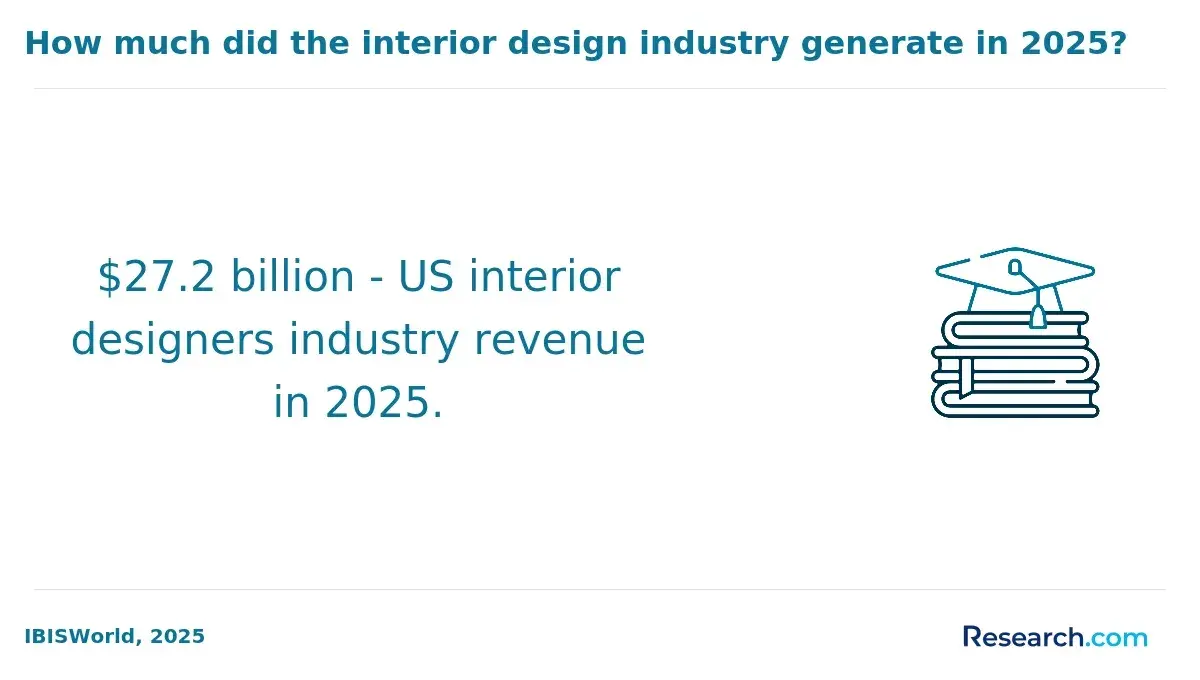
The 2025 ASID State of Interior Design Report points to growing use of AI tools in design workflows, while the interior design services market is projected to reach $204 billion by 2031 at a 5.83% CAGR, with residential demand holding a 57% share and renovation activity still strong. Interior design services market outlook
Quick answer: Is interior design a good career in 2026?
Interior design can be a good career if you like creative problem-solving, client communication, space planning, and technical detail. It is a weaker fit if you only want artistic work without deadlines, budgets, code considerations, revisions, or client management. The designers who tend to stand out combine visual judgment with CAD or 3D skills, building-code awareness, and the ability to manage projects from concept to installation.
Fast facts to know before you commit
- Interior designers in the United States earned a median annual salary of $63,490 in 2024 (BLS, 2024).
- The highest-paying industries listed for interior designers by median annual pay are architectural, engineering, and related services ($73,990); wholesale trade ($67,520); and specialized design services ($62,710).
- A recent report indicates that 69% of interior designers in the US hold bachelor's degrees, 18% hold associate degrees, and 6% hold master's degrees.
- Employment for interior designers in the US from 2024 to 2034 is projected to grow by 3%.
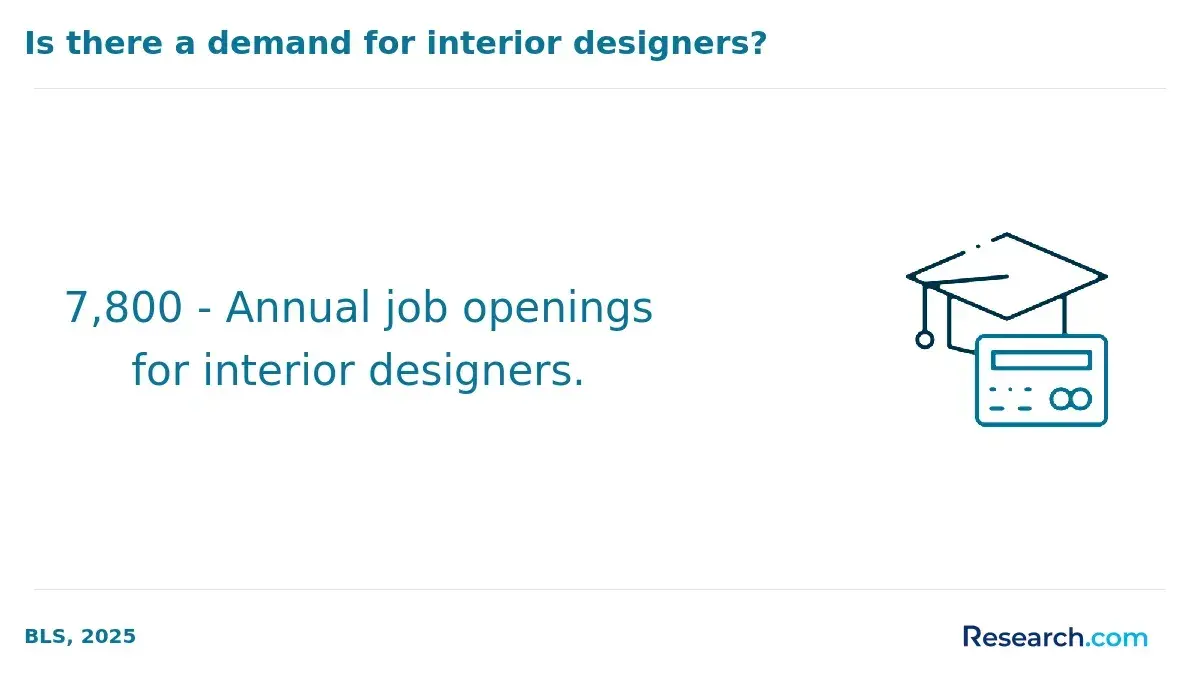
- Interior design job openings from 2024 to 2034 are expected to average around 7,800 each year.
- Interior designers in the top 10% of earners make more than $101,860 annually.
What interior design is, and what it is not
Interior design is the planning of interior spaces so they are functional, safe, attractive, and suited to how people actually use them. The job is not limited to decorating. Interior designers work on layout, circulation, storage, lighting, materials, finishes, drawings, renderings, vendor coordination, and in many settings, compliance with building and accessibility requirements.
In practice, the work often sits at the intersection of design and project management. A designer may meet with a client, assess the space, build a concept, create plans or visualizations, compare materials, revise the design after budget feedback, and coordinate with architects, contractors, or installers.
For anyone comparing professions that combine creativity with technical responsibility, interior design is closer to a structured professional service than a purely artistic role.
Common duties in interior design
- Assessing client goals, room use, budget, and timeline.
- Planning layouts that improve flow, accessibility, and comfort.
- Developing concepts, color palettes, and finish selections.
- Preparing drawings, specifications, renderings, or presentation materials.
- Choosing furniture, fixtures, lighting, textiles, and surface materials.
- Coordinating with vendors, contractors, architects, and installers.
- Monitoring schedules, approvals, purchases, and installation details.
- Checking designs for function, durability, safety, and code concerns.
| Work area | What it means in practice | Why it matters |
| Space planning | Arranging rooms, furniture, pathways, storage, and activity zones | Determines whether the space works in daily use |
| Visualization | Using sketches, boards, CAD, or 3D models to show ideas | Helps clients understand and approve the design before spending begins |
| Material selection | Choosing flooring, wall treatments, finishes, lighting, and furnishings | Influences appearance, maintenance, durability, sustainability, and cost |
| Project coordination | Managing deadlines, vendors, revisions, purchases, and installation | Reduces errors, delays, and budget overruns |
| Code awareness | Considering egress, accessibility, and applicable regulations | Supports safe and professionally defensible design decisions |
What is the job outlook for interior designers?
BLS projections cited in this guide show employment for interior designers growing by 3% from 2024 to 2034. That is about as fast as the average for all occupations and matches the projected growth rate for art and design workers.
During that same period, the number of job openings is expected to average about 7,800 per year, with employment rising from 87,100 in 2024 to about 89,900 by 2034.
What the outlook means for students and career changers
The outlook suggests a steady but competitive field, not a boom cycle. A degree helps, but it will not be enough on its own. Employers usually look for a polished portfolio, software ability, documentation skills, client communication, and enough technical understanding to work within budgets and code limitations.
What interior designers earn
BLS data cited here lists a median annual salary of $62,510 for interior designers in the United States. That is above the median annual pay for all US workers, which is $48,060, and above the median annual wage of traditional art and design workers, which is $51,660.
Pay can improve with specialization, experience, location, and the type of employer. Designers in architectural, engineering, and related services report a median annual pay of $73,990, while wholesale trade reports $67,520 and specialized design services reports $62,710.
| Factor | How it affects income |
| Industry | Some industries pay more because projects are more technical, larger in scale, or tied to higher-value clients. |
| Experience | Entry-level designers usually earn less while building skills; senior designers may move into management, direction, or ownership. |
| Specialization | Kitchen and bath design, healthcare, hospitality, workplace, sustainable design, and high-end residential work can support stronger earnings. |
| Credentials | NCIDQ certification, licensure where relevant, and specialty credentials may strengthen credibility with employers and clients. |
| Location and market | Local demand, cost of living, client budgets, and construction activity can all affect pay. |
What skills successful interior designers need
Interior design rewards people who can balance aesthetics with execution. A strong designer can create appealing ideas, explain them clearly, adapt to constraints, and still deliver a space that works in the real world.
Technical skills to build early
- Visual communication. Designers need to show ideas through drawings, boards, renderings, diagrams, and digital models.
- Budget awareness. Product costs, labor, lead times, and procurement issues must be understood early, not after selections are finalized.
- Project management. Timelines, approvals, vendor coordination, and installation schedules all require attention.
- Trend literacy. Designers should follow current materials, colors, and technologies, while avoiding work that becomes dated too quickly.
- Accessible design. Spaces should account for mobility, age, body size, sensory needs, and different levels of ability.
- Building systems literacy. Interior designers do not replace architects or engineers, but they should understand how lighting, HVAC, plumbing, structure, and electrical systems affect the plan.
Professional skills that matter just as much
- Creativity with discipline. Ideas must fit the budget, the space, and the client’s actual needs.
- Communication. Designers present concepts, explain trade-offs, and keep clients updated through changes.
- Decision-making. Every project involves many choices, from finishes to furniture scale to vendor substitutions.
- Adaptability. Delays, revisions, budget changes, and site problems are normal.
- Problem-solving. Designers often work around awkward layouts, limited space, conflicting priorities, or code constraints.
| If you enjoy... | Interior design may suit you because... | Be aware of... |
| Creative visual work | You will create concepts, palettes, layouts, and presentations | The job also requires technical documents and revisions |
| Working with people | Client discovery and collaboration are central to the work | Some clients change direction frequently |
| Organizing details | Budgets, specifications, purchases, and schedules need precision | Small errors can become expensive |
| Technology | CAD, 3D visualization, and AI-supported tools are increasingly useful | Software changes quickly, so ongoing learning is necessary |
How to start a career in interior design
The most common path is an undergraduate degree in interior design or a related field. Like many structured careers, it usually combines formal education, hands-on experience, software practice, and, in some cases, credentialing.
An associate degree can help students enter the field sooner, especially in assistant, drafting, showroom, staging, or support roles. A bachelor's degree usually provides broader preparation and is more aligned with employer expectations and many licensing paths.
According to 2024 Zippia data, 69% of interior designers in the country have a bachelor's degree, 18% have an associate degree, 6% have a master's degree, and 2% completed a diploma or certificate course.
Associate degree vs. bachelor’s degree in interior design
| Path | Best for | Main advantages | Main limits |
| Associate degree | Students who want quicker entry into assistant, drafting, showroom, or staging roles | Shorter timeline, earlier work experience, lower time commitment | May not be enough for some employer or licensure expectations |
| Bachelor's degree | Students who want broader preparation, stronger portfolios, and more advancement options | More complete education and better alignment with many job requirements | Usually takes longer and costs more overall |
| Certificate or diploma | Career changers or professionals adding a specific skill set | Focused and often more flexible | May not satisfy licensure or full professional-role requirements |
Entry-level roles with an associate degree
| Role | Typical work | Median annual salary |
| Residential lighting adviser | Plans lighting and electrical layouts that support mood, function, and budget while coordinating with design and engineering teams. | $48,684 |
| Drafter | Uses CAD software to turn concepts into technical drawings and design documents. | $62,530 |
| Architectural assistant | Supports architects with planning, documentation, CAD or BIM tasks, and coordination. | $51,449 |
Career options with a bachelor’s degree
| Role | Typical work | Median annual salary |
| Real estate staging consultant | Prepares homes for listing, photography, and showings by arranging furnishings and decor to improve appeal. | $48,610 |
| Art director | Guides visual concepts and leads creative teams across media and design environments. | $106,500 |
| Production design manager | Leads the visual design of theater, film, or television sets and coordinates the design team. | $86,533 |
Practical steps to enter the field
- Compare programs by curriculum depth, portfolio support, faculty experience, software access, and internship options.
- Learn CAD, 3D modeling, rendering, presentation, and project documentation tools.
- Build a portfolio that shows your process, not just final images.
- Look for internships, showroom work, design assistant roles, staging projects, or freelance opportunities.
- Learn the business side of design: proposals, contracts, purchasing, markups, and client management.
- Check licensing and certification requirements early if your target state or role needs them.
How to advance in interior design
Graduate study is optional for many interior design careers, and it is not always required for licensure. Still, a master’s or doctorate can support advancement into leadership, teaching, research, design management, or more specialized roles.
Interior designers in the top 10% of earners make more than $101,860 annually. Higher pay is usually tied to experience, specialization, leadership, business ownership, premium client markets, or advanced credentials rather than education alone.
Roles that may fit a master’s-level background
| Role | Typical focus | Median annual salary |
| Senior industrial designer | Develops user-centered products with engineers, manufacturers, and design teams. | $105,882 |
| Facilities project manager | Oversees workspace planning, improvements, budgets, vendors, and timelines. | $104,900 |
| Interior design director | Leads design direction, teams, project assignments, client communication, and executive reporting. | $112,687 |
Roles that may fit a doctorate-level background
| Role | Typical focus | Median annual salary |
| Urban and regional planner | Plans land use, development, public spaces, and long-term growth strategies. | $81,800 |
| Design engineering manager | Leads design engineering teams and improves product development processes. | $138,257 |
| Senior design researcher | Studies behavior, culture, usability, and experience to shape evidence-based design. | $112,576 |
Which interior design certifications are worth considering?
Certifications can strengthen credibility when you want to work in regulated, commercial, sustainable, kitchen-and-bath, or residential niches. They are not interchangeable, and the best choice depends on your state, employer market, and long-term goals.
| Certification | Best for | Why it matters |
| NCIDQ Certification | Designers seeking broad professional recognition or licensure eligibility in some states | Widely recognized as a major benchmark for competence in codes, project coordination, and professional practice |
| LEED AP Interior Design + Construction (LEED ID+C) | Designers focused on sustainable interiors and green building projects | Signals knowledge of environmentally conscious design and project priorities |
| Certified Interior Decorators International (CID) Certification | Residential decorators and designers working outside NCIDQ-focused paths | Can support credibility in decoration-focused residential work |
| California Council for Interior Design Certification (CCIDC) | Designers practicing in California | Addresses California-specific education, experience, exam, and ethics expectations |
| Certified Kitchen and Bath Designer (CKBD) | Designers specializing in kitchens, bathrooms, cabinetry, plumbing fixtures, and renovation spaces | Demonstrates targeted expertise in highly technical residential design work |
How to choose the right credential
- Verify whether your state requires or recognizes a specific credential.
- Review job postings to see what employers actually ask for.
- Choose specialty credentials only when they match your portfolio and client base.
- Confirm eligibility, renewal rules, and industry recognition before paying for anything.
What alternative careers can interior design graduates pursue?
Interior design graduates often build transferable skills in spatial planning, presentation, materials, research, software, and client communication. Those strengths can move into related creative or built-environment careers. Some graduates also broaden their design toolkit through programs such as online graphic design degree programs.
| Alternative career | Why the skills transfer | Median annual salary |
| Craft and fine artist | Training in composition, color, and materials can support gallery or handmade work. | $52,910 |
| Landscape architect | Spatial planning and design software help in outdoor environments, though degrees must be approved by the Landscape Architectural Accreditation Board and professionals must pass the Landscape Architect Registration Examination. | $79,320 |
| Fashion designer | Color theory, trend research, prototyping, materials, and presentation can transfer into apparel and accessory work. | $79,290 |
When a different path may be better
- You prefer concept work over documentation and site coordination.
- You want to work in fashion, media, entertainment, product design, or digital experiences.
- You are more interested in research, strategy, or sustainability than in traditional interior projects.
- You want less home-renovation client work and more studio or corporate work.
How to become a licensed interior designer
Licensing rules differ by state, so always check the rules where you plan to work. In general, licensure involves finishing an approved education path, gaining supervised experience, passing an exam, applying to the state authority, and meeting continuing education requirements.
- Earn an accredited degree. Complete an interior design program or a closely related major accredited by CIDA or another accepted body. A bachelor's degree is often the better option for licensure preparation and employer expectations.
- Complete supervised experience. Many states require years of supervised work under a qualified or licensed designer. The length varies and is often two to four years.
- Pass the NCIDQ exam or an accepted alternative. NCIDQ is widely used to measure competency in design fundamentals, codes, documentation, and professional practice.
- Apply to the state board or authority. Submit education, experience, exam, and application materials if your state offers or requires licensure or registration.
- Maintain the credential. Most licensed designers need continuing education to stay current with standards, codes, and practice changes.
Questions to ask before enrolling in a program
- Is the program accredited in a way my target state recognizes?
- Does the curriculum align with NCIDQ content areas?
- Are internships, supervised experience, or employer connections part of the program?
- Will the degree meet the education rules for licensing or registration where I want to work?
- What proof of education and experience will I need later?
How to prepare for and pass the NCIDQ exam
To sit for the NCIDQ exam, candidates must first meet the education and work-experience requirements that apply to them. The exam has three parts, each focused on a different level of knowledge and application.
| NCIDQ section | What it tests | Format |
| Fundamentals Exam (IDFX) | Interior design theory, history, building systems, construction standards, professional practice, and core knowledge | 125 multiple-choice questions with a three-hour time limit |
| Professional Exam (IDPX) | Ethics, contract documents, project coordination, and advanced professional practice | 150 multiple-choice questions with a four-hour time limit |
| Practicum Exam (PRAC) | Applied judgment in lighting, space planning, accessibility, egress, and building systems integration | Scenario-based assessment of real-world competence |
Study strategies that help
- Start with the official outline. Focus on the actual content areas, not just general design theory.
- Use practice questions thoughtfully. Review why answers are right or wrong instead of memorizing patterns.
- Take a review course if you need structure. Guided prep can help organize your study plan.
- Practice pacing. Each section has strict time limits, so timing matters.
- Study applied scenarios. The exam tests decisions, not just vocabulary.
The chart below shows the pass rates of the three NCIDQ exam sections:
How sustainability, AI, and technology are changing the field
Current interior design work increasingly includes sustainability, digital visualization, and AI-assisted workflows. These tools can improve speed and communication, but they do not replace professional judgment, code knowledge, or the ability to solve real site problems.
What sustainability means in practice
- Eco-conscious materials. Designers may specify recycled wood, natural fibers, low-impact finishes, or low-toxicity paints when budgets allow.
- Energy-aware interiors. Lighting, daylighting, controls, insulation coordination, and efficient systems can affect operating costs.
- Biophilic design. Natural light, plants, organic materials, and nature-inspired forms can support well-being.
- Waste reduction. Durable materials, modular systems, and furniture reuse can reduce replacement and landfill waste.
- Green credentials. Familiarity with LEED and WELL concepts can help with sustainability-focused clients.
What AI and digital tools can do
AI tools may speed up mood boards, concept generation, image exploration, or workflow organization. Rendering software, digital libraries, and virtual walkthroughs can also improve communication with clients. Even so, a designer still has to confirm dimensions, durability, code compliance, and whether the final plan can actually be built.
For professionals who want to deepen their technical skills, digital design education, data literacy, or AI training may help. Those options can be useful if you want to move toward workplace strategy, visualization, product development, or design leadership.
How online education can help aspiring interior designers
Online education can be a practical way to learn software, build a foundation, or keep studying while working. It is especially useful for career changers, parents, and adults who need flexibility.
Benefits of online study
- Flexible scheduling. Online courses can fit around work or family responsibilities.
- Software practice. Many programs teach AutoCAD, SketchUp, Adobe Creative Suite, rendering platforms, and digital presentation tools.
- Specialization options. Students may explore sustainable design, lighting, kitchen and bath, or visualization.
- Cost-conscious pathways. Some learners compare adjacent digital fields, such as the most affordable online UX/UI degree programs.
Online vs. campus learning
| Option | Best for | What to check carefully |
| Online program | Students who need flexibility or already have some design experience | Accreditation, studio feedback, software access, portfolio support, and licensure alignment |
| Campus program | Students who want in-person studio culture, materials labs, critiques, and networking | Commuting, relocation, and total cost |
| Hybrid program | Students who want flexibility plus some hands-on experience | Residency requirements, scheduling, and whether the format matches your goals |
How engineering collaboration can strengthen interior design work
Interior designers often get better results when they collaborate with engineers early. Electrical, mechanical, structural, lighting, and acoustic issues can affect ceiling plans, smart systems, HVAC coordination, and code compliance. Understanding those constraints helps designers create concepts that are realistic and cost-effective.
How branding and networking support an interior design career
Interior design is both portfolio-driven and relationship-driven. A clear personal brand helps clients and employers understand your style, process, and strengths. Networking can lead to referrals from architects, contractors, real estate agents, showrooms, vendors, photographers, and past clients.
- Show process, not only polished final photos.
- Use social media with a clear point of view, not as a substitute for skill.
- Attend trade shows, showroom events, association meetings, and local design gatherings.
- Build a niche if possible, such as sustainable interiors, hospitality, kitchen and bath, luxury residential, or small-space design.
How data science and health informatics can influence design strategy
Data skills can help designers make better decisions in workplaces, healthcare settings, retail environments, hospitality projects, and other spaces where behavior and performance matter. Occupancy patterns, movement flow, lighting performance, and post-occupancy feedback can all guide stronger design choices.
Health informatics can also be useful when design work supports patient care, senior living, workplace wellness, or human factors research. In those settings, data about ergonomics, movement, stress, and safety can shape the design brief.
How international business knowledge can help designers
Designers who work with imported products, luxury clients, hospitality brands, or cross-border vendors may benefit from business and logistics knowledge. Procurement, pricing, cultural expectations, and contract management all matter when a practice serves clients beyond a local market.
What other pivots interior designers can consider
Interior design training can transfer into set design, exhibition design, visual merchandising, product styling, showroom management, furniture sales, design writing, and real estate staging. These paths can make sense if you want to use spatial and visual thinking in a different environment.
Some designers also compare adjacent technical or hands-on fields, depending on the kind of work they want. If your interests shift toward security, installation, or practical repair work, a career like how to become a locksmith may offer a very different kind of problem-solving.
What education path can help you enter faster?
If speed matters, the main trade-off is simple: shorter programs get you into the field sooner, but longer programs usually prepare you better for licensure, broader job access, and more advanced design work. A certificate may help you learn a narrow skill. An associate degree may open assistant or technical roles. A bachelor's degree usually gives you the strongest all-around foundation.
Common mistakes to avoid when planning your path
| Mistake | Why it causes problems | Better move |
| Choosing a program without checking accreditation | You may later find out it does not help with licensing or employer expectations. | Confirm recognition before enrolling. |
| Looking only at tuition | Software, materials, travel, and portfolio costs can change the real price. | Compare total cost, not sticker price alone. |
| Assuming all online programs meet licensure requirements | Requirements can vary by state and may depend on degree level and supervised experience. | Ask the school and state board for written guidance. |
| Building a portfolio with only pretty images | Employers want to see process and problem-solving. | Include research, drawings, decisions, and outcomes. |
| Ignoring business skills | Proposals, purchasing, contracts, and budgets affect project success. | Learn the business side early. |
| Assuming salary outcomes are guaranteed | Income varies widely by market and specialization. | Use salary data as planning guidance, not a promise. |
Key insights
- Interior design is a technical creative career. Strong designers combine concept development with space planning, documentation, budgeting, and client management.
- The job outlook is steady, not explosive. BLS data cited here projects 3% growth from 2024 to 2034 and about 7,800 openings per year.
- Education choice matters. Associate degrees can support faster entry into support roles, while bachelor's degrees are more common and often better aligned with licensure paths.
- Licensing is state-specific. Before choosing a program, verify whether your target state requires accredited education, supervised experience, and NCIDQ or another exam.
- NCIDQ remains a major professional benchmark, but it is not the only credential worth considering. LEED ID+C, CKBD, CID, and state-specific credentials can add value in the right niche.
- Technology is changing the workflow. AI, 3D visualization, rendering tools, and data-informed planning can improve speed and communication, but they do not replace judgment or code knowledge.
- Sustainability, accessibility, and wellness are no longer side topics. They are becoming more important in client expectations and hiring decisions.
- The best fit depends on your goals. Residential, commercial, staging, set design, UX, workplace strategy, and sustainable consulting all use different parts of the interior design skill set.
References:
- BLS (2024, April 17). Administrative Services and Facilities Managers. BLS
- BLS (2024, April 17). Art Directors. BLS
- BLS (2024, April 17). Craft and Fine Artists. BLS
- BLS (2024, April 17). Drafters. BLS
- BLS (2024, April 17). Fashion Designers. BLS
- BLS (2024, April 17). Interior Designers. BLS
- BLS (2024, April 17). Landscape Architects. BLS
- CareerExplorer. Are interior designers happy? CareerExplorer
- Glassdoor (2024, February 10). How much does a Design and Production Manager make? Glassdoor
- Glassdoor (2024, February 10). How much does a Design Engineering Manager make? Glassdoor
- Glassdoor (2024, April 8). How much does a Senior Design Researcher make? Glassdoor
- Market.us. (2024, May 3). AI interior design market to surpass USD 7,299 billion by 2033. LinkedIn
- Zippia (2024, April 5). INTERIOR DESIGNER EDUCATION REQUIREMENTS. Zippia
- ZipRecruiter (2024, April 24). Architect Assistant Salary. ZipRecruiter
- ZipRecruiter (2024, April 24). Interior Design Director Salary. ZipRecruiter
- ZipRecruiter (2024, April 24). Lighting Specialist Salary. ZipRecruiter
- ZipRecruiter (2024, April 24). Senior Industrial Designer Salary. ZipRecruiter
- ZipRecruiter (2024, April 24). What Is the Average Real Estate Staging Salary by State. ZipRecruiter
Other Things You Should Know About Interior Design Careers
Most U.S. states that license interior designers use the NCIDQ Exam, administered by the Council for Interior Design Qualification. Candidates usually need an approved degree and supervised work experience before sitting for the exam, and some states also require separate state registration or title-use rules.
In 2027, interior designers in the U.S. can expect average annual salaries ranging from $50,000 to $70,000, depending on experience, location, and specialty. Higher salaries are typically seen in metropolitan areas where demand for interior design services is higher.
The job outlook for interior designers in 2027 is expected to be positive, with the Bureau of Labor Statistics projecting a steady demand due to an increased focus on sustainable and functional interior spaces. Competitive salaries and diverse opportunities also contribute to the growing interest in this field.