
2027 Liberal Arts Careers: Guide to Career Paths, Options & Salary

Co-Founder and Chief Data Scientist
A liberal arts degree can open more career doors than many students expect, but only if you know how to translate the degree into a specific job plan. The challenge is not whether liberal arts “counts.” The real question is how to turn broad skills in writing, analysis, communication, research, and critical thinking into a marketable path in 2026.
This matters now because hiring is shifting. Employers want candidates who can learn quickly, work across teams, communicate clearly, and adapt as AI and automation change day-to-day tasks. Liberal arts graduates often have those strengths, but they usually need a focused strategy to make them visible in a resume, portfolio, interview, or graduate school application.
This guide breaks down what liberal arts careers look like today, which jobs fit different degree levels, what employers actually look for, how salaries vary by occupation, and when it makes sense to specialize further with certificates, graduate study, or practical experience. It is written for students choosing a major, graduates starting a job search, and working adults deciding whether to add another credential.
Quick Answer: What Jobs Can You Get With a Liberal Arts Degree?
A liberal arts degree can lead to jobs in communications, marketing, human resources, public relations, education, research, social services, publishing, fundraising, government, project coordination, library science, and some technology-adjacent roles. The best outcomes usually come when graduates pair the degree with internships, a portfolio, digital skills, or a more targeted credential.
Put simply, liberal arts is not a single job track. It is a flexible academic base built around fields such as communication, history, psychology, literature, sociology, philosophy, humanities, arts, and the social sciences. Those subjects strengthen the kinds of thinking employers still need: judgment, writing, audience awareness, ethical reasoning, and the ability to explain complex ideas clearly.
Liberal Arts Careers at a Glance
- Why liberal arts careers still matter
- Career outlook for liberal arts graduates
- Skills employers expect from liberal arts majors
- How to start a liberal arts career
- How to move into higher-level liberal arts careers
- Alternative career options for liberal arts graduates
- How liberal arts supports public relations careers
- How to stand out in a competitive job market
- How an advanced creative degree can strengthen a liberal arts background
- How creative writing can expand liberal arts career options
- How to specialize after earning a liberal arts degree
- How accelerated communications study can support liberal arts graduates
- How accelerated creative writing study can support liberal arts graduates
- Library science options for liberal arts graduates
- Interdisciplinary career paths for liberal arts graduates
- Using digital skills for creative career growth
- Building a professional network as a liberal arts graduate
Why Liberal Arts Careers Still Matter
The biggest strength of a liberal arts education is portability. Instead of training for one narrow occupation, it teaches skills that can be used in many different jobs and industries. That matters in a labor market where people switch employers, job functions, and even career tracks more often than they used to.
The old idea that liberal arts majors are not employable is too simplistic. The degree can be hard to market if a student graduates without experience or a clear direction, but it becomes much stronger when paired with internships, public-facing work, research projects, data tools, writing samples, or a credential tied to a target field.
Liberal arts is also more relevant in the age of automation and AI. Machines can process information, but they still need people who can interpret context, identify ethical concerns, understand audiences, ask better questions, and communicate with nontechnical stakeholders. That is one reason human-centered skills remain valuable in technology-driven workplaces.
Researchers and writers have argued that liberal arts training supports flexibility in a changing economy because it helps people learn, adapt, and collaborate across disciplines. That practical flexibility is often the real career advantage.
Common employment areas for liberal arts graduates include business, government, education, healthcare, marketing, human resources, advertising, communications, publishing, public relations, social services, and some roles that rely on data interpretation or user insight. In some cases, these careers also connect with benefits and advancement opportunities that can improve long-term earnings and workplace quality.
| Career advantage | Why it matters | How to show it to employers |
| Communication | Many jobs depend on writing, presenting, interviewing, explaining, or persuading. | Share writing samples, presentations, reports, campaign materials, or client-facing work. |
| Research and analysis | Employers need people who can gather evidence, evaluate sources, and draw sound conclusions. | Include research papers, briefs, literature reviews, market scans, or data interpretation projects. |
| Human and cultural insight | Organizations need to understand communities, customers, coworkers, and behavior. | Connect coursework in psychology, sociology, history, ethics, or literature to workplace problems. |
| Adaptability | Liberal arts graduates often move between functions as their careers develop. | Use a targeted resume that translates broad strengths into role-specific language. |
| Ethical reasoning | AI, data, education, health, policy, and media decisions often affect people in real ways. | Discuss projects where you considered fairness, stakeholder impact, or risk. |
Career Outlook for Liberal Arts Graduates
The career outlook for liberal arts graduates depends much more on the specific job than on the degree title alone. A graduate who applies broadly without a focus may struggle to explain their fit. A graduate who can connect liberal arts training to a role like public relations, HR, market research, grant writing, policy analysis, content strategy, or project coordination is usually easier for employers to evaluate.
Enrollment trends show that the field still attracts many students. According to the National Student Clearinghouse Research Center, liberal arts, general studies, and humanities had the third highest undergraduate enrollment in fall 2025, with 702,812 enrolled students. That does not guarantee strong job outcomes, but it does show continued interest in broad-based education.
Employability is often about translation. Nicholas (2018), in “Marketable selves: Making sense of employability as a liberal arts undergraduate,” published in the Journal of Vocational Behavior, explored how liberal arts students make sense of career stigma and build a professional story around their education. The takeaway is straightforward: students must show how their degree solves workplace problems.
Salary varies widely by occupation, location, employer, and experience. Liberal arts graduates in office and administrative support occupations have median earnings of $46,320. For business and financial occupations, the median salary is $780,920, and for education and library occupations the median wage is $59,220, which is comparable to some outcomes associated with a bachelor’s degree in English. The important point is to look at salary by role, not by major.
The Association of American Colleges and Universities has also argued that liberal arts education can support long-term employability. In practice, many graduates start in entry-level jobs and move into better-paying roles as they gain experience, switch functions, or build more specialized skills.
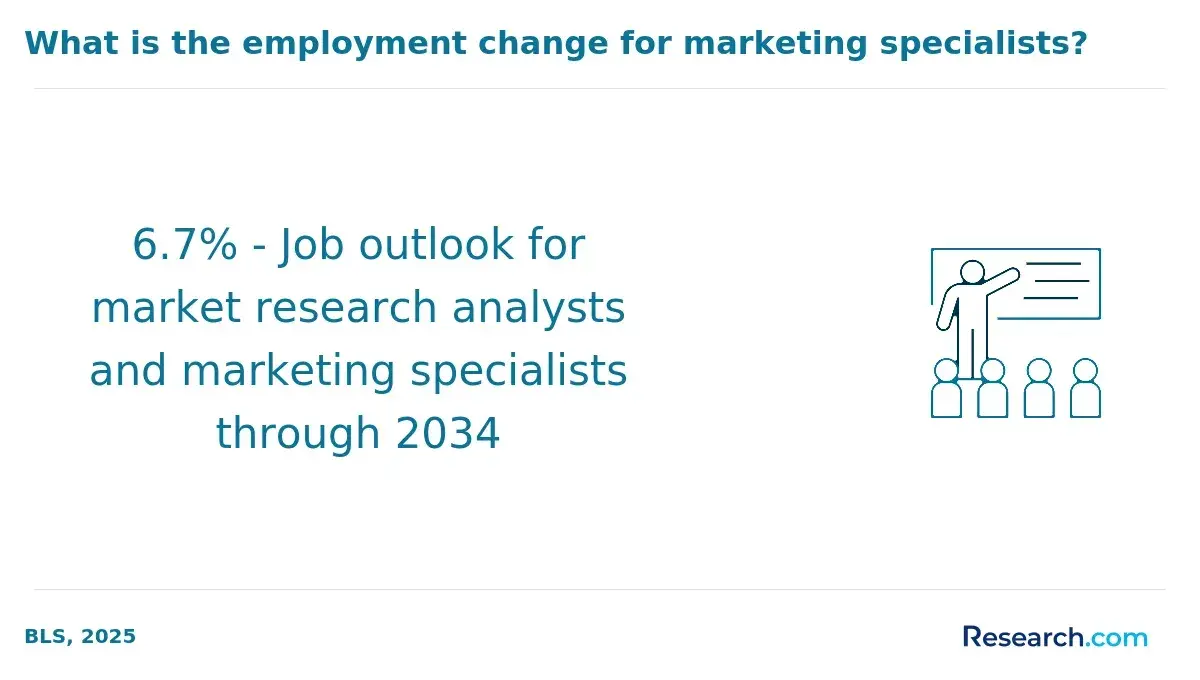
One example is market research analyst. The role matches liberal arts strengths when graduates add data interpretation, survey analysis, consumer behavior knowledge, and business communication. The median salary for market research analysts is $76,950, and the job outlook through 2034 is 6.7%, which is faster than average.
| Career area | Why liberal arts graduates may fit | Salary or outlook cited in this guide |
| Office and administrative support | Organization, writing, coordination, and internal communication are central to many of these roles. | Median earnings: $46,320 |
| Business and financial occupations | Analysis, stakeholder communication, and problem framing can support these roles. | Median salary: $780,920 |
| Education and library occupations | Research, teaching, literacy, information organization, and communication are core strengths. | Median wage: $59,220 |
| Market research analysis | This work combines behavior, research design, communication, and data interpretation. | Median salary: $76,950; outlook through 2034: 6.7% |
Skills Employers Expect From Liberal Arts Majors
Being “well-rounded” is not enough in a job search. Employers want evidence. They want to see that a candidate can produce work, solve problems, communicate with people, and learn new tools without needing constant supervision. The strongest liberal arts candidates can point to examples such as research papers, published writing, internship projects, presentations, event planning, campaign results, or digital portfolios.
Core Skills Liberal Arts Graduates Bring
- Research: Liberal arts students learn how to find sources, judge credibility, compare viewpoints, and synthesize information. That is useful in market research, technical writing, policy support, grant writing, and communications.
- Analysis: Graduates are trained to interpret patterns, behavior, arguments, and context. That ability supports roles in management analysis, nonprofit strategy, community work, and content strategy.
- Communication: Liberal arts programs strengthen writing, speaking, editing, and translating ideas for different audiences. That skill matters in publishing, public relations, archives, fundraising, and education.
- Critical thinking: Students learn to question assumptions, evaluate evidence, and consider consequences. That makes them useful in public service, healthcare education, ethics-focused roles, and organizational decision-making.
Workplace Skills That Make the Degree More Marketable
- Digital fluency: Employers often expect comfort with collaboration tools, spreadsheets, content systems, social platforms, analytics dashboards, or basic data visualization.
- Project coordination: Many entry-level jobs require tracking deadlines, managing details, and keeping teams organized.
- Portfolio development: A resume tells employers what you studied; a portfolio shows what you can do. Writing samples, research briefs, campaign work, and presentations make a broad degree easier to evaluate.
- Industry vocabulary: Liberal arts graduates should learn how their skills are described in the field they want. For example, “critical thinking” might become “user research,” “campaign messaging,” “employee relations,” or “stakeholder communication.”
- Ethical and cultural judgment: Organizations that serve communities, patients, students, donors, or customers need workers who can think through consequences for different groups.
| If your strength is... | Consider roles in... | Build evidence by... |
| Writing and editing | Content strategy, publishing, technical writing, public relations, grant writing | Creating a portfolio with work for different formats and audiences |
| Research | Market research, policy support, library science, nonprofit evaluation, academic support | Producing briefs, literature reviews, survey summaries, or source-based reports |
| People and organizations | Human resources, community services, fundraising, student services, public administration | Completing internships, volunteer work, event coordination, or case documentation |
| Media and storytelling | Social media, public relations, digital marketing, film, multimedia production | Building campaigns, scripts, audience analyses, or creative samples |
| Interdisciplinary problem-solving | Project management, consulting support, user experience, operations, program coordination | Documenting projects that required planning, research, communication, and follow-through |
How to Start a Liberal Arts Career
A better starting question than “What can I do with this degree?” is “What kind of problems do I want to solve, and what proof can I show?” Because liberal arts is broad, students usually need to choose one or two target job families early. That focus helps with electives, internships, networking, and portfolio building.
Students should also be realistic about timing. Some liberal arts graduates do not have the same early earnings advantage as students in more technical majors, but many improve their position over time as they gain experience and move into more specialized work. The degree can be a long-term asset when used intentionally.
An associate degree in liberal arts typically emphasizes writing, reasoning, communication, cultural literacy, and broad exposure to humanities and social sciences. It can support transfer into a bachelor’s program or help qualify students for entry-level administrative, customer-facing, legal support, social media, or coordination roles.
A bachelor’s degree in liberal arts offers a wider academic base and is commonly used for roles that require stronger writing, research, analysis, and organizational judgment. Admission to associate and bachelor’s programs usually requires an official high school transcript or GED.
| Path | Typical purpose | Good fit for students who... | Important next step |
| Certificate | Shorter study centered on selected liberal arts courses or a career-adjacent skill area | Want a faster credential, are exploring college, or need targeted skill development | Check whether the certificate links to a job, transfer path, or employer-recognized skill |
| Associate degree | Two-year foundation in communication, analysis, and cultural literacy | Want to enter the workforce sooner or transfer later into a bachelor’s program | Confirm transfer agreements and choose electives that support a career direction |
| Bachelor’s degree | Four-year preparation for a wider range of professional roles | Want broader options in business, education, communications, government, or social services | Complete internships, build a portfolio, and choose a practical minor or concentration when possible |
| Graduate degree | Advanced interdisciplinary study or specialization | Need higher-level preparation for teaching, leadership, research, or a specialized field | Compare costs, career outcomes, faculty fit, and whether the degree is necessary for your goal |
Practical First Steps for Getting a Liberal Arts Job
- Select one or two job families. Good examples include communications, HR, policy, marketing, social services, library science, education support, or project coordination.
- Rewrite your coursework in employer language. A research paper can become “analysis and synthesis.” A group presentation can become “stakeholder communication.”
- Collect proof before graduation. Internships, campus jobs, research assistantships, volunteer work, freelance writing, student media, and community projects all count.
- Learn one practical tool set. Depending on your target, that might include spreadsheets, social analytics, content management, presentation tools, survey software, or basic data visualization.
- Build a portfolio. Include writing, research, presentations, creative work, or project summaries that show how you think and what you can produce.
- Network with a goal. Ask professionals what they do daily, what entry-level job titles they hire for, and what makes a candidate stand out.
Jobs You Can Get With an Associate Degree in Liberal Arts
An associate degree can support entry-level work, especially when combined with office experience, customer service, legal support training, or digital media practice. These roles show how liberal arts strengths can transfer into real workplace settings.
| Role | What the job involves | Median salary |
| Human Resource Specialist | HR specialists help with hiring, onboarding, employee questions, workplace policies, records, and engagement. | $72,910 |
| Legal Assistants | Legal assistants and paralegals organize files, support legal research, prepare documents, and handle administrative tasks. | $61,010 |
| Social Media Specialist | Social media specialists create and schedule content, interact with audiences, track platform activity, and help shape a brand’s voice. | $79,169 |
| Project Management Specialist | Project management specialists coordinate timelines, tasks, people, and resources so work stays organized. | $100,750 |
Jobs You Can Get With a Bachelor’s Degree in Liberal Arts
A bachelor’s degree expands the range of roles available, especially if students graduate with internships, applied projects, a minor, or electives in a complementary field such as business, data, communication, psychology, public policy, or digital media.
| Role | What the job involves | Median salary |
| Management Analyst | Management analysts study organizational systems, workflows, culture, and performance, then recommend ways to improve efficiency. | $101,190 |
| Fundraiser | Fundraisers create campaigns and events that encourage donations for charities, campaigns, universities, and other organizations. | $66,490 |
| Market Research Analyst | Market research analysts study consumers, markets, competitors, products, and services to support decisions. | $76,950 |
| Social Worker | Social workers help individuals and communities respond to challenges such as illness, job loss, family stress, and social barriers. | $61,330 |
Can You Get a Liberal Arts Job With a Certificate?
Yes, but only if the certificate connects to a clear outcome. A liberal arts certificate may support entry-level work in education, creative arts, journalism, government, nonprofit support, or similar fields, especially if the student already has some experience or plans to continue toward a degree. Grade 12 completers are usually eligible, and many schools expect English-language proficiency. Typical courses may include English, Biology, Sociology, Religious Studies, History, Psychology, and Theater.
A certificate is most useful when it gives employers a recognizable skill. A writing-focused credential can support communications work, while a humanities or social science certificate can help students test interest before committing to a full degree. Before enrolling, students should confirm transferability, accreditation, and the kinds of jobs graduates actually pursue.
How to Move Into Higher-Level Liberal Arts Careers
Most liberal arts career advancement comes from one of three moves: gaining experience, learning specialized tools, or earning an advanced credential. Which route makes sense depends on the job you want. Some people can move up through work experience alone, while others need a master’s degree, certification, license, or doctorate.
Graduate study is still relevant, but it should be intentional. According to the National Student Clearinghouse Research Center (2026), graduate enrollment in liberal arts, humanities, and general studies declined by 10% for the second year in a row in 2025 as more post-baccalaureate learners moved toward business, health, and science fields. That makes it more important than ever to connect graduate school to a clear career goal.
A master of arts in liberal arts is often interdisciplinary, with study across areas such as politics and society, literature, mathematics and natural science, history and philosophy, and theology. Students who need flexibility can compare affordable online master’s degree programs. Admission usually requires a bachelor’s degree, though not always in a specific major. Applicants may also need transcripts, an essay, and letters of recommendation.
A Ph.D. in liberal arts is generally more research-intensive and individualized. Students may design work across disciplines around a focused question or theme. Admissions can be demanding and may require a curriculum plan or dissertation proposal. Because doctoral study is time-consuming and competitive, it is best suited to students whose goals clearly require research-level training.
| Advancement option | When it makes sense | When to be cautious |
| Professional experience | You already work in a field with promotion paths, such as HR, communications, fundraising, operations, or project coordination. | You are not gaining measurable accomplishments or broader responsibilities. |
| Certification | Your field recognizes a credential in areas like marketing, HR, project management, or analytics. | The credential is costly but not respected in your target market. |
| Master’s degree | You need advanced preparation for leadership, teaching, library science, counseling-adjacent work, or specialized roles. | You are using school to delay decisions without a clear career return. |
| Doctorate | Your goal requires research training, academic work, or a highly specialized path. | The program does not fit your career plan, funding, or location needs. |
Jobs You Can Get With a Master’s in Liberal Arts
| Role | What the job involves | Median salary |
| Fundraising Manager | Fundraising managers build donor relationships, identify funding opportunities, coordinate campaigns, and use channels such as social media to encourage giving. | $123,480 |
| Marketing Manager | Marketing managers oversee product, pricing, promotion, distribution, customer research, and collaboration with sales, product, and public relations teams. Students who want a narrower route can also compare a dedicated marketing degree. | $161,030 |
| Postsecondary Teacher | Postsecondary teachers teach specialized subjects, advise students, and often conduct research or other scholarly work at colleges and universities. | $81,600 |
Jobs You Can Get With a Doctorate in Liberal Arts
| Role | What the job involves | Median salary |
| Psychologist | Psychologists study cognitive, emotional, and social processes by observing and interpreting how people interact with others and their environments. | $94,310 |
| Lawyer | Lawyers advise and represent clients, research legal issues, analyze disputes, and may supervise legal assistants and legal secretaries. Many work more than 40 hours per week. | $151,160 |
| Political Scientist | Political scientists study institutions, policies, behavior, and political systems to explain developments and forecast possible outcomes. | $139,380 |
Which Certifications Can Help Liberal Arts Graduates?
The most useful certification is the one employers in your target field actually value. Marketing professionals may look at credentials from the American Marketing Association. HR professionals may consider certifications tied to the Society for Human Resource Management. Project coordination and management professionals may explore credentials from the Global Association for Quality Management. The point is to choose a credential for its market value, not its appearance.
Alternative Career Options for Liberal Arts Graduates
Liberal arts graduates are not confined to classic humanities jobs. Because they study people, systems, culture, communication, and evidence, they can move into unexpected industries when they add practical experience and a clear domain focus.
That means the strongest path is usually not “do anything.” It is “combine broad training with one field.” Examples include media, tech, law, public policy, health communication, nonprofit work, food culture, design, library science, education, marketing, or business operations.
Other Career Paths Worth Considering
| Career option | How liberal arts applies | Outlook cited in this guide |
| Filmmaker | Film work depends on storytelling, cultural context, social observation, collaboration, and audience awareness. Liberal arts coursework can deepen the meaning behind a story. | Producers and directors: 4.9% through 2034, faster than the 3% average for all occupations |
| Software Developers, Quality Assurance Analysts, and Testers | Liberal arts graduates who build technical skills can contribute to software quality, user experience, documentation, testing, and human-centered product improvement. | Projected growth through 2034: 13.3%, much faster than the average for all jobs |
| Life Coach | Life coaches help clients build self-awareness and improve personal or professional areas. Some focus on career development, spirituality, or emotional wellness. | Career counseling group: estimated growth of 3.5% through 2034 |
How Liberal Arts Supports Public Relations Careers
Public relations is one of the most natural fits for liberal arts graduates because the work depends on writing, audience analysis, persuasion, reputation management, and cultural awareness. Coursework in the humanities and social sciences can help PR professionals understand tone, trust, crisis messaging, and how different audiences may react to a message.
A student interested in PR should build a portfolio with press releases, campaign plans, media pitches, social media copy, event materials, and crisis communication examples. Those who want a more targeted route can compare a public relation degree and decide whether formal PR training would strengthen their career plan.
How Liberal Arts Graduates Can Stand Out in Competitive Job Markets
To stand out, liberal arts graduates have to make their strengths concrete. Employers should not be left guessing how a course in philosophy, history, sociology, literature, or communication connects to the job. The application should make the match obvious.
- Get experience early: Internships, part-time jobs, campus leadership, volunteer work, research assistantships, and freelance projects make academic learning visible.
- Add focused training: Short programs or certifications in marketing, project management, data analysis, HR, design, or communications can make the degree more job-specific.
- Network with intention: Alumni, faculty, professional associations, and industry events can help students identify realistic entry-level titles and hiring expectations.
- Create a portfolio: Writing samples, research briefs, campaign plans, creative pieces, and presentations can show ability more clearly than a resume alone.
- Build an online presence: A thoughtful LinkedIn profile, personal website, or digital portfolio helps employers see your focus and work.
- Customize applications: A generic resume rarely performs well. Tailor each version to the role’s language and priorities.
How an Advanced Creative Degree Can Complement a Liberal Arts Background
An advanced creative degree can help liberal arts graduates turn broad reading, writing, and analysis skills into a stronger creative practice. This can be useful for students interested in multimedia production, fiction, nonfiction, screenwriting, visual arts, creative teaching, or creative leadership.
Advanced creative programs also add structure through critique, deadlines, mentorship, and portfolio development. Students who want flexible graduate study can explore options such as MFA online programs, especially if they need to balance cost, work, and location.
How Creative Writing Can Expand Liberal Arts Career Options
Creative writing can improve a graduate’s ability to tell stories, shape ideas, develop voice, and write with emotional impact. Those strengths are useful in media, digital content, publishing, public relations, marketing, nonprofit communications, and brand storytelling.
It can also make a portfolio stronger and more polished. Students who want a structured bachelor’s route can compare the best affordable bachelor's in creative writing degree online to see how writing-focused coursework may complement a broader liberal arts background.
How to Specialize After Earning a Liberal Arts Degree
Specialization does not mean giving up liberal arts. It means choosing a field and building proof that your broad education can solve real problems there. The fastest way to specialize is to combine coursework, experience, networking, and a portfolio around one target area.
- Pursue creative writing: An online degree creative writing program can support content creation, journalism, publishing, and storytelling-centered media work.
- Add field-specific training: Digital marketing, HR management, project management, analytics, grant writing, and user experience training can make a broad degree more job-ready.
- Use freelance or volunteer projects: Short assignments can become samples, references, and measurable accomplishments.
- Find mentors: A mentor can explain hiring norms, help you avoid unnecessary credentials, and identify realistic entry points.
- Attend events and workshops: Conferences and local meetups can expose you to tools, trends, and job titles that do not appear in course catalogs.
- Target cross-disciplinary roles: Liberal arts graduates often fit positions that blend business, communication, technology, research, education, policy, or creativity.
- Create a personal project: A newsletter, research blog, podcast, design portfolio, community project, or public writing sample can demonstrate initiative and expertise.
How an Accelerated Communications Degree Can Support Liberal Arts Graduates
Communications is one of the clearest ways to focus a liberal arts background. An accelerated communications program can strengthen messaging, audience research, media literacy, campaign planning, and digital communication skills. That can be useful in public relations, corporate communications, social media, marketing, nonprofit outreach, and internal communications.
Students who want a faster route into communications-focused work can compare programs such as the fastest communications degree online. Before enrolling, check the program length, transfer credit rules, total cost, and whether the curriculum includes applied projects or portfolio work.
How an Accelerated Creative Writing Online Degree Can Support a Liberal Arts Career
An accelerated creative writing online degree can help liberal arts graduates build strong writing samples more quickly while improving narrative craft, editing, persuasive writing, and digital communication. That can support careers in public relations, content development, multimedia production, publishing, and brand storytelling.
A focused credential such as an accelerated creative writing online degree is most valuable when it results in a portfolio and matches a clear career goal. Students should compare cost, course format, faculty background, genres covered, and opportunities for feedback before choosing a program.
Library Science Options for Liberal Arts Graduates
Library science can be a strong match for liberal arts graduates who enjoy research, information organization, literacy, archives, technology, and public service. The field uses many of the same strengths developed in liberal arts study, including source evaluation, writing, teaching, cultural awareness, and ethical access to information.
Students who want to qualify for librarian, archivist, or information specialist roles may consider a masters in library science online program. A graduate program can provide specialized preparation in library management, information systems, archival studies, digital collections, and user services. Before enrolling, confirm that the program fits employer expectations in your location and setting.
Exploring Interdisciplinary Paths for Liberal Arts Graduates
Some liberal arts graduates build careers where culture, business, creativity, and public life overlap. Food-related work is one example. Culinary careers can involve storytelling, history, sociology, entrepreneurship, sustainability, community engagement, media, and project management.
Students considering formal culinary training should evaluate cost carefully. Resources on how much is culinary school can help compare tuition, scholarships, training formats, and possible returns on the investment.
Liberal arts graduates may also work as food critics, culinary historians, sustainable food entrepreneurs, nonprofit food program coordinators, or cultural writers. These careers usually work best when personal interest is paired with a practical business model, industry relationships, and visible work samples.
How Liberal Arts Graduates Can Use Digital Skills for Creative Career Growth
Digital skills make liberal arts graduates more competitive because they help turn ideas into measurable output. A graduate who writes well, understands audiences, and can use digital tools is better positioned for content strategy, social media, digital marketing, multimedia production, user experience, online education, or creative consulting.
Useful skills may include online branding, content planning, basic analytics, image editing, layout, video production, web publishing, search optimization, and user-centered design. Graduates who want formal visual training can explore graphic design schools online to build practical design skills alongside a liberal arts background.
How Liberal Arts Graduates Can Build Effective Professional Networks
Networking matters even more in liberal arts careers because many of the best opportunities do not come with one obvious job title. A strong network can help graduates learn which roles exist, how employers describe them, and what skills matter most in hiring.
- Start with alumni: Ask graduates from your program how they found their first job, what they wish they had learned sooner, and which skills matter most now.
- Join professional associations: Look for groups in communications, HR, marketing, education, publishing, public policy, nonprofits, or your target industry.
- Request informational interviews: A short conversation can clarify titles, tools, salary expectations, and hiring timelines.
- Share work publicly: Articles, research summaries, and creative projects can make networking more concrete.
- Use training as a connection point: Short programs and credentials can introduce you to instructors and peers in your target field. For example, a fast online master degree social media marketing may help build digital skills while expanding professional contacts.
Online vs. Campus Liberal Arts Programs: Which Is the Better Choice?
Neither format is automatically better. The best option depends on your schedule, learning style, budget, access to campus resources, and career goals. Online programs are often a strong fit for working adults and students who need flexibility. Campus programs may be better for people who want in-person networking, student organizations, faculty access, and local internships.
| Factor | Online program may be better if... | Campus program may be better if... |
| Schedule | You need flexibility because of work, caregiving, or distance. | You prefer a structured weekly routine and in-person classes. |
| Networking | You are comfortable building relationships online and using virtual career services. | You want direct access to faculty, peers, events, and organizations. |
| Learning style | You can manage deadlines independently and work well in a self-directed format. | You learn best through discussion, immediate feedback, and campus interaction. |
| Career development | The program offers remote internships, portfolio support, and strong online advising. | You want local internships, student media, research roles, or community partnerships. |
| Cost planning | You want to reduce commuting or relocation costs. | You can access campus-based funding, work-study, or nearby opportunities. |
Common Mistakes Liberal Arts Students Should Avoid
Liberal arts can be a strong foundation, but flexibility creates risk when students do not plan ahead. The biggest mistakes usually happen when students assume the degree will market itself.
| Mistake | Why it hurts | Better approach |
| Choosing a program without checking accreditation | Accreditation can affect transferability, graduate admissions, employer trust, and financial aid access. | Verify institutional accreditation before enrolling. |
| Assuming the degree alone is enough | Employers want evidence of applied skills, not just a broad major. | Build internships, projects, work samples, and references before graduation. |
| Looking only at tuition | Total cost also includes fees, books, technology, commuting, lost work time, and time to finish. | Compare the full cost and likely career value. |
| Sending the same resume everywhere | A generic resume can make you look unfocused. | Tailor each application to the role’s language and priorities. |
| Ignoring transfer credit policies | Lost credits can increase time and cost. | Ask for written transfer evaluations before you enroll. |
| Relying only on rankings | A highly ranked program may still be a poor fit for your budget or schedule. | Use rankings as one factor, not the whole decision. |
| Assuming salary is guaranteed | Income depends on occupation, location, employer, and experience. | Research the actual job and build skills that match higher-opportunity roles. |
Questions to Ask Before Choosing a Liberal Arts Program
- Is the institution accredited?
- What concentrations, minors, or electives can help me specialize?
- Does the program offer internships, research opportunities, service learning, or portfolio support?
- How many credits will transfer if I already attended college?
- What career services are available to online and campus students?
- Can I combine liberal arts with business, data, communications, public policy, education, or digital media?
- What kinds of jobs have recent graduates pursued?
- How much will the full program cost, including fees and materials?
- Will this degree help me reach my target career, or would a more specialized program be better?
- If I am deciding between college or trade school, which option fits the work I want to do?
Is a Liberal Arts Degree Worth It?
A liberal arts degree can be worth it for students who want broad intellectual training and are willing to connect it to practical experience. It is especially useful for people who enjoy writing, research, communication, culture, public issues, human behavior, media, or interdisciplinary problem-solving.
It may be a weaker fit for students who want a direct technical credential, a licensure-based occupation, or a program that maps cleanly to one specific job from the beginning. Those students may still benefit from liberal arts coursework, but they should compare specialized degrees, certificates, apprenticeships, or professional programs before enrolling.
The strongest liberal arts strategy is not to study broadly and hope for the best. It is to study broadly, specialize on purpose, and prove your value with real work. That is what turns a flexible degree into a credible career tool.
Key Insights
- Liberal arts is a foundation, not a destination: It can lead to work in communications, HR, marketing, education, research, public relations, social services, government, library science, and tech-adjacent roles.
- Proof matters more than labels: Internships, portfolios, writing samples, research projects, certifications, and digital tools make the degree easier for employers to understand.
- Career results vary by occupation: Salary and job growth depend on the specific role, industry, location, and experience, not the major alone.
- Human skills remain valuable in an AI economy: Critical thinking, ethics, communication, and audience awareness continue to matter as work becomes more automated.
- Specialization improves hiring outcomes: Liberal arts graduates are stronger when they connect the degree to a field such as public relations, marketing, HR, library science, creative writing, project coordination, policy, or digital media.
- Graduate school should have a purpose: A master’s or doctorate can help, but only if it fits a clear goal and a realistic cost plan.
- The best graduates translate their education: They explain how research, writing, analysis, and judgment solve real workplace problems.
References:
- Afshar, V. (2017). The Importance of Liberal Arts in the AI Economy. HuffPost. https://www.huffpost.com/entry/the-importance-of-liberal-arts-in-the-ai-economy_b_5981cfc8e4b09d231a5182bd
- Blochinger, S. (2015). What do the world’s most successful people study? British Council. https://www.britishcouncil.org/voices-magazine/what-do-worlds-most-successful-people-study
- Deming, D. (2019). In the Salary Race, Engineers Sprint but English Majors Endure. New York Times. https://www.nytimes.com/2019/09/20/business/liberal-arts-stem-salaries.html
- Hrynowski, Z. & Marken, S. (2026, February 24). College Students, Grads See Strong Career Value in Degree. Gallup. https://news.gallup.com/poll/702284/college-students-grads-strong-career-value-degree.aspx
- Lewis, P. (2018). Globalizing the Liberal Arts: Twenty-First-Century Education. In N. Gleason (Ed.), Higher Education in the Era of the Fourth Industrial Revolution. Palgrave Macmillan, Singapore. https://doi.org/10.1007/978-981-13-0194-0_2
- National Student Clearinghouse Research Center. (2026, January 15). Final Fall Enrollment Trends. https://nscresearchcenter.org/final-fall-enrollment-trends
- Pasquerella, L. (2021). What Employers Want: Dispelling Myths about the Value of the Liberal Arts. Association of American Colleges and Universities. https://www.aacu.org/blog/what-employers-want-dispelling-myths-about-value-liberal-arts
- U.S. Bureau of Labor Statistics. (2025, August 28). Occupational projections, 2024–2034, and worker characteristics. Retrieved March 2026, from https://www.bls.gov/emp/tables/occupational-projections-and-characteristics.htm
- Forbes. In Defense of the Liberal Arts in the Age of AI. https://www.forbes.com/sites/theyec/2019/12/19/in-defense-of-the-liberal-arts-in-the-age-of-ai/?sh=47724aed754b
- Research.com. Liberal arts degree programs. https://research.com/degrees/liberal-arts-degree
Other Things You Should Know About Liberal Arts Careers
No. Many management roles accept a bachelor’s degree plus 3 to 5 years of relevant experience. Employers often value leadership, communication, and project-management skills more than a specific major, especially in operations, nonprofit management, sales, and public relations.
Liberal arts graduates can thrive in numerous industries, including business, government, education, healthcare, marketing, human resources, advertising, communications, publishing, and data analytics. The broad skill set they acquire allows them to fit into various roles within these sectors.
While a liberal arts certificate equips you with foundational skills like communication and critical thinking, it is often not enough alone for securing stable employment. It is generally advisable to pair the certificate with additional qualifications or experience to enhance employability in 2027.
High-paying jobs for liberal arts graduates include roles such as market research analysts, human resource specialists, legal assistants, project coordinators, management analysts, fundraisers, and postsecondary teachers. These positions leverage their analytical, communication, and problem-solving skills.
Yes, you can advance in your career with a liberal arts degree. Pursuing advanced degrees like a Master's or Ph.D. in liberal arts can lead to higher-level positions in academia, management, and specialized fields. Additionally, gaining practical experience and certifications can further enhance career prospects.
In 2027, the highest-paying industries for liberal arts graduates include technology, finance, and consulting. Within these fields, roles such as data analyst, financial consultant, and project manager are particularly lucrative, with salaries often exceeding $80,000 annually. Advanced degrees or certificates may further enhance earning potential.
Alternative career options for liberal arts majors include roles such as filmmakers, software developers, quality assurance analysts, testers, and life coaches. These roles benefit from the critical thinking, creativity, and people management skills that liberal arts graduates possess.
Emerging career trends for liberal arts graduates in 2027 include roles in digital marketing, data analysis, UX design, and sustainability consulting. These fields value the critical thinking and communication skills developed through a liberal arts education, opening diverse opportunities beyond traditional paths.
Key skills developed through a liberal arts education include critical thinking, effective communication, analytical abilities, creativity, empathy, problem-solving, research proficiency, and the ability to collaborate and adapt to different environments. These skills are highly valued by employers across multiple industries.


