
2027 How to Become a Medical Assistant in Utah Online

Co-Founder and Chief Data Scientist
Becoming a medical assistant in Utah can be a practical way to enter healthcare without spending years in school, but the online route requires careful planning. Most coursework can be completed remotely, yet employers still expect hands-on clinical training, certification readiness, and proof that you can perform safely in a patient care setting.
This guide explains how online medical assistant programs work for Utah students, how long training usually takes, what accreditation and certification mean, what costs to expect, and how to compare programs before enrolling. It is designed for first-time college students, working adults, career changers, and Utah residents who want a flexible path into healthcare without choosing a program that limits future job options.
Quick Answer: Can You Become a Medical Assistant in Utah Online?
Yes. Utah students can complete much of their medical assistant training online, but a fully online program is usually not enough by itself. Reputable programs include in-person labs, supervised externships, or local clinical placements so students can practice skills such as vital signs, injections, phlebotomy support, patient intake, and exam room preparation. Utah does not require every medical assistant to hold national certification, but many employers prefer or expect credentials such as CMA, RMA, or CCMA.
Key Things to Know About Becoming a Medical Assistant in Utah
- Online medical assistant training is usually hybrid: academic courses are delivered online, while clinical practice must be completed in person.
- Certification is not the same as graduation. A program may prepare you for exams such as the CMA, RMA, or CCMA, but you still need to meet the certifying organization’s eligibility rules.
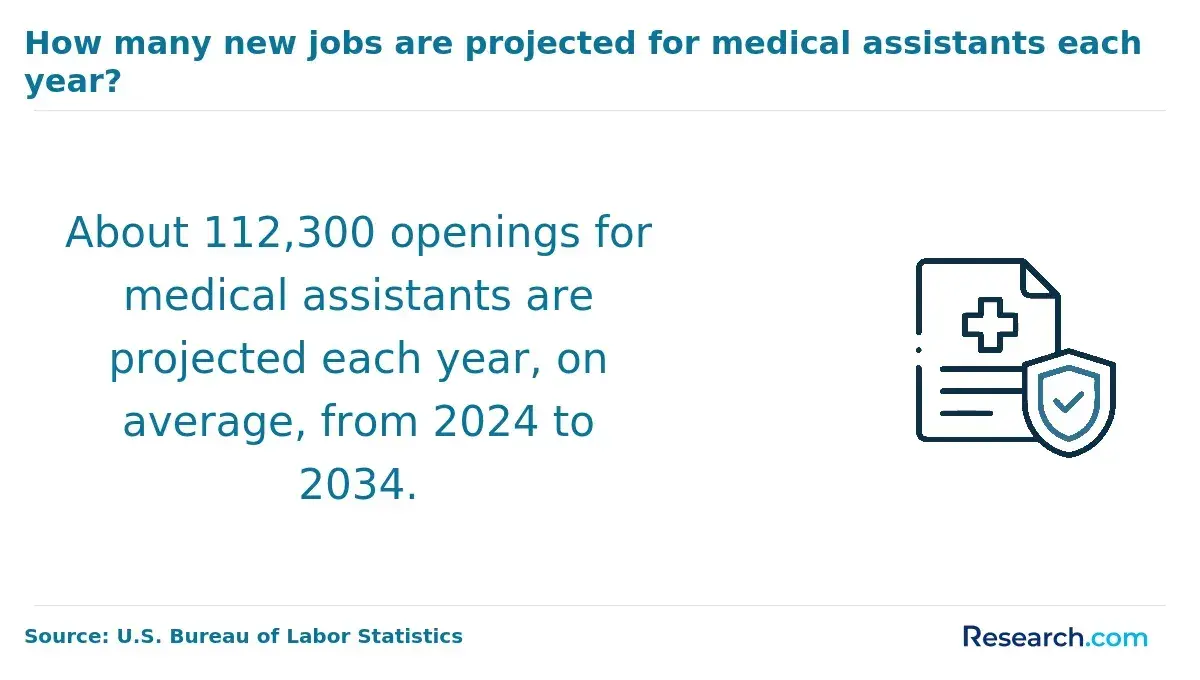
- Utah’s healthcare job market is favorable for this role, with employment for medical assistants projected to grow by 21% over the next decade and a separate projection showing 10% growth through 2030.
- Before enrolling, confirm accreditation, externship support, certification exam eligibility, total cost, and whether the program helps Utah students secure local clinical experience.
- Can Utah students complete medical assistant training online?
- How long do online medical assistant programs in Utah take?
- Why does accreditation matter for Utah online medical assistant programs?
- How do you earn medical assistant certification after online training?
- What is the full timeline to become a medical assistant in Utah?
- How much does an online medical assistant program cost in Utah?
- What financial aid options may help pay for Utah medical assistant training?
- What Utah-specific rules should online students check?
- How much do medical assistants earn in Utah?
- Do Utah employers hire online-trained medical assistants?
- Can medical assisting lead to more advanced healthcare careers?
Can you become a medical assistant in Utah through online programs?
Yes, but students should understand what “online” means in this field. Medical assisting combines administrative duties with patient-facing clinical work, so online programs can teach the classroom portion, but they cannot replace supervised practice in a healthcare setting.
A Utah online or hybrid medical assistant program typically covers anatomy, medical terminology, healthcare documentation, office procedures, basic pharmacology, patient communication, infection control, and clinical support skills. The strongest programs pair those courses with scheduled labs and externships so graduates can show employers they are ready for real patient care.
| Program Component | What Usually Happens Online | What Must Be Completed In Person | Why It Matters |
| Academic coursework | Medical terminology, anatomy, healthcare systems, documentation, and administrative procedures | Usually not required for lecture-based topics | Builds the foundation needed for certification exams and clinic work |
| Clinical skill practice | Video demonstrations, simulations, quizzes, and skill explanations | Hands-on labs for patient care techniques and clinical procedures | Employers need evidence that you can perform tasks safely, not just describe them |
| Externship or practicum | Some coordination and documentation may be handled online | Supervised experience in a clinic, physician office, hospital department, or similar setting | Provides real workplace exposure and may influence hiring |
| Certification preparation | Exam review modules, practice tests, and study plans | The exam process depends on the certifying organization and testing format | Certification can improve competitiveness with Utah employers |
- Online coursework: Students often complete subjects such as medical terminology, anatomy, healthcare law, front-office procedures, and patient communication through a learning platform.
- Hybrid structure: Many Utah options combine remote instruction with required labs, check-offs, and clinical experience.
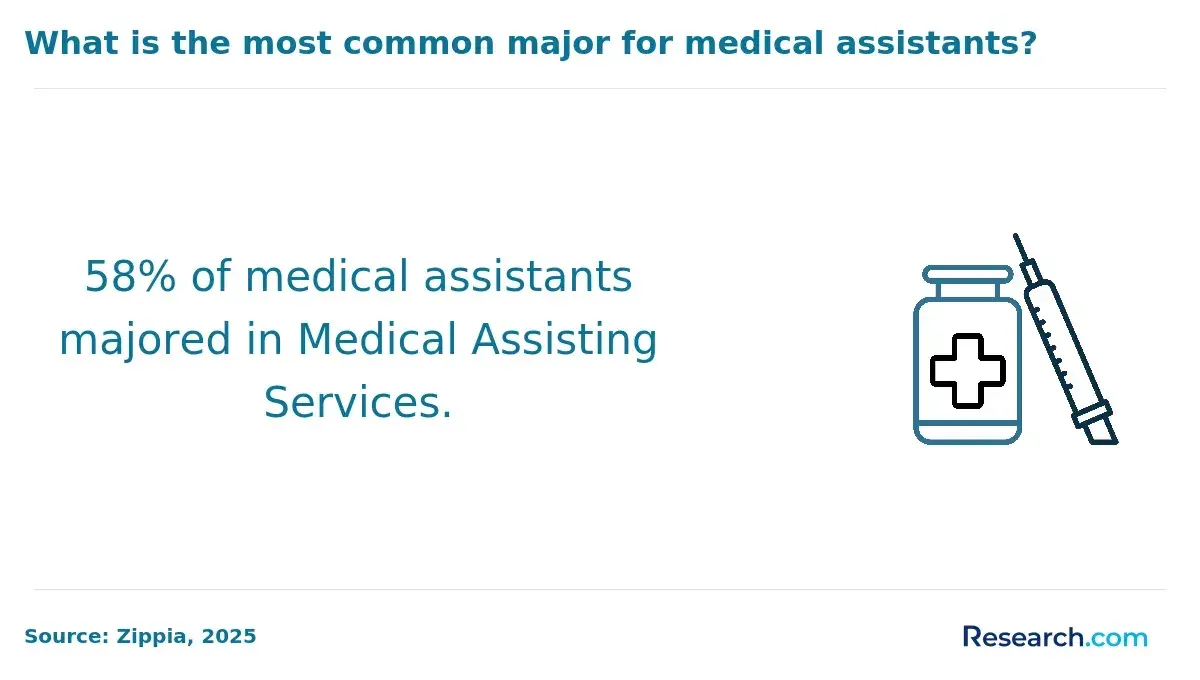
- Externship expectations: Reputable online and hybrid programs commonly require clinical externships of 180 to 265 hours, giving students supervised experience before graduation.
- Certification preparation: Programs may prepare students for exams such as the Certified Clinical Medical Assistant (CCMA), and some report pass rates above the national average.
- Flexible pacing: Some certificate programs can be completed in as little as four months, while diploma and associate degree routes often take longer.
- Student responsibility: Career services and externship coordination can help, but students should ask whether the school directly places Utah students or only provides guidance.
- Admission requirements: Most programs require a high school diploma or GED and do not require previous healthcare experience.
If you are comparing healthcare careers and want a less clinical path, it may also help to review medical billing and coding salary and requirements. Medical billing and coding is more focused on records, insurance, and reimbursement, while medical assisting involves more direct patient interaction.
How long are online medical assistant programs in Utah?
Online medical assistant program length in Utah depends on the credential level, pace, externship scheduling, and whether the program is designed for fast workforce entry or broader academic preparation. A shorter program may help you start working sooner, while a longer credential can provide more complete training and may support future education.
| Credential Type | Typical Length | Best For | Main Trade-Off |
| Certificate | 4–12 Months | Students who want the fastest route into entry-level medical assisting | Less general education and usually a narrower academic foundation |
| Diploma | 9–12 Months | Students who want structured training in both clinical and administrative duties | Takes longer than a short certificate but may feel more complete |
| Associate degree | 16–24 Months | Students who may later pursue nursing, allied health, or healthcare administration | Requires the most time and often includes general education courses |
- Certificate programs: These are usually the quickest option. Some accelerated formats can be completed in as little as 4 months, especially when students can study intensively and complete clinical requirements on schedule.
- Diploma programs: These commonly take 9 to 12 months and provide broader coverage of front-office and back-office medical assisting tasks.
- Associate degree programs: These usually require 16 to 24 months because they combine medical assisting coursework with general education and may be useful for students who want a longer-term healthcare pathway.
When asking how many months it takes to become a medical assistant online in Utah, do not look only at advertised completion time. Ask how soon you can start an externship, how clinical placements are scheduled, whether part-time enrollment is allowed, and whether certification exam preparation is built into the program calendar. Students comparing adjacent administrative healthcare careers may also want to review the pros and cons of being a medical biller and coder before choosing a clinical or nonclinical route.
Are online medical assistant programs in Utah accredited?
Some online medical assistant programs serving Utah students are accredited, and some are not. Accreditation matters because it signals that a program has been reviewed for curriculum quality, faculty qualifications, student support, and outcomes. It can also affect certification exam eligibility, employer confidence, credit transfer, and access to certain types of financial aid.
Two accrediting organizations are especially important in medical assisting:
- Commission on Accreditation of Allied Health Education Programs: CAAHEP accredits medical assisting programs that meet standards for curriculum, faculty, resources, and student outcomes. Graduating from a CAAHEP-accredited program can support eligibility for the Certified Medical Assistant (CMA) examination.
- Accrediting Bureau of Health Education Schools: ABHES accredits health education programs, including medical assisting programs with online or hybrid components. ABHES accreditation may help graduates pursue recognized credentials such as the CMA or Registered Medical Assistant (RMA), depending on the program and certifying body rules.
| What to Verify | Why It Matters Before You Enroll |
| Programmatic accreditation | May affect certification exam eligibility and employer trust |
| Institutional accreditation | Can influence financial aid eligibility and credit transfer |
| Externship approval process | Determines whether you can complete required clinical hours near your Utah location |
| Certification exam alignment | Confirms whether the curriculum prepares you for CMA, RMA, CCMA, or another credential |
| Graduate outcomes | Helps you evaluate completion, certification, and employment support claims |
Do not assume that an online program is acceptable simply because it is convenient or inexpensive. Ask the school to identify its accreditor, explain which certification exams graduates are eligible to take, and confirm how Utah students complete clinical requirements. To better understand how medical assisting connects with other healthcare support roles, you can also explore what medical billers and coders do in healthcare settings.
How do you get certified as a medical assistant in Utah online?
Utah does not make national certification mandatory for every medical assistant position, but certification can make a major difference in hiring. Many employers use credentials to confirm that a candidate has completed formal training, passed an exam, and understands both administrative and clinical responsibilities.
- Choose an accredited or employer-recognized program. Look for training that covers medical terminology, anatomy, patient care, phlebotomy support, injections, appointment scheduling, records, and clinical workflow.
- Complete all online coursework. Expect a mix of readings, video lessons, assignments, quizzes, simulations, and exam preparation.
- Finish required in-person training. Programs may include around 24 hours of labs and 180 hours of clinical practice, although requirements vary by school.
- Confirm exam eligibility. Before you pay tuition, ask whether graduates qualify for exams such as Certified Clinical Medical Assistant (CCMA), Registered Medical Assistant (RMA), or Certified Medical Assistant (CMA).
- Meet baseline education requirements. A high school diploma or GED is typically required for admission and certification pathways.
- Complete additional required training. CPR certification may be included or required separately, depending on the program and employer.
- Use career support early. Resume help, interview coaching, externship coordination, and job search support are most useful when you start before graduation.
| Credential | Why Utah Students Consider It | Question to Ask the School |
| CMA | Widely recognized credential connected with formal medical assisting education | Does this program meet the eligibility rules for the CMA exam? |
| RMA | Recognized by many employers and often used to validate medical assisting knowledge | Which pathway does the program use to prepare students for RMA eligibility? |
| CCMA | Common clinical medical assistant credential used by students entering patient care support roles | Is CCMA exam preparation included, and is the exam fee included in tuition? |
The safest approach is to work backward from your target employers. Review job postings in your area of Utah, note which credentials appear most often, then choose a program that prepares you for those expectations.
How long does it take to become a medical assistant in Utah?
Most Utah students can move from enrollment to job readiness in one to two years, depending on the credential they choose. Certificate and diploma programs are usually faster, while associate degrees take longer because they include more coursework. Certification preparation and clinical scheduling can also extend the timeline.
| Stage | Typical Time Impact | What Can Delay Completion |
| Admissions and enrollment | Varies by school | Missing transcripts, delayed GED documentation, or waiting for the next cohort |
| Coursework | 4 to 16 months for many certificate, diploma, or similar online options | Part-time study, repeated courses, or self-paced programs that require strong discipline |
| Clinical practicum or externship | 160 to 200 hours in many accredited programs | Limited clinical site availability, work schedule conflicts, or delayed health clearance |
| Certification preparation | Several weeks or months may be added | Waiting for exam approval, needing extra study time, or retesting |
| Associate degree route | 18 to 24 months | General education requirements, transfer issues, or part-time enrollment |
A certificate or diploma can be a good choice if you want to enter the workforce quickly. An associate degree may be a better fit if you want a broader academic base, plan to continue into another healthcare program, or want credits that may be more useful later. Either way, the clinical practicum is not optional in a quality program; it is the part that turns online learning into workplace-ready training.
One Utah medical assistant who completed an online program described the process as manageable but not effortless. He said the online format made it possible to keep working, but the clinical hours required careful coordination. His experience reflects a common reality: online training can be flexible, but students still need reliable transportation, scheduling availability, and a plan for completing in-person requirements.
How much does it cost to complete a medical assistant program in Utah online?
The cost of an online medical assistant program for Utah students depends on the school type, credential level, pacing model, and what is included in tuition. A low advertised tuition may not include textbooks, supplies, certification exams, technology fees, immunizations, background checks, uniforms, or externship-related expenses.
| Cost Category | Reported Range or Example | What to Ask Before Enrolling |
| Tuition | Approximately $3,200 for some hybrid programs at public universities to over $13,000 for diploma programs at private colleges | Is this the full program cost or only tuition? |
| Subscription-style tuition | Some programs use a $79 per month model, which may total around $316 for four months depending on completion speed | What happens if I need more time? |
| Books and supplies | Additional materials or uniforms may cost between $100 and $500 or more if not included | Are textbooks, scrubs, equipment, and online resources included? |
| Technology fees | Often range from $50 to $250 | Are platform, simulation, and online access fees separate? |
| Certification exam costs | Students may need to budget $200 to $300 if fees are not included; some schools include the $259 exam fee in tuition | Which exam is covered, and is one attempt included? |
When comparing programs, calculate total cost rather than tuition alone. Also ask whether the program charges extra for externship coordination, background checks, drug screening, CPR certification, immunizations, transcript evaluation, or graduation fees. A program with a higher sticker price may be more affordable in practice if it includes supplies, exam preparation, and clinical placement support.
Can you get financial aid for online medical assistant training in Utah?
Financial aid may be available for Utah students, but eligibility depends heavily on the school, program type, accreditation status, and whether the program is offered for credit. Short-term workforce programs and self-paced certificate courses do not always qualify for the same aid as for-credit college programs.
- Federal grants: Need-based aid such as the Pell Grant may help students in eligible for-credit programs. Not every online medical assistant course qualifies.
- Federal student loans: Subsidized and unsubsidized loans may be available to students enrolled in eligible accredited programs, but loans must be repaid with interest.
- Scholarships: Utah colleges may offer merit-based or need-based awards for students in healthcare training programs, including online and hybrid formats.
- Employer tuition assistance: Some healthcare employers help workers pay for training through reimbursement or education benefits, especially when the training supports current or future job duties.
- Payment plans: Some programs allow students to divide tuition into monthly payments, which may help if federal aid is unavailable.
| Financial Aid Question | Why It Matters |
| Is the program eligible for federal financial aid? | Some short online courses are not Title IV-eligible, even if they prepare students for certification. |
| Is the school accredited? | Accreditation can affect aid eligibility, credit transfer, and employer confidence. |
| Are certification exams included? | Exam fees can add to out-of-pocket costs if they are not built into tuition. |
| Does the school offer scholarships or payment plans? | These options can reduce upfront financial pressure. |
| Will my employer reimburse tuition? | Employer support can make training more affordable for current healthcare workers. |
One Utah medical assistant who trained online said the financial aid process felt confusing at first, but the school’s financial aid office helped her combine scholarships, a payment plan, and employer assistance. Her advice was to ask questions early, keep documentation organized, and avoid assuming that every online program qualifies for the same funding.
What State-Specific Regulations Impact Online Medical Assistant Programs in Utah?
Utah students should distinguish between three separate issues: state rules, employer policies, and certification requirements. Medical assistants are not the same as licensed nurses or physicians, so their duties are generally shaped by delegation, workplace policy, training, and supervision. That makes program quality especially important.
Before enrolling in an online program, ask how the school addresses Utah clinical placement requirements, what tasks students are trained to perform, and whether local employers recognize the credential. If a program serves students nationwide, confirm that it can support Utah residents specifically rather than only students near the school’s main campus.
- Clinical experience: Online students still need in-person practice to demonstrate patient care skills.
- Scope of duties: Employers may limit or expand tasks based on workplace policy, training, and supervision.
- Certification expectations: National certification may not be legally required for every job, but it can be preferred in competitive Utah healthcare settings.
- Externship logistics: Students should confirm whether the school arranges Utah placements or expects students to find their own site.
- Background and health requirements: Clinical sites may require immunization records, CPR certification, background checks, or other documentation before a student can begin.
Students researching state-specific healthcare training may also find it useful to compare requirements in other regulated roles, such as how to become an occupational therapist in Utah.
What is the average salary for medical assistants in Utah?
Medical assistant pay in Utah varies by experience, certification, employer type, region, and clinical responsibilities. Whether a student completed coursework online or on campus is usually less important than accreditation, certification, externship quality, and job readiness.
| Salary Category | Reported Utah Pay | What May Influence Earnings |
| Entry-level medical assistant | Around $32,300 annually or $16 per hour | Formal training, certification, location, and willingness to work in high-need settings |
| Median salary | Approximately $40,270 annually | Experience, employer type, and range of clinical and administrative duties |
| Experienced or advanced roles | Near $45,570 per year or about $22 per hour | Advanced certifications, leadership duties, specialty experience, and location |
| Higher reported earnings | Some certified assistants earn up to $48,802 depending on location | Metro-area demand, specialty clinics, and employer pay scales |
| Salt Lake City median income | $42,820 | Larger healthcare systems and metropolitan wage differences |
| Private practices or rural clinics | Between $37,410 and $38,250 annually | Practice size, patient volume, and local labor market conditions |
Salary should not be evaluated in isolation. Also consider commute time, benefits, shift schedule, certification reimbursement, career ladder opportunities, and whether the employer supports further education. A slightly lower starting wage may still be worthwhile if the role provides strong training, tuition assistance, or a path into nursing, administration, or specialty healthcare work.
Are online-trained medical assistants hired as often as campus-trained ones in Utah?
Online-trained medical assistants can be competitive in Utah, especially when they graduate from accredited or well-recognized programs and complete meaningful in-person clinical training. Employers are usually less concerned with whether lectures were online and more concerned with whether the candidate can perform essential tasks safely, communicate with patients, document accurately, and adapt to clinic workflow.
- Hands-on training matters most: A strong externship can reduce employer concerns about online coursework.
- Certification can close the credibility gap: Credentials such as CCMA, CMA, or RMA help show that a graduate has met an external standard.
- Program reputation affects hiring: Employers may be more comfortable with schools that have established clinical partnerships and consistent graduate outcomes.
- Regional demand helps qualified graduates: Utah’s need for medical assistants can make employers more open to online-trained candidates who can prove competency.
- Job readiness is visible in interviews: Candidates should be prepared to discuss externship duties, patient interaction, EHR experience, infection control, and common clinical procedures.
| Online-Trained Candidate Concern | How to Address It |
| “Did you get enough hands-on practice?” | Choose a program with required labs and externship hours, then document the skills you performed. |
| “Is your program reputable?” | Verify accreditation, certification exam eligibility, and employer partnerships before enrolling. |
| “Can you work in a real clinic?” | Use your externship to build references and examples of patient care, scheduling, documentation, and teamwork. |
| “Are you certified?” | Prepare for a recognized exam and list your credential clearly on your resume once earned. |
If you are still deciding between medical assisting and other healthcare support roles, cost comparisons can help. For example, Research.com’s guide to affordable online medical billing and coding courses may be useful if you prefer insurance, coding, and records work over direct clinical care.
Do online medical assistant programs in Utah lead to advanced healthcare careers?
Medical assisting can be a starting point for broader healthcare advancement, but it is not an automatic bridge into every role. Students who want long-term mobility should choose programs carefully, earn recognized credentials, keep strong records of coursework and clinical hours, and understand which future programs accept transfer credit or prior healthcare experience.
| Advancement Path | How Medical Assisting Helps | What You May Need Next |
| Registered Nursing (RN) | Patient care experience can strengthen confidence and clarify whether nursing is a good fit | Admission to an approved nursing program and completion of required nursing education |
| Healthcare administration | Clinic experience builds understanding of scheduling, records, patient flow, and team operations | Additional education or experience in management, health administration, or health information |
| Specialized medical assisting | Experience in primary care can lead to roles in podiatry, ophthalmology, cardiology, or other specialties | Employer training, specialty experience, or additional certifications |
| Advanced certifications | Credentials such as CMA or RMA can support mobility and credibility | Eligibility, exam preparation, and continuing education when required |
| Allied health professions | Medical assisting provides exposure to patient care and clinical environments | Associate degrees or specialized programs in fields such as radiologic technology or respiratory therapy |
Medical assisting is especially useful for students who want to test their interest in healthcare before committing to a longer program. It can also help students build patient communication skills, learn clinical terminology, and understand how healthcare teams function. For students interested in a remote-friendly administrative healthcare path, becoming a certified medical coder and biller from home may be another option to compare.
How to Choose the Right Online Medical Assistant Program in Utah
- Start with your goal. Decide whether you want the fastest entry-level route, a stronger academic foundation, or a stepping stone toward another healthcare career.
- Verify accreditation and certification alignment. Ask which accreditor reviews the program and which certification exams graduates can take.
- Ask detailed externship questions. Confirm whether the school places Utah students, how many hours are required, and what happens if no local site is available.
- Calculate the full cost. Include tuition, books, supplies, technology fees, certification exams, uniforms, immunizations, and commuting to clinical sites.
- Compare student support. Look for tutoring, instructor access, exam preparation, career coaching, resume help, and interview support.
- Review employer expectations. Scan Utah job postings and note which credentials, skills, and experience levels appear most often.
- Check flexibility honestly. Self-paced online learning can be convenient, but it requires discipline. Make sure the schedule fits your work, family, and clinical availability.
Common Mistakes to Avoid
- Choosing the cheapest program without checking accreditation. A low price is not helpful if the credential does not support certification or employer recognition.
- Assuming “online” means no in-person requirements. Medical assisting requires hands-on practice, and clinical hours can affect your schedule.
- Ignoring externship placement details. Ask whether the school finds a site for you or expects you to arrange one independently.
- Looking only at completion time. A four-month program may be attractive, but speed should not come at the expense of clinical readiness.
- Forgetting certification costs. Exam fees, study materials, and retesting costs may not be included in tuition.
- Assuming salaries are guaranteed. Utah pay varies by location, employer, certification, experience, and responsibilities.
- Relying only on marketing claims. Ask for written details about accreditation, clinical hours, exam eligibility, tuition, and job support.
Questions to Ask Schools Before Enrolling
- Is the medical assistant program accredited, and by which organization?
- Which certification exams will I be eligible to take after graduation?
- How many lab and externship hours are required?
- Will the school help me find a Utah clinical site?
- Are textbooks, supplies, uniforms, CPR training, and exam fees included?
- What is the total program cost if I finish early, on time, or later than expected?
- Does the program qualify for federal financial aid, scholarships, or payment plans?
- What career services are available before and after graduation?
- Can credits transfer into an associate degree or another healthcare program?
- What happens if I cannot complete my externship on the original schedule?
What Do Medical Assistants in Utah Say About Their Career?
Student and graduate perspectives can help prospective medical assistants understand what the online route feels like in practice. The examples below highlight common themes: flexibility, community-based work, career stability, and the need to balance online coursework with real clinical responsibility.
- Cyril completed an online medical assistant program through Mountain West Healthcare Academy and valued being able to study while remaining in a rural Utah community. He described the training as broad enough to support his move into a local school-based role, where he now helps students with day-to-day health needs and sees the work as part of a larger commitment to community wellness. Cyril
- Mario trained through the Utah Medical Support Institute and found that medical assisting created opportunities in academic and student health settings. He emphasized the value of steady employment, ongoing learning, and the chance to build long-term relationships while supporting children’s health needs in Utah. Mario
- Zayne pursued certification through the Wasatch Front Online Program and described the process as demanding but personally meaningful. He connected his experience to Utah’s cultural diversity and community-based care, noting that medical assisting strengthened his confidence and his interest in helping young patients understand and manage their health. Zayne
Related Articles for Nearby States
- 2027 How to Become a Medical Assistant in Nevada Online
- 2027 How to Become a Medical Assistant in Arizona Online
- 2027 How to Become a Medical Assistant in Idaho Online
- 2027 How to Become a Medical Assistant in Wyoming Online
- 2027 How to Become a Medical Assistant in Colorado Online
- 2027 How to Become a Medical Assistant in New Mexico Online
- 2027 How to Become a Medical Assistant in California Online
- 2027 How to Become a Medical Assistant in Montana Online
- 2027 How to Become a Medical Assistant in Oregon Online
- 2027 How to Become a Medical Assistant in Washington Online
References:
- Utah Online Medical Assistant Certificate Program | Self-Paced Course https://www.uscareerinstitute.edu/online-medical-assistant-school/utah
- Continuing Education at the University of Utah: Classes for All Ages! https://continue.utah.edu/proed/academy/certificate/medical-assistant-program
- Online Medical Assisting Programs for Utah Residents https://www.herzing.edu/healthcare/medical-assisting/utah
- 4-Month Utah Medical Assistant Certification Program https://www.stepful.com/program/utah-medical-assistant-certification-program
- Medical Assisting Program | Earn Your Medical Assisting Diploma https://www.eaglegatecollege.edu/programs/medical-assisting/
- Online Certified Clinical Medical Assistant (CCMA) (Voucher Included) from Utah Valley University https://careertraining.uvu.edu/training-programs/certified_clinical_medical_assistant/
- Inside Online Medical Assistant Programs in Utah https://www.edumed.org/online-schools/medical-assistant-programs/utah-ut/
- Medical Assistant - TC https://www.usu.edu/degrees-majors/medical-assistant_tc
- Employee Benefits - Utah Medical Products, Inc. http://www.utahmed.com/benefits.html
Key Insights
- Utah students can train for medical assisting online, but quality programs still require in-person labs, externships, or clinical practice.
- Certification is not always legally required in Utah, but credentials such as CMA, RMA, or CCMA can improve credibility with employers.
- Program length varies widely: certificates may take 4–12 Months, diplomas often take 9–12 Months, and associate degrees usually take 16–24 Months.
- Total cost should include more than tuition. Budget for supplies, technology fees, certification exams, uniforms, and clinical requirements.
- Accreditation and externship support are two of the most important factors when comparing online medical assistant programs.
- Online-trained graduates can compete with campus-trained applicants when they complete strong clinical training and earn recognized certification.
- Medical assisting can be a fast entry into Utah healthcare and may support future paths in nursing, healthcare administration, specialty assisting, or allied health.
Other Things You Should Know About Becoming a Medical Assistant Online in Utah
Students need basic computer skills, including using email, learning systems, video meetings, and online assignment tools. Many Utah programs also require reliable internet access, a webcam, a microphone, and a Windows or Mac computer for coursework and virtual labs.
Students need reliable internet access and a computer that meets their program's specifications, typically including updated operating systems and browser compatibility. Some programs might also require specific software installations or high-speed internet for interactive learning modules.


