2027 Fastest Online Religious Studies Degree Programs

Co-Founder and Chief Data Scientist
With 35% of adults switching religious identities, understanding belief as a social and political force is more critical than ever. Yet, many who are drawn to the subject get stopped by a major hurdle: they confuse the academic study of religion with training for ministry. This guide cuts through that confusion.
Our career planning experts have mapped out the real-world value of an online religious studies degree. We'll show you how this academic path builds in-demand skills for fields from law to management and help you find the right program to turn your intellectual curiosity into a respected profession.
What are the benefits of getting a fast online religious studies degree program?
- It provides incredible career flexibility, opening doors to respected fields like law, public policy, education, and journalism.
- You build a foundation for strong earning potential, with related careers in law and management offering median salaries well over $100,000.
- You can complete a fully accredited bachelor’s degree on an accelerated timeline, fitting your education into your current work and life commitments
What can I expect from a fast online religious studies degree program?
You should expect a challenging academic program that demands critical thinking, sharp analytical skills, and a high degree of self-discipline. An accredited online program is not an easier path—it's a more flexible one that holds you to the same high standards as an on-campus degree.
The curriculum will push you to analyze complex texts, understand diverse global cultures, and articulate your ideas with precision. The online format itself helps build skills that employers value. You'll become a stronger, more concise writer and a better time manager, proving you can deliver high-quality work independently.
Most importantly, you can expect your diploma to hold the same weight as one earned on campus. Accreditation is the key, as it signals to graduate schools and employers that your education is credible, rigorous, and respected. With this training, a wide range of professional environments will be open to you.
Where can I work with a fast online religious studies degree program?
Graduates with an online religious studies degree work in a wide range of respected fields. This degree is excellent preparation for law school, as it hones the exact analytical and interpretive skills needed to succeed as an attorney. Many also find fulfilling careers in government and public policy, where understanding different cultural worldviews is a major professional asset.
Other common paths include journalism, non-profit management, and education at both the K-12 and university levels. The degree doesn't train you for one specific job; it equips you with a set of powerful, transferable skills. You learn how to think critically, write clearly, and understand what motivates people—abilities that are valuable in any profession.
These respected career paths also come with strong earning potential.
How much can I make with a fast online religious studies degree program?
The earning potential for graduates is excellent, especially for those who see this degree as a strategic step toward a specific profession. While the degree itself doesn't have a set salary, it serves as a powerful launchpad into high-paying fields.
For example, lawyers, a common career path for graduates, have a median salary of over $151,160 per year. Those who move into management roles in business or nonprofit organizations can expect to earn a median salary of more than $105,350. This degree provides the critical thinking and communication skills that are foundational to success in these lucrative careers.
- List of the Fastest Online Religious Studies Degree Programs for 2027 List of Programs
- How long does it take to complete a fast online religious studies degree program? Completion Time
- How does a fast online religious studies degreeprogram compare to an on-campus program? How does a fast online religious studies degreeprogram compare to an on-campus program?
- What is the average cost of a fast online religious studies degree program? Program Cost
- What are the financial aid options for students enrolling in a fast online religious studies degree program? Financial Aid
- What are the prerequisites for enrolling in a fast online religious studies degree program? What are the prerequisites for enrolling in a fast online religious studies degree program?
- What courses are typically in a fast online religious studies degree program? What courses are typically in a fast online religious studies degree program?
- What types of specializations are available in a fast online religious studies degree program? What types of specializations are available in a fast online religious studies degree program?
- How to Choose the Best Fast Online Religious Studies Degree Program How to Choose the Best Fast Online Religious Studies Degree Program
- Can This Fast Online Religious Studies Degree Program Accelerate Your Path to Advanced Studies? Can This Fast Online Religious Studies Degree Program Accelerate Your Path to Advanced Studies?
- How Does a Fast Online Religious Studies Degree Program Integrate Interdisciplinary Perspectives? How Does a Fast Online Religious Studies Degree Program Integrate Interdisciplinary Perspectives?
- What career paths are available for graduates of a fast online religious studies degree program? Career Paths
- What is the job market for graduates with a fast online religious studies degree program? Job Market
- Can an Online Religious Studies Degree Support a Career in Library and Information Science? Can an Online Religious Studies Degree Support a Career in Library and Information Science?
Fastest Online Religious Studies Degree Programs for 2027
Choosing an accelerated online religious studies degree is usually a decision about time, cost, academic fit, and career direction. Some students want a faster path to graduate school, ministry-related work, education, journalism, nonprofit leadership, law, or public service. Others want a flexible humanities degree that helps them understand religion as a cultural, historical, ethical, and political force without relocating or pausing work.
This guide explains how fast online religious studies programs work, what they cost, which schools are included in this list, how online study compares with campus learning, and what to check before enrolling. It is designed for students who want a practical way to compare programs rather than a generic list of schools.
If you are comparing accelerated online formats across fields, you may also find it useful to review how fast-track structures work in related Research.com guides, such as fast online education specialist programs in special education and accelerated online electrical engineering degree options.
Quick Answer: Is a Fast Online Religious Studies Degree Worth Considering?
A fast online religious studies degree can be a strong option if you want a flexible, accredited bachelor’s program focused on religion, culture, history, ethics, and human behavior. It is especially useful for students who plan to pursue graduate study, law school, education, nonprofit work, ministry-adjacent roles, journalism, public service, or careers that require cross-cultural communication.
However, it is not the best choice if you want a narrowly vocational credential with one guaranteed job outcome. Religious studies is a broad liberal arts field, so its value depends on how well you connect your coursework, internships, writing samples, language study, research experience, and career goals.
How We Rank Schools
Because degree cost, completion time, and institutional quality matter, Research.com evaluates programs using transparent data sources and program-level information where available. Our ranking process draws from the IPEDS database, Peterson's database, the College Scorecard database, and The National Center for Education Statistics. These sources help verify institutional data, costs, and other factors relevant to online degree comparison.
Readers can learn more about Research.com’s broader evaluation approach on Research.com and the Research.com methodology page.
Featured Fast Online Religious Studies Degree Programs
The programs below offer online religious studies, religion, or closely related bachelor’s degree pathways. Use this list as a starting point, then confirm current tuition, course delivery format, transfer credit rules, financial aid eligibility, and graduation requirements directly with each school.
| Rank | School and Program | Program Length | Credits | Cost | Accreditation |
| 1 | Louisiana State University at Alexandria — Bachelor of Arts in Religious Studies | Up to 4 years | 120 | $340 per credit | Southern Association of Colleges and Schools Commission on Colleges (SACSCOC) |
| 2 | Arizona State University — BA in Religious Studies: Religion, Culture, and Public Life | Up to 4 years | 120 | $580 per credit | Higher Learning Commission (HLC) |
| 3 | Chaminade University of Honolulu — B.A. in Religious Studies | 4 years | 120 | $600 per credit | WASC Senior College and University Commission (WSCUC) |
| 4 | Oregon State University — Religious Studies Bachelor's Degree | 3-4 years | 180 quarter credits | $384 per quarter credit | Northwest Commission on Colleges and Universities (NWCCU) |
| 5 | American Public University — Bachelor of Arts in Religion | 3-4 years | 120 | $350 per credit | Higher Learning Commission (HLC) |
| 6 | Liberty University — Bachelor of Science in Religion | 3.5 years | 120 | $390 full-time; $455 part-time | Association of Theological Schools (ATS) |
| 7 | University of Central Florida — Online Religion and Cultural Studies, BA | 4 years | 120 | $179.19 in-state; $715.80 out-of-state | Southern Association of Colleges and Schools Commission on Colleges (SACSCOC) |
1. Louisiana State University at Alexandria - Bachelor of Arts in Religious Studies
LSU Alexandria’s online religious studies program examines influential religious traditions, sacred texts, beliefs, rituals, and historical developments. The degree is built for students who want to study religion as a human, cultural, and intellectual force while developing strong writing, analysis, and intercultural communication skills.
- Program Length: Up to 4 years
- Required Credits to Graduate: 120
- Cost per Credit: $340
- Accreditation: Southern Association of Colleges and Schools Commission on Colleges (SACSCOC)
2. Arizona State University - BA in Religious Studies: Religion, Culture, and Public Life
Arizona State University’s online degree focuses on the public role of religion in culture, politics, media, and everyday life. Students study how religious ideas influence identity, communication, conflict, ethics, and social behavior, making the program relevant for students interested in public-facing careers.
- Program Length: Up to 4 years
- Required Credits to Graduate: 120
- Cost per Credit: $580
- Accreditation: Higher Learning Commission (HLC)
3. Chaminade University of Honolulu - B.A. in Religious Studies
Chaminade University’s program is shaped by Roman Catholic theology and Marianist educational values while also engaging multicultural and interfaith perspectives. It may appeal to students interested in religious education, ministry-related service, social justice, or graduate study in theology or religious studies.
- Program Length: 4 years
- Required Credits to Graduate: 120
- Cost per Credit: $600
- Accreditation: WASC Senior College and University Commission (WSCUC)
4. Oregon State University - Religious Studies Bachelor's Degree
Oregon State University’s online religious studies bachelor’s degree emphasizes comparative, academic study of world religions and their influence on global societies. Coursework explores how religious ideas intersect with ethics, social organization, gender, sexuality, conflict, and cultural change.
- Program Length: 3-4 years
- Required Quarter Credits to Graduate: 180
- Cost per Quarter Credit: $384
- Accreditation: Northwest Commission on Colleges and Universities (NWCCU)
5. American Public University - Bachelor of Arts in Religion
American Public University’s religion degree takes a multidisciplinary approach to religious traditions, institutions, texts, and practices. Students examine religion from cultural, political, historical, and spiritual perspectives while learning to analyze belief systems both sympathetically and critically.
- Program Length: 3-4 years
- Required Credits to Graduate: 120
- Cost per Credit: $350
- Accreditation: Higher Learning Commission (HLC)
6. Liberty University - Bachelor of Science in Religion
Liberty University’s online Bachelor of Science in Religion is designed around biblical studies, Christian theology, and practical ministry preparation. It is best suited for students seeking a Christian-centered curriculum with options to tailor the degree toward specific ministry or service interests.
- Program Length: 3.5 years
- Specializations: Global and Intercultural Engagement; Humanitarian Action and Human Rights; NextGen; and more
- Required Credits to Graduate: 120
- Cost per Credit: $390 (full-time); $455 (part-time)
- Accreditation: Association of Theological Schools (ATS)
7. University of Central Florida - Online Religion and Cultural Studies, BA
The University of Central Florida’s online Religion and Cultural Studies, BA approaches religion through a cultural studies framework. Students investigate world religions, humanistic traditions, religious figures, popular culture, and the ways belief systems shape social meaning.
- Program Length: 4 years
- Required Credits to Graduate: 120
- Cost per Credit: $179.19 (in-state); $715.80 (out-of-state)
- Accreditation: Southern Association of Colleges and Schools Commission on Colleges (SACSCOC)
How Long Does It Take to Complete a Fast Online Religious Studies Degree Program?
A full online bachelor’s degree in religious studies may be completed in as little as 2.5 to 3 years when a student uses transfer credits, takes accelerated terms, and maintains a heavier year-round course load. Many programs still follow a traditional timeline of up to 4 years, especially for first-time students who enroll part time or take standard semester loads.
The fastest programs often use shorter academic sessions instead of traditional 15-week semesters. In an 8-week term format, students may take fewer courses at once but complete more sessions across the year. This structure can help motivated students build credits more quickly, but it also compresses reading, writing, discussion, and exam deadlines.
What Determines Your Actual Graduation Timeline?
| Factor | How It Can Speed Up or Slow Down Completion | What to Ask Before Enrolling |
| Transfer credits | Previously completed college courses can reduce the number of credits you still need. | How many credits can I transfer, and which will apply to major requirements? |
| Term length | 8-week terms may allow faster progress than standard 15-week terms. | How many start dates and terms are available each year? |
| Full-time or part-time study | Full-time enrollment usually shortens completion time but requires more weekly study hours. | What course load is realistic for working adults? |
| Prior learning credit | Some schools may award credit through exams or documented learning. | Does the university offer credit for prior learning, exams, military training, or professional experience? |
| Course availability | Limited course rotations can delay graduation if required classes are not offered often. | Are all major courses available online frequently enough for an accelerated plan? |
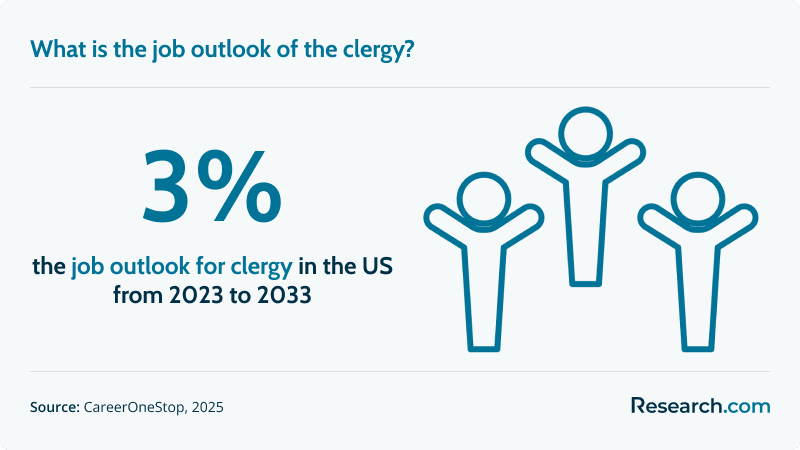
Career goals also matter. For example, clergy roles may have denominational education, ordination, or formation requirements beyond a bachelor’s degree, and one referenced labor source lists projected job growth of only 3% for clergy. A religious studies bachelor’s degree can be broader than that single pathway, supporting careers in education, communications, public service, nonprofit work, or graduate study.
How Does a Fast Online Religious Studies Degree Compare to an On-Campus Program?
An accredited online religious studies degree is generally evaluated by the same core factors as an on-campus degree: institutional accreditation, academic rigor, faculty quality, curriculum, and the reputation of the university. In many cases, the diploma does not specify whether the coursework was completed online.
The bigger difference is the learning environment. Online programs prioritize flexibility and self-directed study, while campus programs offer more in-person discussion, immediate access to campus events, and face-to-face faculty interaction. Neither format is automatically better. The right choice depends on your schedule, learning style, budget, and need for local community.
| Online Religious Studies Degree | On-Campus Religious Studies Degree |
| Best for working adults, transfer students, parents, military-connected students, and learners who need location flexibility. | Best for students who want in-person seminars, campus ministry or interfaith organizations, local internships, and direct campus engagement. |
| Requires strong time management, written communication, and comfort with online discussion boards or learning platforms. | Provides more spontaneous discussion, office visits, and in-person networking opportunities. |
| May offer accelerated 8-week terms and multiple start dates. | Often follows a traditional semester schedule and campus-based course sequence. |
| Can reduce relocation and commuting costs. | May involve housing, transportation, and campus fees depending on enrollment status. |
Skills Online Students Build Along the Way
Online humanities programs tend to make students practice concise writing, asynchronous collaboration, independent research, and deadline management. These are practical workplace skills, especially in roles that involve public communication, policy analysis, nonprofit coordination, education, or human services.
The ability to interpret complex worldviews can also support adjacent helping professions. For example, Research.com’s guide to choosing a therapy specialization shows how important nuanced understanding of human experience can be in people-centered careers.
What Is the Average Cost of a Fast Online Religious Studies Degree Program?
Program cost varies widely. Based on the programs reviewed here, tuition for a 120-credit online bachelor’s degree in religious studies can range from approximately $21,500 for an in-state public university option to over $70,000 at a private institution. Nationally, total program costs commonly fall between $25,000 and $75,000.
The final price depends on whether the school is public or private, whether online students pay in-state or out-of-state rates, how many credits transfer, and whether fees are charged separately from tuition. A lower-cost accredited program can be a better fit than a more expensive option if the curriculum, faculty, and transfer policies align with your goals.
Cost Factors to Compare Before You Apply
| Cost Factor | Why It Matters | How to Evaluate It |
| Tuition per credit | This is usually the largest direct cost. | Multiply the per-credit rate by the remaining credits you need after transfer evaluation. |
| Online fees | Technology, distance learning, or course fees can change the real cost. | Ask for a full program cost estimate, not just tuition. |
| Transfer credit acceptance | More accepted credits can reduce both cost and time. | Request an unofficial transfer review before committing. |
| Residency pricing | Some public universities charge different rates for in-state and out-of-state students. | Confirm whether online students receive a flat rate or residency-based tuition. |
| Books and materials | Humanities courses often require many texts. | Ask whether open educational resources or digital library materials are used. |
Thinking About Return on Investment
A religious studies degree does not point to one fixed salary outcome. ROI depends on how you use the degree: applying to graduate school, pairing it with teacher preparation, building a writing portfolio, pursuing nonprofit leadership, preparing for law school, or combining it with another credential.
When comparing programs, look for the least expensive accredited option that still gives you strong advising, relevant electives, faculty expertise, and a realistic path to graduation. Similar cost-comparison thinking is useful when evaluating other writing- and humanities-focused programs, such as online professional writing degree programs.
What Financial Aid Options Are Available for Fast Online Religious Studies Degree Students?
Students enrolled in accredited online programs may qualify for many of the same financial aid options as campus-based students. The first step is confirming that the institution is properly accredited and eligible to participate in federal aid programs.
- Federal financial aid: Complete the Free Application for Federal Student Aid to determine eligibility for federal grants, federal loans, and other aid programs. Grants do not have to be repaid, while loans do.
- Institutional scholarships: Check each university’s scholarship database and financial aid office. Some awards are based on grades, financial need, transfer status, adult learner status, or major.
- Private scholarships: Religious organizations, community foundations, humanities associations, and civic groups may offer awards, though availability varies.
- Employer tuition assistance: If you work in education, nonprofit administration, communications, public service, or a faith-based organization, ask whether your employer offers reimbursement or tuition support.
- Private loans: Use these cautiously after comparing federal aid and scholarships. Review interest rates, repayment terms, and borrower protections before signing.
What Are the Prerequisites for Enrolling in a Fast Online Religious Studies Degree Program?
Most online bachelor’s programs require a high school diploma or GED. Applicants usually submit an online application, official transcripts, and any documents required for transfer credit review. Some schools may also request a personal statement, resume, or short essay.
Transfer students should pay close attention to transcript evaluation. A program may accept credits toward general education requirements but not toward the religious studies major, which can affect both completion time and total cost.
How to Write a Strong Religious Studies Application Essay
A strong essay should show that you understand religious studies as an academic discipline. Admissions readers may want evidence that you are prepared to analyze religion historically, socially, philosophically, and culturally rather than only describe your personal beliefs.
Useful angles include interest in the sociological role of religion, the historical development of religious communities, ethical systems, interfaith relations, religion and media, or the relationship between belief and public life. Avoid writing only a personal testimony unless the program specifically asks for that kind of reflection.
This analytical mindset is not limited to humanities programs. Students comparing other skill-based online learning options, including online CompTIA Network+ training bootcamps, should also look for programs that clearly match course content to learning goals.
What Courses Are Typically Included in a Fast Online Religious Studies Degree Program?
Online religious studies programs usually combine general education, major core courses, electives, and a capstone or advanced research experience. The curriculum is typically academic rather than devotional, though faith-based universities may include confessional or ministry-focused courses depending on the institution.
Common course topics include:
- World religions
- Christianity, Judaism, Islam, Hinduism, Buddhism, and other traditions
- Sociology of Religion
- Philosophy of Religion
- Anthropology of Religion
- New Religious Movements
- Religion and politics
- Religion, ethics, and public life
- Sacred texts and interpretation
- Religion in film, literature, media, or popular culture
How Religious Texts Are Studied Academically
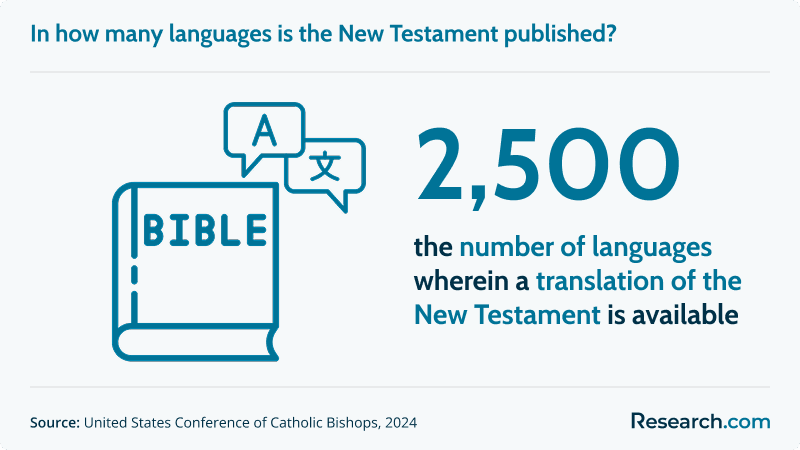
Academic religious studies programs often treat sacred texts as historical, literary, theological, and cultural documents. For instance, scholars may examine the New Testament not only as a religious text but also as a work that has shaped art, law, literature, politics, and social life. Its translation into over 2,500 languages illustrates the scale of its cultural influence.
The goal is not to tell students what to believe. The goal is to teach disciplined interpretation, contextual analysis, and evidence-based argument.
What Specializations Are Available in a Fast Online Religious Studies Degree Program?
Specializations allow students to connect religious studies with a clearer academic or career direction. Availability varies by school, so students should review elective lists carefully before enrolling.
| Specialization Area | What You Study | Best Fit For |
| Religion and Culture | Religious themes in literature, film, music, art, media, and popular culture. | Students interested in journalism, writing, publishing, education, or cultural analysis. |
| Religion and Society | Religion’s relationship to politics, law, ethics, social justice, and public institutions. | Students considering public service, nonprofit work, advocacy, law, or policy-related graduate study. |
| Philosophy of Religion | Questions about reason, faith, belief, morality, existence, and knowledge. | Students interested in graduate school, law school, ethics, or advanced humanities study. |
| New Religious Movements | Contemporary spiritual communities, emerging belief systems, and religious change. | Students interested in sociology, anthropology, media, or modern religious identity. |
| Ministry or Christian Studies | Biblical studies, theology, ministry practice, missions, or church leadership. | Students seeking faith-based service, ministry preparation, or seminary pathways. |
Why Interdisciplinary Specialization Matters
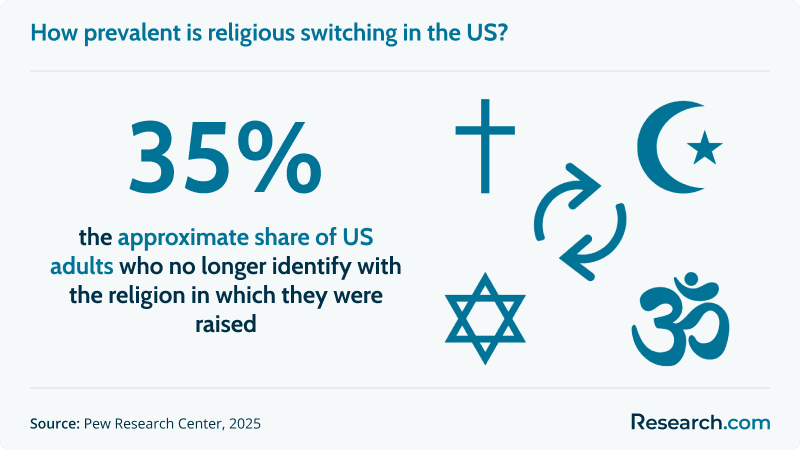
Religion rarely operates in isolation. It intersects with psychology, politics, migration, family life, education, conflict, art, and identity. With about 35% of U.S. adults no longer identifying with their childhood religion, students who study religious change, secularization, conversion, and spiritual seeking can explore major shifts in contemporary society.
Students interested in human motivation may also compare this field with helping-profession pathways. Research.com’s guide on the steps to become a behavior therapist explains another route for people interested in behavior, belief, and change.
How to Choose the Best Fast Online Religious Studies Degree Program
The best program is not always the cheapest, fastest, or most recognizable. It is the program that is accredited, affordable for your situation, academically credible, and aligned with your next step.
- Confirm accreditation before anything else. Regional or recognized institutional accreditation affects credit transfer, graduate school eligibility, employer recognition, and federal financial aid access.
- Read the curriculum carefully. Look for courses across multiple traditions and methods, not just a narrow set of introductory classes.
- Check faculty expertise. Review faculty biographies, research interests, degrees, and areas of specialization.
- Ask about transfer credit. A fast degree only stays fast if your previous credits count toward requirements.
- Compare total cost, not just tuition. Include fees, materials, lost work time, and the number of credits you still need.
- Clarify the program’s academic orientation. Some programs are comparative and secular in method; others are faith-based or ministry-centered.
- Review student support. Online students need advising, library access, writing help, career services, and responsive faculty communication.
Questions to Ask Admissions Advisors
| Question | Why It Matters |
| Is the full religious studies major available online? | Some schools advertise online completion but require limited on-campus or synchronous components. |
| How many credits can I transfer into the program? | Transfer credit can significantly change time to degree and total cost. |
| Are online courses asynchronous, synchronous, or mixed? | Your schedule may depend on whether live attendance is required. |
| Does the program prepare students for graduate school, ministry, education, or another pathway? | Different religious studies programs emphasize different outcomes. |
| What support is available for online students? | Advising, writing centers, library access, and career services can affect completion and career readiness. |
A Note About Faith-Based Universities
Faith-based institutions can offer rigorous programs, but students should read the statement of faith, course descriptions, and program outcomes carefully. Ask whether the degree emphasizes academic study of multiple traditions, preparation for ministry within a specific tradition, or both.
Program selection also requires the kind of goal-matching used in career advising. Students interested in that process may find Research.com’s guide on how to prepare for a career in career counseling useful for understanding how education choices connect to long-term plans.
Can a Fast Online Religious Studies Degree Help You Prepare for Advanced Study?
Yes, an accredited online religious studies degree can support applications to graduate programs if it includes strong research, writing, theory, and methods training. Students aiming for master’s or doctoral study should choose a program with advanced seminars, faculty mentorship, a capstone or thesis-style project, and opportunities to produce polished academic writing.
Students comparing accelerated graduate pathways can also review Research.com’s guide to the shortest Ed D programs, especially if they are weighing religious studies against education, leadership, or interdisciplinary doctoral options.
How Does a Fast Online Religious Studies Degree Use Interdisciplinary Perspectives?
Religious studies draws from history, sociology, anthropology, philosophy, political science, literature, gender studies, ethics, and cultural studies. This makes it a strong fit for students who want to understand how communities create meaning, organize rituals, transmit values, and respond to conflict or change.
Students who are especially interested in ritual, symbolism, kinship, cultural identity, and human behavior may also compare religious studies with online anthropology degree programs. The two fields overlap, but anthropology usually centers more broadly on human cultures, while religious studies focuses specifically on religious ideas, institutions, texts, and practices.
What Career Paths Are Available for Graduates of a Fast Online Religious Studies Degree Program?
Religious studies graduates often move into careers where interpretation, writing, cultural awareness, ethical reasoning, and communication are valuable. The degree is not limited to clergy or ministry. It can support pathways in education, law, journalism, nonprofit administration, public service, social services, publishing, graduate study, and organizational leadership.
| Career Direction | How Religious Studies Helps | Additional Preparation Often Needed |
| Law or legal support | Builds skills in textual interpretation, argument, ethics, and cultural context. | Law school, paralegal training, internships, or legal writing experience. |
| Education | Supports teaching about history, culture, ethics, and world religions. | Teacher certification, graduate study, or state-specific requirements. |
| Journalism and writing | Helps explain belief, identity, conflict, politics, and culture with nuance. | Portfolio, reporting experience, editing skills, or professional writing coursework. |
| Nonprofit and community work | Develops cross-cultural communication and understanding of values-driven organizations. | Volunteer experience, grant writing, program coordination, or management training. |
| Ministry or pastoral work | Provides theological, historical, or biblical foundations depending on the program. | Denominational requirements, seminary, ordination, supervised ministry, or counseling training. |
| Graduate study | Prepares students for advanced research in religion, theology, humanities, or social sciences. | Strong GPA, writing sample, faculty recommendations, and research preparation. |
How Religious Studies Skills Translate at Work
- In law: Understanding religious identity and cultural context can help with client communication, legal interpretation, mediation, and public-interest work.
- In management: Leaders who understand different moral frameworks and cultural assumptions may communicate more effectively with diverse teams.
- In human services: Knowledge of belief systems, grief, ethics, and community support can be useful in helping roles. Students interested in faith-informed support work can review Research.com’s guide on how to start a career in pastoral counseling.
What Is the Job Market Like for Graduates With a Fast Online Religious Studies Degree?
The job market for religious studies graduates depends heavily on how students package the degree. Employers may not always search specifically for “religious studies” majors, but they do value research, writing, ethical judgment, communication, cultural literacy, and the ability to interpret complex information.
Graduates improve their employability when they pair the degree with practical experience: internships, teaching credentials, language study, nonprofit work, digital media skills, writing samples, counseling-related prerequisites, public policy coursework, or graduate school preparation.
Current Trends Affecting Religious Studies Graduates
- Religious change is a major public issue. Shifts in affiliation, attendance, and religious identity affect politics, education, journalism, community life, and social services.
- Employers still need human-centered skills. AI can summarize text, but human professionals are needed to interpret context, communicate sensitively, and make ethical judgments.
- Online education is more normalized. Accredited online degrees are widely used by working adults, but students still need to verify accreditation and program quality.
- Career outcomes are strongest when the degree is paired with experience. Religious studies alone is broad; internships and additional credentials help convert academic skills into job-ready evidence.
Students interested in remote or human-centered work may also compare religious studies with related career guides, including Research.com’s online therapist career guide. Different careers have different licensure and education requirements, so always verify the rules for the specific role you want.
Can an Online Religious Studies Degree Support a Career in Library and Information Science?
Yes, religious studies can be a useful academic foundation for library and information science, especially for students interested in archives, special collections, theological libraries, manuscript studies, digital humanities, metadata, or historical research. The degree trains students to work with texts, interpret context, compare sources, and organize complex information.
Most professional librarian roles require graduate-level preparation, so students considering this route should explore MLIS options after the bachelor’s degree. Research.com’s guide to the most affordable online MLIS degrees can help students compare next-step programs in library and information science.
Common Mistakes to Avoid When Choosing a Fast Online Religious Studies Degree
| Mistake | Why It Can Hurt You | Better Approach |
| Choosing only the fastest program | A short timeline is not useful if the curriculum is weak or courses do not match your goals. | Balance speed with accreditation, faculty quality, course depth, and support services. |
| Ignoring accreditation | Accreditation affects transfer credit, graduate admission, employer recognition, and federal aid eligibility. | Verify the institution’s accreditation before applying. |
| Looking only at tuition per credit | Fees, books, transfer limits, and required credits can change the real cost. | Request a full cost estimate based on your transcript. |
| Assuming all religious studies programs are the same | Some are comparative and academic; others are ministry-centered or faith-specific. | Read course descriptions and program outcomes carefully. |
| Expecting the degree alone to guarantee a job | Religious studies is versatile but not a direct license for most occupations. | Add internships, writing samples, certifications, graduate preparation, or career-specific experience. |
| Not checking licensure or ordination requirements | Teaching, counseling, ministry, and pastoral roles may require additional steps. | Confirm requirements with your state, denomination, employer, or graduate program. |
What Graduates Say About Fast Online Religious Studies Programs
- : "I expected online study to feel disconnected, but the course discussions were active and thoughtful. Students brought perspectives from many regions and backgrounds, and that made the material feel more immediate and relevant. — Samuel"
- : "The degree changed how I approach journalism. I learned to look beyond surface-level events and ask what beliefs, values, and histories shape people’s choices. Being online also meant I could keep freelancing while finishing school. — Mario"
- : "I used to think my interest in ancient history and philosophy was too impractical to pursue seriously. The program gave me structure, strong discussions, and the confidence to apply for a master’s program. — Nimo"
Key Insights
- Fast does not always mean better. The best accelerated religious studies program is accredited, affordable, academically rigorous, and realistic for your schedule.
- Completion time depends on transfer credit and course format. Some students may finish in as little as 2.5 to 3 years, but many will take up to 4 years depending on enrollment pace.
- Costs vary significantly. Listed program tuition can range from approximately $21,500 to over $70,000, with many programs falling between $25,000 and $75,000.
- Online and campus degrees can both be credible. Accreditation, curriculum quality, and institutional reputation matter more than delivery format.
- Religious studies is broad, not narrowly vocational. It can support careers in law, education, journalism, nonprofit work, ministry-related roles, public service, and graduate study, but students should add practical experience and career-specific preparation.
- Program orientation matters. Compare whether a degree is academic and comparative, faith-based and ministry-centered, or a combination of both.
- Ask direct questions before enrolling. Confirm accreditation, total cost, transfer credit, online course availability, faculty expertise, and whether the program supports your intended next step.
References
- CareerOneStop. (2025). Occupation profile: Clergy. Retrieved July 24, 2025, from https://www.careeronestop.org/Toolkit/Careers/Occupations/occupation-profile.aspx?keyword=Clergy&onetcode=21-2011.00
- Data USA. (2025). Christian studies. Retrieved July 24, 2025, from https://datausa.io/profile/cip/christian-studies
- Data USA. (2025). Divinity & ministry. Retrieved July 24, 2025, from https://datausa.io/profile/cip/divinity-ministry
- Data USA. (2025). Religious studies. Retrieved July 24, 2025, from https://datausa.io/profile/cip/religious-studies-380201
- Gallup News. (2024, March 25). Church attendance has declined in most US groups. Retrieved July 24, 2025, from https://news.gallup.com/poll/642548/church-attendance-declined-religious-groups.aspx
- Gordon Conwell Theological Seminary. (2025). Status of Global Christianity, 2025, in the context of 1900–2050. Retrieved July 24, 2025, from https://www.gordonconwell.edu/wp-content/uploads/sites/13/2025/01/Status-of-Global-Christianity-2025.pdf
- Pew Research Center. (2025, June 9). How the global religious landscape changed from 2010 to 2020. Retrieved July 24, 2025, from https://www.pewresearch.org/religion/2025/06/09/how-the-global-religious-landscape-changed-from-2010-to-2020/
- Pew Research Center. (2025, June 10). Video: How much ‘religious switching’ is there in the U.S.? Retrieved July 24, 2025, from https://www.pewresearch.org/religion/2025/06/10/video-how-much-religious-switching-is-there-in-the-us/
- Population Education. (2024, January 12). World population by religion: A global tapestry of faith. Retrieved July 24, 2025, from https://populationeducation.org/world-population-by-religion-a-global-tapestry-of-faith/
- Statista. (2025, April 4). Self-described religious identification of Americans 2023. Retrieved July 24, 2025, from https://www.statista.com/statistics/245478/self-described-religious-identification-of-americans/
- The Board of Pensions of the Presbyterian Church (USA). (2025). Median and effective salary. Retrieved July 24, 2025, from https://www.pensions.org/what-we-offer/employer-guidance/effective-salary
- The Catholic World Report. (2025, February 17). Diocesan priestly vocations in the United States: A look at the numbers. Retrieved July 24, 2025, from https://www.catholicworldreport.com/2025/02/17/diocesan-priestly-vocations-in-the-u-s-a-look-at-the-numbers/
- United States Conference of Catholic Bishops. (2024, April 15). New survey of men being ordained to the priesthood underscores the significant influence of parents on children’s vocational discernment. Retrieved July 24, 2025, from https://www.usccb.org/news/2024/new-survey-men-being-ordained-priesthood-underscores-significant-influence-parents
- United States Conference of Catholic Bishops. (2025). Clergy and religious. Retrieved July 24, 2025, from https://www.usccb.org/offices/public-affairs/clergy-and-religious
- ZipRecruiter. (2025). Salary: Minister (July 2025). Retrieved July 24, 2025, from https://www.ziprecruiter.com/Salaries/Minister-Salary
- CareerOneStop. (2025). Additional clergy occupation profile link. Retrieved July 24, 2025, from https://www.careeronestop.org/Toolkit/Careers/Occupations/occupation-profile.aspx?keyword=Clergy&onetcode=21-2011.00
Other Things You Should Know About the Fastest Online Religious Studies Degree Programs
Yes. Many accelerated online religious studies programs accept transfer credit from regionally accredited colleges, often up to 90 of 120 credits for a bachelor’s degree. Schools usually require official transcripts and a minimum grade of C or better in accepted courses.
In 2027, the fastest online religious studies degree programs typically take between 12 to 18 months. These accelerated programs allow students to engage in intensive coursework, enabling them to graduate sooner than in traditional formats.
To enroll in the fastest online religious studies degree programs in 2027, students typically need a high school diploma or equivalent. Some programs may require SAT or ACT scores, letters of recommendation, and a personal statement. Check specific program requirements for additional prerequisites.
In 2027, several online religious studies programs are designed to be completed quickly, often within 12 to 18 months. These accelerated programs typically focus on areas like comparative religion, theology, and biblical studies, providing a compact curriculum tailored for swift learning while maintaining academic rigor.