
2027 How to Become an Online Therapist

Co-Founder and Chief Data Scientist
Becoming an online therapist is not simply a matter of moving counseling sessions onto Zoom. To practice legally and ethically, you need the right graduate education, supervised clinical experience, state licensure, secure telehealth systems, and a clear plan for serving clients across digital settings.
This guide is for students, career changers, and licensed mental health professionals who want to understand how online therapy careers work in 2027. You will learn what online therapists do, how long the path takes, which degrees and licenses matter, how much online therapists can earn, what risks to prepare for, and how to decide whether this career path fits your goals.
Quick answer: How do you become an online therapist?
To become an online therapist, you generally need a bachelor’s degree, a master’s degree in counseling, social work, marriage and family therapy, psychology, or a related field, 2,000–4,000 supervised clinical hours, a passing score on the required licensing exam, and a state-issued mental health license. After licensure, you can provide therapy online through an employer, a telehealth platform, or your own private practice, provided you follow state licensing rules, privacy laws, informed consent requirements, and professional ethics standards.
What are the benefits of working as an online therapist?
- Flexible work structure: Many online therapists can build schedules around client needs, family responsibilities, or part-time clinical work.
- Remote practice options: Teletherapy can reduce commuting time and may eliminate the need to rent a traditional office.
- Competitive income potential: Online therapists earn between $55,000 and $86,000 per year, with earnings influenced by licensure level, caseload, specialization, employment model, and location.
- Broader client reach: Online therapy can help clients in rural or underserved areas access care when local in-person providers are limited.
- Career mobility: Licensed therapists may work for telehealth companies, group practices, universities, employee assistance programs, hospitals, or independent private practices.
- What is an online therapist?
- What do online therapists do?
- How do I become an online therapist for 2027?
- How long does it take to become an online therapist?
- What are the educational requirements to become an online therapist?
- Do I need a license to practice online therapy?
- How much can I make as an online therapist?
- What advanced education opportunities are available for online therapists?
- How can I accelerate my path to success in online therapy?
- How do online therapists navigate risk and liability issues?
- Can specialized religious counseling training boost my online therapy career?
- How can I market your online therapy practice effectively?
- What future trends are shaping online therapy?
- What certifications do I need as an online therapist?
- How can I access affordable online education for my therapy career?
- What are the career paths for online therapists?
- Is a career in online therapy worth it?
- What challenges do online therapists face and how can they overcome them?
What is an online therapist?
An online therapist is a licensed mental health clinician who delivers therapy remotely through secure video sessions, phone appointments, live chat, or asynchronous messaging. The clinical work is similar to in-person therapy: online therapists assess client concerns, create treatment plans, apply evidence-based interventions, document sessions, and monitor progress. The difference is the delivery method.
Online therapy is often used for concerns such as anxiety, depression, grief, trauma, relationship stress, life transitions, and work-related stress. However, it is not appropriate for every situation. Clients who are at immediate risk of harm, need intensive psychiatric care, require in-person assessment, or lack a private and safe location for sessions may need a different level of care.
Many therapists move into telehealth after gaining experience in clinics, hospitals, schools, community agencies, or private practices. Students comparing healthcare career options may also look at other remote or hybrid care paths, such as a 12-month respiratory therapy program online, but therapy careers follow a distinct licensing process that usually requires graduate-level mental health training.
| Online therapist feature | What it means in practice | Why it matters |
| State licensure | The therapist must hold an active professional license for the type of therapy being provided. | Licensure protects clients and determines where the therapist can legally practice. |
| Telehealth platform | Sessions take place through secure video, phone, chat, or messaging systems. | The platform must support privacy, documentation, and appropriate clinical communication. |
| Clinical scope | Therapists provide care within the limits of their training, license, and state rules. | Scope of practice affects diagnosis, treatment methods, supervision, and referrals. |
| Client fit | Some clients benefit from virtual care, while others need in-person or higher-acuity services. | Appropriate screening helps reduce risk and improve care quality. |
What do online therapists do?
Online therapists provide mental health services using digital communication tools. They may meet with clients weekly by video, respond through secure messaging, coordinate referrals, update treatment plans, and maintain confidential clinical records. Their work combines therapy skills, documentation discipline, crisis judgment, technology competence, and careful attention to ethical boundaries.
Online therapy can overlap with other behavioral health roles, but it is not the same as every mental health-related profession. For example, if you are comparing therapy with applied behavior analysis and wondering what a behavior analyst does, the distinction is important: behavior analysts typically focus on measurable behavior change through applied behavior analysis, often in developmental, educational, or behavioral intervention settings, while therapists generally focus on emotional, relational, psychological, and mental health treatment.
Common responsibilities include:
- Conducting individual, couples, family, or group therapy through video, phone, chat, or secure messaging.
- Screening clients to determine whether online care is clinically appropriate.
- Assessing symptoms, functioning, history, risk factors, and treatment goals.
- Developing treatment plans based on client needs and professional standards.
- Using approaches such as Cognitive Behavioral Therapy (CBT), Dialectical Behavior Therapy (DBT), trauma-informed care, solution-focused therapy, or family systems methods when appropriate.
- Tracking client progress and revising treatment plans when symptoms, goals, or risk levels change.
- Keeping accurate, secure, HIPAA-compliant records.
- Providing crisis planning, safety resources, and referrals when a client needs urgent or specialized care.
- Coordinating with psychiatrists, physicians, schools, social service agencies, or other providers when client consent and clinical needs support collaboration.
Therapy remains a large and active occupation. There are over 192,497 therapists employed in the US, and Zippia reported over 159,770 therapist job openings in the U.S. as of 2025. The chart below summarizes this employment context.
How do I become an online therapist for 2027?
The path to online therapy is the same professional foundation required for in-person therapy, followed by additional preparation for telehealth delivery. A psychology background can help, but it is not the only route. If you are asking, what can I do with a school psychology degree, online counseling-related work may be possible depending on your credential, license, state rules, and clinical training.
Follow these steps to become an online therapist:
- Choose the license you want to pursue. Common options include Licensed Professional Counselor (LPC), Licensed Mental Health Counselor (LMHC), Licensed Marriage and Family Therapist (LMFT), Licensed Clinical Social Worker (LCSW), and Licensed Psychologist. Your target license determines which graduate degree, fieldwork, exams, and supervised hours you need.
- Earn a relevant bachelor’s degree. Many students major in psychology, social work, human services, sociology, counseling-related studies, or another behavioral science field. The bachelor’s degree alone is not enough for independent therapy practice, but it prepares you for graduate admission.
- Complete an accredited graduate program. Most online therapists need a master’s degree in counseling, social work, marriage and family therapy, or a closely related mental health discipline. Clinical psychologists usually need a Ph.D. or Psy.D.
- Finish practicum and internship requirements. Graduate programs typically include supervised field placements where students begin applying assessment, counseling, documentation, and ethical decision-making skills.
- Complete postgraduate supervised clinical experience. Most states require 2,000–4,000 hours of supervised clinical training before independent licensure.
- Pass the required licensing exam. Depending on the profession and state, this may include the National Counselor Examination (NCE), the Association of Marital & Family Therapy Regulatory Boards (AMFTRB) Exam, or another approved examination.
- Apply for state licensure. State boards may require official transcripts, supervisor verification, exam scores, background checks, fees, and sometimes ethics or jurisprudence exams.
- Learn telehealth rules before seeing clients online. Online therapy raises questions about client location, emergency planning, informed consent, documentation, privacy, platform security, and interstate practice.
- Decide where to work. You can join a telehealth platform such as BetterHelp or Talkspace, work for a group practice, provide online services for an agency, or build an independent private practice.
- Consider teletherapy-specific training. Optional credentials such as the Board Certified-TeleMental Health Provider (BC-TMH) can help demonstrate that you understand online care standards.
BetterHelp reports it has helped over 5 million people with online therapy. At the same time, the mental health workforce includes 207,500 psychologists and 76,000 marriage and family therapists, as shown below. These figures help explain why teletherapy has become a major part of modern behavioral health access.
How long does it take to become an online therapist?
Most people spend six to eight years preparing to become an online therapist, although the timeline can stretch longer depending on the degree, state requirements, part-time enrollment, exam timing, and supervised-hour completion. The typical route includes a four-year bachelor’s degree, a two- to three-year master’s program, and one to two years of supervised postgraduate experience.
Clinical psychologists usually follow a longer path because they need doctoral training. A Doctor of Psychology can add four to six more years of education. Students who want the doctoral route but need flexibility may compare PsyD online programs, while still checking residency, internship, accreditation, and state licensing requirements carefully.
| Stage | Typical time required | What to verify before enrolling |
| Bachelor’s degree | About four years | Prerequisites for graduate counseling, psychology, social work, or MFT programs |
| Master’s degree | About two to three years | Accreditation, practicum requirements, state license alignment, online field placement support |
| Doctoral degree for psychologists | Four to six more years | APA-related expectations, internship requirements, state psychology board rules |
| Postgraduate supervised experience | Usually one to two years | Required supervisor credentials, approved settings, documentation rules, hour categories |
| Licensing exams and application | Varies by state and exam schedule | Exam type, fees, background checks, jurisprudence or ethics exams |
In many cases, students become fully licensed within six to ten years. The fastest realistic path depends less on shortcuts and more on choosing a program that is properly aligned with your state’s licensing board from the beginning.
What are the educational requirements to become an online therapist?
Online therapists usually need graduate-level clinical education. The process starts with a bachelor’s degree, commonly in psychology, social work, counseling, human development, sociology, or a related field. Some students first explore adjacent psychology careers, including entry-level jobs in industrial-organizational psychology, before deciding whether clinical practice is the right long-term goal.
After the bachelor’s degree, aspiring therapists typically complete a master’s degree in counseling, marriage and family therapy, clinical social work, clinical psychology, or a closely related discipline. This stage generally takes two to three years and includes coursework in assessment, ethics, human development, diagnosis, counseling techniques, multicultural practice, research, and supervised fieldwork.
Students who want to become clinical psychologists need a Doctor of Psychology (PsyD) or Ph.D., which adds four to six years of education. Doctoral training usually includes advanced assessment, research, clinical practica, internship experience, and supervised postdoctoral work depending on state rules.
| Degree path | Common license outcome | Best fit | Important caution |
| Master’s in Counseling | LPC, LMHC, or similar counselor license | Students who want to provide individual or group therapy for mental health concerns | Program names and licensure alignment vary by state, so confirm board approval before enrolling. |
| Master of Social Work | LCSW after supervised clinical experience | Students interested in therapy, case coordination, advocacy, and community-based care | Not every MSW track is equally clinical; choose a clinical concentration if therapy is the goal. |
| Master’s in Marriage and Family Therapy | LMFT | Students focused on couples, families, relationships, and systems-based treatment | Confirm the program meets MFT board requirements in the state where you plan to practice. |
| PsyD or Ph.D. in Psychology | Licensed Psychologist | Students who want advanced assessment, diagnosis, research, supervision, or specialized clinical roles | The timeline is longer and internship requirements can be highly structured. |
Do I need a license to practice online therapy?
Yes. Online therapists need the same state-issued license required for in-person therapy. Telehealth changes the delivery format, not the legal requirement to be licensed. The license you need depends on your profession, education, and state board.
Common licenses include:
- Licensed Professional Counselor (LPC)
- Licensed Mental Health Counselor (LMHC)
- Licensed Marriage and Family Therapist (LMFT)
- Licensed Clinical Social Worker (LCSW)
- Licensed Psychologist
State rules differ, just as undergraduate and graduate programs differ in areas such as course requirements for psychology majors. In general, online therapists need at least a master’s degree, 2,000 to 4,000 hours of supervised clinical experience, and a passing score on a state-approved exam before independent practice.
Licensing exams may include the National Counselor Examination (NCE), the Marital & Family Therapy (AMFTRB) Exam, or another exam required by the relevant board. Some states also require a jurisprudence or ethics exam.
Online therapy adds one more licensing issue: client location. Therapists usually need to be authorized to treat clients in the state where the client is physically located during the session. Before accepting clients across state lines, check the licensing board rules for each state involved.
| Licensing question | Why it matters | What to do before practicing online |
| Where is the client located? | State rules may depend on the client’s physical location at the time of service. | Document client location and emergency contact information at each session when appropriate. |
| Does your license cover the service? | Diagnosis, treatment, supervision, and assessment can fall under specific scopes of practice. | Compare your services with your board’s scope-of-practice language. |
| Is your platform secure? | Therapists must protect client confidentiality and records. | Use HIPAA-compliant tools and maintain written privacy and informed consent policies. |
| Are you prepared for emergencies? | Remote therapy requires a plan when a client is in crisis far from the provider. | Collect local emergency resources, client location, and crisis contacts before treatment begins. |
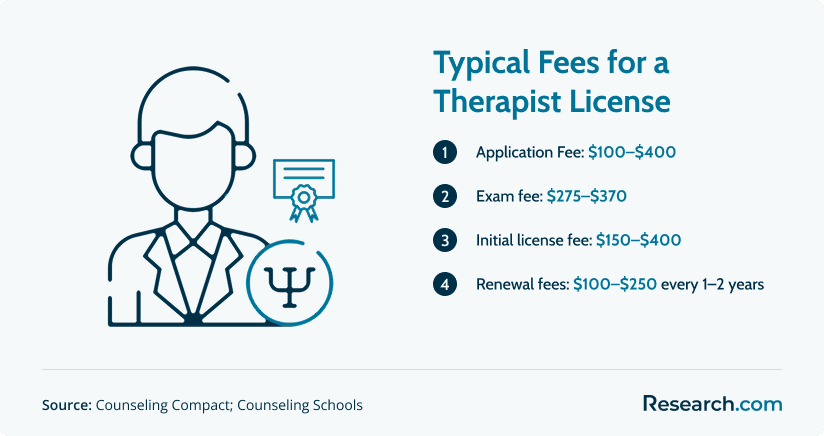
License costs vary by state. The image below shows typical fees.
How much can I make as an online therapist?
Online therapist earnings vary widely because pay depends on licensure, specialization, employment type, hours worked, payer mix, state, and platform rates. According to Glassdor, the average salary for an online therapist in the U.S. ranges from $60,000 to $112,000 per year. ZipRecruiter reports an average of around $66,131. Online therapists working for platforms like BetterHelp or Talkspace can earn up to $135,000 annually, depending on caseload and hours worked.
These figures should be treated as estimates rather than guarantees. A therapist employed full time by a health system may have a different income structure than a contractor paid per session, and an independent practice owner must account for taxes, insurance, software, marketing, unpaid administrative time, and cancellations.
Online therapy salaries also differ from other psychology-related careers. For example, the industrial psychology salary averages $154,380 per year, which is higher than many clinical counseling roles. Traditional marriage and family therapists earn a median of $58,510 per year, while clinical and counseling psychologists make $92,740 on average. The chart below compares these salary figures.
| Role or category | Salary figure stated | Key income factors |
| Online therapist | $55,000 to $86,000 per year | Caseload, platform, license type, specialty, client volume, state, and employment model |
| Online therapist salary range according to Glassdor | $60,000 to $112,000 per year | Experience, employer, location, and reported compensation data |
| ZipRecruiter online therapist average | Around $66,131 | Market postings, role title, and self-reported or employer-reported pay information |
| Platform-based online therapist potential | Up to $135,000 annually | Hours worked, pay model, client volume, and platform policies |
| Marriage and family therapist | $58,510 per year | Setting, state, licensure level, and specialization |
| Clinical and counseling psychologists | $92,740 on average | Doctoral training, assessment services, employment setting, and specialization |
| Industrial psychology | $154,380 per year | Business, consulting, research, organizational development, and applied workplace roles |
What advanced education opportunities are available for online therapists?
Advanced education can help licensed therapists deepen their expertise, serve more specialized populations, supervise other clinicians, or move into leadership and teaching roles. It can also be useful when therapists want to add structured treatment methods, expand assessment skills, or work with clients whose needs require specialized intervention.
Options include doctoral degrees, post-master’s certificates, continuing education workshops, trauma-focused training, substance use credentials, supervision training, and specialized behavioral health programs. For clinicians interested in behavior-focused treatment models, online ABA master's programs may provide a stronger foundation in behavior analysis, though therapists should confirm whether the program aligns with their professional scope and career goals.
| Advanced option | When it may make sense | What to check first |
| Doctoral degree | You want psychologist licensure, advanced assessment work, research, university teaching, or higher-level clinical leadership. | Accreditation, internship requirements, state psychology board rules, time commitment, and cost. |
| Post-master’s certificate | You already have a graduate degree but need additional coursework for licensure, specialization, or a new client population. | Whether credits are accepted by your licensing board or employer. |
| Trauma or DBT training | You want to serve clients with trauma histories, emotional regulation concerns, or complex clinical needs. | Training provider credibility, supervision requirements, and fit with your current scope. |
| Telehealth continuing education | You provide therapy online and need stronger knowledge of privacy, risk management, and virtual ethics. | State continuing education rules and whether the training covers current telehealth practice issues. |
How can I accelerate my path to success in online therapy?
The safest way to move faster is not to skip requirements. It is to avoid wrong turns. Many delays happen because students choose a program that does not meet their state’s licensing rules, fail to plan for supervised hours, or underestimate exam and application timelines.
To shorten the path responsibly, choose an accredited program aligned with your target license, complete fieldwork as early as allowed, build relationships with approved supervisors, prepare for licensing exams before graduation, and select employers or placements that support the hours your board requires. If you want a structured overview of shorter routes, review the quickest way to become a therapist.
Practical ways to reduce delays
- Contact your state licensing board before applying to graduate programs.
- Ask programs for written licensure outcome information, not just marketing language.
- Choose internships that expose you to documentation, diagnosis, treatment planning, and telehealth when possible.
- Track supervised hours carefully from the first eligible day.
- Schedule exam preparation before your final semester or immediately after graduation.
- Keep copies of syllabi, field placement records, supervisor credentials, and hour logs.
- Consider part-time telehealth training or continuing education while completing supervised practice.
How do online therapists navigate risk and liability issues?
Online therapy creates risks that are different from office-based care. A therapist must think about client location, emergency response, technology failure, privacy, secure documentation, miscommunication through digital channels, and whether a client’s needs are appropriate for remote care.
Risk management begins before the first session. Therapists should use informed consent documents that explain telehealth limits, privacy expectations, communication rules, emergency procedures, platform risks, fees, cancellation policies, and what happens if technology fails. They should also carry malpractice insurance that covers telehealth services and review whether their policy applies across the states where they are authorized to practice.
Professionals comparing counseling licensure pathways can use What is an LPC? to better understand how counselor education, licensing, careers, and salary considerations fit together.
| Risk area | Common problem | Better practice |
| Client location | The therapist does not know where the client is during a crisis. | Confirm location and emergency contact information as part of telehealth procedures. |
| Privacy | The client joins sessions from a shared space, car, workplace, or public location. | Discuss privacy expectations and help the client plan for a confidential setting. |
| Technology | Video fails, messages are delayed, or records are stored insecurely. | Use secure systems and write backup communication plans into informed consent. |
| Licensure | The therapist accepts a client in a state where they are not authorized to practice. | Check the client’s location and board rules before treatment begins. |
| Clinical fit | A client needs intensive, in-person, or emergency care that teletherapy cannot provide safely. | Screen carefully and refer to a higher level of care when needed. |
Can specialized religious counseling training boost my online therapy career?
Religious or spiritually integrated counseling training can be valuable for therapists who want to serve clients seeking faith-informed support. This type of specialization may be especially relevant in private practice, church-affiliated counseling centers, pastoral counseling contexts, or online niche practices.
A program such as a master degree in Christian counseling can help students study counseling through a Christian framework. However, aspiring therapists should distinguish between ministry training, pastoral counseling, and state-licensed mental health practice. If the goal is to diagnose and treat mental health conditions independently, the program must meet the licensing requirements of the state where you plan to practice.
Questions to ask before choosing faith-based counseling training
- Does the program qualify graduates for state counseling, MFT, social work, or psychology licensure?
- Is the curriculum clinical, pastoral, or both?
- Does the program include supervised practicum and internship experiences?
- Will credits transfer if you later need a licensure-track degree?
- Does the training teach ethical integration of spirituality without imposing beliefs on clients?
How can I market your online therapy practice effectively?
Marketing an online therapy practice should focus on trust, clarity, compliance, and fit. Clients need to understand who you help, what concerns you treat, which states you can legally serve, what therapy formats you offer, and how to begin care. Avoid exaggerated promises, guaranteed outcomes, or language that could misrepresent your qualifications.
A strong digital presence usually includes a professional website, search-friendly service pages, clear online scheduling instructions, accurate directory profiles, and educational content that answers common client questions. Therapists can also build credibility through specialized training, community partnerships, professional referrals, and well-defined niches such as couples counseling, trauma therapy, anxiety treatment, grief support, or family therapy. If affordability is a major concern while preparing for MFT practice, comparing the cheapest MFT degree online options can be part of a broader cost-conscious education plan.
| Marketing element | What to include | What to avoid |
| Website | License, states served, specialties, fees or insurance information, contact process, telehealth format. | Vague claims, unsupported success promises, or confusing service descriptions. |
| Online directories | Accurate credentials, specialties, populations served, availability, and teletherapy details. | Listing services outside your scope or states where you cannot practice. |
| Content marketing | Helpful articles about therapy questions, symptoms, coping strategies, and when to seek support. | Clinical advice that replaces individualized assessment or crisis care. |
| Referral network | Connections with physicians, schools, psychiatrists, attorneys, agencies, and other therapists. | Informal arrangements that ignore consent, privacy, or documentation standards. |
What future trends are shaping online therapy?
Online therapy is being shaped by telehealth regulation, employer expectations, platform competition, privacy concerns, workforce shortages, and client demand for flexible care. Therapists entering the field should expect technology to remain important, but clinical skill and licensure compliance will still matter more than the platform used to deliver care.
Artificial intelligence may support administrative tasks, documentation workflows, intake screening, or decision support, but it does not remove the need for licensed clinical judgment. Therapists should be cautious about tools that process client information, generate clinical notes, or provide automated recommendations because privacy, accuracy, consent, and professional responsibility remain central concerns.
Another major trend is credential-based hiring. Employers and telehealth platforms often look for licensed clinicians with clear specialties, strong documentation habits, comfort with digital systems, and the ability to manage risk remotely. Students who want a faster entry point into counseling should still verify the requirements behind programs that explain how to be a counselor fast, because speed is only useful if the credential leads to the license you need.
What certifications do I need as an online therapist?
Specialized certification is usually optional, but it can strengthen your professional profile, especially if it reflects genuine training in telehealth ethics, trauma care, DBT, or another defined clinical area. Certification does not replace state licensure. A therapist must still meet education, supervised experience, examination, and board requirements before practicing independently.
Certifications may be especially helpful when your degree path or specialty needs clarification. For example, students comparing clinical psychology vs counseling psychology may find that additional credentials help communicate a specific practice focus after licensure.
| Certification | Focus | Cost stated | Best use |
| Board Certified-TeleMental Health Provider (BC-TMH) | Ethical and effective online therapy practice | $150 application fee + $45 annual renewal | Therapists who want formal recognition of telehealth-specific knowledge |
| National Certified Counselor (NCC) | General counseling credential tied to professional counseling standards | $335 application fee | Counselors who want an additional national credential after meeting eligibility requirements |
| Certified Clinical Trauma Professional (CCTP) | Trauma-informed therapy training | $250–$300 for training + ~$100 certification fee | Clinicians who work with trauma histories and want structured trauma-focused education |
| Certified Dialectical Behavior Therapist (C-DBT) | DBT methods for emotional regulation and related concerns | $200–$500 | Therapists who use DBT-informed approaches and want to demonstrate additional training |
Before paying for any credential, check whether employers value it, whether it counts toward continuing education, and whether it is recognized by reputable professional organizations in your field.
How can I access affordable online education for my therapy career?
Affordable education matters because therapy careers often require several years of study before full independent earnings begin. The lowest tuition is not always the best value, though. A program that does not meet licensure requirements can cost more in the long run if you need extra coursework, delayed supervision, or another degree.
Students pursuing counselor licensure should compare accredited programs, state alignment, field placement support, exam preparation, financial aid options, transfer credit policies, and graduation outcomes. Reviewing the cheapest online LPC programs can help identify cost-conscious options, but affordability should always be evaluated alongside licensure fit.
Ways to manage education costs
- Choose a program that clearly aligns with your state licensing board.
- Compare total program cost, not just per-credit tuition.
- Ask about practicum and internship placement support before enrolling.
- Use transfer credits when accepted and appropriate.
- Check employer tuition assistance, scholarships, grants, and assistantships.
- Avoid programs that are inexpensive but do not lead to the license you need.
- Ask whether online students pay additional technology, residency, or placement fees.
| Cost factor | Why it affects ROI | Question to ask |
| Tuition and fees | Graduate therapy programs can require many credits, so small per-credit differences add up. | What is the full estimated cost through graduation? |
| Licensure alignment | A non-aligned program may require extra courses or delay licensure. | Does this program meet the requirements for my intended license in my state? |
| Field placement | Delayed practicum or internship placements can postpone graduation and supervised hours. | Does the school help online students secure approved placements? |
| Transfer policy | Accepted credits may reduce cost and time. | How many credits can transfer, and which courses are excluded? |
| Financial aid | Grants, scholarships, and employer benefits can reduce borrowing. | What aid is available specifically for graduate counseling or therapy students? |
What are the career paths for online therapists?
Online therapy is not one single job. It includes several licensed career paths, each with different training expectations, scopes of practice, salaries, and client populations. The right path depends on whether you want to focus on individual counseling, clinical social work, couples and families, psychological assessment, or specialized populations.
Students often compare MSW vs. Masters in Psychology when deciding which graduate route to take. An MSW can lead toward clinical social work and may also prepare graduates for case management, advocacy, and systems-based roles. A psychology or counseling graduate program may focus more directly on therapy, assessment, or mental health counseling depending on the degree and state rules.
| Career path | Salary stated | Typical work focus | Good fit for |
| Licensed Mental Health Counselor (LMHC/LPC) | $55,000–$73,000/year | Therapy for clients managing anxiety, depression, trauma, stress, and life transitions | Students who want a counseling-centered graduate path and direct client care |
| Marriage and Family Therapist (LMFT) | $58,510/year | Relationship, couples, family, and systems-focused therapy | Students interested in relational dynamics and family-based treatment |
| Licensed Clinical Social Worker (LCSW) | $73,600/year | Clinical therapy, social services coordination, advocacy, and mental health support | Students who want both therapy skills and broader social work career flexibility |
| Clinical Psychologist | $96,100/year | Psychological assessment, diagnosis, therapy, consultation, and specialized clinical services | Students prepared for doctoral-level education and a longer training timeline |
Online therapists may work in telehealth platforms, group practices, hospitals, college counseling centers, employee assistance programs, community mental health organizations, correctional or forensic settings, integrated care teams, or private practice.
Is a career in online therapy worth it?
A career in online therapy can be worth it for people who want a licensed helping profession, are prepared for graduate education, and can manage the responsibilities of remote clinical care. The strongest reasons to consider the field are flexible service delivery, meaningful client impact, and continued demand for mental health professionals.
The U.S. Bureau of Labor Statistics (BLS) projects 16% job growth for marriage and family therapists between 2023 and 2033, adding 12,300 new jobs. Psychologists are expected to see 7% job growth in the same period. Therapist salaries have increased by 7% over the last five years.
Income should be evaluated against training costs and living expenses. Online therapists earn between $55,000 and $86,000 per year, including roles connected to marriage and family therapist salary data. The average monthly expenses for a single person are around $1,173 excluding rent, while a family of four needs approximately $4,177 per month. These figures make location, debt, employment model, and benefits important parts of the decision.
| This career may be worth it if... | You may want another path if... |
| You are willing to complete graduate school, supervised hours, exams, and ongoing continuing education. | You want a career that requires only a short training program or no state licensure. |
| You enjoy structured conversations, long-term client relationships, documentation, and ethical decision-making. | You dislike administrative work, emotional labor, or high-responsibility client care. |
| You want flexibility but can also set firm boundaries while working remotely. | You need a job where work ends completely when you log off. |
| You are comfortable learning secure technology and adapting to telehealth rules. | You prefer exclusively in-person interaction or do not want to manage digital privacy concerns. |
| You can evaluate salary realistically based on caseload, taxes, benefits, and unpaid administrative time. | You are expecting guaranteed high income immediately after graduation. |
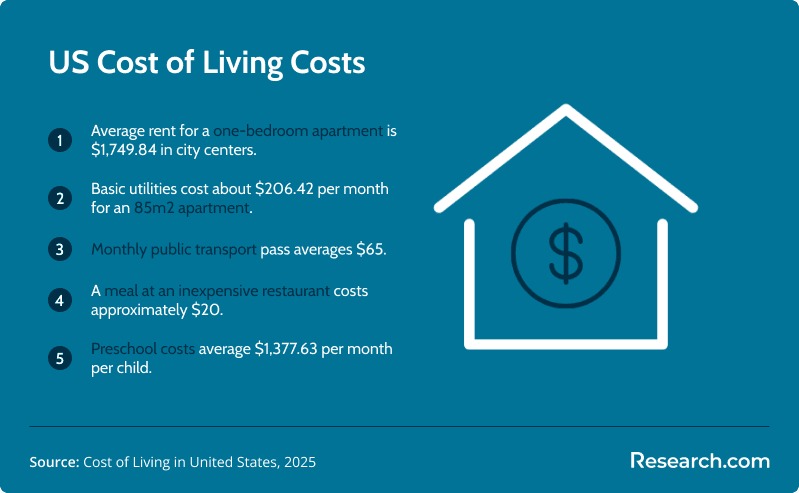
The infographic below shows major cost-of-living components in the U.S. that can affect whether online therapy income supports your financial goals.
What challenges do online therapists face and how can they overcome them?
Online therapy can be rewarding, but it is not easy work. Therapists must maintain clinical presence through a screen, respond to risk from a distance, protect privacy, manage digital fatigue, and keep boundaries when home becomes the workplace.
Common challenges include client no-shows, unreliable internet connections, privacy problems on the client’s side, difficulty reading nonverbal cues, emotional burnout, state-by-state regulation, and uncertainty about crisis procedures. Therapists can reduce these problems with clear intake screening, written telehealth policies, backup communication plans, scheduled breaks, consultation groups, supervision, and ongoing training.
Some clinicians also build specialized expertise to expand their practice. For example, therapists interested in legal, correctional, or assessment-adjacent settings may compare affordable forensic psychology graduate programs online as part of a broader professional development plan.
Common mistakes aspiring online therapists should avoid
| Mistake | Why it causes problems | Better approach |
| Choosing a program without checking licensure alignment | You may graduate with credits that do not meet your state board’s requirements. | Confirm requirements with the licensing board before enrollment. |
| Focusing only on tuition | A cheap program can become expensive if it lacks placement support or licensure fit. | Compare total cost, accreditation, fieldwork help, exam support, and outcomes. |
| Assuming online programs automatically meet all state requirements | Licensure rules are state-specific and may not match a national online curriculum. | Ask the school for state-by-state licensure disclosures. |
| Ignoring supervised-hour logistics | Postgraduate hours can delay licensure if you cannot find an approved supervisor or setting. | Plan for supervision before graduation and keep detailed records. |
| Relying only on rankings | A highly ranked school may not be the best fit for your state, budget, schedule, or license. | Use rankings as one input, then verify practical fit. |
| Assuming salary outcomes are guaranteed | Income varies by license, setting, caseload, location, and business costs. | Compare realistic compensation scenarios before borrowing for school. |
Here's What Graduates Have to Say About Their Online Therapist Careers
- Providing therapy online gave me access to clients I would never have met in a traditional office. I still have to protect my schedule and document carefully, but the flexibility has made the work more sustainable for me. Azariah
- My online coursework helped me become comfortable with virtual communication, secure platforms, and remote client interaction early. That made the transition into telehealth feel much more natural after graduation. Edgar
- Online practice has allowed me to focus on anxiety and trauma work while reducing commuting time and office expenses. The most rewarding part is reaching clients who might otherwise struggle to find support. Leah
Key Insights
- Online therapy is a licensed mental health profession delivered through secure digital tools; it is not an informal coaching role or a shortcut around clinical requirements.
- Most online therapists need a master’s degree, 2,000–4,000 supervised hours, a licensing exam, and state authorization before practicing independently.
- The typical preparation timeline is six to eight years, though doctoral psychology routes and part-time study can extend the process.
- Online therapists earn between $55,000 and $86,000 per year, but actual income depends on license type, caseload, platform or employer, specialization, benefits, taxes, and business expenses.
- Licensing rules matter more in teletherapy because the client’s physical location can affect whether you are legally allowed to provide care.
- Optional credentials such as BC-TMH, NCC, CCTP, and C-DBT can strengthen a therapist’s profile, but they do not replace state licensure.
- The best program is not always the cheapest or highest ranked; it is the one that meets your state’s licensure rules, supports field placement, fits your budget, and prepares you for supervised clinical work.
- Online therapy can be worth it for people who want meaningful clinical work and flexibility, but it requires strong boundaries, risk management, technology competence, and ongoing professional development.
References:
- Bureau of Labor Statistics. Marriage and Family Therapists.
- Bureau of Labor Statistics. Psychologists.
- Glassdoor. Online Therapist Salary.
- Numbeo. Cost of Living in the United States.
- Zippia. Therapist Job Outlook and Growth in the US.
- Zippia. Therapist Salary Expectations.
- ZipRecruiter. Online Therapist Salary.
Other Things You Should Know About Online Therapists
Online therapists need HIPAA-compliant video software, encrypted messaging, and secure electronic records systems. In the United States, platforms should support access controls, audit logs, and business associate agreements. Therapists must also use private internet connections and verify identity before each telehealth session.
Online therapists in 2027 must adhere to ethical guidelines set by bodies like the American Psychological Association (APA), including maintaining client confidentiality, securing digital communications, and obtaining informed consent specific to virtual sessions. These guidelines ensure professional and patient safety standards are upheld online.





