2027 What Can You Do With an Addiction Counselor Degree? Costs & Job Opportunities

Co-Founder and Chief Data Scientist
Choosing an addiction counselor degree is a serious career decision because the work affects people at some of the most difficult points in their lives. Addiction may involve substances, compulsive behaviors, or both, and it often affects families, workplaces, schools, courts, and healthcare systems. For students who want a counseling career with direct human impact, addiction counseling can be a meaningful path—but it also requires the right education, supervised experience, ethical judgment, and state-approved credentials.
The need for trained behavioral health professionals remains strong. The projected numeric change in employment for mental health, behavioral disorder, and substance abuse counselors is 483,500 until 2034 (BLS, 2025). This guide explains what an addiction counselor degree covers in 2027, how much it can cost, what jobs it can lead to, how licensure works, and how to compare programs before enrolling.
Addiction Counselor Degree Table of Contents
- What is an addiction counselor degree?
- Cost of an addiction counselor degree
- 2027 best bachelor’s degrees in addiction counseling
- Addiction counselor degree jobs
- Types of addiction counseling degrees
- Addiction counselor degree requirements
- Ethical considerations in addiction counseling
- Most affordable ways to pursue an addiction counselor degree
- How do I become a licensed addiction counselor?
- What to look for in an addiction counselor degree program
- How can addiction counselors use family therapy?
- How can technology support addiction counseling?
- How can counselors treat co-occurring disorders?
- How do licensure differences affect career outcomes?
- How can addiction counselors improve earning potential?
- Career growth and specializations in addiction counseling
- How can addiction counselors keep developing professionally?
- The role of addiction counselors in grief counseling
- How can addiction counselors prevent burnout?
Quick answer: Is an addiction counselor degree worth considering?
An addiction counselor degree can be worth considering if you want a counseling-focused career helping people manage substance use disorders, behavioral addictions, relapse risks, family conflict, trauma, and co-occurring mental health concerns. It is especially useful for students who want structured training in counseling theory, assessment, ethics, treatment planning, and supervised practice.
The degree is not a shortcut to independent clinical practice. State licensure rules vary, and many counseling roles require supervised hours, exams, background checks, continuing education, and sometimes a master’s degree. Before choosing a program, confirm whether it meets your state’s addiction counseling credential or mental health counseling licensure requirements.
| Best fit | May not be the best fit |
| Students who want direct client-facing work in treatment centers, outpatient clinics, recovery programs, corrections, or community health settings. | Students looking for a career with minimal emotional stress or limited interpersonal conflict. |
| People who are comfortable with ethics, boundaries, documentation, crisis response, and long-term client support. | People who want guaranteed salary outcomes or the same licensure rules in every state. |
| Students willing to verify accreditation, practicum requirements, and state credentialing rules before enrolling. | Students who plan to choose a program based only on tuition or convenience. |
What is an addiction counselor degree?
An addiction counselor degree is an academic program that prepares students to support people affected by substance use disorders, behavioral addictions, and related mental health challenges. Programs usually combine counseling theory, addiction science, case management, ethics, multicultural counseling, assessment, treatment planning, and practical field experience.
The purpose of the degree is not only to teach students about addiction. A strong program should also help students practice the communication, documentation, listening, and decision-making skills needed in real counseling environments. Graduates may work with individuals, groups, families, and community organizations, depending on their education level, supervised experience, and state credential.
Students in an addiction counseling program commonly study topics such as:
- Core courses in a Bachelor’s in Addiction Counseling program
- Process addiction
- The foundation of addiction and substance use disorders
- Psychopharmacology in the treatment of substance use disorders and addiction
- Legal and ethical issues for substance use disorder and addiction counselors
- Multicultural counseling in a diverse society
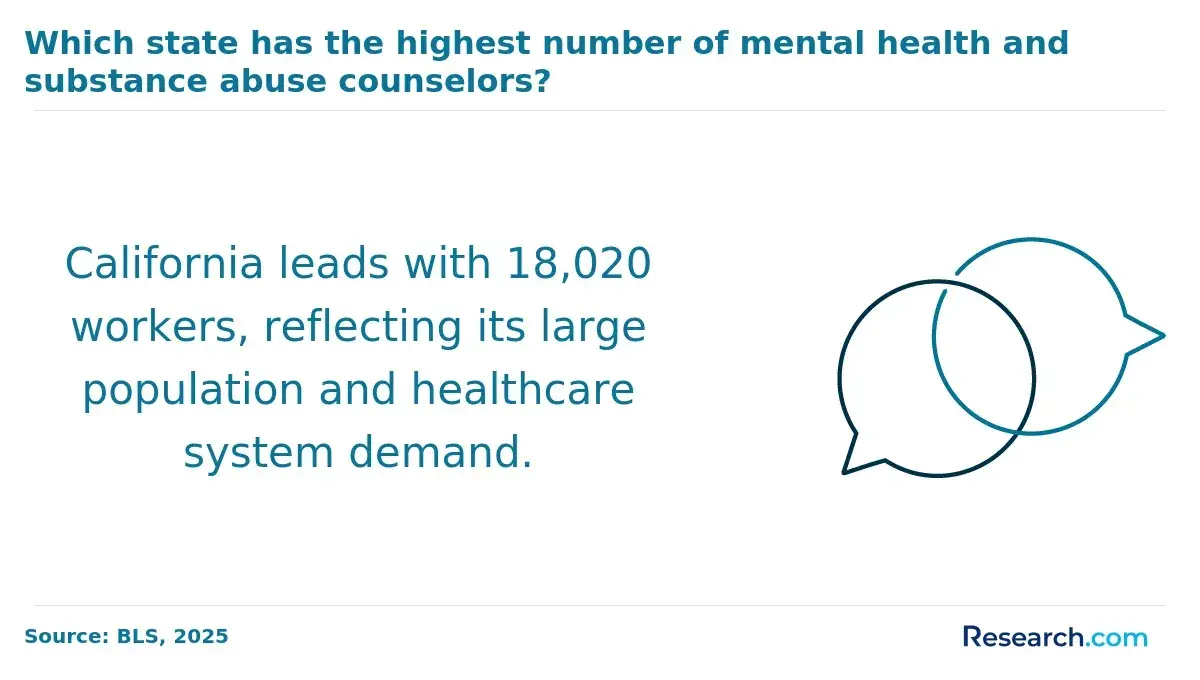
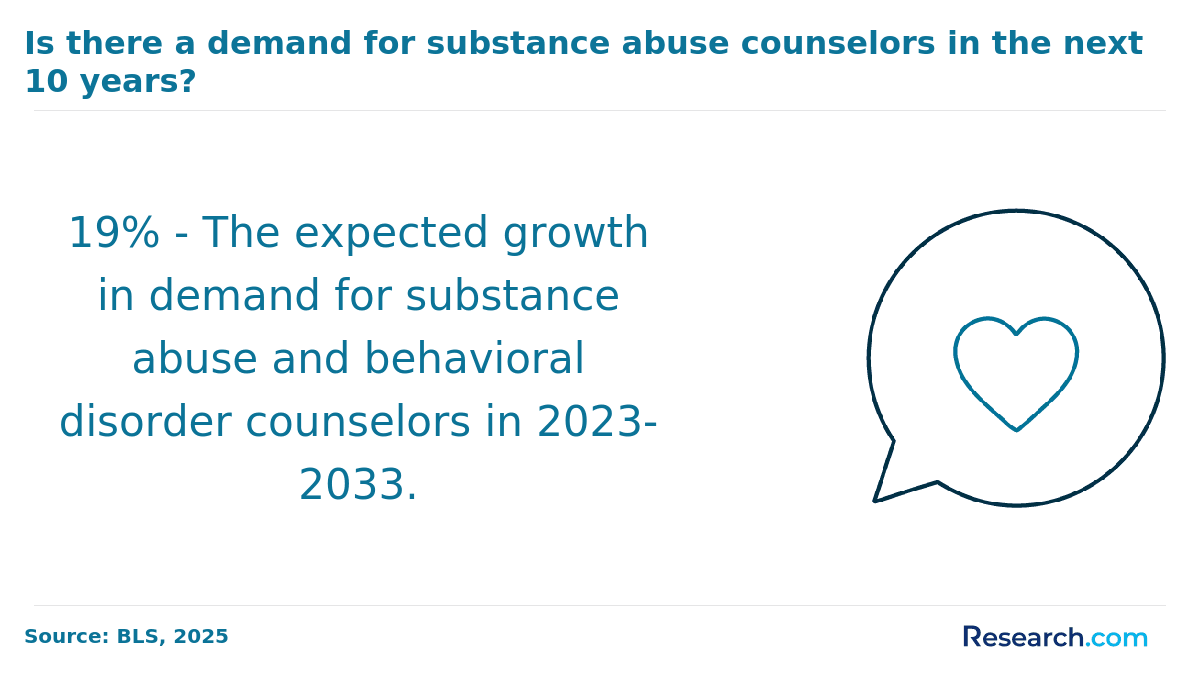
Career demand is one reason many students consider this path. The U.S. Bureau of Labor Statistics projects 19% employment growth for mental health, behavioral disorder, and substance abuse counselors until 2033.
What can you do with an addiction counselor degree?
With an addiction counselor degree, you can prepare for work in substance use treatment, recovery support, prevention education, behavioral health services, community programs, criminal justice settings, and related counseling environments. The exact roles available to you depend on your degree level, fieldwork, licensure, and state rules.
Addiction counselors may help clients identify triggers, build relapse-prevention plans, repair relationships, connect with community resources, and stay engaged in treatment. They may also support clients dealing with alcohol use disorder, drug use, compulsive behaviors, eating-related problems, grief, trauma, or co-occurring mental health concerns.
Empathy is central to the work. Research has described how empathy is crucial in therapy because it helps create and sustain a productive counseling relationship. Counselors also need strong boundaries, careful listening, stress tolerance, and the ability to respond without judgment.
Personal recovery experience can help some counselors relate to clients, but it is not required. UC San Diego Extended Studies notes that a personal history of addiction is not a requirement to be a drug and alcohol abuse counselor. What matters professionally is appropriate training, ethical conduct, self-awareness, and compliance with state credentialing standards.
Cost of an addiction counselor degree
The cost of an addiction counselor degree depends on the credential level, school type, delivery format, residency status, required credits, fees, books, field placement expenses, and whether prior credits transfer. Students should compare total program cost, not just the advertised tuition rate.
Average undergraduate tuition and fees for substance abuse or addiction counseling programs are $9,496 for in-state students and $22,094 for out-of-state students. The average tuition for a vocational program is $21,847. Graduate tuition and fees average $11,095 for state residents and $19,652 for out-of-state residents.
| Program type | In-state students | Out-of-state students |
| Undergraduate tuition and fee | $9,496 | $22,094 |
| Graduate tuition and fee | $11,095 | $19,652 |
| Average tuition for vocational program | $21,847 | $21,847 |
Cost factors students often overlook
- Practicum or internship expenses: Field placements may require transportation, background checks, health documentation, liability insurance, or specific scheduling availability.
- Licensure and certification costs: Exams, applications, renewals, and continuing education can add costs after graduation.
- Transfer credit rules: A program with a higher tuition rate may cost less overall if it accepts more transfer credits.
- Online program fees: Online study can reduce commuting costs, but some schools charge technology or distance-learning fees.
- Time away from work: Full-time study may shorten completion time, while part-time study may make employment easier to maintain.
2027 best bachelor’s degrees in addiction counseling
Research.com’s review team identified five bachelor’s-level addiction counseling programs for 2027 using factors such as accreditation, curriculum, faculty qualifications, affordability, student outcomes, and industry reputation. Use this list as a starting point, then verify current tuition, admissions requirements, practicum rules, and licensure alignment directly with each school.
| School | Program | Program length | Cost per credit | Credits required | Accreditation |
| University of South Dakota | BS in Addiction Counseling and Prevention | four years | $354.75 | 120 credit hours | The National Addiction Studies Accreditation Commission (NASAC), Higher Learning Commission (HLC) |
| Northwestern State University of Louisiana | Bachelor of Science in Addiction Studies | four years | $375 | 120 credit hours | Southern Association of Colleges and Schools, Commission on Colleges (SACSCOC) |
| Ohio Christian University | Bachelor of Arts in Substance Abuse Counseling | one year | $425 | 30 credit hours at the 3,000 level or above | Higher Learning Commission (HLC) |
| Alvernia University | Bachelor of Arts in Addictions and Mental Health Treatment | four years | $535 | a minimum of 123 semester credits | Middle States Commission on Higher Education (MSCHE) |
| University of Holy Cross | Bachelor of Science Degree in Addiction Counseling | four years | $585 | 120 credit hours | Southern Association of Colleges and Schools, Commission on Colleges (SACSCOC) |
Program notes
- University of South Dakota: The program offers treatment and prevention and addiction counseling tracks. It is one of the few four-year programs of its kind in Mount Rushmore State and focuses on the nature, etiology, prevention, and treatment of alcohol and drug concerns.
- Northwestern State University of Louisiana: The program emphasizes addictive behavior and addiction counseling. SR Education Group recently ranked the university’s addiction studies program seventh overall for the Most Affordable Online Colleges for Substance Abuse Counseling Degrees and third among Bachelor’s programs.
- Ohio Christian University: The program is available online and on campus and is designed for students entering the addiction recovery field. It also includes a Christian perspective in the study of substance abuse counseling.
- Alvernia University: The program combines addiction and mental health treatment preparation with applied learning and professional exposure.
- University of Holy Cross: The program is designed to build skills in research, interviewing, assessment, and counseling, with a foundation in psychology theories and addictive behavior assessment.
Addiction counselor degree jobs
Graduates with addiction counseling training may work in residential care facilities, outpatient mental health clinics, community agencies, local government programs, correctional systems, hospitals, and recovery organizations. Some roles are available with a bachelor’s degree or certificate, while independent clinical counseling often requires graduate education and licensure.
Are addiction counselors in high demand?
Demand is supported by both public health need and expanded behavioral health services. In 2024, about 48.4 million people aged 12 or older had SUD, including 27.9 million who suffered from alcohol use disorder and 7.5 million who struggled with both drugs and alcohol (National Survey on Drug Use and Health, 2024).
As more people seek addiction treatment and psychological counseling, employers need counselors who understand both substance use and mental health. The BLS reports 43,000 job openings each year for behavioral disorder, mental health, and substance abuse counselors, largely because workers change occupations or leave the labor force.
Criminal justice policy also affects demand. In many states, people with drug or alcohol addiction may be directed toward treatment and counseling instead of incarceration, which can increase the need for qualified professionals in community-based and court-connected programs (BLS, 2025).
What jobs can you get with an addiction counselor degree?
| Role | What the work may involve | Decision point for students |
| Mental health counselor | Assessing emotional distress, relationship issues, mental health symptoms, and life challenges using psychotherapy methods. | Check whether your state requires a master’s degree and clinical licensure for this title. |
| Substance abuse counselor | Evaluating clients, recommending treatment, teaching recovery skills, and helping families support a loved one in treatment. | Confirm the credential level required for the setting where you want to work. |
| Probation officer | Monitoring court requirements, supporting rehabilitation plans, and serving as a link between offenders and the court. | Useful for students interested in justice-system work and rehabilitation. |
| Community health worker | Connecting community members with healthcare and social services, often in communities where shared language or lived experience improves trust. | Can be a practical entry point into behavioral health or public health work. |
| Social and community service worker | Organizing programs, preparing intake documentation, tracking service statistics, and supervising volunteers or support workers. | Good fit for students interested in program coordination as well as client support. |
| Clinical supervisor | Overseeing counselors, client care procedures, agency compliance, and communication between staff and administrators. | Usually requires experience, advanced credentials, and strong leadership skills. |
What salary can you earn with an addiction counselor degree?
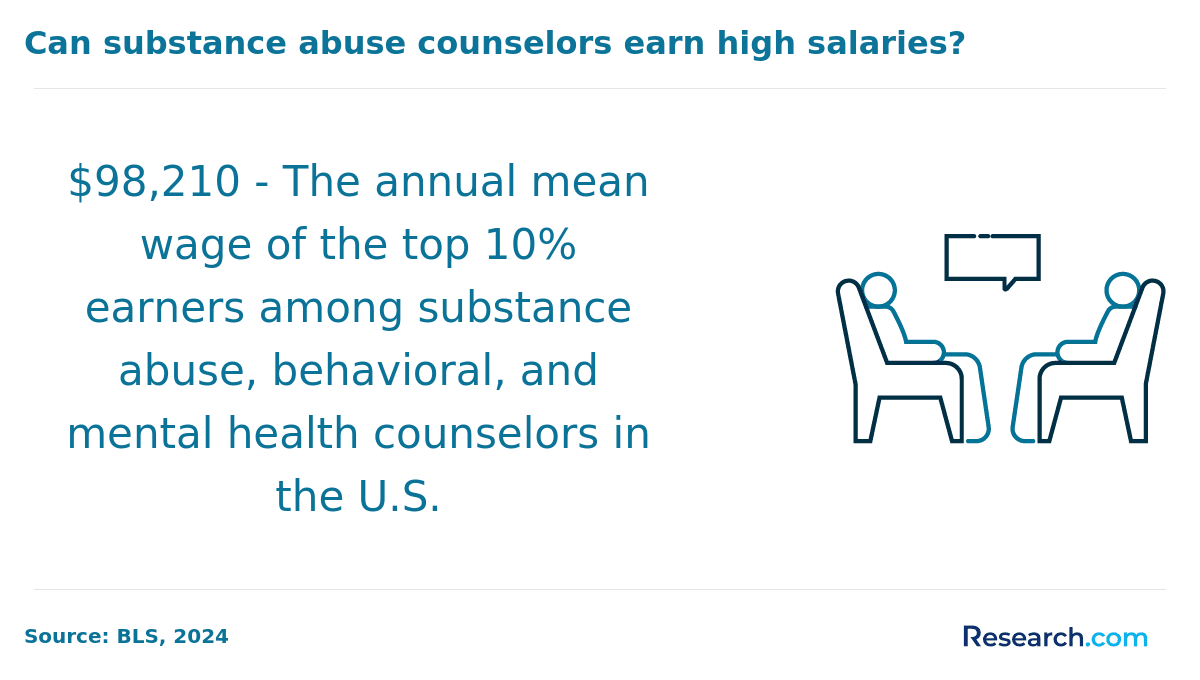
The median annual wage for mental health, behavioral disorder, and substance abuse counselors is $59,190. Many counselors work full-time, though part-time schedules are also common. Counselors in residential or inpatient facilities may work evenings or weekends because client care often continues outside standard business hours (BLS, 2025).
Types of addiction counseling degrees
Addiction counseling education is available at several levels. The right choice depends on your career goal, prior education, budget, state credentialing rules, and whether you want entry-level support work, licensed counseling practice, supervision, teaching, or research. Some counseling careers require at least a master’s degree.
Across all fields, educational attainment is associated with different earnings and unemployment outcomes. The table below shows median usual weekly earnings and unemployment rates by education level.
| Educational attainment of a professional | Median usual weekly earnings | Unemployment rate |
| Doctoral degree | $2,278 | 1.2% |
| Professional degree | $2,363 | 1.3% |
| Master's degree | $1,840 | 2.2% |
| Bachelor's degree | $1,543 | 2.5% |
| Associate's degree | $1,099 | 2.8% |
| Some college, no degree | $1,020 | 3.8% |
| High school diploma | $930 | 4.2% |
| Less than a high school diploma | $738 | 6.2% |
Addiction counseling degree options compared
| Credential | Average time to complete | Typical coursework | Possible entry-level jobs | Best for |
| Associate Degree in Addiction Counseling | two years | Basic counseling, theories of counseling, group counseling and addiction, professional ethics and issues in addiction, trauma and recovery. | Counselor assistant, substance abuse counselor, behavior health counselor. | Students seeking a shorter path into support roles or a foundation for transfer to a bachelor’s program. |
| Bachelor’s Degree in Addiction Counseling | four years | Causes and control of addiction, rehabilitation methods, effective therapy, internship, capstone course, or supervised counseling practicum depending on the school. | School and career counselor, community health worker, rehabilitation counselor. | Students who want broader preparation and more employment flexibility than a short certificate may provide. |
| Master’s Degree in Addiction Counseling | two years | Advanced counseling theory, clinical practice, assessment, research, and specialized addiction or mental health topics. | Addiction and recovery counselor, professor, mental health counselor. | Students pursuing licensure, advanced counseling responsibilities, or preparation similar to fields such as social work and psychology. |
| Doctoral Degree in Addiction Counseling | three to four years | Addictive behavior and substance abuse, group counseling, diversity and social justice, addiction intervention, counseling skills and techniques, professional growth and well-being. | Counselors, clinical psychologists specializing in substance abuse and addiction counseling, postsecondary teachers. | Professionals interested in leadership, teaching, research, advanced clinical expertise, or program development. |
| Certificate in Addiction Counseling | six to 12 months | Addiction counseling, psychopharmacology, and addiction treatment. | Addiction counselor, mental health counselor specializing in addiction, recovery specialist. | Students adding a focused credential to prior education or preparing for a specific state-recognized certification path. |
M.A. vs. M.S. in addiction counseling
At the graduate level, students may find both M.A. and M.S. programs. The two can overlap, but an M.S. program may place more emphasis on clinical methods and technical practice, while an M.A. may use a broader interdisciplinary approach. Do not choose based on the degree abbreviation alone. Compare practicum hours, licensure alignment, faculty expertise, and clinical preparation.
Addiction counselor degree requirements
Admission requirements differ by school and degree level. Some programs ask for standardized test scores, while others evaluate applicants through GPA, transcripts, recommendations, essays, interviews, prior coursework, or relevant experience. Students should also be prepared for background checks or field placement requirements before practicum work.
Common admission requirements
- Minimum GPA: Many colleges set minimum GPA expectations of at least 2.5 to 3.0. Some programs may still consider applicants with slightly lower GPAs if their grades improved over time or if other application materials are strong.
- Letters of recommendation: Recommendations should come from teachers, supervisors, mentors, or professionals who can describe your maturity, reliability, communication skills, and readiness for a helping profession.
- Transcripts: Request official transcripts early because processing can take time. Some schools charge a small fee for transcript requests.
- Test scores: Some schools no longer require SAT or ACT scores, but others still use them as one factor when evaluating college readiness.
Personal qualities that matter in addiction counseling
- Active listening: In human services and counseling roles, clients need to feel heard, not simply observed. Active listening supports trust and better assessment.
- Professional boundaries: Counselors often build meaningful therapeutic relationships, but they must avoid enabling behavior, dual relationships, or blurred roles.
- Commitment to helping others: Effective treatment requires genuine engagement, careful planning, and the patience to support clients through setbacks.
- Confidence under pressure: Counselors may face crisis situations, conflict, relapse, trauma disclosures, and complex family dynamics. Confidence helps professionals stay grounded and ethical.
Ethical considerations in addiction counseling
Ethics are not an optional part of addiction counseling. Clients may be dealing with relapse risk, shame, family conflict, legal pressure, trauma, or severe distress. Ethical practice protects clients, strengthens the counseling relationship, and helps counselors make responsible decisions when cases become complex.
Core ethical responsibilities
- Confidentiality: Counselors must protect client information and follow legal requirements such as the Health Insurance Portability and Accountability Act (HIPAA). Clients should also understand the limits of confidentiality, including situations involving danger to self or others.
- Professional boundaries: Clear boundaries reduce the risk of dual relationships, conflicts of interest, dependency, or decisions that place the counselor’s needs above the client’s care.
- Informed consent: Clients should understand the treatment process, their choices, the methods being used, documentation practices, and what participation involves.
- Cultural competence: Addiction treatment should account for the client’s cultural background, values, spiritual beliefs, identity, family structure, and lived experience.
- Nonjudgmental care: Stigma can keep people from seeking help. Counselors need to create a setting where clients can speak honestly without being shamed.
How programs teach ethics
Addiction counseling programs often include ethics coursework covering mandated reporting, countertransference, boundaries, informed consent, documentation, confidentiality, and ethical decision-making. Professional organizations such as the National Association for Alcoholism and Drug Abuse Counselors (NAADAC) also provide ethical codes that professionals can use when facing difficult practice situations.
Why ethics remains important after graduation
Ethical competence requires ongoing attention. Counselors should use supervision, consultation, continuing education, and peer discussion to address difficult cases. Ethical practice also supports credibility in substance abuse counseling and protects clients who may be especially vulnerable during treatment.
Most affordable ways to pursue an addiction counselor degree
The most affordable path is not always the lowest sticker price. A program may be more cost-effective if it accepts transfer credits, offers online coursework, includes required field placement support, qualifies for financial aid, or directly aligns with your state credential. Students comparing online addiction counseling degree options should evaluate total cost, completion time, practicum rules, and licensure fit before enrolling.
Ways to reduce cost
- Start at a community college if your target bachelor’s program accepts transfer credits.
- Ask whether prior learning, military training, or previous coursework can reduce required credits.
- Compare in-state, online, and public college options.
- Confirm whether scholarships, grants, loans, and work-study are available.
- Choose a program that supports your actual credential goal so you do not pay for courses that do not count toward licensure.
How do I become a licensed addiction counselor?
To become a licensed addiction counselor, start by identifying the exact credential required in the state where you plan to work. Licensing requirements vary by state, but they commonly include an approved degree or coursework, supervised clinical hours, a licensing or certification exam, background screening, ethics standards, and continuing education.
- Choose your target state and credential: State boards may use different titles and requirements for addiction counseling, substance abuse counseling, mental health counseling, or professional counseling.
- Enroll in a program that meets those rules: Ask the school to document how its curriculum maps to your state’s requirements.
- Complete supervised experience: Many credentials require documented hours under an approved supervisor.
- Pass required exams: Exam requirements vary, so verify them with the licensing board.
- Maintain your credential: Renewal usually involves continuing education, ethics compliance, and updated documentation.
Students searching for the fastest way to become a therapist should be careful: the fastest educational option is not always the one that qualifies you for your intended license. Always check state board rules before making enrollment decisions.
What to look for in an addiction counselor degree program
The best addiction counseling program for you is the one that fits your career goal, state credentialing plan, schedule, budget, and learning needs. Rankings can help you build a shortlist, but they should not replace direct verification with schools and licensing boards.
| Factor | Why it matters | Question to ask before enrolling |
| Accreditation | Accreditation helps confirm that a school or program has met recognized quality standards. The National Addiction Studies Accreditation Commission (NASAC) accredits higher education addiction studies programs. NASAC accreditation is noninstitutional and applies to specific programs within a college or university. | Is the institution accredited, and does the addiction counseling program hold any program-specific accreditation? |
| Licensure alignment | A degree may be academically legitimate but still fail to meet a specific state credential requirement. | Does this program meet the education requirements for the addiction counseling credential in my state? |
| Financial aid | Loans, grants, scholarships, and work-study can reduce out-of-pocket cost. Over the last decade, the average grant aid per full-time equivalent (FTE) undergraduate student has increased to $11,040 in 2024 (College Board, 2024). | Which forms of aid can I use for this program, and what is the net cost after aid? |
| Completion time | Undergraduate, graduate, vocational, certificate, full-time, part-time, and accelerated options can differ significantly. | How long do students like me usually take to finish, including fieldwork? |
| Student-to-teacher ratio | Class size can influence access to instructors, feedback, and discussion. However, research on class size shows that outcomes are complex and depend on more than the number of students in a room. | How much individual feedback and practicum support will I receive? |
Common mistakes when choosing a program
- Assuming every counseling degree leads to licensure: State rules differ, and some programs are not designed for independent clinical practice.
- Looking only at tuition: Fees, fieldwork costs, transfer credits, and completion time can change the real price.
- Ignoring accreditation: Accreditation can affect financial aid, transferability, employer confidence, and credential eligibility.
- Choosing online study without checking field placement: Online coursework may still require local supervised practice.
- Relying only on rankings: A highly ranked program may not be the best fit for your state, schedule, budget, or credential goal.
How can addiction counselors use family therapy?
Family therapy can strengthen addiction treatment because recovery rarely happens in isolation. Family members may influence relapse risk, communication patterns, accountability, emotional support, and treatment engagement. Counselors can use family sessions to improve communication, identify unhealthy dynamics, set boundaries, and align the treatment plan with the client’s real support system.
Addiction counselors should also know when to collaborate with marriage and family therapy specialists. Students who want deeper preparation in family systems can explore affordable MFT programs to understand how family-based methods may complement addiction counseling.
How can technology support addiction counseling?
Technology is changing how addiction counseling services are delivered. Secure video sessions, electronic health records, remote check-ins, and mobile tools can make care more accessible and help counselors monitor client progress more consistently. These tools do not replace clinical judgment, privacy protections, or ethical practice, but they can support hybrid treatment models when used responsibly.
Students comparing online counseling programs should ask whether digital counseling skills, telehealth ethics, privacy standards, and documentation practices are covered in the curriculum. Those looking for cost-conscious online options may review affordable master's in counseling programs that include preparation for technology-supported care.
How can addiction counselors treat co-occurring disorders?
Many clients with addiction also experience mental health conditions such as anxiety, depression, trauma-related symptoms, or grief. Treating substance use without recognizing these concerns can weaken the treatment plan. Effective counselors use comprehensive assessment, coordinated care, evidence-based methods, and referral networks to address substance use and mental health together.
Common approaches include motivational interviewing, cognitive behavioral therapy, relapse-prevention planning, trauma-informed care, and collaboration with psychiatrists, social workers, primary care providers, or licensed mental health clinicians. Students who want training in dual-diagnosis work can compare affordable substance abuse counseling programs online with coursework in assessment, co-occurring disorders, and integrated treatment.
How do licensure differences affect career outcomes?
Licensure can shape job titles, scope of practice, supervision requirements, insurance reimbursement options, and advancement. For example, differences between credentials such as LCSW and LPC can affect the roles professionals qualify for and how employers classify their work. Students considering advanced counseling or clinical pathways should compare state-specific rules before choosing a degree.
For a broader comparison of credential pathways and compensation considerations, review the discussion of LCSW salary vs LPC salary. The main lesson is that credentials are not interchangeable across every state or setting, so licensure planning should happen before graduate enrollment, not after graduation.
How can addiction counselors improve earning potential?
Addiction counselors can improve long-term earning potential by building specialized skills, completing advanced credentials, gaining supervised clinical experience, taking on leadership responsibilities, and learning how to document outcomes and deliver evidence-based care. Salary growth is not guaranteed, but targeted preparation can improve competitiveness for supervisory, clinical, administrative, and specialized roles.
Practical strategies include pursuing state-recognized certification, adding training in co-occurring disorders or trauma-informed care, developing telehealth competence, seeking clinical supervision experience, and learning program management. Counselors interested in higher-income therapy pathways can explore strategies in how to become a therapist that earns six figures.
Career growth and specializations in addiction counseling
Addiction counseling offers several paths for advancement. Some professionals deepen their clinical expertise, while others move into supervision, program management, prevention, policy, education, research, or private practice where allowed by license and state law.
Specializations to consider
- Dual diagnosis counseling: Focuses on clients who have both substance use concerns and mental health conditions. This path requires strong assessment skills and coordination with other providers.
- Trauma-informed care: Helps counselors understand how trauma can shape substance use, trust, emotional regulation, and treatment engagement.
- Adolescent addiction counseling: Supports teens and young adults whose developmental stage, family environment, school context, and peer influences affect treatment.
- Recovery program leadership: Combines counseling knowledge with staff supervision, compliance, program evaluation, and service coordination.
Advancement options
- Certified Addiction Counselor (CAC): This credential can signal specialized addiction counseling knowledge and may improve eligibility for certain roles, depending on state and employer requirements.
- Master’s or doctoral study: Graduate education can open paths toward clinical director roles, program management, teaching, research, or advanced practice. Students comparing options can also review careers in addiction recovery to see how education level affects opportunities.
How can addiction counselors keep developing professionally?
Continuous professional development helps addiction counselors stay current with treatment methods, ethical expectations, technology, supervision standards, and emerging client needs. Many credentials require periodic renewal, and renewal often depends on completing continuing education.
Useful professional development activities include ethics training, workshops, conferences, online courses, supervision groups, peer consultation, mentoring, and advanced education. Counselors may focus on areas such as trauma-informed care, co-occurring disorders, family systems, telehealth, motivational interviewing, documentation, or clinical supervision.
Professional organizations such as the American Counseling Association (ACA) and the National Association for Alcoholism and Drug Abuse Counselors (NAADAC) can also provide networking, conferences, ethical guidance, and continuing education opportunities. Mentoring is especially valuable because experienced counselors can help newer professionals process difficult cases, improve boundaries, and build a sustainable career plan.
The role of addiction counselors in grief counseling
Grief and addiction often overlap. Some clients use substances or compulsive behaviors to cope with the death of a loved one, estrangement, divorce, job loss, identity loss, or the loss of stability caused by addiction itself. If grief remains unaddressed, it can complicate recovery and increase relapse risk.
Recognizing grief in addiction treatment
Grief can appear as sadness, anger, numbness, denial, guilt, isolation, or difficulty imagining a future. Clients may not always connect their substance use with unresolved loss, so counselors need to ask careful questions and listen for patterns.
Using grief-informed counseling techniques
Addiction counselors can integrate guided reflection, mindfulness, narrative techniques, coping-skills training, and relapse-prevention planning that accounts for grief triggers. Professionals who want to specialize further can review how to become a grief counselor to understand additional training pathways.
Collaborating with grief specialists
Some clients need support from both addiction counselors and grief counseling specialists. Coordinated treatment can help clients process loss, rebuild resilience, and maintain recovery goals.
How can addiction counselors prevent burnout?
Addiction counseling can be emotionally demanding. Counselors may hear trauma histories, manage relapse concerns, support families in crisis, and work in high-need settings with limited resources. Burnout prevention is therefore a professional responsibility, not a luxury.
- Use supervision consistently: Supervision helps counselors process difficult cases and avoid isolation.
- Set firm boundaries: Clear work hours, documentation routines, and communication limits reduce emotional overextension.
- Build peer support: Consultation groups and trusted colleagues can provide perspective and practical advice.
- Practice regular self-assessment: Watch for cynicism, exhaustion, irritability, detachment, or declining empathy.
- Seek personal support when needed: Counselors may also benefit from therapy, wellness routines, exercise, rest, and time away from work.
Understanding career timelines can also reduce unrealistic pressure. For example, learning how long does it take to be a therapist can help students and early-career professionals set realistic expectations for licensure, advancement, and specialization.
Should you pursue an addiction counselor degree?
An addiction counselor degree can be a strong choice if you want a helping profession that combines counseling, behavioral health, public health, ethics, and recovery support. It may be especially meaningful for students who have seen addiction affect families or communities and want practical training to help people rebuild stability.
Before enrolling, verify the program’s accreditation, cost, fieldwork support, transfer policies, and state licensure alignment. If you are also considering adjacent clinical paths, compare addiction counseling with options such as a Master’s Degree in Social Work.
References
- College Board. (2024). Trends in College Pricing and Student Aid 2024. https://research.collegeboard.org/media/pdf/trends-in-college-pricing-student-aid-2024.pdf
- Federal Student Aid. (n.d.). Types of Financial Aid: Loans, Grants, and Work-Study Programs. https://studentaid.gov/understand-aid/types
- Substance Abuse and Mental Health Services Administration. (2024). Key substance use and mental health indicators in the United States: Results from the 2024 National Survey on Drug Use and Health. https://smokingcessationleadership.ucsf.edu/news/2024-nsduh-annual-national-report
- U.S. Bureau of Labor Statistics. (2025). Substance Abuse, Behavioral Disorder, and Mental Health Counselors. https://www.bls.gov/ooh/community-and-social-service/substance-abuse-behavioral-disorder-and-mental-health-counselors.htm
- U.S. Bureau of Labor Statistics (BLS): Education Pays: Unemployment rates and earnings by educational attainment, 2024. https://www.bls.gov/careeroutlook/2025/data-on-display/education-pays.htm
- University of South Dakota. (n.d.). Addiction Counseling and Prevention (B.S.) https://catalog.usd.edu/preview_program.php?catoid=33&poid=6525
Key Insights
- Demand is strong, but requirements matter: The field is projected to grow, with 19% employment growth until 2033, but job eligibility depends heavily on state credentials and degree level.
- Costs vary by pathway: Undergraduate programs average $9,496 for in-state and $22,094 for out-of-state students, vocational programs average $21,847, and graduate programs average $11,095 for state residents and $19,652 for out-of-state residents.
- A bachelor’s degree is useful but may not be enough for independent practice: Many advanced counseling roles require a master’s degree, supervised clinical hours, exams, and continuing education.
- Accreditation and licensure alignment should be checked before enrollment: A program can be affordable and convenient but still fail to meet the requirements for your intended credential.
- Strong counselors need both technical and interpersonal skills: Assessment, documentation, ethics, treatment planning, empathy, active listening, and boundaries are all essential.
- Specialization can improve career options: Training in co-occurring disorders, trauma-informed care, adolescent counseling, family systems, grief, telehealth, or supervision can support advancement.
- Self-care is part of professional competence: Addiction counseling can be emotionally intense, so supervision, boundaries, peer support, and burnout prevention are necessary for long-term effectiveness.
Other Things You Should Know About Addiction Counselor Degrees
The cost of an addiction counselor degree in 2027 can vary based on location, institution, and program length. On average, students might expect to pay between $15,000 to $30,000 for a bachelor's degree. Additional expenses can include books, lab fees, and internship costs.
Career opportunities include roles such as mental health counselors, substance abuse counselors, probation officers, community health workers, and clinical supervisors. These positions are available in various settings, including residential care facilities, outpatient clinics, and government agencies.
Yes, the demand for addiction counselors is rising due to the increasing prevalence of substance use disorders and the growing awareness of mental health issues. The projected employment growth for these counselors is 19% until 2033.
Degrees range from associate to doctoral levels. Associate degrees provide entry-level opportunities, bachelor's degrees offer foundational knowledge, master's degrees allow for advanced specialization and licensure, and doctoral degrees open up high-level roles in clinical practice and academia.
Yes, a certificate in addiction counseling can qualify you for entry-level positions such as addiction counselor or mental health counselor specializing in addiction. However, higher-level positions typically require more advanced degrees.
Advancing your career can be achieved by pursuing higher education, such as a master's or doctoral degree, obtaining relevant certifications, and gaining practical experience in the field. Networking and continuous professional development are also crucial for career growth.