2027 Electrical Engineering Roles Growing Fast in Energy, Semiconductors, and Automation

Co-Founder and Chief Data Scientist
Electrical engineering is becoming a high-stakes career choice as utilities modernize the grid, chipmakers expand U.S. production, and factories automate faster. The U.S. Bureau of Labor Statistics projects 9% employment growth for electrical and electronics engineers from 2023 to 2033, which signals stronger-than-average demand.
This guide is for students, career changers, and working technicians comparing degree paths, specializations, salaries, and credentials. You will learn what these engineers do, which programs fit different goals, and how to choose a path with stronger career alignment.
Key Things You Should Know
- Electrical and electronics engineering employment is projected to grow 9% from 2023 to 2033, with demand tied to power infrastructure, semiconductor manufacturing, embedded systems, robotics, and advanced automation.
- The BLS reported a May 2024 median annual wage of $111,910 for electrical engineers, but pay varies by industry, region, clearance requirements, graduate education, and hands-on specialization.
- For most engineering-track roles, an ABET-accredited bachelor's degree is the safest starting point; master's degrees, PE licensure, and vendor certifications become more valuable for power systems, design leadership, and specialized technical roles.
What do electrical engineers do in modern energy, semiconductor, and automation industries?
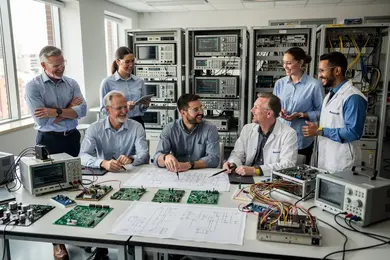
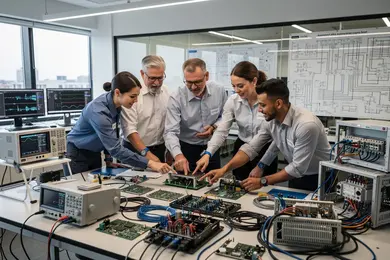
Electrical engineers design, test, improve, and troubleshoot systems that use electricity, electronics, electromagnetics, and control logic. In traditional terms, that can mean circuits, motors, power distribution, signals, sensors, or communication systems. In fast-growing industries, it increasingly means connecting hardware with software, data, cybersecurity, and automated decision-making.
The same electrical engineering foundation can lead to very different daily work depending on the sector. The table below shows how responsibilities differ across energy, semiconductors, and automation so readers can match their interests to realistic job functions.
| Sector | Common responsibilities | Roles that may fit | Best fit for students who enjoy |
| Energy and power systems | Designing substations, modeling power flow, integrating renewable energy, improving grid reliability, testing protective relays, and supporting electrification projects | Power systems engineer, protection and controls engineer, renewable energy engineer, utility electrical engineer | Large infrastructure, physics-based systems, field work, reliability, and public-impact engineering |
| Semiconductors and electronics | Designing circuits, validating chips, improving fabrication tools, testing electronics, analyzing signal integrity, and supporting manufacturing yield | Analog design engineer, semiconductor process engineer, validation engineer, product test engineer, hardware engineer | Microelectronics, device physics, precision testing, cleanroom environments, and advanced computing hardware |
| Automation and robotics | Programming controllers, designing sensor and actuator systems, integrating drives, improving factory controls, and connecting equipment to industrial networks | Controls engineer, robotics electrical engineer, automation engineer, mechatronics engineer, instrumentation engineer | Hands-on troubleshooting, manufacturing systems, software-hardware integration, and measurable process improvement |
A practical way to think about the field is this: energy roles often scale electricity across cities and facilities, semiconductor roles miniaturize and optimize electronics, and automation roles make machines act precisely and reliably. All three sectors need engineers who can move between theory, simulation, lab testing, documentation, and cross-functional teamwork.
Students should also understand the difference between electrical engineering and adjacent fields. Computer engineering usually leans more toward processors, embedded computing, and digital systems.
Mechanical engineering covers machines, fluids, structures, and thermal systems. Data science focuses on extracting insight from data; students more interested in analytics than circuits may want to compare engineering with a data scientist degree before committing to a hardware-heavy pathway.
What education and skills are required to start a career in electrical engineering?
Most entry-level electrical engineering jobs require at least a bachelor's degree in electrical engineering, electrical and computer engineering, or a closely related ABET-accredited engineering field. Technician roles may be available with an associate degree, but design engineering, power systems analysis, semiconductor validation, and controls engineering typically expect deeper math, physics, and engineering design preparation.
The required skill set is broad because modern electrical engineers work across physical systems and digital tools. The following list groups the most important competencies students should build before applying for internships or full-time roles:
- Math and science foundation: Calculus, differential equations, linear algebra, physics, electromagnetics, and probability help students understand why systems behave the way they do.
- Circuit and electronics knowledge: Employers expect familiarity with analog circuits, digital logic, power electronics, signal processing, sensors, and instrumentation.
- Software and simulation ability: MATLAB, Python, C/C++, SPICE tools, CAD tools, PLC programming, and hardware description languages can make graduates more competitive.
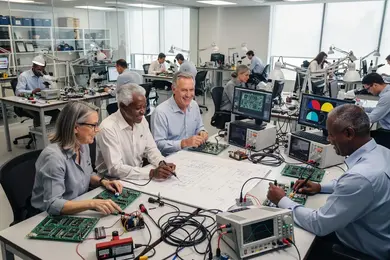
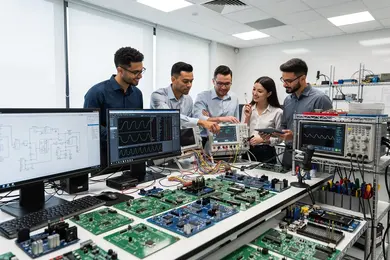
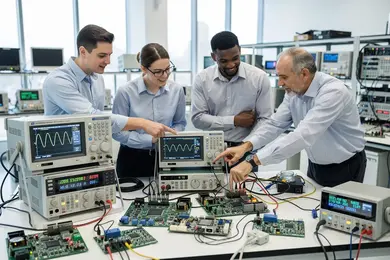
- Lab and testing skills: Engineers must know how to use oscilloscopes, multimeters, spectrum analyzers, data acquisition systems, and test plans safely and accurately.
- Communication and documentation: Design reviews, compliance records, test reports, and safety documentation matter because engineering decisions affect cost, reliability, and risk.
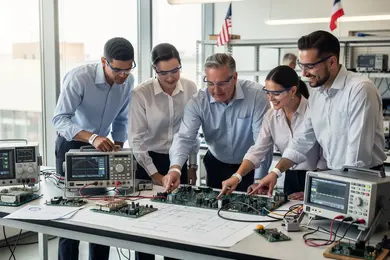
Students who want the strongest start should prioritize internships, undergraduate research, design teams, co-ops, and project portfolios. A transcript shows preparation, but a tested inverter, robot, PCB, relay coordination study, or embedded control project gives employers evidence that a student can apply engineering concepts.
Electrical engineering is demanding, so it is worth checking personal fit early. Students who dislike advanced math, debugging, lab work, or long design cycles may be happier in a related field. For example, learners drawn to human movement, biomechanics, and health technology rather than power, circuits, or embedded systems might compare engineering programs with exercise science degrees before choosing a major.
How strong is the job outlook for electrical engineers in energy, semiconductors, and automation?
The job outlook is solid, but it is not evenly distributed across every employer or region. The BLS projection of 9% growth for electrical and electronics engineers from 2023 to 2033 suggests a stronger market than many occupations, especially for candidates who can support electrification, chip production, automation, defense systems, and complex embedded hardware.
The strongest opportunities tend to appear where public investment, private capital, and technical bottlenecks overlap. In energy, utilities and engineering firms need talent for grid modernization, renewable integration, battery storage, transmission upgrades, electric vehicle charging, and power quality.
In semiconductors, U.S. fabrication expansion and supply-chain resilience efforts are increasing attention on chip design, process engineering, equipment engineering, and test engineering. In automation, manufacturers need controls and robotics talent to improve productivity, safety, traceability, and uptime.
The table below summarizes where demand is likely to be most visible for early-career and mid-career electrical engineers. It is not a guarantee of hiring in every location, but it can help students choose internships, electives, and geographic targets.
| Growth area | Why demand is rising | Useful preparation | Common hiring environments |
| Grid modernization | Aging infrastructure, renewable integration, resilience planning, and increased electricity demand | Power systems, protection, power electronics, energy storage, utility software | Utilities, engineering consulting firms, renewable developers, public agencies |
| Semiconductor expansion | Domestic chip investment, advanced manufacturing, AI hardware demand, and supply-chain risk management | Microelectronics, semiconductor devices, cleanroom processes, test engineering, statistics | Chip manufacturers, equipment suppliers, electronics firms, research labs |
| Industrial automation | Labor constraints, reshoring, quality control, robotics adoption, and connected manufacturing systems | Controls, PLCs, robotics, sensors, industrial networking, safety systems | Manufacturers, systems integrators, robotics firms, process industries |
| Embedded and intelligent systems | More products now include sensors, processors, connectivity, and software-controlled features | Embedded C/C++, digital logic, signal processing, real-time systems, cybersecurity basics | Automotive, aerospace, medical devices, consumer electronics, defense contractors |
Readers should treat the outlook as a signal to specialize, not as a reason to enroll anywhere quickly. The best job prospects usually go to candidates who combine an accredited degree with internships, relevant tools, and projects that match the sector they want to enter.
What degree pathways prepare you for specialized electrical engineering roles in these sectors?
The right degree pathway depends on whether the reader is entering college for the first time, transferring from a technician role, changing careers, or trying to move into advanced design or leadership. A bachelor's degree is the standard engineering entry point, while a master's degree can help with specialization in power electronics, integrated circuits, control systems, robotics, signal processing, or communications.
The table below compares common academic routes. It can help students avoid overpaying for credentials that are too broad, too advanced, or not aligned with the role they want.
| Pathway | Typical purpose | Best for | Limitations to check |
| Associate degree in electrical engineering technology | Prepares students for technician, test, maintenance, or transfer pathways | Students seeking lower-cost entry, hands-on labs, or a bridge to a bachelor's program | May not qualify graduates for engineering design roles without further education |
| Bachelor's in electrical engineering | Provides the core engineering foundation for entry-level engineering jobs | Students targeting power, electronics, controls, robotics, semiconductors, or embedded systems | ABET accreditation, lab access, and internship support are especially important |
| Bachelor's in electrical engineering technology | Emphasizes applied systems, implementation, testing, and troubleshooting | Students who prefer hands-on applied engineering and field-oriented roles | Some employers and PE licensing boards may treat technology degrees differently |
| Master's in electrical engineering | Builds advanced technical depth or supports career change for qualified STEM graduates | Engineers targeting specialized design, R&D, senior technical roles, or graduate-level focus areas | Requires strong prerequisites; ROI depends heavily on employer demand and specialization |
| Graduate certificate | Adds focused skill development in areas such as power systems, controls, or embedded systems | Working engineers who need targeted upskilling without a full degree | Usually not a substitute for an accredited bachelor's degree for entry-level engineering jobs |
Students with a bachelor's degree in engineering, physics, computer science, or a related field may use graduate study to pivot into a specialized electrical engineering area. An online master's in electrical engineering degree can make sense for working professionals who need advanced coursework without leaving a full-time job, as long as the program's labs, faculty expertise, and course options match the target role.
A common mistake is choosing the highest-level credential before clarifying the job target. A master's can be valuable, but it may not replace missing undergraduate fundamentals in circuits, signals, electromagnetics, and labs. Before enrolling, students should compare job postings in their target region and note whether employers ask for a bachelor's degree, graduate degree, specific tools, security clearance, PE eligibility, or industry experience.
How do online electrical engineering programs compare to campus-based options for career readiness?
Online electrical engineering programs can be career-relevant, especially at the graduate level, but they are not automatically equivalent for every learner or every specialization. The main question is not whether a program is online or campus-based. The better question is whether it provides accredited coursework, credible labs, faculty depth, advising, employer connections, and enough project work to prove technical ability.
The comparison below highlights where online and campus-based formats tend to differ. Use it to evaluate delivery format based on career readiness, not convenience alone.
| Factor | Online programs | Campus-based programs | Decision point |
| Lab experience | May use remote labs, simulation, mailed kits, short residencies, or local lab arrangements | Usually provides direct access to circuits labs, cleanrooms, robotics labs, and faculty-supervised equipment | Choose the format that gives enough hands-on evidence for your target role |
| Flexibility | Often better for working adults, military students, and part-time learners | Often better for students who can study full time and use campus resources daily | Flexibility should not come at the cost of missing required labs or prerequisites |
| Networking | May rely on virtual advising, online teams, employer webinars, and local internships | Often offers easier access to clubs, labs, career fairs, and research groups | Online students should ask how the school supports internships and projects remotely |
| Specialization | Graduate online programs may offer strong advanced coursework in power, controls, or signal processing | Campus options may be stronger for cleanroom, hardware fabrication, robotics, or intensive lab-based tracks | Match delivery format to the equipment and mentorship your specialization requires |
Online study is often strongest for working engineers pursuing a master's degree, students with access to employer labs, or learners focused on simulation-heavy topics such as power systems analysis, signal processing, or control theory. Campus study may be better for first-time undergraduates who need structured labs, close faculty contact, design teams, and early career networking.
Students comparing online programs should also look beyond engineering if they are still deciding how much technical hardware work they want. For example, a learner more interested in digital information systems, data organization, or public-sector knowledge management may find an online MLIS more aligned than an engineering graduate degree, especially if they do not want advanced math, lab work, or engineering design responsibility.
What core courses and technical focus areas should an electrical engineering program include?
A strong electrical engineering program should combine fundamentals, design practice, computing, labs, and specialization options. Students should be cautious of programs that appear convenient but have thin lab requirements, limited engineering faculty, or too few advanced electives in the area they want to enter.
The following course areas matter because they form the foundation for energy, semiconductor, and automation roles. Students do not need every advanced elective, but they should see enough depth to support their target specialization.
- Engineering math and physics: Calculus, differential equations, linear algebra, probability, electromagnetics, and mechanics-related fundamentals.
- Circuits and electronics: Circuit analysis, analog electronics, digital logic, microelectronics, semiconductor devices, and measurement techniques.
- Signals and systems: Signal processing, communications, control systems, feedback, filtering, and system modeling.
- Power and energy: Power systems, power electronics, machines, renewable energy systems, smart grids, and protection.
- Computing and embedded systems: Programming, microcontrollers, FPGA or HDL concepts, real-time systems, software-hardware integration, and cybersecurity basics.
- Automation and robotics: Sensors, actuators, PLCs, industrial control, robotics, instrumentation, and safety systems.
- Engineering design: Team-based design projects, capstone work, documentation, ethics, standards, testing, and cost-aware decision-making.
Students targeting power systems should look for courses in power flow, protection, high-voltage systems, and power electronics. Students targeting semiconductors should prioritize microelectronics, device physics, VLSI, fabrication concepts, cleanroom access if available, and statistical process control. Students targeting automation should look for controls, robotics, industrial networks, instrumentation, and hands-on PLC or embedded systems work.
AI is also changing expectations. Electrical engineers are not being replaced by AI tools, but employers increasingly value engineers who can use simulation, automated testing, data analysis, and model-based design responsibly. The best programs teach students to verify results, understand physical constraints, and document assumptions rather than treating software output as automatically correct.
What are typical admission requirements, program length, and costs for electrical engineering degrees?
Electrical engineering admissions vary by institution, but competitive programs usually expect strong preparation in math and science. Bachelor's applicants may need high school calculus or precalculus readiness, lab science courses, transcripts, test scores if required, essays, and sometimes direct admission into an engineering college. Transfer and graduate applicants should check prerequisite course rules carefully because missing calculus, physics, circuits, or programming can delay graduation.
Program length depends on credential type and enrollment pace. The table below summarizes typical timelines and cost considerations so students can compare practical commitment before applying.
| Credential | Typical length | Common admission expectations | Cost factors to compare |
| Associate degree or pre-engineering transfer pathway | About 2 years full time | High school diploma or equivalent, placement into college math, and science readiness | Community college tuition, transferability, lab fees, books, transportation, and articulation agreements |
| Bachelor's in electrical engineering | About 4 years full time | Strong math and science background, engineering admission requirements, and progression standards | Tuition, fees, housing, lab fees, summer courses, co-op effects, and time to degree |
| Master's in electrical engineering | About 1.5 to 3 years depending on pace | Bachelor's degree, engineering prerequisites, transcripts, recommendations, statement of purpose, and sometimes GRE scores | Graduate tuition, employer tuition assistance, online fees, course load, and opportunity cost |
| Graduate certificate | Often less than 1 year to 18 months | Bachelor's degree and technical prerequisites related to the certificate topic | Per-credit tuition, whether credits transfer to a master's, and employer reimbursement rules |
Cost can vary widely by residency, institution, delivery format, and how long a student takes to finish. College Board's 2024 Trends in College Pricing reported average published tuition and fees of $11,610 for in-state students at public four-year institutions and $43,350 at private nonprofit four-year institutions for 2024-25. Those figures are not engineering-specific and do not include every living or lab cost, but they show why residency status, transfer credits, scholarships, and time to completion matter for ROI.
Students should estimate total cost before enrolling, not just first-year tuition. A practical cost review should include the following items because engineering programs can add expenses beyond standard tuition:
- Tuition and mandatory university fees for the full expected program length
- Engineering, lab, technology, software, and equipment fees
- Housing, commuting, parking, meals, and relocation costs
- Books, calculators, computing hardware, lab kits, and simulation software access
- Lost wages or reduced work hours during full-time study or intensive labs
- Scholarships, grants, employer tuition assistance, military benefits, and paid co-op income
A common mistake is assuming the cheapest advertised tuition is always the lowest-cost pathway. A slightly more expensive program with stronger transfer credit, paid co-ops, high course availability, and better lab access may reduce delays and improve career readiness. Conversely, a prestigious program may not justify extra debt if it lacks the specialization, location, or employer connections the student needs.
What salary ranges can electrical engineers expect in energy, semiconductor, and automation fields?
Electrical engineering can offer strong earnings, but salary should be interpreted carefully. Pay depends on location, industry, job level, degree, clearance, overtime policies, union environment, employer type, and whether the role is design-focused, field-focused, manufacturing-focused, or research-oriented. The BLS reported a May 2024 median annual wage of $111,910 for electrical engineers, which provides a useful national benchmark but not a personal salary prediction.
The table below explains how salary expectations often differ by sector and role type. It avoids presenting pay as guaranteed because individual offers can vary substantially.
| Career area | Typical salary drivers | Why pay may rise | Why pay may be lower at entry level |
| Energy and power systems | Utility experience, PE eligibility, protection and controls expertise, field responsibility, and grid software skills | Critical infrastructure work, reliability responsibility, and licensure pathways can increase value | New graduates may start in rotational, field, or assistant engineer roles while building experience |
| Semiconductors and electronics | Chip design skills, validation experience, fabrication process knowledge, graduate education, and specialized tools | Advanced technical specialization and high-value manufacturing environments can support higher compensation | Technician-adjacent or production support roles may pay differently than design or R&D roles |
| Automation and controls | PLC and robotics skills, travel requirements, commissioning experience, safety knowledge, and industry domain expertise | Engineers who can reduce downtime and improve throughput create measurable business value | Some entry roles begin with installation, documentation, or support tasks before higher-level systems design |
| Embedded systems and hardware | Firmware ability, digital logic, board-level design, testing, cybersecurity awareness, and product lifecycle experience | Engineers who bridge hardware and software can be valuable in product-driven industries | Employers may expect a portfolio, internships, or demonstrated coding ability before offering advanced work |
Students should use salary data as one input in a broader decision. A higher-paying specialization may require more graduate study, longer hours, travel, security clearance, relocation, or intense technical competition. A lower initial salary may still be reasonable if the role provides strong mentorship, PE experience, tuition assistance, or exposure to valuable systems.
To evaluate ROI, compare expected debt against realistic entry-level roles in your target region, not only national median pay. Look at job postings, ask programs for career outcome data, and consider whether the curriculum leads to internships in the industries you actually want.
Are licenses, certifications, or professional engineer (PE) credentials needed in electrical engineering?
Licensure is not required for every electrical engineering job, but it matters in roles where engineers offer services to the public, sign and seal engineering documents, supervise regulated infrastructure work, or advance in utility and consulting environments. The professional engineer, or PE, pathway is especially relevant for power systems, building systems, protection, and consulting roles.
The licensing process varies by state board, so students should confirm rules where they plan to work. In general, the PE pathway commonly includes these steps:
- Earn an engineering degree that satisfies the state board's education requirements, often with ABET accreditation preferred or required.
- Pass the Fundamentals of Engineering exam to become an engineer intern or engineer-in-training, depending on state terminology.
- Complete the required supervised engineering experience under qualified professionals.
- Pass the PE exam in an appropriate discipline, such as electrical and computer engineering with a power focus.
- Maintain licensure through renewal and continuing education when required by the state board.
Certifications can also help, but they should support a specific career target. Automation candidates may benefit from PLC, robotics, safety, or vendor training. Power engineers may pursue training in protective relays, power systems software, electrical safety, or project management. Semiconductor candidates may value cleanroom safety, statistical process control, reliability, or tool-specific training, though employer-sponsored training is common.
A frequent mistake is collecting certifications without a clear role strategy. A certificate is most useful when it proves a tool or safety skill that appears in job postings. It is less useful when it distracts from finishing an accredited degree, gaining internship experience, or building a strong engineering portfolio.
How can students evaluate and choose an accredited, reputable electrical engineering school or program?
The safest way to evaluate an electrical engineering program is to start with accreditation, curriculum, outcomes, and fit. For U.S. engineering degrees, ABET accreditation is a key quality marker because many employers, graduate schools, and licensing boards recognize it. Students should verify accreditation directly through ABET or the institution's official accreditation page rather than relying only on marketing language.
Use the following questions when comparing schools:
- Is the electrical engineering or electrical engineering technology program ABET-accredited, and does that accreditation apply to the exact campus or online format?
- Which concentrations, electives, labs, and faculty research areas match energy, semiconductors, automation, robotics, or embedded systems?
- What percentage of required courses are offered often enough to avoid delayed graduation?
- How does the program support internships, co-ops, senior design, undergraduate research, and employer networking?
- What are the total estimated costs, including fees, equipment, housing, commuting, and extra semesters?
- How many transfer credits will apply to the engineering major, not just general education?
- What career outcomes does the school publish, and are they specific to electrical engineering graduates?
- For online programs, how are labs, exams, team projects, advising, and technical support delivered?
The table below summarizes common red flags and better alternatives. It can help readers avoid decisions that look convenient at first but create problems later.
| Red flag | Why it matters | Better approach |
| No clear ABET status for the specific program | It may affect employment options, transfer, graduate admission, or PE eligibility | Verify accreditation for the exact degree name and delivery location |
| Limited labs or unclear remote lab requirements | Electrical engineering is a hands-on field, especially for circuits, controls, and hardware roles | Ask for sample lab syllabi, equipment lists, and residency requirements |
| Few advanced electives in the target specialization | A general curriculum may not prepare students for power, semiconductors, or automation roles | Compare electives with job postings and faculty expertise |
| Career outcomes reported only at the university level | Institution-wide outcomes may hide weak engineering placement | Request engineering-specific internship, co-op, employment, and graduate school data |
| Low tuition but poor transfer or course availability | Delayed graduation can increase total cost | Calculate total time to degree and confirm course rotations before enrolling |
Students should also compare engineering with other fields if their interests are still broad. Research.com publishes program guides across many disciplines, and comparing unrelated options can clarify whether a student wants hardware-intensive engineering, analytics, health science, information science, or another path before taking on a demanding technical curriculum.
Other Things You Should Know About Electrical Engineering Degrees
In 2027, roles such as renewable energy systems engineer, semiconductor process engineer, and automation controls engineer are highly sought after, driven by advancements in sustainable technologies, semiconductor innovation, and industrial automation solutions.
Some people enter technician, testing, drafting, or automation support roles without a full engineering degree, especially with strong hands-on experience. However, most roles with the title electrical engineer require a bachelor's degree in electrical engineering or a closely related engineering field.
The most useful credentials are the Fundamentals of Engineering exam, the Professional Engineer license, and vendor certifications such as Siemens TIA Portal or Rockwell Automation Studio 5000. For power work, IEEE training and NERC-related coursework can also help employers verify grid and controls knowledge.
Yes, at least at a practical level. Many electrical engineers use coding for simulation, data analysis, automation, embedded systems, test scripts, and hardware control. Python, MATLAB, C, and C++ are especially useful depending on the role.
References
- Electrical Engineering Careers in the Semiconductor and Datacenter Sectors - LotusWorks https://lotusworks.com/electrical-engineering-careers/
- Electrical Engineering Salary Guide 2026 https://turn2engineering.com/electrical-engineering/electrical-engineering-salary
- Power electronics job market: No boom, but solid https://pcim.mesago.com/nuernberg/en/pcim-insights/pcim-magazine/power-electronics-job-market-no-boom-but-solid.html
- Top Electrical Engineering Schools Ranked for 2025 - Delta Wye Electric https://deltawye.com/top-electrical-engineering-schools/
- What is a PE? https://www.nspe.org/about/about-professional-engineering/what-pe
- Best Engineering Colleges by Academics and Value https://www.road2college.com/top-engineering-schools/