2027 Electrical Engineering Careers Most Resilient to AI and Automation

Co-Founder and Chief Data Scientist
Choosing an electrical engineering path now means asking which work will stay valuable as AI handles more design, coding, and documentation. The U.S. Bureau of Labor Statistics projects 9% employment growth for electrical and electronics engineers from 2023 to 2033, with 2024 median pay of $118,780.
This guide is for students, career changers, and working engineers who want durable roles. You will learn which specialties resist automation, what degree and accreditation matter, and how to build a career plan with better long-term flexibility.
Key Things You Should Know
- The most AI-resilient electrical engineering roles combine digital tools with physical infrastructure, safety accountability, field constraints, regulation, and cross-functional decision-making.
- BLS data shows electrical and electronics engineers had $118,780 in median annual pay in 2024 and projected employment growth of 9% from 2023 to 2033.
- An ABET-accredited bachelor's degree is the safest baseline for licensure, power systems, controls, defense, utilities, hardware, and other roles where employers need verified engineering preparation.
What electrical engineering jobs are most resilient to AI and automation?
The electrical engineering jobs most resilient to AI and automation are those where software is only part of the work. These roles require engineers to understand physical systems, safety margins, equipment behavior, codes, customer constraints, and unpredictable field conditions. AI can assist with calculations, simulations, schematics, test scripts, and documentation, but it cannot independently take responsibility for a substation, medical device, aircraft component, manufacturing line, or safety-critical embedded system.
Resilience does not mean these jobs will avoid AI. It means the engineer who uses AI well may become more productive, while the core judgment, accountability, and system-level responsibility remain difficult to automate. The table below compares electrical engineering roles by why they are harder to replace and what students should prioritize while preparing for them.
| Career path | Why it is relatively resilient | Best preparation focus |
| Power systems engineer | Work involves grid reliability, utility standards, physical equipment, regulatory constraints, and outage risk. | Power systems, protection, high-voltage engineering, energy markets, and field internships. |
| Control systems engineer | Automation still needs engineers who tune systems, diagnose plant behavior, and integrate sensors, drives, and safety logic. | Control theory, PLCs, robotics, instrumentation, process safety, and industrial networking. |
| Embedded systems engineer | Products depend on hardware-software interaction, timing constraints, sensors, power limits, and real-world testing. | Microcontrollers, C/C++, real-time systems, PCB fundamentals, testing, and cybersecurity basics. |
| RF and communications engineer | Signal behavior depends on physics, spectrum rules, antenna design, interference, and site-specific conditions. | Electromagnetics, antennas, wireless systems, signal processing, and lab measurement. |
| Electrical safety and compliance engineer | Employers need engineers who interpret standards, document risk, and support certification and audits. | Codes, standards, failure analysis, documentation, and product testing. |
| Hardware design engineer | AI can suggest circuits, but manufacturability, reliability, debugging, and trade-off decisions remain human-intensive. | Analog/digital design, PCB layout, signal integrity, lab instruments, and design reviews. |
The common theme is clear: the safer choice is not "avoid AI," but choose work where AI becomes a tool inside a larger engineering responsibility. If a role is mostly repetitive drafting, routine report writing, or isolated coding without domain knowledge, it is usually more exposed than a role tied to equipment, safety, testing, and accountable design decisions.
Which electrical engineering specialties face the least automation risk?
The specialties with the lowest automation risk tend to sit at the intersection of electricity, physics, infrastructure, hardware, regulation, and human safety. These areas are not immune to automation, but they require engineers to interpret messy real-world signals, make conservative decisions under uncertainty, and coordinate with technicians, operators, regulators, customers, and other engineers.
The table below helps compare specialties by the type of "human moat" they offer. Use it to match your interests with the kind of work environment you want, not just with a course title that sounds promising.
| Specialty | Automation-resilience factor | Good fit for students who like | Potential drawback |
| Power and energy systems | Critical infrastructure, grid reliability, field assets, and regulatory oversight. | Utilities, renewable integration, high-voltage equipment, and public-impact work. | May involve site visits, emergency response, or slower-moving regulated organizations. |
| Controls and automation | Industrial systems need safe integration, troubleshooting, and plant-specific judgment. | Robotics, manufacturing, mechatronics, and hands-on problem-solving. | Some roles require travel, shift support, or factory-floor troubleshooting. |
| Embedded and cyber-physical systems | Devices require hardware-software timing, reliability testing, and security awareness. | Programming, sensors, electronics, and product development. | Entry-level roles can be competitive without projects or internship evidence. |
| RF, microwave, and communications | Performance depends on electromagnetics, spectrum rules, testing, and environment. | Wireless systems, aerospace, defense, antennas, and lab measurement. | Advanced roles may prefer graduate coursework. |
| Electrical safety, reliability, and compliance | Human accountability matters because errors can create safety, legal, and financial risk. | Standards, product testing, risk analysis, and documentation. | Work can be detail-heavy and less design-centered than other paths. |
Students interested in climate, energy, and infrastructure may also compare electrical engineering with environmental pathways. For example, understanding what jobs can you get with an environmental science degree can clarify whether you want to solve sustainability problems through engineering design, environmental assessment, policy, field science, or compliance work.
What skills make electrical engineers harder to replace by AI?
The most durable electrical engineers are not just strong at math or software. They can translate ambiguous requirements into safe, testable, maintainable systems. AI can accelerate parts of the workflow, but employers still need people who can identify bad assumptions, validate outputs, and accept professional responsibility for decisions.
The skills below are especially valuable because they combine technical judgment with context that AI tools often lack. They also make it easier to move across industries if one market slows down.
- Systems thinking: Understand how power, signals, firmware, mechanical constraints, thermal limits, cost, safety, and user needs affect each other.
- Hands-on testing and debugging: Use oscilloscopes, power analyzers, spectrum analyzers, logic analyzers, and test plans to verify whether a design works outside a simulation.
- AI-assisted engineering judgment: Use AI for first drafts, code assistance, data review, and brainstorming, while independently checking assumptions, calculations, and safety implications.
- Safety and standards literacy: Learn how codes, product standards, documentation, and design controls shape engineering decisions in regulated or high-risk environments.
- Cross-functional communication: Explain trade-offs to technicians, software developers, project managers, customers, procurement teams, and nontechnical stakeholders.
- Cybersecurity awareness: Understand how connected devices, industrial controls, smart grids, and embedded products can be attacked or misconfigured.
- Economic decision-making: Compare reliability, maintainability, parts availability, lifecycle cost, and schedule risk rather than optimizing only for technical elegance.
A common mistake is treating AI tools as a substitute for fundamentals. A better approach is to use AI to move faster on routine work, then spend the saved time on validation, lab work, design reviews, and field learning. Engineers who can challenge AI-generated answers will be more useful than engineers who simply copy them.
Which electrical engineering degree should you choose for this career path?
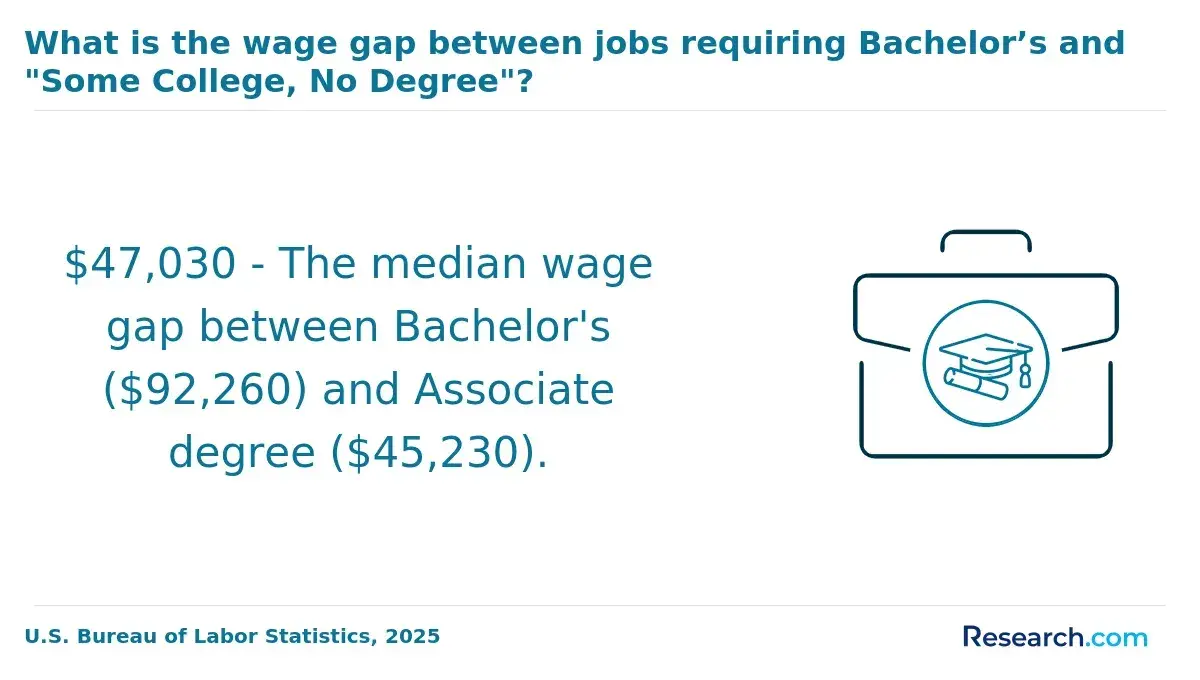
For most AI-resilient electrical engineering careers, the best starting point is a bachelor's degree in electrical engineering, electrical and computer engineering, or a closely related ABET-accredited engineering program. Associate degrees and certificates can support technician or technologist roles, but they usually do not substitute for an engineering degree when employers require design authority, licensure eligibility, or advanced technical responsibility.
Cost matters because electrical engineering can require four or more years of study, lab fees, software, hardware kits, and time away from full-time work. College Board's 2024 pricing data lists average published tuition and fees for 2024-25 at $11,610 for in-state public four-year colleges, $30,780 for out-of-state public four-year colleges, and $43,350 for private nonprofit four-year colleges. These figures do not determine your final net price, but they show why scholarships, transfer credits, employer tuition support, and residency status can change the return on investment.
The table below compares degree options by career fit. It is especially useful if you are deciding whether to start with a lower-cost credential, transfer later, or go directly into a four-year engineering program.
| Credential | Typical fit | Best for | Limitations to check |
| Associate degree in electrical engineering technology | Technician, testing, maintenance, drafting, or transfer pathway. | Students seeking lower upfront cost or hands-on entry-level work. | May not meet engineering licensure or design engineer requirements. |
| Bachelor's in electrical engineering | Standard route for design, power, controls, embedded systems, RF, and hardware roles. | Students aiming for long-term engineering mobility and licensure eligibility. | Requires strong math, physics, labs, and multi-year commitment. |
| Bachelor's in electrical and computer engineering | Blends circuits, embedded systems, computer architecture, and software. | Students targeting cyber-physical systems, hardware, firmware, or robotics. | May include less power engineering unless electives are chosen carefully. |
| Master's in electrical engineering | Advanced specialization in power, RF, signal processing, controls, or electronics. | Working engineers seeking deeper technical roles or research-oriented positions. | Usually most valuable when tied to a clear specialty or employer need. |
| Graduate certificate | Focused upskilling in power systems, embedded systems, controls, or cybersecurity. | Engineers who already have a technical degree and need targeted knowledge. | May not replace a full degree for career changers without engineering foundations. |
If affordability is your main barrier, compare total cost rather than tuition alone. A cheapest online electrical engineering degree search should still include accreditation, lab access, transfer policy, graduation support, and whether the program aligns with the roles you want.
What accreditation should an electrical engineering program have?
The most important accreditation for an electrical engineering bachelor's program is ABET accreditation, specifically through ABET's Engineering Accreditation Commission for engineering degrees. ABET accreditation signals that the program has met recognized standards for curriculum, faculty, student outcomes, assessment, and continuous improvement. It is especially important if you may pursue Professional Engineer licensure, work in public infrastructure, join a regulated industry, or apply to employers that screen for accredited engineering degrees.
Institutional accreditation also matters. The college or university should be accredited by an agency recognized by the U.S. Department of Education or the Council for Higher Education Accreditation. Institutional accreditation affects federal financial aid eligibility, transferability, graduate school admission, and employer acceptance.
Before enrolling, take these steps to avoid a costly accreditation mistake:
- Search the ABET database for the exact program name, campus, degree level, and delivery format.
- Confirm whether the degree is "electrical engineering," "electrical engineering technology," or another title, because these can lead to different employer and licensure outcomes.
- Ask the school whether online, hybrid, extension, or satellite versions of the program carry the same accreditation status as the main campus program.
- Check your state engineering board's education rules if you may eventually pursue Engineer in Training or Professional Engineer credentials.
- Request written clarification from admissions or the department if marketing language is unclear.
A major red flag is a program that says it is "aligned with ABET standards" but is not actually ABET-accredited. Alignment language may reflect curriculum intent, but it is not the same as accreditation. If your goal is a resilient engineering career with maximum mobility, verified accreditation is worth checking before you compare rankings, price, or speed.
Should you choose an online or campus electrical engineering program?
Online electrical engineering programs can work well for disciplined students, working adults, military learners, and transfer students who need flexibility. Campus programs may be better for students who want frequent lab access, research opportunities, clubs, design teams, and face-to-face recruiting. The right choice depends less on format and more on accreditation, lab quality, student support, and fit with your target specialty.
Electrical engineering is more lab-intensive than many online-friendly majors, so you should look closely at how a program handles circuits, electronics, embedded systems, power labs, controls labs, and senior design. Online quality varies across disciplines; reviewing how schools structure other professional online programs, such as best library science programs, can also help you notice the importance of accreditation, field experience, and student support in distance learning.
The table below summarizes the practical trade-offs. Use it as a screening tool before speaking with admissions advisors.
| Decision factor | Online program | Campus program |
| Flexibility | Often better for working adults and students with fixed schedules. | Less flexible but easier to structure around labs and team projects. |
| Labs | May use remote labs, lab kits, intensives, or partner sites. | Usually offers direct access to equipment, faculty, and lab staff. |
| Networking | Requires more intentional effort through virtual events, internships, and local industry groups. | Often stronger for student teams, faculty research, career fairs, and peer networks. |
| Cost control | Can reduce relocation and commuting costs, but fees and lab requirements vary. | May provide stronger access to facilities but can add housing and transportation costs. |
| Best fit | Self-directed learners with transfer credits or work experience. | Students who benefit from structure, hands-on access, and in-person mentoring. |
Ask schools direct questions before enrolling. Strong programs should be able to explain how students complete lab work, how often they interact with faculty, whether senior design includes real engineering constraints, and which employers recruit graduates. Be cautious if a program emphasizes speed but gives vague answers about equipment, accreditation, internship support, or engineering career outcomes.
What coursework prepares electrical engineers for AI-resistant roles?
The most useful coursework for AI-resistant electrical engineering roles builds a bridge between theory, physical systems, software, safety, and design validation. You do not need to specialize immediately, but you should use electives, projects, and internships to move toward power, controls, embedded systems, RF, hardware, or reliability work.
Prioritize courses that force you to test, model, troubleshoot, and defend engineering decisions. The following course areas are especially valuable because they support roles where human judgment remains central.
- Circuit analysis and electronics: Builds the foundation for understanding devices, signals, power behavior, and hardware debugging.
- Signals and systems: Supports communications, controls, signal processing, instrumentation, and sensing applications.
- Electromagnetics: Essential for RF, antennas, transmission lines, power equipment, and high-speed design.
- Power systems and machines: Prepares students for utilities, renewables, grid modernization, motor drives, and protection work.
- Control systems: Helps engineers design and tune systems used in manufacturing, robotics, aerospace, energy, and automation.
- Embedded systems and microcontrollers: Connects electronics with firmware, sensors, actuators, timing, and product behavior.
- Digital systems and computer architecture: Strengthens preparation for hardware, FPGA, real-time, and cyber-physical roles.
- Engineering statistics and reliability: Supports test planning, quality control, failure analysis, and risk-based design.
- Cybersecurity for engineers: Adds value in smart grids, industrial controls, connected devices, and defense-related systems.
- Capstone design: Shows employers that you can work in teams, manage constraints, document decisions, and produce a tested result.
Do not choose electives only because they sound trendy. A better strategy is to build a coherent profile: for example, power plus protection plus renewable integration, or embedded systems plus controls plus cybersecurity. Employers often respond more strongly to a clear project portfolio than to a transcript filled with unrelated advanced topics.
What licenses and certifications can strengthen electrical engineering careers?
Licenses and certifications can make an electrical engineering career more resilient by proving competence in areas where safety, standards, infrastructure, or specialized tools matter. They are not always required, and their value varies by state, employer, and specialty. The key is to pursue credentials that match the work you actually want to do.
The most important licensure path for many infrastructure-oriented engineers is the Professional Engineer pathway. It commonly starts with passing the Fundamentals of Engineering exam, earning Engineer in Training or Engineer Intern status depending on the state, gaining supervised experience, and later passing the Principles and Practice of Engineering exam. Requirements vary, so always verify rules with the state board where you plan to practice.
The table below explains common credentials and when they are most useful.
| Credential | Best aligned with | Why it may help |
| Fundamentals of Engineering exam | Students or recent graduates considering licensure. | Shows progress toward professional engineering credentials and can help in utilities, consulting, and public infrastructure. |
| Professional Engineer license | Power, consulting, public works, facilities, and safety-critical infrastructure. | Can support signing authority, higher responsibility, and credibility in regulated engineering work. |
| Certified Automation Professional | Controls, industrial automation, and process industries. | Signals knowledge of automation systems, instrumentation, and control practices. |
| Project Management Professional | Engineers moving into technical leadership or program management. | Useful when leading schedules, budgets, suppliers, and cross-functional engineering teams. |
| Vendor or platform certifications | PLC, industrial networks, cloud-connected IoT, cybersecurity, or EDA tools. | Can support roles that depend on specific systems, but should not replace fundamentals. |
| Cybersecurity certifications | Embedded systems, industrial controls, smart grid, and connected products. | Helpful when paired with engineering domain knowledge rather than pursued in isolation. |
A common mistake is collecting credentials without a career target. Before paying for an exam or certificate, look at job postings in your preferred specialty and region. If employers repeatedly ask for PE licensure, PLC experience, power system studies, cybersecurity knowledge, or project management, then a credential may have practical value. If not, a strong project, internship, or lab portfolio may be a better investment.
What jobs can electrical engineering graduates pursue in these specialties?
Electrical engineering graduates can pursue roles across utilities, manufacturing, aerospace, defense, telecommunications, semiconductors, medical devices, automotive systems, renewable energy, consumer electronics, consulting, and government. The best job for you depends on whether you prefer field work, design, programming, lab testing, operations, customer-facing engineering, or long-term research and development.
The table below connects resilient specialties with job titles and typical responsibilities. Titles vary by employer, so focus on the responsibility pattern rather than the exact wording.
| Specialty area | Possible job titles | Typical responsibilities |
| Power and energy | Power systems engineer, protection engineer, substation engineer, renewable energy engineer. | Analyze grid performance, design electrical infrastructure, evaluate faults, support reliability, and coordinate with utilities or contractors. |
| Controls and automation | Controls engineer, automation engineer, robotics engineer, instrumentation engineer. | Program and tune control systems, integrate sensors and actuators, troubleshoot production equipment, and improve safety and uptime. |
| Embedded systems | Embedded systems engineer, firmware engineer, IoT hardware engineer, test engineer. | Develop firmware, integrate electronics with software, test devices, debug timing issues, and support connected products. |
| RF and communications | RF engineer, antenna engineer, wireless systems engineer, signal integrity engineer. | Design and test wireless systems, evaluate interference, model signal behavior, and validate performance using lab or field measurements. |
| Hardware and electronics | Hardware design engineer, PCB engineer, analog design engineer, electronics test engineer. | Design circuits, review layouts, build prototypes, run validation tests, and resolve manufacturability or reliability issues. |
| Safety, reliability, and compliance | Reliability engineer, compliance engineer, electrical safety engineer, quality engineer. | Analyze failures, document risk, support audits, interpret standards, and improve product or infrastructure safety. |
Some students discover that their interests overlap with adjacent fields such as environmental compliance, public infrastructure, data systems, or safety. In those cases, compare job duties carefully before changing majors. Electrical engineering is usually stronger for designing and validating technical systems, while environmental science, policy, or information-focused degrees may lead to different kinds of impact.
What salary and job outlook can electrical engineers expect?
Salary and job outlook for electrical engineers vary by industry, region, clearance requirements, experience, licensure, and specialty. The strongest compensation often appears in industries where electrical expertise affects product performance, safety, infrastructure reliability, or high-value hardware. However, no degree or specialty guarantees a particular income.
BLS reports that electrical and electronics engineers had a 2024 median annual wage of $118,780 and projected employment growth of 9% from 2023 to 2033. For readers, this suggests the occupation is not only relatively well paid but also positioned for continued demand as industries invest in electrification, automation, semiconductors, communications, defense systems, renewable energy, and connected devices.
The table below summarizes how to interpret the labor market, not as a promise, but as a planning tool for education and career decisions.
| Career factor | What it means for electrical engineers | How to use it in planning |
| Median pay | The 2024 median for electrical and electronics engineers was $118,780. | Use it as a national benchmark, then research local wages and target industries. |
| Projected growth | BLS projects 9% growth from 2023 to 2033. | Look for specialties tied to long-term investment rather than short-lived hiring spikes. |
| Industry variation | Pay may differ across utilities, manufacturing, aerospace, defense, consulting, and electronics. | Compare job postings by responsibility, required tools, travel, and advancement path. |
| Experience effect | Entry-level pay and senior engineering pay can differ substantially. | Build internships, projects, licensure progress, and specialty depth early. |
| Geography | High-cost regions may pay more but also require higher living expenses. | Evaluate net income, relocation cost, and hybrid or field expectations. |
When judging return on investment, apply the same discipline you would use for any graduate or professional degree decision: compare total cost, opportunity cost, credential value, and realistic career outcomes. The decision logic is similar to evaluating whether is a masters in library science worth it: the right answer depends on the specific role, market, cost, and advancement requirements, not the credential name alone.
To improve your odds of entering the stronger side of the market, build evidence before graduation. Complete internships or co-ops, document lab and design projects, learn tools used in your target field, practice technical interviews, and ask employers which credentials matter. Avoid assuming that "electrical engineering" by itself is specific enough; the graduates who can name a specialty and show proof of relevant work usually present a stronger case.
Other Things You Should Know About Electrical Engineering
Defense and aerospace roles in embedded systems, radar, avionics, and power electronics often require a Secret or Top Secret clearance. Employers commonly sponsor the process, but candidates must be U.S. citizens and pass a background investigation through DCSA before starting classified work.
Yes, at least at a practical level. Coding helps with data analysis, simulation, test automation, embedded systems, controls, and AI-assisted workflows. Python, C, C++, MATLAB, and scripting are commonly useful, but the best language depends on the specialty.
In 2027, electrical engineering careers focusing on power systems, renewable energy, and infrastructure management remain most resilient to AI and automation. These roles often require complex decision-making and problem-solving, skills that are still challenging for AI to fully replicate.
Yes. Internships and co-ops help students prove they can apply classroom knowledge to real equipment, teams, deadlines, and design constraints. They are especially valuable in AI-resilient specialties because employers want evidence of hands-on judgment, not only coursework.
References
- The Significance of Electrical Engineering Certification for Professional Advancement - CertLibrary Blog https://www.certlibrary.com/blog/the-significance-of-electrical-engineering-certification-for-professional-advancement/
- The 65 Jobs With the Lowest Risk of Automation by Artificial Intelligence and Robots - USCI https://www.uscareerinstitute.edu/blog/65-jobs-with-the-lowest-risk-of-automation-by-ai-and-robots
- How important is ABET accreditation for Electrical Engineering? https://talk.collegeconfidential.com/t/how-important-is-abet-accreditation-for-electrical-engineering/1941391
- Will Electrical Engineers be replaced by AI & Robots? https://willrobotstakemyjob.com/electrical-engineers
- Why Electrical Engineering Certification is Important for Your Career https://www.koenig-solutions.com/blog/electrical-engineering-certification
- Inside the Best Online Bachelor's in Electrical Engineering Degrees https://www.onlinecolleges.me/engineering-degrees/bachelors/electrical-engineering/
- Future-Proof Careers: Why Trades Are AI-Resistant Jobs https://www.accesstraininguk.co.uk/news/post/future-proof-careers-why-trades-are-ai-resistant-jobs
- Powering Your Future: Essential Skills & Certifications for Electrical Engineers in Renewable Energy - CalTek Staffing https://caltekstaffing.com/powering-future-essential-skills-certifications-electrical-engineers-renewable-energy/
- 10 High Paying Tech Jobs Safe From Artificial Intelligence https://motionrecruitment.com/blog/10-high-paying-tech-jobs-safe-from-artificial-intelligence
- Accreditation - ABET https://www.abet.org/accreditation/