2027 Online Electrical Engineering Degrees That Help Build Embedded Systems Skills

Co-Founder and Chief Data Scientist
Choosing an online electrical engineering degree for embedded systems means weighing flexibility, lab quality, accreditation, cost, and career payoff. It matters because the U. S. Bureau of Labor Statistics projects electrical and electronics engineering employment to grow 9% from 2023 to 2033, faster than the average for all occupations.
This guide is for students, career changers, and working technicians who want hardware-plus-software skills for connected devices, robotics, vehicles, and industrial systems. You'll learn how to compare programs, avoid weak options, and choose a path that fits your goals.
Key Things You Should Know
- ABET-accredited online electrical engineering programs are usually the safest choice for students who may pursue professional engineering licensure, graduate school, or hardware-focused roles.
- Published undergraduate tuition and fees for 2024-25 averaged $11,610 at public four-year in-state institutions and $43,350 at private nonprofit four-year institutions, so total cost can vary sharply by residency, transfer credit, and lab fees.
- Embedded systems roles often blend electrical engineering, computer engineering, and software development; BLS May 2024 wage data for related roles ranges from $118,780 for electrical and electronics engineers to $155,020 for computer hardware engineers.
What are online electrical engineering degrees for embedded systems?
Online electrical engineering degrees teach the theory and design methods behind circuits, electronics, signals, power, controls, and computing systems. When a program supports embedded systems, it also helps students learn how processors, sensors, firmware, real-time operating systems, and connected devices work together inside physical products.
An embedded system is a computer built into a larger device, such as a medical monitor, smart thermostat, drone, electric vehicle subsystem, industrial controller, or wearable sensor. Unlike general-purpose software, embedded work is constrained by power use, timing, memory, hardware interfaces, safety, and reliability. That is why the best degree fit is often electrical engineering or computer engineering, not only software development.
The table below compares common online degree options and how well they fit embedded systems goals. Use it to identify whether you need a broad engineering foundation, a hardware-heavy curriculum, or a faster upskilling route.
| Program type | Best fit | Embedded systems strengths | Limitations to check |
| Bachelor's in electrical engineering | First-time engineering students and transfer students | Circuits, electronics, signals, controls, electromagnetics, and design labs | May have fewer required programming or operating systems courses unless electives are available |
| Bachelor's in computer engineering | Students focused on digital hardware and firmware | Microprocessors, digital logic, computer architecture, embedded programming, and hardware-software integration | May offer less depth in power systems or analog electronics than electrical engineering |
| Master's in electrical or computer engineering | Engineers seeking specialization or advancement | Advanced embedded design, VLSI, signal processing, control systems, robotics, and IoT | Often requires prior engineering, math, or computing coursework |
| Graduate certificate | Working professionals who need targeted skills | Focused training in embedded software, FPGA design, sensors, or real-time systems | Usually not a substitute for an engineering degree in roles requiring a bachelor's |
Students who are drawn to robotics, manufacturing automation, or mechatronics should also compare the embedded systems path with a cheapest mechanical engineering degree online, especially if their interests lean more toward mechanisms, thermal systems, and physical product design than firmware or electronics.
This degree path makes the most sense if you want to design, test, or integrate devices that interact with the physical world. It may be a weaker fit if your main goal is web development, business analytics, or IT administration, where a computer science, data science, or information technology program may be more direct.
Which accreditation matters for online electrical engineering programs?
Accreditation is one of the most important filters when evaluating online electrical engineering degrees. It affects credit transfer, employer recognition, graduate school eligibility, federal financial aid access, and, in many cases, professional engineering licensure.
For engineering programs, the key programmatic accreditor is ABET. ABET accreditation signals that an engineering program has been reviewed against standards for curriculum, faculty qualifications, student outcomes, facilities, continuous improvement, and engineering design. Institutional accreditation also matters because it indicates that the college or university itself meets broader academic and administrative standards.
Before applying, verify the following items directly with the school and the accreditor, not only with advertisements or rankings:
- Confirm that the exact online electrical engineering or computer engineering program is ABET-accredited, not just the campus version or a different engineering major.
- Check whether the institution holds recognized institutional accreditation and participates in federal financial aid if you plan to use aid.
- Ask whether the program meets education requirements for the FE exam, PE licensure pathways, or graduate admission in your state or intended state of employment.
- Review how the school handles online labs, proctored exams, design projects, and any campus visits required for accreditation-supported learning outcomes.
A common mistake is assuming that "online" and "ABET-accredited" are automatically compatible. Some online engineering programs are accredited, but others are not, and some hybrid programs require short residencies or in-person labs. If your goal is software-first work and licensure is not important, comparing engineering with a cheapest online computer science degree can help you decide whether you truly need the engineering accreditation pathway.
Red flags include unclear accreditation language, missing program-level details, heavy reliance on vendor certificates instead of engineering coursework, and admissions staff who cannot explain lab requirements. Accreditation does not guarantee a job, but it reduces avoidable risk when you are investing in a technical degree.
How do online and campus electrical engineering programs compare?
Online and campus electrical engineering programs can cover similar academic content, but the learning experience differs in labs, scheduling, peer interaction, and access to equipment. NCES distance education data published in 2024 shows that online learning is now a mainstream part of U.S. higher education, which helps explain why more engineering schools are investing in remote labs, simulation tools, and hybrid delivery.
The table below summarizes the practical trade-offs. It is not about which format is universally better; it is about which format matches your schedule, learning style, and need for hands-on access.
| Factor | Online electrical engineering | Campus electrical engineering | Decision tip |
| Schedule | Often asynchronous or evening-friendly | Usually fixed class and lab times | Online is better for working adults; campus may suit students who want structure |
| Labs | Uses mailed kits, simulation software, remote instruments, or short residencies | Uses on-campus labs and supervised equipment | Ask for a sample lab list before enrolling |
| Networking | Depends on discussion boards, group projects, advising, and virtual events | Often easier to access clubs, labs, and faculty research | Online students should actively seek IEEE, robotics, or makerspace communities |
| Cost | May reduce relocation and commuting costs | May offer more campus-based assistantships or facilities access | Compare total cost, not tuition alone |
| Career preparation | Can work well with a strong portfolio and internships | May provide more in-person recruiting and lab exposure | Choose the format that helps you produce demonstrable projects |
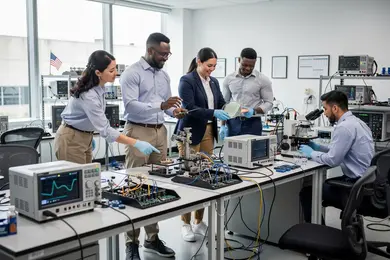
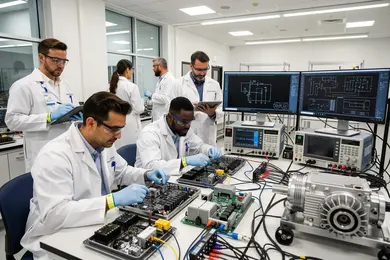
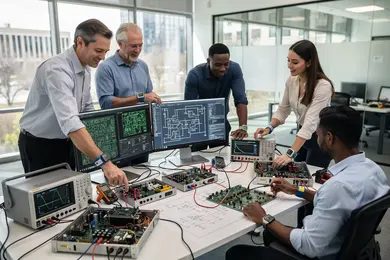
Lab delivery is the key difference. Some programs mail electronics kits that include microcontrollers, sensors, breadboards, and measurement tools. Others use circuit simulation, cloud-based FPGA tools, or remote lab benches. For a broader view of how hands-on requirements work in online STEM fields, students comparing lab delivery models may also find it useful to review an online animal science degree, where remote and in-person practical requirements are also a major planning issue.
Online learning is a strong fit if you are disciplined, employed, geographically limited, or able to build projects independently. Campus learning may be stronger if you need daily structure, frequent access to specialized equipment, undergraduate research, or a local engineering peer network.
What coursework builds embedded systems skills?
Embedded systems requires both electrical engineering fundamentals and practical computing skills. A strong curriculum should not only teach you how to code a microcontroller; it should help you understand why a circuit behaves a certain way, how signals move through hardware, and how software decisions affect timing, power, and reliability.
Look for courses and projects that build the following skill clusters. These areas are important because embedded systems employers often evaluate candidates through project evidence, technical interviews, and debugging ability.
- Circuits and electronics: DC and AC circuits, analog electronics, digital electronics, PCB concepts, sensors, and instrumentation.
- Programming and firmware: C, C++, Python for testing, assembly basics, memory management, device drivers, and hardware registers.
- Digital systems: logic design, microprocessors, microcontrollers, computer architecture, FPGA fundamentals, and hardware description languages.
- Signals and controls: signal processing, feedback control, filters, motor control, robotics, and real-time response.
- Systems integration: embedded Linux, RTOS concepts, communication protocols, cybersecurity basics, testing, verification, and documentation.
Current embedded work is also being shaped by edge AI, connected sensors, autonomous systems, and energy-efficient computing. Students who later want to move from device-level work into machine learning, signal analytics, or AI-enabled systems may eventually compare engineering graduate options with the best online data science masters, but the undergraduate foundation should still emphasize math, circuits, and real hardware constraints.
A practical way to judge coursework is to ask what you will build by graduation. Strong embedded systems preparation usually includes a sequence of increasingly complex projects:
- Start with simple microcontroller projects that read sensors, control outputs, and communicate data.
- Move into real-time constraints, interrupts, timers, buses, and debugging with instruments or software tools.
- Build a capstone that integrates hardware, firmware, testing, documentation, and a clear engineering design process.
- Publish a portfolio with schematics, code samples, test results, design trade-offs, and a short explanation of what you learned.
A common mistake is choosing a program based only on course titles. "Embedded systems" can mean a rigorous hardware-software design course, or it can mean a broad overview with limited lab depth. Ask for syllabi, tool lists, sample capstones, and details about required programming languages before you commit.
What admission requirements do these programs usually have?
Admission requirements vary by school and degree level, but online electrical engineering programs usually expect evidence that you can handle calculus-based engineering coursework. Selective programs may also review prior lab science, programming experience, transfer credits, and college-level physics.
The table below outlines common requirements by program level. Use it to estimate whether you are ready to apply now or should complete prerequisites first.
| Program level | Typical academic requirements | Other common materials | Preparation advice |
| Bachelor's, first-year entry | High school diploma or equivalent, strong math preparation, and often physics or chemistry | Transcripts, application, test scores if required, and sometimes essays | Complete precalculus or calculus readiness before starting engineering courses |
| Bachelor's, transfer entry | College credits in calculus, physics, chemistry, programming, or general education | College transcripts, minimum GPA, course descriptions for transfer review | Ask for a formal transfer evaluation before enrolling |
| Master's degree | Bachelor's in electrical engineering, computer engineering, or a related technical field | Resume, statement of purpose, recommendations, and sometimes GRE scores | Address gaps in circuits, signals, programming, or math before applying |
| Graduate certificate | Technical bachelor's degree or equivalent preparation | Resume, transcripts, and proof of prerequisite knowledge | Confirm whether credits can later apply to a master's degree |
If you are missing prerequisites, do not rush into the first program that admits you. Engineering math builds in sequence, and weak preparation in calculus or physics can slow your progress later. Community college courses, bridge courses, or nondegree prerequisite enrollment may be cheaper and less risky than repeating failed engineering courses after admission.
Before applying, ask admissions or the engineering department these questions:
- Which math and science courses must be completed before upper-division engineering classes?
- How many transfer credits will apply to the engineering major, not just to general electives?
- Are online labs fully remote, hybrid, or tied to specific scheduled sessions?
- What programming languages and tools should students know before the embedded systems sequence?
- Does the program have GPA progression rules for engineering majors?
The biggest admissions mistake is assuming that acceptance equals readiness. A program may admit you conditionally, but you still need a realistic plan for math, labs, time management, and technical study.

How long do online electrical engineering degrees take to finish?
Completion time depends on degree level, transfer credits, course availability, and whether you study full time or part time. Engineering programs also have prerequisite chains, so one missed calculus, physics, or circuits course can delay later classes.
The table below gives typical time frames. These are planning ranges, not promises, because online engineering programs differ in term length, lab scheduling, and transfer policies.
| Path | Typical time to finish | Best for | Main timeline risk |
| Full bachelor's degree | About 4 years full time | Students starting with few or no college credits | Sequential math, physics, and engineering prerequisites |
| Transfer bachelor's completion | About 2 to 3 years | Students with completed general education and lower-division technical courses | Credits that transfer to electives instead of the engineering major |
| Part-time bachelor's path | About 5 to 7 years | Working adults and military students | Course rotation and workload during lab-heavy terms |
| Master's degree | About 1.5 to 3 years | Engineers seeking advanced technical roles | Prerequisite gaps and thesis or project requirements |
| Graduate certificate | About 6 to 18 months | Professionals seeking targeted embedded systems skills | Limited depth if taken without project work |
Accelerated programs can be attractive, but they are not always better for embedded systems. Hardware labs, debugging, and capstone design take time. A slightly slower program that lets you build stronger projects may be more valuable than a faster path with thin technical evidence.
To keep your timeline realistic, take these steps before enrolling:
- Map every prerequisite from calculus through senior design or the embedded systems capstone.
- Ask whether required courses are offered every term, once per year, or only on demand.
- Confirm whether summer courses include engineering labs or only general education classes.
- Build a weekly schedule that includes lab setup, debugging, group meetings, and exam preparation.
- Leave room for internships, co-ops, or portfolio projects if you are changing careers.
A common red flag is a degree plan that looks fast but does not show when upper-division engineering courses are actually available. Always request a term-by-term plan based on your transfer credits and start date.
What do online electrical engineering degrees cost?
Online electrical engineering degree costs vary by institution type, residency, transfer credits, technology fees, lab kits, and whether the program charges online students the same tuition as campus students. College Board's 2024 pricing data shows why comparison shopping matters: published tuition and fees for 2024-25 differ widely across public and private four-year institutions.
- Public four-year, in-state average published tuition and fees: $11,610 for 2024-25.
- Public four-year, out-of-state average published tuition and fees: $30,780 for 2024-25.
- Private nonprofit four-year average published tuition and fees: $43,350 for 2024-25.
These figures are useful benchmarks, but they do not tell you your final bill. Online students should compare total cost of attendance, including fees and the number of credits they actually need after transfer evaluation.
The table below shows the cost factors that most often change the real price of an online engineering degree.
| Cost factor | Why it matters | What to ask |
| Transfer credit | Accepted credits can reduce time and tuition, but engineering departments may reject outdated or non-equivalent technical courses | Will my credits apply to the major requirements or only electives? |
| Residency pricing | Some public universities charge different rates for in-state, out-of-state, and online students | Is there a separate online tuition rate? |
| Lab kits and equipment | Embedded systems courses may require microcontrollers, components, tools, or software licenses | Which equipment is required and what is optional? |
| Course repetition | Repeating calculus, physics, or circuits can increase cost and extend the timeline | What tutoring or academic support is available for engineering students? |
| Employer tuition assistance | Working adults may lower out-of-pocket cost through company benefits | Does the program schedule align with reimbursement deadlines? |
To reduce cost without weakening the degree, prioritize accredited public programs, maximize legitimate transfer credit, use community college for prerequisites when allowed, and compare fees carefully. Do not choose the lowest tuition if the program lacks accreditation, has weak lab support, or does not offer the embedded systems electives you need.
The most common cost mistake is comparing only per-credit tuition. A program with a higher per-credit rate may cost less overall if it accepts more transfer credits, offers predictable course rotations, and helps you finish sooner.
Which embedded systems jobs can graduates pursue?
Graduates of online electrical engineering or computer engineering programs can pursue roles that involve designing, programming, testing, or integrating intelligent hardware. Exact job titles vary by employer, and many embedded systems roles sit between electrical engineering, computer engineering, and software engineering.
The table below summarizes common career paths and the responsibilities students should prepare for while in school.
| Job title | Typical responsibilities | Helpful preparation |
| Embedded systems engineer | Designs and integrates hardware, firmware, sensors, communication interfaces, and real-time behavior | Microcontrollers, C/C++, RTOS concepts, electronics labs, and debugging tools |
| Firmware engineer | Writes low-level software that controls devices, drivers, boot processes, and hardware interfaces | C, C++, assembly basics, memory constraints, device protocols, and version control |
| Electrical design engineer | Designs circuits, boards, power interfaces, and electronic subsystems | Analog and digital electronics, PCB design, signal integrity, and testing |
| Controls engineer | Develops systems that control motors, industrial equipment, robotics, or automated processes | Control theory, sensors, motors, PLCs, modeling, and real-time systems |
| Test or validation engineer | Builds test plans, verifies device performance, documents failures, and supports product reliability | Instrumentation, scripting, lab measurement, statistics basics, and documentation |
| IoT engineer | Connects devices to networks, cloud services, dashboards, and data pipelines | Wireless protocols, embedded Linux, security fundamentals, sensors, and networking |
Industries that hire embedded systems talent include aerospace, defense, automotive, medical devices, semiconductor firms, consumer electronics, industrial automation, energy, telecommunications, and robotics. AI is also changing the field by moving more inference and decision-making to edge devices, which increases demand for engineers who understand both models and hardware constraints.
To improve your job readiness, build a portfolio that shows complete engineering thinking, not just code. A strong project page explains the problem, design constraints, schematic or block diagram, code repository, test process, results, and what you would improve. Employers often value this evidence because embedded systems work is difficult to evaluate from transcripts alone.
Students should avoid assuming that the degree alone is enough. Internships, co-ops, undergraduate research, open-source contributions, robotics competitions, and documented lab projects can make a major difference, especially for career changers and online students who need to prove hands-on ability.
What salary can embedded systems engineers expect?
Embedded systems engineer is not always reported as a separate federal occupation, so salary expectations are best understood through related BLS categories. The most relevant benchmarks are electrical and electronics engineers, computer hardware engineers, and software developers who work close to hardware.
The table below uses BLS May 2024 median annual wage data for related U.S. roles. Use these figures as labor-market context, not as a guaranteed outcome for any specific graduate or program.
| Related occupation | May 2024 median annual wage | How it relates to embedded systems |
| Electrical and electronics engineers | $118,780 | Closest broad benchmark for engineers working on circuits, electronics, systems, and device design |
| Software developers | $133,080 | Relevant for firmware, embedded Linux, device software, and systems programming roles |
| Computer hardware engineers | $155,020 | Relevant for processor, board, architecture, and hardware design roles |
Salary varies by region, industry, security clearance requirements, experience, degree level, and whether the role is closer to hardware design, firmware, testing, or systems architecture. Defense, semiconductor, automotive, and advanced electronics employers may pay differently from small device startups or local manufacturing firms.
For ROI, compare salary potential against total cost, time out of the workforce, and the likelihood that you will finish with marketable projects. A lower-cost accredited program with strong labs and transfer acceptance can be a better investment than a higher-priced program with limited embedded systems coursework.
Be cautious with school-level salary claims. Ask whether outcomes are specific to electrical engineering graduates, whether online students are included, how many graduates responded, and whether the reported jobs are actually related to embedded systems.
What licensing or certifications should students consider?
Licensing and certifications are not equally important for every embedded systems career. Professional engineering licensure can matter for roles involving public safety, regulated engineering services, power systems, infrastructure, or sign-off authority. Many firmware and product development roles, however, focus more on degree quality, projects, technical interviews, and work experience.
The table below explains the main credentials students may encounter and when each is worth considering.
| Credential | Best for | Important limitation |
| FE exam | Engineering students or graduates starting the professional engineering pathway | Eligibility and next steps vary by state licensing board |
| PE license | Engineers whose work requires licensed responsibility or public-facing engineering approval | Less common for many embedded firmware roles than for civil, power, or public safety engineering |
| Embedded systems or RTOS vendor training | Professionals using specific platforms, toolchains, or real-time systems | Vendor credentials supplement but rarely replace an accredited degree |
| IPC or electronics design credentials | Students focused on PCB design, electronics manufacturing, or hardware quality | Most useful when paired with hands-on board design experience |
| Security or safety-related training | Automotive, medical device, aerospace, defense, and industrial control roles | Requirements depend heavily on employer and industry standards |
If you may want licensure, choose an ABET-accredited program and contact your state engineering board early. Requirements can include education, exams, supervised experience, and documentation, and rules differ by state.
For students focused on embedded product development, the smartest credential strategy is usually sequential:
- Prioritize an accredited degree or a rigorous technical degree path first.
- Build a portfolio with microcontroller, firmware, electronics, and testing projects.
- Add targeted certifications only when they match a job description, platform, or industry requirement.
- Keep documentation of labs, capstones, internships, and work experience in case you later pursue licensure or regulated roles.
A common mistake is collecting certificates before building fundamentals. Certifications can help signal focus, but employers still need evidence that you can debug hardware, read datasheets, write reliable code, test systems, and communicate engineering trade-offs.
Other Things You Should Know About Electrical Engineering
Often, yes. Many programs require a laptop that can run engineering software, reliable internet, and sometimes lab kits with microcontrollers, sensors, breadboards, or measurement tools. Ask for the required equipment list before enrolling.
Most online electrical engineering bachelor’s programs require calculus I and II, differential equations, and calculus-based physics before upper-division engineering courses. Some also require linear algebra or chemistry. Transfer applicants usually need a minimum 2.5 GPA in prerequisite coursework and official transcripts for admission.
Yes, but the path usually requires strengthening calculus, physics, circuits, programming, and design skills. Technicians with hands-on electronics experience may have an advantage in labs and troubleshooting, but engineering roles often require a bachelor's degree.
References
- What Are My Career Options with an Embedded Systems Degree? https://www.hanuniversity.com/en/programs/bachelor/embedded-systems-engineering/fulltime/careers/
- Certificates, Certifications and Licenses https://trainingindustry.com/wiki/professional-development/certificates-certifications-and-licenses/
- Understanding Embedded Systems in EEE - Cyprus West University https://www.cwu.edu.tr/understanding-embedded-systems-in-eee/
- Online Electrical Engineering Degrees https://www.affordablecollegesonline.org/degrees/engineering-programs/electrical-engineering/
- Top 5 Embedded Systems Jobs | Amoria Bond https://www.amoriabond.com/insights/articles/top-5-embedded-systems-jobs/
- Embedded Systems Essentials with Arm Professional Certificate - Design Course https://www.arm.com/resources/education/online-courses/efficient-embedded-systems
- Embedded systems courses online | edX https://www.edx.org/learn/embedded-systems
- Best Online Electrical Engineering Degrees 2025 https://www.onlineu.com/degrees/electrical-engineering
- Careers in Embedded Systems: Your Complete 2025 Guide https://zenovo.co.uk/embedded-systems-career-guide/
- Find Programs - ABET https://www.abet.org/accreditation/find-programs/