2027 How to Become an Elementary School Teacher in California: Requirements & Certification

Co-Founder and Chief Data Scientist
Becoming an elementary school teacher in California requires more than earning a degree and applying for jobs. You must complete the state’s credentialing steps, choose a teacher preparation route, pass required assessments or approved equivalents, complete supervised classroom experience, and move from a preliminary credential to a clear credential on time.
This guide is for aspiring elementary educators, career changers, bachelor’s degree holders, and students comparing online and campus-based teacher preparation programs in California. It explains the education requirements, credential process, program options, costs, timelines, specializations, career paths, and common mistakes to avoid so you can plan a realistic path into the classroom.
Quick Answer: How do you become an elementary school teacher in California?
To become an elementary school teacher in California, you generally need a bachelor’s degree, completion of a California Commission on Teacher Credentialing-approved teacher preparation program, required basic skills and subject-matter assessments or approved alternatives, a background check with fingerprinting, and a Multiple Subject Teaching Credential. Most candidates first receive a preliminary credential, then complete state-required steps to earn a clear credential.
Key Things You Should Know About Becoming an Elementary Teacher in California
- The California Commission on Teacher Credentialing (CTC) manages the credentialing system for public school teachers and sets the standards candidates must meet before teaching elementary students.
- The average time to complete the requirements for an elementary teaching license in California is approximately 1.5 to 2 years, depending on the individual’s educational background and the pace of their program.
- In the 2022-2023 academic year, California issued over 25,000 preliminary teaching credentials, showing continued need for prepared educators across the state.
- Candidates should plan for credential-related expenses such as an application fee of around $100, plus teacher preparation tuition that can range from $5,000 to $30,000 depending on the institution.
- To qualify for a preliminary credential, candidates must complete a bachelor’s degree, a teacher preparation program, and pass the California Basic Educational Skills Test (CBEST) or an equivalent assessment.
- Some credential renewal and professional growth guidance refers to 150 hours of professional development every five years; candidates should verify the current requirement directly with the CTC and their employing district because rules can vary by credential status and pathway.
- The CTC states that almost 50% of candidates experience delays getting their credentials due to inadequate preparation or misunderstanding of requirements, so confirming requirements early can prevent costly setbacks.
- What are the educational requirements for elementary school teachers in California?
- What is the licensure application and renewal process for elementary school teachers in California?
- What is the difference between traditional and alternative teacher certification programs in California?
- How long does it take to become an elementary school teacher in California?
- Are online education programs accepted for teacher licensure in California?
- How does an online elementary education program in California compare to an on-campus program?
- What is the average cost of elementary education programs in California?
- How does one choose the best elementary education program in California?
- What types of specializations are available within elementary education in California?
- What professional development opportunities are available for elementary school teachers in California?
- How can aspiring teachers explore teaching opportunities outside California?
- What other teaching opportunities are available beyond elementary education in California?
- How can elementary school teachers transition into a school counseling role in California?
- What additional academic qualifications can boost my teaching career in California?
- Can obtaining a preschool teaching credential expand my career opportunities?
- How can I transition to a private school teaching career in California?
- Is there a cost-effective pathway to credentialing for elementary educators in California?
- What distinguishes elementary teaching from high school teaching in California?
- What are the teaching certificate requirements in California?
- How can mentorship and ongoing professional development accelerate career advancement?
- What career paths are available for elementary school teachers in California?
- How can elementary school teachers in California achieve work-life balance?
- What is the job market for elementary school teachers in California?
- Innovative Teaching Strategies for Elementary Educators in California
What are the educational requirements for elementary school teachers in California?
California elementary teachers typically teach multiple subjects to one group of students, so the state requires preparation in child development, literacy, mathematics, classroom management, assessment, and inclusive instruction. The main credential for this role is the Multiple Subject Teaching Credential.
- Bachelor’s degree: You must hold a bachelor’s degree from an accredited institution. The degree does not always need to be in education, but coursework in child development, psychology, liberal studies, or related areas can make the transition into teacher preparation smoother.
- CTC-approved teacher preparation program: After or during your degree, you must complete a teacher preparation program approved by the California Commission on Teacher Credentialing. These programs combine pedagogy coursework with supervised classroom experience.
- Multiple Subject Teaching Credential: This credential authorizes teachers to work in self-contained classrooms, which is the common model in California elementary schools.
- Required assessments: Candidates may need to meet basic skills and subject-matter requirements through exams such as the California Basic Educational Skills Test (CBEST) and California Subject Examinations for Teachers (CSET), or through approved alternatives when available.
- Student teaching or supervised fieldwork: Teacher preparation programs include classroom placements where candidates practice lesson planning, instruction, assessment, and classroom routines under supervision.
- Background clearance: Fingerprinting and a background check are required before candidates can work with students.
According to a report by the California Department of Education, the state needs approximately 20,000 new teachers annually to respond to student enrollment needs and teacher retirements. California also continues to face shortages in some locations and subject areas, particularly in underserved communities.
| Requirement | Why it matters | What to verify before enrolling |
| Bachelor’s degree | Establishes the academic foundation required for credential eligibility. | Confirm the institution is accredited and that credits will be accepted by your teacher preparation program. |
| Teacher preparation program | Provides pedagogy, student teaching, and credential recommendation support. | Check that the program is CTC-approved for the Multiple Subject Teaching Credential. |
| Assessments or approved alternatives | Demonstrates basic skills and subject-matter readiness. | Ask whether your coursework, degree, or prior exams can satisfy any requirement. |
| Fieldwork or student teaching | Builds practical classroom experience before full-time teaching. | Ask where placements occur, who supervises them, and whether placements fit your location and schedule. |
| Fingerprinting and background clearance | Protects students and is required for school-based work. | Complete clearance steps early to avoid delaying student teaching or credential filing. |
What is the licensure application and renewal process for elementary school teachers in California?
After completing the required education, preparation, assessments, and background clearance, candidates apply for a preliminary teaching credential through the California Commission on Teacher Credentialing. The preliminary credential is valid for five years and allows qualified teachers to begin working in California public schools.
The important point is that California does not simply renew a five-year preliminary credential. Teachers are expected to complete the requirements for a clear credential before the preliminary credential expires. This usually involves an approved induction program or another CTC-recognized route, depending on the teacher’s situation.
Candidates should treat credential filing as a documentation process, not a formality. Missing transcripts, incomplete exam records, unverified fieldwork, or misunderstood requirements can delay employment. If cost is a concern, compare accredited programs carefully and review economical pathways such as affordable online education degrees only after confirming that the program supports California credential eligibility.
| Credential stage | What happens | Common risk |
| Preliminary credential | You meet initial state requirements and become eligible to teach while completing next steps. | Assuming the credential can be renewed indefinitely instead of planning for a clear credential. |
| Induction or clear credential preparation | You complete additional support, mentoring, and professional requirements. | Waiting until the preliminary credential is close to expiring before starting the process. |
| Clear credential | You receive the more durable professional credential after completing all required steps. | Not tracking deadlines, documentation, or employer-specific requirements. |
What is the difference between traditional and alternative teacher certification programs in California?
Traditional and alternative certification programs can both lead to a California Multiple Subject Teaching Credential, but they are designed for different kinds of candidates. The better choice depends on your prior education, work schedule, classroom readiness, financial situation, and how quickly you want to begin teaching.
Traditional Teacher Certification Programs
Traditional programs usually follow a structured university-based model. They are often a strong fit for undergraduate students, recent graduates, and candidates who want a more gradual transition into teaching.
- Degree pathway: Candidates complete a bachelor’s degree from an accredited institution, often in education, liberal studies, or a related area.
- Pedagogy coursework: The program covers teaching methods, classroom management, child development, assessment, literacy, and inclusive instruction.
- Student teaching: Candidates complete supervised classroom placements before becoming the teacher of record.
- Assessment preparation: Programs help candidates prepare for requirements such as CBEST and CSET or approved equivalents.
Examples of traditional programs include offerings from California State University, Los Angeles, and the University of California, Berkeley.
Alternative Teacher Certification Programs
Alternative routes are often built for people who already hold a bachelor’s degree and want to move into teaching without completing a second undergraduate degree. They may appeal to career changers, substitute teachers, paraprofessionals, or professionals from non-education fields.
- More scheduling flexibility: Many alternative programs allow candidates to work while completing credential coursework.
- Condensed preparation: Some programs can be completed in a year or less, although the workload can be intense.
- Intern credential options: In some cases, candidates may teach while completing remaining requirements under an intern model.
Examples of alternative certification programs in California include Teach for America and the California Teacher Corps.
| Pathway | Best for | Main advantage | Main caution |
| Traditional program | Students who want a structured, university-based route with extensive preparation before full responsibility for a classroom. | Clear sequencing, supervised practice, and strong academic support. | May take longer and may require more time away from full-time work. |
| Alternative program | Career changers and bachelor’s degree holders who want a faster or more work-compatible route. | Can reduce time to classroom entry and may allow paid teaching while completing requirements. | Can be demanding because candidates may teach while still learning core pedagogy. |
How long does it take to become an elementary school teacher in California?
The full path generally takes four to six years when it includes a bachelor’s degree and teacher preparation. Candidates who already have a bachelor’s degree may complete the credential portion faster, often depending on program design, exam timing, field placement availability, and application processing.
- Bachelor’s degree: This usually takes four years. A major in education is not always required, but a relevant major can help you prepare for classroom work and credential coursework.
- Teacher preparation program: After earning a degree, candidates typically spend one to two years completing pedagogy classes, supervised teaching, and credential requirements.
- Licensure application: Once program and assessment requirements are complete, the application review may take several weeks to months depending on document accuracy and CTC processing.
- Required exams: Preparing for CBEST, CSET, or approved alternatives can add time, especially if candidates wait too long to understand which requirements apply to them.
Overall, aspiring teachers should expect a serious multi-year commitment. To understand how this path connects to broader employment options, review related education sector jobs and compare roles before choosing a credential pathway.
| Candidate starting point | Likely next steps | Planning advice |
| No bachelor’s degree yet | Complete undergraduate study, then teacher preparation and credential requirements. | Choose an accredited school and ask whether the degree aligns with Multiple Subject Credential preparation. |
| Bachelor’s degree completed | Enter a CTC-approved postbaccalaureate or alternative preparation program. | Request a transcript review before enrolling so you know which requirements remain. |
| Working in schools already | Explore intern, residency, or alternative routes if eligible. | Ask whether your current district partners with approved credential programs. |
Are online education programs accepted for teacher licensure in California?
Online education programs can be accepted for California teacher licensure, but only if they meet the state’s credential requirements. The most important issue is not whether the coursework is online; it is whether the program is approved for the California credential you need and includes required supervised classroom experiences.
- Accreditation and approval: Confirm that the program is recognized by the CTC or meets the standards required for California credentialing. Programs accredited by the Council for the Accreditation of Educator Preparation (CAEP) or the National Council for Accreditation of Teacher Education (NCATE) are often discussed in relation to educator preparation, but California credential eligibility should be verified directly.
- Field placement: Even online programs usually require in-person student teaching or supervised fieldwork in a school setting.
- Credential alignment: The program should prepare candidates for the Multiple Subject Teaching Credential, not only a general education degree.
- Assessment support: Ask how the program helps students meet basic skills and subject-matter requirements, including CBEST, CSET, or approved alternatives.
- Schedule fit: Online formats can help working adults and parents, especially when courses are asynchronous, but fieldwork still requires predictable availability.
- Labor market context: According to the California Employment Development Department, demand for elementary school teachers is projected to grow, making program quality and credential readiness especially important.
Before enrolling, ask the program in writing whether completing it will make you eligible for a California Multiple Subject Teaching Credential and what additional steps you must complete outside the program.
How does an online elementary education program in California compare to an on-campus program?
Online and on-campus elementary education programs can both prepare candidates for California credentialing when they meet CTC requirements. The right choice depends on how you learn best, whether you need schedule flexibility, how close you are to approved field placements, and how much in-person support you want.
| Factor | Online program | On-campus program |
| Flexibility | Often better for working adults, caregivers, and students who need asynchronous coursework. | Usually follows set class times and may provide more predictable structure. |
| Fieldwork | Coursework may be remote, but student teaching must still happen in person at an approved school site. | Field placements may be easier to coordinate through local school partnerships. |
| Peer and faculty interaction | Relies on video meetings, discussion boards, virtual collaboration, and online advising. | Offers more face-to-face interaction, informal networking, and campus-based support. |
| Resources | Digital libraries, online tutoring, virtual advising, and remote exam preparation may be available. | Students may have easier access to physical libraries, teaching labs, campus events, and in-person faculty. |
| Cost considerations | May reduce commuting or relocation expenses, though technology and placement-related costs can still apply. | May include additional campus fees, commuting, housing, or parking, but can also offer institutional scholarships. |
| Best fit | Self-directed students who can manage deadlines and communicate proactively online. | Students who prefer in-person accountability, immediate feedback, and campus community. |
The biggest mistake is choosing by format alone. A convenient online program is not useful if it does not lead to the correct California credential, and a well-known campus program may not fit your schedule or budget. Start with credential approval, then compare cost, placement support, faculty access, and completion timeline.
What is the average cost of elementary education programs in California?
The cost of becoming an elementary teacher in California depends on whether you are completing a bachelor’s degree, a postbaccalaureate credential program, a graduate-level credential pathway, or an alternative route. Tuition is only one part of the total price.
- Tuition costs: As of 2022, the average annual tuition and fees for in-state undergraduate programs at colleges and universities in California was approximately $36,786. This figure reflects a 10% increase over the past five years.
- Room and board: Students who relocate or attend campus-based programs should plan for living expenses that may range from $15,000 to $20,000 per academic year, depending on school location and housing choices.
- Textbooks and materials: Books, digital platforms, lesson materials, and course resources can average around $1,200 annually.
- Credentialing fees: After completing the education program, candidates should expect credential-related costs that can range from $300 to $500, depending on required applications and examinations.
| Cost category | Estimated amount stated | How to reduce or control the cost |
| Tuition and fees | Approximately $36,786 for average annual in-state undergraduate tuition and fees as of 2022 | Compare public, private, online, and transfer-friendly options before committing. |
| Room and board | $15,000 to $20,000 per academic year | Consider commuting, online coursework, shared housing, or local placements when feasible. |
| Textbooks and materials | Around $1,200 annually | Ask about open educational resources, used books, and digital access fees. |
| Credentialing fees | $300 to $500 | Budget for exams, applications, fingerprinting, and document processing early. |
Students interested in adjacent school-based or educational resource roles may also compare options such as a library science degree, especially if they are considering careers beyond classroom teaching.
How does one choose the best elementary education program in California?
The best elementary education program is the one that gets you credential-ready, supports your field placement, fits your budget, and prepares you for the type of school community where you want to teach. California has over 6.2 million students enrolled in K-12 public schools, so program quality matters because classrooms vary widely by language background, learning needs, location, and resources.
- CTC approval: Confirm that the program is approved for the California Multiple Subject Teaching Credential.
- Accreditation: Make sure the institution is accredited and that your credits will be recognized if you transfer or pursue graduate study later.
- Curriculum depth: Look for strong preparation in literacy, math instruction, child development, classroom management, assessment, special education, and culturally responsive teaching.
- Field experience: The CTC requires a minimum of 600 hours of supervised fieldwork, so ask how placements are arranged and whether the program has reliable school partnerships.
- Faculty expertise: Review whether instructors have recent K-12 classroom, leadership, or research experience in elementary education.
- Format: Decide whether online, hybrid, evening, weekend, or full-time campus study best matches your schedule and responsibilities.
- Student support: Strong advising, exam preparation, career services, mentorship, and induction guidance can reduce the risk of credential delays.
- Total cost: Compare tuition, fees, materials, travel, unpaid student teaching time, and financial aid instead of looking only at advertised tuition.
Questions to ask before enrolling
- Is this program CTC-approved for the Multiple Subject Teaching Credential?
- Will the program recommend me for the credential when I finish?
- How are student teaching placements assigned, and can I complete them near where I live?
- What is the program’s process for helping students meet CBEST, CSET, or approved alternative requirements?
- How many candidates experience credential filing delays, and what causes them?
- What costs are not included in tuition?
- Does the program support bilingual education, special education, literacy, STEM, or other specializations?
- What support is available during induction and the move from preliminary to clear credential?
What types of specializations are available within elementary education in California?
Specializations can help elementary teachers serve specific student populations, strengthen instruction in high-need areas, and qualify for broader career opportunities. They are especially useful in California because schools serve students with varied language backgrounds, learning needs, and academic preparation.
- Bilingual education: Prepares teachers to support students in English and another language, which can be valuable in multilingual communities.
- Special education: Focuses on supporting students with disabilities through accommodations, individualized instruction, and collaboration with families and specialists. Approximately 13% of students in the U.S. receive special education services.
- STEM education: Builds instructional strategies for science, technology, engineering, and mathematics at the elementary level.
- Early childhood education: Emphasizes developmentally appropriate practice for younger children, especially kindergarten through third grade.
- Culturally responsive teaching: Helps educators connect instruction to students’ identities, communities, and experiences while maintaining rigorous academic expectations.
- Literacy and reading instruction: Strengthens reading, writing, phonics, comprehension, and intervention strategies, which are central to elementary achievement.
California education career opportunities continue to include classroom and specialized roles, and the state is projected to need over 33,000 new teachers annually in the coming years. Choosing a specialization should be based on student needs, district demand, your strengths, and whether the specialization requires an added authorization or credential.
The chart below shows that elementary and middle school teaching is the most common type of education major.
What professional development opportunities are available for elementary school teachers in California?
Professional development helps California elementary teachers keep instruction current, strengthen classroom management, adapt to new curriculum expectations, and prepare for leadership roles. It can also support the transition from preliminary to clear credential when tied to induction or employer requirements.
- District workshops: School districts often provide training in curriculum implementation, assessment, student behavior, multilingual learner support, and technology tools.
- College and university continuing education: Educators can take courses in special education, literacy, curriculum design, educational technology, and leadership.
- Professional learning communities: PLCs allow teachers to analyze student work, share strategies, plan lessons, and solve instructional problems with colleagues.
- Mentorship programs: New teachers can work with experienced educators who provide classroom feedback, planning support, and guidance during the first years of teaching.
- Conferences: Events such as the California Kindergarten Association Conference or National Education Association Annual Meeting can expose teachers to new methods and professional networks.
- Online courses and webinars: Remote professional learning can help teachers build skills without leaving their current positions.
How can aspiring teachers explore teaching opportunities outside California?
Some aspiring teachers compare California’s credentialing process with requirements in other states before deciding where to begin their careers. This can be useful if you are open to relocating, want a different school environment, or need a route that better matches your timeline and finances.
Arkansas is one example of a state that may appeal to candidates exploring different certification systems, community settings, or cost-of-living considerations. If you are comparing state requirements, review this guide on how to become a teacher in Arkansas to understand licensure pathways, eligibility rules, and job-market considerations outside California.
Before leaving California or completing an out-of-state program, ask whether the credential can transfer back to California later. Reciprocity can involve additional documentation, assessments, or coursework, so it is safer to plan for both your immediate teaching goal and your long-term location.
What other teaching opportunities are available beyond elementary education in California?
Elementary teaching is only one route in the education field. Some candidates later move into middle school, high school, special education, early childhood education, school counseling, curriculum design, or educational leadership. Each role has different students, credentials, and daily responsibilities.
Middle school teaching, for example, usually requires stronger subject-area focus and an understanding of adolescent development. If you want to compare grade levels or see how requirements differ by state, this guide on how to become a middle school math teacher in Arkansas can provide a useful contrast.
How can elementary school teachers transition into a school counseling role in California?
Elementary teachers who enjoy one-on-one student support, family communication, intervention planning, and social-emotional development may consider school counseling. This is a different professional role from classroom teaching and typically requires additional graduate-level preparation and counseling-specific credentialing.
Teaching experience can be an advantage because former teachers understand classroom dynamics, student behavior, parent communication, and school systems. However, candidates should not assume that a teaching credential automatically qualifies them for counseling work. To compare efficient routes and requirements, review this guide on the fastest way to become a counselor.
What additional academic qualifications can boost my teaching career in California?
Additional academic credentials can help elementary teachers move into specialized instruction, reading intervention, curriculum leadership, school library services, instructional coaching, or administration. The best option depends on whether you want to remain in the classroom or move into a support, leadership, or resource-focused role.
Teachers interested in information literacy, digital learning resources, and school library-related roles may compare programs such as an online library science degree. Before enrolling, verify whether the degree supports the specific school-based role, credential, or authorization you want.
Can obtaining a preschool teaching credential expand my career opportunities?
An early childhood or preschool-focused credential can help elementary educators work with younger learners and better understand development before kindergarten. This can be useful for teachers interested in transitional kindergarten, preschool settings, early intervention, or roles that bridge early childhood and elementary education.
The credential requirements for preschool roles differ from elementary teaching requirements, so candidates should confirm the correct pathway before starting coursework. To compare options, review how to become a preschool teacher in California.
How can I transition to a private school teaching career in California?
Private schools in California may use hiring standards that differ from public school credential rules. Some value state credentials, while others emphasize subject expertise, teaching experience, religious or mission alignment, specialized curriculum knowledge, or independent school experience.
If you are moving from public elementary teaching into a private school, prepare a portfolio that shows lesson plans, student engagement strategies, classroom management strengths, assessment practices, and family communication. Also research each school’s accreditation, salary structure, benefits, and expectations. For a focused overview, see how to become a private school teacher in California.
Is there a cost-effective pathway to credentialing for elementary educators in California?
A cost-effective credential pathway is not always the cheapest advertised program. The better measure is total cost plus credential success: tuition, fees, fieldwork logistics, exam support, time away from work, transfer credit acceptance, and whether the program actually leads to the California credential you need.
Budget-conscious candidates should compare public universities, online or hybrid CTC-approved programs, district partnerships, residency models, scholarships, and transfer-friendly routes. For a practical cost comparison, review the cheapest way to get a teaching credential in California.
What distinguishes elementary teaching from high school teaching in California?
Elementary and high school teaching require different instructional models. Elementary teachers usually teach multiple subjects to the same group of students and focus on foundational academic, social, and behavioral development. High school teachers usually specialize in one subject and teach multiple groups of older students throughout the day.
This difference affects credential selection, classroom management, lesson planning, assessment, and professional identity. If you are considering secondary education, review high school math teacher qualifications in California to see how subject-specific preparation differs from elementary credentialing.
| Factor | Elementary teaching | High school teaching |
| Credential focus | Multiple Subject Teaching Credential | Subject-specific credential pathway |
| Instructional scope | Multiple subjects in a self-contained classroom | One primary academic subject or discipline |
| Student development focus | Foundational literacy, numeracy, routines, and social growth | Advanced content, college or career preparation, and adolescent development |
| Best fit | Teachers who enjoy broad instruction and working with younger children | Teachers who want deep specialization in a subject area |
What are the teaching certificate requirements in California?
California teaching certificate requirements typically include official transcripts, completion of an approved teacher preparation program, required assessments or approved alternatives, supervised field experience, fingerprint clearance, and submission of the correct credential application materials.
The exact requirements depend on the credential type, preparation route, prior education, and whether the candidate is applying from in state or out of state. Candidates should review teaching certificate requirements in California before choosing a program so they do not enroll in a route that fails to match their intended credential.
How can mentorship and ongoing professional development accelerate career advancement?
Mentorship can shorten the learning curve for new elementary teachers. A strong mentor helps with lesson pacing, classroom routines, parent communication, assessment, behavior systems, and navigating school culture. This support is especially valuable during induction and the transition from a preliminary credential to a clear credential.
Professional development can also open doors to leadership roles, specialized assignments, and better instructional outcomes. Workshops, certifications, peer coaching, and graduate coursework can help teachers build expertise over time. If you are planning your full timeline, this guide on how long does it take to become a teacher in California can help you map the process more realistically.
What career paths are available for elementary school teachers in California?
Elementary teaching can lead to several career directions. Some educators remain classroom teachers for their entire careers, while others specialize, coach other teachers, design curriculum, or move into leadership.
- Classroom teacher: Teaches multiple subjects, builds foundational skills, manages daily routines, and supports academic and social development.
- Special education teacher: Works with students with disabilities and develops individualized supports, often requiring additional preparation or authorization.
- Reading or literacy specialist: Supports students who need targeted reading and writing instruction.
- Curriculum developer: Designs lessons, instructional materials, assessments, and academic programs for schools or districts.
- Instructional coach: Helps other teachers improve instruction through observation, feedback, modeling, and professional learning.
- Educational administrator: Moves into school or district leadership after additional education, experience, and administrative preparation.
- Educational consultant: Advises schools, nonprofits, curriculum companies, or districts on teaching practice and program improvement.
- Higher education instructor: With advanced education, some former elementary teachers prepare future educators in college-level programs.
California requires a minimum of five years of higher education for credentialing, and advanced study can support career growth. Teachers who want to strengthen literacy expertise may consider an online master's degree in reading and literacy.
How can elementary school teachers in California achieve work-life balance?
Elementary teaching can be meaningful, but it also involves planning, grading, family communication, classroom management, meetings, and emotional labor. Work-life balance is not automatic; teachers need systems that protect planning time, reduce unnecessary workload, and prevent burnout.
If you are still choosing a preparation program, ask whether it teaches practical time management, classroom systems, technology use, and stress-management strategies. Candidates comparing the cheapest online teaching degree should look beyond price and confirm that the program prepares them for the realities of classroom work.
New teachers can also benefit from induction support, mentorship, peer collaboration, and district resources. Programs such as Beginning Teacher Support and Assessment (BTSA) have been associated with structured guidance for early-career teachers adapting to classroom responsibilities.
Practical work-life balance strategies for new teachers
- Create reusable lesson templates instead of rebuilding plans from scratch each week.
- Set communication windows for family emails and avoid responding at all hours unless urgent.
- Use grade-level team planning to share resources and reduce duplicated effort.
- Prioritize high-impact feedback rather than over-commenting on every assignment.
- Build classroom routines early so students can work more independently over time.
- Ask mentors which tasks truly matter and which can be simplified.
What is the job market for elementary school teachers in California?
The job market for elementary school teachers in California remains active, but opportunities vary by district, region, credential area, and specialization. Over the next decade, demand for educators, including elementary teachers, is projected to increase by approximately 7-8%, which is above the national average for job expansion.
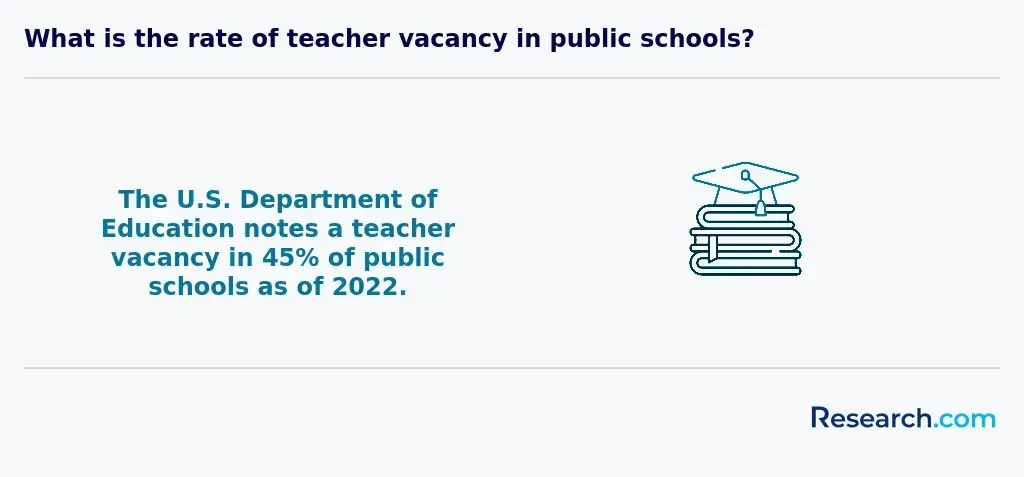
- Teacher shortages: The COVID-19 pandemic intensified existing staffing challenges through retirements, career changes, and vacancies in some districts.
- Specialized skills: Teachers with preparation in science, mathematics, English as a Second Language (ESL), bilingual education, and special education may find stronger demand in many communities.
- Regional salary differences: Urban districts may offer more competitive pay because of demand and cost of living, but candidates should compare salaries against housing, commute, and workload.
- Credential readiness: Candidates who complete requirements cleanly and hold the correct credential are better positioned to apply quickly when openings appear.
Understanding California teaching license requirements is essential before applying for jobs. Candidates who want to advance into research, leadership, or higher-level education roles may also explore remote degree programs in education as part of a longer-term career plan.
A teacher's salary can increase with additional education, as shown in the table below.
Innovative Teaching Strategies for Elementary Educators in California
Modern elementary classrooms require teachers to combine strong fundamentals with flexible, student-centered methods. California educators often teach students with different language backgrounds, learning needs, technology access levels, and family circumstances, so effective instruction must be clear, inclusive, and adaptable.
Key Strategies for Modern Classrooms
- Project-based learning: Students investigate real-world questions, collaborate with peers, and produce work that shows understanding beyond a worksheet or test.
- Technology integration: Digital tools, educational apps, interactive boards, and virtual resources can support practice, feedback, accessibility, and engagement when used with a clear instructional purpose.
- Culturally responsive teaching: Lessons connect academic content to students’ identities, communities, and experiences while maintaining high expectations.
- Small-group instruction: Teachers use assessment data to group students temporarily for targeted reading, math, language, or intervention support.
- Universal Design for Learning: Students receive multiple ways to access content, practice skills, and demonstrate learning.
Aspiring teachers can build these skills through a credential-aligned education pathway. If you are comparing flexible undergraduate options, review programs related to a bachelor of education online and confirm California credential alignment before enrolling.
Common mistakes to avoid when becoming an elementary teacher in California
| Mistake | Why it causes problems | Better approach |
| Choosing a program without confirming CTC approval | You may complete coursework that does not lead to the credential you need. | Verify CTC approval for the Multiple Subject Teaching Credential before applying. |
| Looking only at tuition | Fees, books, exams, unpaid fieldwork, commuting, and delayed completion can change the real cost. | Calculate total cost and ask for a full fee list. |
| Assuming online programs are automatically accepted | Some online degrees may not include California-approved teacher preparation or field placements. | Ask for written confirmation of California credential eligibility. |
| Waiting too long to plan assessments | Testing or alternative documentation can delay student teaching and credential filing. | Map exam and documentation requirements during your first advising session. |
| Ignoring field placement logistics | A program may require placements far from your home or during hours you cannot attend. | Confirm placement locations, schedules, and supervisor expectations early. |
| Assuming salary outcomes are guaranteed | Pay varies by district, education level, experience, contract, and region. | Review district salary schedules and compare them with local living costs. |
| Relying only on rankings | A highly ranked program may not fit your credential goal, budget, or schedule. | Use rankings as one factor, then verify approval, placement quality, support, and outcomes. |
Here’s What Graduates Have to Say About Becoming an Elementary School Teacher in California
- Teaching elementary students in California has been deeply meaningful for me. The diversity in my classroom has pushed me to become more thoughtful, flexible, and culturally aware. I work with colleagues and families who care intensely about student success, and that shared commitment makes the hard days manageable. Noel
- I entered elementary teaching because I wanted my work to matter in my own community. California’s focus on inclusive education has challenged me to adjust instruction for students with different strengths and needs. Watching children gain confidence is the part of the job that reminds me why I chose this career. Josh
- Working as a teacher in California has shown me how much strong instruction can shape a child’s future. I appreciate the emphasis on hands-on learning, technology, and creative teaching. When students finally understand a difficult idea, the moment is unforgettable. Leslie
Related Articles for Nearby States
- 2027 How to Become an Elementary School Teacher in Nevada: Requirements & Certification
- 2027 How to Become an Elementary School Teacher in Oregon: Requirements & Certification
- 2027 How to Become an Elementary School Teacher in Idaho: Requirements & Certification
- 2027 How to Become an Elementary School Teacher in Utah: Requirements & Certification
- 2027 How to Become an Elementary School Teacher in Washington: Requirements & Certification
- 2027 How to Become an Elementary School Teacher in New Mexico: Requirements & Certification
- 2027 How to Become an Elementary School Teacher in Colorado: Requirements & Certification
- 2027 How to Become an Elementary School Teacher in Montana: Requirements & Certification
- 2027 How to Become an Elementary School Teacher in Wyoming: Requirements & Certification
- 2027 How to Become an Elementary School Teacher in Texas: Requirements & Certification
Key Insights
- California elementary teachers generally need a bachelor’s degree, a CTC-approved teacher preparation program, required assessments or approved alternatives, supervised classroom experience, background clearance, and a Multiple Subject Teaching Credential.
- The preliminary credential is not the endpoint. Plan early for induction or other clear credential requirements so your five-year preliminary credential does not expire before you complete the next step.
- Online programs can work, but only if they are credential-aligned and include approved in-person fieldwork. Convenience should never replace CTC approval.
- Traditional programs often provide more structure, while alternative routes may fit career changers who already have a bachelor’s degree and need a faster or more flexible pathway.
- Total cost includes tuition, housing, materials, exams, credential fees, and time spent in field placements. Compare the full financial picture before enrolling.
- Specializations such as bilingual education, special education, literacy, STEM, and early childhood education can strengthen employability and help teachers serve California’s diverse student population.
- The strongest candidates avoid credential delays by confirming requirements in writing, tracking documentation, planning assessments early, and choosing programs with strong advising and placement support.
References
- ctc.ca.gov. (02 Apr 2024). Become an Elementary School Teacher in California. ctc.ca.gov
- nu.edu. (23 Oct 2018). How To Become An Elementary School Teacher In California. nu.edu
- pointloma.edu. (n.d.). What is the Job Market Like for Teachers Today? pointloma.edu
- Indeed (2024, Jul 31). How to Become a Teacher in California. Indeed.
Other Things You Should Know About Becoming an Elementary School Teacher in California
To become an elementary school teacher in California, you must pass the California Basic Educational Skills Test (CBEST) or meet its requirements through other approved means, and the California Subject Examinations for Teachers (CSET) relevant to elementary education by 2027.
You apply through the California Commission on Teacher Credentialing using the online Educator Credentialing Information System, or ECOS. You must submit a bachelor’s degree transcript, proof of completing an approved teacher preparation program, fingerprint clearance, and passing scores for the required exams before the credential can be issued.