
2027 How to Become an Elementary School Teacher in North Carolina: Requirements & Certification

Co-Founder and Chief Data Scientist
Becoming an elementary school teacher in North Carolina requires more than earning a degree and applying for jobs. You must complete an approved educator preparation pathway, pass required exams, submit a licensure application, complete field experience, and keep your license active through professional development. For many candidates, the hardest part is not the coursework itself but understanding which route fits their background, budget, timeline, and career goals.
This guide explains the North Carolina elementary teacher pathway in practical terms. You will learn the education and licensure requirements, how traditional and alternative certification routes compare, whether online programs can qualify, what costs to expect, how renewal works, and how to choose a program that will actually move you toward licensure. It is written for first-time college students, career changers, current educators seeking endorsements, and licensed teachers considering new opportunities in North Carolina.
Quick Answer: How do you become an elementary school teacher in North Carolina?
To become an elementary school teacher in North Carolina, you generally need a bachelor’s degree in elementary education or a related field, completion of a state-approved teacher preparation program, supervised student teaching, passing scores on required licensure exams such as Praxis assessments, a background check, and approval from the North Carolina Department of Public Instruction. Candidates then apply for a North Carolina Professional Educator’s License and must renew it according to state requirements.
Key Things You Should Know About Becoming an Elementary School Teacher in North Carolina
- Licensure processing is not instant. The initial application for a North Carolina teaching license typically takes about 4 to 6 weeks for processing, depending on application volume and whether all required documents are submitted correctly.
- North Carolina continues to issue many new licenses. In the 2022-2023 academic year, North Carolina issued approximately 12,000 new teaching licenses, showing continued need for qualified educators across the state.
- Application and background check costs should be budgeted early. The teaching license application fee is $75. Background checks may add about $38 to $50, depending on the provider used.
- The standard route usually takes four years of full-time study. Candidates typically need a bachelor’s degree in education or a related field plus a state-approved teacher preparation program.
- Renewal requirements matter after you are hired. Teachers must renew their licenses every five years. Some guidance describes renewal as requiring 15 continuing education units, while the NCDPI renewal guidance cited in this article describes 8 Continuing Education Units or 80 clock hours. Always confirm current renewal requirements directly with NCDPI before planning coursework.
- Licensure exams can affect your timeline. According to the North Carolina Department of Public Instruction, nearly 30% of first-time test takers do not pass the Praxis II, which may delay entry into a licensed classroom role.
- What are the educational requirements for elementary school teachers in North Carolina?
- What is the licensure application and renewal process for elementary school teachers in North Carolina?
- What is the difference between traditional and alternative teacher certification programs in North Carolina?
- How long does it take to become an elementary school teacher in North Carolina?
- Are online education programs accepted for teacher licensure in North Carolina?
- How does an online elementary education program in North Carolina compare to an on-campus program?
- What is the average cost of elementary education programs in North Carolina?
- How to choose the best elementary education program in North Carolina?
- What are the continuing education opportunities for elementary school teachers in North Carolina?
- What other teaching opportunities are available in North Carolina?
- How can I obtain a special education endorsement in North Carolina?
- What types of specializations are available within elementary education in North Carolina?
- How can I incorporate creative arts into my elementary teaching practice in North Carolina?
- How can I advance my career through leadership opportunities in North Carolina?
- How can elementary school teachers collaborate with speech and language specialists?
- Can elementary school teachers transition to preschool education roles in North Carolina?
- How can I transition to private school teaching in North Carolina?
- How can I minimize the costs of earning my teaching credential in North Carolina?
- What career paths are available for elementary school teachers in North Carolina?
- What are the certification pathways for elementary school teachers in North Carolina?
- How do state education policies influence career progression for elementary teachers in North Carolina?
- What is the job market for elementary school teachers in North Carolina?
- What support resources are available for new teachers in North Carolina?
- How do elementary school teachers address student mental health needs in North Carolina?
- Can Elementary Teachers Transition to High School Instruction in North Carolina?
What are the educational requirements for elementary school teachers in North Carolina?
North Carolina elementary teachers need formal preparation in both child learning and classroom practice. The usual pathway combines a bachelor’s degree, an approved educator preparation program, supervised fieldwork, state exams, and a background check before the candidate applies for licensure.
| Requirement | What it means for candidates | Why it matters |
| Bachelor’s degree | Earn a Bachelor of Arts or Bachelor of Science in Elementary Education or a related field from a regionally accredited institution. | This provides the academic foundation for teaching core elementary subjects and understanding child development. |
| State-approved teacher preparation program | Complete coursework and clinical practice through a program approved for North Carolina licensure. | Not every education-related degree automatically qualifies for licensure, so program approval is essential. |
| Student teaching or field experience | Work in real classrooms under supervision, often during the final phase of the program. | Schools and licensing agencies expect evidence that candidates can manage instruction with actual students. |
| Licensure exams | Pass required assessments, including Praxis Core Academic Skills for Educators tests and the Praxis II Elementary Education Content Knowledge exam when applicable. | Exam results help verify basic academic skills and subject knowledge for elementary instruction. |
| Background check | Complete the required criminal background review. | Public schools must protect student safety before placing adults in instructional roles. |
Elementary education programs usually include courses in literacy instruction, mathematics methods, assessment, classroom management, child psychology, special populations, and instructional technology. The strongest programs do not treat student teaching as an afterthought; they build field experience across multiple semesters so candidates can connect theory with classroom realities.
North Carolina has seen projections indicating a need for approximately 10,000 new teachers annually over the next decade. That demand can create opportunity, but it does not remove licensure obligations. Candidates should verify that their degree path is aligned with North Carolina Department of Public Instruction requirements before enrolling, especially if they are considering an out-of-state or online provider.
What is the licensure application and renewal process for elementary school teachers in North Carolina?
The licensure process begins after you complete your degree, teacher preparation program, student teaching, and testing requirements. You then submit an application to the North Carolina Department of Public Instruction with documentation such as transcripts, exam scores, program verification, background check information, and the required fee.
The initial application commonly takes about 4 to 6 weeks to process. Incomplete applications, missing transcripts, unclear program approval, or delayed testing results can extend that timeline. Candidates should collect documents before graduation rather than waiting until a school district requests proof of licensure.
| Licensure step | Candidate action | Common delay to avoid |
| Finish the preparation program | Confirm your educator preparation provider has submitted or can provide completion verification. | Assuming a general education degree is the same as an approved licensure program. |
| Submit exam scores | Make sure Praxis or other required exam scores are sent correctly. | Waiting too long to retake an exam if you do not pass on the first attempt. |
| Complete background requirements | Budget for a background check, which may cost $38 to $50 depending on the service. | Using the wrong process or failing to follow district or state instructions. |
| Pay the application fee | Prepare for the $75 license application cost. | Submitting without confirming all supporting documents are attached. |
| Track renewal obligations | Plan professional development during the license cycle, not at the last minute. | Waiting until the final year to locate CEU options. |
North Carolina’s Professional Educator’s License is valid for five years. Renewal requires continuing professional development. The NCDPI renewal information cited here states that elementary teachers must complete 8 Continuing Education Units, equal to 80 clock hours, during each renewal cycle. Because some summaries describe renewal in terms of 15 continuing education units, teachers should check current NCDPI guidance and district instructions before registering for courses.
Educators with long service may qualify for a lifetime license after completing at least 30 years of service. This option recognizes sustained professional commitment and removes the standard recurring renewal burden for eligible teachers.
If you still need to complete the academic requirement, reviewing flexible teacher preparation options can be useful. Research.com’s guide to the best online education degrees can help you compare programs, but you should still confirm that any program you choose satisfies North Carolina licensure expectations.
What is the difference between traditional and alternative teacher certification programs in North Carolina?
North Carolina candidates usually enter elementary teaching through either a traditional educator preparation program or an alternative certification pathway. The right option depends on where you are now: a first-time undergraduate student, a career changer with a bachelor’s degree, or someone already working in schools.
| Pathway | Best for | Typical structure | Trade-offs |
| Traditional certification | Students who know early that they want to become elementary teachers. | Bachelor’s degree in elementary education or a related field, education coursework, field placements, student teaching, and licensure exams. | More structured and comprehensive, but usually takes longer if you have not started college. |
| Alternative certification | Career changers or degree holders who did not major in education. | Teaching-related training, required assessments, supervised practice, and licensure steps that may be completed while working or preparing to enter the classroom. | May be faster and more flexible, but can feel intense because candidates are learning pedagogy while transitioning careers. |
Traditional Teacher Certification Programs
Traditional programs are usually embedded in a bachelor’s degree. Candidates complete courses in pedagogy, child development, literacy, math instruction, educational assessment, classroom management, and inclusive teaching. A supervised student teaching placement gives candidates extended practice before they become teachers of record.
Examples of institutions associated with traditional preparation include the University of North Carolina at Chapel Hill and North Carolina State University. When comparing programs, do not rely only on the university name. Confirm that the specific elementary education track is approved for North Carolina licensure.
Alternative Teacher Certification Programs
Alternative routes are designed for people who already hold a degree outside education or who need a more direct route into teaching. These pathways may allow candidates to keep working while completing requirements, and many alternative programs can be completed in a year or less. Programs such as the North Carolina Teaching Fellows Program and Teach for America are examples of alternative pathways that provide structured support and training.
The key decision is not simply “fast versus slow.” Traditional programs generally offer more gradual preparation, while alternative pathways may suit disciplined adults who bring subject knowledge, professional maturity, and a clear reason for changing careers.
How long does it take to become an elementary school teacher in North Carolina?
The full timeline depends on your starting point. A first-time college student may spend about four years completing a bachelor’s degree and teacher preparation program. A career changer who already has a bachelor’s degree may move faster through an alternative route, but still needs to satisfy program, testing, field experience, and application requirements.
| Stage | Typical length | What happens during this stage |
| Bachelor’s degree | 4 years | Complete general education, elementary education coursework, and major requirements. |
| Teacher preparation program | 1-2 years | Finish pedagogy coursework, clinical experience, and student teaching if not already embedded in the degree. |
| Student teaching | Usually one semester or about 15 weeks in many programs | Teach under supervision and demonstrate classroom readiness. |
| Licensure exams | Varies | Prepare for and pass required exams such as Praxis Core and Praxis II assessments. |
| Licensure application | 1-2 months or about 4 to 6 weeks | Submit transcripts, scores, program verification, background materials, and fees. |
Aspiring teachers who begin with no college credits should plan carefully for a multi-year pathway. Transfer credits, summer courses, and program sequencing can affect the timeline. If you are licensed or preparing in another state, requirements may differ; for comparison, Research.com also explains Washington teacher education programs.
Are online education programs accepted for teacher licensure in North Carolina?
Online education programs can be accepted for North Carolina teacher licensure if they meet the same standards expected of in-person programs. The delivery format is less important than accreditation, state approval, field experience, and alignment with licensure exams.
- Check regional accreditation. Your institution should be regionally accredited. In North Carolina, the Southern Association of Colleges and Schools Commission on Colleges is a key accrediting body for many institutions.
- Confirm teacher preparation approval. An online bachelor’s degree in education is not enough if the program is not approved or accepted for licensure in North Carolina.
- Expect in-person fieldwork. Online coursework may be remote, but student teaching and classroom observations usually require physical school placements.
- Ask about exam alignment. Strong programs prepare candidates for Praxis Core, Praxis II, or other required assessments rather than leaving test preparation entirely to students.
- Verify out-of-state online programs carefully. A program approved in one state may not automatically satisfy North Carolina licensure requirements.
- Use online courses for renewal when appropriate. Licensed teachers may use approved online professional development options to help meet continuing education requirements.
Before enrolling, ask the program in writing whether graduates are eligible to apply for North Carolina elementary education licensure and what additional steps, if any, are required after graduation.
How does an online elementary education program in North Carolina compare to an on-campus program?
Online and on-campus elementary education programs can both lead to licensure when properly accredited and approved. The better choice depends on your schedule, learning style, need for campus support, and access to field placements.
| Factor | Online program | On-campus program |
| Schedule flexibility | Often better for working adults, parents, and students who need asynchronous coursework. | Usually follows fixed class times and campus calendars. |
| Classroom placements | May allow placements near your community, but you must confirm placement support. | Often has established relationships with nearby school districts. |
| Peer and faculty interaction | Uses discussion boards, video meetings, and virtual advising; networking may require extra effort. | Provides more face-to-face contact with classmates, faculty, and local educators. |
| Cost | The average cost of an online bachelor’s degree in education in North Carolina can range from $10,000 to $20,000. | May include additional campus fees, commuting, housing, and facility-related expenses. |
| Best fit | Self-directed students who need flexibility and can manage deadlines independently. | Students who want structure, campus resources, and frequent in-person support. |
Do not assume online automatically means easier or cheaper. Some online programs charge technology fees, require travel for residencies, or expect students to arrange parts of their field experience. Likewise, campus programs may offer scholarships, tutoring, advising, and district partnerships that improve completion and job placement.
What is the average cost of elementary education programs in North Carolina?
The cost of becoming an elementary teacher in North Carolina depends on institution type, residency status, online versus campus format, transfer credits, and how quickly you complete the program. Tuition is only one part of the total cost.
| Cost category | Amount stated in available guidance | Planning advice |
| Undergraduate tuition | Approximately $4,000 to $10,000 per year, depending on institution and program details. | Compare resident and non-resident rates, mandatory fees, and whether online students pay different rates. |
| Online bachelor’s degree in education | Can range from $10,000 to $20,000 in North Carolina. | Ask whether the quoted amount includes fees, field placement costs, and materials. |
| Room and board | About $10,000 to $15,000 annually for students living in a campus setting. | Commuting, living at home, or online enrollment may reduce this expense. |
| Books and course materials | About $1,000 to $1,500 each year. | Check whether digital resources, classroom supplies, testing materials, or edTPA/Praxis preparation tools are extra. |
| Credentialing and licensure fees | Credentialing fees can range from $100 to $200, and the North Carolina license application fee is $75. | Also budget for exam fees and a background check of about $38 to $50. |
If you plan to move into leadership later, graduate study may become part of your long-term budget. For example, some teachers compare online organizational leadership graduate programs after gaining classroom experience and deciding whether they want roles beyond teaching.
How to choose the best elementary education program in North Carolina?
The best elementary education program is not always the most famous or the cheapest. It is the program that qualifies you for licensure, fits your life, prepares you for exams and classroom practice, and offers enough support to help you finish.
| Question to ask | Why it matters | Warning sign |
| Is the institution regionally accredited and is the teacher preparation program approved? | Licensure depends on recognized academic and educator preparation standards. | The school discusses general accreditation but avoids confirming licensure eligibility. |
| Does the curriculum cover literacy, child development, assessment, classroom management, and instructional methods? | Elementary teachers teach multiple subjects and must adapt lessons for diverse learners. | The program is heavy on theory but light on methods and supervised practice. |
| How much field experience is included before student teaching? | Early classroom exposure helps candidates decide whether the profession fits. | Fieldwork begins only at the very end of the program. |
| Does the program support Praxis preparation? | Exam delays can slow licensure and hiring. | Students are told to prepare entirely on their own. |
| What are graduate placement outcomes? | Job placement rates and district partnerships may signal employer confidence. | The program cannot explain where graduates teach or how career services work. |
| What is the true total cost? | Tuition, books, testing, transportation, fees, and lost work time all affect affordability. | The school promotes tuition only and leaves out required fees. |
- Prioritize licensure alignment first. A low-cost program is not a bargain if it does not qualify you for the license you need.
- Evaluate field placement support. Ask whether the school arranges student teaching sites or expects students to locate their own placements.
- Look for strong advising. Teacher licensure has many checkpoints, and missed paperwork can delay graduation or hiring.
- Compare affordability realistically. If price is a major factor, Research.com’s guide to low-cost online elementary education programs can help you begin your search.
- Ask about specialization options. Special education, ESL, literacy, STEM, and gifted education can strengthen your profile if they align with your goals.
What are the continuing education opportunities for elementary school teachers in North Carolina?
Continuing education helps North Carolina elementary teachers maintain licensure, improve classroom practice, and prepare for new roles. It is also a practical way to stay current with curriculum standards, instructional technology, student mental health needs, literacy strategies, and inclusive teaching.
Options may include district workshops, Regional Education Service Alliances, university graduate certificates, master’s programs, online professional development, and training from the North Carolina Center for the Advancement of Teaching. Teachers can also pursue focused learning in areas such as literacy instruction, special education, curriculum design, digital learning, and culturally responsive teaching.
| Continuing education option | Best use | Things to confirm |
| District professional development | Meeting renewal needs while addressing local school priorities. | Whether the activity counts toward required CEUs. |
| University graduate coursework | Building advanced expertise or preparing for leadership roles. | Cost, admission requirements, and whether credits apply to renewal. |
| Online professional development | Flexible learning for teachers balancing classroom and family responsibilities. | Approval status and documentation requirements. |
| NCCAT programs | Professional renewal, instructional innovation, and leadership development. | Availability, eligibility, and alignment with your professional goals. |
| Specialized endorsements or certificates | Moving into areas such as literacy, ESL, special education, or STEM. | Whether the credential changes your license area or only adds professional knowledge. |
If you are still at the beginning of the process, Research.com’s broader guide on how to become a teacher in North Carolina can help you understand how continuing education fits into the full educator career cycle.
What other teaching opportunities are available in North Carolina?
Elementary education is only one route into teaching. Some educators later move into middle grades, high school subjects, preschool, special education, private schools, instructional coaching, or leadership roles. Your existing coursework and license area will determine how much additional preparation you need.
If you enjoy subject-specific instruction and older students, you may want to compare elementary teaching with how to become a middle school math teacher in North Carolina. Middle school positions often require stronger subject-area preparation, but they may appeal to teachers who want to specialize beyond the elementary curriculum.
How can I obtain a special education endorsement in North Carolina?
A special education endorsement can help elementary teachers serve students with disabilities more effectively and may expand job opportunities in inclusive and specialized settings. Requirements typically include targeted coursework, field experience with exceptional learners, and evidence that the teacher can adapt instruction, collaborate with families, and support individualized education plans.
This path is especially relevant for teachers who enjoy intervention work, differentiated instruction, and collaboration with specialists. To compare the full route, review Research.com’s guide on how to become a special education teacher in North Carolina.
What types of specializations are available within elementary education in North Carolina?
Specializations allow elementary teachers to build deeper expertise while still working with young learners. They can also strengthen a teacher’s value to schools that need support in literacy, inclusion, language development, STEM, or advanced learning.
| Specialization | Focus | Who should consider it |
| Special Education | Instructional adaptations, disability support, inclusive classrooms, and individualized learning plans. | Teachers who want to support students with diverse learning needs. Approximately 13% of students in the U.S. receive special education services. |
| English as a Second Language | Language development, classroom inclusion, and instruction for non-native English speakers. | Teachers working in multilingual communities or schools with growing language diversity. |
| Reading Specialist | Literacy assessment, intervention, phonics, comprehension, and reading development. | Teachers focused on early literacy. Nearly 65% of fourth graders in the U.S. are not reading at grade level. |
| STEM Education | Hands-on science, technology, engineering, and math instruction. | Teachers who want to build inquiry-based learning and strengthen problem-solving skills. |
| Gifted Education | Advanced instruction, enrichment, and differentiation for high-performing learners. | Teachers who want to challenge students who need more than the standard curriculum. |
Teachers interested in literacy leadership may also explore top online reading and literacy programs to compare graduate-level options.
How can I incorporate creative arts into my elementary teaching practice in North Carolina?
Creative arts can support elementary learning when they are connected to academic goals rather than treated as unrelated enrichment. Teachers can use drawing to strengthen observation in science, drama to improve reading fluency, music to reinforce patterns, and visual projects to help students explain historical or literary ideas.
If you want a deeper arts education pathway, compare elementary arts integration with the requirements to become an arts specialist. Research.com’s guide on how to become an art teacher in North Carolina can help you understand how that role differs from general elementary teaching.
How can I advance my career through leadership opportunities in North Carolina?
Elementary teachers can grow professionally without leaving education. Career advancement may include mentoring beginning teachers, becoming a grade-level chair, leading curriculum work, serving as an instructional coach, moving into administration, or contributing to district initiatives.
Teachers considering high-level leadership, research, or district administration may eventually pursue graduate or doctoral study. Research.com’s guide to affordable doctoral programs in leadership can help experienced educators compare advanced options when cost is a major concern.
How can elementary school teachers collaborate with speech and language specialists?
Elementary teachers are often the first professionals to notice communication barriers, articulation concerns, or language delays that affect classroom participation. Collaboration with speech and language specialists can help teachers adapt directions, reinforce vocabulary, support oral language development, and identify students who may need formal evaluation.
Effective collaboration includes sharing classroom observations, aligning intervention strategies, documenting progress, and communicating with families. For a clearer view of the specialist’s role, see Research.com’s guide on how to be a speech therapist in North Carolina.
Can elementary school teachers transition to preschool education roles in North Carolina?
Elementary teachers can move into preschool education, but they need to adjust their instructional approach. Preschool emphasizes early childhood development, play-based learning, social-emotional growth, motor skills, routines, and family engagement. Experience with elementary students helps, but it does not automatically replace early childhood preparation.
Teachers considering this shift should review age-specific requirements and training expectations. Research.com explains the route in How to become a preschool teacher in North Carolina?.
How can I transition to private school teaching in North Carolina?
Private schools in North Carolina may use different hiring standards than public schools. Some may not require the same state licensure, while others strongly prefer licensed teachers or candidates with specialized preparation. Hiring often depends on the school’s mission, grade levels, curriculum model, subject needs, and expectations for parent communication.
If you are moving from public to private education, ask about class size, curriculum autonomy, benefits, salary structure, religious or philosophical requirements, and professional development support. For a focused comparison, see how to become a private school teacher in North Carolina.
How can I minimize the costs of earning my teaching credential in North Carolina?
The cheapest pathway is not always the best pathway. A low-cost program that does not qualify for licensure can become expensive if you must complete extra coursework later. To reduce costs safely, focus on accredited, approved, and efficient routes.
- Start with transfer credits. Community college or prior college credits may reduce the number of courses you need.
- Compare total cost, not just tuition. Include testing, background checks, textbooks, transportation, student teaching expenses, and lost work hours.
- Use financial aid strategically. Complete the FAFSA and ask schools about grants, scholarships, work-study, and education-specific funding.
- Ask about paid residency or alternative pathways. Career changers may find programs that reduce the time spent outside the workforce.
- Choose a program with strong advising. Avoiding unnecessary courses can save both time and money.
For a cost-focused overview, review Research.com’s guide to the cheapest way to get a teaching credential in North Carolina.
What career paths are available for elementary school teachers in North Carolina?
Elementary teaching can remain a long-term classroom career, but it can also lead to specialized, leadership, district, policy, or education business roles. The best path depends on whether you want to stay close to students, support other teachers, influence school systems, or move into education-related organizations.
| Career path | Possible roles | Good fit for teachers who... |
| Classroom leadership | Lead teacher, mentor teacher, grade-level chair. | Want to remain in the classroom while guiding colleagues and improving instruction. |
| School leadership | Instructional coordinator, assistant principal, curriculum support role. | Want broader influence within one school community. |
| District leadership | Curriculum director, district administrator, professional development leader. | Want to shape instruction across multiple schools. |
| Policy, advocacy, and academia | Education advocate, researcher, teacher educator, nonprofit program specialist. | Want to influence systems, research, preparation, or public policy. |
| Education products and services | Curriculum developer, edtech trainer, assessment writer, instructional designer. | Want to apply classroom expertise outside a traditional school role. |
Career mobility often depends on additional credentials, strong performance, leadership experience, and sometimes graduate education. Teachers should document accomplishments, assessment gains, mentoring work, curriculum projects, and professional development throughout their careers.
What are the certification pathways for elementary school teachers in North Carolina?
North Carolina’s certification pathways are designed for different candidate backgrounds. A traditional pathway fits students who complete a teacher preparation program as part of their undergraduate education. Alternative pathways may fit people who already hold a bachelor’s degree and want to transition into teaching.
In every pathway, candidates must meet academic standards, complete required preparation, satisfy testing rules, and apply through the correct state process. To compare available options in more detail, use Research.com’s guide to teaching certificate requirements in North Carolina.
How do state education policies influence career progression for elementary teachers in North Carolina?
State education policy affects teacher careers through licensure rules, renewal requirements, evaluation systems, funding decisions, teacher support programs, and requirements for advanced credentials. Policy changes can influence how quickly candidates enter the profession, what professional development counts for renewal, and which shortage areas receive incentives.
Teachers should monitor NCDPI updates, district announcements, and legislative changes that affect licensure and renewal. If you are comparing routes and timelines, Research.com’s guide to how long does it take to become a teacher in North Carolina provides a broader look at how preparation choices affect entry into the profession.
What is the job market for elementary school teachers in North Carolina?
The elementary teacher job market in North Carolina is shaped by enrollment patterns, retirements, state funding, local district needs, and shortages in specific licensure areas. Demand is not identical in every county or school district, so candidates should look beyond statewide averages.
- Employment growth: The projected annual job growth rate for teachers in North Carolina is approximately 2.5%, compared with an overall state job growth rate of 1.6%. Elementary school teachers are expected to see a growth rate of 2.7%.
- Average salary: The average salary for elementary school teachers in North Carolina is around $43,420. The average salary for all jobs in the state is $41,250.
- Higher-paying locations: Urban areas such as Charlotte, Raleigh, and Greensboro often provide more competitive compensation packages because of cost-of-living differences and district demand.
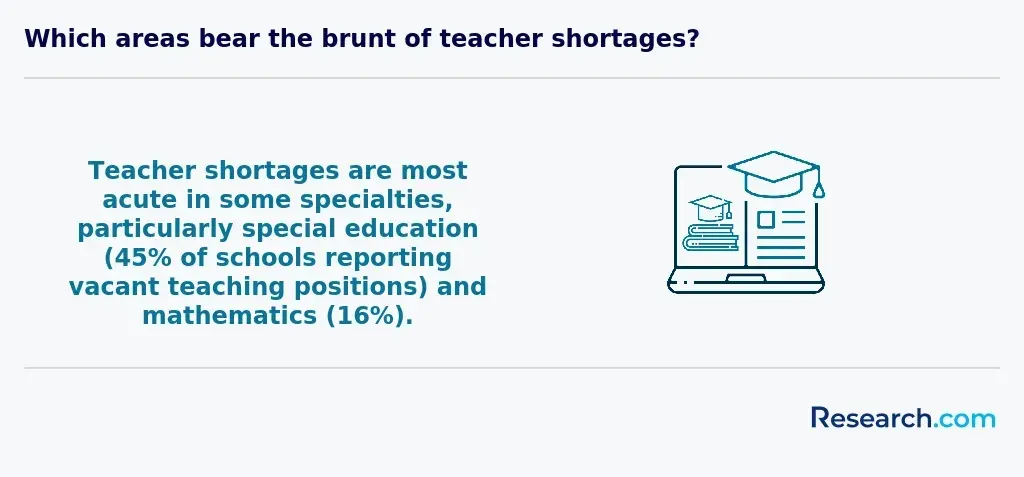
- Shortage-related opportunities: North Carolina has shortages in areas such as math, science, and special education at middle and high school levels. Elementary teachers with dual credentials or willingness to retrain may find additional options.
Salary outcomes vary by district, experience, supplemental pay, education level, local funding, and role. Candidates should compare district salary schedules before accepting a position and should not assume that statewide averages predict individual earnings.
What support resources are available for new teachers in North Carolina?
New elementary teachers need support with lesson planning, classroom management, parent communication, assessment, student behavior, and licensure obligations. North Carolina schools and districts may provide several forms of structured assistance.
| Resource | How it helps new teachers |
| Beginning Teacher Support Program | Provides mentorship and structured support during the first three years of teaching, including guidance on planning, management, and professional expectations. |
| Professional Learning Communities | Allow teachers to collaborate on curriculum, analyze student work, share strategies, and solve classroom problems with colleagues. |
| Regional Education Service Alliances | Offer workshops, training, and educator resources across regions of North Carolina. |
| Online professional development courses | Provide flexible training in topics such as digital literacy, differentiated instruction, and classroom management. |
| School-based mentors and instructional coaches | Help new teachers translate program knowledge into day-to-day classroom decisions. |
When interviewing with districts, new teachers should ask what support is provided, how mentors are selected, whether release time is available for professional learning, and how beginning teachers are evaluated.
How do elementary school teachers address student mental health needs in North Carolina?
Elementary teachers are not mental health clinicians, but they play an important role in noticing changes in behavior, creating predictable routines, using trauma-informed classroom practices, and connecting students with school counselors or support staff. Teachers may receive training in emotional regulation, crisis response, social-emotional learning, and classroom de-escalation.
Collaboration is essential. Teachers should document concerns, follow school referral processes, communicate carefully with families, and work with counselors, social workers, psychologists, and administrators. Understanding professional roles can prevent confusion; Research.com’s explanation of social worker vs psychologist can help educators understand how support responsibilities differ.
Can Elementary Teachers Transition to High School Instruction in North Carolina?
Elementary teachers can transition to high school teaching, but they usually need additional subject-specific preparation and the appropriate licensure area. High school instruction requires deeper content expertise, different classroom management strategies, adolescent development knowledge, and preparation for course-specific standards.
For example, a teacher moving into high school mathematics would need to review the relevant certification expectations and content requirements. Research.com’s guide to high school math teacher qualifications in North Carolina explains that specialized pathway in more detail.
Common mistakes to avoid when becoming an elementary teacher in North Carolina
| Mistake | Why it creates problems | Better approach |
| Choosing a program without checking licensure approval | You may graduate with a degree that does not meet North Carolina teacher licensure requirements. | Get written confirmation that the program prepares graduates for North Carolina elementary licensure. |
| Focusing only on tuition | Fees, exams, books, transportation, and student teaching costs can change the real price. | Build a full cost estimate before enrolling. |
| Waiting too long to prepare for Praxis exams | Failed or delayed exams can postpone licensure and job offers. | Start exam preparation before the final semester and use practice tests early. |
| Assuming online programs are automatically accepted | Some online programs may not align with North Carolina approval rules. | Verify accreditation, program approval, field placement support, and state-specific requirements. |
| Ignoring renewal rules until the last year | Teachers may scramble to complete CEUs and documentation. | Track professional development every year of the five-year license cycle. |
| Relying only on rankings | A highly ranked school may not be the best fit for your location, budget, timeline, or support needs. | Compare accreditation, field experience, advising, exam preparation, cost, and placement outcomes. |
Here’s What Graduates Have to Say About Becoming an Elementary School Teacher in North Carolina
"Choosing elementary teaching in North Carolina has been deeply meaningful for me. The early support I received from mentors helped me understand classroom routines, student needs, and professional expectations. On my first day, seeing how eager my students were reminded me why I entered education. Watching children gain confidence is still the most rewarding part of the work." — Gerry
"I wanted a career where I could serve my community directly. Teaching in North Carolina has allowed me to work with students and families from many backgrounds, and that diversity has made me a stronger educator. The relationships I have built with children, parents, and colleagues make the work feel much larger than a job." — Robbie
"Professional growth has been one of the strongest parts of my teaching experience in North Carolina. Workshops, collaboration time, and support from other educators have helped me keep improving. Being part of a community of teachers who care about their students pushes me to keep learning and refining my practice." — Dennis
Other Things You Should Know about Becoming an Elementary School Teacher in North Carolina
How can I finance my teacher education in North Carolina?
Financing teacher preparation requires planning before you enroll. Start by estimating total program cost, then compare grants, scholarships, loans, work-study, and teacher-specific programs. The goal is to reduce borrowing while staying in a pathway that leads to licensure.
Federal Student Aid
- FAFSA: Complete the Free Application for Federal Student Aid to determine eligibility for federal grants, loans, and work-study. In North Carolina, the average federal grant awarded is around $4,000.
- Pell Grants: Students with financial need may qualify for Pell Grants, which do not require repayment. For the 2023-2024 academic year, the maximum award is $7,395.
State-Specific Programs
- North Carolina Teaching Fellows Program: This competitive scholarship program offers up to $8,250 per year for students preparing to teach in critical shortage areas, including elementary education. Recipients commit to teaching in North Carolina for four years after graduation.
- NC Education Lottery Scholarship: This program supports eligible students attending participating North Carolina colleges and universities, with awards averaging around $1,000.
Scholarships for Future Teachers
- TEACH Grant: The Teacher Education Assistance for College and Higher Education Grant offers up to $4,000 per year for students who commit to teaching in high-need fields, including elementary education, for at least four years.
- Local scholarships: Community foundations, civic organizations, districts, and colleges may offer scholarships for aspiring teachers. Ask the financial aid office at each school you are considering.
Private Lenders
- Student loans: If grants and scholarships do not cover the full cost, federal student loans generally offer stronger borrower protections than many private loans. Exhaust federal options before considering private lenders.
What is the fastest way to become a teacher in North Carolina?
The fastest route depends on whether you already have a bachelor’s degree. First-time college students usually need a bachelor’s degree in elementary education, which typically takes four years. Some accelerated programs may be completed in as little as three years, including options at institutions such as the University of North Carolina at Charlotte and North Carolina Central University.
Career changers who already hold a bachelor’s degree may be able to use an alternative pathway, but they still need to complete required teacher preparation, field experience, exams, background checks, and licensure paperwork. Speed should not come at the expense of approval. Before choosing an accelerated or alternative route, confirm that it leads to the North Carolina license you need.
What is the job satisfaction rate among elementary school teachers in North Carolina?
Recent surveys indicate that approximately 70% of elementary school teachers in North Carolina report being satisfied with their jobs. Nationally, teacher job satisfaction is around 75%. These numbers suggest that many teachers value the work, but satisfaction can vary widely based on school leadership, workload, planning time, class size, compensation, and community support.
Teachers often cite relationships with students, collaboration with colleagues, and opportunities for professional development as meaningful parts of the job. Programs such as the North Carolina Teacher Leadership Program can also support satisfaction by giving educators pathways to influence instruction and school improvement.
Related Articles for Nearby States
- 2027 How to Become an Elementary School Teacher in South Carolina: Requirements & Certification
- 2027 How to Become an Elementary School Teacher in Virginia: Requirements & Certification
- 2027 How to Become an Elementary School Teacher in Georgia: Requirements & Certification
- 2027 How to Become an Elementary School Teacher in Tennessee: Requirements & Certification
- 2027 How to Become an Elementary School Teacher in West Virginia: Requirements & Certification
- 2027 How to Become an Elementary School Teacher in Kentucky: Requirements & Certification
- 2027 How to Become an Elementary School Teacher in Florida: Requirements & Certification
- 2027 How to Become an Elementary School Teacher in Maryland: Requirements & Certification
- 2027 How to Become an Elementary School Teacher in Alabama: Requirements & Certification
- 2027 How to Become an Elementary School Teacher in Pennsylvania: Requirements & Certification
References:
- dpi.nc.gov (30 Jun 2024). Professional Educator's License Renewal. North Carolina Department of Public Instruction
- online-distance.ncsu.edu (n.d.). Elementary Education. NC State University
- teachelementary.org (26 Feb 2014). Elementary Teaching Certification in North Carolina. Teach Elementary
- masters-education.com (n.d.). Teaching in North Carolina. Masters in Education
- northcarolina.teach.org (n.d.). Find Your Teacher Career Path. Teach North Carolina
Key Insights
- Licensure alignment is the most important decision. Choose a regionally accredited institution and a teacher preparation pathway that is accepted for North Carolina elementary licensure.
- Online programs can work, but field experience is still in person. Confirm placement support, exam alignment, and North Carolina approval before enrolling in an online program.
- Plan for more than tuition. Budget for books, testing, licensure fees, background checks, transportation, and possible room and board.
- Traditional and alternative pathways serve different candidates. Traditional programs fit first-time education majors; alternative routes may work better for career changers who already hold a degree.
- Testing can delay your timeline. Because Praxis results matter for licensure, start preparation early and leave time for retakes if needed.
- Renewal is part of the career, not an afterthought. Track CEUs throughout the five-year license cycle and verify current requirements with NCDPI.
- Elementary teaching can lead to many roles. With experience and additional preparation, teachers can move into special education, literacy, STEM, preschool, private school teaching, instructional coaching, administration, policy, or education services.
Other Things You Should Know about Becoming an Elementary School Teacher in North Carolina
North Carolina teachers must complete 8 Continuing Education Units, or 80 renewal credits, for each five-year license renewal cycle. At least 4 CEUs must come from a regionally accredited college or approved provider, and the rest may be approved professional development.
To maintain an elementary teaching license in North Carolina, teachers must complete 8 continuing education credits every 5 years, including 3 in their subject area, 3 in literacy, and 2 in digital learning competencies as of 2027.


