2027 How to Become a Special Education Teacher in Ohio: Requirements & Certification

Co-Founder and Chief Data Scientist
Becoming a special education teacher in Ohio is a licensing decision, a training decision, and a career-fit decision. The role can be deeply meaningful, but it also comes with legal responsibilities, documentation demands, collaboration with families and specialists, and the need to support students whose learning, communication, behavioral, or physical needs vary widely. With approximately 17% of Ohio’s public school students relying on special education services, schools need educators who understand individualized instruction, inclusive classrooms, assistive technology, and compliance with state and federal requirements.
This guide explains how to become a special education teacher in Ohio, including the education path, licensing requirements, timeline, salary expectations, job demand, professional development options, scholarships, advanced career paths, and practical questions to ask before choosing a program. It is written for future teachers, career changers, current paraprofessionals, and licensed educators considering a move into special education.
Quick Answer: How do you become a special education teacher in Ohio?
To become a special education teacher in Ohio, you typically need a bachelor’s degree in special education or a closely related teacher preparation field, supervised student teaching, passing scores on state-required licensure exams, background checks and fingerprinting, and an Ohio teaching license aligned with special education. Many educators complete the process in about four to five years, though career changers, part-time students, and graduate students may take longer. A master’s degree is optional but can support advancement into leadership, diagnostic, consulting, or specialist roles.
Key Things You Should Know About Becoming a Special Education Teacher in Ohio
- Ohio's education sector anticipates a steady demand for special education teachers, with a projected growth rate of 7% through 2030, reflecting increasing student needs.
- The average salary for special education teachers in Ohio is approximately $50,996 annually, with earnings affected by district, experience, education level, certifications, and local salary schedules.
- Professional learning matters in this field. Organizations like the Ohio Coalition for the Education of Children with Disabilities and the Council for Exceptional Children can help teachers strengthen skills in IEPs, behavior supports, inclusive instruction, and family collaboration.
- Large districts, including Columbus City Schools and Cleveland Metropolitan School District, are among the employers that commonly need qualified special education professionals.
- What education do you need to become a special education teacher in Ohio?
- How long does it take to become a special education teacher in Ohio?
- What are Ohio’s licensing requirements for special education teachers?
- What is the job demand for special education teachers in Ohio?
- How much do special education teachers in Ohio earn?
- What professional development options are available in Ohio?
- What advanced roles can experienced special education teachers pursue?
- What challenges should future special education teachers expect?
- How do Ohio special education laws affect classroom practice?
- Are scholarships and grants available for future special education teachers?
- How is assistive technology changing special education in Ohio?
- What financial aid options can reduce the cost of a special education degree?
- How can you find an affordable Ohio teaching certification pathway?
- How can online education support career advancement?
- Can school psychology certification strengthen special education practice?
- Can complementary certifications expand career options?
- How can early childhood credentials help special education teachers?
- How does family engagement improve special education outcomes?
- Should special education teachers consider BCBA certification?
- Can mentorship improve retention and advancement?
- Are there alternative teaching pathways for special education professionals in Ohio?
- How can special education teachers protect work-life balance?
- What related careers can special education teachers move into?
- How can a political science background support special education advocacy?
What education do you need to become a special education teacher in Ohio?
The standard path to special education teaching in Ohio begins with a state-approved teacher preparation program. The goal is not only to learn teaching theory but also to build the practical skills needed to design individualized instruction, adapt materials, manage behavior, collaborate with families, and meet legal requirements for students with disabilities.
- Bachelor’s degree: Most candidates start with a bachelor’s degree in special education or a closely related education field. Ohio institutions such as Ohio State University and Kent State University offer programs designed to prepare future educators for classrooms serving students with diverse learning needs.
- Teacher preparation coursework: A qualifying program should include foundations of education, assessment, instructional design, disability categories, classroom management, intervention strategies, inclusive education, and supervised clinical practice.
- Academic performance: A minimum cumulative GPA of 2.75 is generally required for graduation and licensure. Students should confirm GPA rules with the specific college, school of education, and Ohio licensing pathway they plan to use.
- Student teaching: Fieldwork is essential. Candidates complete supervised placements where they practice lesson planning, IEP implementation, data collection, accommodations, modifications, and collaboration with general education teachers.
- Graduate study: A master’s degree is not always required for entry-level teaching, but it can be useful for teachers who want advanced expertise or future roles such as educational diagnostician, behavior intervention specialist, consultant, or program leader. The University of Cincinnati, for example, offers a Master of Education in Special Education.
| Education option | Best for | What to check before enrolling |
| Bachelor’s in special education | First-time college students who want the most direct path into licensure | State approval, student teaching placements, licensure alignment, GPA requirements, and support for exams |
| Bachelor’s in education with special education preparation | Students who want broader teaching preparation with a special education focus | Whether the program clearly leads to the special education license you need in Ohio |
| Master’s in special education | Licensed teachers, career changers with qualifying backgrounds, or educators seeking advancement | Admission requirements, practicum expectations, online availability, and whether the program supports initial or advanced licensure |
| Alternative or post-baccalaureate pathway | Adults who already hold a bachelor’s degree and want to transition into teaching | Eligibility rules, field placement requirements, exam preparation, cost, and whether the pathway is accepted for Ohio licensure |
Before choosing a program, ask a direct question: “Will completing this program make me eligible for the Ohio special education license I want?” If the answer is unclear, contact the institution’s licensure officer before you commit money or time.
How long does it take to become a special education teacher in Ohio?
For most new college students, the full path takes about four to five years. The timeline depends on whether you attend full time or part time, whether your program includes licensure preparation, how quickly you complete student teaching, and how long you need to prepare for required exams.
| Step | Typical time | What happens during this stage |
| Bachelor’s degree | About four years | You complete general education, education courses, special education coursework, and field experiences. |
| Teacher preparation program | Roughly four to eight months if completed after the bachelor’s degree | Candidates complete professional education requirements, clinical practice, and licensure preparation. |
| Student teaching or internship | One semester, or about four to five months | You teach under supervision and demonstrate readiness for classroom responsibilities. |
| Licensure exams | Several months of preparation for many candidates | You study for and pass the exams required for the license area. |
| Optional master’s degree | One to two years | You deepen specialization and may prepare for advanced roles or higher salary lanes where district policies allow. |
Students who enter college directly after high school and remain full time may finish the bachelor’s and licensure process in about five years. Career changers may move faster if they already have transferable coursework, but they still need to meet Ohio preparation, clinical, exam, and background check requirements.
Institutions such as Ohio State University and the University of Cincinnati offer programs for future special education teachers. As more adults seek flexible preparation options, online and hybrid coursework can make the path more accessible, but student teaching and licensure requirements still need careful planning.
What are Ohio’s licensing requirements for special education teachers?
Ohio special education teachers must hold the appropriate teaching license for their assignment. Licensure is more than a formality: it verifies that an educator has completed an approved preparation route, met testing requirements, and passed student safety checks.
- Complete an approved preparation pathway: Candidates typically finish a bachelor’s degree and teacher preparation program with special education coursework and supervised clinical experience.
- Pass required licensure exams: Ohio requires candidates to pass exams that measure professional teaching knowledge and special education content knowledge. Candidates should verify the exact exams for their intended licensure area before registering.
- Submit background checks and fingerprinting: Student safety requirements include background screening and fingerprinting as part of the licensure process.
- Provide academic documentation: Candidates must verify degree completion, coursework, and program recommendation when applying for licensure.
- Renew the license: Once licensed, teachers must manage renewal requirements. Ohio teacher licenses are renewed every five years, and renewal generally involves continuing education, professional development, or approved learning activities.
| Licensure requirement | Why it matters | Practical tip |
| Approved educator preparation | It connects your degree to Ohio’s teaching license requirements. | Ask the program for written confirmation of the license area it prepares you for. |
| Student teaching | It shows you can apply special education practices in real classrooms. | Look for placements that include IEP meetings, co-teaching, progress monitoring, and family communication. |
| Licensure exams | Passing scores are required before you can be licensed. | Plan exam dates early so a failed attempt does not delay hiring. |
| Background checks | Schools must verify that candidates meet student safety standards. | Complete this step as soon as your program or employer allows. |
| Renewal every five years | Teachers must remain current in professional practice. | Track professional development hours throughout the license cycle instead of waiting until renewal time. |
What is the job demand for special education teachers in Ohio?
Ohio continues to need special education teachers because public and private schools must serve students with disabilities and provide legally required supports. The state has approximately 65,730 special education teachers working in public and private school settings, and special education remains a core staffing area for districts focused on inclusive education.
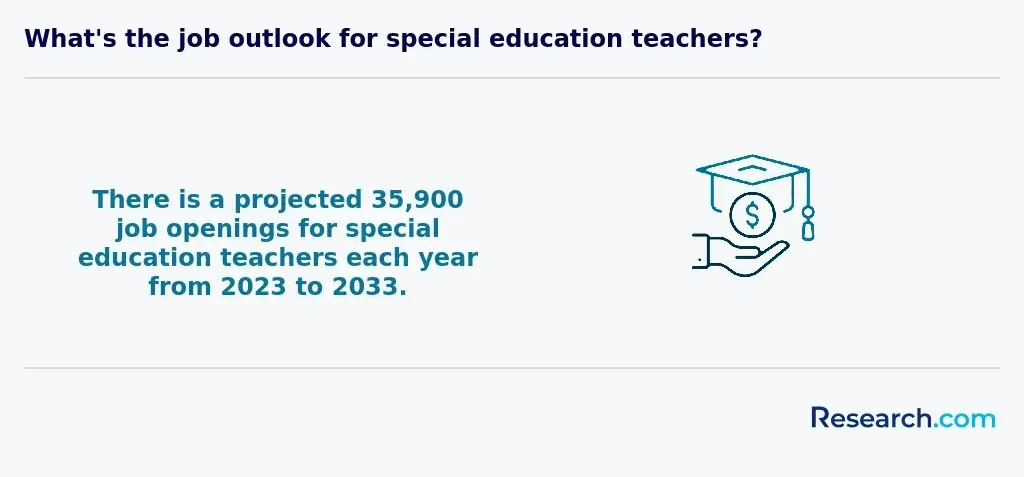
The employment picture is best understood in two parts. First, overall national employment growth for special education teachers is expected to show little to no change over the next decade. Second, Ohio is still anticipated to have around 1,460 job openings for special education teachers each year, largely because schools must replace teachers who retire, transfer, or leave the profession.
For candidates, this means demand is real, but location and specialization matter. Urban districts may have different staffing needs than rural districts. Schools may also prioritize teachers with strong skills in behavior intervention, autism support, early childhood special education, transition planning, assistive technology, or inclusive co-teaching.
If you are comparing licensure in other states, requirements differ by state. For example, candidates considering South Carolina should review South Carolina educator certification requirements before assuming an Ohio pathway will transfer directly.
How much do special education teachers in Ohio earn?
Special education teachers in Ohio earn an average salary of approximately $50,996. Actual pay depends on district salary schedules, years of experience, education level, collective bargaining agreements where applicable, local cost of living, and whether the teacher holds additional credentials or advanced degrees.
Urban districts may offer different salary opportunities than rural districts because funding structures, staffing needs, and cost-of-living pressures vary. However, salary should not be evaluated in isolation. Benefits, retirement contributions, class size, planning time, caseload expectations, support staff, and administrative backing can significantly affect the real value and sustainability of a position.
| Salary factor | How it can affect earnings or job quality | Question to ask before accepting a job |
| District salary schedule | Determines pay by education level and years of service. | Where would I enter on the salary schedule? |
| Advanced degree | May qualify teachers for higher salary lanes depending on district policy. | Does this district compensate master’s-level preparation? |
| Caseload and assignment | Heavy caseloads can increase workload even when salary is similar. | How many students will I serve, and what disability categories are included? |
| Planning and support time | Time for IEP work, collaboration, and documentation affects burnout risk. | How much protected planning time is built into the schedule? |
| Benefits | Health insurance, retirement, and leave policies affect total compensation. | What is the full benefits package, not just the base salary? |
Because salary outcomes are not guaranteed, prospective teachers should compare multiple districts and review official salary schedules whenever possible.
What professional development options are available in Ohio?
Special education changes as laws, instructional practices, assistive technologies, and student needs evolve. Ohio teachers need ongoing professional learning not only to renew licenses but also to stay effective in IEP development, inclusive instruction, behavior support, family engagement, and data-based decision-making.
- Council for Exceptional Children (CEC) events: CEC offers webinars, conferences, and training focused on evidence-based strategies for students with exceptionalities. These opportunities can help teachers keep current with research-informed practice.
- Ohio Department of Education workshops: State-sponsored training may address IEPs, compliance, interventions, assessment, and instructional improvement for students with disabilities.
- Annual CEC Convention & Expo: Scheduled for March 2025 in Baltimore, this event gives special education professionals a chance to learn from experts, compare practices, and build professional networks.
- District-based training: Local districts may provide training on curriculum tools, behavior systems, assistive technology, crisis prevention, co-teaching models, and compliance procedures.
- Professional organizations and parent advocacy groups: Groups such as the Ohio Coalition for the Education of Children with Disabilities can help educators better understand family perspectives and student rights.
Teachers who are exploring certification in another state should check that state’s rules. For example, candidates looking at Oklahoma can review Oklahoma educator certification to understand how requirements may differ.
What advanced roles can experienced special education teachers pursue?
Special education can lead to several career paths beyond the classroom. Many advanced roles require graduate education, specialized credentials, district experience, or demonstrated expertise in assessment, behavior, compliance, or program leadership.
| Advanced role | What the role involves | Who it may fit |
| Educational diagnostician | Assesses student learning needs, supports evaluation processes, and collaborates with families and educators on individualized plans. | Teachers who enjoy assessment, problem-solving, and data interpretation. |
| Behavior intervention specialist | Designs and supports behavior plans, analyzes behavior data, and helps teams implement interventions. | Educators interested in behavior support, autism services, and intensive intervention. |
| Director of special education | Oversees programs, staffing, compliance, services, and district-level improvement efforts. | Experienced teachers who want leadership responsibility and are comfortable with policy and administration. |
| Independent consultant | Provides training, coaching, program review, or specialized support to schools and organizations. | Teachers with strong expertise, communication skills, and an interest in working across settings. |
| Instructional coach or inclusion specialist | Supports teachers with lesson design, accommodations, co-teaching, and inclusive practices. | Educators who like mentoring colleagues and improving classroom systems. |
Districts such as Cleveland Metropolitan School District and Cincinnati Public Schools may offer specialized or leadership opportunities as teachers build experience. A master’s degree in special education can also strengthen preparation for roles that involve assessment, coaching, or program oversight.
What challenges should future special education teachers expect?
Special education can be rewarding, but prospective teachers should enter the field with a realistic view of the work. The strongest candidates are not only compassionate; they are organized, legally aware, collaborative, emotionally steady, and willing to keep learning.
- Staffing shortages: Many schools struggle to recruit and retain qualified special education teachers. When positions remain unfilled, current teachers may face larger workloads or more complex caseloads.
- High demands and modest compensation concerns: Special education teachers often balance instruction, documentation, meetings, family communication, behavior support, and legal compliance. When pay does not feel aligned with workload, burnout risk can rise.
- Administrative workload: IEP documentation, compliance reports, progress monitoring, evaluation paperwork, and meeting preparation can take substantial time away from direct instruction if systems are not well managed.
- Uneven resources: Support can vary by district. Some teachers have access to paraprofessionals, specialists, technology, and coaching, while others work with limited materials or staffing.
- Insufficient mentorship: New teachers need guidance on IEPs, classroom routines, family communication, behavior plans, and collaboration. Without strong mentoring, the first years can feel overwhelming.
| Common mistake | Why it creates problems | Better approach |
| Choosing a program without confirming Ohio licensure alignment | You may finish coursework that does not lead to the license you need. | Ask the licensure officer to identify the exact Ohio license connected to the program. |
| Comparing schools by tuition only | Low tuition may not offset weak advising, limited placements, or poor exam support. | Compare total cost, field placement quality, exam preparation, completion support, and licensure outcomes. |
| Ignoring caseload expectations during job interviews | A higher salary may come with an unsustainable workload. | Ask about student numbers, disability categories, planning time, paraprofessional support, and meeting schedules. |
| Assuming online programs are automatically acceptable | Some online coursework may not meet Ohio licensure or student teaching requirements. | Verify accreditation, state approval, clinical placement arrangements, and licensure eligibility. |
| Underestimating paperwork and legal compliance | Missed deadlines or weak documentation can affect services and district compliance. | Build systems for progress monitoring, IEP timelines, parent contact, and meeting preparation early. |
If the barriers in Ohio lead you to compare teaching in another state, review each state’s credential rules carefully. For instance, future teachers considering Illinois can explore Illinois teaching credentials requirements before making a move.

How do Ohio special education laws affect classroom practice?
Special education teachers work within a legal framework. The Individuals with Disabilities Education Act (IDEA) requires that eligible students with disabilities receive a free appropriate public education (FAPE). In practice, that means teachers must help design, implement, document, and review individualized education programs, commonly called IEPs.
Ohio’s special education framework emphasizes inclusive practices, appropriate services, and equitable access. Teachers often collaborate with general education teachers, intervention specialists, school psychologists, speech-language pathologists, occupational therapists, administrators, and families to support each student’s plan.
The Ohio Medicaid Schools Program can allow schools to receive reimbursement for certain services provided to students with disabilities. While reimbursement is typically handled at the administrative level, it can affect available services, documentation expectations, and coordination among school professionals.
Teachers also need to be aware of equity concerns, including disproportionality in identification, discipline, placement, and services. Careful assessment, culturally responsive practice, and accurate documentation help ensure that students are evaluated and supported fairly.
Educators who are interested in research, interpretation, and evidence-based documentation may also find transferable skill discussions in resources on required skills for historians, especially where analysis and source evaluation are relevant to advocacy and policy work.
Are scholarships and grants available for future special education teachers in Ohio?
Teacher preparation can be expensive, so future special education teachers should look for scholarships, grants, fellowships, employer tuition support, and federal aid before borrowing. Some awards are specifically connected to education, disability services, equity, or teacher diversity.
- New Futures Scholars Program: This program provides up to $7,800 to students studying education, including special education. It is administered by various educational organizations in Ohio to support future teachers.
- Bethesda Auxiliary Scholarships: The Bethesda Auxiliary, in partnership with AbleLight, supports individuals with intellectual and developmental disabilities and offers related educational assistance. Its initiatives include $15,000 in scholarships for students in disability-related fields and a $5,000 contribution to a group home in the Dominican Republic.
- The Black Teacher Pipeline Fellowship: The Center for Black Educator Development's Black Teacher Pipeline Fellowship supports Black college students pursuing education careers. It offers up to $5,000 per year for four years and $20,000 in stipends at the start of their fifth teaching year, along with academic support, coaching, and a focus on educational equity and racial justice.
Students should also ask colleges about school-specific scholarships, graduate assistantships, tuition discounts for paraprofessionals, and aid for shortage-area teaching fields. If you are comparing financial requirements in other states, resources such as Nevada teaching certification cost can help you understand how certification expenses may differ by location.
How is assistive technology changing special education in Ohio?
Assistive technology is one of the most important trends affecting special education classrooms. Tools such as communication devices, adaptive software, text-to-speech supports, speech-to-text tools, accessible digital materials, visual schedules, and interactive platforms can help students participate more fully in instruction.
Technology is most effective when it is tied to a student’s IEP goals and supported by teacher training. A device alone does not improve learning; educators need to know when to use it, how to collect progress data, how to teach students to use it independently, and how to coordinate with families and related service providers.
Teachers who want stronger digital teaching skills may also explore broader Ohio teaching pathways, including guidance on how to become an English teacher in Ohio, to understand how literacy instruction, accessibility, and technology-supported learning can overlap across teaching fields.
What financial aid options can reduce the cost of a special education degree?
The cost of a special education degree, including a traditional or online bachelor of education online degree, can affect whether students can enter the teaching workforce without excessive debt. The best approach is to combine multiple funding sources and compare net cost rather than sticker price.
- New Futures Scholars Program: This program provides up to $7,800 to students pursuing education, including special education.
- Ohio Department of Education Grants: The Ohio Department of Education offers various grants for aspiring educators, and some may apply to special education preparation.
- Institutional aid: Colleges may offer scholarships for education majors, transfer students, graduate students, or students preparing for high-need teaching areas.
- Employer assistance: Paraprofessionals, aides, and school employees should ask whether their district offers tuition reimbursement or partnerships with educator preparation programs.
- Federal financial aid: Students should complete the FAFSA and compare grants, work-study, and loan options before choosing a program.
| Cost question | Why it matters |
| What is the total program cost, including fees and testing? | Tuition is only one part of the expense; exams, background checks, books, and commuting can add up. |
| Does the program place students for fieldwork? | Arranging your own placement can delay completion or create logistical barriers. |
| Can previous credits transfer? | Transfer credit can shorten the timeline and reduce cost. |
| Are scholarships renewable? | One-year awards may not lower the full degree cost as much as expected. |
| Does the program lead to Ohio licensure? | A cheaper program is not a good value if it does not qualify you for the license you need. |
How can you find an affordable Ohio teaching certification pathway?
An affordable teaching certification route should be low-cost and licensure-aligned. Do not choose the cheapest option until you verify accreditation, state approval, field placement support, licensure exam preparation, and total fees. A program that appears inexpensive can become costly if credits do not transfer, student teaching is delayed, or the coursework does not match Ohio requirements.
Prospective special education teachers can compare teaching credential programs in Ohio to identify options that balance cost, speed, and preparation quality. The right pathway should help you enter the classroom prepared, not merely licensed.
How can online education support career advancement?
Online education can be useful for working teachers, paraprofessionals, parents, and career changers who need flexibility. It can also help licensed educators add graduate-level preparation or deepen expertise without leaving their current jobs.
However, online does not automatically mean easier, cheaper, or licensure-ready. Students should check whether the program is accredited, whether it is approved for Ohio licensure if initial certification is the goal, how student teaching is arranged, and whether faculty have experience in special education practice. To compare broader options, review quality online education programs and focus on programs that match your credential goal.
Can school psychology certification strengthen special education practice?
School psychology knowledge can help special education teachers better understand assessment, behavior, mental health, crisis response, and intervention planning. While a special education teacher and a school psychologist have different roles, cross-disciplinary knowledge can improve collaboration and IEP decision-making.
Teachers considering a formal move into school psychology should review school psychologist requirements Ohio because the preparation and certification process is separate from classroom teaching licensure.
Can complementary certifications expand career options?
Additional credentials can broaden a special education teacher’s career path, especially when they address student needs that overlap with mental health, behavior, communication, family support, or transition planning. Not every certification is necessary, so teachers should choose credentials based on the students they serve and the roles they want next.
For example, educators interested in behavioral health and intervention systems may study related pathways such as how to become a substance abuse counselor in Ohio. This does not replace special education licensure, but it can help teachers understand how counseling, family systems, and student well-being intersect with school support.
How can early childhood credentials help special education teachers?
Early childhood training can be valuable for special education teachers who work with young learners or students with developmental delays. It helps educators understand developmental milestones, early intervention, play-based learning, family-centered practice, and age-appropriate assessment.
Teachers who want to work with younger children can review preschool teacher requirements in Ohio to understand how early childhood preparation may complement special education goals.
How does family engagement improve special education outcomes?
Family partnership is central to effective special education. Parents and guardians often know a student’s communication preferences, triggers, strengths, routines, medical needs, and long-term goals better than anyone else. Teachers who build trust with families can create more accurate IEP goals, improve consistency between home and school, and address concerns before they become conflicts.
- Use plain language when explaining IEP goals, services, progress data, and accommodations.
- Contact families with positive updates, not only when problems occur.
- Offer multiple communication options, such as email, phone calls, meetings, and digital platforms when appropriate.
- Document communication carefully and respectfully.
- Invite families to share what works at home and what goals matter most to them.
Teachers who want broader classroom communication strategies may find useful preparation themes in how to become an elementary school teacher in Ohio, especially where family engagement and foundational instruction overlap.
Should special education teachers consider BCBA certification?
Board Certified Behavior Analyst (BCBA) certification can be valuable for special education teachers who want advanced expertise in behavior assessment and intervention. It may be especially relevant for educators working with students with autism, significant behavioral needs, or intensive intervention plans.
BCBA certification is not required for every special education teacher, and it involves a separate professional pathway. Teachers should consider it if they want to specialize in behavior analysis, move into consultation, or take on roles that require advanced behavioral assessment. For details, review how to become a BCBA in Ohio.
Can mentorship improve retention and advancement?
Mentorship can make the difference between surviving the first years and building a sustainable special education career. New teachers need practical guidance on IEP timelines, classroom routines, paraprofessional collaboration, parent meetings, behavior plans, progress monitoring, and emotional resilience.
Strong mentorship can come from senior intervention specialists, instructional coaches, administrators, related service providers, or peer teacher groups. Some educators also benefit from learning how school counselors support student development and family systems; related guidance on school counselor requirements in Ohio can help teachers understand another part of the student support network.
Are there alternative teaching pathways for special education professionals in Ohio?
Special education professionals may consider alternative teaching settings, including private schools, specialized programs, charter schools, tutoring organizations, and nonprofit education services. These settings can offer different class sizes, staffing models, student populations, and instructional expectations.
Private schools may have different requirements from public schools, so educators should not assume that one credential automatically applies everywhere. If you are considering this route, review how to become a private school teacher in Ohio and confirm each employer’s expectations.
Some private or specialized settings focus on areas such as autism spectrum disorders, language-based learning differences, intensive behavioral support, or transition services. These environments can be a good fit for teachers who want deeper specialization, but candidates should still ask about training, caseload, salary, benefits, and student support resources.
How can special education teachers protect work-life balance?
Work-life balance in special education is not just about personal comfort; it affects teacher retention, instructional quality, and student consistency. The role involves emotional labor, legal deadlines, meetings, documentation, lesson planning, and direct instruction. Sustainable systems matter.
- Set realistic boundaries: Identify which tasks must be completed during contract hours and which require scheduled planning time. Avoid making late-night paperwork a permanent routine.
- Build repeatable systems: Use calendars, checklists, progress-monitoring templates, and IEP deadline trackers to reduce last-minute stress.
- Prioritize legal deadlines: IEP timelines, evaluation dates, and parent communication should be organized before less urgent tasks.
- Collaborate instead of working alone: Share strategies with general education teachers, paraprofessionals, therapists, counselors, and administrators.
- Use professional development strategically: Choose training that solves real problems, such as behavior support, co-teaching, assistive technology, or documentation workflows.
- Protect recovery time: Exercise, hobbies, sleep, relationships, and quiet time are not luxuries in a high-demand helping profession.
Tip for aspiring educators: If you are still exploring teaching majors and want a less complex starting point before specializing, you may want to compare options such as the easiest education major. Just remember that special education requires specialized preparation regardless of the undergraduate route.
What related careers can special education teachers move into?
Special education teachers develop skills that can transfer into assessment, intervention, consulting, advocacy, administration, curriculum design, and related services. Some transitions require additional graduate education or licensure, while others build directly on classroom experience.
- Educational diagnostician or assessment specialist
- Behavior intervention specialist
- Special education coordinator or director
- Instructional coach
- Assistive technology specialist
- Transition coordinator
- Special education consultant
- Advocacy or nonprofit program roles
- Related service fields, including pathways connected to how to become a speech language pathologist in Ohio
The best transition depends on whether you prefer direct student work, systems leadership, assessment, family advocacy, or specialized clinical preparation.
How can a political science background support special education advocacy?
A political science major can be useful for educators who want to understand policy, public funding, legislation, civil rights, and state education governance. Special education is shaped by federal law, state rules, district budgets, administrative decisions, and advocacy from families and community organizations.
Teachers with policy literacy may be better prepared to interpret proposed regulations, participate in district committees, communicate with policymakers, and advocate for equitable resources. This background does not replace teaching preparation, but it can strengthen the advocacy side of special education work.
Questions to ask before choosing a special education program in Ohio
- Is the program approved for the Ohio special education license I want?
- What disability categories, grade bands, or licensure areas does the program prepare me to teach?
- How are student teaching placements arranged?
- What support is available for licensure exams?
- What is the total cost after tuition, fees, books, testing, and background checks?
- Can I complete coursework online, and how are in-person requirements handled?
- What percentage of students complete the program and obtain licensure?
- Does the program support transfer students or career changers?
- Are there partnerships with Ohio school districts?
- What scholarships, grants, or tuition assistance options are available?
Key Insights
- Ohio special education teachers typically need a bachelor’s degree, approved teacher preparation, supervised student teaching, passing licensure exams, background checks, and an Ohio teaching license.
- The common timeline is about four to five years for full-time students, with optional graduate study adding one to two years.
- Ohio has approximately 65,730 special education teachers and around 1,460 job openings expected each year, even though national employment growth is projected to show little to no change.
- The average salary for special education teachers in Ohio is approximately $50,996, but district salary schedules, workload, benefits, and support systems should all factor into job decisions.
- Do not choose a program based only on cost or convenience. Confirm state approval, licensure alignment, clinical placement support, accreditation, and exam preparation before enrolling.
- Assistive technology, inclusive education, behavior intervention, family engagement, and data-based IEP implementation are increasingly important skills for Ohio special education teachers.
- Advanced roles such as educational diagnostician, behavior intervention specialist, director of special education, consultant, and instructional coach can expand long-term career options.
- Work-life balance requires systems: deadline tracking, collaboration, realistic boundaries, mentorship, and targeted professional development.
Related Articles for Nearby States
- 2027 How to Become a Special Education Teacher in Indiana: Requirements & Certification
- 2027 How to Become a Special Education Teacher in Kentucky: Requirements & Certification
- 2027 How to Become a Special Education Teacher in West Virginia: Requirements & Certification
- 2027 How to Become a Special Education Teacher in Pennsylvania: Requirements & Certification
- 2027 How to Become a Special Education Teacher in Michigan: Requirements & Certification
- 2027 How to Become a Special Education Teacher in Illinois: Requirements & Certification
- 2027 How to Become a Special Education Teacher in Virginia: Requirements & Certification
- 2027 How to Become a Special Education Teacher in Tennessee: Requirements & Certification
- 2027 How to Become a Special Education Teacher in North Carolina: Requirements & Certification
- 2027 How to Become a Special Education Teacher in Missouri: Requirements & Certification
References:
- AbleLight. (2024). Join the Bethesda Auxiliary | Get Involved | AbleLight. https://ablelight.org/get-involved/auxiliary
- Black Teacher Pipeline Fellowship - CBED website. (2024, May 21). CBED Website. https://thecenterblacked.org/black-teacher-pipeline-fellowship
- Salary.com (2024). Special Education Teacher Salary in Ohio. salary.com https://www.salary.com/research/salary/benchmark/special-education-teacher-salary/oh
- National Center for Education Statistics. (n.d.). Fast Facts: Students with disabilities (64). https://nces.ed.gov/fastfacts/display.asp?id=64
- U.S. Department of Education (2023). 45th Annual Report to Congress on the Implementation of the Individuals with Disabilities Education Act, 2023. https://sites.ed.gov/idea/files/45th-arc-for-idea.pdf
- U.S. Bureau of Labor Statistics (2023). Occupational Outlook Handbook: Special Education Teachers. https://www.bls.gov/ooh/education-training-and-library/special-education-teachers.htm
- Kolmar, C. (2024). Special education teacher salary by State: Highest-Paid Special Education Teachers by State [2024]. Zippia. https://www.zippia.com/advice/special-education-teacher-salary-by-state
- O*Net OnLine. (n.d.). Ohio employment trends: 25-2058.00 - Special education teachers, secondary school. https://www.onetonline.org/link/localtrends/25-2058.00?st=OH
- O*Net OnLine. (n.d.). Ohio employment trends: 25-2057.00 - Special education teachers, middle school. https://www.onetonline.org/link/localtrends/25-2057.00?st=OH
- O*Net OnLine. (n.d.). Ohio employment trends: 25-2056.00 - Special education teachers, elementary school. https://www.onetonline.org/link/localtrends/25-2056.00?st=OH
Other Things You Should Know About Becoming a Special Education Teacher in Ohio
In 2027, the process for obtaining a special education teaching license in Ohio involves completing a relevant bachelor's program, passing the Ohio Assessments for Educators exams, and completing an approved teacher preparation program. After these steps, applicants must apply for licensure through the Ohio Department of Education.
To become a special education teacher in Ohio in 2027, you need a bachelor's degree in special education, completion of an accredited teacher preparation program, and passing scores on the Ohio Assessments for Educators (OAE). You must also apply for licensure through the Ohio Department of Education. Now, I will provide four questions and answers directly related to "2027 How to Become a Special Education Teacher in Ohio: Requirements & Certification."
To teach special education in Ohio in 2027, you will need a bachelor’s degree in special education or a related field, complete a teacher preparation program, and pass the Ohio Assessments for Educators. You must then apply for licensure through the Ohio Department of Education.