Research.com is an editorially independent organization with a carefully engineered commission system that’s both transparent and fair. Our primary source of income stems from collaborating with affiliates who compensate us for advertising their services on our site, and we earn a referral fee when prospective clients decided to use those services. We ensure that no affiliates can influence our content or school rankings with their compensations. We also work together with Google AdSense which provides us with a base of revenue that runs independently from our affiliate partnerships. It’s important to us that you understand which content is sponsored and which isn’t, so we’ve implemented clear advertising disclosures throughout our site. Our intention is to make sure you never feel misled, and always know exactly what you’re viewing on our platform. We also maintain a steadfast editorial independence despite operating as a for-profit website. Our core objective is to provide accurate, unbiased, and comprehensive guides and resources to assist our readers in making informed decisions.

2026 How to Become a Speech Language Pathologist in Ohio: Requirements & Certification

Imed Bouchrika, PhD

by Imed Bouchrika, PhD

Co-Founder and Chief Data Scientist

Becoming a speech-language pathologist in Ohio is a multi-step decision: you need the right graduate education, supervised clinical training, state licensure, and a realistic view of where SLPs work and what the job demands. The path is not short, but it can lead to stable work in schools, hospitals, rehabilitation centers, private practice, and teletherapy settings.

This guide explains how to become a speech-language pathologist in Ohio, what degree you need, how licensing works, what SLPs actually do, how much they can earn, and which career paths may make the most sense based on your goals. It also highlights common mistakes to avoid, questions to ask before choosing a program, and ways to compare traditional, online, and advanced education options.

Quick answer: How do you become a speech-language pathologist in Ohio?

To become a speech-language pathologist in Ohio, you generally need a master’s degree in speech-language pathology from an accredited program, supervised clinical practicum, a clinical fellowship, a passing Praxis score, and licensure through the Ohio Speech and Hearing Professionals Board. Many SLPs also pursue the CCC-SLP credential from the American Speech-Language-Hearing Association to strengthen their professional qualifications, although state licensure is the legal requirement for practice.

StepWhat you need to doWhy it matters
Earn the right degreeComplete a master’s degree in speech-language pathology from an accredited institution.Ohio licensure requires graduate-level preparation for clinical practice.
Complete clinical trainingFinish supervised practicum requirements, including 375 hours of supervised clinical experience and 25 hours of observation.Clinical hours prepare you to assess and treat real clients under supervision.
Finish a clinical fellowshipComplete at least nine months of post-graduate supervised professional practice.The fellowship helps bridge graduate school and independent practice.
Pass the examTake and pass the Praxis exam in speech-language pathology.The exam confirms that you meet national competency expectations.
Apply for Ohio licensureSubmit transcripts, clinical documentation, exam results, background check materials, and required fees.You cannot legally practice as an SLP in Ohio without state licensure.

Key things you should know about becoming a speech-language pathologist in Ohio

  • The demand for speech-language pathologists in Ohio is expected to rise, with the U.S. Bureau of Labor Statistics estimating a 25% increase in employment opportunities from 2021 to 2031.
  • As of 2023, the average salary for speech-language pathologists in Ohio is approximately $80,000 per year. Pay can differ by setting, experience, city, and employer, with some SLPs earning upwards of $100,000 in metropolitan areas.
  • Ohio’s cost of living can make the career more financially manageable than in higher-cost states. Housing costs in cities such as Columbus and Cincinnati are about 10-20% lower than the national average.
  • Teletherapy and digital health tools are changing how services are delivered. SLPs who are comfortable with technology, remote communication, and digital documentation may have an advantage in some hiring markets.
  • Ohio’s increasingly diverse population may create stronger opportunities for SLPs with bilingual skills or experience serving specific cultural and linguistic communities.
Table of Contents
  1. How do you become a speech-language pathologist in Ohio?
  2. What education do Ohio speech-language pathologists need?
  3. What does a speech-language pathologist do?
  4. How does Ohio SLP licensing and certification work?
  5. What legal and ethical rules apply to Ohio SLPs?
  6. How much do speech-language pathologists earn in Ohio?
  7. What is the Ohio job market like for SLPs?
  8. What career growth options do Ohio SLPs have?
  9. Which advanced programs and specializations can help Ohio SLPs move forward?
  10. Can Ohio SLPs pursue alternative career paths?
  11. Can an online bachelor’s degree help future Ohio SLPs?
  12. What financial aid and scholarships can support Ohio SLP students?
  13. How do Ohio SLPs collaborate with schools, hospitals, and other professionals?
  14. What challenges should Ohio SLPs expect?
  15. Can dual certification expand an SLP’s clinical options?
  16. Can mental health counseling skills strengthen SLP practice?
  17. How can school counseling knowledge support school-based SLPs?
  18. What teaching certification options relate to SLP work in Ohio?
  19. How can an Ohio SLP move into elementary teaching?
  20. Where can Ohio SLPs find mentorship and peer support?
  21. How can psychology knowledge improve SLP services?

How can you become a speech-language pathologist in Ohio?

The Ohio pathway to becoming an SLP combines graduate education, supervised clinical practice, testing, and licensure. The process is designed to make sure clinicians can evaluate communication and swallowing disorders, create treatment plans, document progress, and work safely with children and adults in clinical or educational settings.

  1. Complete a relevant undergraduate degree or prerequisites. Many students major in communication sciences and disorders, speech and hearing science, psychology, education, or a related field. If your bachelor’s degree is outside the field, you may need prerequisite courses in areas such as anatomy, audiology, language science, and communication development before entering a master’s program.
  2. Earn a master’s degree in speech-language pathology. Ohio candidates need a graduate degree from an accredited program. Most master’s programs take about two years and commonly expect strong academic preparation, including a minimum undergraduate GPA of 3.0 and competitive GRE scores. Students who need a flexible format can compare speech pathology graduate degrees online, but they should confirm clinical placement support and Ohio licensure alignment before enrolling.
  3. Finish required coursework and supervised practicum. Graduate study usually includes assessment, intervention, speech sound disorders, language disorders, fluency, voice, swallowing, audiology, and clinical methods. Ohio candidates must also complete at least 375 hours of supervised clinical experience, including 25 hours of observation.
  4. Complete a clinical fellowship. After graduation, candidates complete a supervised clinical fellowship lasting a minimum of nine months. This period allows new clinicians to refine assessment, therapy, documentation, and professional judgment before practicing independently.
  5. Pass the Praxis exam. The national speech-language pathology Praxis exam measures core knowledge needed for entry-level practice.
  6. Apply for Ohio licensure. Candidates submit documentation to the Ohio Speech and Hearing Professionals Board, including education records, clinical experience documentation, examination results, and required background check materials.
  7. Consider the CCC-SLP credential. The Certificate of Clinical Competence in Speech-Language Pathology is not the same as state licensure, but it can improve portability, employer recognition, and professional credibility.
  8. Build a focused job application. Your resume should clearly show your placements, populations served, diagnostic and therapy experience, technology skills, certifications, and readiness for the setting you want, such as schools, hospitals, rehabilitation clinics, or private practice.
Career stageTypical milestoneDecision to make
Before graduate schoolBachelor’s degree and prerequisite courseworkChoose whether to major in communication sciences or complete leveling courses later.
Graduate schoolMaster’s program and clinical practicumCompare accreditation, placement quality, cost, faculty expertise, and licensure fit.
Post-graduationClinical fellowship and Praxis examSelect a fellowship setting that matches your long-term career goals.
LicensureOhio application, background check, and documentationTrack every requirement carefully so your application is not delayed.
Early careerFirst licensed roleDecide whether to specialize in schools, medical care, pediatrics, adults, telepractice, or private practice.

What is the minimum educational requirement to become a speech language pathologist in Ohio?

The minimum educational requirement for clinical speech-language pathology practice in Ohio is a master’s degree in speech-language pathology from an accredited institution. A bachelor’s degree alone is not enough for independent SLP licensure, although it can prepare you for graduate admission.

  • Required degree level: Future SLPs need a master’s degree in speech-language pathology. A bachelor’s degree in a related area can be acceptable for graduate admission if prerequisite courses are completed. A PhD may be useful for research, university teaching, or advanced academic leadership, but it is not required for standard clinical practice.
  • Core graduate coursework: Students typically study speech and hearing anatomy, language acquisition, speech sound disorders, fluency, voice, swallowing, assessment, treatment planning, audiology, and clinical procedures.
  • Typical time commitment: A bachelor’s degree usually takes about four years, followed by about two additional years for a master’s degree. That creates a six-year education pathway before the clinical fellowship and licensure process.
  • Estimated program cost: Master’s program tuition can vary widely, with costs ranging from approximately $30,000 to $60,000 depending on institution type, residency status, and delivery format.
  • Clinical preparation: Ohio candidates must complete 375 hours of supervised clinical practicum, including 25 hours of observation. This is where students begin applying diagnostic and treatment skills with real clients.
  • Accreditation: The program should be accredited by the American Speech-Language-Hearing Association. Accreditation matters because it affects licensure eligibility, certification options, employer confidence, and transferability of professional preparation.

If you are comparing degree paths, review program accreditation, clinical placement support, Praxis preparation, faculty expertise, and licensure outcomes before focusing on tuition alone. For a broader overview of the full career route, see this guide to the steps for becoming a speech therapist.

Program factorWhy it matters for Ohio SLP candidatesQuestion to ask
AccreditationSupports licensure and professional certification eligibility.Is the program accredited by the appropriate speech-language pathology accreditor?
Clinical placementsDetermines whether you can complete required supervised experience.Does the school arrange placements in Ohio or help distance learners secure approved sites?
Total costTuition is only part of the investment.What are the full costs, including fees, travel, background checks, books, and clinical requirements?
FormatOnline, hybrid, and campus programs vary in flexibility and supervision.Will the format fit your work schedule and clinical placement obligations?
Licensure alignmentNot every program is designed around every state’s rules.Does the program confirm that its curriculum supports Ohio licensure requirements?
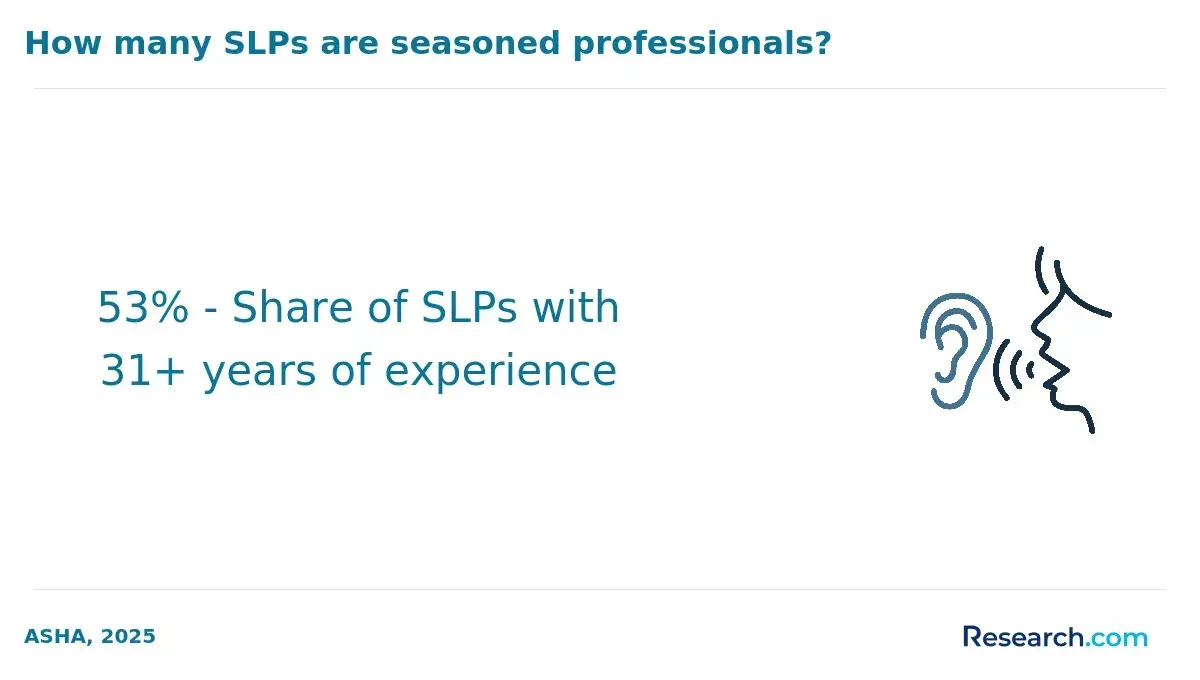
How many SLPs in 20232 have advanced degrees?

What does a speech language pathologist do?

A speech-language pathologist evaluates, diagnoses, and treats communication and swallowing disorders. SLPs work with infants, children, adults, and older adults who may have speech delays, language impairments, stuttering, voice disorders, cognitive-communication difficulties, social communication challenges, or swallowing problems.

Daily work depends heavily on the setting. A school-based SLP may evaluate students, write IEP goals, provide therapy, consult with teachers, and communicate with families. A hospital-based SLP may assess swallowing safety, support patients recovering from stroke or injury, and coordinate with physicians, nurses, dietitians, occupational therapists, and physical therapists. A private practice clinician may serve a specialized population, manage billing, and develop long-term therapy plans.

Work settingCommon responsibilitiesBest fit for SLPs who want to
SchoolsScreen students, conduct evaluations, deliver therapy, contribute to IEPs, and collaborate with educators.Work with children and support academic communication needs.
HospitalsAssess swallowing, cognition, speech, and language after illness, injury, or surgery.Practice in fast-paced medical teams.
Rehabilitation centersHelp clients regain communication, cognitive, and swallowing functions.Support recovery and long-term functional improvement.
Private practiceProvide evaluations and therapy, often for specialized populations or services.Build a focused caseload and possibly manage a business.
TeletherapyDeliver remote assessment support and treatment through digital platforms when appropriate.Use technology to expand access and increase schedule flexibility.

Successful SLPs need more than clinical knowledge. They must communicate clearly with clients and families, build trust, adapt therapy plans, interpret assessment data, write defensible documentation, and collaborate with professionals from education, medicine, psychology, and social services.

  • Communication: SLPs must explain complex information in language clients, caregivers, and colleagues can act on.
  • Empathy and patience: Therapy progress can be gradual, especially when clients are dealing with frustration, disability, anxiety, or medical recovery.
  • Clinical reasoning: Strong SLPs connect symptoms, assessment data, client goals, and evidence-based treatment choices.
  • Creativity: Therapy activities often need to be engaging, age-appropriate, culturally responsive, and functional.
  • Adaptability: Clinicians adjust treatment when clients plateau, new diagnoses emerge, or service delivery changes.

Technology is also becoming more important. Teletherapy, digital documentation, remote collaboration, and data-informed therapy planning are increasingly part of the profession. Artificial intelligence may support workflow, analysis, and personalization in some contexts, but clinical judgment, ethical decision-making, and human rapport remain central to effective care.

  • : "

    “I graduated from Ohio University, and the work has been deeply meaningful. One child I treated had significant speech clarity challenges, and watching that child become easier to understand reminded me why this profession matters. The best part of the job is helping people connect with others.”

    "

What is the certification and licensing process for a speech language pathologist in Ohio?

Ohio SLP licensure is handled by the Ohio Speech and Hearing Professionals Board. The board reviews whether applicants have completed the required education, supervised clinical experience, examination, background checks, and application materials. Because requirements and fees can change, applicants should verify current instructions directly with the board before applying.

  1. Graduate from an accredited program. Applicants must provide official transcripts showing completion of the required speech-language pathology education.
  2. Document supervised clinical experience. Clinical practicum and fellowship records must show that experience was supervised by qualified professionals.
  3. Pass the Praxis exam. Candidates must pass the Praxis examination in speech-language pathology and meet the required minimum score of 600.
  4. Complete fingerprinting and background checks. These checks help confirm that applicants meet professional and ethical standards for clinical work.
  5. Submit the Ohio application and fees. Application, examination, and background check costs can vary, so candidates should check the current fee schedule before budgeting.
  6. Maintain the license through continuing education. Licensed SLPs must complete ongoing professional development to keep their knowledge current and meet renewal expectations.

Many Ohio SLPs also pursue the CCC-SLP credential through ASHA. This credential can be valuable for employment, mobility, and professional recognition, but it does not replace Ohio licensure.

Licensing may continue to evolve as telepractice grows and as the Audiology and Speech-Language Pathology Interstate Compact develops across participating states. For students still comparing programs, reviewing the best speech-language pathology programs can help clarify what strong graduate preparation looks like.

What ethical and legal guidelines should you observe as a speech language pathologist in Ohio ?

Ohio SLPs are responsible for practicing within state law, protecting client information, documenting services accurately, and following professional ethics. These responsibilities matter in every setting, but they are especially important when working with children, medically vulnerable clients, billing systems, and interdisciplinary teams.

Core legal responsibilities

  • Licensure: Practicing SLPs in Ohio must hold the appropriate license from the Ohio Speech and Hearing Professionals Board. Licensure depends on graduate education, clinical fellowship completion, examination, and other board requirements.
  • Continuing education: Ohio requires 20 hours of continuing education every two years to maintain licensure. These hours help clinicians stay current with evidence-based practice, laws, and service delivery changes.
  • Scope of practice: SLPs must work within their training and competence. If a client needs services outside an SLP’s expertise, referral or collaboration is often the ethical choice.

Confidentiality and documentation

  • HIPAA compliance: Client records and health information must be protected. Information should be shared only when permitted, required, or authorized by the client or guardian.
  • School privacy rules: School-based SLPs must also understand student record protections and district documentation procedures.
  • Mandated reporting: Ohio professionals must understand obligations related to suspected abuse or neglect and follow required reporting procedures.

Ethical issues to expect

SLPs often face difficult decisions when caseloads are high, time is limited, families disagree with recommendations, or a client needs more support than a setting can provide. Ethical practice requires clear documentation, transparent communication, careful goal-setting, and advocacy that remains grounded in professional evidence.

Billing, reimbursement, and professional conduct

Clinicians who work with Medicaid, Medicare, private insurance, or school-based reimbursement systems must understand documentation and billing requirements. They should also follow the ASHA Code of Ethics, employer policies, and Ohio laws. Teletherapy introduces additional considerations, including client privacy, appropriate platforms, consent, state practice rules, and whether remote services are clinically suitable.

How much can you earn as a speech language pathologist in Ohio?

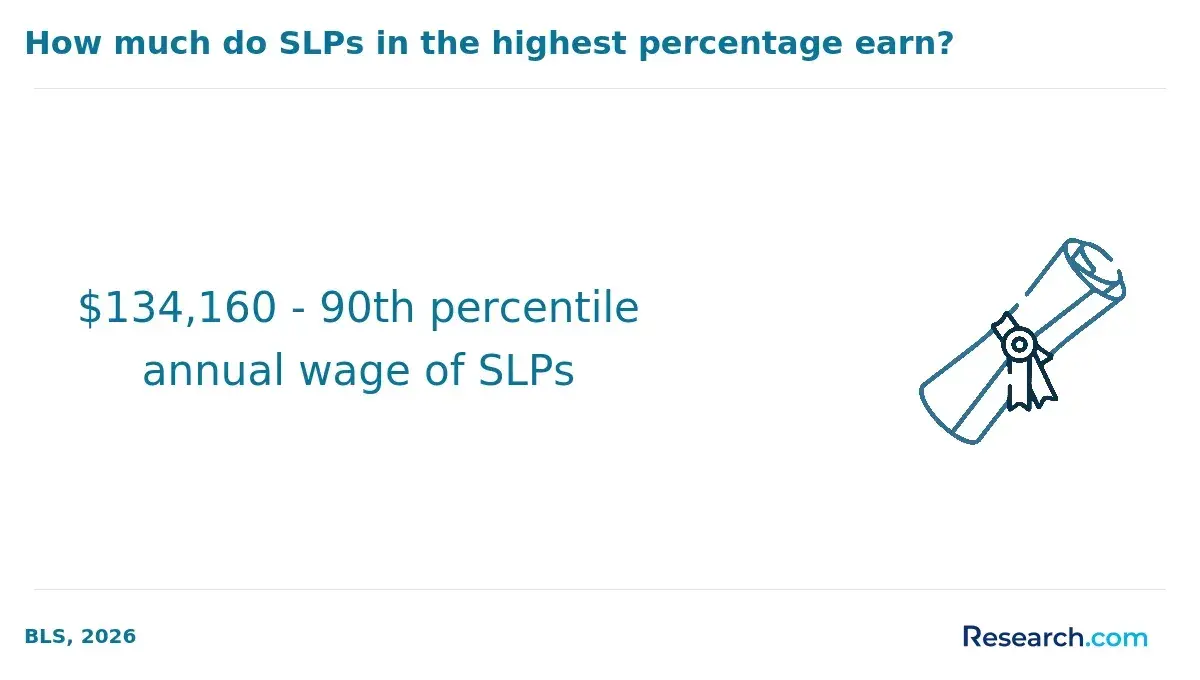
Speech-language pathologist earnings in Ohio depend on employer type, location, experience, specialization, and work schedule. As stated in the available figures, SLPs in Ohio can expect an average salary of approximately $80,000 per year, with a median salary around $78,000. Nationally, the average is around $85,000 and the median is around $83,000.

These numbers should be treated as planning benchmarks, not guarantees. A new graduate in a school-based fellowship may earn less than an experienced medical SLP in a major metro area. Benefits, loan repayment options, schedule flexibility, and caseload expectations can also change the real value of a job offer.

Ohio SLP salary factors

  • Setting: Healthcare and social assistance roles, including hospitals, outpatient clinics, and rehabilitation centers, often pay differently from school-based positions.
  • Location: Columbus, Cleveland, and Cincinnati may offer strong demand because of their healthcare systems, schools, and population size.
  • Experience: Salary generally rises as clinicians develop specialized skills, supervisory experience, and stronger clinical judgment.
  • Specialization: Voice, swallowing, pediatric feeding, AAC, bilingual services, and medical rehabilitation expertise may improve competitiveness in some settings.
  • Work arrangement: Full-time, part-time, contract, teletherapy, school-year, and private practice roles can differ substantially in pay and benefits.
Job offer factorWhy it mattersWhat to compare
Base salaryShows direct annual earnings.Compare salary by setting, city, and years of experience.
BenefitsHealth insurance, retirement, leave, and professional development can add significant value.Ask for the complete benefits package, not just pay.
CaseloadHigh caseloads can affect quality of care and burnout risk.Ask about average caseload size, documentation time, and support staff.
Continuing education supportCE funding can reduce professional costs and help with specialization.Look for CE allowances, conference support, and paid training time.
ScheduleSchool-year, clinical, and teletherapy schedules can be very different.Compare calendar expectations, evenings, weekends, travel, and remote options.
How many annual job openings are there for SLPs?

What is the job market like for a speech language pathologist in Ohio ?

The Ohio job market for speech-language pathologists is supported by school needs, healthcare demand, rehabilitation services, early intervention, and services for older adults. The U.S. Bureau of Labor Statistics projected 25% employment growth for SLPs from 2019 to 2029, which is much faster than the average for all occupations.

  • Demand areas: Schools, hospitals, outpatient clinics, rehabilitation facilities, long-term care, early intervention programs, and teletherapy providers all employ SLPs.
  • Compensation context: The average annual salary for SLPs in Ohio is approximately $75,000 in the cited job-market figures, though pay varies by employer, location, experience, and setting.
  • Urban competition: Columbus, Cleveland, and other larger cities may have more openings but also more applicants from nearby graduate programs.
  • Rural opportunities: Rural areas may have fewer applicants and stronger need for clinicians, especially when telepractice or travel-based service models are available.
  • Quality-of-life factors: Ohio’s relatively low cost of living can make early-career salaries stretch further than they might in higher-cost regions.

Students should not evaluate the job market only by whether openings exist. The better question is whether the available roles match your preferred population, workload, supervision needs, salary expectations, and long-term advancement goals.

  • : "

    “After graduating from Ohio University, I found that Ohio offered real demand for SLPs, especially in schools and healthcare. The larger cities were competitive, but the professional community and cost of living made the state a practical place to build a career.”

    "

What career and advancement opportunities are available for a speech language pathologist in Ohio?

Ohio SLPs can build careers in clinical practice, education, healthcare leadership, private practice, research, consulting, and teletherapy. Early roles often focus on direct client care, while experienced clinicians may move into supervision, program design, specialization, or administration.

Career levelPossible rolesHow to advance
Entry-levelClinical fellow, school-based SLP, outpatient clinician, rehabilitation SLPBuild strong documentation, assessment, treatment, and collaboration skills.
Experienced clinicianSpecialist in pediatrics, voice, swallowing, AAC, fluency, or bilingual servicesPursue continuing education, mentorship, and specialized clinical experience.
Lead or supervisorProgram coordinator, clinical lead, mentor, department supervisorDevelop leadership, compliance, scheduling, staff training, and quality improvement skills.
Advanced or nontraditionalConsultant, researcher, university instructor, private practice owner, teletherapy providerConsider advanced credentials, business training, research experience, or interdisciplinary study.

Some SLPs pursue additional education through flexible formats, including speech pathology degrees online USA, especially when they need to continue working while completing academic requirements. Others move into leadership by managing therapy programs, mentoring new clinicians, training school staff, or coordinating interdisciplinary services.

The job outlook for SLPs in Ohio is described as promising, with an anticipated growth rate of 18% from 2023 to 2033. Drivers include an aging population, broader recognition of communication disorders, and expanding use of technology in service delivery. To benefit from this growth, clinicians should keep developing skills in evidence-based practice, teletherapy, documentation, cultural responsiveness, and collaboration.

What advanced educational programs and specializations can further elevate a speech-language pathologist’s career in Ohio?

Advanced training can help Ohio SLPs move into more specialized clinical work, leadership, research, or interdisciplinary practice. Common areas for deeper preparation include pediatric intervention, voice therapy, dysphagia, augmentative and alternative communication, neurogenic communication disorders, bilingual services, and telepractice.

Post-graduate fellowships, professional workshops, certificate programs, and advanced degrees can all be useful, but the best choice depends on your setting and career goal. A school-based clinician may benefit from AAC or autism-focused training, while a hospital clinician may prioritize swallowing, cognitive-communication, or adult neurogenic disorders. SLPs considering deeper work across hearing and communication sciences may also compare options such as a master's in speech and audiology.

Can speech language pathologists explore alternative career paths in Ohio?

Yes. SLP training develops skills that can transfer into education, healthcare administration, research, advocacy, public health, communication training, accessibility consulting, and information-focused roles. These paths may appeal to clinicians who want to step away from full-time direct therapy while still using their expertise in communication, documentation, assessment, and client support.

Alternative paths require careful planning. Some roles need additional credentials, while others depend more on experience, networking, writing ability, data skills, or policy knowledge. A professional interested in structured information systems and public service, for example, might compare SLP work with how to become a librarian in Ohio as a possible career pivot.

Is an Online Bachelor's Degree a Viable Option for Aspiring SLPs in Ohio?

An online bachelor’s degree can be a practical starting point for Ohio students who need flexibility, especially if the program covers communication sciences, language development, speech and hearing foundations, and prerequisite coursework for graduate admission. However, students should remember that the bachelor’s degree is only the first step. Independent SLP practice still requires a graduate degree and licensure.

Before enrolling online, confirm whether courses meet prerequisites for the master’s programs you plan to apply to. Also ask whether the program offers advising for SLP graduate school, observation opportunities, faculty support, and preparation for competitive admissions. Students comparing undergraduate options can review guidance on what is the best online bachelor of audiology and speech language pathology.

What financial aid and scholarship opportunities can support your SLP education in Ohio?

SLP education can be expensive, so students should build a funding plan before committing to a program. Start with the FAFSA, then compare institutional scholarships, graduate assistantships, employer tuition support, state aid, professional association awards, and loan repayment options tied to high-need settings.

Do not evaluate affordability by tuition alone. Clinical travel, technology, books, background checks, examination fees, licensure fees, and lost income during full-time clinical placements can all affect total cost. Students who are also considering adjacent helping professions may compare education costs and pathways with fields such as how to become a school psychologist in Ohio.

What educational partnerships and interdisciplinary collaborations exist for speech-language pathologists in Ohio?

SLPs rarely work in isolation. In Ohio, they commonly collaborate with teachers, special education teams, physicians, nurses, psychologists, occupational therapists, physical therapists, audiologists, social workers, dietitians, and families. These partnerships are essential because communication and swallowing needs often overlap with educational, medical, behavioral, and social concerns.

Universities such as Ohio University and Cleveland State University may connect students with schools, hospitals, clinics, and rehabilitation centers for clinical learning and research exposure. These partnerships can help students build practical skills while introducing them to potential employers and professional networks.

In public schools, SLPs often work with special education teachers to develop IEP goals, align therapy with classroom expectations, and support students across academic environments. Clinicians who want a stronger understanding of classroom-based disability services may find it useful to explore how to become a special education teacher in Ohio.

Professional organizations, including the Ohio Speech-Language-Hearing Association, can also support collaboration through conferences, continuing education, mentorship, and networking. These connections are especially helpful for new clinicians, specialists, and SLPs moving between school and medical settings.

What challenges should you consider as a speech language pathologist in Ohio?

Speech-language pathology can be rewarding, but the work can also be demanding. Students should understand the pressure points before choosing the field, especially if they plan to work in schools, high-volume clinics, or under-resourced communities.

  • Large caseloads: Some Ohio SLPs report managing more than 50 students at one time. High caseloads can reduce planning time, limit individual attention, and increase burnout risk.
  • Heavy documentation: IEPs, progress notes, evaluations, billing records, treatment plans, and compliance paperwork can take significant time away from direct therapy.
  • Limited resources: Underfunded settings may not have enough materials, testing tools, private therapy space, or technology support.
  • Unqualified service providers: Families may not always understand the difference between licensed SLPs and individuals offering speech-related services without adequate training.
  • Diverse client needs: SLPs must adapt to different ages, diagnoses, cultures, languages, family priorities, and co-occurring conditions.
  • Emotional strain: Progress can be slow, families may be stressed, and clinicians may need to advocate repeatedly for services or accommodations.

Technology may reduce some barriers by supporting teletherapy, remote consultation, digital materials, and more efficient documentation. Still, technology does not eliminate the need for strong clinical judgment and manageable workloads. Students trying to reduce debt before entering the field can compare the cheapest speech pathology degrees while still prioritizing accreditation and licensure fit.

Common mistakeWhy it can hurt youBetter approach
Choosing a program without checking accreditationYou may risk licensure or certification problems later.Verify accreditation before applying or enrolling.
Looking only at tuitionFees, clinical travel, lost income, and exam costs can change affordability.Calculate total cost of attendance and funding options.
Assuming any online program works for OhioLicensure alignment and clinical placements may vary.Ask the program directly how it supports Ohio requirements.
Ignoring caseload expectationsA high workload can lead to burnout even with good pay.Ask employers about caseload size, documentation time, and supervision.
Assuming salary outcomes are guaranteedPay varies by setting, experience, city, and contract type.Compare salary, benefits, schedule, and advancement potential together.

Is dual certification a viable strategy to broaden your clinical expertise?

Dual certification can make sense when it supports a clear career goal. For example, an SLP who regularly works with families, behavioral concerns, or complex communication needs may benefit from additional training in counseling-informed approaches. However, extra credentials require time, money, and ongoing maintenance, so they should not be pursued only for résumé value.

If you are considering a clinical path that combines communication services with family systems or behavioral health perspectives, review how credentials differ from SLP licensure. One adjacent path to compare is how to become a MFT in Ohio.

Can speech-language pathologists benefit from integrating mental health counseling skills in Ohio?

SLPs often serve clients whose communication needs intersect with anxiety, trauma, behavior, family stress, cognitive changes, or social participation challenges. Counseling skills can help clinicians listen effectively, support motivation, communicate with families, and collaborate with mental health professionals. Still, SLPs must stay within their scope of practice and refer to licensed mental health providers when needs go beyond communication-related support.

Clinicians interested in formal behavioral health credentials should compare education, supervision, and licensure requirements carefully. A useful starting point is this overview of mental health counselor requirements in Ohio.

How can integrating school counseling skills enhance your SLP practice in Ohio?

School-based SLPs work with students whose communication goals may be connected to confidence, peer interaction, classroom participation, behavior, and emotional regulation. Understanding school counseling concepts can improve collaboration with counselors, teachers, families, and intervention teams.

This does not mean an SLP becomes a school counselor without additional preparation. Instead, counseling-informed knowledge can help SLPs recognize when to collaborate, refer, or adjust communication goals to support the whole student. If you are interested in the separate credential path, explore how to become a school counselor in Ohio.

What are the options for teaching certifications in speech language pathology in Ohio?

SLPs who want to work in schools should understand how Ohio handles education-related credentials and employment requirements. The exact requirements can vary by role, district, and state rules, so candidates should verify expectations with the Ohio Department of Education and Workforce, the Ohio Speech and Hearing Professionals Board, and prospective employers.

Teaching credentials are not interchangeable with SLP licensure. If you want to move between therapy and classroom teaching, compare the requirements carefully. A helpful related resource is this guide to the types of teaching certificates in Ohio.

How can a speech language pathologist transition into an elementary school teaching role in Ohio?

An SLP who wants to become an elementary teacher will likely need additional educator preparation and certification beyond clinical licensure. The transition can be attractive for professionals who enjoy classroom instruction, curriculum planning, child development, and school-wide learning support.

The strongest candidates connect their clinical communication expertise with classroom management, literacy development, inclusive instruction, and assessment. Before changing roles, compare certification requirements, student teaching expectations, salary schedules, and long-term career goals. For a deeper look at the teaching route, review how to become an elementary school teacher in Ohio.

What mentorship programs and peer networks are available for speech-language pathologists in Ohio?

Mentorship can make the difference between surviving the first few years and building a sustainable SLP career. New clinicians should look for supervision, peer consultation, professional association events, employer-based mentoring, university alumni networks, and specialty communities related to their practice area.

Good mentors can help with caseload management, ethical questions, documentation, parent communication, clinical reasoning, salary negotiation, and specialization decisions. SLPs considering a future move into broader education roles may also compare teaching-related paths such as how to become an English teacher in Ohio.

How can integrating psychology insights improve your SLP practice in Ohio?

Psychology can strengthen SLP practice by improving how clinicians understand attention, memory, motivation, behavior, learning, trauma, and social interaction. These factors often affect communication progress, especially for children with developmental differences and adults recovering from neurological events.

SLPs do not need to become psychologists to use psychology-informed collaboration. They can consult with school psychologists, neuropsychologists, counselors, and behavioral specialists when client needs are complex. Clinicians seeking deeper academic or referral relationships may find value in reviewing the best psychology schools in Ohio.

What do speech language pathologists say about their careers in Ohio ?

  • : "

    “Working as a speech-language pathologist in Ohio has allowed me to serve clients from many backgrounds. Helping children make progress with speech delays is one of the most satisfying parts of my work, and the professional community makes it easier to exchange ideas and resources.” Chris

    "
  • : "

    “Ohio’s focus on early intervention has shaped my practice. I work closely with families so children can receive support as soon as possible, and access to training opportunities helps me keep improving the care I provide.” Matthew

    "
  • : "

    “Technology has changed how I reach clients. Teletherapy has helped me support people in rural communities who might otherwise have limited access to services, and I expect remote care to remain an important part of the field.” Lara

    "

References:

Key Insights

  • Ohio SLPs need a master’s degree, supervised clinical practicum, a clinical fellowship, a passing Praxis score, and state licensure before practicing independently.
  • Accreditation should be the first filter when comparing programs. Cost, format, and rankings matter, but they cannot compensate for a program that does not support licensure.
  • Speech-language pathology offers multiple Ohio career settings, including schools, hospitals, rehabilitation centers, private practice, and teletherapy.
  • Salary depends on location, employer, experience, specialty, benefits, and caseload. Use salary figures as benchmarks, not promises.
  • Teletherapy, interdisciplinary care, bilingual services, and technology-supported treatment are shaping the profession, but strong clinical judgment and ethical practice remain essential.
  • The best program or job is not always the cheapest or highest-paying option. Choose the path that aligns with licensure, supervision, workload, specialization, and long-term career fit.

Other Things You Should Know About Becoming a Speech Language Pathologist in Ohio

How long does becoming a speech-language pathologist in Ohio typically take?

Becoming a speech-language pathologist in Ohio typically takes about six to eight years. This period includes earning a bachelor's degree, a master's degree in speech-language pathology, and completing supervised clinical experience. After this, candidates need to pass the national Praxis exam and obtain state licensure.

What is the licensing process to become a speech-language pathologist in Ohio in 2026?

In 2026, to become a licensed speech-language pathologist in Ohio, you must complete a master's degree in speech-language pathology, pass the Praxis exam, and obtain the Certificate of Clinical Competence in Speech-Language Pathology (CCC-SLP) from ASHA. You'll then apply for licensure through the Ohio Board of Speech-Language Pathology and Audiology.

What certification is required to work as a speech-language pathologist in Ohio?

To work as a speech-language pathologist in Ohio, candidates must obtain a license from the Ohio Speech and Hearing Professionals Board. This requires a master's degree from an accredited program, passing the Praxis exam, and completing a supervised professional experience.

Related Articles
2026 How to Become a Speech Language Pathologist in Missouri: Requirements & Certification thumbnail
2026 How to Become a Speech Language Pathologist in New Mexico: Requirements & Certification thumbnail
2026 How to Become a Speech Language Pathologist in Utah: Requirements & Certification thumbnail
2026 How to Become a Speech Language Pathologist in California thumbnail
Careers JUN 17, 2026

2026 How to Become a Speech Language Pathologist in California

by Imed Bouchrika, PhD
2026 How to Become a Speech Language Pathologist in Michigan: Requirements & Certification thumbnail
2026 How to Become a Speech Language Pathologist in Arkansas thumbnail
Careers JUN 17, 2026

2026 How to Become a Speech Language Pathologist in Arkansas

by Imed Bouchrika, PhD

Recently Published Articles

Newsletter & Conference Alerts

Research.com uses the information to contact you about our relevant content.
For more information, check out our privacy policy.

Newsletter confirmation

Thank you for subscribing!

Confirmation email sent. Please click the link in the email to confirm your subscription.