Research.com is an editorially independent organization with a carefully engineered commission system that’s both transparent and fair. Our primary source of income stems from collaborating with affiliates who compensate us for advertising their services on our site, and we earn a referral fee when prospective clients decided to use those services. We ensure that no affiliates can influence our content or school rankings with their compensations. We also work together with Google AdSense which provides us with a base of revenue that runs independently from our affiliate partnerships. It’s important to us that you understand which content is sponsored and which isn’t, so we’ve implemented clear advertising disclosures throughout our site. Our intention is to make sure you never feel misled, and always know exactly what you’re viewing on our platform. We also maintain a steadfast editorial independence despite operating as a for-profit website. Our core objective is to provide accurate, unbiased, and comprehensive guides and resources to assist our readers in making informed decisions.

2026 How to Become a Speech Language Pathologist in North Dakota: Requirements & Certification

Imed Bouchrika, PhD

by Imed Bouchrika, PhD

Co-Founder and Chief Data Scientist

Table of Contents
  1. How can you become a speech language pathologist in North Dakota?
  2. What is the minimum educational requirement to become a speech language pathologist in North Dakota?
  3. What does a speech language pathologist do?
  4. What is the certification and licensing process for a speech language pathologist in North Dakota?
  5. What ethical and legal guidelines should you observe as a speech language pathologist in North Dakota?
  6. How much can you earn as a speech language pathologist in North Dakota?
  7. What is the job market like for a speech language pathologist in North Dakota?
  8. What alternative career paths can speech language pathologists pursue in education?
  9. What career and advancement opportunities are available for a speech language pathologist in North Dakota?
  10. What challenges should you consider as a speech language pathologist in North Dakota?
  11. What financial planning strategies can support my SLP career in North Dakota?
  12. What communication disorders are most frequently managed by SLPs in North Dakota?
  13. How does speech-language pathology intersect with special education in North Dakota?
  14. What professional development opportunities can enhance my SLP career in North Dakota?
  15. How can integrating marriage and family therapy approaches elevate my SLP practice in North Dakota?
  16. Can integrating mental health counseling strategies strengthen my SLP practice in North Dakota?
  17. What are the emerging trends in speech-language pathology in North Dakota?
  18. Can integrating school psychology enhance my SLP practice in North Dakota?
  19. How can teaching opportunities complement my SLP career in North Dakota?
  20. Can collaborating with school counselors improve my SLP outcomes in North Dakota?
  21. What mentorship and networking opportunities can advance my SLP career in North Dakota?

How can you become a speech language pathologist in North Dakota?

The fastest way to understand the North Dakota SLP pathway is to think of it as a sequence: complete the required graduate education, pass the national exam, apply for state licensure, and then decide whether additional credentials will improve your employability.

StepWhat you need to doWhy it matters
1. Complete prerequisite educationEarn a bachelor’s degree, commonly in communication sciences and disorders or a closely related field.Graduate programs expect applicants to have foundational knowledge in language development, anatomy, speech science, and communication disorders.
2. Earn an accredited master’s degreeComplete a master’s degree in speech-language pathology from an accredited institution.A graduate degree is the core academic requirement for licensure and clinical practice.
3. Meet program admission standardsTypical admission expectations include a minimum undergraduate GPA of 2.75 overall, a 3.00 GPA in Communication Sciences and Disorders courses, and three letters of recommendation.Competitive programs use these requirements to assess readiness for graduate-level clinical training.
4. Pass the National SLP ExamAfter graduate study, take and pass the national examination required for licensing.The exam verifies that candidates have the professional knowledge needed for safe practice.
5. Apply for North Dakota licensureSubmit official transcripts, exam documentation, and the required fee to the North Dakota State Board of Examiners on Audiology and Speech-Language Pathology.You cannot practice independently as an SLP in North Dakota without state authorization.
6. Consider professional certificationMany SLPs pursue the Certificate of Clinical Competence in Speech-Language Pathology, commonly known as the CCC-SLP.Certification is not always mandatory, but it can strengthen applications for competitive, specialized, or advanced positions.

North Dakota candidates can consider two in-state programs with traditional campus experiences, as well as online programs that may offer greater scheduling flexibility. Before enrolling, confirm that the program’s accreditation, clinical placement support, and state authorization align with North Dakota licensure expectations.

North Dakota does not require postgraduate professional experience for initial licensure, which can help new graduates enter the workforce sooner. However, candidates pursuing national certification, school-based credentials, or employment in certain settings should verify whether additional supervised experience, school practica, or employer-specific requirements apply. For a broader overview of professional preparation, see this guide to speech pathologist qualifications.

So, what is the most common foreign language spoken by speech-language pathologists? It is Spanish at 67.3% of all SLPs, as shown below.

What is the most common foreign language spoken by SLPs?<br>

What is the minimum educational requirement to become a speech language pathologist in North Dakota?

The minimum educational requirement for a speech-language pathologist in North Dakota is a master’s degree in speech-language pathology from an accredited institution. A doctoral degree is not required for licensure, although some professionals later pursue doctoral study for research, university teaching, leadership, or advanced clinical specialization.

Education levelTypical purposeDecision point for students
Bachelor’s degreeUsually provides the undergraduate foundation in communication sciences and disorders or a related discipline.If your bachelor’s degree is in another field, ask graduate programs whether you need leveling or prerequisite coursework.
Master’s degreeProvides the clinical and academic preparation required for SLP licensure.Choose a CAA-accredited program that supports supervised clinical practice and meets North Dakota licensing expectations.
Doctoral degreeMay support careers in research, higher education, specialized leadership, or advanced clinical expertise.Consider this only if your goals go beyond entry-level clinical licensure.

Graduate coursework usually covers communication disorders, speech and hearing anatomy and physiology, language development, assessment methods, treatment planning, and clinical procedures. Supervised clinical practice is also central because SLPs must learn to apply theory with real clients across age groups and settings.

The typical education timeline is about four years for a bachelor’s degree followed by two years for a master’s program, for a total of around six years of higher education before licensure eligibility. The financial investment for a master’s degree in speech-language pathology can range from $20,000 to $60,000, depending on the institution, residency status, and program format.

Accreditation should be nonnegotiable. Students should confirm that the program is accredited by the Council on Academic Accreditation in Audiology and Speech-Language Pathology, often referred to as CAA accreditation. The University of North Dakota offers a master’s program designed to address the academic and clinical preparation needed for state licensure. Students comparing options can also review top-rated SLP master's programs to understand how curriculum, cost, format, and clinical placements differ.

What does a speech language pathologist do?

Speech-language pathologists assess, diagnose, and treat speech, language, communication, cognitive-communication, voice, fluency, and swallowing disorders. In North Dakota, SLPs may work in schools, hospitals, rehabilitation centers, nursing and residential care facilities, outpatient clinics, private practices, early intervention programs, or telepractice settings.

Common responsibilities

  • Evaluate clients to identify speech, language, communication, voice, fluency, or swallowing concerns.
  • Create individualized treatment plans based on assessment results, client goals, family needs, and setting requirements.
  • Deliver therapy using evidence-based strategies, structured exercises, caregiver training, and progress monitoring.
  • Work with physicians, teachers, special education professionals, occupational therapists, physical therapists, psychologists, counselors, and families.
  • Document services, track outcomes, write reports, and participate in eligibility, care planning, or IEP meetings when applicable.

Skills that matter in day-to-day practice

  • Clear communication, because SLPs must explain complex information to clients, parents, teachers, and care teams.
  • Clinical judgment, because therapy plans must be adjusted when progress is slower than expected or when client needs change.
  • Patience and empathy, especially when clients feel frustrated by communication or swallowing difficulties.
  • Creativity, because therapy must often be engaging, age-appropriate, culturally responsive, and practical for real-world use.
  • Organization, because caseload management, documentation, scheduling, compliance, and collaboration can be demanding.

The role is both educational and healthcare-oriented. A school-based SLP may focus heavily on language skills that affect learning, classroom participation, and literacy. A medical SLP may spend more time on swallowing, cognition, voice, neurological recovery, and interdisciplinary care. Many North Dakota SLPs also need flexibility because rural settings may require them to serve wider age ranges or multiple facilities.

One North Dakota SLP described the impact this way: after working with a young child who struggled to produce certain sounds, she saw the child’s confidence grow as communication became easier. That experience captures why many professionals choose the field: the work is clinical, but the outcome is often deeply personal.

What is the certification and licensing process for a speech language pathologist in North Dakota?

The North Dakota speech language pathologist licensing process is handled by the North Dakota State Board of Examiners on Audiology and Speech-Language Pathology. Applicants should review current board instructions before applying because licensing rules, documentation requirements, and forms can change.

RequirementWhat to prepareImportant note
Education documentationOfficial transcripts showing completion of the required graduate education.Make sure transcripts are sent in the format requested by the board.
Clinical documentationEvidence of supervised clinical experience, if requested as part of the application file.Keep copies of practicum records and program verification documents.
National examProof that you passed the required national examination within one year of applying.The exam is a core measure of entry-level professional competence.
Application feeA $100 non-refundable application fee.Incomplete applications may delay review.
Review timelineApplication review typically takes about 7-10 business days.Processing may take longer if documents are missing or clarification is needed.
Continuing educationFour semester hours of continuing education every five years.Plan ahead so renewal requirements do not become a last-minute problem.

Candidates should also ask the board whether fingerprinting, background checks, or additional verification steps apply to their situation. Those who want to work in public schools may need a state license or a Restricted Educator's Professional license, which requires completing a school-based practicum.

The CCC-SLP credential from the American Speech-Language-Hearing Association is separate from state licensure. It can be valuable for mobility, employer recognition, specialization, and advancement, but candidates should distinguish clearly between what North Dakota requires for legal practice and what employers may prefer for hiring.

Budgeting for licensure should include more than the state application fee. Students may also need to account for graduate tuition, exam fees, transcript fees, travel for clinical placements, continuing education, and professional association membership. If cost is a deciding factor, compare program formats through resources such as the best affordable online speech pathology programs.

What ethical and legal guidelines should you observe as a speech language pathologist in North Dakota?

SLPs in North Dakota must practice within state law, protect client privacy, use evidence-based methods, and avoid working beyond their competence. Ethical practice is not just about avoiding misconduct; it directly affects client safety, trust, and treatment quality.

Legal responsibilities

  • Hold the appropriate license from the North Dakota Board of Examiners for Speech-Language Pathology and Audiology before practicing independently.
  • Stay within the state-defined scope of practice for assessment, diagnosis, treatment, consultation, documentation, and referrals.
  • Confirm any school-based requirements if your role involves public school services, IEPs, or educator licensing rules.
  • Keep up with legislative and regulatory changes that affect speech-language pathology practice in the state.

Confidentiality and informed consent

  • Protect client records under HIPAA and applicable state privacy rules.
  • Secure paper and electronic documentation so only authorized individuals can access it.
  • Obtain informed consent before sharing client information, except where law or policy permits or requires disclosure.
  • Explain assessment results, treatment goals, and service limitations in language families and clients can understand.

Common ethical challenges

  • Serving culturally and linguistically diverse clients when bilingual resources are limited.
  • Deciding when to provide services directly and when to refer to a provider with more appropriate language, cultural, or specialty expertise.
  • Managing high caseloads without allowing documentation, scheduling, or workload pressure to reduce service quality.
  • Clarifying the difference between qualified SLP services and services offered by individuals without full SLP training.

Professional organizations such as the North Dakota Speech-Language-Hearing Association can help practitioners stay informed about continuing education, advocacy, and state-level professional issues. Candidates should note that continuing education timelines may be discussed differently across sources; for licensure planning, always rely on the current North Dakota board requirements.

So, which state has the highest number of SLPs? It is Texas at 18,790 total SLPs in the state, as shown below.

Which state has the highest number of SLPs?<br>

How much can you earn as a speech language pathologist in North Dakota?

According to the U.S. Bureau of Labor Statistics, the average salary for speech language pathologists in North Dakota is approximately $70,000 per year, with a median salary of around $68,000. The national average is about $83,000, so North Dakota earnings may be lower than the U.S. average, but the state’s lower cost of living can affect the real value of compensation.

Salary factors to compare before accepting a job

FactorWhy it changes compensationWhat to ask
Employment settingHospitals, nursing and residential care facilities, therapy offices, schools, and government agencies may pay differently.Is the salary based on a school-year calendar, a 12-month schedule, hourly work, or per-visit compensation?
LocationFargo, Bismarck, Grand Forks, and rural communities may differ in demand, cost of living, and benefits.Are there recruitment incentives, travel reimbursement, rural service benefits, or relocation support?
ExperienceNew graduates, mid-career clinicians, and specialists usually negotiate from different positions.Is there a formal salary ladder tied to years of experience, certification, or specialty skills?
BenefitsHealth insurance, retirement contributions, paid time off, continuing education support, and loan repayment can materially change total compensation.What is the full compensation package beyond base pay?
Caseload and workloadA higher salary may come with heavier documentation, travel, productivity expectations, or larger caseloads.How many clients, schools, facilities, or sites will I cover?

Top-earning industries to consider

  • Healthcare: Hospitals and rehabilitation centers may offer competitive pay, especially for clinicians with medical SLP skills.
  • Educational services: Schools can provide stable employment, predictable calendars, and benefits, though pay structures may differ from healthcare roles.
  • Government: State and local government roles may be attractive when benefits, job stability, and specialized responsibilities are considered.

North Dakota locations with notable opportunities

  • Fargo: The largest city in the state offers employment options in healthcare, education, and private practice.
  • Bismarck: The state capital has demand in both school and healthcare settings.
  • Grand Forks: The presence of the University of North Dakota supports a strong education and healthcare environment.

In 2024, the median academic year salary of speech-language pathologists varies by educational setting. SLPs in secondary schools earn a median salary of $83,886, while those in administrative offices earn $87,000. In special day or residential schools, the median salary is $75,000. Preschool settings report $74,000, and elementary school SLPs have a median salary of $72,300, as shown below.

What is the job market like for a speech language pathologist in North Dakota?

The job market for speech-language pathologists in North Dakota is favorable, but the best opportunities may depend on where and how you want to practice. Schools, hospitals, private practices, rehabilitation centers, and rural service providers all need SLPs, but each setting comes with different expectations.

According to the U.S. Bureau of Labor Statistics, employment of SLPs is projected to grow by 25% from 2019 to 2029, which is much faster than the average for all occupations. In North Dakota, demand is shaped by rural access challenges, school service needs, an aging population, and broader awareness of communication and swallowing disorders.

Job market factorWhat it means for North Dakota SLPsPractical takeaway
Urban competitionFargo and Bismarck may attract more graduates and experienced clinicians.Apply early and build clinical experience that matches the setting you want.
Rural demandRural communities may have fewer providers and more urgent service gaps.Ask about travel, telepractice, caseload size, support, and incentives before accepting a rural role.
School employmentSchools often need SLPs for evaluation, IEP services, language support, articulation therapy, and collaboration with special education teams.Confirm school licensure expectations and practicum requirements.
Healthcare employmentHospitals, rehabilitation centers, and nursing facilities may emphasize swallowing, cognition, neurological disorders, and interdisciplinary care.Develop medical documentation, dysphagia, and adult neurogenic communication skills.
TelepracticeRemote service delivery can improve access, especially where in-person providers are scarce.Check employer policies, state rules, technology support, privacy compliance, and client suitability.

Let's look at some BLS stats. Nursing and residential care facilities paid speech-language pathologists the most in 2023, averaging $105,030 annually. Hospitals followed at $100,130, therapy offices at $94,990, and educational services at $79,960, as shown below. This shows the increasing need for speech-language pathologists in healthcare and education.

One North Dakota clinician summarized the trade-off well: urban jobs can be more competitive, while rural positions may offer more openings and stronger community impact. The lower cost of living can be helpful, but candidates should also think honestly about winter travel, professional isolation, and access to mentorship.

What alternative career paths can speech language pathologists pursue in education?

SLPs who enjoy education but want options beyond direct therapy can move into teaching, supervision, training, curriculum development, assistive technology support, literacy intervention, early childhood consultation, or higher education roles. These paths make sense for clinicians who like coaching adults, designing learning materials, supporting teachers, or preparing future professionals.

If you are considering a formal move into classroom teaching, it is important to understand credential rules. Reviewing the types of teaching certificates in North Dakota can help you compare whether a teaching credential, school SLP role, or education-adjacent position best fits your goals.

What career and advancement opportunities are available for a speech language pathologist in North Dakota?

A North Dakota SLP career can grow in several directions: deeper clinical specialization, leadership, education, research, telepractice, or private practice. The right path depends on whether you want more complex clinical work, higher responsibility, schedule flexibility, or broader influence.

Career stageCommon rolesHow to prepare
Entry levelSchool SLP, hospital SLP, rehabilitation clinician, private practice clinician, early intervention provider.Build strong assessment, documentation, family communication, and treatment planning skills.
Mid-careerLead clinician, specialist, clinical mentor, program coordinator, telepractice provider.Pursue continuing education in areas such as dysphagia, autism, AAC, fluency, pediatric language, or adult neurogenic disorders.
LeadershipClinical supervisor, department lead, therapy program manager, school services coordinator.Develop skills in compliance, supervision, budgeting, policy, outcomes tracking, and staff development.
Advanced or alternative practiceFaculty member, researcher, curriculum developer, consultant, private practice owner.Consider advanced credentials, doctoral study, business training, teaching experience, or research involvement.

Specialization can be especially valuable in a state where providers may serve diverse communities and multiple settings. Common specialization areas include pediatric speech therapy, telepractice, dysphagia, augmentative and alternative communication, school-based services, and adult neurological rehabilitation.

SLPs who want to reduce education costs or continue working while studying may compare online SLP programs, especially when flexibility, clinical placement support, and accreditation are major concerns.

What challenges should you consider as a speech language pathologist in North Dakota?

Speech-language pathology can be rewarding, but North Dakota candidates should understand the practical pressures before choosing the field. The biggest challenges often involve workload, geography, resources, and professional support.

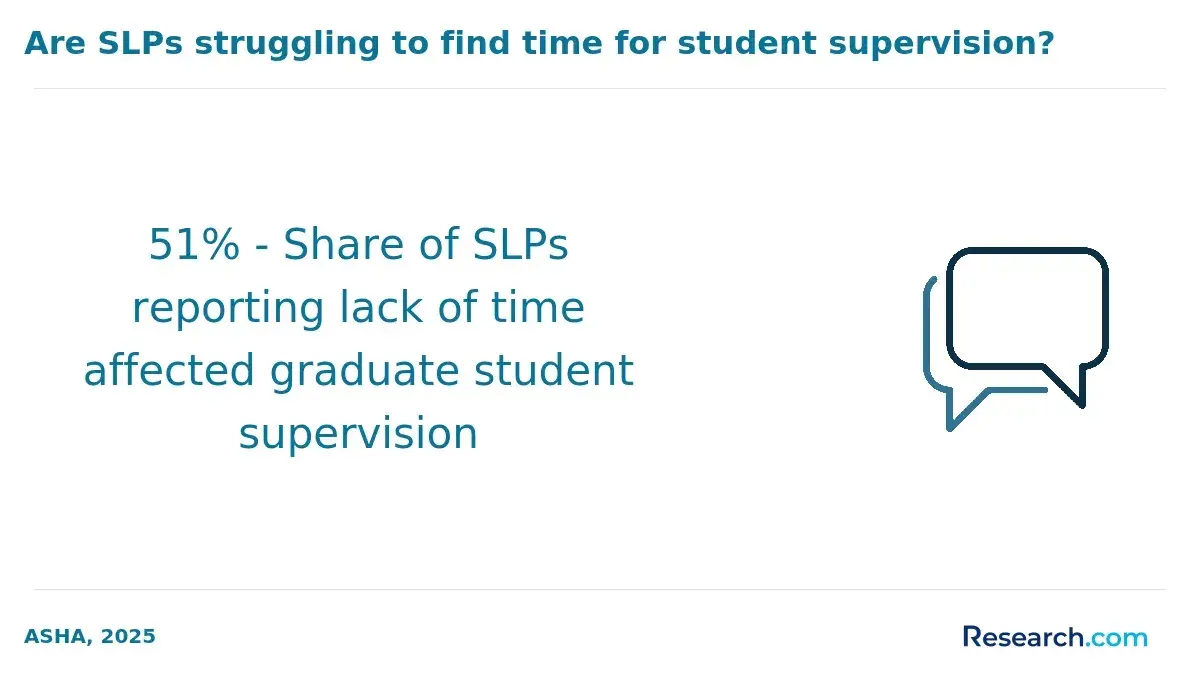
  • High caseloads: Many practitioners handle an average of 47 clients each month. Large caseloads can make it harder to provide individualized therapy, complete documentation on time, and prevent burnout.
  • Administrative workload: Reports, progress notes, meetings, billing documentation, IEP paperwork, and compliance tasks can reduce the time available for direct therapy.
  • Limited resources: Some settings may have constrained budgets for therapy materials, technology, assessment tools, or support staff, requiring clinicians to be resourceful.
  • Rural service demands: Rural roles may involve travel, broader age ranges, fewer nearby specialists, and professional isolation. Telepractice can help, but it does not solve every access issue.
  • Unqualified service providers: When individuals without proper SLP training offer speech-related services, families may be confused about qualifications and quality of care.
  • Diverse client needs: SLPs must adapt services for clients from different cultural, linguistic, developmental, medical, and educational backgrounds.

Common mistakes to avoid

MistakeWhy it causes problemsBetter approach
Choosing a program without confirming accreditationLicensure can become difficult or impossible if the program does not meet required standards.Verify CAA accreditation before applying or enrolling.
Looking only at tuitionFees, clinical travel, lost wages, relocation, and exam costs can change the true cost.Compare total program cost, not just advertised tuition.
Assuming every online program works for North DakotaOnline programs may vary in state authorization, clinical placement support, and licensure alignment.Ask the program directly whether it prepares students for North Dakota licensure.
Ignoring school-based requirementsPublic school roles may require additional educator-related documentation or practicum experience.Check state and district requirements before planning a school SLP career.
Assuming salary outcomes are guaranteedPay varies by setting, experience, location, benefits, and workload.Compare total compensation, caseload, supervision, and advancement opportunities.

Students concerned about program affordability can research low-cost options and compare them with licensure outcomes, clinical support, and employment placement. A good starting point is reviewing top-rated SLP master's programs while also asking each school detailed questions about North Dakota preparation.

What financial planning strategies can support my SLP career in North Dakota?

Financial planning should begin before you apply to graduate school. The master’s degree is required, and the cost can range from $20,000 to $60,000, so students should compare tuition, fees, living costs, clinical placement travel, online versus campus formats, and the time they may need to reduce work hours during clinical training.

  • Search for scholarships connected to communication sciences and disorders, healthcare workforce needs, rural service, or graduate education.
  • Ask programs whether assistantships, tuition waivers, or paid clinical opportunities are available.
  • Review loan repayment and forgiveness options carefully, especially if you plan to work in schools, healthcare, or underserved communities.
  • Compare full compensation packages when accepting jobs, including continuing education support, retirement benefits, paid time off, and travel reimbursement.
  • Consider career diversification only when it supports your long-term goals. For example, learning how to become a librarian in North Dakota may be useful for professionals interested in education, literacy, research, or community learning roles.

What communication disorders are most frequently managed by SLPs in North Dakota?

North Dakota SLPs work with clients across the lifespan, from infants and school-aged children to adults recovering from illness or injury. Common areas of practice include articulation and phonological disorders, fluency disorders such as stuttering, receptive and expressive language impairments, voice disorders, swallowing disorders, and cognitive-communication difficulties related to neurological conditions.

The most effective treatment plans are individualized. A child with a language delay may need classroom collaboration and family coaching, while an adult with dysphagia may need medical-team coordination and careful swallowing assessment. For a broader explanation of conditions in the field, review this guide to communication disorders treated by SLPs.

How does speech-language pathology intersect with special education in North Dakota?

Speech-language pathology and special education overlap most often in schools. SLPs help identify communication barriers that affect learning, social participation, literacy, behavior, and classroom performance. They also provide services that may be included in individualized education plans.

In North Dakota schools, SLPs often collaborate with special education teachers to evaluate students, set communication goals, align therapy with academic expectations, and support inclusive learning. This work may involve articulation therapy, language intervention, social communication support, assistive communication tools, and consultation with families and classroom teams.

Students considering school-based work should understand how SLP services fit into the broader special education system. If you are exploring closely related roles, this guide on how to become a special education teacher in North Dakota can help you compare responsibilities, credentials, and classroom-focused career paths.

What do speech language pathologists say about their careers in North Dakota?

Working as a speech language pathologist in North Dakota has been incredibly rewarding for me. The sense of community here is palpable, and I often find myself forming deep connections with my clients and their families. The rural setting allows for a slower pace, which fosters meaningful interactions and a focus on individualized care. I appreciate the opportunity to make a real difference in people's lives, especially in underserved areas where access to therapy can be limited. Eunice

I never expected to find such a fulfilling career in North Dakota. The variety of cases I encounter keeps my work exciting and challenging. From helping children with speech delays to supporting adults recovering from strokes, each day presents new opportunities to learn and grow. The collaborative environment among healthcare professionals here is also a significant advantage, as we often work together to provide comprehensive care for our clients. Fred

In North Dakota, I have the unique opportunity to work in both clinical and educational settings, which has enriched my professional experience. I love being able to support students in schools while also providing therapy in private practice. The flexibility in my career allows me to tailor my approach to meet the diverse needs of my clients. Plus, the cost of living is relatively low, making it easier to establish a comfortable life while pursuing my passion. Katrina

What professional development opportunities can enhance my SLP career in North Dakota?

Professional development helps North Dakota SLPs stay current, meet renewal requirements, and move into specialized or leadership roles. Useful training areas include telepractice, augmentative and alternative communication, dysphagia, literacy, autism services, fluency, school-based documentation, interdisciplinary care, and culturally responsive assessment.

  • Join state and national professional organizations to access workshops, advocacy updates, and networking.
  • Use continuing education strategically rather than only choosing the cheapest or easiest courses.
  • Seek mentorship when moving into a new setting, such as from schools to medical practice or from in-person therapy to telepractice.
  • Track continuing education hours throughout the renewal cycle instead of waiting until the deadline.
  • If you are interested in combining clinical knowledge with classroom instruction, review how to become an elementary school teacher in North Dakota to understand the education side of child development and learning.

How can integrating marriage and family therapy approaches elevate my SLP practice in North Dakota?

Family dynamics can strongly influence communication progress, especially for children, clients with long-term disabilities, and adults adjusting to neurological or swallowing disorders. SLPs do not become marriage and family therapists by using family-centered communication strategies, but they can improve care by understanding how family routines, stress, caregiver communication, and relationship patterns affect therapy carryover.

This approach is most useful when treatment depends on home practice, caregiver coaching, or collaborative goal-setting. SLPs interested in deeper interdisciplinary knowledge can explore how to become a MFT in North Dakota to understand how family therapy training differs from speech-language pathology.

Can integrating mental health counseling strategies strengthen my SLP practice in North Dakota?

Mental health and communication often intersect. Anxiety, trauma, depression, frustration, attention challenges, and social difficulties can affect participation in speech-language therapy. SLPs should not provide mental health counseling unless they are properly credentialed, but they can use counseling-informed communication, motivational interviewing principles, trauma-aware interactions, and appropriate referral practices.

Collaboration is especially important when clients show emotional distress, avoidance, behavioral changes, or reduced participation. Professionals who want to understand the boundaries between counseling and SLP practice can review the mental health counselor requirements in North Dakota.

What are the emerging trends in speech-language pathology in North Dakota?

Several trends are changing how SLPs deliver services in North Dakota. Telepractice is expanding access for clients who live far from providers. Digital tools are supporting assessment, home practice, documentation, and therapy engagement. Employers are also placing more emphasis on interdisciplinary care, data-supported progress monitoring, and flexible service delivery across schools and healthcare settings.

AI and automation may assist with documentation, scheduling, practice activities, and data organization, but they do not replace clinical judgment, ethical decision-making, family counseling, or individualized assessment. SLPs should treat technology as a tool, not a substitute for professional expertise.

Can integrating school psychology enhance my SLP practice in North Dakota?

School psychology can strengthen school-based SLP practice by adding insight into learning, behavior, cognitive assessment, intervention planning, and student support systems. Collaboration is particularly useful when students have communication needs that overlap with attention, executive functioning, emotional regulation, learning disabilities, or social participation.

SLPs and school psychologists can work together on evaluations, IEP planning, intervention monitoring, and referrals. If you are interested in the psychological and assessment side of student support, learn more about how to become a school psychologist in North Dakota.

How can teaching opportunities complement my SLP career in North Dakota?

Teaching skills can make an SLP more effective, especially in schools, early intervention, caregiver coaching, and professional training. SLPs routinely teach clients how to use strategies, teach parents how to support communication at home, and teach educators how to reinforce therapy goals in the classroom.

Teaching opportunities may also lead to adjunct instruction, staff training, curriculum support, literacy initiatives, or clinical supervision. If you are considering a stronger education focus, this guide on how to become an English teacher in North Dakota can help you compare language-focused classroom roles with SLP practice.

Can collaborating with school counselors improve my SLP outcomes in North Dakota?

School counselors can help SLPs address the social and emotional factors that affect communication, classroom participation, peer interaction, and therapy engagement. Collaboration is especially useful for students who experience anxiety, bullying, social withdrawal, transition stress, or emotional barriers connected to communication difficulties.

Strong school-based teams coordinate referrals, share relevant observations, align student support plans, and communicate consistently with families. To understand how counseling roles fit into school systems, review how to become a school counselor in North Dakota.

What mentorship and networking opportunities can advance my SLP career in North Dakota?

Mentorship can be especially valuable in North Dakota because some SLPs work in rural or mixed-service settings where nearby peer support may be limited. New clinicians should look for mentors who understand their target setting, whether that is schools, hospitals, early intervention, private practice, telepractice, or long-term care.

  • Connect with the North Dakota Speech-Language-Hearing Association for state-specific events, continuing education, and advocacy updates.
  • Ask graduate programs about alumni networks, clinical supervisors, and job placement contacts.
  • Build relationships with interdisciplinary partners, including educators, physicians, occupational therapists, physical therapists, psychologists, and counselors.
  • Seek supervision or peer consultation before moving into unfamiliar specialties such as dysphagia, AAC, or telepractice.
  • Professionals interested in broader behavioral science connections may also explore alumni and faculty networks connected to the best psychology schools in North Dakota.

Key Insights

  • North Dakota SLP licensure requires graduate preparation, a passing national exam score, and approval from the state board; do not enroll in a program until you confirm accreditation and licensure alignment.
  • The required education is significant: most students complete about four years of undergraduate study plus two years of graduate study, and a master’s degree can cost $20,000 to $60,000.
  • North Dakota’s average SLP salary is approximately $70,000 per year, with a median salary of around $68,000, while the national average is about $83,000. Compare pay alongside cost of living, benefits, caseload, and location.
  • Nursing and residential care facilities paid speech-language pathologists the most in 2023, averaging $105,030 annually. Hospitals followed at $100,130, therapy offices at $94,990, and educational services at $79,960.
  • The most common foreign language spoken by speech-language pathologists is Spanish at 67.3% of all SLPs.
  • Texas has the highest number of SLPs, with 18,790 total SLPs in the state.
  • In 2024, academic year salaries for SLPs varied by school setting: administrative offices reported $87,000, secondary schools reported $83,886, special day or residential schools reported $75,000, preschool settings reported $74,000, and elementary schools reported $72,300.
  • The strongest candidates prepare for more than licensure. They build clinical depth, understand school and healthcare differences, plan financially, seek mentorship, and evaluate whether rural, urban, telepractice, or specialized roles fit their life and career goals.

References:

  • American Speech-Language-Hearing Association. (n.d.-a). North Dakota licensing requirements for audiology and speech-language pathology. American Speech-Language-Hearing Association.
  • American Speech-Language-Hearing Association. (n.d.-b). North Dakota teacher requirements for audiologists and speech-language pathologists. American Speech-Language-Hearing Association.
  • Department of Communication Sciences & Disorders. (n.d.). University of North Dakota. University of North Dakota.
  • Essentia Health. (n.d.). Speech-language pathologist (Casual) (Incentive or bonus available). Essential Health.
  • Leader.pubs.asha.org. (2003, November 1). Meeting the challenge of rural service delivery. ASHA.
  • North Dakota Legislative Branch. (n.d.). Chapter 43-37: Audiologists and speech-language pathologists. North Dakota Legislative Branch.
  • North Dakota State Board of Examiners. (n.d.). Welcome to the official site for the North Dakota State Board of Examiners on Audiology and Speech-Language Pathology. North Dakota State Board of Examiners.
  • Sanford Health. (n.d.). Speech-language pathologist - PRN. Sanford Health.

Other Things You Should Know About Speech-language Pathologist Degrees

What are the licensure requirements for becoming a speech language pathologist in North Dakota in 2026?

In 2026, to become a licensed speech language pathologist in North Dakota, candidates must hold a master’s degree from an accredited program, complete a supervised clinical fellowship, and pass the Praxis Examination in Speech-Language Pathology. Additionally, a criminal background check and application for state licensure are required.

What degree do you need to become a speech language pathologist in North Dakota in 2026?

In 2026, aspiring speech-language pathologists in North Dakota must earn a master's degree in speech-language pathology from a program accredited by the Council on Academic Accreditation in Audiology and Speech-Language Pathology (CAA). This is a prerequisite for obtaining state licensure.

What are the continuing education requirements for licensed speech language pathologists in North Dakota in 2026?

In North Dakota, speech language pathologists need to complete 10 hours of continuing education every year to maintain their licensure. These hours must include professional development activities aimed at enhancing skills and knowledge in the field.

What are the steps to becoming a licensed speech language pathologist in North Dakota in 2026?

To become a licensed SLP in North Dakota in 2026, you need a master's degree in speech-language pathology from an accredited program. You must also complete a clinical fellowship, pass the Praxis exam, and apply for state licensure through the North Dakota State Board of Examiners on Audiology and Speech-Language Pathology.

Related Articles
2026 Linguistics Jobs: Careers, Salary Range, and Requirements thumbnail
Careers JUN 10, 2026

2026 Linguistics Jobs: Careers, Salary Range, and Requirements

by Imed Bouchrika, PhD
2026 How to Become a Speech Language Pathologist in New Hampshire thumbnail
Careers JUN 17, 2026

2026 How to Become a Speech Language Pathologist in New Hampshire

by Imed Bouchrika, PhD
2026 How to Become a Speech Language Pathologist in Vermont: Requirements & Certification thumbnail
2026 How to Become a Speech Language Pathologist in California thumbnail
Careers JUN 17, 2026

2026 How to Become a Speech Language Pathologist in California

by Imed Bouchrika, PhD
2026 How to Make a Career Change from Teacher to SLP Speech Pathologist thumbnail
2026 How to Become a Speech Language Pathologist in New Mexico: Requirements & Certification thumbnail

Recently Published Articles

Newsletter & Conference Alerts

Research.com uses the information to contact you about our relevant content.
For more information, check out our privacy policy.

Newsletter confirmation

Thank you for subscribing!

Confirmation email sent. Please click the link in the email to confirm your subscription.