2027 How to Become an Occupational Therapist – Salary & Requirements

Co-Founder and Chief Data Scientist
Becoming an occupational therapist is a serious education and licensure decision, not just a general interest in helping people. Occupational therapists help clients build, regain, or adapt the skills needed for daily life—getting dressed, returning to work, participating in school, managing routines, using assistive equipment, or recovering after illness or injury.
This guide is for students, career changers, healthcare workers, and allied health professionals comparing occupational therapy with related fields such as physical therapy, nursing, rehabilitation, public health, and healthcare administration. If you are also weighing whether public health is a good major, this article will help you understand how occupational therapy differs from broader population-health careers.
You will learn what occupational therapists do, how long the path usually takes, what degree is commonly required, what skills matter, where OTs work, how salaries and job outlook are presented in current sources, and which alternatives may fit better if you want a related but different healthcare role. According to the Bureau of Labor Statistics (2025), there are around 10,200 job openings for occupational therapists each year, and the median annual wage is $98,340.
Occupational Therapy Careers Table of Contents
- Quick answer: How do you become an occupational therapist?
- Why choose occupational therapy?
- Occupational therapy career outlook
- Skills occupational therapists need
- Education path: degrees, fieldwork, and licensure
- Continuing education and career growth
- Related careers to consider
- Technology trends in occupational therapy
- Certifications that can strengthen an OT career
- How public health can complement OT
- Healthcare administration paths for OTs
- Complementary healthcare degrees for OTs
- A typical day for an occupational therapist
- Common workplaces for occupational therapists
- Alternative career options for occupational therapists
- How biology can support an OT career
Quick answer: How do you become an occupational therapist?
To become an occupational therapist, you typically need to complete a bachelor’s degree, graduate from an accredited occupational therapy master’s program, finish required supervised fieldwork, pass the national certification examination, and meet your state or regional licensure requirements. The full path commonly takes a bachelor’s degree plus two to three years of graduate study, followed by fieldwork and a licensure process that may take several weeks to a few months.
| Step | What it involves | Typical timeframe stated |
| Bachelor’s preparation | Complete an undergraduate degree in a related area such as biology, psychology, kinesiology, or pre-occupational therapy. | Around four years of full-time study |
| Graduate OT degree | Enroll in a master’s degree in occupational therapy from an accredited program. | Two to three years of full-time study |
| Fieldwork | Complete supervised clinical placements and apply classroom learning in real practice settings. | Several months or a year |
| Certification and licensure | Pass the national certification examination and satisfy state or regional requirements. | Several weeks to a few months |
Why choose occupational therapy?
Occupational therapy is a good fit for people who want a hands-on healthcare career focused on function, independence, and daily participation. Instead of only treating a diagnosis, occupational therapists ask: What does this person need to do, want to do, or need help doing safely?
That focus can lead OTs into many populations and specialties, including pediatrics, geriatrics, neurorehabilitation, mental health, workplace ergonomics, home health, school-based services, and rehabilitation after injury or surgery. The work can be highly personal because treatment plans are built around real routines: eating, bathing, dressing, writing, working, driving, using technology, managing sensory needs, or participating in community life.
Occupational therapy may also appeal to people comparing rehabilitation careers. If you are considering a career change from physical therapy, the overlap is meaningful: both fields support recovery, mobility, function, and independence. The difference is that occupational therapy is often centered more directly on everyday activities, adaptive strategies, environmental modification, and participation in school, work, home, or community routines.
OTs also work closely with other allied health professionals, including physical therapists, speech-language professionals, dietitians, diagnostic medical sonographers, medical technologists, and other clinicians involved in rehabilitation and chronic disease management. Team-based care is one reason the profession can offer strong learning opportunities, but it also requires clear communication and careful coordination.
Occupational therapy is also frequently discussed as a high-paying career for women. Recent data indicates that 89% of all occupational therapists working in the United States are women (Data USA, n.d.). That gender profile may matter to readers studying representation, workforce trends, and advancement opportunities in healthcare.
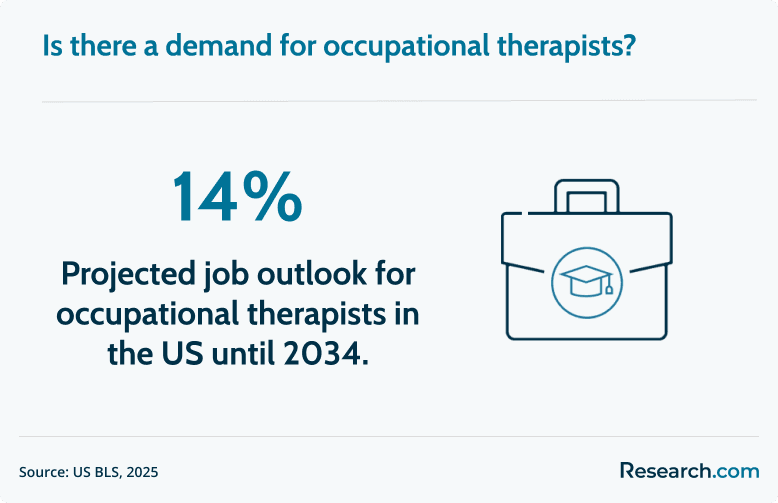
Occupational therapy career outlook
Demand for occupational therapists is tied to several healthcare realities: older adults are living longer with chronic conditions, more patients need rehabilitation after injury or illness, and schools and healthcare systems continue to recognize the value of early intervention and functional support. OTs are especially important for clients with arthritis, stroke, dementia, developmental delays, mental health conditions, neurological impairments, and post-surgical limitations.
Technology and changing models of care are also shaping demand. Home health, telehealth-supported therapy, assistive technology, and interdisciplinary rehabilitation teams can expand where and how services are delivered. International opportunities may exist as well, especially in regions building healthcare infrastructure or responding to aging populations, though licensing and credential recognition vary by country.
The table below preserves the salary and outlook figures cited in the source article. Treat these as general planning numbers, not guarantees. Salary varies by state, employer, setting, experience, specialization, and whether you work in clinical care, administration, research, consulting, or private practice.
| Role | Average salary | Job outlook |
| Occupational therapists | $85,570 | 14% |
| Healthcare diagnosing or treating practitioners | $101,370 | 8% |
| Rehabilitation Program Manager | $83,910 | 12% |
| Occupational Health and Safety Specialists and Technicians | $58,440 | 12% |
| Occupational health and safety specialists | $117,960 | 23% |
Skills occupational therapists need
Occupational therapy is both clinical and practical. OTs need scientific knowledge, empathy, problem-solving ability, documentation discipline, and comfort working with clients whose progress may be slow, uneven, or emotionally complex. Some of the highest-paying industries that employ occupational therapists include home healthcare services, nursing care facilities, hospitals, and private practice clinics (Bureau of Labor Statistics, 2025).
Core clinical skills
- Assessment and evaluation: OTs evaluate physical, cognitive, emotional, sensory, developmental, and psychosocial factors that affect daily function. This can involve standardized tools, observation, interviews, chart review, and clinical reasoning.
- Treatment planning: After assessment, OTs create individualized plans tied to functional goals. A strong plan connects therapy activities to real-life outcomes such as self-care, school participation, home safety, work readiness, or community access.
- Intervention and adaptation: Occupational therapists teach strategies, recommend adaptive equipment, modify environments, and guide therapeutic activities that help clients participate more independently.
- Therapeutic communication: Effective OT practice depends on trust. OTs must listen carefully, explain interventions clearly, involve caregivers when appropriate, and adapt communication for different ages, cultures, and cognitive abilities.
Professional skills that affect success
- Critical thinking: Occupational therapists often work with complex cases. They must adjust plans when symptoms change, motivation shifts, environments are unsafe, or a client’s goals evolve.
- Time management: Caseloads, treatment sessions, charting, care coordination, equipment recommendations, and meetings compete for time. Strong organization is essential.
- Team collaboration: OTs coordinate with physicians, nurses, physical therapists, speech therapists, teachers, social workers, family members, and community resources.
- Cultural competence: Daily routines, caregiving expectations, home layouts, food preparation, family roles, disability beliefs, and communication preferences vary. Good OT care respects those differences rather than applying a one-size-fits-all plan.
Education path: degrees, fieldwork, and licensure
The most common answer to “What degree do you need to be an occupational therapist?” is a graduate degree in occupational therapy. To become a licensed occupational therapist, a minimum of a master’s degree in occupational therapy is typically required. Master’s programs usually combine coursework in therapeutic approaches, functional assessment, community and global health issues, evidence-based practice, and supervised fieldwork.
Some healthcare degrees offer hybrid learning, combining online coursework with in-person clinical requirements. For example, students comparing healthcare graduate options may also research RN to MSN online programs or different types of MSN degrees. Those programs do not replace OT education, but they help illustrate how many healthcare fields now blend online academics with required hands-on practice.
If you are already a registered nurse and wondering whether a nurse can become a respiratory therapist or occupational therapist, the key point is that switching fields usually requires completing the required degree and licensure path for the new profession. Prior healthcare experience may help you in admissions, patient communication, and clinical judgment, but it generally does not eliminate occupational therapy education requirements.
Students interested in specialty areas such as pediatrics, mental health, neurorehabilitation, or geriatrics may later pursue advanced training, specialty credentials, or related graduate study. Some professionals also compare OT advancement with accelerated NP programs, but nurse practitioner and occupational therapy careers lead to different scopes of practice.
Typical timeline to become an occupational therapist
- Bachelor’s degree: Many students start with a bachelor’s degree in biology, psychology, kinesiology, or pre-occupational therapy. This usually takes around four years of full-time study, depending on transfer credits, course load, and program design.
- Master’s degree in occupational therapy: After undergraduate study, students typically enter a master’s degree in occupational therapy from an accredited program. These programs generally require two to three years of full-time study.
- Fieldwork and clinical experience: Graduate programs require supervised fieldwork. This hands-on component may take several months or a year and is essential for learning how to apply theory with real clients.
- Licensure process: After graduation, candidates must pass the required national certification examination and meet state, provincial, or regional licensure rules. This stage can take several weeks to a few months.
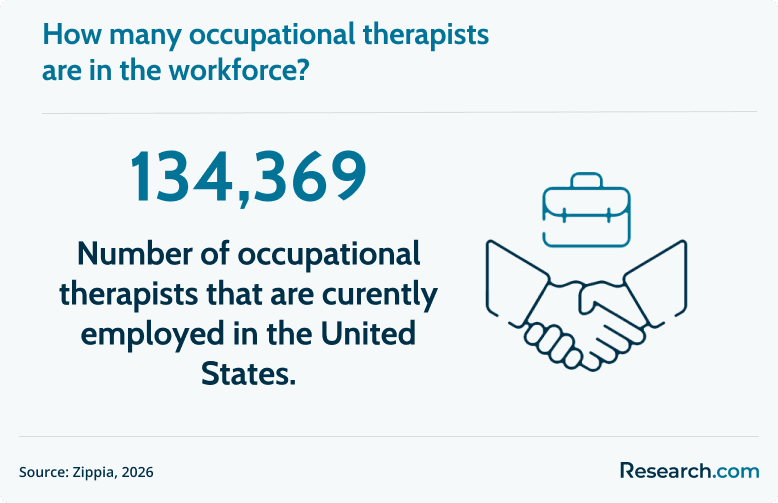
What can you do with an associate degree in occupational therapy?
An associate degree does not typically qualify someone to work as a licensed occupational therapist. It may, however, support entry into occupational therapy assistant or rehabilitation support roles, depending on program accreditation, state rules, and employer requirements.
| Role | What the role usually involves | Median salary cited |
| Certified Occupational Therapy Assistant (OTA) | Works under an occupational therapist’s supervision, helps carry out treatment plans, supports patients during activities, and reports progress. | $62,940 per year |
| Rehabilitation Assistant | Supports patients in clinics, hospitals, or rehabilitation centers by helping with exercises, routines, and recovery activities. | $34,040 per year |
| Home Health Occupational Therapy Assistant | Provides therapy support in clients’ homes and helps clients adapt routines and environments for safety and function. | $65,320 per year |
| School-Based Occupational Therapy Assistant | Works with teachers, parents, and OTs to support children with disabilities or developmental delays in school activities. | $62,940 per year |
What can you do with a bachelor’s degree in occupational therapy?
A bachelor’s degree can provide useful preparation for occupational therapy graduate school, rehabilitation support roles, healthcare administration, research assistance, or related human services positions. In the United States, however, a bachelor’s degree alone is generally not enough for independent occupational therapist licensure. Always verify licensure rules in the state or country where you plan to practice.
| Career direction | How it connects to occupational therapy | Median salary cited |
| Occupational Therapist (OTR) | Assesses client needs, builds treatment plans, and delivers interventions in hospitals, clinics, schools, rehabilitation centers, or community settings. | $86,280 per year |
| School-Based Occupational Therapist | Supports students with developmental, physical, sensory, or learning-related needs so they can participate in educational activities. | $73,300 per year |
| Mental Health Occupational Therapist | Helps clients build routines, coping strategies, and functional skills in psychiatric hospitals, outpatient clinics, or community mental health settings. | $86,280 per year |
| Rehabilitation Occupational Therapist | Works with patients recovering from injury, illness, surgery, or neurological events and supports return to home, work, school, or community life. | $86,280 per year |
| Community Health Occupational Therapist | Serves populations through community health centers, public health organizations, or nonprofit agencies focused on access and participation. | $86,280 per year |
Can you get an occupational therapy job with only a certificate?
A certificate may help with a narrow support role, but it usually does not qualify someone to practice independently as an occupational therapist. Certificate programs may focus on a specialized skill area such as pediatric support, hand therapy concepts, adaptive equipment, or administrative practice. With only a certificate, employment is more likely to be in aide, assistant, support, or administrative roles under supervision rather than licensed OT practice.
Occupational therapy career paths compared
| Career stage | Clinical Occupational Therapist Path | Researcher/Academician Path | Management/Administration Path | Entrepreneurship/Consulting Path |
| Primary focus | Assessing clients, creating treatment plans, and delivering interventions that improve function and independence. | Conducting studies, expanding occupational therapy knowledge, publishing findings, or teaching OT students. | Managing service delivery, supervising teams, building protocols, and maintaining quality and compliance. | Offering direct services, developing a niche practice, consulting with organizations, or operating a therapy business. |
| Entry level jobs | Occupational Therapy Assistant ($50,000/year) | Research Assistant ($35,000/year) | Program Coordinator ($40,000/year) | Entry-level Occupational Therapy Consultant ($50,000/year) |
| Junior management jobs | Rehabilitation Services Coordinator ($70,000/year) Registered Occupational Therapist ($86,000 per year) | Assistant Director of Research ($60,000/year) | Program Manager ($55,000/year) | Practice Administrator/Manager ($75,000/year) |
| Middle management jobs | Clinical Education Coordinator($95,000/year) | Assistant/Associate Professor ($80,000/year) | Rehabilitation Manager ($70,000/year) | Healthcare Practice Manager ($95,000/year) |
| Senior management jobs | Clinical Operations Manager ($85,000/year) | Research Director/Chief Research Officer ($100,000/year) | Director of Rehabilitation Services ($130,000/year) | Chief Executive Officer (CEO) - Occupational Therapy Consulting Firm ($150,000/year) |
How can you advance in occupational therapy?
Career advancement in occupational therapy can mean several different things: moving into a specialty, earning a doctorate, supervising a team, managing rehabilitation programs, teaching, conducting research, opening a private practice, or adding complementary healthcare expertise. The right path depends on whether you want deeper clinical expertise, more autonomy, leadership responsibilities, or a shift away from direct patient care.
Some OTs compare the profession with physical therapy, especially when considering dual credentials or related rehabilitation roles. If you are deciding between the two, review the differences in scope, treatment focus, and training requirements in an occupational therapy vs physical therapy comparison before committing to an expensive graduate pathway.
Cost is one of the biggest decision points. According to a recent study of online college students, tuition and fees are the top factor affecting graduate students’ enrollment decisions. In the United States, the cost of a master’s degree in occupational therapy can range from approximately $20,000 to $100,000 or more for the entire program. Public institutions often charge different rates for in-state and out-of-state students, while private institutions may have higher tuition but may also offer scholarships or aid.
| Master's Degree in Occupational Therapy Tuition | Estimated cost cited |
| Average cost | $65,000 to $200,000 |
| Yearly cost for in-state students | $15,000 |
| Yearly cost for out-of-state students | $37,000 |
Questions to ask before choosing an OT program
- Is the program accredited for occupational therapy licensure? Do not assume every health sciences program qualifies you for OT licensure.
- Where are fieldwork placements located? Ask whether placements are local, competitive, assigned, or require relocation.
- What is the total cost, not just tuition? Include fees, books, lab costs, background checks, immunizations, travel, lost work hours, and living expenses.
- What are the program’s outcomes? Ask about graduation rates, certification exam outcomes, fieldwork support, and employment support.
- Can you study part time? Working students should ask whether the program allows reduced course loads or has rigid sequencing.
- Does the curriculum match your goals? A student interested in pediatrics, hand therapy, mental health, or home health should examine electives, faculty expertise, and clinical placement options.
What can you do with a master’s degree in occupational therapy?
Rehabilitation Program Manager
Rehabilitation program managers coordinate therapy services, supervise teams, support treatment program development, and handle administrative responsibilities in healthcare or rehabilitation settings.
Median salary: $95,000 per year
Assistive Technology Specialist
Assistive technology specialists evaluate clients’ functional needs, recommend devices, train clients and caregivers, and provide ongoing support so technology improves independence rather than adding complexity.
Median salary: $80,000 per year
Ergonomics Consultant
Ergonomics consultants assess work environments, equipment, posture, task design, and workflow to reduce strain, improve safety, and support productivity.
Median salary: $75,000 per year
Occupational Therapy Professor or Program Director
OT professionals with graduate education may move into teaching, academic leadership, or research. These roles can involve mentoring students, designing curriculum, publishing research, presenting at conferences, and helping shape future practice.
Median salary: $60,000 to over $120,000 per year
What kind of job can you get with a doctorate in occupational therapy?
Clinical Research Scientist
Doctorate-level practitioners may design research studies, evaluate interventions, analyze outcomes, publish findings, and contribute to evidence-based occupational therapy practice.
Median salary: $100,000 to $130,000 per year
Rehabilitation Director or Manager
Rehabilitation directors oversee department strategy, staffing, compliance, operations, quality improvement, and service delivery in healthcare facilities.
Median salary: $110,000 to $140,000 per year
Occupational Therapy Consultant
Consultants advise healthcare organizations, schools, government agencies, legal teams, or businesses on program design, accessibility, rehabilitation planning, quality improvement, or policy implementation.
Median salary: $100,000 to $150,000 per year
Advanced Practice Occupational Therapist
In some states or countries, doctoral-level OTs may qualify for advanced practice responsibilities, specialized assessment roles, assistive technology leadership, or program development authority.
Median salary: $90,000 to $120,000 per year
Licenses and certifications for occupational therapists
- Occupational Therapist Registered (OTR): In the United States, this designation is associated with passing the National Board for Certification in Occupational Therapy examination and meeting national practice standards.
- Certified Occupational Therapy Assistant (COTA): COTAs complete occupational therapy assistant education and pass the certification examination for assistant-level practice.
- Licensed Occupational Therapist (LOT): Some jurisdictions use this or similar terminology for state or provincial licensure. Requirements vary by location.
- Limited permit or provisional license: Some jurisdictions allow limited practice while candidates complete final requirements such as supervised practice or documentation.
- Specialty or advanced practice certifications: OTs may pursue credentials in areas such as hand therapy, pediatrics, mental health, geriatrics, or assistive technology. These usually require additional education, experience, and examination.
Continuing education and career growth in occupational therapy
Continuing education is not optional in a field where research, technology, reimbursement rules, assistive devices, and care models keep changing. OTs need ongoing learning to maintain competence, meet renewal requirements, and stay effective with changing client needs.
Targeted training can help an occupational therapist move into specialties such as pediatrics, mental health, neurorehabilitation, hand therapy, assistive technology, workplace ergonomics, or leadership. Some professionals broaden their healthcare background through related pathways. For example, nurses who want to combine nursing and advanced practice may explore ADN to NP programs online, though this is a nursing path rather than a replacement for OT training.
Workshops, professional conferences, online courses, clinical mentorship, and specialty credentials can all support career growth. The best continuing education choices are tied to a specific goal: qualifying for a specialty role, improving patient outcomes, preparing for management, strengthening documentation and reimbursement knowledge, or building a private practice.
Related careers to consider if you are interested in occupational therapy
If occupational therapy appeals to you but the education path, licensure requirements, or daily work do not feel like the right fit, consider adjacent fields before enrolling. Related options include physical therapy, speech-language pathology, nursing, rehabilitation counseling, recreational therapy, art therapy, public health, healthcare administration, and occupational health and safety.
For readers drawn to creative therapeutic work, learning how to become an art therapist may be worthwhile. Art therapy has a different credentialing path and clinical focus, but it may appeal to people interested in mental health, expression, trauma-informed care, and creative interventions.
| If you like... | Consider occupational therapy if... | Consider another path if... |
| Rehabilitation and recovery | You want to help clients regain independence in daily activities. | You prefer a stronger focus on movement, gait, strength, and mobility. |
| Mental health support | You want to connect routines, coping skills, and participation to recovery. | You want psychotherapy, diagnosis, or counseling to be your primary role. |
| Working with children | You want to support school participation, sensory needs, fine motor skills, and adaptive routines. | You prefer classroom teaching, speech development, or behavioral intervention. |
| Healthcare leadership | You want to start clinically and later manage rehabilitation programs. | You want to move directly into operations, finance, compliance, or policy. |
How is technology transforming occupational therapy practice?
Technology is changing how occupational therapists assess clients, deliver interventions, monitor progress, and adapt environments. Telehealth platforms can support remote follow-up and caregiver coaching. Virtual reality can simulate tasks and environments. Robotics, digital home assessments, wearable devices, and assistive technology can help clients practice skills, improve safety, and increase independence.
Technology does not replace clinical judgment. OTs still need to evaluate whether a tool fits the client’s goals, cognition, home environment, finances, caregiver support, and comfort level. A sophisticated device is not helpful if the client cannot use it consistently or safely.
Students interested in adjacent diagnostic technology roles may compare OT with imaging-related education, such as ultrasound tech school online. Ultrasound technology is not occupational therapy, but comparing these paths can clarify whether you prefer rehabilitation, diagnostics, direct functional training, or imaging-focused clinical work.
What additional certifications can enhance an occupational therapy career?
Certifications can help occupational therapists demonstrate focused expertise, qualify for specialized roles, or strengthen practice operations. Good options depend on your setting. A school-based OT may prioritize pediatric or sensory-related training. A hand therapy clinician may pursue advanced hand rehabilitation credentials. A private practice owner may need stronger billing, compliance, and documentation knowledge.
Administrative knowledge can also matter. For example, understanding reimbursement and coding can help clinicians manage documentation and practice operations more effectively. If that is your goal, reviewing the cost for medical billing and coding certification can help you decide whether a short credential is worth adding to your professional development plan.
Challenges and rewards of occupational therapy
Occupational therapy can be deeply meaningful, but it is not easy work. Before committing to graduate school, consider the emotional, physical, and administrative demands alongside the rewards.
| Aspect | What to expect | How to prepare |
| Emotional demands | Clients may be coping with disability, pain, trauma, cognitive decline, slow progress, or loss of independence. | Build professional boundaries, supervision habits, and self-care routines. |
| Physical demands | Some settings require transfers, mobility support, equipment setup, and active demonstrations. | Learn body mechanics, workplace safety, and when to ask for assistance. |
| Complex caseloads | OTs may serve children, older adults, post-surgical patients, mental health clients, or people with chronic conditions. | Choose fieldwork and continuing education that match your preferred population. |
| Documentation | Charting, progress notes, insurance requirements, and compliance tasks can take significant time. | Develop efficient documentation habits early and learn payer expectations. |
| Client impact | Helping someone return to meaningful daily activities can be highly rewarding. | Track functional goals, not just clinical measures. |
Can public health studies complement an occupational therapy career?
Public health can strengthen occupational therapy by helping clinicians think beyond individual treatment sessions. Many barriers to daily function are shaped by housing, transportation, income, education, workplace safety, community design, food access, caregiver support, and health literacy. A public health perspective can help OTs design interventions that account for those realities.
OTs interested in prevention, community programming, disability policy, population health, or underserved communities may benefit from public health coursework. If you want a lower-cost way to build this background, compare options such as the cheapest online bachelors in public health degree while keeping in mind that public health education does not substitute for occupational therapy licensure preparation.
Can occupational therapists use healthcare administration for leadership roles?
Yes. Occupational therapists who understand budgeting, staffing, compliance, quality improvement, reimbursement, and strategic planning may be better prepared for leadership roles in hospitals, rehabilitation centers, home health agencies, school systems, or private practices.
Healthcare administration is most useful for OTs who want to move into program management, department leadership, clinic operations, policy implementation, or executive roles. Those considering this direction can compare the cheapest online degrees in healthcare administration to determine whether a formal degree, certificate, or employer-sponsored training makes more sense.
Can complementary healthcare degrees enhance an occupational therapy career?
Additional healthcare education can broaden an OT’s perspective, but it should be chosen carefully. A complementary degree may be useful if it supports a clear goal such as interdisciplinary leadership, research, medication-related collaboration, healthcare operations, or a planned career pivot.
For example, a Pharm D online degree may interest healthcare professionals who want deeper knowledge of medication management and pharmacy collaboration. However, it is a major commitment and leads to a different professional scope. Before adding another healthcare degree, compare cost, licensure implications, time investment, and whether a shorter certification would meet your goal.
What does a typical day look like for an occupational therapist?
A typical OT day depends heavily on the setting. A hospital OT may focus on discharge readiness and basic self-care after surgery or stroke. A school OT may work on fine motor skills, sensory regulation, and classroom participation. A home health OT may assess fall risks, bathroom safety, equipment needs, and caregiver support.
- Assessing patients: OTs review records, talk with clients and caregivers, observe functional tasks, and evaluate physical, cognitive, sensory, and psychosocial needs.
- Developing treatment plans: The OT turns assessment findings into practical goals, such as safe dressing, meal preparation, handwriting, work tasks, or independent transfers.
- Providing therapy sessions: Much of the day is spent guiding clients through therapeutic activities, adaptive techniques, equipment use, strengthening tasks, or routines tied to daily life.
- Documenting progress: OTs record goals, interventions, client responses, safety concerns, and plan updates. Accurate documentation supports continuity of care and reimbursement.
- Collaborating with the care team: OTs communicate with physicians, nurses, physical therapists, teachers, speech therapists, social workers, case managers, and family members.
Some readers comparing helping professions may also explore how to become a marriage and family therapist. Both careers require strong listening and individualized care, but marriage and family therapy is a mental health counseling path rather than a rehabilitation-focused OT path.
Common workplace settings for occupational therapists
Occupational therapists work wherever daily function, participation, and adaptation matter. Your workplace will shape your schedule, documentation load, patient population, physical demands, and advancement options.
- Hospitals: OTs often support patients after surgery, stroke, trauma, illness, or acute decline. They may focus on self-care, transfers, discharge planning, and early rehabilitation.
- Rehabilitation centers: These settings serve clients recovering from neurological, orthopedic, cognitive, or musculoskeletal conditions and may involve intensive therapy schedules.
- Schools: School-based OTs help students participate in learning activities by addressing fine motor skills, sensory processing, adaptive tools, classroom access, and functional routines.
- Home health care: OTs visit clients at home to assess safety, recommend modifications, teach adaptive strategies, and support independence in the actual environment where daily tasks happen.
- Private practice: Some OTs provide specialized services in areas such as pediatrics, hand therapy, chronic pain, sensory integration, ergonomics, or post-surgical rehabilitation.
- Mental health facilities: OTs may help clients build routines, social participation, coping skills, self-care habits, and functional independence in inpatient, outpatient, or community programs.
Continuing education can help OTs specialize or broaden their skills. Shorter medical certificate programs may also be useful for professionals comparing healthcare support credentials, though they do not replace occupational therapy licensure requirements.
Alternative career options for occupational therapists
Some trained occupational therapists eventually move away from full-time direct care. Their assessment skills, documentation experience, rehabilitation knowledge, and understanding of disability can transfer into consulting, case management, administration, education, insurance review, research, accessibility, and workplace health roles.
Rehabilitation consultant
Rehabilitation consultants advise insurance companies, legal firms, government agencies, employers, or healthcare organizations. They may review records, evaluate functional capacity, and make recommendations related to disability claims, workplace injury, coverage, or rehabilitation planning.
Median salary: $68,700 per year
Case manager
Case managers coordinate services for clients with complex medical, rehabilitation, or social needs. They communicate with providers, insurers, families, and community resources to support treatment plans and transitions between care settings.
Median salary: $45,000 per year
| Alternative path | Best fit for OTs who... | Main trade-off |
| Administration | Want to manage teams, budgets, quality measures, and program operations. | Less direct patient care and more meetings, compliance, and staffing work. |
| Consulting | Want autonomy, niche expertise, and project-based work. | Income and workload may be less predictable. |
| Education | Enjoy mentoring students, teaching, curriculum work, and academic service. | May require advanced degrees, research activity, or lower early academic pay. |
| Research | Want to study intervention outcomes, evidence-based practice, or rehabilitation systems. | Often requires grant writing, publication pressure, and advanced research training. |
How can a biology background enhance an occupational therapy career?
A biology background can help future occupational therapists understand anatomy, physiology, neuroscience, disease processes, movement, aging, and recovery. That foundation can be especially useful in rehabilitation, neurorehabilitation, hand therapy, geriatrics, assistive technology, and research-oriented practice.
Biology majors who are still comparing options should also examine other healthcare and science careers before choosing graduate school. Reviewing high paying jobs with biology degree can help you decide whether occupational therapy, another clinical profession, research, healthcare technology, or a non-clinical science career is the better fit.
Common mistakes to avoid before becoming an occupational therapist
- Choosing a program without checking accreditation: Accreditation affects eligibility for certification, licensure, and employment. Verify it before applying.
- Looking only at tuition: Fieldwork travel, fees, supplies, background checks, immunizations, exam fees, and lost work hours can change the true cost.
- Assuming online means fully remote: Occupational therapy programs require in-person fieldwork and may require labs or campus visits.
- Ignoring state licensure rules: Requirements can vary. Confirm that your program and fieldwork support the state where you want to work.
- Assuming salary outcomes are guaranteed: Published salary figures are helpful benchmarks, but actual pay depends on location, setting, experience, productivity expectations, and specialization.
- Choosing OT because it sounds similar to another field: Compare OT with physical therapy, speech therapy, counseling, nursing, and public health before committing.
- Underestimating documentation: Charting, compliance, and payer requirements are major parts of many OT jobs.
Is occupational therapy worth it?
Occupational therapy can be worth it if you want a licensed healthcare career centered on helping people participate more fully in daily life and you are prepared for graduate education, supervised fieldwork, licensure, documentation, and ongoing professional development. The career offers varied settings, meaningful patient impact, and advancement paths in clinical specialization, leadership, research, education, and consulting.
It may not be the best choice if you want a shorter training path, dislike hands-on care, prefer diagnosis over rehabilitation, want fully remote work, or are uncomfortable with physical assistance, emotional complexity, and administrative documentation. If you are also considering advanced nursing, compare OT with options such as BSN to DNP programs to understand differences in scope, cost, licensure, and long-term career direction.
Key Insights
- The standard OT path is graduate-level: A bachelor’s degree is usually preparation, while a master’s degree in occupational therapy, fieldwork, certification, and licensure are typically needed for practice.
- The timeline is substantial: Expect around four years for undergraduate study, two to three years for the OT master’s program, several months or a year of fieldwork, and several weeks to a few months for licensure steps.
- OT is function-focused: Occupational therapists help clients perform meaningful daily activities, adapt environments, use assistive tools, and regain independence.
- Work settings vary widely: Hospitals, schools, rehabilitation centers, home health, private practice, and mental health programs all use OT skills differently.
- Cost and accreditation are major decision points: Do not choose a program until you verify accreditation, licensure alignment, fieldwork support, total cost, and program outcomes.
- Advancement depends on your goal: Clinical specialization, doctoral study, administration, research, teaching, consulting, and private practice are all possible, but each requires different preparation.
- Technology is expanding OT practice: Telehealth, virtual reality, robotics, digital tools, and assistive technology can improve care, but clinical judgment remains essential.
References:
- National Center for ONET Development (n.d.). 29-1122.00 - Occupational therapists. ONET OnLine. https://www.onetonline.org/link/summary/29-1122.00
- US BLS (2025). Occupational Outlook Handbook: Occupational Therapists. https://www.bls.gov/ooh/healthcare/occupational-therapists.htm
- Statista (2024). Number of employed occupational therapists in the United States, by state. https://www.statista.com/statistics/1303973/number-of-employed-occupational-therapists-by-us-state/
- Zippia (2026). Occupational therapist demographics and statistics in the US. https://www.zippia.com/occupational-therapist-jobs/demographics/
- Zippia (n.d.). Occupational therapist salary. https://www.zippia.com/salaries/occupational-therapist/
Other Things You Should Know About Becoming an Occupational Therapist
To become an occupational therapist, you typically need a minimum of a master's degree in occupational therapy from an accredited program. This includes completing a bachelor's degree in a related field, such as biology, psychology, or kinesiology, followed by a master's program that provides advanced education and hands-on fieldwork experience.
The process generally takes around six to seven years, including four years to complete a bachelor's degree and an additional two to three years for a master's degree in occupational therapy. Additional time may be required for fieldwork, clinical experience, and the licensure process.
As of 2027, a new occupational therapist in the U.S. can expect to earn an average starting salary of approximately $65,000 to $75,000 annually, depending on location and work setting, such as hospitals or private clinics.
Advancing your career in occupational therapy can involve pursuing postgraduate education, such as a master's or doctorate degree, obtaining specialized certifications, gaining experience in specific areas of practice, and exploring roles in research, academia, management, or consultancy.
Essential skills for a career in occupational therapy include strong communication abilities, empathy, problem-solving skills, and patience. Occupational therapists must also have the capacity for critical thinking and be able to work collaboratively with other healthcare professionals to provide comprehensive patient care.