
2027 How to Become an Art Therapist

Co-Founder and Chief Data Scientist
Becoming an art therapist is not just an art career with a counseling angle. It is a clinical mental health path that requires graduate education, supervised client experience, professional credentials, and, in many places, state licensure. The decision matters because art therapists work with people facing trauma, anxiety, illness, developmental challenges, grief, addiction, and other deeply personal concerns. During the pandemic, more than 53% of art therapists worked as essential frontline workers, including in psychiatric hospitals and outpatient mental health clinics, which underscored how creative therapies can support people during periods of crisis.
This guide explains how to become an art therapist in 2026, what degree and credentials are usually required, how licensure works, what the job involves, where art therapists work, how much they can earn, and what students should consider before committing to this path. It is designed for high school students, college students, career changers, artists considering mental health work, and counseling professionals who want to understand whether art therapy is a practical next step.
Quick Answer: How Do You Become an Art Therapist?
To become an art therapist, you typically need a master’s degree in art therapy or a closely related mental health field that includes required coursework in counseling, psychology, art therapy theory, and studio art. You must also complete supervised clinical training, pursue credentials such as the Registered Art Therapist (ATR) and Board-Certified Art Therapist (ATR-BC) through the Art Therapy Credentials Board, Inc. (ATCB), and meet any state licensure requirements where you plan to practice. Some states license art therapists directly, while others require a counseling, social work, or related mental health license.
Key Things to Know Before Choosing Art Therapy
- Most professional art therapy roles require a graduate degree, not only artistic talent or a bachelor’s degree in art.
- Graduate preparation must combine studio art, counseling theory, human development, psychopathology, assessment, multicultural practice, ethics, and supervised clinical work.
- ATCB credentials such as the ATR and ATR-BC are important markers of professional preparation and may be required or preferred by employers.
- Licensure rules are state-specific. Art therapists are licensed in 14 states across the country, but other states may require related credentials such as counseling or social work licensure.
- Maintaining certification requires continuing education, including ethics and supervision requirements.
- This career can be meaningful and highly client-centered, but it also requires emotional resilience, documentation skills, ethical judgment, and comfort working in clinical systems.
- Art therapist role and daily responsibilities
- Degree requirements for art therapists
- Certification and licensure requirements
- Skills needed for art therapy practice
- Career paths and work settings
- Art therapist salary in the United States
- Tools, materials, and digital media used in sessions
- Financial aid options for art therapy students
- Art therapy salary and outlook compared with counseling
- Additional credentials that may strengthen your career
- Art therapy in addiction recovery settings
- Interdisciplinary training for better client outcomesAddiction recovery and integrated care
- Continuing education for certification renewal
- Challenges art therapists should expect
- Organizational psychology and art therapy leadership
- Social work training and art therapy careers
- High school preparation for future art therapists
- Affordable advanced degrees and career expansionEarly preparation stepsProgram planning questions
What does an art therapist do?
An art therapist is a trained mental health professional who uses art-making, reflection, and therapeutic dialogue to help clients process emotions, communicate experiences, build coping skills, and work toward treatment goals. Art therapy is not simply an art class, recreational activity, or craft session. It is a clinical practice that combines knowledge of psychological theory, counseling methods, human development, ethics, and visual art processes.
As of 2021, the Art Therapy Credentials Board, Inc. reported 6,235 credentialed art therapists. That number reflects a specialized field within mental health rather than a broad occupational category like counseling or social work.
Art therapy can be especially useful when clients struggle to express experiences verbally. Creating images, symbols, sculptures, or visual narratives may help clients explore grief, trauma, identity, stress, illness, family conflict, or developmental concerns in a way that feels safer or more accessible than talk alone.
Common responsibilities of art therapists
- Assessing client needs: Art therapists review client histories, presenting concerns, treatment goals, strengths, risks, and readiness for different types of creative interventions.
- Planning therapeutic art activities: They select materials and prompts intentionally, based on clinical goals rather than personal artistic preference.
- Facilitating individual or group sessions: Sessions may involve drawing, painting, sculpture, collage, digital art, journaling, or mixed media, followed by reflection and therapeutic processing.
- Documenting treatment progress: Like other mental health professionals, art therapists maintain records, write progress notes, and participate in treatment planning.
- Collaborating with care teams: In hospitals, schools, rehabilitation programs, and clinics, they may work with psychologists, counselors, psychiatrists, educators, nurses, social workers, and speech professionals. Students interested in communication-related care can also explore online speech language pathology degree options.
- Creating emotionally safe environments: Art therapists manage boundaries, confidentiality, informed consent, trauma sensitivity, and cultural considerations during sessions.
Where art therapists work
| Setting | Typical clients | How art therapy may be used |
| Hospitals and psychiatric facilities | Patients with mental health conditions, trauma histories, chronic illness, or acute emotional distress | Emotional expression, coping support, stabilization, treatment engagement, and adjustment to illness |
| Schools and youth programs | Children and adolescents experiencing stress, bullying, behavioral concerns, grief, or learning-related challenges | Developmentally appropriate expression, social-emotional support, self-regulation, and collaboration with educators. Students comparing school-based mental health careers may find NASP-accredited online school psychology programs useful. |
| Rehabilitation and addiction treatment centers | Clients recovering from substance use disorders, injury, illness, or major life disruption | Relapse-prevention reflection, identity rebuilding, trauma processing, and coping skills practice |
| Community agencies | Families, older adults, veterans, survivors of violence, and underserved groups | Group support, community healing, self-expression, and strengths-based interventions |
| Private practice | Children, teens, adults, families, or groups seeking specialized therapeutic support | Individualized treatment, longer-term therapy, family work, and niche services |
The central value of art therapy is not the finished artwork. The therapeutic value comes from the process: choosing materials, making images, noticing emotions, exploring meaning, building insight, and connecting creative expression to real-life change.
What degree do you need to become an art therapist?
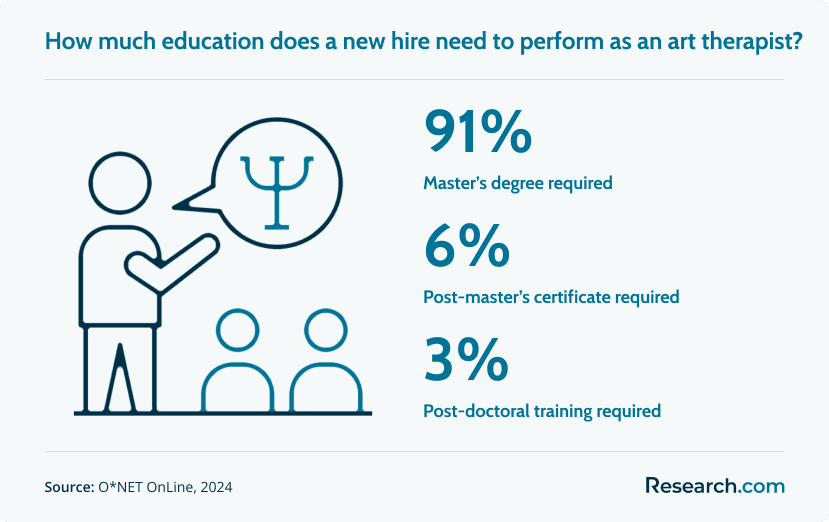
If you are researching how to become a therapist with a specialization in art, the most important point is this: professional art therapy practice usually requires graduate-level training. The ATCB requires specific education in both art therapy and mental health before a candidate can pursue the Registered Art Therapist credential.
Minimum graduate education
Candidates must complete a master’s degree or higher with at least 60 graduate-level credits from an accredited institution. The program should prepare students in art therapy theory and practice while also covering clinical mental health coursework.
Studio art preparation
- Total studio art requirement: Candidates need 18 semester credits or 27 quarter credits in studio art.
- Type of coursework: Courses should involve direct art-making in areas such as two-dimensional art, three-dimensional art, or digital media.
- Before graduate study: At least six credits of studio art must be completed before beginning graduate-level art therapy coursework.
- Portfolio option: Up to six credits may be replaced by a visual arts portfolio if a qualified faculty member approves the portfolio as evidence of sufficient competency.
Mental health coursework
Graduate study must also include six required mental health areas, with at least three credits in each area:
- Psychopathology or abnormal psychology: Covers mental health disorders, causes, treatment approaches, and psychopharmacology concepts.
- Psychological assessment: Introduces assessment methods, standardized testing concepts, and issues such as reliability.
- Human development: Examines emotional, psychological, cognitive, and social development across the lifespan.
- Counseling theories and techniques: Builds a foundation in psychotherapy models and clinical intervention skills.
- Cultural diversity: Focuses on multicultural counseling, inclusion, equity, social justice, and culturally responsive care.
- Research methods: Develops the ability to understand research design, evaluate evidence, analyze data, and assess programs.
If a graduate program does not include all required mental health coursework, candidates may complete up to 15 credits, or five courses, through other accredited graduate-level institutions.
Some students come to art therapy after studying fine art, psychology, design, or counseling. For example, art therapy may interest readers comparing creative graduate outcomes, including those exploring career options after a graphics design master’s degree. However, art therapy is more clinically regulated than many design-related careers because it involves mental health treatment.
Degree path comparison
| Education path | When it may make sense | Important limitation |
| Master’s in art therapy | Best fit for students who know they want to practice art therapy and need a curriculum aligned with ATCB expectations | Applicants still need to verify accreditation, supervised training, state licensure fit, and studio art prerequisites |
| Master’s in counseling with art therapy coursework | May work for students in states where counseling licensure is central to practice | Not every counseling program includes enough art therapy-specific coursework for ATCB credentialing |
| Master’s in psychology or related mental health field | Can support broader mental health preparation or research-oriented goals | Additional art therapy coursework and supervised experience may be needed |
| Fast counseling route | May appeal to students who want the shortest route into a counseling-related role | Art therapy credentialing is structured and may not match the fastest way to get a counseling degree |
Before enrolling, ask the program directly whether its curriculum meets current ATCB education requirements and whether it prepares graduates for the state license they intend to pursue.
What certifications are required to become a licensed art therapist?
Certification and licensure are separate but connected. Certification generally comes from a professional credentialing body, while licensure is controlled by a state or jurisdiction. Art therapists often need both professional credentials and state authorization to practice independently or provide clinical mental health services.
| Credential or license | What it shows | Key requirements mentioned | Why it matters |
| Registered Art Therapist (ATR) | Professional preparation in art therapy education and supervised practice | Completion of an art therapy master’s program or related graduate preparation, 700 hours of supervised clinical experience during the degree program, and 1,000 post-graduate supervised clinical hours | Often serves as a core professional credential and may support state licensure applications |
| Board-Certified Art Therapist (ATR-BC) | Advanced professional standing through national board certification | Requires passing the ATCB national board examination and meeting continuing education and ethics expectations | May strengthen employment options, professional credibility, and eligibility for some roles |
| State art therapy license | Legal permission to practice under a state’s art therapy licensure rules | Requirements vary by state and often align with education, supervised experience, and examination expectations | Needed in states that regulate art therapy directly; art therapists are licensed in 14 states across the country |
| Related mental health license | Authorization to practice under another regulated profession, such as counseling or social work | May require extra coursework, supervised hours, exams, and ethics training | Important in states without a separate art therapy license or for roles requiring broader clinical licensure |
Students comparing graduate programs should confirm whether the curriculum supports ATR eligibility and whether it also meets state counseling or mental health licensure requirements. A program can be academically strong but still fail to meet the rules in the state where you want to practice. If you are ready to compare dedicated graduate options, review master’s programs in art therapy with accreditation, fieldwork, and licensure alignment in mind.
Questions to ask before choosing a graduate program
- Does the program meet current ATCB education requirements for ATR eligibility?
- How many supervised clinical hours are included during the degree?
- Does the program help graduates pursue licensure in the state where I plan to work?
- Are practicum and internship placements arranged by the school, or must students find their own?
- What kinds of clients and settings are available for fieldwork?
- Does the curriculum include counseling ethics, assessment, psychopathology, multicultural practice, and research methods?
- Are graduates prepared for counseling licensure, art therapy licensure, or both?
What skills are essential for a career in art therapy?
Successful art therapists need more than artistic ability. They must be able to use creative processes responsibly within a therapeutic relationship, observe client responses, make clinical decisions, document care, and collaborate with other professionals.
- Art-making fluency: Art therapists should understand multiple media well enough to choose materials safely and intentionally for different ages, abilities, cultures, and clinical goals.
- Clinical listening: They must attend to what clients say, what they avoid, how they interact with materials, and what emotions emerge during the process.
- Empathy with boundaries: Warmth matters, but so do professional limits, confidentiality, informed consent, and appropriate responses to risk.
- Counseling knowledge: Art therapists need a strong grounding in theories of change, mental health conditions, trauma-informed care, assessment, and treatment planning. Students building this foundation before graduate school may consider an affordable online psychology degree.
- Cultural humility: Images, symbols, colors, and materials can carry different meanings across cultures, communities, and personal histories. Art therapists should not impose their own interpretations.
- Communication skills: They must explain treatment goals, discuss sensitive artwork respectfully, coordinate with families or care teams, and write clear clinical notes.
- Assessment and observation: Art therapists evaluate client needs, monitor progress, and adjust interventions based on both verbal and nonverbal information.
- Adaptability: Sessions do not always unfold as planned. A therapist may need to shift materials, pacing, structure, or goals based on the client’s emotional state.
- Emotional stamina: The work may involve trauma, grief, crisis, illness, and complex family situations. Self-awareness and supervision are essential.
- Ethical decision-making: Art therapists must understand confidentiality, mandated reporting, client artwork storage, consent, scope of practice, and professional competence.
Artistic skill vs. clinical skill
| Skill area | Why it matters | Common mistake |
| Artistic skill | Helps the therapist select media, guide creative exploration, and understand process-based expression | Assuming strong personal art talent is enough to practice therapy |
| Clinical skill | Supports assessment, treatment planning, crisis response, documentation, ethics, and therapeutic relationships | Using art activities without a clinical purpose or treatment framework |
| Interpersonal skill | Builds trust and helps clients feel safe enough to explore difficult material | Over-interpreting client artwork instead of inviting client meaning-making |
| Professional skill | Enables collaboration, recordkeeping, supervision, and compliance with workplace and licensure expectations | Ignoring documentation, confidentiality, or state scope-of-practice rules |
What are common career paths for art therapists?
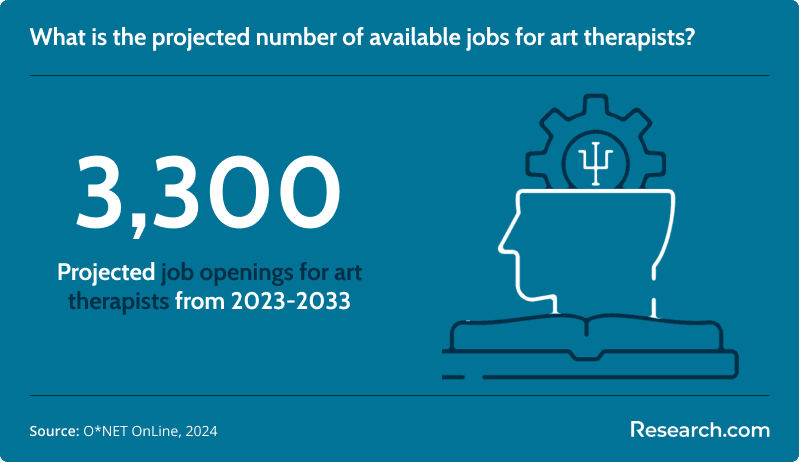
Art therapists can work in mental health, healthcare, education, rehabilitation, community services, and private practice. According to O*NET OnLine data, there were 43,200 employed art therapists in the United States in 2023, and the field is projected to grow by 9% from 2023 to 2033.
- Art therapist: Provides individual, family, or group therapy using visual art processes to support mental health and emotional growth.
- Art psychotherapist: Integrates psychotherapy approaches with art-making, often focusing on deeper emotional processing, trauma work, identity, and insight.
- Creative arts therapist: May work across visual art, music, drama, dance, or other expressive modalities depending on training and setting.
- Group art therapist: Leads structured group sessions where participants use art to explore shared themes, improve social connection, and practice communication.
- Oncology art therapist: Supports people affected by cancer by helping them process fear, grief, identity changes, stress, and treatment-related emotional strain.
Career path timeline
| Stage | Typical focus | What to prioritize |
| High school | Art exposure, psychology interest, volunteering, portfolio development | Build art breadth, strengthen communication skills, and learn about helping professions |
| Bachelor’s degree | Studio art, psychology, human services, or related preparation | Complete prerequisite art and psychology coursework for graduate admission |
| Master’s degree | Art therapy theory, counseling, assessment, ethics, research, practicum, and internship | Choose a program aligned with ATCB and state licensure requirements |
| Post-graduate supervised practice | Clinical hours, supervision, documentation, and credential applications | Track hours carefully and confirm supervisor qualifications |
| Credentialed practice | ATR, ATR-BC, state licensure, specialization, or private practice development | Maintain continuing education and deepen expertise with specific client populations |
What is the average salary of an art therapist in the U.S.?
Art therapist pay depends on location, employer type, experience, credentials, licensure, specialization, and whether the therapist works in an agency, healthcare system, school, nonprofit organization, or private practice. According to the College Board, the median annual income for art therapists in 2024 is approximately $67,354. Salary.com also reported that salaries in 2024 typically range from around $50,000 for entry-level positions to upwards of $76,000 for professionals with more experience or roles in higher-demand areas.
Salary expectations should be realistic. Art therapy can offer meaningful clinical work, but income potential may differ from psychology doctorate pathways. Readers comparing long-term earnings across psychology careers can review how income differs for a PsyD versus a PhD in psychology.
Factors that can affect art therapist earnings
- State and local labor market: Salaries vary by region and by the number of employers hiring art therapists.
- Licensure status: A state license or related mental health license can affect eligibility for clinical roles and reimbursement-related positions.
- Work setting: Hospitals, schools, community agencies, and private practice can have different pay structures.
- Experience level: Entry-level clinicians usually earn less than supervisors, specialists, or private practitioners with established referral networks.
- Specialization: Experience in trauma, oncology, addiction recovery, child and adolescent services, or group therapy may influence opportunities.
- Administrative duties: Supervisory, program director, training, or leadership roles may change compensation compared with direct-service-only positions.
What tools and materials do art therapists use regularly?
Art therapists choose materials based on client needs, safety, developmental level, sensory preferences, emotional regulation, setting, and treatment goals. Materials are not neutral in therapy; some can feel calming and structured, while others may be messy, expressive, or emotionally activating.
- Drawing materials: Pencils, markers, crayons, charcoal, and pastels can support quick expression, symbolism, emotional mapping, and structured prompts.
- Painting supplies: Watercolors, acrylics, brushes, palettes, and paper allow clients to work with color, flow, intensity, and emotional tone.
- Sculpting media: Clay, playdough, and modeling compounds offer tactile engagement and can help clients externalize feelings in three-dimensional form.
- Collage materials: Magazines, paper, scissors, images, glue, and mixed papers help clients build visual stories, identity maps, or future-oriented images.
- Textiles and fibers: Yarn, fabric, felt, and weaving materials can support grounding, repetition, sensory regulation, and memory work.
- Digital tools: Tablets and digital art software can be useful for clients who are comfortable with technology or prefer less physically messy media.
- Found objects: Buttons, beads, stones, leaves, and everyday objects can support metaphor, memory, and accessible mixed-media work.
- Journals and sketchbooks: These help clients track themes, combine words and images, and continue reflection between sessions when appropriate.
- Prompt cards and structured activities: These can help clients begin when they feel stuck or anxious about making art.
- Storage systems: Portfolios, containers, shelves, and locked storage help protect confidentiality and preserve client artwork appropriately.
Current trend: digital and hybrid art therapy tools
Digital art tools are increasingly relevant, especially in telehealth, school-based services, and work with clients who already use tablets or design software. However, technology should not be used simply because it is new. Art therapists must consider privacy, accessibility, clinical fit, client comfort, and documentation when using digital media.
What financial support options are available for art therapy students?
Art therapy graduate study can be expensive, so students should compare total cost carefully before enrolling. Financial support may come from institutional scholarships, graduate assistantships, grants, federal or private loans, employer tuition support, work-study opportunities, and field-placement partnerships. The best option depends on enrollment status, school policies, financial need, academic profile, and whether the program is online, hybrid, or campus-based.
Students should not compare programs by tuition alone. Fees, travel to campus residencies, art supplies, clinical placement costs, supervision expenses, background checks, liability insurance, and licensure exam costs can affect the real price of becoming credentialed. Students who are also considering adjacent mental health careers can compare affordability and credential outcomes in online marriage and family therapy programs.
Ways to reduce art therapy education costs
- Ask whether transfer graduate credits are accepted and how many can apply.
- Confirm whether prerequisites can be completed at a lower-cost accredited institution before graduate enrollment.
- Compare online, hybrid, and campus formats, including travel and residency expenses.
- Ask whether the school provides practicum placement support or requires students to locate sites independently.
- Look for scholarships through the institution, professional associations, local foundations, and mental health organizations.
- Check whether an employer offers tuition assistance for mental health or healthcare-related graduate programs.
How do art therapists' salaries and career prospects compare to other counselors?
Art therapists and counselors may work in similar settings, but their training and treatment methods are not identical. Counselors typically rely more heavily on talk therapy, while art therapists integrate visual expression into assessment, intervention, and processing. Some art therapists also hold counseling credentials, especially in states where a related mental health license is important for practice.
For readers comparing compensation across counseling careers, Research.com’s guide to how much counselors make can provide additional salary context. When comparing careers, look beyond pay. Consider licensure portability, client population, emotional demands, reimbursement rules, supervision requirements, and whether you want creative media to be central to your work.
| Career path | Main treatment approach | When it may be a better fit |
| Art therapist | Creative expression combined with clinical therapy | You want visual art to be a core part of treatment and are willing to complete specialized graduate and credentialing requirements |
| Mental health counselor | Talk therapy, assessment, treatment planning, and counseling interventions | You want a broader counseling identity that may apply across many clinical settings |
| Marriage and family therapist | Family systems, couples work, relational patterns, and communication | You want to focus on relationships, families, and systemic dynamics |
| Clinical social worker | Clinical therapy combined with case management, advocacy, systems navigation, and community resources | You want a mental health role that can include therapy, policy, community work, and client resource coordination |
What additional certifications can support career growth in art therapy?
Additional credentials can help art therapists serve specialized populations, qualify for broader clinical roles, or move into supervision and leadership. The right credential depends on state law, employer expectations, and career goals. A certificate or second degree should not be chosen only because it looks impressive; it should solve a specific professional problem.
For example, professionals who need broader counseling preparation may consider a low-cost online master’s degree in counseling, especially if their state or employer values counseling licensure. Before enrolling in any additional program, confirm whether the coursework will count toward licensure or credential renewal.
Examples of useful specialization areas
- Trauma-informed therapy
- Child and adolescent mental health
- Addiction counseling
- Family systems practice
- Clinical supervision
- Group therapy facilitation
- Digital art therapy ethics and telehealth practice
- Program evaluation and nonprofit leadership
Can art therapy support integrated approaches in addiction recovery?
Art therapy can complement addiction treatment by giving clients a nonverbal way to explore shame, grief, trauma, cravings, identity, relationships, and relapse triggers. In recovery settings, art therapy is usually most effective when it is integrated into a broader evidence-informed treatment plan rather than used as a stand-alone replacement for addiction counseling, medical care, peer support, or case management.
Clinicians interested in this area may benefit from understanding the training pathway for a drug and alcohol counselor. Combining art therapy knowledge with addiction counseling principles can support more coordinated care, especially in residential treatment, outpatient recovery programs, hospitals, and community agencies.
How can interdisciplinary training improve art therapy outcomes?
Art therapists often work with clients whose needs cross several disciplines, including psychology, education, behavioral intervention, medicine, rehabilitation, social work, and family services. Interdisciplinary training can help therapists communicate more effectively with care teams and design interventions that align with broader treatment plans.
For clients with behavioral, developmental, or learning-related needs, knowledge from behavior-focused fields may be useful. Professionals who want to understand behavior assessment and intervention frameworks can compare the best online applied behavior analysis programs. Any interdisciplinary training should be used within the art therapist’s scope of practice and state regulations.
What continuing education is required to maintain art therapy certification?
Board-certified art therapists must keep their knowledge current through continuing education. To maintain board certification, art therapists must earn 100 continuing education credits, or CECs, over a five-year cycle if they are not taking the Art Therapy Credentials Board Examination. As of 2023, all Board-Certified Art Therapists must complete at least six of these credits in supervision. This ongoing requirement is one reason art therapy should not be viewed as the easiest therapy degree.
ATR-BC recertification requirements mentioned
- Earn 100 eligible CECs during the five-year cycle.
- Complete at least 6 CECs in Ethics.
- Complete at least 6 CECs in supervision.
- Apply no more than 10 CECs to art methods or techniques that do not address therapeutic uses.
- Use participation in a juried art exhibition for a maximum of 10 CECs per cycle, limited to one exhibition.
- Submit the recertification application and pay the $100 recertification fee, separate from annual renewal fees for the ATR and/or ATCS credential.
Continuing education content areas
- Psychological and psychotherapeutic theories and practice
- Art therapy assessment
- Art therapy theory and practice
- Client populations and multicultural competence
- Art therapy and media, with restrictions for art techniques and juried exhibitions
- Professional issues, including supervision, private practice, art therapy, and social action
- Ethics, with a minimum of 6 CECs required during the five-year cycle
Good continuing education should strengthen clinical judgment, not simply satisfy a renewal checklist. Choose training that matches your client population, setting, ethical responsibilities, and long-term specialization.
What are the common challenges art therapists face in their careers?
Art therapy can be rewarding, but students should understand the practical challenges before entering the field. Many difficulties are not about art-making itself; they involve systems, regulation, documentation, supervision, funding, and how well other professionals understand the role.
- Role misunderstanding: Some employers, clients, or colleagues may confuse art therapy with recreation, art instruction, or informal creative activities.
- Clinical integration: Art therapists may need to explain how their work fits into treatment planning, multidisciplinary care, and measurable client goals.
- Outcome documentation: The field continues to face challenges in consistently documenting and measuring therapeutic outcomes.
- Licensure complexity: State rules differ, and graduates may need to navigate art therapy licensure, counseling licensure, or another related mental health credential.
- Training-to-practice gaps: New professionals may discover that field placements, workplace expectations, and client populations differ from classroom preparation.
- Research barriers: Art therapists may encounter methodological challenges, limited protocols, or difficulty translating creative processes into research designs.
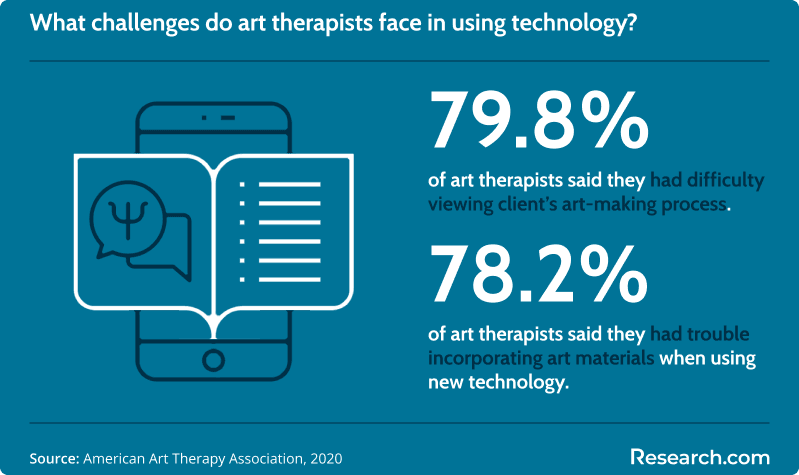
- Technology adoption: Digital media and telehealth can expand access but also raise privacy, comfort, training, and ethical concerns.
- Emotional fatigue: Working with trauma, illness, grief, and crisis requires supervision, peer consultation, and sustainable self-care practices.
Common mistakes to avoid
| Mistake | Why it can hurt your career | Better approach |
| Choosing a program without checking credential alignment | You may graduate without meeting ATR or state licensure requirements | Ask for written confirmation of ATCB and state licensure preparation |
| Looking only at tuition | Fees, supplies, travel, supervision, and licensure costs can change total affordability | Compare full cost of attendance and post-graduate credentialing expenses |
| Assuming all online programs meet local licensing rules | State requirements vary, and some programs may not qualify you where you live | Contact your state licensing board before enrolling |
| Over-interpreting client artwork | Imposed interpretations can damage trust and misrepresent the client’s experience | Use client-centered questions and let clients define personal meaning |
| Ignoring supervision quality | Poor supervision can slow skill development and complicate credentialing | Verify supervisor credentials, documentation processes, and hour tracking |
| Assuming salary outcomes are guaranteed | Pay varies by setting, location, experience, credentials, and demand | Review local job postings and compare requirements before committing |
Can organizational psychology principles enhance art therapy practice?
Organizational psychology can be useful for art therapists who lead groups, manage programs, supervise staff, or work inside hospitals, schools, nonprofits, and community agencies. Skills such as team communication, conflict management, feedback systems, burnout prevention, and program evaluation can improve how art therapy services are delivered.
This is most relevant for art therapists moving beyond direct client care into coordinator, supervisor, director, or consultant roles. Professionals interested in workplace behavior and leadership may compare the most affordable online master’s programs in organizational psychology as a possible complementary pathway.
Can a master's in social work enhance an art therapy career?
A Master’s in Social Work can broaden an art therapist’s understanding of case management, advocacy, community resources, policy, systems of care, and clinical practice. This can be especially valuable for professionals working with clients affected by poverty, housing instability, trauma, family systems, medical issues, or complex service needs.
However, an MSW is not automatically necessary for every art therapist. It may make sense if you want broader clinical licensure options, social service leadership, community mental health roles, or integrated behavioral health work. Students evaluating this route can review online MSW programs and compare admission requirements, field placement expectations, and licensure outcomes.
What steps should students take in high school to prepare for a career in art therapy?
High school students do not need to specialize too early, but they can build a strong foundation in both art and human services. The goal is to become a thoughtful artist, strong communicator, and curious student of human behavior.
- Take varied art courses: Study drawing, painting, sculpture, photography, digital art, ceramics, and design if available. Graduate programs may expect evidence of studio art preparation.
- Build a portfolio: Save work that shows experimentation, technical growth, personal voice, and experience with different media.
- Study psychology or sociology: Introductory coursework can help students understand behavior, development, mental health, culture, and social systems.
- Volunteer in helping settings: Hospitals, community centers, youth programs, senior centers, disability services, and nonprofit organizations can expose students to service work.
- Develop communication skills: Peer mentoring, tutoring, clubs, team activities, and service projects can strengthen listening, patience, and empathy.
- Research college prerequisites: Look at bachelor’s and master’s program expectations early so you know which studio art and psychology courses may be needed.
- Seek mentorship: Reach out respectfully to art therapists, counselors, social workers, teachers, or professional organizations to learn what the work is really like.
- Protect academic flexibility: Strong writing, science, social science, and research skills will help later in graduate-level clinical study.
- Think ahead about cost: Students planning for graduate education can also compare options such as an affordable online master’s degree when considering long-term education expenses.
How does art therapy differ from other mental health professions?
Art therapy differs from many mental health professions because visual expression is central to the therapeutic process. Counselors, psychologists, social workers, and marriage and family therapists may use creative techniques at times, but art therapists are specifically trained to use art materials, image-making, symbolism, process, and reflection as part of clinical care.
The difference is not that art therapy avoids talking. Many sessions include discussion before, during, or after art-making. The difference is that clients can communicate through images and materials as well as words. This can be useful for children, trauma survivors, clients with limited verbal expression, people navigating illness, or anyone who processes experience visually or somatically.
Readers comparing helping professions more broadly may also want to understand the difference between social work and psychology, since those fields have different training models, licenses, and career outcomes.
How can affordable advanced degrees expand career opportunities in art therapy?
Affordable advanced education can help art therapists add clinical depth, qualify for adjacent roles, or build leadership capacity. The key is choosing education that aligns with a specific career goal: licensure, supervision, research, addiction treatment, school-based services, private practice, program administration, or interdisciplinary mental health work.
For some professionals, complementary graduate study in psychology may support broader clinical understanding or open new academic and applied pathways. Cost-conscious students can compare options such as the most affordable online master’s degrees in clinical psychology, but they should always verify whether a program supports the license or credential they want.
Decision checklist before enrolling in an advanced degree
- What credential, license, promotion, or specialization will this degree help me pursue?
- Will credits count toward licensure, certification, or continuing education?
- Does the program require in-person residencies, internships, or local placements?
- Can I balance tuition, fees, supplies, travel, and unpaid clinical training?
- Will this degree improve my actual job options in the state where I plan to work?
- Are graduates employed in roles similar to the one I want?
Is becoming an art therapist worth it?
Becoming an art therapist can be worth it if you want a clinical mental health career centered on creativity, client relationships, and expressive healing. It is a strong fit for people who value both art and psychology, can handle graduate-level clinical training, and are willing to navigate licensure and credentialing requirements.
It may not be the best fit if you want a quick path into mental health work, prefer purely studio-based art careers, dislike documentation, or want guaranteed high earnings. The path requires time, supervised practice, continuing education, and emotional maturity.
Who should consider art therapy?
- Students who want art-making to be part of clinical care, not just a personal passion.
- Artists interested in mental health, trauma-informed work, education, rehabilitation, or community services.
- Counseling-oriented students who are comfortable with visual expression and nonverbal processing.
- Professionals who want to work with children, medical patients, trauma survivors, groups, or clients who may struggle with traditional talk therapy.
Who may want a different path?
- Students seeking the shortest or least regulated route into helping work.
- People who want to teach art but do not want to provide therapy.
- Students uncomfortable with crisis work, mental health documentation, or ethical responsibilities.
- Applicants unwilling to verify licensure requirements before enrolling in graduate school.
Key Insights
- Art therapy is a regulated clinical career path, not simply a creative arts job. Most roles require graduate education, supervised clinical experience, credentials, and sometimes state licensure.
- The ATCB education pathway includes at least 60 graduate-level credits, 18 semester credits or 27 quarter credits in studio art, required mental health coursework, and supervised clinical preparation.
- The ATR and ATR-BC credentials are important professional milestones. The ATR pathway includes 700 hours of supervised clinical experience during the degree program and 1,000 post-graduate supervised clinical hours.
- Licensure varies by location. Art therapists are licensed in 14 states across the country, while other states may require related mental health credentials.
- According to O*NET OnLine, there were 43,200 employed art therapists in the United States in 2023, with the field projected to grow by 9% from 2023 to 2033.
- The College Board reports a 2024 median annual income of approximately $67,354 for art therapists, while Salary.com reported a 2024 range from around $50,000 to upwards of $76,000 depending on experience, location, and role.
- Board-certified art therapists must complete 100 continuing education credits over a five-year cycle, including ethics and supervision requirements.
- The best program choice is the one that aligns with ATCB requirements, state licensure rules, supervised training needs, total cost, and your intended client population.
- Students should avoid choosing a program based only on tuition, convenience, or rankings. Accreditation, licensure fit, field placement quality, and credential outcomes matter more.
References:
- AATA. (2021, March). Member demographics. American Art Therapy Association. Retrieved December 30, 2024.
- ATCB. (2024). ATR-BC recertification standards 2024. Art Therapy Credentials Board, Inc. Retrieved December 30, 2024.
- ATCB. (n.d.). ATR required education. Art Therapy Credentials Board, Inc. Retrieved December 30, 2024.
- Choudhry, R., & Keane, C. (2020, May). Art therapy during a mental health crisis: Coronavirus pandemic impact report. American Art Therapy Association. Retrieved December 30, 2024.
- College Board. (2024). Art therapists. BigFuture | College Board. Retrieved December 30, 2024.
- Dallas Art Therapy. (2024). Dallas art therapy, 501 (C) (3). Dallas Art Therapy. Retrieved December 30, 2024.
- Garcia, J. (2021). ATCB annual report 2021. Art Therapy Credentials Board, Inc.. Retrieved December 30, 2024.
- Salary.com. (2024, December 1). Art therapist salary in United States. Salary.com. Retrieved December 30, 2024.
Other Things You Should Know About Becoming an Art Therapist
In 2027, to become a certified art therapist, you must earn a Master's degree in Art Therapy or a related field from an accredited program. Coursework typically includes art therapy techniques, psychology, and supervised clinical experience. After graduation, you must fulfill certification requirements from a recognized body, such as the Art Therapy Credentials Board.
It typically takes around six to eight years to become an art therapist in 2026, including four years for a bachelor's degree, two to three years for a master's program in art therapy, and additional time for obtaining required certifications and supervised clinical experience.





