
2027 How to Become a Marriage and Family Therapist (MFT) in Houston, TX: License Requirements & Salary

Co-Founder and Chief Data Scientist
Choosing to become a marriage and family therapist in Houston is not just a degree decision. It is a licensing, training, cost, supervision, and career-planning decision. MFTs work with individuals, couples, and families on relationship patterns, conflict, emotional distress, behavioral concerns, and life transitions. In Houston, the path can be attractive because the city has a large and diverse population, a broad healthcare network, and steady need for mental health services across private practices, hospitals, schools, community agencies, and integrated care settings.
This guide explains how to become a marriage and family therapist in Houston, TX, from graduate school through licensure and career growth. You will learn what degree is required, how long the process takes, what supervised clinical experience involves, how Texas defines the MFT scope of practice, what salary expectations look like, how to evaluate program costs, and what questions to ask before investing in this career path.
Quick answer: How do you become an MFT in Houston, TX?
To become a marriage and family therapist in Houston, you generally need a master’s degree in marriage and family therapy or a closely related field, post-graduate supervised clinical experience, a passing score on the national MFT exam, and licensure through the Texas State Board of Examiners of Marriage and Family Therapists. Texas requires substantial supervised practice before full licensure, so most candidates should plan for several years of education and clinical training before practicing independently.
- Houston MFT candidates typically need a graduate degree in marriage and family therapy, counseling, psychology, or another qualifying field.
- Texas licensure requires supervised clinical experience, including direct work with clients under approved supervision.
- Candidates must pass the Association of Marital & Family Therapy Regulatory Boards national examination.
- Salary estimates in Houston commonly fall around $58,000 to $59,000 annually, though pay varies by setting, experience, specialization, and private practice income.
- Demand is supported by national mental health workforce trends, including a 22% projected employment growth figure cited for marriage and family therapists.
- Steps to become a marriage and family therapist in Houston
- Texas scope of practice for Houston MFTs
- Degree requirements for MFT licensure
- Average MFT salary in Houston
- How long MFT graduate school takes
- Tuition, fees, and financial aid options
- Texas MFT licensure requirements
- Houston job outlook for MFTs
- Whether substance abuse counseling can strengthen an MFT practice
- Career advancement options for Houston MFTs
- Additional certifications and clinical training options
- Interdisciplinary collaboration in MFT practice
- Legal steps for opening a private practice
- How MFTs can protect their well-being and avoid burnout
- Common challenges for MFTs in Houston
What are the steps to become a Marriage and Family Therapist in Houston, TX?
The path to becoming an MFT in Houston starts with graduate education and ends with state licensure. Houston candidates must meet Texas requirements, not city-specific rules, because licensure is regulated at the state level. The practical sequence is: complete a qualifying graduate degree, gain supervised clinical experience, pass the national licensing exam, apply for licensure, and keep the license active through continuing education.
A typical candidate begins by enrolling in a master’s program in marriage and family therapy or a closely related discipline such as counseling or psychology. Programs at institutions such as the University of Houston, Houston Baptist University, and nearby Texas Woman’s University are examples cited for Houston-area students because they offer graduate training designed around clinical preparation and licensure expectations.
After completing the degree, candidates move into supervised practice. Texas requires 3,000 hours of supervised clinical experience after the degree. These hours give new therapists structured experience with client assessment, treatment planning, couples and family sessions, documentation, ethical decision-making, and consultation with supervisors.
Candidates must also pass the Association of Marital & Family Therapy Regulatory Boards national examination. Preparation often includes review courses, exam workshops, peer study groups, and support from professional organizations such as the Texas Association for Marriage and Family Therapy. The exam covers core areas such as family systems theory, treatment models, ethics, assessment, and clinical application.
Once licensed, Houston MFTs must continue learning. Renewal requirements include continuing education so clinicians remain current on ethics, evidence-informed treatment, telehealth practices, cultural responsiveness, and changes in Texas rules.
| Stage | What you complete | Why it matters |
| Graduate education | Master’s degree in marriage and family therapy or a related field | Provides the academic foundation required for licensure and supervised practice |
| Supervised clinical experience | 3,000 hours of post-degree supervised clinical training | Builds competence with real clients before independent practice |
| Licensing exam | AMFTRB national MFT exam | Demonstrates readiness to practice according to professional standards |
| State application | Licensure process through the Texas licensing authority | Gives legal permission to practice as an MFT in Texas |
| Ongoing renewal | Continuing education and license maintenance | Keeps the therapist compliant and professionally current |
- Confirm that the graduate program’s curriculum supports Texas MFT licensure requirements before enrolling.
- Ask programs how they help students secure practicum or internship placements in Houston.
- Identify approved supervisors early because supervision availability can affect your timeline.
- Prepare for the licensing exam with materials aligned to the AMFTRB content areas.
- Track all supervised hours carefully; incomplete records can delay licensure.
How does Houston, TX law define the scope of practice for MFTs?
Houston MFTs practice under Texas law. Their scope centers on assessing and treating mental, emotional, relational, and behavioral issues through a systemic lens. In practical terms, MFTs help clients understand how family roles, relationship patterns, communication, attachment, conflict, trauma, and life stressors affect individual and relational well-being.
Day-to-day work may include intake assessments, treatment plans, individual counseling, couples therapy, family sessions, crisis planning within the therapist’s competence, referrals, progress notes, and collaboration with physicians, psychiatrists, psychologists, school personnel, social workers, or other behavioral health professionals.
Texas rules also set boundaries. MFTs do not prescribe medication and do not perform medical procedures. When a client’s needs involve medication, complex medical conditions, psychological testing outside the MFT’s competence, or higher levels of care, the therapist should refer or coordinate with the appropriate licensed professional. These boundaries protect clients and help therapists practice within their training.
Confidentiality is central to MFT practice, but it is not absolute. Therapists must follow Texas mandatory reporting laws, including reporting requirements involving child abuse. Houston’s cultural and linguistic diversity also makes cultural competence more than a professional ideal; it is a practical requirement for ethical and effective treatment.
Some MFTs broaden their clinical usefulness by adding training in areas that often overlap with family distress, including addiction treatment. Students comparing related behavioral health pathways may find this guide to online addiction counseling degree options helpful when considering complementary education.
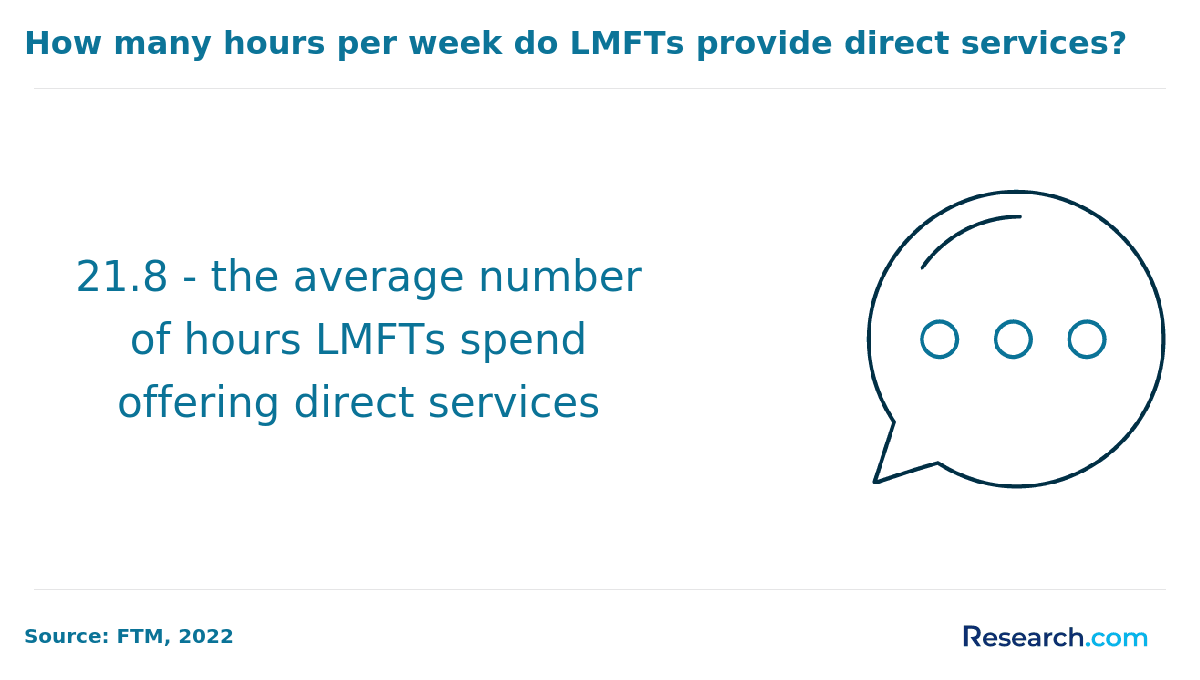
The infographic below shows that licensed MFTs spend an average of 21.8 hours each week providing direct client services. That aligns with the Texas scope of practice for Houston clinicians, which allows MFTs to provide assessment and psychotherapy for individuals, couples, and families using systemic and relational approaches. Under the Texas Occupations Code and the rules of the Texas State Board of Examiners of MFTs, clinicians may diagnose and treat mental and emotional disorders, use relationship-focused assessment tools, and provide telehealth when appropriate. They cannot prescribe medication or perform medical procedures, and they should collaborate with physicians, psychologists, or other specialists when a client’s needs exceed the MFT scope.
What degree do you need to become an MFT in Houston, TX?
The standard educational route is a master’s degree in marriage and family therapy. Texas may also accept closely related graduate degrees when the coursework and clinical training meet licensing standards. For most students, the safest approach is to choose a program that clearly prepares graduates for MFT licensure in Texas and includes supervised clinical training as part of the curriculum.
Common graduate coursework includes family systems theory, human development, psychopathology, ethics, couples counseling, family therapy methods, assessment, diversity in counseling, research methods, and practicum or internship. These courses matter because MFTs are trained to look beyond the individual and consider relationships, family structures, communication patterns, and social context.
Some candidates pursue doctoral study, such as a PhD or PsyD in clinical psychology or marriage and family therapy, but a doctorate is not typically the first required step for MFT licensure. Doctoral education may make sense for students who want to teach, conduct research, supervise clinicians, lead programs, or specialize deeply in advanced clinical work.
Houston-area students often compare options such as the University of Houston’s Couple and Family Therapy Program, Texas Woman’s University Houston Center, and the University of St. Thomas. When comparing schools, do not rely only on reputation. Ask whether the program’s coursework satisfies Texas requirements, how many clinical hours are built into the program, where students complete practica, and how graduates perform in the licensure process.
| Degree option | Best fit | Important caution |
| Master’s in Marriage and Family Therapy | Students who want the most direct MFT-focused preparation | Confirm that the program supports Texas licensure requirements |
| Master’s in counseling or psychology | Students considering broader counseling roles as well as MFT pathways | Additional MFT-specific coursework or supervised experience may be needed |
| Doctoral degree in MFT or psychology | Students interested in research, teaching, leadership, or advanced specialization | Usually takes longer and may not be necessary for entry into MFT practice |
| Online or hybrid MFT master’s program | Working adults or students who need scheduling flexibility | Verify practicum placement support and Texas licensure alignment before enrolling |
Students who need flexible graduate options can compare programs through this overview of online marriage and family counseling master’s degrees while still checking each program’s fit with Texas licensing rules.
The bar chart below shows that 39 % of current marriage and family therapists began with a psychology degree, while 18 % majored directly in family therapy. For Houston students, the takeaway is that different undergraduate backgrounds can lead to the field, but the graduate program must still provide the right MFT preparation for licensure.
What is the average salary for a marriage and family therapist in Houston, TX?
Salary expectations for Houston MFTs should be treated as estimates, not guarantees. The article’s cited figures place the average annual salary at about $59,000 as of 2023, or roughly $4,900 per month. Another summary estimate lists the Houston average at approximately $58,000. These figures are slightly below the Texas state average of about $62,000 annually.
Entry-level MFTs in Houston commonly start near $45,000 per year. With experience, specialization, stronger referral networks, supervisory roles, or private practice development, earnings may rise to $70,000 or more. Clinicians who specialize in areas such as trauma, substance abuse counseling, child and adolescent therapy, high-conflict couples work, or integrated care may have more ways to differentiate their services.
Setting matters. Private practice can offer higher income potential but also brings business expenses, insurance billing issues, marketing responsibilities, inconsistent cash flow, and administrative work. Agency or hospital roles may provide steadier pay, benefits, supervision, and interdisciplinary support, but compensation can be more structured.
| Career stage or setting | Salary figure cited | What can affect earnings |
| Houston average estimate | Approximately $58,000 to about $59,000 annually | Employer type, caseload, insurance participation, specialization, and experience |
| Monthly equivalent of $59,000 | Roughly $4,900 per month | Taxes, benefits, business expenses, and unpaid administrative time can change take-home income |
| Texas average estimate | Approximately $62,000 annually | Regional demand and employer mix vary across the state |
| Entry-level Houston estimate | Near $45,000 per year | Supervision status, setting, and clinical experience are important |
| Experienced or specialized clinicians | $70,000 or more | Advanced training, referrals, private practice, and niche expertise can influence income |
One Houston MFT described the early-career period as financially modest but professionally meaningful. They emphasized that income growth often depends on building trusted referral relationships, learning insurance systems, choosing a specialty carefully, and continuing to develop clinical skills. Their experience reflects a common reality in therapy careers: the work can be deeply rewarding, but financial progress usually requires intentional planning.
The bar chart below shows that MFT earnings differ widely by work setting, from nearly $89 k in state-government roles to about $59 k in private offices. Houston’s cited average of ≈ $59,000 per year, or around $4,900 per month, sits near the middle of that range, while experienced or specialized clinicians in the city may move into the low-$70 k bracket.
How long does it take to complete a master's degree in marriage and family therapy in Houston, TX?
A master’s degree in marriage and family therapy in Houston typically takes 2 to 3 years of full-time study. Many programs require about 60 semester credit hours, including coursework in counseling theory, family systems, assessment, ethics, human development, psychopathology, and supervised clinical practice. Some accelerated programs may be completed in 18 to 24 months, but those formats can be demanding and may not suit students who work full time or have significant family responsibilities.
The degree is only part of the timeline. The licensure process continues after graduation because candidates must complete supervised clinical experience. The article’s cited figures describe supervised internship or post-degree training as typically involving 2,000 to 4,000 clinical hours, while Texas licensure information in this guide also cites 3,000 supervised hours. Depending on whether the candidate works full time or part time in a qualifying clinical role, this phase may add 1 to 2 years or longer.
| Pathway | Estimated time cited | Best for | Trade-off |
| Accelerated graduate program | 18 to 24 months | Students who can manage a heavy course and clinical schedule | Less flexibility and greater workload intensity |
| Full-time master’s program | 2 to 3 years | Students who want a standard graduate pace | Requires sustained time commitment |
| Part-time graduate enrollment | Longer than full-time study | Working adults and caregivers | Delays entry into post-graduate supervised practice |
| Post-degree supervised experience | May add 1 to 2 years depending on pace | All licensure candidates | Hours, supervision access, and job setting can affect completion time |
Students can shorten avoidable delays by choosing a program with strong practicum placement support, arranging supervision early, keeping complete documentation, and selecting jobs that qualify for supervised hours. Houston’s hospitals, community mental health centers, university clinics, nonprofit agencies, and private practices can all be potential training environments, but availability and fit vary.
If you are weighing whether the time commitment makes sense, this guide on whether an MFT degree is worth it can help you compare cost, timeline, and career goals before enrolling.
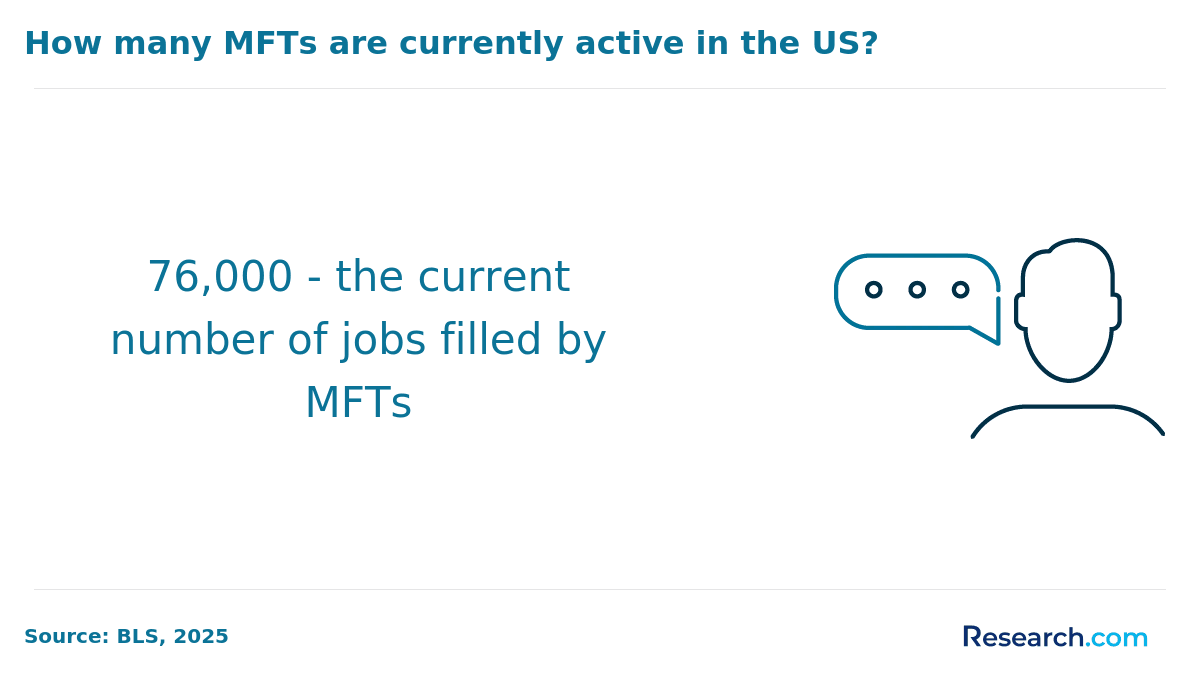
The infographic below notes that 76 000 positions are already filled by MFTs nationwide. For Houston students, that context can help frame the 2-to-3-year master’s commitment, plus supervised clinical hours, as preparation for an established behavioral health profession rather than a short-term certificate path.
What is the cost of tuition for MFT programs in Houston, TX, and are there financial aid options?
Tuition for MFT graduate programs in Houston varies by institution, residency status, program length, and delivery format. The article’s cited range for a master’s degree in marriage and family therapy is $15,000 to $40,000 for the full program. Public universities may be less expensive for in-state students, while private institutions often cost more.
Tuition is not the only cost. Students should also budget for fees, books, technology, transportation, background checks, liability insurance if required for clinical placements, exam preparation, licensing application costs, and possible supervision-related expenses. Internship schedules can also reduce a student’s ability to work full time, which can affect the real cost of attendance.
| Cost category | What to check before enrolling | Why it matters |
| Tuition | Whether the full program falls within the cited $15,000 to $40,000 range | The advertised per-credit price may not show the total degree cost |
| Fees and materials | Technology fees, clinical fees, books, and assessment materials | These can add costs beyond tuition |
| Clinical placement costs | Transportation, schedule limits, background checks, or liability coverage | Practicum and internship requirements can affect both time and money |
| Licensing and exam costs | Exam preparation, application fees, and renewal expenses | Licensure expenses continue after graduation |
| Lost wages or reduced work hours | Whether clinical training conflicts with employment | The opportunity cost may be significant for working adults |
Financial aid may include federal student aid, state aid, institutional scholarships, assistantships, tuition waivers, and private scholarships. Students should submit aid applications early and ask each program whether graduate assistantships, research roles, teaching support, or department-level awards are available. Local professional support may also come from organizations such as the Texas Association for Marriage and Family Therapy Foundation.
Students comparing behavioral health graduate options may also want to review related affordable pathways, such as this list of affordable online BCBA programs when exploring adjacent fields in behavioral intervention and family support.
What are the requirements for MFT licensure in Houston, TX?
Houston MFTs must satisfy Texas licensure requirements. The process begins with a qualifying master’s or doctoral degree in marriage and family therapy or a closely related field. The degree must provide appropriate training in family systems, clinical assessment, ethics, treatment methods, and supervised practice.
After graduation, candidates must complete at least 3,000 hours of supervised clinical experience over a minimum of two years. Of those hours, 1,500 must involve direct client contact. This phase is designed to help candidates build judgment, confidence, and competence before practicing independently.
The complete route from starting graduate school to full licensure often takes between three to five years, depending on program format, supervised work pace, employment status, and how quickly the candidate completes exam and application requirements.
Texas also requires license renewal every two years. MFTs must complete 24 hours of continuing education, including 3 hours in ethics, through education approved by the Texas Behavioral Health Executive Council. These requirements support professional accountability and are especially important in a diverse city where cultural competence, telehealth knowledge, and ethical decision-making are daily concerns.
| Requirement | Texas figure cited | Practical advice |
| Graduate degree | Master’s or doctoral degree in MFT or a closely related field | Verify licensure alignment before enrolling |
| Supervised experience | At least 3,000 hours | Use approved supervision and keep detailed records |
| Direct client contact | 1,500 hours | Confirm your role provides qualifying client-facing experience |
| Minimum supervision period | Minimum of two years | Plan financially for the post-graduate training period |
| Typical total licensure timeline | Three to five years | Program format and supervision pace can change the timeline |
| License renewal | Every two years | Do not wait until the deadline to complete continuing education |
| Continuing education | 24 hours, including 3 hours in ethics | Choose approved courses that also strengthen your practice area |
Professionals who want to combine MFT work with addiction-related training may also compare options such as a low-cost online master’s in substance abuse counseling, especially if they plan to work with families affected by substance use.
What is the job market outlook for MFTs in Houston, TX?
The job outlook for Houston MFTs is supported by both local population needs and national mental health employment trends. The article cites about 1,200 MFTs currently employed in Houston. It also cites a U.S. Bureau of Labor Statistics projection of 22% growth for MFTs between 2022 and 2032, which is much faster than the average for all occupations.
Houston’s size and diversity create demand for therapists who can work across cultures, languages, family structures, and socioeconomic contexts. Opportunities may exist in private practice, community agencies, hospitals, school-based settings, nonprofit organizations, employee assistance programs, and integrated behavioral health teams.
Compared with Dallas and Austin, Houston is described as having competitive employment levels, although those cities may have slightly higher MFT concentrations per capita. For job seekers, that means Houston can offer opportunity, but candidates still need to differentiate themselves through licensure progress, supervised experience, specialty training, and strong professional networks.
- Hold or be actively working toward the Texas LMFT credential.
- Develop experience with culturally responsive care for Houston’s diverse communities.
- Consider specialization in trauma, substance abuse, child and adolescent therapy, couples work, or integrated care.
- Build referral relationships with physicians, psychiatrists, schools, community organizations, and other therapists.
- Stay current with teletherapy standards and documentation expectations.
Is it beneficial for MFTs in Houston to incorporate substance abuse counseling into their practice?
Substance use concerns often affect couples, parenting, finances, trust, safety, and family stability. For that reason, Houston MFTs who understand addiction counseling may be better prepared to serve clients with overlapping relational and substance-related challenges.
Additional training in substance abuse counseling can support more integrated treatment planning, stronger referrals, and improved collaboration with addiction specialists, physicians, recovery programs, and community agencies. It may also help therapists stand out in interdisciplinary behavioral health settings where clients often present with more than one concern.
This does not mean every MFT should claim addiction expertise without proper training. The better approach is to pursue appropriate coursework, supervision, continuing education, or credentials before expanding services. Practitioners exploring this direction can review how to become a substance abuse counselor in Houston as a complementary career pathway.
How can MFTs advance their careers in Houston, TX?
Career advancement for Houston MFTs usually comes from one or more of four moves: specialization, supervision or leadership, private practice development, and interdisciplinary work. The right path depends on whether the therapist wants higher income potential, more clinical depth, more autonomy, teaching opportunities, or leadership responsibilities.
Specialization is often the most practical first step. Therapists may pursue advanced training in trauma therapy, child and adolescent therapy, substance abuse counseling, emotionally focused therapy, Gottman Method couples work, sex therapy, grief work, or integrated behavioral health. Houston-based continuing education providers, university programs, and clinical institutes can help therapists meet renewal requirements while building stronger expertise.
MFTs can also move into supervisory, administrative, academic, or research roles. Houston’s healthcare and education sectors, including institutions such as Baylor College of Medicine and the University of Texas Health Science Center at Houston, may provide opportunities for clinicians interested in research, program development, teaching, or policy-related work.
| Advancement route | When it makes sense | What to prepare for |
| Clinical specialization | You want to attract specific clients or improve outcomes in a focused area | Training, consultation, and ethical scope boundaries |
| Private practice | You want autonomy and business ownership | Marketing, billing, compliance, taxes, documentation, and risk management |
| Agency or hospital leadership | You want stability, teams, and program responsibility | Supervision skills, administrative experience, and interdisciplinary collaboration |
| Teaching or research | You want to train future clinicians or contribute to evidence-based practice | Doctoral education may be useful or required for some roles |
| Professional association involvement | You want referrals, advocacy, mentorship, and visibility | Consistent participation in events, committees, and continuing education |
What additional certifications and training options can enhance my practice in Houston, TX?
Additional credentials can help an MFT serve more complex client needs, but they should be chosen strategically. The best training is not necessarily the most marketable-sounding certificate; it is the training that fits your client population, supervision background, ethical scope, and long-term career plan.
Useful areas may include trauma-informed care, substance abuse treatment, integrated behavioral health, child and adolescent therapy, couples therapy models, telehealth practice, and culturally responsive counseling. MFTs who want to understand related counseling pathways can also review mental health counselor requirements in Houston to compare credential expectations across behavioral health roles.
How can interdisciplinary collaboration enhance my MFT practice in Houston, TX?
Many clients do not fit neatly into one professional category. A family may need therapy, psychiatric medication management, school support, behavioral intervention, substance use treatment, medical care, or social services at the same time. Interdisciplinary collaboration helps an MFT avoid working in isolation and gives clients a more coordinated care experience.
Houston MFTs may collaborate with psychiatrists, psychologists, physicians, school counselors, social workers, behavior analysts, addiction counselors, pediatric specialists, and community organizations. This can improve referral quality, reduce duplication, clarify treatment goals, and support families with complex needs.
For clients with behavioral challenges, understanding adjacent professions can be especially useful. For example, learning how to become a BCBA in Houston can help MFTs identify when collaboration with a behavior analyst may benefit families navigating developmental or behavioral concerns.
What are the legal requirements for starting a private practice as an MFT in Houston, TX?
Opening a private practice in Houston requires both clinical licensure and business compliance. First, the therapist must hold the appropriate Texas MFT license. The licensure route includes a qualifying master’s or doctoral degree, at least 3,000 hours of supervised clinical experience, and a passing score on the national MFT examination.
After licensure, the therapist must choose a business structure, such as a sole proprietorship, LLC, or corporation, and complete any required business registration with the Texas Secretary of State when applicable. A federal Employer Identification Number may be needed for tax and business purposes. Private practitioners must also follow confidentiality rules, HIPAA requirements when applicable, recordkeeping standards, informed consent rules, telehealth requirements, and professional ethics obligations.
The article cites that about 45% of licensed therapists in the Houston metropolitan area work in private practice settings. It also cites projected 15% local growth in the therapist industry over the next decade. Those figures suggest private practice is a common and potentially growing route, but it is not automatically easier or more profitable than employment.
| Private practice requirement | Why it matters | Common mistake to avoid |
| Active Texas MFT license | Allows legal independent clinical practice | Starting independent services before meeting licensure requirements |
| Business structure | Affects taxes, liability, and operations | Choosing a structure without legal or tax guidance |
| EIN and tax setup | Supports billing, payroll, and business filings | Mixing personal and business finances |
| HIPAA and confidentiality compliance | Protects client privacy and reduces legal risk | Using nonsecure communication or weak documentation systems |
| Liability insurance | Helps protect against professional claims | Assuming licensure alone provides legal protection |
| Continuing education | Maintains licensure and professional competence | Waiting until renewal deadlines to complete required hours |
Therapists may strengthen a private practice by earning targeted credentials such as Certified Clinical Trauma Professional training or Gottman Method certification, building referral partnerships, understanding insurance reimbursement, and using compliant teletherapy tools. Texas requires 24 hours of approved continuing education every two years for license renewal, so practice owners should build professional development into their business plan.
How can MFTs sustain personal well-being while managing professional demands in Houston, TX?
MFT work can be emotionally demanding. Therapists regularly sit with conflict, grief, trauma, betrayal, anxiety, parenting stress, and family crises. Without boundaries and support, the work can lead to burnout, compassion fatigue, and poor clinical judgment.
Sustainable practice requires more than occasional self-care. Houston MFTs should build routines that protect both clients and clinicians: manageable caseloads, regular consultation, peer supervision, clear scheduling limits, documentation time, vacation planning, and referral options for cases outside their scope or capacity.
Professional networks can also reduce isolation. Workshops, consultation groups, supervision communities, and mindfulness-based training may help clinicians maintain resilience. Career planning matters too. Understanding related licensing pathways, such as how to become a therapist in Houston, can help professionals make informed decisions without overextending themselves.
What do marriage and family therapists in Houston, TX have to say about their careers?
- My training in marriage and family therapy at the University of Houston helped me connect clinical theory with real client work. Houston’s cultural variety has challenged me to listen carefully, adapt my approach, and stay humble as a clinician. The need for mental health professionals here made the career feel stable, but the most meaningful part has been watching families repair trust and communicate differently. Alyona
- Studying at Texas Woman’s University gave me access to strong professional development and exposed me to Houston’s broad healthcare community. Working with complicated family systems in a large city has strengthened my clinical judgment and increased my empathy. I value the support among local therapists because that collaboration keeps me learning. Monica
- Sam Houston State University gave me an important foundation, but Houston’s mix of urban energy and community commitment has shaped the way I practice. The city’s diversity pushes me to keep improving and to tailor therapy to each family’s context. I find the work rewarding because it contributes directly to stronger relationships and healthier communities. Alana
What are the key challenges MFTs encounter in Houston, TX?
Houston offers opportunity, but MFTs should be realistic about the challenges. New therapists may struggle to secure supervised positions, build a referral base, manage documentation, understand insurance billing, or compete in a crowded private practice market. Clinicians serving diverse communities also need ongoing cultural humility and language-access awareness.
Administrative demands can be significant. Insurance reimbursement, compliance, scheduling, electronic records, telehealth policies, business taxes, and marketing can consume time that therapists would rather spend on clinical care. For private practitioners, client acquisition is often one of the hardest early hurdles.
Some professionals diversify their income through teaching, consulting, supervision, agency work, or adjunct roles. Those exploring education-related options may compare resources such as affordable teacher certification programs in Houston, although teaching pathways have separate requirements and should be evaluated carefully.
| Common mistake | Why it causes problems | Better approach |
| Choosing a program without checking licensure alignment | The degree may not satisfy Texas MFT requirements | Ask for written confirmation of licensure preparation |
| Looking only at tuition | Fees, clinical costs, exam costs, and lost wages can change affordability | Calculate total cost of attendance and post-graduation licensing costs |
| Assuming online programs automatically qualify | Clinical placement and state requirements may differ | Verify Texas eligibility before enrolling |
| Waiting too long to arrange supervision | Supervised hours can delay full licensure | Identify approved supervisors and qualifying roles early |
| Opening a private practice without a business plan | Clinical skill alone does not solve billing, marketing, or compliance issues | Plan for legal setup, insurance, documentation, referral development, and taxes |
| Expecting salary figures to be guaranteed | Income depends heavily on setting, experience, caseload, and payer mix | Compare multiple salary sources and speak with local practitioners |
Questions to ask before choosing an MFT program in Houston
- Does the program clearly prepare graduates for Texas MFT licensure?
- How many clinical hours are included before graduation?
- Where do Houston students typically complete practicum or internship placements?
- Does the program help students find approved supervisors after graduation?
- What is the full cost of attendance, including fees and clinical training expenses?
- Are classes full time, part time, online, hybrid, or campus-based?
- How does the program train students in teletherapy, ethics, and culturally responsive care?
- What support is available for licensing exam preparation?
- What types of jobs do graduates pursue in Houston?
- Can transfer credits, assistantships, scholarships, or employer benefits reduce cost?
Key Insights
- Becoming an MFT in Houston requires graduate education, supervised clinical experience, exam completion, and Texas licensure; it is not a short certificate pathway.
- The most direct academic route is a master’s degree in marriage and family therapy, though related graduate degrees may work if they satisfy Texas requirements.
- Texas licensure figures cited in this guide include 3,000 supervised clinical hours, with 1,500 hours involving direct client contact and a minimum two-year supervision period.
- Houston salary estimates center around $58,000 to $59,000 annually, but income can vary substantially by setting, experience, specialization, and private practice structure.
- Program cost should be evaluated beyond tuition. Clinical placement expenses, licensing fees, supervision logistics, and reduced work hours can affect total affordability.
- Specialization in areas such as trauma, substance abuse counseling, child and adolescent therapy, or couples work can improve career flexibility, but only when supported by proper training.
- Private practice can offer autonomy, but it requires business planning, compliance systems, referral development, liability protection, and strong documentation habits.
- The best next step is to compare Houston-area and online programs against Texas licensure requirements before applying, rather than assuming any counseling-related degree will qualify.
Related Articles for Nearby Cities
- 2027 How to Become a Marriage and Family Therapist (MFT) in Austin, TX: License Requirements & Salary
- 2027 How to Become a Marriage and Family Therapist (MFT) in Corpus Christi, TX: License Requirements & Salary
- 2027 How to Become a Marriage and Family Therapist (MFT) in San Antonio, TX: License Requirements & Salary
- 2027 How to Become a Marriage and Family Therapist (MFT) in Dallas, TX: License Requirements & Salary
- 2027 How to Become a Marriage and Family Therapist (MFT) in Arlington, TX: License Requirements & Salary
- 2027 How to Become a Marriage and Family Therapist (MFT) in Garland, TX: License Requirements & Salary
- 2027 How to Become a Marriage and Family Therapist (MFT) in Irving, TX: License Requirements & Salary
- 2027 How to Become a Marriage and Family Therapist (MFT) in Fort Worth, TX: License Requirements & Salary
- 2027 How to Become a Marriage and Family Therapist (MFT) in Plano, TX: License Requirements & Salary
- 2027 How to Become a Marriage and Family Therapist (MFT) in Laredo, TX: License Requirements & Salary
References:
- CHCP. Medical Coding and Billing Training.
- Counseling Psychology. Best MFT Programs in Texas Online.
- Edumed. Financial Aid for Online MFT Programs.
- Fuller Seminary. Graduate Tuition and Aid.
- OnlineU. 2025 Affordable Online MFT Programs.
- Texas Wesleyan University. Marriage and Family Therapy Program Cost
- University of Houston. Graduate Tuition, Fees, Costs, and Financial Aid.
- UTHealth Houston. Cost of Attendance.
- University of Houston. Online Medical Billing and Coding Training.
- Our Lady of the Lake University. Marriage and Family Therapy Program.
Other Things You Need to Know About Marriage and Family Therapists in Houston, TX
The Texas State Board of Examiners of Marriage and Family Therapists, under the Texas Behavioral Health Executive Council, handles MFT licensure in Houston and statewide. Applicants must follow its rules for LMFT Associate and LMFT credentials, including supervision, examination, and renewal requirements.
MFTs in Houston, TX must complete 30 hours of continuing education every two years to maintain their license. This must include 6 hours in ethics and 3 hours in cultural diversity or competency, as required by the Texas State Board of Examiners of Marriage and Family Therapists.
Yes, MFTs in Houston must pass the Texas Jurisprudence Exam for licensure. This exam tests knowledge of state rules and ethical guidelines applicable to marriage and family therapy. It is a prerequisite for obtaining the MFT license in Texas.


