
2027 Most Affordable Online Master’s in Substance Abuse Counseling Degrees

Co-Founder and Chief Data Scientist
Choosing an affordable online Master’s in Substance Abuse Counseling is not just a tuition decision. It affects whether you qualify for practicum hours, meet state licensure or certification rules, build supervised clinical experience, and graduate with debt that fits your expected earnings. This guide is for students who want graduate-level addiction counseling training but need a flexible and cost-conscious path.
Below, you will find a decision-focused overview of online substance abuse counseling master’s programs: what they teach, how long they take, how much they cost, which programs are listed for 2027, how online study compares with campus learning, and what to check before enrolling. You will also learn how accreditation, field placement support, financial aid, state requirements, and career goals should shape your final choice.
Quick answer: Is an affordable online Master’s in Substance Abuse Counseling worth it?
An affordable online Master’s in Substance Abuse Counseling can be worth it if the program is accredited, aligns with your state’s counseling or addiction certification requirements, includes supervised practicum or internship experience, and keeps total tuition manageable. Graduates may qualify for roles in addiction treatment, behavioral health, community mental health, rehabilitation, and related counseling settings. Substance Abuse, Behavioral Disorder, and Mental Health Counselors earn a median annual salary of $56,230, but actual earnings depend on location, licensure, employer type, and experience.
| Decision factor | What to know before enrolling |
| Typical completion time | Many online programs take one and a half to three years, depending on credits, pace, and enrollment status. |
| Estimated tuition range | Online master’s programs in this field commonly range from $16,000 to $34,000 in total tuition. |
| Per-credit cost | Students can expect per-credit prices between $440 and $750. |
| Career preparation | Programs usually combine addiction theory, assessment, counseling methods, ethics, multicultural practice, and supervised fieldwork. |
| Most important enrollment check | Confirm that the program meets your state’s licensure or certification expectations before applying. |
Benefits of choosing an affordable online Master’s in Substance Abuse Counseling
- Flexible access to graduate training. Online study can help working adults, caregivers, and students outside major metro areas complete counseling coursework without relocating.
- Career options in behavioral health and addiction services. Graduates may pursue roles such as licensed substance abuse counselor, behavioral disorder counselor, mental health counselor, community mental health worker, and related positions, depending on state rules and credentials.
- Potential for stronger professional mobility. A master’s degree may support advancement into clinical, supervisory, or specialized counseling roles when paired with required supervised experience and licensure.
- Lower indirect costs. Online learners may avoid commuting, campus housing, and relocation expenses, though technology fees and residency-based tuition policies still matter.
What can I expect from an affordable online Master’s in Substance Abuse Counseling?
An online master’s in substance abuse counseling prepares students to understand addiction as a clinical, behavioral, social, and public health issue. Coursework typically covers substance use disorders, assessment, treatment planning, counseling theory, relapse prevention, psychopharmacology, ethics, multicultural counseling, and evidence-based interventions.
Most programs also require applied experience through a practicum, internship, or supervised clinical placement. This component is especially important because addiction counseling is a practice-based profession. Before enrolling, ask whether the school helps arrange local placement sites or expects students to find approved sites independently.
What students usually learn
- How to assess substance use disorders and co-occurring mental health concerns.
- How to create treatment plans using evidence-based counseling approaches.
- How family systems, trauma, culture, poverty, disability, and social support affect recovery.
- How to follow ethical, legal, documentation, and confidentiality standards.
- How to work with clients in individual, group, community, and clinical settings.
Where can I work with an affordable online Master’s in Substance Abuse Counseling?
Graduates may work in addiction treatment centers, outpatient behavioral health clinics, residential facilities, hospitals, community agencies, rehabilitation programs, correctional settings, local government agencies, and private or group practices, depending on licensure and state scope-of-practice rules.
According to the US Bureau of Labor Statistics, the industries with the most positions in this field include:
| Industry | Positions |
| Outpatient care centers | 76,420 positions |
| Individual and family services | 59,400 positions |
| Offices of other health practitioners | 49,110 positions |
| Residential intellectual and developmental disability, mental health, and substance abuse facilities | 38,140 positions |
| Local government, excluding schools and hospitals | 21,520 positions |
The right work setting depends on your preferred client population, tolerance for crisis-oriented work, interest in clinical documentation, and whether you want a highly structured treatment environment or broader community-based practice.
How much can I make with an affordable online Master’s in Substance Abuse Counseling degree?
Salary outcomes vary by state, employer, licensure level, experience, and job responsibilities. A graduate working under supervision in an entry-level addiction treatment role may earn less than a licensed counselor with years of experience, while private practice or specialized clinical roles may follow different compensation patterns.
On average, Substance Abuse, Behavioral Disorder, and Mental Health Counselors earn $27.03 per hour, or $56,230 per year. Treat this as a labor-market benchmark rather than a guaranteed outcome. Before enrolling, compare expected debt with local salaries for addiction counselor, mental health counselor, behavioral health clinician, case manager, and related roles in the state where you plan to work.
- 2027 Best Online Masters in Substance Abuse Counseling Programs
- How long does it take to complete an online Master’s in Substance Abuse Counseling degree program?
- How does an online Master’s in Substance Abuse Counseling degree program compare to an on-campus program?
- What is the average cost of an online Master’s in Substance Abuse Counseling degree program?
- What are the financial aid options for students enrolling in an online Master’s in Substance Abuse Counseling degree program?
- What are the prerequisites for enrolling in an online Master’s in Substance Abuse Counseling degree program?
- What courses are typically in an online Master’s in Substance Abuse Counseling degree program?
- What types of specializations are available in online Master’s in Substance Abuse Counseling degree programs?
- What strategies can help accelerate your journey to becoming a substance abuse counselor?
- What challenges might you face when pursuing an affordable online Master’s in Substance Abuse Counseling degree?
- Is accreditation essential for ensuring quality and career prospects in substance abuse counseling programs?
- How can substance abuse counselors integrate holistic self-care practices to prevent burnout?
- What post-graduation professional development and networking resources are available?
- Is a bachelor’s degree in substance abuse counseling online a viable foundation for further specialization?
- How do LPC vs LCSW education requirements impact career prospects in substance abuse counseling?
- How to choose the best online Master’s in Substance Abuse Counseling degree program?
- What career paths are available for graduates of online Master’s in Substance Abuse Counseling degree programs?
- What are the licensure and certification requirements for substance abuse counselors?
- What is the job market for graduates with an online Master’s in Substance Abuse Counseling degree?
- What skills are required to succeed in an online Master's in Substance Abuse Counseling program?
2027 Best Online Masters in Substance Abuse Counseling Programs
How do we rank schools?
Research.com evaluates online graduate programs with attention to affordability, program structure, institutional credibility, online learning availability, and student-relevant outcomes. The goal is to help prospective students compare options without relying only on advertising claims or name recognition.
Our ranking process uses a defined research methodology and draws from established education data sources, including the IPEDS database, Peterson’s database, the Distance Learning Licensed Data Set, the College Scorecard database, and the National Center for Education Statistics.
1. Fort Valley State University
Fort Valley State University (FVSU) offers an online Master of Science in Rehabilitation Counseling that requires 61 credit hours and can be completed within a 2-year timeframe. The university is accredited by the Southern Association of Colleges and Schools Commission on Colleges (SACSCOC). Students study topics such as Ethical and Professional Case Management, Counseling Theories and Processes, Psychopathology, Medical Case Management, and Diagnosing and Treatment Planning. The program also emphasizes cultural competency and social justice, which are essential for counseling clients from diverse backgrounds.
2. Union College KY
Union College in Kentucky is a private nonprofit institution with an online Master of Science in Substance Abuse. The program includes 60 credits and covers subjects such as Introduction to Psychology and Graduate Studies, Statistics for Mental Health Professionals, Theories of Counseling and Psychotherapy, History and Systems of Psychology, and Social Psychology. Union College KY is accredited by SACSCOC. Students must also complete a counseling practicum and a two-semester internship.
3. Governors State University
Governors State University offers an online Master of Health Science in Addiction Studies with a 32-credit curriculum. The program is accredited by the Illinois Alcohol and Other Drug Abuse Professional Certification Association (IAODAPCA) and the National Addiction Studies Accreditation Commission (NASAC). Students may complete the program in 16 to 24 months, depending on format and pace. The program is designed for learners who want focused addiction studies training with faculty mentorship.
4. University of South Dakota
The University of South Dakota (USD) offers an online Master of Arts in Addiction Counseling and Prevention and is identified as one of twelve NASAC-accredited master’s programs nationwide. The accreditation supports eligibility for the highest level of addiction/prevention credentialing. Depending on prior certification and academic background, students complete 33 to 45 credit hours. Courses include Advanced Legal/Ethical Issues and The Addiction Profession, Wellness, Recovery, and Maintenance, Addiction Counseling, Addiction Studies Research, Addiction Profession Supervision, and Public Policy and Addiction. The program is structured to be completed in two years.
5. Aspen University
Aspen University offers an online Master of Arts in Psychology and Addiction Studies requiring 48 credits. The institution is accredited by DEAC. Students study Addiction Theories and Practice, Psychology of Addiction, Substance Abuse Prevention, Neurobiology of Addiction, Advanced Addiction Theories, and Advanced Helping Skills. The program is designed for completion in 24 months and is taught by faculty with advanced academic and professional backgrounds.
6. Eastern Washington University
Eastern Washington University provides an online Master of Arts in Addiction Studies. The 40-credit program can be completed in two years and includes courses such as Relapse Prevention, Counseling Theories for Addiction Professionals, HIV/AIDS and Addiction Treatment, Adolescent Addiction Assessment and Treatment, and Addiction Group Counseling. Eastern Washington University is accredited by the Northwest Commission on Colleges and Universities (NWCCU). The curriculum focuses on practical, evidence-informed addiction treatment.
7. Washburn University
Washburn University offers an online Master of Arts in Family and Human Services addiction counseling. The 36-credit program is designed to be completed over two years. Coursework includes Integrative Human Services, Advanced Methods of Individual Counseling, Advanced Methods of Group Counseling, Professional Ethics and Practice, and Advanced Pharmacology and Substance Use Disorders. The program is accredited by the National Association of Alcohol and Drug Abuse Counselors (NAADAC).
8. Arizona State University
Arizona State University offers an online Master’s in Addiction Psychology. The HLC-accredited program requires 45 credit units. Students study Addiction and Substance Abuse: Assessment and Diagnosis, Comorbidity in Substance Use-Related Problems, Evidence-Based Interventions for Substance Use-Related Problems, Group Therapy for Substance Use-Related Problems, and Multicultural Issues Related to Substance Use. The two-year curriculum combines addiction research with clinical perspectives from psychologists and addiction counselors.
9. New Mexico Highlands University
New Mexico Highlands University offers a dual degree, MSW/MBA Master of Social Work with a focus on substance abuse. The program includes 48 credit hours and is accredited by the Council for Accreditation of Counseling and Related Educational Programs (CACREP). Students can finish within two years. Coursework includes Social Work Theory and Practice, Disability Studies, Vocational Rehabilitation, Mental Health and Substance Abuse, Case Management and Treatment Planning, and Ethics and Legal Issues in Social Work.
10. Crown College
Crown College offers an online Master of Arts in Alcohol and Drug Counseling. The program requires 36 credits and can be completed in two years. Crown College is accredited by HLC. Courses include Theories and Practices of Counseling, Legal and Ethical Issues in Counseling, Counseling Skills, Methods and Techniques Residency, Assessment, Testing, and Measurement in Counseling, and Addictions and Substance Abuse.
How to compare the listed programs
| School | Program format and key requirement | Best-fit consideration |
| Fort Valley State University | 61-credit-hour online MS in Rehabilitation Counseling | Consider if you want rehabilitation counseling with addiction-related clinical preparation. |
| Union College KY | 60-credit online MS in Substance Abuse with practicum and two-semester internship | Consider if you want a substance abuse-focused curriculum with applied training. |
| Governors State University | 32-credit online Master of Health Science in Addiction Studies | Consider if you want a shorter credit structure and addiction studies focus. |
| University of South Dakota | 33 to 45 credit online MA in Addiction Counseling and Prevention | Consider if NASAC accreditation and credentialing alignment are major priorities. |
| Aspen University | 48-credit online MA in Psychology and Addiction Studies | Consider if you want addiction coursework framed through psychology. |
| Eastern Washington University | 40-credit online MA in Addiction Studies | Consider if you want evidence-based addiction treatment coursework. |
| Washburn University | 36-credit online MA in Family and Human Services addiction counseling | Consider if you want addiction counseling connected to family and human services practice. |
| Arizona State University | 45-credit-unit online Master’s in Addiction Psychology | Consider if you want addiction psychology coursework from a large online university. |
| New Mexico Highlands University | 48-credit-hour dual degree, MSW/MBA Master of Social Work with a focus on substance abuse | Consider if you want social work, management, and substance abuse training together. |
| Crown College | 36-credit online MA in Alcohol and Drug Counseling | Consider if your goal is focused alcohol and drug counseling preparation. |
Key Findings
- Total tuition for online master’s in substance abuse counseling programs ranges from $16,000 to $34,000.
- Financial aid options for students in these programs include the NBCC Minority Fellowship Program, The William White Scholarship, The Melanie Foundation Scholarship, and Services for Transition Age Youth Fellowship.
- Among substance abuse counseling students, 511 individuals were awarded master’s degrees, and 430 received postbaccalaureate certificates.
- Available specialization areas include Alcohol and Drug Counseling, Addiction Counseling, Clinical Mental Health Counseling, Rehabilitation Counseling, School Counseling, and Counseling Psychology.
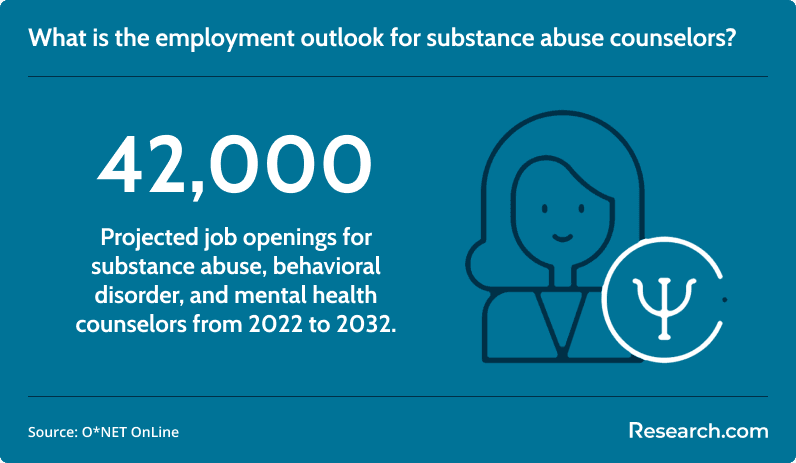
- The job market outlook includes projected job openings reaching 42,000 from 2022 to 2032.
How long does it take to complete an affordable online Master’s in Substance Abuse Counseling degree?
Most online master’s in substance abuse counseling programs take one and a half to three years for full-time students. The exact timeline depends on credit requirements, practicum or internship hours, course availability, start dates, and whether the program uses accelerated, semester-based, or part-time scheduling.
Part-time enrollment can make the degree more manageable for working professionals but usually extends the graduation timeline. Accelerated study may shorten completion time, but it can be difficult if you are also working, completing field hours, or managing family responsibilities.
| Enrollment style | When it may make sense | Potential drawback |
| Full-time | You want to finish within the standard program timeline and can prioritize school. | Heavier weekly workload and less flexibility for full-time employment. |
| Part-time | You need to balance graduate school with work, caregiving, or other responsibilities. | Longer time to graduation and possibly delayed credentialing. |
| Accelerated | You have strong time-management skills and want a faster route. | Compressed coursework can be demanding, especially during practicum or internship terms. |
How does an affordable online Master’s in Substance Abuse Counseling degree compare to an on-campus program?
Online and campus-based substance abuse counseling master’s programs can cover similar academic material and may prepare students for comparable career paths. The bigger differences usually involve scheduling, peer interaction, field placement logistics, access to campus services, and how much structure you need to stay on track.
| Factor | Online program | On-campus program |
| Learning environment | Coursework is delivered through virtual platforms, discussion boards, recorded or live sessions, and digital assignments. | Students attend classes in person and interact face-to-face with faculty and classmates. |
| Scheduling | Often better for students with work or family obligations, especially when courses are asynchronous. | Usually follows set class meeting times and campus schedules. |
| Practicum and internship | Students may complete fieldwork near home, but they must confirm placement support before enrolling. | Schools may have established local partnerships that make placement coordination easier. |
| Cost considerations | May reduce commuting, relocation, and housing costs; tuition and fees still vary by school. | May involve campus fees, transportation, and housing costs, but offers direct access to campus resources. |
| Best for | Self-directed learners who need flexibility and can communicate well online. | Students who prefer in-person support, classroom discussion, and campus community. |
How to decide between online and campus study
- Choose online if you need location flexibility, can manage deadlines independently, and have access to approved field placement sites.
- Choose campus-based study if you learn best through in-person interaction or want more direct access to local clinical networks.
- Be cautious with any format that does not clearly explain how practicum and internship requirements work.
- Ask whether online students receive the same advising, career support, and licensure guidance as campus students.
What is the average cost of an affordable online Master’s in Substance Abuse Counseling degree?
Students often begin by asking, “How much does it cost to become a substance abuse counselor?” For online master’s programs in substance abuse counseling, per-credit tuition commonly ranges from $440 to $750. Total tuition typically falls between $16,000 and $34,000.
Tuition is only part of the cost. Some schools charge technology fees, distance learning fees, clinical placement fees, graduation fees, or higher rates for out-of-state online students. Other institutions use flat online tuition regardless of residency. Always compare total program cost, not just the advertised per-credit price.
| Cost item | Why it matters |
| Tuition | The largest direct cost and usually calculated by credit hour. |
| Fees | Technology, online learning, clinical, or student service fees can increase total cost. |
| Books and materials | Counseling courses may require textbooks, assessment materials, or software access. |
| Practicum costs | Fieldwork may require background checks, liability insurance, travel, or immunization documentation. |
| Licensure and exam costs | Graduates may need to pay for applications, exams, supervision, and continuing education after graduation. |
What are the financial aid options for students enrolling in an affordable online Master’s in Substance Abuse Counseling degree?
Graduate counseling education can be expensive, but students in accredited online programs may have several ways to reduce out-of-pocket costs. Start by completing the Free Application for Federal Student Aid (FAFSA), then compare school-based aid, scholarships, fellowships, employer benefits, and loan options.
- NBCC Minority Fellowship Program for Addiction Counselors
- The Melanie Foundation Scholarship
- The William White Scholarship
- Services for Transition Age Youth Fellowship
Grants and fellowships are generally preferable to loans because they do not add interest-bearing debt. If loans are necessary, borrow only what you need and compare your expected monthly repayment with likely entry-level earnings in your region.
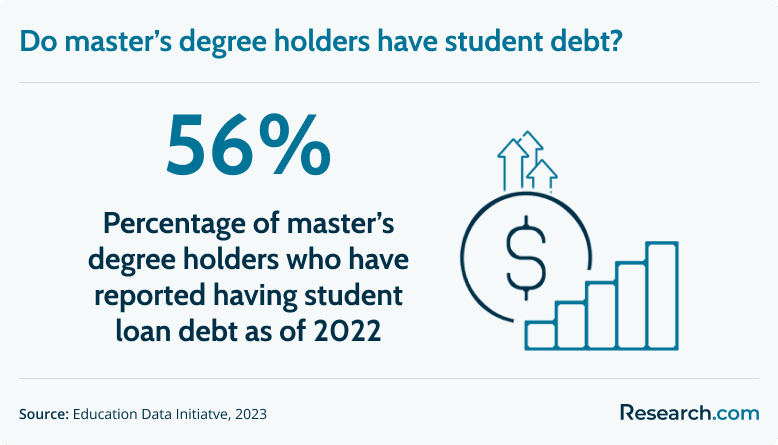
Debt risk deserves careful attention. Medical and health science degree holders are especially likely to accumulate graduate student loan debt, and 56% of master’s degree holders have student loan debt.
What are the prerequisites for enrolling in an affordable online Master’s in Substance Abuse Counseling degree?
Admission requirements vary by institution, but most online counseling graduate programs look for evidence that applicants can handle advanced coursework and are prepared for professional helping roles. Students comparing the best online counseling degree programs should review each school’s requirements early, especially if they do not have an undergraduate background in psychology, counseling, social work, or human services.
- Bachelor’s degree. Most programs require a bachelor’s degree from a regionally or nationally accredited institution.
- Minimum GPA. A cumulative GPA of 3.0 or above is often expected for regular admission.
- Prerequisite coursework. Some schools may require prior courses such as statistics, introductory psychology, abnormal psychology, or social work theory.
- Official transcripts. Applicants usually submit transcripts from every college or university attended.
- English proficiency. Applicants whose native language is not English may need to provide proof of English proficiency.
- GRE scores. Some programs may request GRE results, although this requirement is not universal.
- Related work experience. Experience in social services, mental health, addiction treatment, or human services can strengthen an application.
- Volunteer or internship experience. Service in addiction treatment or community support settings may help demonstrate readiness for the field.
- Personal statement. Most schools ask applicants to explain their goals, motivation, relevant experience, and fit with the program.
- Letters of recommendation. Faculty, supervisors, or mentors can speak to your academic preparation and professional potential.
- Interview. Some programs interview finalists to assess communication skills, maturity, ethics, and readiness for counseling training.
For the most accurate information about admission steps and timelines tied to becoming a counselor, consult the official program page or contact an admissions advisor. Degree distribution data for substance abuse counseling students shows that 511 individuals received master’s degrees and 430 earned postbaccalaureate certificates.
The chart below, based on DataUSA, shows common degree types awarded to substance abuse counseling students.
What courses are typically in an affordable online Master’s in Substance Abuse Counseling degree program?
Curricula vary by school, but substance abuse counseling master’s programs usually combine counseling theory, addiction science, clinical assessment, ethics, treatment planning, and supervised practice. Field experience is a critical part of many programs because students must learn how to apply classroom concepts with real clients under supervision.
- Principles of Addiction and Substance Use Disorders. Students examine major addiction models and the biological, psychological, family, and social factors connected to substance use disorders. Students who previously completed a bachelor’s degree in substance use counseling may encounter familiar concepts at a more advanced level.
- Counseling Techniques and Therapeutic Interventions. This course introduces evidence-based helping skills, often through role-play, case review, group exercises, and applied counseling practice.
- Psychopharmacology. Students study how addictive substances affect the brain, behavior, treatment response, and recovery planning.
- Multicultural Counseling. This course prepares students to work respectfully and effectively with clients across cultural, racial, socioeconomic, religious, gender, and community backgrounds.
- Ethical and Legal Issues in Substance Abuse Counseling. Students learn about confidentiality, boundaries, mandated reporting, documentation, client rights, and professional standards.
- Assessment and Treatment Planning. Students learn how to evaluate client needs, identify substance use patterns, consider co-occurring concerns, and build individualized treatment plans.
What types of specializations are available in affordable online Master’s in Substance Abuse Counseling degree programs?
Some programs focus broadly on addiction counseling, while others let students specialize by client population, clinical setting, or professional pathway. The best specialization depends on where you want to work and which license or credential you plan to pursue.
| Specialization | Primary focus | Good fit for students who want to... |
| Alcohol and Drug Counseling | Assessment, diagnosis, and treatment of alcohol and drug addiction. | Work directly in substance use treatment programs or addiction recovery services. |
| Addiction Counseling | Clinical treatment of substance use disorders across multiple substances and client needs. | Build a broad addiction counseling foundation. |
| Clinical Mental Health Counseling | Mental health disorders, substance use disorders, depression, anxiety, and co-occurring issues. | Pursue wider mental health counseling roles if state requirements are met. |
| Rehabilitation Counseling | Support for individuals with disabilities, including clients affected by substance use disorders. | Work in rehabilitation, disability services, or vocational support settings. |
| School Counseling | Student support in school environments, including mental health and substance use concerns. | Work with youth in educational settings, subject to school counseling requirements. |
| Counseling Psychology | Behavioral, emotional, and mental health concerns, including substance use disorders. | Study addiction within a broader psychology-based counseling framework. |
Alcohol and drug counseling remains highly relevant. SAMHSA data indicates that 44.5% of individuals aged 12 or older are categorized as binge drinkers and 26.3% are identified as heavy alcohol users.
The chart below uses SAMHSA data to show the percentage of Americans who consumed alcohol in 2022.
What strategies can help accelerate your journey to becoming a substance abuse counselor?
The fastest responsible path is not simply the shortest degree. It is the route that avoids wasted credits, meets state requirements, includes approved fieldwork, and positions you for the credential you actually need.
- Check state requirements before choosing a school. Licensure and certification rules vary. A program that works in one state may not satisfy requirements in another.
- Choose a program with clear practicum and internship support. Delays in field placement can slow graduation and credentialing.
- Ask about transfer credits. If you already completed relevant graduate coursework, transfer policies may reduce your required credits.
- Align coursework with your target credential. Build your plan around the exams, supervised hours, and content areas required after graduation.
- Use advising early and often. Meet with academic and licensure advisors before your first term, not after graduation.
Students exploring broader mental health pathways can also review the fastest way to become a therapist to understand how degree selection, supervised hours, and credential rules affect career timelines.
What questions should you ask before enrolling in an affordable online Master’s in Substance Abuse Counseling degree program?
Before applying, ask questions that reveal whether the program is affordable in practice, not just on paper. A low tuition rate is less helpful if the program lacks field placement support, does not meet your state’s requirements, or extends your timeline through unavailable courses.
| Question to ask | Why it matters |
| Is the institution accredited, and is the counseling program accredited or recognized by a relevant body? | Accreditation can affect financial aid, licensure eligibility, employer trust, and transferability. |
| Does the program meet requirements in the state where I plan to work? | State rules determine whether your degree supports licensure or certification. |
| Who finds practicum and internship sites? | Students may face delays if they must secure approved placements alone. |
| What is the total program cost, including fees? | Advertised tuition may not include all required expenses. |
| Are courses asynchronous, synchronous, or both? | Schedule format affects work-life balance and time-zone compatibility. |
| What career services are available to online students? | Online learners should have access to advising, job search help, and alumni networks. |
For a broader overview of the education-to-career pathway, review how to become a substance abuse counselor.
What challenges might you face when pursuing an affordable online Master’s in Substance Abuse Counseling degree?
Online counseling programs can be convenient, but they require planning and self-management. Students must keep up with readings, discussion posts, assignments, virtual meetings, and fieldwork without the daily structure of campus attendance.
- Field placement uncertainty. Some online programs offer strong placement support, while others expect students to locate approved sites on their own.
- Licensure mismatch. A program may be reputable but still fail to meet requirements in your state.
- Limited in-person networking. Online students may need to be more intentional about joining professional organizations and building local connections.
- Technology dependence. Virtual learning, telehealth training, and online supervision require reliable equipment and internet access.
- Emotional workload. Addiction counseling training can involve difficult case material and emotionally demanding field experiences.
If you are comparing adjacent helping professions, understanding distinctions such as social worker vs psychologist can help clarify which educational pathway fits your long-term goals.
Is accreditation essential for ensuring quality and career prospects in substance abuse counseling programs?
Accreditation is one of the most important quality checks for an online master’s in substance abuse counseling. Institutional accreditation helps confirm that the school meets recognized academic standards. Programmatic accreditation or professional recognition may also matter for counseling licensure, certification, and employer confidence.
Do not assume that every online counseling program qualifies you for the same credentials. Before enrolling, verify accreditation status, ask how the curriculum maps to your state’s requirements, and confirm whether practicum and internship hours are acceptable for the credential you plan to pursue. Students who want counseling programs with specific accreditation alignment can compare CACREP accredited online programs.
How can substance abuse counselors integrate holistic self-care practices to prevent burnout?
Addiction counseling can be meaningful work, but it can also involve relapse, crisis intervention, trauma histories, family conflict, and heavy documentation. Students should begin building self-care habits before entering full-time practice.
- Use supervision to process difficult cases rather than carrying them alone.
- Practice reflective journaling, mindfulness, or structured debriefing after emotionally intense sessions.
- Maintain clear professional boundaries around availability, communication, and crisis response.
- Seek peer consultation and continuing education instead of becoming isolated.
- Pay attention to sleep, physical health, personal relationships, and workload sustainability.
Some counselors also explore integrative or values-based approaches to care. Training connected to becoming a certified spiritual counselor may be relevant for professionals who want to understand spiritual support within appropriate ethical and clinical boundaries.
What post-graduation professional development and networking resources are available?
Professional growth does not stop at graduation. Substance abuse counselors often need continuing education, supervision, exam preparation, licensure guidance, and connections with employers or professional associations.
When comparing programs, ask whether online graduates receive career counseling, alumni access, mentorship, continuing education opportunities, webinars, or networking events. These supports can matter when looking for supervised roles, preparing for credential exams, or moving into specialized practice areas.
Students with faith-integrated counseling interests may also explore a Christian counseling masters degree online, particularly if they want to compare clinical, pastoral, and values-based counseling pathways.
Is a bachelor’s degree in substance abuse counseling online a viable foundation for further specialization?
An online bachelor’s degree in substance abuse counseling can be a practical starting point for students who want introductory training before graduate study. Undergraduate programs often cover counseling basics, human services, addiction foundations, prevention, ethics, and case management.
However, a bachelor’s degree may not be enough for advanced clinical counseling roles in many states. Students who plan to pursue licensure or higher-level clinical practice should check whether their undergraduate credits, practicum experience, and chosen major prepare them for master’s admission. If affordability is the priority, review options for a cheap bachelor's degree in substance abuse counseling online before committing to a long-term education plan.
How do LPC vs LCSW education requirements impact career prospects in substance abuse counseling?
LPC and LCSW pathways can both connect to substance abuse counseling, but they are not interchangeable. LPC-oriented pathways usually emphasize counseling theory, assessment, diagnosis, psychotherapy, and clinical mental health practice. LCSW pathways are rooted in social work and often include systems-level practice, case management, advocacy, policy, and clinical services.
Your choice affects coursework, field placement, supervision expectations, eligible job titles, and long-term practice options. If you are deciding between counseling and social work, compare the LPC vs LCSW education requirements before choosing a master’s program.
How to choose the best affordable online Master’s in Substance Abuse Counseling degree?
The best program is the one that fits your state requirements, budget, schedule, learning style, and career goal. Rankings can help you build a shortlist, but your final decision should be based on direct verification with the school and your state licensing or certification board.
- Verify accreditation first. Confirm institutional accreditation and any relevant counseling or addiction studies accreditation.
- Match the curriculum to your state credential. Ask for a course-to-requirement map if available.
- Review practicum and internship policies. Find out who approves sites, who supervises students, and whether placements can be completed near you.
- Compare total cost. Include tuition, fees, books, technology, travel for fieldwork, and future licensure expenses.
- Evaluate faculty expertise. Look for faculty with clinical, research, or professional experience in addiction counseling and behavioral health.
- Check course delivery format. Make sure live class times, deadlines, and residency requirements fit your schedule.
- Ask about student support. Online learners should have access to advising, technical support, library resources, and career services.
- Look at alumni and employer connections. Networking support can help with supervised roles and early career opportunities.
- Consider specialization carefully. Choose a concentration that supports your intended client population and credential, not just the title that sounds most appealing.
Common mistakes to avoid
| Mistake | Better approach |
| Choosing the cheapest program without checking accreditation. | Start with accreditation and state eligibility, then compare price. |
| Assuming every online program leads to licensure. | Ask your state board or credentialing agency whether the program meets requirements. |
| Ignoring practicum logistics. | Confirm placement support, site approval rules, and supervision requirements before enrolling. |
| Comparing only tuition. | Calculate total program cost, including fees and fieldwork-related expenses. |
| Relying only on rankings. | Use rankings as a starting point, then evaluate fit, outcomes, support, and licensure alignment. |
| Assuming salary outcomes are guaranteed. | Research local job postings, required credentials, and entry-level pay in your target region. |
What career paths are available for graduates of affordable online Master’s in Substance Abuse Counseling degree programs?
Graduates may work across addiction treatment, mental health, rehabilitation, social services, and community support settings. Exact job titles depend on state law, credential level, supervised experience, and employer requirements.
| Career path | Typical responsibilities | Important note |
| Substance Abuse Counselor | Provide individual or group counseling, support relapse prevention, complete assessments, and coordinate care. | Licensure or certification requirements vary by state and employer. |
| Mental Health Counselor | Address addiction alongside depression, anxiety, trauma, or other behavioral health concerns. | May require broader counseling licensure beyond addiction-specific credentials. |
| Family and Couples Therapist | Support families and couples affected by addiction, communication issues, and codependency. | Marriage and family therapy credentials may be required for certain roles. |
| Psychotherapist | Provide deeper individual therapy using approaches such as CBT, motivational interviewing, or trauma-informed care. | Usually requires additional licensure and supervised clinical experience. |
| Community Mental Health Worker | Connect clients with housing, crisis support, treatment referrals, and community resources. | Roles may combine counseling support, case management, and outreach. |
Some graduates later pursue doctoral study, especially if they want to conduct research, teach future counselors, or move into advanced psychology-related roles. Doctoral-level counseling psychology careers may offer different salary opportunities, including those discussed in guides about PhD counseling psychology salary.
What are the licensure and certification requirements for substance abuse counselors?
Licensure and certification requirements for substance abuse counselors vary by state. Most pathways include a relevant degree, specific coursework, supervised clinical experience, and a passing score on an approved exam, such as the National Clinical Mental Health Counseling Examination (NCMHCE) or the Alcohol and Drug Counselor (ADC) exam.
Supervised hours are often required after or during graduate education. These hours help graduates apply counseling skills under the guidance of an approved professional. Because state rules differ widely, students should check requirements before enrolling, not after completing the degree.
Credentialing can improve credibility and may expand eligibility for clinical roles in treatment centers, hospitals, community agencies, and private practices. Students interested in related mental health pathways may also compare affordable online MFT programs, which focus more heavily on relational and family systems issues.
What is the job market for graduates with an affordable online Master’s in Substance Abuse Counseling degree?
The job market for substance abuse, behavioral disorder, and mental health counselors is supported by ongoing demand for addiction treatment, behavioral health care, and community-based mental health services. Employers may include outpatient clinics, residential facilities, government agencies, hospitals, nonprofits, and integrated care organizations.
According to O*NET OnLine, projected job openings for Substance Abuse, Behavioral Disorder, and Mental Health Counselors are expected to reach 42,000 from 2022 to 2032. Students researching the job outlook for substance abuse counselors should still compare openings in their own state because demand, credential expectations, and pay can vary significantly by region.
An online master’s degree can support a broader job outlook for counselors when it meets credentialing requirements and includes strong clinical preparation. However, the degree alone does not guarantee licensure, employment, or a specific salary.
What skills are required to succeed in an online Master’s in Substance Abuse Counseling program?
Success in an online substance abuse counseling master’s program requires more than academic ability. Students must manage independent learning while developing the interpersonal and ethical skills needed for client-facing work.
- Time management and self-discipline. Online students must keep track of readings, assignments, discussions, exams, and fieldwork without relying on a campus schedule.
- Critical thinking and problem-solving. Addiction counseling involves complex client histories, co-occurring concerns, family systems, relapse risks, and social barriers.
- Communication and interpersonal skill. Counselors need to write clearly, listen carefully, build trust, and communicate with clients, families, supervisors, and care teams.
- Technology proficiency. Online coursework, telehealth exposure, virtual meetings, and digital records require comfort with learning platforms and communication tools.
- Empathy and emotional intelligence. Counselors must respond to relapse, resistance, shame, trauma, and crisis with professionalism and compassion.
- Ethical decision-making. Students must understand confidentiality, boundaries, informed consent, documentation, mandated reporting, and professional codes.
- Cultural competence. Effective treatment requires awareness of how culture, identity, socioeconomic status, family background, and lived experience shape recovery.
- Adaptability. Counseling practice continues to evolve through telehealth, new research, integrated care models, and changing employer expectations.
If you want to expand into family-based mental health practice, comparing the most affordable online MFT programs may help you decide whether addiction counseling or marriage and family therapy better matches your goals.
Current trends affecting substance abuse counseling students
- Telehealth is now part of behavioral health delivery. Students should be prepared to communicate professionally in virtual environments and understand privacy expectations.
- Employers increasingly value integrated care skills. Addiction counselors often collaborate with mental health providers, medical professionals, social workers, and case managers.
- Credential alignment matters more than program title. A degree name alone does not determine licensure eligibility; curriculum, accreditation, and supervised hours are critical.
- Burnout prevention is a career skill. Students should learn supervision, boundaries, consultation, and self-care strategies before entering full-time clinical work.
- Affordability requires total-cost thinking. Rising education costs make it essential to compare tuition, fees, aid, debt, and likely local earnings together.
Key Insights
- An affordable online Master’s in Substance Abuse Counseling is most valuable when it meets your state’s licensure or certification requirements and includes approved supervised fieldwork.
- Total tuition commonly ranges from $16,000 to $34,000, with per-credit costs between $440 and $750, but fees and fieldwork expenses can change the real price.
- Substance Abuse, Behavioral Disorder, and Mental Health Counselors earn a median annual salary of $56,230; individual earnings depend on credentials, location, employer, and experience.
- Do not choose a program based on tuition alone. Accreditation, practicum support, curriculum alignment, and career services can affect your ability to graduate, become credentialed, and find work.
- Online learning works best for disciplined students who need flexibility and can manage deadlines, technology, and field placement requirements independently.
- Before enrolling, ask the school to confirm how the program supports licensure, where fieldwork can be completed, what online student services are available, and what the full program cost will be.
References:
- DataUSA. (n.d.). Substance Abuse Counseling. https://datausa.io/profile/cip/substance-abuse-counseling#counties_most_degrees
- Education Data Initiative. (2023). Average Graduate Student Loan Debt. https://educationdata.org/average-graduate-student-loan-debt
- O*NET OnLine. (n.d.). Substance Abuse and Behavioral Disorder Counselors. https://www.onetonline.org/link/summary/21-1011.00
- SAMHSA. (2023). 2022 National Survey on Drug Use and Health. https://www.samhsa.gov/data/release/2022-national-survey-drug-use-and-health-nsduh-releases
- US BLS. (2023). 21-1018 Substance Abuse, Behavioral Disorder, and Mental Health Counselors. https://www.bls.gov/oes/current/oes211018.htm
Other Things You Should Know About Online Master’s in Substance Abuse Counseling Degrees
Yes, if the program is CACREP-accredited or otherwise approved by the state board where you plan to practice. Most states require a master’s degree, supervised clinical hours, and passing an exam such as the NCE or NCMHCE before licensure.
Financial aid options for 2027 online master's degrees in substance abuse counseling include federal loans, grants like the Pell Grant, and scholarships specific to counseling studies. Prospective students should also check for employer-sponsored tuition assistance and state-specific programs to reduce costs further.


