2027 Cheapest Online Reading & Literacy Master's Degrees That Pay Well: Tuition, Duration, and Earnings

Co-Founder and Chief Data Scientist
Choosing an online Reading & Literacy master’s degree is usually a return-on-investment decision: you want a program that is affordable, respected by employers, flexible enough for working educators, and likely to support better career opportunities. The challenge is that tuition alone does not tell the full story. Fees, credit requirements, practicum expectations, state requirements, and salary outcomes all affect whether a program is financially sensible.
This guide is for teachers, reading interventionists, instructional coaches, curriculum professionals, and career changers comparing low-cost online graduate programs in literacy education. According to the U.S. Bureau of Labor Statistics, employment for education specialists with master’s degrees is projected to grow 8% from 2022 to 2032. That demand can make a Reading & Literacy master’s degree useful, but the best choice still depends on accreditation, total cost, program length, fieldwork requirements, and the kinds of roles you want after graduation.
Below, you will find practical guidance on costs, fees, timelines, credits, accelerated options, financial aid, salary expectations, and the career paths that may offer the strongest earning potential for graduates.
Key Things to Know About the Cheapest Online Reading & Literacy Master's Degrees That Pay Well
- Online reading & literacy master's degrees offer average tuition costs significantly below traditional programs, often under $15,000, making advanced education accessible for budget-conscious students.
- Most programs can be completed within 18 to 24 months, enabling faster entry or advancement in education careers compared to longer on-campus counterparts.
- Graduates report median salaries around $60,000 annually, with experienced specialists in reading & literacy education earning upwards of $75,000, reflecting strong return on investment.
How Much Does an Online Reading & Literacy Master's Degree Cost?
An online Reading & Literacy master’s degree commonly costs between $10,000 and $35,000 annually for graduate programs in the United States, but the amount a student actually pays can vary significantly by school type, residency status, credit load, and required fees. The most affordable program is not always the one with the lowest advertised tuition rate; it is the one with the lowest realistic total cost for your situation.
Public universities are often the strongest starting point for cost-conscious students, especially when they offer lower in-state tuition to online learners. In-state students may pay nearly half of what out-of-state students are charged at some public institutions. Private universities usually charge one tuition rate regardless of location, which can simplify budgeting but often results in a higher overall price.
Students who want a shorter path should also compare program length, not just yearly tuition. A higher annual cost may still be manageable if the degree can be completed quickly, while a lower annual cost may become expensive if the program takes longer than expected. If speed is a priority, reviewing online one year masters programs can help you understand how compressed graduate options compare with traditional pacing.
Cost factors to compare before applying
- Tuition structure: Confirm whether tuition is charged per credit, per course, per semester, or as a flat program rate.
- Residency rules: Ask whether online students qualify for in-state tuition or pay a separate online rate.
- Required credits: A program with fewer credits may cost less overall if the per-credit rate is reasonable.
- Fieldwork expenses: Practicum or supervised teaching requirements can add indirect costs such as travel, substitute coverage, or unpaid time.
- Licensure alignment: If you need a reading specialist endorsement or credential, verify that the program meets the requirements for your state before enrolling.
What Fees Are Included in the Total Cost of an Online Reading & Literacy Master's Program?
The total cost of an online Reading & Literacy master’s program usually includes more than tuition. Fees can affect affordability, especially in programs that advertise low tuition but charge separately for technology, registration, course materials, field supervision, or graduation processing. Before committing, ask the admissions or bursar’s office for a full cost sheet that includes tuition and all mandatory fees.
- Technology fees: These fees support access to learning management systems, online libraries, digital assessment tools, video platforms, and other course technologies used throughout the program.
- Registration fees: These are often charged each term and cover enrollment processing, academic records, and administrative student services.
- Course materials fees: Some programs bundle textbooks, digital readings, software, literacy assessment tools, or instructional materials into a required course fee. Others require students to buy materials separately.
- Graduation fees: These fees are typically charged near the end of the program and may cover degree conferral, diploma processing, transcript updates, or commencement-related administration.
- Residency or practicum fees: Some online programs include supervised fieldwork, clinical practice, or short in-person sessions. Costs may involve supervision, facility use, travel, background checks, or placement-related requirements.
Questions to ask about fees
- Are all fees mandatory, or can any be waived for online students?
- Are textbooks and digital materials included in tuition?
- Does the program require campus visits, and if so, how often?
- Are practicum supervision costs included in the published tuition estimate?
- Will fees change if you enroll part time instead of full time?
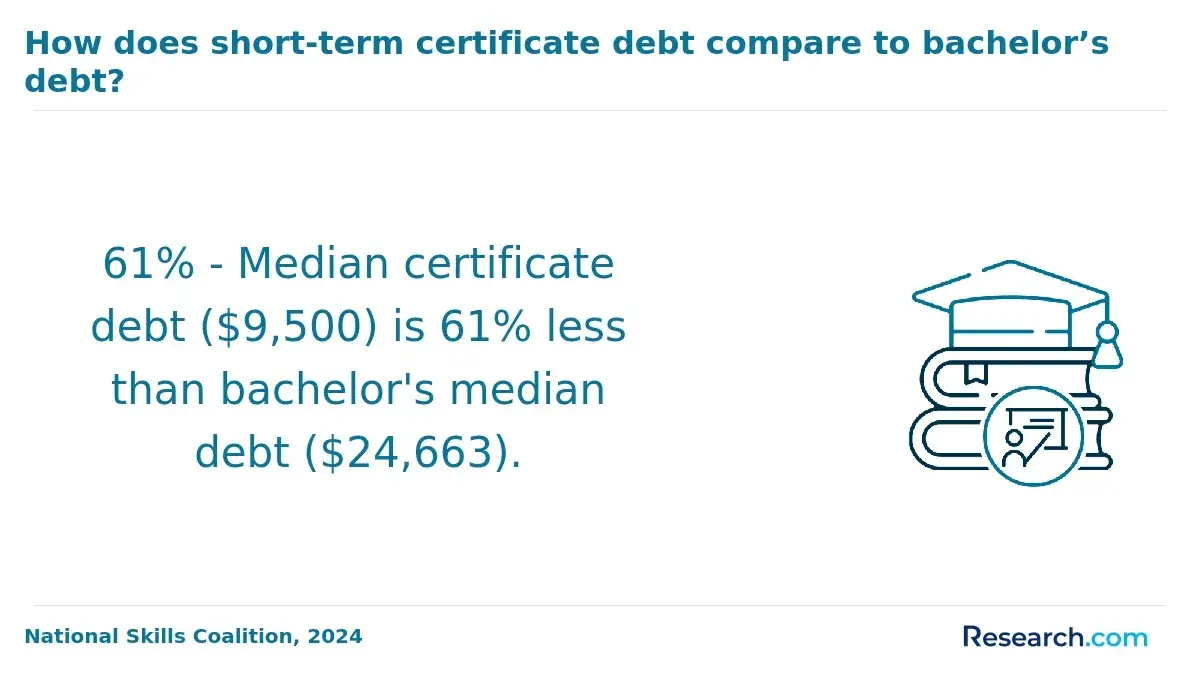
Students comparing graduate options should calculate the full program cost, not just the tuition line. If you are also considering smaller credentials before or instead of a master’s degree, certificate programs online may provide additional ways to build skills at a lower upfront cost.
How Long Does It Take to Complete an Online Reading & Literacy Master's Degree?
Most online graduate degrees take about two years to complete on average, and online Reading & Literacy master’s programs often follow that general timeline. However, completion time depends on enrollment status, course availability, practicum requirements, and whether the program uses traditional semesters, short terms, or accelerated sessions.
- Enrollment status: Full-time students commonly finish in 1.5 to 2 years because they take more courses each term. Part-time students may need three years or longer, particularly if they are teaching full time or managing family responsibilities.
- Accelerated programs: Some schools offer compressed tracks that can be completed in less than two years. These programs can reduce time to graduation, but they require steady weekly availability and strong organization.
- Course load flexibility: Online programs may let students adjust how many credits they take each term. A lighter course load can reduce stress but extends the timeline; a heavier load can shorten the program but may be difficult during the school year.
- Practicums and externships: Field experiences may affect pacing because they depend on placement availability, supervisor schedules, school calendars, and state or institutional requirements.
How to choose the right pace
| Program pace | Best for | Trade-off |
| Full time | Students who can dedicate significant weekly time to coursework | Faster completion, but heavier workload |
| Part time | Working educators balancing teaching, family, or other obligations | More manageable schedule, but longer time to graduation |
| Accelerated | Highly organized students who want to finish as quickly as possible | Shorter timeline, but less room for schedule disruptions |
A graduate of an online Reading & Literacy master’s program described the biggest challenge as balancing coursework with a full-time job. He said he felt “constantly stretched,” especially when practicum hours overlapped with work commitments. The ability to adjust his course load helped him “avoid burnout” and finish sooner than expected. He added, “The pacing wasn’t always steady—I learned to adapt and lean on support networks to keep going.” His experience shows why students should choose a timeline that matches their real weekly availability, not just their ideal graduation date.
How Many Credits Are Required for an Online Reading & Literacy Master's Degree?
Online Reading & Literacy master’s degrees typically require 30 to 36 credit hours. Credit requirements matter because they influence tuition, time to completion, workload, and eligibility for certain program pathways. A lower-credit program may be less expensive, but students should still confirm that it provides the preparation, field experience, and credential alignment they need.
- Program specialization: Concentrations such as language acquisition, reading intervention, literacy assessment, or curriculum design may require additional coursework. These options can strengthen career focus but may increase the total credit load.
- Core vs. elective courses: Core courses build required literacy knowledge, while electives let students tailor the degree. Programs with more electives may offer flexibility, but they can also affect how efficiently students complete the degree.
- Capstone or thesis requirements: Many programs require a final project, research paper, portfolio, or thesis. These components may carry credits and require significant planning near the end of the program.
- Transfer credits and prerequisites: Some schools allow students to transfer prior graduate coursework, while others require all major courses to be completed through the institution. Applicants may also need prerequisite education coursework depending on their background.
Why credit count is not the only measure of value
A 30-credit program may look more affordable than a 36-credit program, but value depends on what the credits include. If you need a reading specialist endorsement, a program that meets state requirements may be worth the additional coursework. If you already hold relevant credentials and want advancement rather than licensure, a streamlined degree may be more cost-effective.
Students evaluating graduate ROI can also compare broader degree-value patterns through resources on highest-paying bachelor’s degrees, but Reading & Literacy outcomes should be judged within the education labor market and your specific career goals.
Do Accelerated Online Reading & Literacy Master's Programs Cost More?
Accelerated online Reading & Literacy master’s programs do not automatically cost more. In many cases, tuition is based on credit hours, so an accelerated program with the same credit requirement may have a similar tuition total as a traditional program. The real difference is usually workload intensity, not necessarily the base price.
- Credit hour pricing: If tuition is charged per credit, acceleration may not change the tuition total because students still complete the same credits. Always compare total program tuition rather than term-by-term charges.
- Program intensity: Accelerated coursework can be demanding. Students may need more time each week for reading, writing, assessment projects, and fieldwork, which can create indirect costs if work hours must be reduced.
- Institution type and accreditation: Price differences are often driven more by whether the school is public or private and whether the program is properly accredited than by the accelerated format itself.
- Technology and resource fees: Some accelerated programs may charge higher or more frequent fees for digital tools, online platforms, or course materials used in compressed sessions.
When an accelerated option makes financial sense
An accelerated program can be a smart financial choice if you can complete it without withdrawing, repeating courses, or reducing income in a way that offsets the savings from finishing sooner. It may be less suitable if you are entering your first year of teaching, managing a heavy workload, or need a slower pace to complete practicum requirements successfully.
Before enrolling, ask whether courses are offered continuously, whether fieldwork can be completed in your local school or district, and whether the accelerated schedule affects financial aid eligibility or payment deadlines.
What Financial Aid Is Available for Online Reading & Literacy Master's Degrees?
Financial aid can make an online Reading & Literacy master’s degree more manageable, especially for working educators who need to control out-of-pocket costs. Nearly 70% of graduate students access various funding options, so students should not assume they must pay the full cost upfront. The best approach is to combine available aid sources and apply early.
- Federal loans and grants: Graduate students may use options such as Direct Unsubsidized Loans and Graduate PLUS Loans, which generally offer fixed interest rates and flexible repayment options. Students must complete the FAFSA to be considered for federal aid, and grants depend on demonstrated financial need.
- Scholarships: Universities, professional associations, and education-focused organizations may offer scholarships for literacy educators, teachers, or graduate students in education. Scholarships do not require repayment, making them one of the most valuable forms of aid.
- Employer tuition assistance: Some school districts, education agencies, and employers reimburse part of graduate tuition for employees pursuing relevant credentials. Policies vary, so students should ask about reimbursement limits, grade requirements, service commitments, and approved programs.
- Private loans: Banks and credit unions may offer private graduate loans, but these often require credit approval and may have variable interest rates. They are generally best considered after reviewing federal aid, scholarships, and employer support.
How to reduce borrowing
- Apply for program-specific scholarships when you apply for admission.
- Ask your employer whether tuition assistance applies to online programs.
- Compare total program costs before accepting a financial aid package.
- Consider part-time enrollment if it allows you to pay some costs while continuing to work.
- Confirm whether maintaining a specific course load is required for aid eligibility.
A professional who earned an online Reading & Literacy master’s degree recalled that navigating aid applications while balancing work and family was difficult at first. “It was overwhelming at first to sort through all the paperwork and deadlines, but securing a scholarship made a big difference,” she said. She also used employer tuition assistance, which helped “lighten the financial load.” Her experience underscores the value of starting early, tracking deadlines, and combining multiple funding sources.
Breakdown of All Fully Online Title IV Institutions

How Much Can You Earn With an Online Reading & Literacy Master's Degree?
Graduates with an online Reading & Literacy master’s degree may pursue roles in schools, districts, curriculum development, instructional coaching, nonprofit literacy programs, publishing, and related education settings. Earnings vary widely, and the degree should not be treated as a guaranteed salary increase. Pay depends on location, employer type, years of experience, union or district salary schedules, licensure, and whether the role includes leadership responsibilities.
Entry-level salaries may start in the upper $40,000s, while experienced professionals with additional credentials and career progression can earn more than $70,000. This range makes affordability especially important: students who keep tuition and fees manageable are better positioned to see a positive return over time.
When estimating earning potential, compare the program’s cost with the roles you are realistically eligible for after graduation. A current teacher may use the degree for salary-lane movement, endorsement preparation, or transition into literacy specialist work. A non-teacher may need additional certification or classroom experience before qualifying for some school-based roles. Students seeking lower-cost graduate options can also compare online affordable master’s programs across fields before deciding.
What Are the Highest-Paying Jobs for Online Reading & Literacy Master's Graduates?
The highest-paying jobs for Reading & Literacy master’s graduates are often roles that combine literacy expertise with program leadership, curriculum design, teacher training, or district-level coordination. Actual pay depends on employer budgets, region, experience, and required credentials, but the following paths are commonly associated with stronger earning potential.
- Literacy specialist: Designs, implements, and evaluates literacy programs in schools or districts; supports struggling readers; and helps teachers apply evidence-informed reading strategies. Earnings typically range from $60,000 to $85,000 annually.
- Curriculum developer: Creates literacy curricula, instructional resources, assessments, and teacher guides for schools, districts, education companies, or publishers. Salaries span from $65,000 to $90,000.
- Educational coordinator: Oversees literacy initiatives, professional development, instructional resources, and program implementation at the district, state, or organization level. Median pay often falls between $70,000 and $95,000.
- Instructional coach: Works directly with teachers to improve literacy instruction, analyze student data, model classroom strategies, and support professional learning. Earnings range from $60,000 to $85,000.
How to improve your chances of higher-paying roles
- Choose a program aligned with your state’s reading specialist or literacy endorsement requirements if school-based advancement is your goal.
- Build experience with assessment, intervention planning, curriculum mapping, and teacher coaching.
- Document measurable outcomes from literacy initiatives, such as improved instructional practices or stronger program implementation.
- Consider whether leadership, curriculum, or specialized education roles fit your long-term plans. Some students also compare adjacent graduate pathways, such as PsyD online degrees, when exploring broader education and human development careers.
What Industries Hire Online Reading & Literacy Master's Graduates?
Online Reading & Literacy master’s graduates are most commonly hired in education, but their skills can also apply to publishing, community services, healthcare communication, and public policy. Employment for education and training occupations is projected to grow 9% from 2022 to 2032, reflecting ongoing demand for professionals who can improve learning, training, and communication outcomes.
- Education: K-12 schools, districts, colleges, and universities hire literacy specialists, reading interventionists, instructional coaches, and curriculum professionals to support reading instruction, assessment, and teacher development.
- Publishing: Educational publishers and content companies may hire literacy experts to develop reading materials, leveled texts, teacher guides, assessments, and instructional products for diverse learners.
- Nonprofit and community services: Literacy organizations, adult education programs, libraries, and community groups may employ graduates to design outreach, tutoring, family literacy, or adult reading initiatives.
- Healthcare: Literacy professionals can help improve patient education materials so information is clearer, more accessible, and easier to understand for people with varying literacy levels.
- Government and policy: Public agencies and policy organizations may use literacy specialists to evaluate programs, support education initiatives, analyze implementation, or advocate for literacy funding and access.
Which industry is the best fit?
If you want direct student impact, school-based literacy roles may be the strongest fit. If you prefer writing, assessment design, and instructional materials, publishing or curriculum development may be better. If your interests center on access, equity, and adult learning, nonprofits and community programs can offer meaningful work, though salaries may vary by funding source.
Is an Online Reading & Literacy Master's Degree a Smart Financial Investment?
An online Reading & Literacy master’s degree can be a smart financial investment when the program is affordable, properly aligned with your career goals, and connected to roles that offer advancement. Tuition costs often range from $10,000 to $25,000, and programs typically take one to two years to complete. According to the U.S. Bureau of Labor Statistics, those with advanced degrees in education earn about 20% more than individuals holding only a bachelor’s degree.
That said, the return is not automatic. A strong ROI depends on choosing a program that matches your intended outcome. For example, a teacher seeking a salary increase, reading endorsement, or literacy specialist role should verify state and district requirements before enrolling. A student interested in curriculum or publishing should look for coursework in assessment, instructional design, intervention, and materials development.
When the degree is likely to be worth it
- You can keep total borrowing low by choosing an affordable program or using employer assistance.
- The program supports a specific career move, such as literacy specialist, instructional coach, or curriculum developer.
- You already work in education and can apply the degree immediately in your current role.
- The curriculum aligns with any credential, endorsement, or advancement requirements relevant to your state or employer.
When to be cautious
- The program is low-cost but does not meet the requirements for the role you want.
- You would need to borrow heavily without a clear path to higher pay.
- The school is not appropriately accredited or lacks transparent information about outcomes.
- You are relying on salary increases that are not available in your district or region.
The degree’s financial value is strongest when students compare total cost against realistic career benefits, not just general salary averages. Accreditation, state alignment, fieldwork quality, and employer recognition matter as much as tuition.
What Graduates Say About Their Cheapest Online Reading & Literacy Master's Degrees That Pay Well
- : "The tuition for my online Reading & Literacy master’s degree was surprisingly affordable compared to traditional programs, which made it easier to manage financially while working full time. The flexibility helped me balance family and career demands. Since graduating, I secured a higher-paying literacy specialist position, which improved my financial stability. — Nami"
- : "The program length was just right—long enough to study the material seriously but short enough to keep my momentum. The cost was still an investment, but the career advancement it opened made it worthwhile. The increase in earning potential has helped me save more and feel more confident about my future. — Ivan"
- : "I appreciated the streamlined structure of the online Reading & Literacy program. It balanced cost-efficiency with comprehensive coursework in under two years. I could keep working while studying, so I did not have to take unpaid leave. The degree helped boost my salary and opened doors to education leadership roles I had not expected. — Rowan"
Other Things You Should Know About Reading & Literacy Degrees
In 2027, tuition for affordable online reading & literacy master's degrees generally ranges from $10,000 to $20,000. The cost can vary based on the institution, program length, and additional fees, providing a cost-effective option for those seeking advanced education in this field.
Typically, online reading & literacy master's programs in 2027 require between 30 to 36 credit hours to graduate. This may include modules on educational psychology, literacy assessment strategies, and advanced teaching methodologies. Specific credit requirements vary by institution.
References
- Reading and Literacy Education MAEd https://degrees.ecu.edu/maed/reading%20and%20literacy%20education/
- Inside Online Master’s Programs in Reading Literacy https://www.onlinemastersdegrees.org/best-programs/education/reading-literacy/
- M.S. in Education in Reading and Literacy - SOU Online https://online.sou.edu/degrees/education/msed/reading-literacy/
- Affordable Online Master's Programs In Reading And Literacy https://www.gradschoolhub.com/affordable/online/masters/reading-literacy/
- M.S.Ed. in Literacy Education (Reading) | Curriculum and Instruction | Northern Illinois University https://www.cedu.niu.edu/c-and-i/academic-programs/masters-literacy-education-reading.shtml
- What Can I Do With a Master’s Degree in Literacy? | UT Permian Basin Online https://online.utpb.edu/about-us/articles/education/what-can-i-do-with-a-masters-degree-in-literacy
- Master of Education — Literacy https://online.ewu.edu/degrees/education/med/reading-literacy/
- Master’s in Reading and Literacy - College of Education https://education.ecu.edu/reading-education-masters/
- Reading & Literacy Instruction (MSEd or EdS) Master's Degree Online https://www.baypath.edu/academics/graduate-programs/reading-literacy-instruction-msed-eds/
- What Can You Do With a Master’s in Reading or Literacy? https://online.pace.edu/articles/education/what-can-you-do-with-masters-in-reading-literacy/