
2027 Credit Requirements for a Library Science Degree Explained

Co-Founder and Chief Data Scientist
Choosing a library science degree is not only about finding the right school; it is also about understanding how many credits you must complete, which credits actually count, and how those requirements affect cost, pacing, transfer options, and graduation timing. Misreading a credit policy can lead to extra courses, delayed graduation, or electives that do not support your career goals.
According to the American Library Association, 65% of library science graduates report confusion over transfer credits and elective flexibility, which can affect timely completion. With projected employment growth of 6% in librarian roles through 2031, planning credits carefully matters for students who want to enter or advance in the field without unnecessary delay.
This guide explains typical credit requirements for library science degrees, how core and elective credits are divided, what changes in online and accelerated formats, how transfer and work experience credits are evaluated, and when licensure or accreditation may affect the number of credits you need.
Key Things to Know About Credit Requirements for Library Science Degrees
- Library science degree programs typically require a set total of credits, influencing program length and depth of study necessary for professional readiness.
- Transfer credits and recognition of prior learning can significantly reduce required coursework, accelerating time to degree completion and lowering overall costs.
- Credit structures affect academic progression pace, impacting tuition expenses and graduation timelines, which are critical considerations given growing demand for information professionals.
How Many Credits Are Required for a Library Science Degree?
Library science credit requirements depend mainly on degree level. Undergraduate programs usually require a full college curriculum, while graduate programs are shorter and more professionally focused. Before comparing schools, students should confirm the total credits required, the minimum credits that must be completed at the institution, and whether fieldwork or a capstone is included in the total.
| Degree level | Typical credit requirement | What the credits usually include |
| Undergraduate programs | Approximately 120 to 130 credits | General education courses, major requirements, library science foundations, research methods, information organization, cataloguing, and electives |
| Graduate programs | Usually 30 to 45 credits | Advanced coursework in information management, digital libraries, archival science, research, internships, capstones, or specialization electives |
For undergraduate students, many credits are not library science courses. A large share usually comes from general education and broader major requirements. For graduate students, nearly every course is tied more directly to library and information science practice, so program design and accreditation matter more than the raw number of credits alone.
The total credit requirement also affects cost and completion time. A 30-credit graduate program may be faster and less expensive than a 45-credit program, but students should compare curriculum depth, practicum options, accreditation status, and career alignment before choosing the shortest option. Transfer credits, course availability, and part-time enrollment can also change how quickly students reach graduation.
For related fields of study, students may compare structured professional programs such as online SLP degrees, which also use credit requirements to define academic progression and readiness for professional roles.
How Many Core and Elective Credits Are Required for a Library Science Degree?
Most library science programs divide credits into required core courses and electives. Core courses make sure all students meet the same professional foundation. Electives let students build expertise for specific settings, such as public libraries, academic libraries, archives, digital collections, youth services, data services, or user experience.
Recent data indicates that approximately 35% of students select electives focused on technology and digital innovation, reflecting the growing importance of digital collections, database systems, metadata, and user-centered information services.
| Credit category | Typical share of program | Common credit range | Purpose |
| Core courses | About 60% to 70% of the total credit requirement | Usually 24 to 30 credits within a 36 to 45 credit program | Builds required competencies in information organization, cataloging, research methods, digital libraries, ethics, and service models |
| Electives | About 30% to 40% of the total credit requirement | Roughly 12 to 15 credits | Supports specialization in areas such as archives management, data science, user experience design, youth services, academic librarianship, or digital innovation |
Students should not treat electives as leftover credits. The best elective plan starts with a target role and works backward. For example, a student interested in digital archives may prioritize metadata, preservation, database design, and archival systems. A student aiming for public librarianship may benefit more from community engagement, collection development, programming, and youth or adult services.
A common mistake is choosing electives only because they are available in a convenient term. That can help with scheduling, but it may weaken the degree’s career focus. Students should ask advisors which electives are offered regularly, which are only offered occasionally, and which courses may be required for a concentration or certificate.
Students interested in combining counseling knowledge with information services may also review online counseling programs to understand how another professional field structures core requirements, electives, and applied learning.
Do Online Library Science Programs Require the Same Number of Credits?
Online library science programs generally require the same number of credits as comparable campus-based programs. Most online library science degrees require between 30 and 45 credit hours, closely mirroring traditional campus programs so that students complete similar academic content and professional competencies.
The bigger difference is not usually the number of credits. It is how those credits are delivered, scheduled, and managed. Online students may have more flexibility, but they also need stronger planning because asynchronous coursework, compressed terms, and multiple deadlines can create a heavy workload.
- Typical credit range: Most online library science degrees require between 30 and 45 credit hours, which is similar to many on-campus graduate programs.
- Course delivery: Online courses often use asynchronous formats, allowing students to complete weekly work on their own schedule. Some programs may still require live sessions, group projects, or scheduled presentations.
- Term structure: Online programs may use shorter or more frequent terms. A course can carry the same credits as a semester course but feel more intense if assignments are compressed into fewer weeks.
- Workload expectations: Flexible does not mean easier. Students should expect regular reading, discussion posts, projects, research assignments, and sometimes field-based work.
- Graduation pacing: Online programs may allow full-time, part-time, or individualized pacing, which can help working adults manage degree completion without leaving employment.
Students comparing online and campus options should look beyond the credit total. Important questions include whether the program is accredited, whether internships can be completed locally, how often required courses are offered, whether there are residency requirements, and whether online students receive the same advising and career support as campus students.
- : "It was challenging to stay disciplined without face-to-face classes, but knowing the credits matched traditional programs made me confident the degree held equal value. The online format allowed me to continue working while completing essential credits."
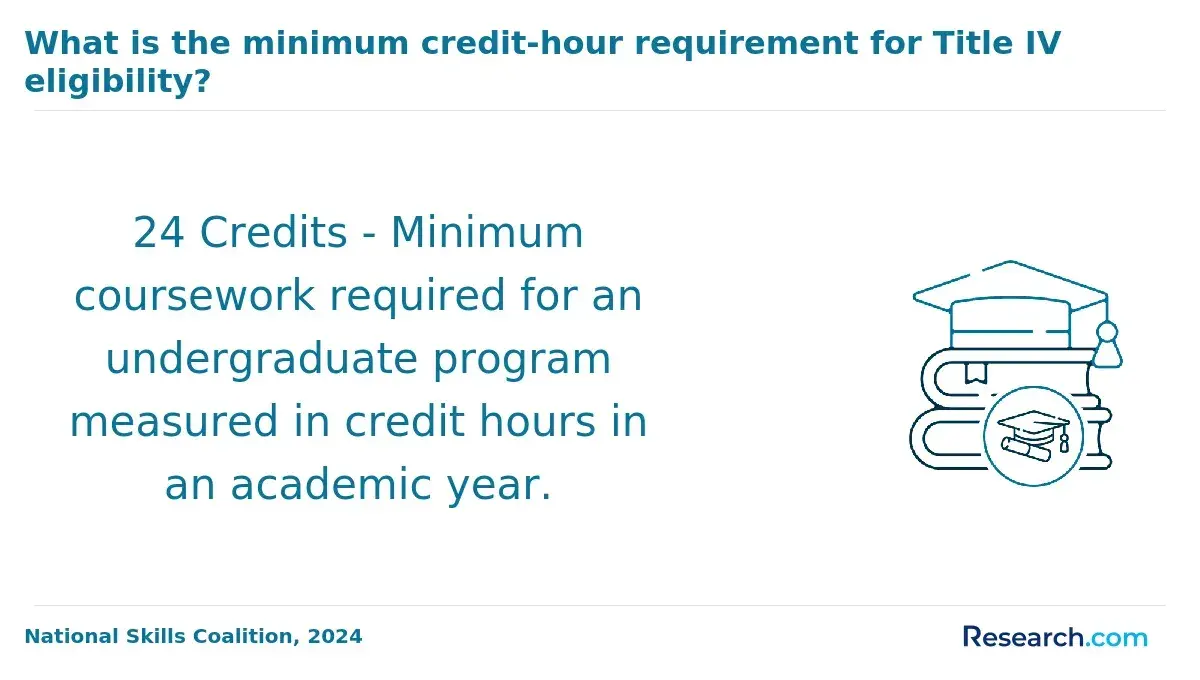
Breakdown of All Fully Online Title IV Institutions

Accelerated library science programs usually do not reduce the total academic expectations; they compress the timeline. Accelerated bachelor's degrees typically require between 120 and 130 credits, while graduate-level programs often range from 30 to 45 credits. The difference is that students may take courses in shorter terms, heavier course loads, or a more tightly sequenced curriculum.
This format can work well for students who have strong time-management skills, predictable schedules, and a clear career goal. It can be risky for students balancing demanding work hours, caregiving responsibilities, or inconsistent access to study time.
- Credit requirements: Accelerated bachelor's degrees typically require between 120 and 130 credits, while graduate-level programs often range from 30 to 45 credits.
- Curriculum composition: Core subjects such as digital libraries, information organization, and research methods usually remain central, with electives used for specialization.
- Course load intensity: Students may complete the same amount of credit-bearing work in a shorter period, which can mean more weekly reading, faster project deadlines, and less time to recover from missed assignments.
- Transfer credit policies: Many accelerated programs restrict the number of transferable credits or require that transferred coursework be recent. Students should verify transfer limits before enrolling.
- Course sequencing: Accelerated programs may have fewer chances to retake or delay required courses because classes are scheduled in a fixed order.
Before choosing an accelerated format, students should calculate the weekly time commitment, not just the expected graduation date. A faster program can save time, but withdrawing from an overloaded term can erase that advantage and may affect financial aid or academic standing.
Transfer credits can reduce the number of courses a student must complete, but acceptance varies widely by degree level, institution, accreditation rules, course age, grade earned, and whether the prior coursework matches the new program’s requirements. Nearly 40% of graduate library science students now enter programs as transfer students, making early credit evaluation an important step.
| Degree or program type | Typical transfer allowance | How credits are commonly applied |
| Associate degrees | Often accept up to 60% of previous coursework | Foundational courses, general education, and some introductory requirements |
| Bachelor's degrees | Transfer limits typically range from 50% to 75% | General education, lower-division courses, electives, and some major prerequisites |
| Master's programs | Generally permit 6 to 12 transfer credits | Usually electives or specialization courses rather than required core courses |
| Professional and accelerated programs | More limited transfer acceptance | Few credits transfer because curricula are often tightly sequenced and institution-specific |
| Doctoral degrees | Minimal transfer credits | Limited coursework credit because original research and dissertation work are central |
Students should request an official transfer evaluation before assuming credits will count. A course may transfer to the university but still not apply to the degree requirement a student expected. For example, a prior graduate course may count as an elective but not replace a required course in information organization or research methods.
To avoid losing time, students should collect syllabi, course descriptions, transcripts, catalog pages, and proof of grades before applying. They should also ask whether transfer credits affect GPA, financial aid pace, residency requirements, or eligibility for concentrations.
- : "It wasn't just a matter of submitting transcripts; understanding how my previous courses aligned with core versus elective categories took time. Patience and proactive communication with advisors were key to maximizing accepted credits."
Some library science programs allow students to earn credit for relevant work experience through prior learning assessment, often called PLA. This option does not usually award credit simply for years worked. Instead, the student must show that the experience produced college-level learning that matches specific course outcomes.
Work experience most likely to be considered includes roles connected to library operations, information services, archives, research support, cataloging, digital collections, or records management. Programs may require documentation, portfolios, supervisor letters, reflective essays, exams, or faculty review.
- Library support roles: Positions such as library assistants and catalogers may qualify when duties align with academic competencies, especially in circulation, cataloging, reference support, or collection services.
- Archivist and information specialist positions: These roles may demonstrate learning in preservation, records management, metadata, archival description, or information access.
- Research and digital resource management: Experience managing databases, digital collections, institutional repositories, or research support systems may be considered when documentation clearly connects the work to program outcomes.
Many programs cap credits earned through PLA, frequently limiting it to 6 to 15 credit hours of the degree total. Caps help preserve academic standards and ensure students still complete the program’s required graduate or undergraduate curriculum.
Students considering PLA should start the process early because reviews can take time and may require fees. They should also ask whether PLA credits can replace core courses or only electives. In many programs, experience-based credits are more likely to apply to elective requirements than to required professional foundations.
For students comparing affordability and flexible credit policies, reviewing a master library science online option can help clarify how programs handle transfer credits, prior learning, and total cost.
Licensure requirements can affect credit hours when a library science program is designed to meet state certification rules, school librarian requirements, or professional preparation standards. The effect is especially important for students who want to work in school libraries, public education systems, or roles where a state credential is required.
Accreditation bodies like the American Library Association (ALA) establish standards that often align closely with professional expectations. Programs with ALA accreditation typically include required courses and supervised practical experiences such as internships or clinical hours to help graduates meet professional and licensing expectations. Students who choose programs without such accreditation may encounter additional coursework, a longer time-to-degree, or reduced eligibility for certain positions, depending on employer or state requirements.
Licensure credit requirements vary widely by state or licensing board. Some states may require specific coursework, supervised fieldwork, teaching-related preparation, or in-person practicums that online programs must accommodate. These requirements can extend the duration and complexity of completing a 4 year degree in library science or a graduate pathway tied to school library certification.
Prospective students should not assume that a library science degree automatically satisfies every credential requirement. Before enrolling, they should identify the state and role they are targeting, review that state’s licensing rules, ask the program for a licensure alignment statement, and confirm whether fieldwork can be completed where they live. This step can prevent unexpected credits, delayed graduation, or the need to complete additional coursework after earning the degree.
Universities use credit hours to measure the academic workload attached to a course. A credit hour represents one hour of classroom instruction per week over a semester, usually about 15 weeks. In practice, students should also expect additional time outside class for reading, research, projects, discussion posts, and applied work.
- Lectures: Typically, one hour of lecture per week equals one credit hour. Many library science core courses use this model for topics such as information organization, cataloging, research methods, and library services.
- Labs and practical sessions: These may require two to three hours of work per credit hour because students are applying tools, systems, or methods rather than only attending lectures.
- Practicums, clinicals, and projects: These are measured by supervised professional activity or major deliverables. Credit values vary by institution and by the expected time commitment.
- Graduate vs. undergraduate credits: Graduate library science programs usually require fewer total credits than undergraduate degrees, but each course often involves more advanced reading, research, analysis, and professional application.
- Online vs. on-campus credits: Online programs follow the same credit hour standards, but contact hours may be distributed through recorded lectures, readings, discussion boards, live sessions, and independent assignments.
Many students complete 12 to 15 credit hours per semester to stay on track in a traditional full-time schedule. Library science graduate programs often total between 36 and 48 credits, though requirements vary by institution and program design.
Students should use credit calculations to estimate workload realistically. A 3-credit graduate course may require substantial weekly reading, writing, and project time even if formal class meetings are limited. For students starting college, an associate's degree can provide a lower-division foundation before moving into a bachelor's pathway related to information or library studies.
Credit requirements directly shape how long it takes to complete a library science degree. Master's programs typically range from 30 to 60 credits, and students finish faster or slower depending on course load, transfer credit, term structure, required fieldwork, and whether they enroll full time or part time.
- Core credits: Required courses create the basic timeline because students must complete them to graduate. If a core course is offered only once per year, missing it can delay completion.
- Elective requirements: Electives add flexibility, but limited course availability can affect scheduling. Students pursuing a narrow specialization may need to wait for specific electives.
- Transfer credits: Accepted credits from prior college coursework can reduce the number of classes needed, but only if they apply to the degree plan rather than general university credit alone.
- Accelerated formats: Condensed terms and intensive courses may shorten the calendar timeline for students who can handle a heavier weekly workload.
- Prior learning assessment: Students with relevant work experience or military service might earn credit vouchers through assessments, which can decrease course loads and shorten the path to graduation.
Online and traditional campus programs may both offer part-time, full-time, transfer, and prior learning options. Online formats often provide more scheduling flexibility, but students still need to meet prerequisites, course sequencing rules, practicum requirements, and institutional deadlines.
The best way to avoid delay is to build a term-by-term degree plan before enrolling. Students should identify required courses, note when each is offered, confirm the maximum transfer or PLA credits allowed, and ask what happens if they need to pause enrollment. Credit planning is not just administrative; it is one of the main tools for controlling time, cost, and graduation risk.
More credits do not automatically lead to better career or salary outcomes. Employers usually care more about relevant skills, accreditation, experience, specialization, technology fluency, and evidence that a graduate can perform the work. Extra credits are most valuable when they build a clear competency tied to a specific role.
Additional credits may help when they support:
- Advanced concentrations: Coursework in areas such as digital archives or law librarianship can prepare graduates for specialized roles.
- Licensure and certification preparation: Courses aligned with professional certification or state requirements may improve eligibility for certain jobs.
- Technical skill development: Credits focused on information technology, data management, metadata, systems, or digital services can strengthen job readiness.
- Leadership readiness: Management, budgeting, assessment, and strategic planning courses may help graduates prepare for supervisory or administrative roles.
Extra credits are less likely to help when they involve:
- General credit accumulation: Taking more courses without a defined purpose rarely improves salary outcomes by itself.
- Unrelated coursework: Credits outside library and information science needs may not strengthen a candidate’s profile.
- Overlapping subjects: Repeating similar content can create diminishing returns, especially if it increases debt or delays employment.
- Lack of practical experience: Employers often weigh internships, projects, systems experience, and service skills heavily, so coursework without applied evidence may have limited impact.
The strongest academic plan connects every added credit to a career objective. A student aiming for archives should choose courses and projects that build archival evidence. A student targeting data or digital services should prioritize technical tools and portfolio-ready work. In most cases, focused credits plus practical experience produce better outcomes than simply completing more coursework.
What Graduates Say About The Credit Requirements for Their Library Science Degree
- Pierce: "Completing my online library science degree was a game-changer for me thanks to its flexible credit requirements. I could balance work and study without the pressure of rigid schedules, and the cost per credit was surprisingly affordable compared to traditional programs. Earning those extra credits gave me a competitive edge in the job market and significantly boosted my confidence."
- Rhianne: "The cost per credit in my traditional library science degree program was definitely higher, but the depth of knowledge I gained, especially from the extra credits I pursued, made it worthwhile. Reflecting back, the program's structured pace pushed me to grow professionally and helped me secure a leadership position in my field. The flexibility to choose some online options would have made it even better."
- Jonie: "As a professional looking to advance, the flexibility of online courses to complete extra credits at my own speed was invaluable. The reasonable cost per credit allowed me to expand my expertise in specialized areas without breaking the bank. These additional credits directly translated into new responsibilities and raises in my career, demonstrating the clear impact of my library science education."
Other Things You Should Know About Library Science Degrees
In 2027, a typical library science degree program may require around 12-18 elective credits. These electives allow students to tailor their education toward specific interests such as digital librarianship, archival management, or public library services, complementing the core credit courses required for the degree.
In 2027, a library science degree typically requires around 36 credit hours of core courses covering information science, cataloging, library management, and research methods, supplemented by elective credits. Exact requirements vary by institution, so consult specific program guides for precise details.
- Online Master of Science in Library and Information Science Curriculum https://online.stjohns.edu/online-programs/mslis/curriculum
- Best Bachelor of Library Science Degree Programs for 2025-2026 https://www.librarysciencedegrees.org/programs/bachelors
- What To Know About Earning A Library Science Degree In 2024 https://thebestschools.org/degrees/library-science/
- Salary Expectations and Career Growth in Library Science https://www.librariancertification.com/salary-expectations-and-career-growth-in-library-science/
- Curriculum & Specializations - Master of Library and Information Science (MLIS) - College of Information (INFO) https://ischool.umd.edu/academics/masters-programs/master-of-library-and-information-science/curriculum-specializations/
- Library and Information Sciences BS-MLIS https://online.usm.edu/accelerated-masters/library-accelerated-masters/
- Master of Library and Information Science https://sis.wayne.edu/mlis
- 2025's Most Affordable Library Science Degrees (MLIS) Online https://librarysciencedegreesonline.org/affordable-library-science-programs/
- Library and Information Science, MLIS https://catalog.upp.pitt.edu/preview_program.php
- Degree Requirements https://vancouver.calendar.ubc.ca/faculties-colleges-and-schools/school-information/master-library-and-information-studies/degree-requirements


