
2027 Best BSN to DNP Programs in Rhode Island: Online & Campus

Co-Founder and Chief Data Scientist
Choosing a BSN to DNP program in Rhode Island is not just a question of finding the nearest nursing school. You are deciding whether a doctoral nursing pathway fits your clinical goals, budget, schedule, certification plans, and long-term role in Rhode Island’s healthcare system. For working registered nurses, the hardest part is often balancing graduate coursework, clinical placements, employment, and family responsibilities without choosing a program that limits future licensure or certification options.
This guide explains how BSN to DNP programs in Rhode Island work, what admissions committees usually look for, which schools and pathways appear in the state, how specializations differ, what the curriculum includes, and how to think about cost, financial aid, salary, and demand. It is designed for BSN-prepared registered nurses comparing online, hybrid, and campus-based DNP options and trying to make a practical decision before applying.
Quick Answer: Is a BSN to DNP Program in Rhode Island Worth Considering?
A BSN to DNP program in Rhode Island can be a strong fit for registered nurses who want to move into advanced practice, leadership, nurse anesthesia, population health, psychiatric mental health, family practice, adult-gerontology care, or nurse education. These programs typically combine graduate nursing coursework, at least 1,000 clinical hours, specialty preparation, and a final DNP project focused on practice improvement.
The strongest candidates are nurses who already know which population or role they want to serve and who are ready for a multi-year commitment. The path may be less suitable for nurses who want the fastest possible credential, are unsure about advanced practice, or have not verified whether a program’s specialization aligns with certification and Rhode Island practice requirements.
- Best for: BSN-prepared RNs seeking advanced clinical practice, leadership, policy, education, or systems-improvement roles.
- Typical structure: Online or hybrid coursework, supervised clinical practice, specialty courses, and a DNP scholarly project.
- Important decision point: Accreditation, clinical placement support, certification eligibility, total cost, and program format matter more than convenience alone.
- Reported benefits: Rhode Island programs may offer flexible online coursework with in-person clinical requirements, and graduates may pursue roles associated with higher responsibility and stronger earning potential than BSN-level positions.
- Key caution: Do not enroll until you confirm the program is accredited, the track matches your intended certification, and clinical placements are realistically available near where you live or work.
- What is a BSN to DNP program, and how does it work in Rhode Island?
- What are the admission requirements for BSN to DNP programs in Rhode Island?
- Which universities offer the best BSN to DNP programs in Rhode Island?
- What specializations can you pursue in BSN to DNP programs in Rhode Island?
- How long does it take to complete a BSN to DNP program in Rhode Island?
- What courses are included in a BSN to DNP curriculum in Rhode Island?
- How much does a BSN to DNP program cost in Rhode Island?
- What financial aid options are available for BSN to DNP students in Rhode Island?
- Is there demand for DNP-prepared nurses in Rhode Island?
- What is the average salary for DNP-prepared nurses in Rhode Island?
What is a BSN to DNP program, and how does it work in Rhode Island?
A BSN to DNP program is a doctoral-level nursing pathway for registered nurses who already hold a Bachelor of Science in Nursing. Instead of completing a master’s degree first and then returning for a doctorate, students move directly from BSN-level preparation into a Doctor of Nursing Practice curriculum. The DNP is a practice-focused doctorate, meaning it emphasizes advanced clinical care, leadership, quality improvement, evidence-based practice, healthcare policy, informatics, and measurable improvements in patient or system outcomes.
In Rhode Island, BSN to DNP students usually complete graduate coursework, clinical practicum hours, specialty preparation, and a final project tied to a real practice problem. The format may be online, hybrid, or campus-based, but even online students should expect in-person clinical requirements because advanced nursing preparation cannot be completed through coursework alone.
| Program feature | What it means for Rhode Island students | Why it matters before applying |
| Credit requirements | Many pathways are described as requiring about 70 to 80 credit hours beyond the BSN. | The credit load affects tuition, time to graduation, and whether full-time study is realistic. |
| Clinical practice | Students complete a minimum of 1,000 clinical hours. | You need to know whether the school helps arrange clinical sites or expects you to find preceptors. |
| Specialty track | Common options include Family Nurse Practitioner, Psychiatric-Mental Health Nurse Practitioner, Adult-Gerontology tracks, Nurse Executive Leadership, and Nurse Anesthesia. | Your track determines certification eligibility, job options, clinical settings, and scope of practice. |
| Learning format | Programs may be online, hybrid, or campus-based. | Format affects flexibility, travel, faculty access, lab requirements, and networking. |
| DNP project | Students complete a practice-focused scholarly project. | The project helps demonstrate leadership in evidence-based improvement rather than traditional dissertation research. |
Online BSN to DNP programs can be attractive for working nurses because lectures, readings, discussions, and assignments may be delivered remotely. However, “online” does not mean fully remote. Clinical rotations, skills experiences, simulation, intensives, and assessment activities may require travel or local site coordination. Hybrid programs combine online academic work with scheduled in-person sessions, while campus-based options provide more face-to-face faculty contact and peer interaction.
Specialization choice is one of the most important decisions in the process. For example, students comparing primary care tracks may need to understand the difference between FNP and AGNP preparation before committing to a population focus. A Family Nurse Practitioner track generally prepares graduates for care across the lifespan, while adult-gerontology tracks focus on adult and older adult populations.
Who should consider this pathway?
- RNs who want advanced practice authority: A BSN to DNP can prepare students for nurse practitioner, nurse anesthesia, or other advanced roles depending on the track.
- Nurses interested in leadership: The DNP can support roles in administration, quality improvement, clinical operations, population health, and policy implementation.
- Clinicians who want doctoral preparation without first completing a separate MSN: The pathway can be more direct than earning multiple degrees in sequence.
- Students who can commit to clinical requirements: The degree requires sustained time in supervised practice settings, which must be planned around employment and personal obligations.
Who may want a different route?
- Nurses who need the shortest possible graduate credential: An MSN or certificate route may be a better immediate step, depending on the career goal.
- Students unsure about their specialty: Switching tracks later can delay graduation and may require additional clinical hours.
- Applicants who cannot travel for clinicals or intensives: Even flexible programs may require in-person participation.
- RNs who have not confirmed accreditation or certification alignment: A convenient program is not a good investment if it does not support the credential you need.
What are the admission requirements for BSN to DNP programs in Rhode Island?
Admission to a BSN to DNP program in Rhode Island is competitive because schools are evaluating whether applicants are ready for graduate-level science, advanced clinical judgment, independent practice development, and doctoral project work. Requirements vary by institution and specialty, so applicants should treat each school’s admission page as the final authority.
| Requirement | What applicants usually need | How to strengthen your application |
| BSN degree | A Bachelor of Science in Nursing from an acceptable institution. | Confirm that your prior nursing program and transcripts meet the graduate school’s standards. |
| RN license | An active, unrestricted Registered Nurse license in Rhode Island or another recognized U.S. jurisdiction. | Resolve license issues before applying and verify whether Rhode Island licensure is needed before clinical placement. |
| Minimum GPA | Programs commonly expect an undergraduate GPA near 3.0 on a 4.0 scale. | If your GPA is lower, highlight recent academic success, certifications, leadership, and strong clinical references. |
| Clinical experience | Many programs prefer or require one to two years of full-time nursing practice. | Use your resume and personal statement to connect bedside experience to your intended DNP specialty. |
| Prerequisite preparation | Some pathways expect preparation in advanced pathophysiology, pharmacology, health assessment, statistics, or research-related coursework. | Ask whether missing prerequisites can be completed before enrollment or during the first part of the program. |
| Recommendations | Two to three letters from academic, clinical, or supervisory references are often requested. | Choose recommenders who can speak specifically about your judgment, professionalism, leadership, and readiness for doctoral work. |
| Statement or interview | Applicants may submit a goals statement and participate in an interview. | Explain why the specialty fits your experience, how you plan to manage the workload, and what problem you hope to address in practice. |
Applicants interested in nurse practitioner preparation should also understand how their desired track connects to certification and employment. Reviewing broader nurse practitioner career pathways can help clarify whether a family, psychiatric mental health, adult-gerontology, or acute care focus matches your intended role.
Application questions to ask before submitting materials
- Does the program require Rhode Island RN licensure before enrollment, before clinical placement, or before graduation?
- Does the school place students in clinical sites, or are students responsible for finding preceptors?
- Are out-of-state clinical placements allowed if you live near the Rhode Island border?
- What certification exam does the specialty track prepare graduates to take?
- Are interviews required, and are they conducted online or in person?
- Can applicants with a GPA below the preferred threshold receive conditional admission?
- Are there separate requirements for Nurse Anesthesia, PMHNP, FNP, or Adult-Gerontology tracks?
Which universities offer the best BSN to DNP programs in Rhode Island?
The best BSN to DNP program is the one that is accredited, fits your specialty goal, provides realistic clinical placement support, prepares you for the correct certification exam, and has a schedule you can complete. Rankings and school names can help you build an initial shortlist, but they should not replace a careful review of accreditation status, curriculum, faculty expertise, costs, and student outcomes.
The institutions and pathways below are commonly discussed by Rhode Island students exploring DNP options. Program availability, accreditation status, track offerings, and admission requirements can change, so verify every detail directly with the school before applying.
| Institution or pathway | Reported strengths | What to verify before applying |
| University of Rhode Island (URI) | URI is described as CCNE-accredited, with specializations that include Family Nurse Practitioner, Psychiatric-Mental Health Nurse Practitioner, and Nurse Anesthesia. The program is described as hybrid, combining online coursework with on-site intensives and clinical partnerships with regional hospitals and community centers, with certification pass rates exceeding 90%. | Confirm current accreditation, track availability, clinical placement process, campus intensive requirements, and the most recent certification pass-rate data. |
| Salve Regina University | Salve Regina is described as emphasizing nursing leadership, population health, evidence-based practice, and healthcare policy in a hybrid format, with clinical placements connected to community health organizations. | Confirm whether the program fits your intended role if you are seeking direct advanced practice certification rather than leadership or population health preparation. |
| Providence College | Providence College is described as holding CCNE accreditation candidacy and offering a part-time, primarily online BSN to DNP pathway with local clinical practicums and an emphasis on interprofessional collaboration and healthcare system improvement. | Confirm current accreditation status, whether the pathway is accepting students, and whether candidacy status meets your employer, certification, and licensure needs. |
| Rhode Island College (RIC) | RIC is described as CCNE-accredited and offering hybrid instruction with clinical experiences throughout Rhode Island. Reported tracks include Adult-Gerontology Nurse Practitioner and Nurse Educator, with mentorship and national certification exam preparation. | Review the exact track list, tuition and fee schedule, clinical expectations, and whether your chosen role requires advanced practice certification. |
| Westerly Community College in partnership with collaborating universities | Westerly Community College is described as not independently offering a DNP but helping students access DNP pathways through transfer agreements with accredited programs in Rhode Island and nearby states. | Confirm transfer agreements, whether credits apply to a doctoral program, and whether the final degree-granting institution is accredited for the track you want. |
How to compare Rhode Island BSN to DNP programs
- Start with accreditation: Look for recognized nursing accreditation and confirm that it applies to the specific program and track, not just the institution.
- Match the track to your intended certification: A leadership DNP, FNP track, PMHNP track, and Nurse Anesthesia pathway prepare students for different outcomes.
- Ask about clinical placements early: Clinical site availability can make or break your timeline, especially in small states where many students compete for preceptors.
- Compare total cost, not just tuition: Fees, travel, textbooks, background checks, clinical compliance costs, and lost work hours can change affordability.
- Review schedule requirements: A mostly online program may still require synchronous sessions, on-campus intensives, or weekday clinical hours.
- Look for transparent outcomes: Ask for graduation rates, certification pass rates, employment outcomes, attrition rates, and average time to completion.
What specializations can you pursue in BSN to DNP programs in Rhode Island?
Your specialization determines the patients you will serve, the certification exam you may pursue, the clinical hours you need, and the jobs you can realistically target after graduation. This decision should come before you compare tuition or format because a convenient program in the wrong specialty can lead to delays, extra coursework, or a career path that does not fit your goals.
| Specialization | Typical focus | Common settings | Best fit for nurses who want to |
| Family Nurse Practitioner (FNP) | Primary care across the lifespan, including acute concerns, chronic disease management, wellness, and preventive care. | Primary care offices, community clinics, outpatient centers, urgent care, and private practices. | Provide broad primary care to children, adults, families, and older adults. |
| Adult-Gerontology Acute Care Nurse Practitioner (AGACNP) | Acute and complex care for adults and older adults, often involving unstable or high-acuity conditions. | Hospitals, ICUs, specialty practices, emergency-adjacent services, and inpatient teams. | Work in hospital-based or specialty care environments with medically complex adults. |
| Psychiatric-Mental Health Nurse Practitioner (PMHNP) | Mental health assessment, diagnosis, medication management, therapy-related care, and psychiatric treatment planning across populations. | Behavioral health clinics, hospitals, community agencies, outpatient mental health practices, and integrated care settings. | Address psychiatric and behavioral health needs in settings where mental health access is a concern. |
| Adult-Gerontology Primary Care Nurse Practitioner (AGPCNP) | Primary and preventive care for adults and older adults, with attention to chronic illness, wellness, and long-term management. | Primary care offices, long-term care, outpatient clinics, and geriatric care settings. | Focus on adult and senior care outside high-acuity hospital roles. |
| Nurse Executive Leadership | Systems leadership, operations, healthcare quality, finance, policy implementation, and organizational change. | Hospitals, health systems, academic medical centers, public health organizations, and administrative offices. | Move into management, executive leadership, or quality improvement rather than direct advanced practice diagnosis and treatment. |
| Nurse Educator | Teaching, curriculum development, clinical education, simulation, assessment, and faculty preparation. | Nursing schools, health systems, staff development departments, and continuing education programs. | Train future nurses or develop education programs for clinical teams. |
| Nurse Anesthesia | Anesthesia care, perioperative assessment, airway management, pharmacology, and advanced monitoring. | Operating rooms, surgical centers, hospitals, obstetric units, and procedural areas. | Pursue highly specialized anesthesia practice through a rigorous clinical pathway. |
FNP and PMHNP tracks are often attractive because they connect to high-need areas such as primary care and mental health. Students comparing faster nurse practitioner options may also look at the best rated 12 month family nurse practitioner program, but speed should never outweigh accreditation, clinical quality, and certification alignment.
How to choose a specialization
- Choose FNP if you want broad primary care flexibility and enjoy working with patients across age groups.
- Choose AGACNP if you prefer hospital-based, high-acuity, specialty, or critical care environments.
- Choose PMHNP if you want to focus on psychiatric evaluation, medication management, and behavioral health treatment.
- Choose AGPCNP if you want adult and geriatric primary care without the pediatric scope of FNP practice.
- Choose leadership or education if your goal is to influence systems, policy, operations, curriculum, or workforce development rather than direct advanced practice care.
- Choose nurse anesthesia only after confirming admission competitiveness, clinical intensity, full-time expectations, and specialty-specific costs.
How long does it take to complete a BSN to DNP program in Rhode Island?
Most Rhode Island BSN to DNP students should plan for a multi-year commitment. Full-time study usually takes about three years, while part-time enrollment often takes four to five years or more. The exact timeline depends on your specialty, course sequence, clinical placement availability, transfer credits, and whether the program uses a lockstep cohort model.
| Enrollment option | Typical completion time | Advantages | Trade-offs |
| Full-time | About three years | Faster completion, stronger academic momentum, earlier entry into advanced roles. | Harder to maintain full-time employment; clinical schedules may be demanding. |
| Part-time | Four to five years or more | More manageable for working nurses and caregivers; may reduce semester-by-semester stress. | Longer time before graduation, prolonged tuition planning, and extended clinical coordination. |
| Accelerated pathway | May reduce the standard timeline when available. | Can help motivated students move faster through coursework and clinical sequencing. | Requires strong time management and may leave little room for work disruption or family emergencies. |
| Transfer-credit pathway | Timeline varies depending on accepted credits. | Previous graduate coursework may reduce required classes. | Programs often limit how many credits transfer and may reject older or non-equivalent courses. |
Factors that can shorten or lengthen your timeline
- Credit load per term: More credits can speed up the degree, but the workload may be difficult alongside clinical shifts.
- Clinical placement timing: Delayed preceptor approval or site onboarding can push graduation back.
- Cohort sequencing: Some programs require students to take courses in a fixed order, which can make it difficult to pause and restart.
- Specialty requirements: Nurse Anesthesia, acute care, and certain advanced practice tracks may have more intensive clinical scheduling.
- Transfer credits: Prior graduate coursework may help, but acceptance is never automatic.
- Employment schedule: Nurses working nights, rotating shifts, or overtime may need a slower plan to avoid burnout.
A practical way to evaluate timing is to map a sample week before applying. Include work shifts, commute time, family responsibilities, study blocks, synchronous class sessions, clinical days, and recovery time. If the schedule only works on paper when nothing goes wrong, part-time enrollment may be safer than an aggressive full-time plan.
What courses are included in a BSN to DNP curriculum in Rhode Island?
A BSN to DNP curriculum is designed to move students from generalist RN practice into doctoral-level clinical reasoning, leadership, and evidence-based decision-making. While courses differ by school and specialty, most programs include advanced science, research translation, policy, informatics, leadership, specialty management, clinical practicum, and a DNP project.
| Course area | What students learn | Why it matters in practice |
| Advanced Health Assessment | Comprehensive physical assessment, diagnostic reasoning, history-taking, and population-specific evaluation. | Advanced practice nurses need strong assessment skills to identify problems, form differentials, and determine next steps. |
| Advanced Pathophysiology | Disease processes, physiologic changes, and clinical implications across body systems. | This course supports advanced diagnosis, treatment planning, and recognition of complications. |
| Advanced Pharmacology | Medication classes, prescribing principles, safety, interactions, monitoring, and patient education. | Prescribing and medication management require deep knowledge of benefits, risks, and patient-specific factors. |
| Evidence-Based Practice | Research appraisal, quality improvement methods, data interpretation, and translation of evidence into care. | DNP graduates are expected to improve care using research-informed interventions rather than tradition alone. |
| Healthcare Policy and Advocacy | Healthcare laws, reimbursement, ethics, access, regulation, and policy influence. | Advanced nurses often help shape care delivery, advocate for patients, and respond to system-level barriers. |
| Healthcare Informatics | Electronic health records, data systems, clinical decision support, privacy, and technology-enabled care. | Modern nursing leadership and advanced practice depend on safe, effective use of health information systems. |
| Leadership and Systems Improvement | Organizational change, quality metrics, interprofessional collaboration, finance, and patient safety. | DNP-prepared nurses are often expected to lead teams, redesign workflows, and improve outcomes. |
| Specialty-Specific Courses | Focused clinical management for tracks such as FNP, PMHNP, AGACNP, AGPCNP, Nurse Anesthesia, or leadership. | These courses prepare students for the population, setting, and certification tied to their specialty. |
| DNP Project | Planning, implementing, evaluating, and presenting a practice-improvement project. | The project demonstrates the ability to solve a real clinical or organizational problem using evidence and measurable outcomes. |
What makes DNP coursework different from BSN coursework?
BSN education prepares nurses for safe generalist practice. DNP education expects students to analyze systems, interpret evidence, manage complex patients or organizations, and lead measurable improvement. The workload is not only more advanced academically; it also requires independent planning, professional writing, data use, and sustained clinical accountability.
How much does a BSN to DNP program cost in Rhode Island?
BSN to DNP programs in Rhode Island are commonly described as costing between $25,000 and $60,000, but the final amount depends on the school, residency status, credit requirements, specialty, fees, clinical expenses, and whether you reduce work hours while enrolled. Tuition is only one part of the real cost.
| Cost category | What to expect | Why it can change your budget |
| Tuition per credit | Rates are described as ranging from roughly $700 to $1,200 per credit hour. The University of Rhode Island is described as charging about $850 per credit for in-state graduate nursing courses, while out-of-state students may pay more. | A small per-credit difference becomes significant across an entire doctoral program. |
| Total credits | Some cost discussions describe programs as requiring 30 to 45 credits, while BSN to DNP pathways are also commonly described as requiring more extensive post-BSN study depending on structure and specialty. | Always calculate cost using the school’s official program plan for your exact track. |
| Residency status | Public institutions may charge lower tuition to Rhode Island residents than to out-of-state students. | Residency classification can substantially affect affordability. |
| Online or campus format | Online courses may reduce commuting and relocation costs but may include technology fees or travel for intensives and clinical requirements. | A lower travel burden does not always mean a lower total cost. |
| Fees and supplies | Students may pay for registration, textbooks, software, lab materials, clinical compliance, background checks, uniforms, equipment, and certification-related costs. | These expenses can add several thousand dollars beyond tuition. |
| Lost income | Some students reduce work hours during clinical semesters or intensive specialty training. | Lost wages can be one of the largest indirect costs of a DNP program. |
How to estimate your true cost
- Request the official plan of study for your exact specialty track.
- Multiply tuition per credit by the total required credits listed for that track.
- Add mandatory university fees, course fees, technology fees, and clinical fees.
- Estimate travel, parking, lodging, supplies, books, background checks, immunization documentation, and certification exam costs.
- Calculate how much income you may lose if clinical rotations reduce your work availability.
- Subtract confirmed grants, scholarships, tuition reimbursement, and loan repayment benefits only after you verify eligibility.
Students comparing cost-sensitive nurse practitioner pathways may also review affordable online nurse practitioner program options, but affordability should be evaluated together with accreditation, clinical support, and certification outcomes.
What financial aid options are available for BSN to DNP students in Rhode Island?
Financial aid for BSN to DNP students can come from federal loans, scholarships, grants, employer tuition support, loan repayment programs, and state or workforce-based incentives. Because DNP students are graduate students, aid packages often rely more heavily on loans than undergraduate aid. The best strategy is to combine multiple sources and avoid borrowing the full amount until you have explored employer and service-based options.
| Funding option | How it may help | Questions to ask |
| Federal loans | Graduate students may use federal Direct Unsubsidized Loans and Direct PLUS Loans through FAFSA. A cumulative borrowing limit of up to $138,500 is commonly cited for federal student loan borrowing. | What will my monthly payment look like after graduation, and do I qualify for income-driven repayment? |
| Scholarships and grants | Nursing scholarships, school-based awards, HRSA-related programs, and private funding may reduce the amount borrowed. | Are awards renewable, specialty-specific, need-based, merit-based, or tied to service obligations? |
| Employer tuition assistance | Healthcare employers such as Lifespan and Care New England may offer tuition reimbursement or education benefits for eligible nurses. | Do I need to stay employed for a certain period after receiving assistance, and what happens if I leave? |
| Loan repayment programs | Programs connected to underserved communities may provide debt relief for qualifying advanced practice nurses. | Which locations, roles, specialties, and service commitments qualify? |
| State-specific nursing incentives | Workforce programs may support advanced nursing education in high-need areas. | Is funding available this year, and does my intended specialty meet the program’s priority criteria? |
Practical ways to reduce debt
- Apply early: Scholarship deadlines may come months before the academic term begins.
- Ask your employer before enrolling: Tuition reimbursement rules may require preapproval.
- Compare net cost: A school with higher tuition may be more affordable if it offers stronger institutional aid or clinical placement support that prevents delays.
- Borrow by semester: Avoid accepting more loan money than you need for the immediate term.
- Look for service-based repayment: Nurses willing to work in underserved areas may find repayment opportunities that change the long-term cost equation.
- Check tax implications and repayment rules: Employer benefits and loan repayment programs may have conditions that affect your finances.
The financial decision should be tied to career plans. A student pursuing a high-intensity specialty, reducing work hours, or relocating for clinicals will face a different debt calculation than a part-time student receiving employer support. Before committing, build a written funding plan for the full program, not just the first semester.
Is there demand for DNP-prepared nurses in Rhode Island?
Demand for DNP-prepared nurses in Rhode Island is shaped by primary care access, behavioral health needs, chronic disease management, hospital staffing models, leadership vacancies, and the need for clinicians who can implement evidence-based improvements. The article’s original demand framing notes that nearly 30% of nursing roles in Rhode Island now require a doctoral degree and that nurse practitioner employment is projected to grow 31% by 2030. Prospective students should treat these figures as indicators to investigate further, not as a guarantee of employment in a specific specialty or city.
The strongest demand is likely to vary by role. A PMHNP may see different opportunities than a Nurse Executive, and an acute care graduate may compete in a different labor market than an FNP. Before choosing a track, review job postings in Providence, local hospitals, community health organizations, specialty clinics, long-term care settings, and behavioral health providers. Look for repeated requirements such as national certification, prescribing eligibility, experience, DNP preference, bilingual skills, EHR experience, or leadership background.
Current trends affecting DNP-prepared nurses
- Primary care access: Nurse practitioners can help expand access in outpatient and community-based care, especially where physician shortages or appointment delays exist.
- Mental health demand: Psychiatric-Mental Health Nurse Practitioners are increasingly relevant as healthcare systems expand behavioral health access and integrated care models.
- Aging population needs: Adult-gerontology preparation can support care for older adults with complex and chronic conditions.
- Quality and safety pressure: Health systems need clinicians who can lead measurable improvements in outcomes, patient safety, workflow, and care coordination.
- Technology and AI: DNP-prepared nurses are expected to use data, informatics, clinical decision support, and digital health tools responsibly. AI may assist with documentation, triage support, population analytics, and workflow improvement, but it does not replace advanced clinical judgment, patient assessment, or licensure-based accountability.
- Credential expectations: Some employers may prefer doctoral preparation for leadership, faculty, or advanced practice roles, while others may still hire MSN-prepared clinicians depending on specialty and experience.
How to test local demand before enrolling
- Search current Rhode Island job postings for your intended specialty.
- Track which credentials are required versus preferred.
- Ask programs where recent graduates are employed.
- Speak with nurses already working in your target role.
- Confirm whether employers prefer DNP preparation or accept MSN preparation for the same job.
- Compare openings across hospitals, outpatient groups, academic settings, public health agencies, and community clinics.
What is the average salary for DNP-prepared nurses in Rhode Island?
Salary for DNP-prepared nurses in Rhode Island depends on specialty, certification, years of experience, employer type, shift expectations, leadership duties, and geographic market. The salary ranges below should be used for planning and comparison, not as guaranteed outcomes. Individual offers may be higher or lower based on the role and employer.
| Role or factor | Reported salary information | What affects pay |
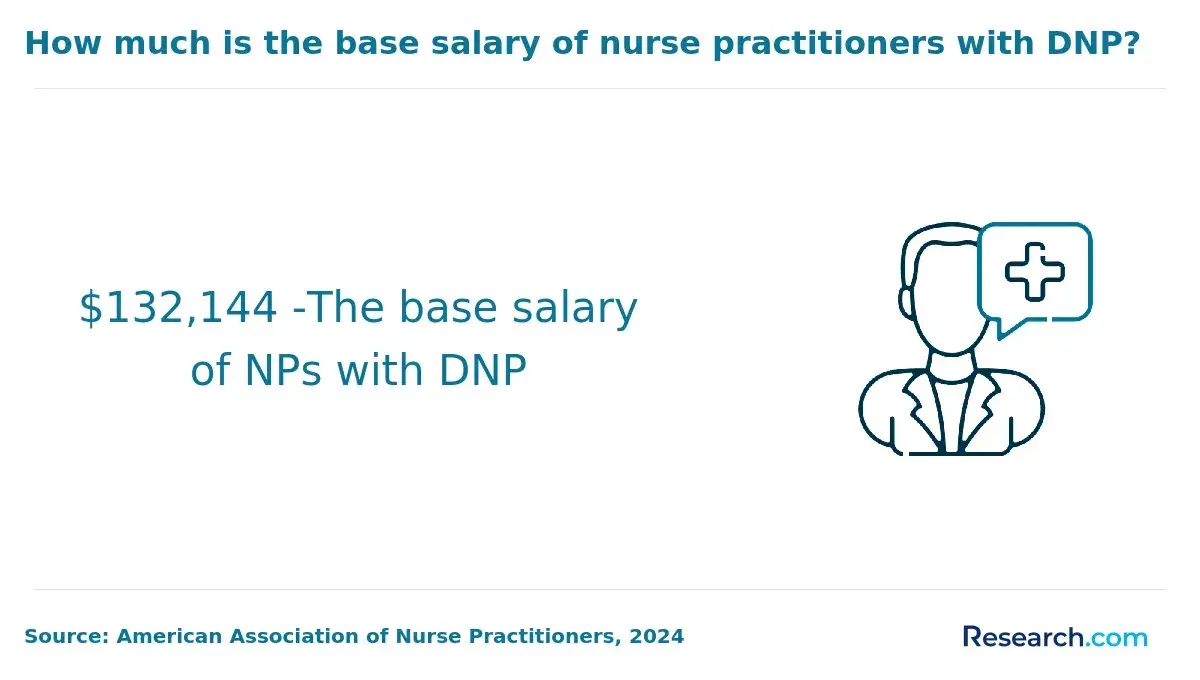
| Statewide DNP-prepared nurses | The average annual salary is described as typically spanning from $110,000 to $140,000. | Specialty, employer, experience, certification, and scope of responsibility. |
| Family Nurse Practitioners | FNPs are described as earning around $115,000 to $130,000. | Primary care demand, patient volume, experience, and outpatient practice setting. |
| Adult-Gerontology Acute Care Nurse Practitioners | AGACNPs are described as earning wages often exceeding $135,000. | Hospital setting, acuity, specialty service, schedule, and procedural responsibilities. |
| Nurse Executives with a DNP | Nurse Executives are described as reaching between $140,000 and $160,000. | Leadership scope, budget responsibility, organization size, and executive experience. |
| Location | Providence and other urban healthcare markets may offer higher compensation than less dense areas. | Competition among employers, academic medical centers, and specialty services. |
| Experience and certification | Additional experience and certifications are described as increasing income by 10-20%. | Advanced competencies, leadership history, specialty demand, and negotiation strength. |
How to evaluate return on investment
- Compare the salary increase to total debt: A higher salary matters less if loan payments are unmanageable.
- Include lost wages during school: If you must reduce work hours, add that to your cost calculation.
- Look at your exact specialty: FNP, PMHNP, AGACNP, Nurse Anesthesia, leadership, and education roles have different pay patterns.
- Consider advancement, not just first job salary: DNP preparation may support leadership, faculty, or systems roles over time.
- Ask about employer benefits: Retirement contributions, loan repayment, tuition reimbursement, schedule flexibility, and paid time off can change the real value of an offer.
What BSN to DNP Graduates in Rhode Island Say About Their Degree
Graduate experiences vary by school, specialty, support system, and career goal. The most useful takeaway from alumni stories is not that every student has the same outcome, but that successful students usually choose programs that match their work schedule, clinical interests, and local professional networks.
- Jamal completed a BSN to DNP pathway at the University of Rhode Island and valued being able to continue building professional ties in his community while advancing his education. The mix of online coursework and periodic campus sessions helped him manage a demanding schedule. He credits the program’s evidence-based practice focus with helping him move into a leadership role in a local educational setting, where he now supports future nurses. Jamal
- Priya chose a traditional BSN to DNP program at Rhode Island College and found that the clinical experiences across Rhode Island’s urban and coastal settings strengthened her ability to adapt to different patient and community needs. After graduation, she moved into a higher-level role in a local school environment, contributing to curriculum development and promoting lifelong learning. Priya
- Carlos pursued an online BSN to DNP program at Salve Regina University while continuing to work. He found Rhode Island’s close professional nursing community valuable for networking and career growth. The program’s leadership and policy emphasis helped him take on administrative responsibilities in a local school setting, where he works on changes that affect staff and students. Carlos
Related Articles for Nearby States
- 2027 Best BSN to DNP Programs in Massachusetts: Online & Campus
- 2027 Best BSN to DNP Programs in Connecticut: Online & Campus
- 2027 Best BSN to DNP Programs in New York: Online & Campus
- 2027 Best BSN to DNP Programs in New Jersey: Online & Campus
- 2027 Best BSN to DNP Programs in Vermont: Online & Campus
- 2027 Best BSN to DNP Programs in New Hampshire: Online & Campus
- Best BSN to DNP Programs in Pennsylvania: Online & Campus for 2027
- 2027 Best BSN to DNP Programs in Delaware: Online & Campus
- 2027 Best BSN to DNP Programs in Maine: Online & Campus
- 2027 Best BSN to DNP Programs in Maryland: Online & Campus
Common Mistakes to Avoid When Choosing a BSN to DNP Program in Rhode Island
| Mistake | Why it can hurt you | Better approach |
| Choosing based only on convenience | A flexible format does not guarantee strong clinical placement, certification alignment, or employer recognition. | Compare accreditation, specialty outcomes, clinical support, and total cost before format. |
| Ignoring accreditation status | Accreditation can affect certification eligibility, employer acceptance, transfer options, and financial aid. | Confirm programmatic nursing accreditation for the exact DNP pathway and track. |
| Assuming online means no campus visits | Many online or hybrid programs still require intensives, labs, simulations, or local clinical hours. | Ask for all in-person requirements before enrolling. |
| Underestimating clinical placement challenges | Delayed preceptor approval can extend your timeline and increase costs. | Ask whether the school secures placements or expects students to find them. |
| Choosing the wrong specialty | Changing tracks can add coursework, clinical hours, and time. | Shadow or interview nurses in your target role before applying. |
| Looking only at tuition | Fees, travel, supplies, lost wages, and certification costs can change affordability. | Build a full program budget from admission through certification. |
| Assuming salary outcomes are guaranteed | Pay depends on role, experience, certification, employer, and location. | Review current job postings and talk to local employers about compensation expectations. |
Questions to Ask Before You Apply
- Is the program accredited, and does that accreditation apply to my exact track?
- Which national certification exam does this specialty prepare graduates to take?
- Does the school arrange clinical placements in Rhode Island, or must I find my own sites?
- How many campus visits, intensives, labs, or synchronous sessions are required?
- What is the total estimated cost, including fees and clinical expenses?
- What percentage of students finish on time?
- What support is available if a clinical site falls through?
- Can I attend part time without losing my place in the course sequence?
- Are there scholarships, assistantships, employer partnerships, or loan repayment options for my specialty?
- Where do recent graduates work, and what roles do they hold?
Key Insights
- A BSN to DNP program in Rhode Island is best suited for BSN-prepared RNs who have a clear advanced practice, leadership, education, or specialty goal.
- Program format matters, but accreditation, certification alignment, clinical placement support, and specialty fit matter more.
- Full-time students typically need about three years, while part-time students often need four to five years or more.
- Students should expect significant clinical requirements, including a minimum of 1,000 clinical hours, even when coursework is online.
- Reported program costs commonly range from $25,000 to $60,000, but total cost should include fees, travel, supplies, certification expenses, and possible lost wages.
- Demand and salary can be strong in advanced nursing roles, but outcomes vary by specialty, employer, experience, and local hiring conditions.
- The safest application strategy is to choose your specialty first, verify accreditation and certification eligibility second, and then compare cost and flexibility.
- Before enrolling, ask direct questions about clinical placements, campus requirements, graduate outcomes, and financial aid so you do not discover major limitations after committing.
References:
- BSN - DNP Nurse Anesthesia Program/DNP Program Tuition and Fees https://www.ric.edu/admissions-financial-aid/tuition-fees/bsn-dnp-nurse-anesthesia-program/dnp-program-tuition-and-fees
- Nursing Scholarships https://nursing.jnj.com/scholarships
- DNP vs MSN for Midwifery: 2025 Complete Comparison Guide | Expert Analysis https://www.midwifeschooling.com/blog/dnp-vs-msn-for-midwifery/
- BSN-to-DNP Programs in Rhode Island – 2025 https://www.nursingprocess.org/bsn-to-dnp-programs-in-rhode-island/
- Best Rhode Island Nursing Schools and Programs | NursingEducation https://nursingeducation.org/state/rhode-island/
- 2026 Best Nurse Practitioner Programs in Rhode Island (Online & Campus Ranked) https://www.registerednursing.org/nurse-practitioner/programs/rhode-island/
- Admission Requirements https://www.elms.edu/school-of-nursing/doctor-nursing-practice/adult-gerontology-acute-care-nurse-practitioner-agacnp/dnp-agacnp-admission-requirements/
- Doctor of Nursing Practice (DNP) Salary in 2025 https://nurse.org/education/DNP-salary/
- St. Joseph Hospital School of Nurse Anesthesia | doctorate in nurse anesthesia https://www.sjhsna.com/
- Rhode Island DNP Programs | DNPPrograms.com https://www.dnpprograms.com/states/rhode-island/


