
2027 Best Online Pediatric Care Nurse Practitioner DNP Programs

Co-Founder and Chief Data Scientist
Experienced nurses often reach a professional crossroads, feeling ready for more but unsure of the path forward. The reality is that a critical shortage of pediatric specialists has created a clear direction and a powerful opportunity. Only 3.7% of all nurse practitioners are certified in pediatrics, leaving a significant gap in care that needs to be filled by clinical leaders.
Career planning experts with over a decade of experience created this guide to give you direct answers. It provides a clear roadmap for how online pediatric care nurse practitioner programs can position you to meet this urgent need and achieve your highest professional goals.
What are the benefits of getting an online pediatric care nurse practitioner DNP degree?
- Achieve greater career autonomy and access top leadership roles in pediatric care.
- Unlock significant earning potential, with salaries often exceeding $145,000 in specialty settings.
- Gain the flexibility to earn a terminal degree from a top university without relocating or pausing your career, thanks to accredited online pediatric care nurse practitioner programs.
What can I expect from an online pediatric care nurse practitioner DNP program?
You can expect a demanding curriculum built on three core pillars: advanced clinical coursework, extensive in-person clinical hours, and a final DNP project. This is a significant step up from previous nursing degrees.
The focus here shifts from direct patient care to systems-level leadership. You’ll find that your courses are less about advanced clinical tasks and more about evidence-based practice, healthcare policy, and using data to improve quality of care.
Every accredited program requires a substantial number of supervised clinical hours, which are always completed in person at an approved healthcare facility. The program culminates in a DNP project, where you'll identify a real-world clinical problem and develop a practical, evidence-based solution. The goal is to prepare you to be a leader who can improve patient outcomes on a larger scale.
Where can I work with an online pediatric care nurse practitioner DNP degree?
The answer to this question comes down to one critical choice you'll make in your program: your sub-specialty. Your future work environment is directly determined by whether you pursue a primary care or acute care certification.
A Primary Care (PNP-PC) certification prepares you for outpatient settings. This includes community clinics, private pediatric practices, and school-based health centers. In these roles, your work centers on health maintenance, developmental screenings, and managing chronic conditions.
In contrast, an Acute Care (PNP-AC) certification is designed for inpatient hospital environments. This path leads to roles in pediatric intensive care units, emergency departments, and specialty surgical units where you manage critically ill or complex patients. This single decision fundamentally shapes your day-to-day professional life.
How much can I make with an online pediatric care nurse practitioner DNP degree?
With a DNP in pediatric care, you can expect to earn between $130,000 and $185,000 annually. Your specific salary within that range is largely determined by your specialization and work environment.
PNPs in primary care roles, often working in outpatient clinics or medical offices, typically earn salaries around $133,000.
In contrast, those with an acute care certification working in hospital inpatient settings can command salaries at the top of that range, often exceeding $184,000. This degree positions you to access the highest tiers of nursing income, and your strategic choices directly shape that potential.
- List of the Best Online Pediatric Care Nurse Practitioner DNP Programs for 2027 List of Programs
- How long does it take to complete an online pediatric care nurse practitioner DNP program? Completion Time
- How does an online pediatric care nurse practitioner DNP program compare to an on-campus program? How does an online pediatric care nurse practitioner DNP program compare to an on-campus program?
- What is the average cost of an online pediatric care nurse practitioner DNP program? Program Cost
- What are the financial aid options for students enrolling in an online pediatric care nurse practitioner DNP program? Financial Aid
- What are the prerequisites for enrolling in an online pediatric care nurse practitioner DNP program? Requirements
- What courses are typically in an online pediatric care nurse practitioner DNP program? What courses are typically in an online pediatric care nurse practitioner DNP program?
- What types of specializations are available in an online pediatric care nurse practitioner DNP program? What types of specializations are available in an online pediatric care nurse practitioner DNP program?
- How to Choose the Best Online Pediatric Care Nurse Practitioner DNP Program How to Choose the Best Online Pediatric Care Nurse Practitioner DNP Program
- What career paths are available for graduates of an online pediatric care nurse practitioner DNP program? Career Paths
- What challenges might I encounter in an online pediatric care nurse practitioner DNP program? What challenges might I encounter in an online pediatric care nurse practitioner DNP program?
- What is the job market for graduates of an online pediatric care nurse practitioner DNP program? Job Market
- What is the best pathway to transition from a BSN to a pediatric care DNP? What is the best pathway to transition from a BSN to a pediatric care DNP?
Best Online Pediatric Care Nurse Practitioner DNP Programs for 2027
Choosing an online pediatric care nurse practitioner DNP program is a high-stakes decision because it affects your clinical scope, certification path, tuition costs, schedule, and long-term career options. The right program can prepare you to care for infants, children, adolescents, and young adults in primary care or specialized pediatric settings. The wrong fit can create problems with clinical placements, board preparation, state authorization, or affordability.
This guide is designed for registered nurses comparing online or hybrid Doctor of Nursing Practice programs with a pediatric focus. You will learn how top programs compare, how long they take, what they cost, what admissions requirements to expect, how online DNP programs differ from campus-based options, and how to evaluate whether a pediatric DNP is worth the investment for your goals.
Quick Answer: What Should You Look for in an Online Pediatric Care Nurse Practitioner DNP Program?
The best online pediatric care nurse practitioner DNP program for you should be accredited, aligned with your intended certification track, realistic for your work schedule, transparent about clinical placement expectations, and affordable enough to support a reasonable return on investment. Accreditation by the Commission on Collegiate Nursing Education (CCNE) or the Accreditation Commission for Education in Nursing (ACEN) is especially important because it affects eligibility for certification and advanced practice licensure.
For most BSN-prepared nurses, an online pediatric DNP takes three to four years of full-time study. MSN-prepared nurses may finish in one to two years, depending on transfer credits, prior graduate coursework, and program structure.
How Research.com Ranks Online Pediatric Care Nurse Practitioner DNP Programs
Because graduate nursing education can require a substantial financial and time commitment, program rankings should be based on verifiable information rather than marketing claims. Research.com evaluates programs using established education datasets, including the IPEDS database, Peterson's database, the College Scorecard database, and The National Center for Education Statistics.
These sources help provide consistent information on institutions, costs, student outcomes, and program characteristics. To understand how Research.com evaluates schools and programs, review the full ranking methodology.
Program Comparison: Online Pediatric Care Nurse Practitioner DNP Options
| Rank | School and Program | Program Length | Credits or Specialization Details | Published Cost Information | Accreditation |
| 1 | Florida International University - Post-BSN to DNP Pediatric Primary Care Nurse Practitioner | 5 years | 77 credits | $48,394 (in-state); $87,208 (out-of-state) | Commission on Collegiate Nursing Education (CCNE) |
| 2 | University of Virginia - DNP Pediatric - Primary Care NP | 3 years (full-time) | 19 specialization credits | $888 (in-state); $1,450 (out-of-state) per credit | Commission on Collegiate Nursing Education (CCNE) |
| 3 | University of Iowa - DNP in Pediatric Nurse Practitioner (Primary Care) | 3-4 years | 77 credits; 630 clinical practice hours | $92,018 (resident); $169,015 (non-resident) | Commission on Collegiate Nursing Education (CCNE) |
| 4 | Johns Hopkins University - DNP: Pediatric Primary Care Nurse Practitioner | 3 years | 74.5 credits | $2,057 per credit | Commission on Collegiate Nursing Education (CCNE) |
| 5 | University of Wisconsin-Madison - Pediatric Primary Care DNP | 3-4 years | 71 credits | $1,150 per credit | Commission on Collegiate Nursing Education (CCNE) |
| 6 | The University of Tennessee-Knoxville - DNP Primary Care Pediatric Nurse Practitioner | 3 years | 69 credits | $67,277 total program fee | Commission on Collegiate Nursing Education (CCNE) |
| 7 | University of Missouri-St Louis - DNP, Primary Care Pediatric Emphasis Area | 3 years | 70 credits | $980 (resident); $1,913 (non-resident); $1,470 (Midwest Student Exchange) per credit | Commission on Collegiate Nursing Education (CCNE) |
| 8 | Maryville University of Saint Louis - BSN to DNP - Pediatric Primary Care Nurse Practitioner | 3-4 years | 71 credits; Pediatric Primary Care Nurse Practitioner concentration | $947 per credit | Commission on Collegiate Nursing Education (CCNE) |
| 9 | Rutgers University-New Brunswick - Pediatric Primary Care Nurse Practitioner DNP | 4 years | 74 credits | $1,125 (in-state); $1,647 (out-of-state) per credit | Commission on Collegiate Nursing Education (CCNE) |
| 10 | University of Minnesota-Twin Cities - Pediatric Clinical Nurse Specialist DNP | 3-4 years | 77 credits; Pediatric Clinical Nurse Specialist specialization | $1,100 per credit | Commission on Collegiate Nursing Education (CCNE) |
1. Florida International University - Post-BSN to DNP Pediatric Primary Care Nurse Practitioner
Florida International University offers a Post-BSN to DNP pathway for nurses who want to specialize in pediatric primary care. The program prepares graduates to assess, diagnose, manage, and support children from birth through young adulthood, with emphasis on common pediatric conditions, chronic illness management, prevention, and community-based child health.
- Program Length: 5 years
- Required Credits to Graduate: 77
- Total Tuition: $48,394 (in-state); $87,208 (out-of-state)
- Accreditation: Commission on Collegiate Nursing Education (CCNE)
2. University of Virginia - DNP Pediatric - Primary Care NP
The University of Virginia offers a DNP Pediatric Primary Care NP track focused on comprehensive care for children’s physical and emotional health. The program is designed for advanced practice nurses who want preparation for independent clinical decision-making, pediatric leadership, health policy engagement, and broader efforts to improve child health outcomes.
- Program Length: 3 years (full-time)
- Required Specialization Credits: 19
- Cost per Credit: $888 (in-state); $1,450 (out-of-state)
- Accreditation: Commission on Collegiate Nursing Education (CCNE)
3. University of Iowa - DNP in Pediatric Nurse Practitioner (Primary Care)
The University of Iowa structures its DNP-PNP curriculum to move students from advanced nursing foundations into focused pediatric primary care practice. Students complete 630 hours of clinical practice and work with preceptors who help them build practical skills in pediatric assessment, diagnosis, management, and family-centered care.
- Program Length: 3-4 years
- Required Credits to Graduate: 77
- Total Tuition: $92,018 (resident); $169,015 (non-resident)
- Accreditation: Commission on Collegiate Nursing Education (CCNE)
4. Johns Hopkins University - DNP: Pediatric Primary Care Nurse Practitioner
The DNP Pediatric Primary Care NP program at Johns Hopkins University combines advanced pediatric clinical preparation with leadership, advocacy, and evaluation skills. Students are trained to manage pediatric health needs while also learning how to assess systems, improve care delivery, and contribute to evidence-based changes in practice.
- Program Length: 3 years
- Required Credits to Graduate: 74.5
- Cost per Credit: $2,057
- Accreditation: Commission on Collegiate Nursing Education (CCNE)
5. University of Wisconsin-Madison - Pediatric Primary Care DNP
The University of Wisconsin-Madison offers a Pediatric Primary Care DNP that prepares nurses to care for patients from birth to age 21. One notable feature is the LEND fellowship opportunity, which can help students develop deeper expertise in caring for children with neurodevelopmental and related disabilities.
- Program Length: 3-4 years
- Required Credits to Graduate: 71
- Cost per Credit: $1,150
- Accreditation: Commission on Collegiate Nursing Education (CCNE)
6. The University of Tennessee-Knoxville - DNP Primary Care Pediatric Nurse Practitioner
The University of Tennessee-Knoxville offers a hybrid DNP-PNP program that blends online coursework with required campus experiences. These in-person sessions support simulation-based learning, skills evaluation, faculty interaction, and peer networking, helping students prepare for pediatric primary care certification.
- Program Length: 3 years
- Required Credits to Graduate: 69
- Total Program Fee: $67,277
- Accreditation: Commission on Collegiate Nursing Education (CCNE)
7. University of Missouri-St Louis - DNP, Primary Care Pediatric Emphasis Area
The University of Missouri-St. Louis offers a DNP with a Primary Care Pediatric emphasis area that centers care within family and community contexts. The curriculum covers well-child care, common pediatric illnesses, chronic conditions, and the role of advanced practice nurses in promoting child health across diverse settings.
- Program Length: 3 years
- Required Credits to Graduate: 70
- Cost per Credit: $980 (resident); $1,913 (non-resident); $1,470 (Midwest Student Exchange)
- Accreditation: Commission on Collegiate Nursing Education (CCNE)
8. Maryville University of Saint Louis - BSN to DNP - Pediatric Primary Care Nurse Practitioner
Maryville University offers an online BSN-to-DNP pathway with a Pediatric Primary Care Nurse Practitioner concentration. The program is intended for nurses who want to strengthen their clinical role in preventive care, child wellness, health education, and family-focused pediatric practice.
- Program Length: 3-4 years
- Concentration: Pediatric Primary Care Nurse Practitioner
- Required Credits to Graduate: 71
- Cost per Credit: $947
- Accreditation: Commission on Collegiate Nursing Education (CCNE)
9. Rutgers University-New Brunswick - Pediatric Primary Care Nurse Practitioner DNP
The Pediatric Primary Care NP program at Rutgers University prepares nurses to care for patients up to 21 years old using a family- and community-centered model. The program emphasizes health promotion, evidence-based practice, outpatient care, and public health applications for pediatric populations.
- Program Length: 4 years
- Required Credits to Graduate: 74
- Cost per Credit: $1,125 (in-state); $1,647 (out-of-state)
- Accreditation: Commission on Collegiate Nursing Education (CCNE)
10. University of Minnesota-Twin Cities - Pediatric Clinical Nurse Specialist DNP
The University of Minnesota offers a Pediatric Clinical Nurse Specialist DNP for nurses who want to become clinical experts and system-level leaders. This path differs from a pediatric nurse practitioner track because it emphasizes consultation, education, research, quality improvement, and pediatric nursing practice improvement within healthcare organizations.
- Program Length: 3-4 years
- Specialization: Pediatric Clinical Nurse Specialist
- Required Credits to Graduate: 77
- Cost per Credit: $1,100
- Accreditation: Commission on Collegiate Nursing Education (CCNE)
How Long Does an Online Pediatric Care Nurse Practitioner DNP Program Take?
The timeline depends mainly on whether you enter with a BSN or an MSN. BSN-to-DNP pediatric nurse practitioner programs commonly require three to four years of full-time study, although some programs may take longer based on credit load, clinical sequencing, and enrollment format.
MSN-to-DNP pathways are usually shorter. Nurses who already hold an MSN may complete a DNP in one to two years, especially if previous graduate coursework satisfies part of the curriculum. Part-time study can make the degree more manageable for working nurses, but it typically extends the total completion time.
| Entry Point | Typical Time to Completion | Best For | Important Consideration |
| BSN-to-DNP | Three to four years of full-time study | RNs who want to move directly from bachelor’s-level nursing into doctoral-level pediatric advanced practice | Requires a longer commitment and usually includes advanced practice coursework, clinical hours, and a DNP project |
| MSN-to-DNP | One to two years | Master’s-prepared nurses seeking doctoral preparation, leadership training, or a pediatric specialization | Transfer credit and prior clinical preparation can significantly affect the timeline |
| Part-time DNP | Longer than full-time study | Working nurses who need flexibility | Students should confirm clinical scheduling expectations before enrolling |
Why More Nurses Are Considering the DNP
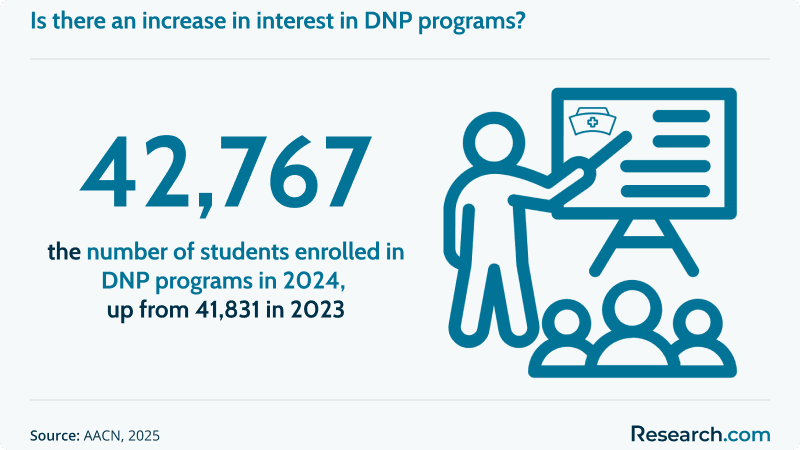
The DNP has become an increasingly common path for nurses who want advanced clinical authority, leadership opportunities, and stronger preparation for evidence-based practice. Nearly 43,000 students are enrolled in DNP programs nationwide, reflecting the degree’s growing role in advanced nursing education.
For pediatric nurses, the DNP can be especially valuable because it combines population-specific clinical preparation with quality improvement, policy, leadership, and systems-level training.
Online vs. On-Campus Pediatric DNP Programs: What Is the Difference?
An accredited online pediatric DNP and an accredited campus-based pediatric DNP can lead to the same degree and the same certification pathway. The format changes how didactic courses are delivered, but it does not eliminate in-person clinical requirements. Pediatric assessment, direct patient care, and supervised clinical experiences still occur in approved healthcare settings.
The key factor is accreditation. Programs accredited by CCNE or ACEN are evaluated against recognized nursing education standards. Before enrolling, students should also confirm that the program is authorized to operate in their state and that it meets the educational requirements for the certification and licensure path they plan to pursue.
| Factor | Online or Hybrid DNP | On-Campus DNP |
| Course delivery | Most didactic coursework is completed remotely; some programs require campus visits | Courses are usually held in person on a regular campus schedule |
| Clinical training | Completed in person at approved clinical sites | Completed in person at approved clinical sites |
| Flexibility | Often better for working nurses and students outside the school’s region | May work better for students who prefer structured face-to-face learning |
| Networking | Depends on virtual engagement, residencies, and clinical placements | Often easier through campus events, faculty access, and local healthcare partnerships |
| Main risk | Clinical placement responsibility may fall partly on the student | Less scheduling flexibility and possible relocation or commuting costs |
Online Clinical Doctorates Are Now Common in Advanced Healthcare Education
Online and hybrid formats are now widely used for graduate clinical education, especially for licensed professionals who must continue working while completing advanced training. Similar shifts can be seen in other healthcare doctorate pathways, including the fastest online doctorate in pharmacy programs.
Still, convenience should not be the only deciding factor. Students should ask whether the program offers clinical placement support, synchronous class requirements, campus intensives, board preparation resources, and state authorization in the state where they intend to practice.
How Much Does an Online Pediatric Care Nurse Practitioner DNP Program Cost?
Published tuition for online pediatric care nurse practitioner DNP programs varies widely by institution, residency status, credit load, and fee structure. In this ranking, total tuition examples range from about $48,000 to over $160,000. Florida International University lists total tuition of $48,394 for in-state students and $87,208 for out-of-state students, while the University of Iowa lists $92,018 for residents and $169,015 for non-residents.
Do not compare programs by tuition alone. A lower published tuition may not include fees, travel for required campus sessions, certification exam costs, textbooks, clinical onboarding expenses, background checks, immunization documentation, or lost income from reduced work hours. Students comparing nursing doctorate options may also want to review related pathways such as the best online nurse leadership DNP programs if their career goals lean more toward administration or systems leadership than pediatric direct care.
How to Estimate Your Real Cost
- Calculate total tuition: Multiply credits by cost per credit unless the school provides a total program cost.
- Add mandatory fees: Ask about technology fees, clinical fees, graduation fees, simulation fees, and background check costs.
- Include travel: Hybrid programs may require campus visits, lodging, meals, and time away from work.
- Account for clinical logistics: Some clinical sites require onboarding, drug screening, immunization records, or compliance tracking.
- Compare aid options: Grants, scholarships, loans, employer support, and loan repayment programs can change the net cost significantly.
Return on Investment: What to Consider Before Borrowing
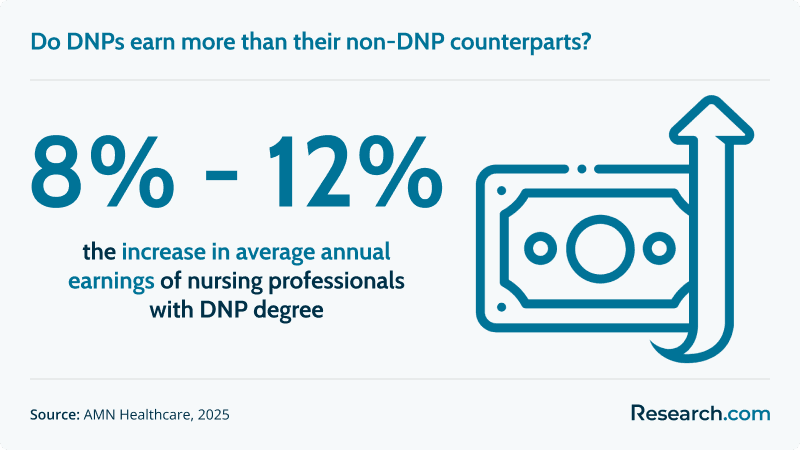
ROI depends on your starting salary, debt level, specialty track, employer, location, and long-term career plan. Data cited in the source materials indicates that nurses with a DNP earn, on average, 8% to 12% more than their non-doctoral counterparts. That increase may help offset the cost of the degree over time, but it should not be treated as a guaranteed outcome for every graduate.
Before enrolling, compare your expected monthly loan payment with realistic salary scenarios in your region. Also consider whether the program improves your access to pediatric primary care roles, acute care roles, leadership positions, faculty roles, or policy work.
Financial Aid Options for Online Pediatric Care Nurse Practitioner DNP Students
DNP students often combine several funding sources instead of relying on one form of aid. Start with federal aid, then evaluate scholarships, employer support, loan repayment programs, and private loans only after comparing terms carefully.
- Federal Student Loans: Complete the Free Application for Federal Student Aid to determine eligibility for federal graduate loan options.
- Private Loans: Private lenders may help cover remaining costs, but interest rates, repayment protections, and deferment options can differ substantially from federal loans.
- Nursing Scholarships: Graduate nursing students may qualify for scholarships from professional associations, foundations, healthcare systems, and local organizations.
- Employer Tuition Reimbursement: Hospitals and health systems may offer tuition assistance to nurses who commit to continued employment or advancement within the organization.
- Loan Repayment Programs: Programs tied to service in high-need settings may reduce debt in exchange for a work commitment.
Using Service-Based Funding Strategically
The HRSA Nurse Corps Loan Repayment Program can be especially relevant for nurses willing to serve in a Critical Shortage Facility. In exchange for a two-year service commitment, the program can repay a substantial portion of qualifying student loan debt.
Before counting on any repayment program, confirm eligibility rules, application deadlines, approved employment settings, service obligations, and tax implications. These programs can be valuable, but they require careful planning.
Admissions Requirements for Online Pediatric Care Nurse Practitioner DNP Programs
Most programs expect applicants to meet core pediatric nurse practitioner DNP requirements, including nursing licensure, prior nursing education, academic readiness, and clinical experience. Requirements vary, so students should review each school’s admissions page before applying.
- An active, unencumbered Registered Nurse (RN) license in the U.S.
- A Bachelor of Science in Nursing (BSN) or a Master of Science in Nursing (MSN) from an accredited institution.
- A competitive undergraduate GPA, usually 3.0 or higher on a 4.0 scale.
Why Pediatric Experience Can Strengthen Your Application
Formal admissions criteria matter, but relevant clinical experience can be just as important in a competitive applicant pool. Many programs prefer applicants with one to two years of professional nursing experience, especially in pediatric environments such as pediatric intensive care, general pediatric units, outpatient pediatric clinics, school health, or community-based child health programs.
Pediatric care requires communication with children and families, developmental awareness, comfort with age-specific assessment, and judgment in situations where symptoms may present differently than in adults. Nurses coming from other backgrounds may need to show how their experience prepares them for the specialty. For comparison, pathway programs such as fast track EMT to RN online programs also show how prior healthcare experience can support entry into a more advanced nursing route.
Common Courses in an Online Pediatric Care Nurse Practitioner DNP Program
A pediatric care nurse practitioner DNP combines advanced practice nursing, pediatric clinical content, doctoral-level evidence-based practice, and leadership training. Students learn to manage individual patients while also improving the systems that shape care quality, safety, and access.
| Course Area | What Students Learn | Why It Matters |
| Advanced Pharmacology | Medication selection, dosing principles, safety, and prescribing considerations for pediatric populations | Children are not simply smaller adults; medication decisions must account for age, weight, development, and condition |
| Advanced Pathophysiology | Complex disease processes across infancy, childhood, adolescence, and young adulthood | Strong diagnostic reasoning depends on understanding pediatric-specific disease patterns |
| Advanced Health Assessment | Comprehensive assessment and diagnostic evaluation for infants, children, and adolescents | Accurate assessment is central to safe advanced practice and certification readiness |
| Evidence-Based Practice | How to evaluate research and apply findings to clinical problems | DNP-prepared nurses are expected to translate evidence into better care processes |
| Healthcare Policy | Policy structures, advocacy, regulation, and access issues affecting pediatric care | Pediatric providers often advocate for children, families, and underserved communities |
| Quality Improvement and Data Analytics | Using data to identify care gaps, measure outcomes, and improve systems | DNP projects commonly focus on measurable clinical or operational improvement |
| Interprofessional Leadership | Team-based care, communication, coordination, and clinical leadership | Pediatric care often involves physicians, nurses, therapists, social workers, educators, and families |
How DNP Coursework Differs from MSN-Level Clinical Training
The DNP goes beyond preparing students for advanced assessment and treatment. It also trains nurses to evaluate evidence, lead quality improvement efforts, use data, understand policy, and influence care delivery. Students interested in broader health science foundations may also explore options such as the best online exercise science degree, though that path does not replace graduate nursing preparation for pediatric advanced practice.
Pediatric DNP Specializations: Primary Care vs. Acute Care
The most important specialization decision is whether to pursue pediatric primary care or pediatric acute care. This choice affects certification, clinical placements, work setting, patient acuity, and salary potential.
| Specialization | Typical Settings | Primary Focus | Best Fit For |
| Pediatric Nurse Practitioner - Primary Care (PNP-PC) | Clinics, private practices, school-based health centers, community health settings, outpatient pediatric programs | Well-child visits, prevention, health education, common illnesses, chronic condition management | Nurses who want long-term patient relationships and outpatient pediatric practice |
| Pediatric Nurse Practitioner - Acute Care (PNP-AC) | Hospitals, pediatric intensive care units, specialty units, emergency or high-acuity environments | Complex, unstable, or critically ill pediatric patients | Nurses who prefer inpatient care, high-acuity decision-making, and complex clinical cases |
| Pediatric Clinical Nurse Specialist | Hospitals, health systems, specialty programs, nursing leadership and education environments | Clinical expertise, consultation, education, quality improvement, and systems-level nursing practice | Nurses who want to improve pediatric care delivery without following the NP provider model |
Salary and Demand Differences by Specialization
Specialization can affect earnings. Source data cited in the original article indicates that PNPs in outpatient clinics often earn around $133,000, while acute care-certified PNPs working in hospitals can earn salaries upwards of $184,000. These figures should be interpreted as context rather than a guarantee, since compensation varies by region, employer, experience, schedule, and scope of practice.
Acute care preparation can be particularly competitive because only 12% of all PNPs hold this certification. That limited supply may create stronger demand in some hospital settings. Nurses considering fast or flexible academic options should be careful not to confuse short-term courses, such as 4 week college courses online accredited, with the much longer clinical and doctoral preparation required for pediatric NP certification.
Students comparing population-specific advanced nursing routes may also want to review related options such as the shortest women's health nurse practitioner DNP programs online to understand how specialization affects coursework, certification, and practice setting.
How to Choose the Best Online Pediatric Care Nurse Practitioner DNP Program
The best program is not always the highest-ranked or most recognizable one. It is the program that fits your certification goal, budget, schedule, clinical placement needs, and state licensure requirements. Use rankings as a starting point, then verify the details that directly affect your ability to graduate, pass certification exams, and practice where you live.
Questions to Ask Before Applying
| Question | Why It Matters |
| Is the program accredited by CCNE or ACEN? | Accreditation affects certification eligibility, licensure, employer recognition, and financial aid access. |
| Does the program match my intended certification track? | Primary care, acute care, and clinical nurse specialist pathways lead to different roles. |
| Will the program meet requirements in my state? | Online programs may not be authorized in every state, and licensure rules can vary. |
| Who finds clinical placements? | Some schools arrange placements, while others expect students to identify preceptors locally. |
| What are the board certification pass rates? | Pass rates can indicate how well the program prepares students for certification. |
| How many campus visits are required? | Travel can increase cost and create scheduling conflicts for working nurses. |
| What support is available for working students? | Advising, tutoring, faculty access, and flexible scheduling can affect persistence. |
| What is the total cost after fees? | Published tuition may not reflect the full amount you will pay. |
When a Pediatric DNP Makes Sense
- You want to become a pediatric nurse practitioner or pediatric clinical nurse specialist.
- You are committed to caring for infants, children, adolescents, and families.
- You want doctoral-level preparation in evidence-based practice, quality improvement, and clinical leadership.
- You are prepared for a demanding program that includes clinical hours, advanced coursework, and a DNP project.
- Your target employers value or prefer doctoral preparation for advanced practice or leadership roles.
When Another Path May Be Better
- If your goal is executive healthcare administration, one of the top online MHA programs may be more aligned with operations, finance, and management.
- If you want nursing leadership without a pediatric provider role, review the best online nursing leadership graduate certificate programs.
- If you are still completing your undergraduate preparation, an accelerated online BSN program may be a more immediate step.
- If you want a broader science foundation before entering healthcare, a bachelor's in natural sciences online may be useful, though it does not replace nursing licensure requirements.
Common Mistakes to Avoid
- Choosing a program before checking accreditation: Accreditation should be verified before you apply, not after admission.
- Ignoring state authorization: An online program may not meet requirements in every state.
- Assuming online means fully remote: Clinical hours are completed in person, and some programs require campus visits.
- Looking only at tuition: Fees, travel, clinical onboarding, and reduced work hours can change the real cost.
- Not asking about preceptors: Clinical placement problems can delay graduation.
- Choosing primary care or acute care based only on salary: The better fit depends on patient population, work setting, pace, and clinical interests.
- Relying only on rankings: Rankings are useful, but licensure fit, clinical support, and certification outcomes matter more.
Career Paths After an Online Pediatric Care Nurse Practitioner DNP
Most graduates use the degree to move into advanced pediatric clinical practice, but the DNP also supports leadership, education, policy, and quality improvement roles. Your specific career options depend on your specialization, certification, state scope-of-practice rules, employer needs, and prior nursing experience.
| Career Path | Typical Responsibilities | Best Fit For |
| Pediatric Primary Care Nurse Practitioner | Well-child visits, preventive care, health education, diagnosis and management of common illnesses, chronic condition follow-up | Nurses who want outpatient pediatric practice and ongoing patient-family relationships |
| Pediatric Acute Care Nurse Practitioner | Management of complex, unstable, or critically ill children in hospital-based settings | Nurses with strong interest in high-acuity pediatric care |
| Pediatric Clinical Nurse Specialist | Consultation, staff education, care improvement, evidence implementation, and system-level pediatric nursing support | Nurses who want clinical influence without the NP provider role |
| Director of Advanced Practice | Clinical team leadership, provider development, policy implementation, quality initiatives, and practice oversight | Experienced clinicians interested in organizational leadership |
| Nursing Faculty | Teaching, mentoring, curriculum development, clinical supervision, and scholarly work | DNP-prepared nurses who want to educate future clinicians |
| Health Policy or Advocacy Role | Program development, policy analysis, advocacy for children and families, and population health initiatives | Nurses interested in improving pediatric care beyond one clinical site |
Long-Term Earning Potential
Compensation generally rises with experience, advanced certification, leadership responsibility, and employer demand. The original source data indicates that nurses with 6-10 years of experience can expect to earn around $138,000. Nurses with 11-20 years of experience earn an average of $152,000. These figures show a possible earnings trajectory, but actual salaries depend on location, specialty, employer, and role.
Clinical Leadership vs. Administrative Leadership
A pediatric DNP primarily develops clinical leaders. That means your authority is grounded in advanced patient care, evidence-based practice, and care improvement. Administrative degrees usually focus more heavily on finance, operations, staffing, compliance, and organizational strategy. If you want to lead care models and clinical quality, the DNP may fit well. If you want to run departments from a business perspective, an MHA may be more appropriate.
Challenges in Online Pediatric Care Nurse Practitioner DNP Programs
Online pediatric DNP programs can be flexible, but they are not easy. Students must balance advanced coursework, clinical requirements, professional responsibilities, family obligations, and doctoral project work. The most common challenges include finding appropriate pediatric clinical sites, keeping pace with graduate-level science and evidence-based practice courses, and staying organized without the structure of daily campus attendance.
Students who are still building their nursing foundation should make sure they are academically ready before entering a doctoral program. Some may need a prior step such as an accelerated online BSN program before they can pursue graduate nursing education.
How to Manage the Workload
- Confirm clinical placement expectations before accepting admission.
- Build a weekly schedule that protects study time, clinical hours, and rest.
- Communicate early with faculty if work or clinical scheduling conflicts arise.
- Use writing centers, library support, board prep tools, and peer study groups.
- Choose a DNP project topic connected to a real clinical problem you can access and measure.
Job Market for Pediatric Care Nurse Practitioner DNP Graduates
The job market for pediatric-focused advanced practice nurses is shaped by a limited supply of pediatric specialists, demand for child and adolescent healthcare, and the need for providers who can manage both direct care and quality improvement. Source data cited in the original article notes that only 3.7% of all nurse practitioners in the country are certified in pediatrics.
That scarcity can create opportunities, especially for nurses with the right certification, clinical experience, and geographic flexibility. However, job availability still varies by state, employer type, scope-of-practice laws, and whether the graduate is prepared for primary care, acute care, or a clinical nurse specialist role.
How Certification Can Affect Marketability
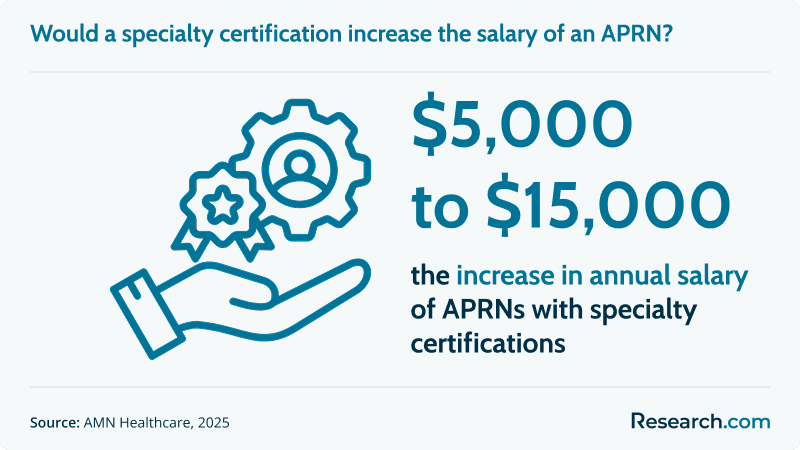
Specialty certification signals that a nurse has focused expertise in a defined area of practice. The original source data indicates that adding a specialty certification can increase an APRN's annual salary by an additional $5,000 to $15,000. That range should be used as a planning reference, not a guaranteed increase.
Employers may value certification because it supports role clarity, credentialing, patient safety, and confidence in specialized clinical practice. For pediatric DNP graduates, certification alignment is essential: the program you choose should prepare you for the exam and role you actually want.
Best Pathway from BSN to Pediatric Care DNP
For BSN-prepared nurses, the most direct route is a BSN-to-DNP pediatric nurse practitioner program. This pathway allows students to move into doctoral-level advanced practice without completing a separate MSN first. It is usually best for nurses who are already confident that pediatrics is their long-term specialty and who are prepared for several years of intensive graduate study.
If you are not yet a BSN-prepared RN, your first step is to complete the nursing education and licensure requirements needed for graduate admission. Some students compare options such as the easiest online accelerated BSN program, but it is important to remember that “easy to get into” should never outweigh accreditation, NCLEX preparation, clinical quality, and eligibility for future graduate study.
Step-by-Step Pathway
- Earn an accredited BSN or MSN, depending on your current education level.
- Maintain an active, unencumbered RN license.
- Gain pediatric nursing experience when possible.
- Choose between pediatric primary care, acute care, or clinical nurse specialist preparation.
- Apply only to accredited programs that meet your state’s requirements.
- Confirm clinical placement support before enrolling.
- Complete coursework, clinical hours, and the DNP project.
- Prepare for the appropriate pediatric certification exam.
- Apply for state advanced practice licensure according to your jurisdiction’s rules.
What Graduates Say About Online Pediatric Care Nurse Practitioner DNP Programs
- Connell: "I worried that choosing between pediatric primary care and acute care would lock me into the wrong future. My rotations exposed me to both environments, and the online discussions with nurses from different regions helped me understand what each role looks like in real practice. That experience made my decision much clearer."
- Althea: "I entered the DNP thinking it would only sharpen my clinical skills. The biggest surprise was how much I learned about systems, data, and quality improvement. My final project focused on reducing clinic wait times, and my organization adopted the work. That project helped me move into a clinical leadership role."
- Kayla: "Before the program, I sometimes struggled to get others to recognize the value of my clinical judgment. The DNP helped me use evidence more effectively and communicate recommendations with confidence. The online discussions with experienced nurses were a major part of that growth."
Key Insights
- Accreditation is non-negotiable. Choose a CCNE- or ACEN-accredited program that supports certification and licensure in your state.
- Your specialization determines your career direction. Pediatric primary care, pediatric acute care, and pediatric clinical nurse specialist tracks prepare graduates for different roles and settings.
- Online does not mean entirely remote. Coursework may be online, but pediatric clinical experiences must be completed in person.
- Costs vary widely. Published tuition in this ranking ranges from about $48,000 to over $160,000, so compare total cost, not only cost per credit.
- Clinical placement support can make or break the experience. Ask exactly how preceptors and clinical sites are secured before enrolling.
- The DNP can support long-term advancement. Graduates may move into advanced practice, clinical leadership, faculty roles, quality improvement, or policy work.
- Do not choose based only on rankings or salary. The best program is the one that fits your certification goal, state requirements, schedule, finances, and preferred pediatric practice environment.
References:
- American Association of Colleges of Nursing. (2025, June). DNP fact sheet. AACN.
- American Association of Critical-Care Nurses. (2024, December 30). Why would I need more than one nursing certification? AACN Blog.
- Baylor University. (2025). The demand for pediatric nurses and how a DNP/PNP can help. Baylor University Online Nursing Programs.
- Centers for Disease Control and Prevention. (2025, June 5). Data and statistics on children's mental health. CDC.
- Centers for Disease Control and Prevention. (2025, July 15). FastStats - Child health. National Center for Health Statistics.
- Centers for Disease Control and Prevention. (2025, July 15). FastStats - Older adult health. National Center for Health Statistics.
- Centers for Disease Control and Prevention. (2023). FastStats - Women’s health. National Center for Health Statistics.
- Kaplow, R., & Reed, K. D. (2021). Specialty certification: A path to improving outcomes. American Journal of Critical Care, 30(2), 156.
- KFF. (2024). U.S. women's health status data. KFF.
- National Council on Aging. (2024, June 1). Get the facts on older Americans. NCOA. AACN fact sheet
Other Things You Should Know About the Best Online Pediatric Care Nurse Practitioner DNP Programs
As of 2027, top-ranked online DNP programs for pediatric nurse practitioners include those offered by Duke University, University of Alabama at Birmingham, and Rush University. These programs are recognized for their comprehensive curricula, experienced faculty, and strong clinical placement support.
Admission requirements typically include a BSN or MSN from an accredited school, a current RN license, and relevant clinical experience. Additional requirements may include a minimum GPA, letters of recommendation, a personal statement, and possibly an interview.
The best online Pediatric Care Nurse Practitioner DNP programs in 2027 typically offer coursework in advanced pediatric health assessment, pharmacology, and healthcare policy. They often incorporate clinical practice components, flexible scheduling for working professionals, and accreditation from recognized bodies like the CCNE or ACEN to ensure quality education.


