
2027 Reasons to Get Your DNP Degree

Co-Founder and Chief Data Scientist
As an education and career planning expert, I know how challenging it can be to find reliable information about the Doctor of Nursing Practice (DNP) degree. The landscape of educational and career data is often confusing and full of conflicting advice.
This guide cuts through the noise to provide a clear, authoritative overview of the DNP's value in the USA. From increased earning potential and career flexibility to a greater impact on patient care and public health, this resource will help you understand the real benefits and confidently plan your next professional step.
What are the benefits of getting a DNP degree?
- Career Advancement: A DNP degree is the highest credential in clinical nursing, opening pathways to executive leadership roles like Chief Nursing Officer and high-level APRN positions.
- Earning Potential: This degree offers a significant boost in salary. Advanced practice registered nurses (APRNs), which include nurse practitioners, nurse anesthetists, and nurse midwives, earned a median annual wage of $132,050 in May 2024. Within this group, specialized roles such as Certified Registered Nurse Anesthetists (CRNAs) had a median salary of $223,210, making them among the highest-paid nursing professionals.
- Flexible Learning: Many DNP programs are offered online or in a hybrid format, allowing you to balance advanced education with your current work schedule and personal life.
What can I expect from a DNP degree program?
- Advanced Clinical Content: The curriculum is centered on advanced topics in pharmacology, diagnostics, and patient care management, building upon your existing nursing knowledge.
- Leadership and Systems-Level Training: Expect intensive coursework focused on healthcare policy, organizational leadership, and health informatics to prepare you for roles that improve entire healthcare systems.
- Scholarly Project: A capstone scholarly project is a core component. You will design, implement, and evaluate a practice-based initiative that addresses a real-world healthcare problem.
- Extensive Clinical Hours: Most DNP programs require a minimum of 1,000 post-baccalaureate clinical hours, providing a deep, immersive experience in your chosen specialty.
- Interprofessional Collaboration: The programs emphasize teamwork, preparing you to collaborate effectively with doctors, specialists, and other healthcare professionals.
Where can I work with a DNP degree?
- Hospitals and Medical Centers: Take on leadership roles as a Nurse Manager, Director of Nursing, or a specialized APRN in departments like critical care or surgery.
- Private Practice and Clinics: Work as a Family Nurse Practitioner (FNP) or other specialized NP, potentially with full practice authority in states that allow it.
- Academia and Education: Become a full-time nursing faculty member, professor, or academic leader in a university setting.
- Public Health and Government: Influence policy and lead public health initiatives for local, state, or federal government agencies.
- Consulting and Healthcare Tech: Apply your expertise in informatics and systems analysis to advise organizations on optimizing their healthcare delivery.
- Specialty Clinics: Work in high-demand, high-paying specialties like anesthesiology, oncology, or psychiatry in outpatient care centers and specialty hospitals.
How much can I make with a DNP degree?
- Nurse Practitioner (NP) Roles: The median salary for nurse practitioners was $129,210 in May 2024, with the top 10% earning more than $217,270 (BLS).
- Certified Registered Nurse Anesthetist (CRNA): One of the highest-paying DNP roles, CRNAs earned a median annual wage of $223,210 in May 2024 (BLS).
- Leadership and Executive Roles: While not tracked directly by the BLS, positions such as Chief Nursing Officer (CNO) can command salaries well over $200,000 annually, depending on the size and location of the organization.
- Salary Growth: A DNP degree provides a strong long-term return on investment, with many experienced DNPs earning between $150,000 and $200,000+ annually in advanced practice or leadership positions.
- What academic and educational opportunities does a DNP offer? Opportunities
- How does a DNP degree impact patient care and clinical practice? How does a DNP degree impact patient care and clinical practice?
- How does a DNP degree allow me to influence the healthcare industry? How does a DNP degree allow me to influence the healthcare industry?
- What personal and professional growth can I expect with a DNP degree? Professional Growth
- What professional and career advancement opportunities does a DNP offer? Career Advancement
- What is the financial investment for a DNP career? Financial Investment
- What skills and qualities do I need for a successful DNP career? Core Skills
- What specializations are available in DNP programs? Specializations
- How much can I earn with a DNP degree? Salaries
- How can I navigate the transition from RN to DNP? How can I navigate the transition from RN to DNP?
- What are some current and future trends in advanced nursing practice? Trends
- How Do I Evaluate the Quality and Outcomes of a DNP Program? How Do I Evaluate the Quality and Outcomes of a DNP Program?
A Doctor of Nursing Practice (DNP) is a major decision for nurses who want more authority, stronger clinical judgment, leadership influence, and access to advanced practice or executive roles. The degree can be valuable, but it is not automatically the right move for every RN or MSN-prepared nurse. The best choice depends on your career target, state practice rules, specialty, time available for school, clinical requirements, and total cost.
This guide explains 25 practical reasons to consider a DNP in 2026, what the degree can and cannot do, how it affects clinical practice and leadership opportunities, what financial factors to compare, and which questions to ask before enrolling. If you are still clarifying the scope of advanced practice, start by reviewing common DNP roles and responsibilities so you can connect the degree to real job functions rather than a title alone.
Quick answer: Is a DNP worth it?
A DNP can be worth it for nurses who want to practice at the highest clinical level, qualify for advanced practice or leadership roles, teach future nurses, lead quality improvement projects, influence policy, or move into executive healthcare administration. It is most useful when the program’s specialty, clinical placements, accreditation, certification preparation, and cost match a clear career goal.
A DNP may not be the best next step if you are unsure about your specialty, need a faster credential for a narrow career change, cannot complete required clinical hours, or would take on debt without a realistic salary or promotion pathway. Nurses comparing options should evaluate the DNP against MSN programs, post-master’s certificates, leadership certificates, and employer-sponsored education benefits.
What academic and educational opportunities does a DNP offer?
A DNP is a practice-focused doctorate. Unlike research doctorates that primarily prepare graduates to generate new nursing science, the DNP is designed to help nurses apply evidence, improve systems, lead teams, and strengthen patient care. For nurses who want advanced academic credibility without stepping away from practice, it can be a strong fit.
| Academic goal | How a DNP helps | Best fit for |
| Remain in advanced clinical practice | Builds doctoral-level clinical reasoning, evidence-based practice, and systems improvement skills. | NPs, CNSs, nurse midwives, CRNAs, and nurses planning advanced practice roles. |
| Teach nursing students | Provides advanced clinical credibility that can support teaching in practice-focused programs. | Nurses who want to combine patient care, precepting, simulation, or classroom instruction. |
| Move into academic leadership | Strengthens preparation for curriculum planning, program leadership, faculty mentorship, and institutional decision-making. | Nurses interested in director, dean, coordinator, or faculty leadership roles. |
1. Advance without leaving clinical care: The DNP is the highest practice-focused nursing degree, making it useful for nurses who want more expertise and influence while staying close to patients. It can support advanced assessment, care coordination, quality improvement, and clinical leadership rather than requiring a full shift into research or administration.
2. Prepare to educate future nurses: DNP-prepared nurses can bring current practice knowledge into classrooms, labs, simulation centers, and clinical supervision. This is especially valuable in programs that need faculty who understand today’s patient complexity, technology, interprofessional teamwork, and safety expectations.
3. Compete for academic leadership roles: A DNP can strengthen a nurse’s qualifications for roles that involve managing faculty, overseeing clinical education, shaping curriculum, and leading nursing programs. Nurses planning this route often compare program cost carefully, including options such as the cheapest BSN to DNP programs.
How does a DNP degree affect patient care and clinical practice?
The strongest reason to pursue a DNP is not the title. It is the ability to improve care decisions, clinical systems, patient safety, and outcomes. DNP programs typically emphasize evidence-based practice, quality improvement, leadership, informatics, health policy, and advanced clinical decision-making.
4. Deepen advanced clinical expertise: DNP coursework can expand a nurse’s ability to manage complex cases, evaluate treatment plans, interpret evidence, and apply advanced pharmacology and diagnostics. Specialized credentials can also affect compensation; for example, nurses comparing women’s health pathways may review WHNP graduate certificate salary information when deciding whether to pursue a certificate, MSN, or DNP route.
5. Support greater professional autonomy: For Advanced Practice Registered Nurses (APRNs), a DNP can strengthen preparation for more independent clinical decision-making. However, full practice authority depends on state law, licensure rules, certification, and employer policy. The degree alone does not override state scope-of-practice restrictions.
6. Improve patient safety work: DNP-prepared nurses are trained to examine clinical processes, identify avoidable risks, measure outcomes, and implement evidence-based improvements. This makes the degree especially relevant for nurses interested in quality, safety, infection prevention, medication-use improvement, and care standardization.
7. Translate research into practice: DNP graduates often serve as the link between published research and daily care delivery. They evaluate evidence, adapt it to the clinical setting, and help teams implement changes that are practical, measurable, and sustainable.
8. Lead interdisciplinary teams: Modern healthcare depends on coordinated work among nurses, physicians, pharmacists, therapists, case managers, social workers, and administrators. DNP programs often train nurses to lead across disciplines, communicate clearly, and align team decisions around patient goals.
9. Specialize in a patient population or practice area: A DNP can support focused expertise in family practice, pediatrics, psychiatric mental health, adult-gerontology, women’s health, anesthesia, nurse executive leadership, informatics, or population health. The right specialty should match both your interests and the licensure or certification required for your intended role.
How can a DNP help nurses influence healthcare systems?
A DNP can move a nurse’s impact beyond one patient encounter at a time. The degree is often designed for nurses who want to redesign workflows, address access gaps, influence institutional policy, improve population health, or build new models of care.
10. Address access gaps in underserved areas: DNP-prepared APRNs can help expand access to primary care, mental health care, chronic disease management, and preventive services, especially where provider shortages affect patients. Nurses comparing healthcare fields may also find it useful to review pathways such as what to major in for occupational therapy to understand how different clinical professions prepare graduates for underserved and high-need settings.
11. Influence health policy: DNP programs commonly include policy analysis, advocacy, healthcare finance, and systems leadership. These skills can help nurses participate in legislative advocacy, organizational policy review, regulatory discussions, and professional association work.
12. Improve public and population health: DNP-prepared nurses may design prevention programs, evaluate community health data, manage disease initiatives, and respond to population-level problems. This is especially relevant in roles involving chronic disease, maternal health, behavioral health, community-based care, and health equity.
13. Build or manage a practice: In states and settings where independent or collaborative practice is permitted, a DNP can support nurses who want to operate clinics, lead service lines, manage telehealth programs, or develop specialized care models. Business readiness still matters: billing, compliance, staffing, malpractice coverage, and state rules must be evaluated before opening a practice.
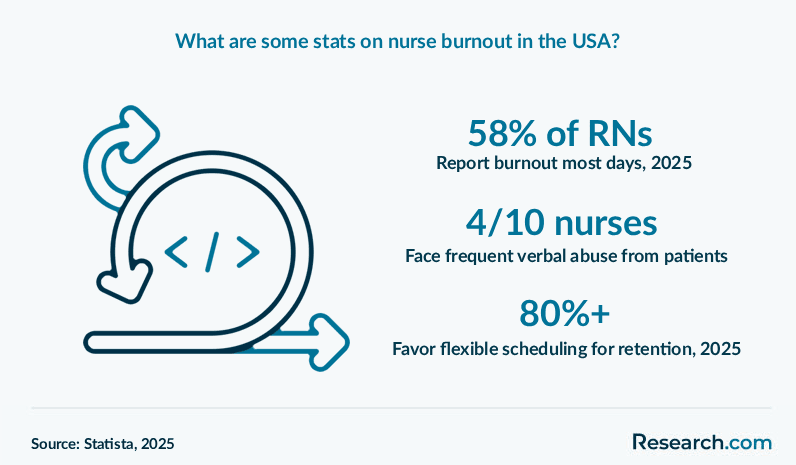
Nursing workforce pressures are one reason many nurses consider advanced roles. In 2025, 58% of registered nurses (RNs) reported experiencing burnout on most days, an improvement from 68% in 2023 but still a serious concern (Statista, 2025). Workplace strain also appears in reports of verbal abuse: four in 10 nurses face frequent verbal abuse from patients, and one in eight experience it from coworkers. More than 80% of nurses favor flexible scheduling for retention, and a similar percentage supports lower patient-to-nurse ratios to improve the work environment (Statista, 2025).
Turnover also carries a direct financial cost. The average cost to replace one RN rose to $61,110 in 2024, an 8.6% increase from the previous year. The overall RN turnover rate in 2024 was 16.4%, down from 27.1% in 2021, but turnover still varies by specialty, ranging from 12% to 23% for mental health and substance abuse nurses. Hospitals in 2024 spent an average of 83 days, or about 12 weeks, recruiting a single RN.
These figures show why leadership, retention, staffing models, and nurse well-being are central issues in healthcare. Nurses who want to shift toward workforce development, teaching, or academic leadership may also compare masters in nursing education jobs as an alternative or stepping-stone career path.
What personal and professional growth can you expect from a DNP?
A DNP is demanding. It usually requires advanced coursework, clinical or practicum hours, leadership projects, evidence appraisal, and sustained writing. For nurses who are ready for that level of commitment, the payoff can include stronger confidence, broader influence, and a clearer professional identity.
14. Strengthen certification readiness: DNP programs aligned with APRN specialties are typically built around advanced practice competencies and certification expectations. Pass rates vary by school, specialty, and student preparation, so applicants should ask each program for current certification exam outcomes before enrolling.
15. Follow a clear doctoral pathway: Nurses can enter DNP programs from different educational points. BSN-to-DNP pathways are longer and often prepare students for APRN certification, while post-MSN DNP programs may focus on leadership, quality improvement, policy, informatics, or advanced specialty practice.
16. Build informatics and technology skills: DNP coursework often includes health information systems, data interpretation, clinical decision support, telehealth, and quality dashboards. These skills are increasingly important as healthcare organizations use technology to monitor outcomes, reduce errors, and coordinate care.
17. Gain professional fulfillment: For many nurses, the DNP represents a meaningful next step because it combines advanced knowledge with practical impact. It can create a stronger sense of purpose for nurses who want to mentor others, improve systems, or serve a defined patient population. If you are comparing graduate education across fields, even broad salary references such as religious studies degree salary can help illustrate how profession, credential level, and labor market demand shape financial outcomes.
18. Stay current as healthcare changes: DNP graduates are expected to evaluate new evidence, adapt to changing guidelines, and guide teams through clinical and operational change. That habit of lifelong learning is one of the practical benefits of doctoral-level preparation.
What career advancement opportunities can a DNP create?
A DNP can support advancement in clinical practice, executive leadership, education, informatics, policy, and population health. The degree is most valuable when it connects to a specific role, such as nurse practitioner, nurse executive, clinical nurse specialist, nurse midwife, nurse anesthetist, quality director, or academic leader.
| DNP career direction | Typical focus | When this path makes sense |
| Advanced clinical practice | Diagnosis, treatment, prescribing, care management, and specialty practice. | You want a patient-facing APRN role and can meet licensure, certification, and clinical-hour requirements. |
| Executive leadership | Staffing, budgets, operations, quality metrics, policy, and organizational strategy. | You want to lead departments, service lines, or healthcare organizations. |
| Academic leadership | Teaching, curriculum, accreditation, faculty development, and clinical education. | You want to prepare nurses while bringing advanced practice experience into education. |
| Informatics and quality | Data systems, workflow redesign, safety projects, and technology implementation. | You enjoy systems thinking, analytics, and measurable improvement work. |
| Policy and population health | Community outcomes, prevention, access, advocacy, and health system reform. | You want to influence care beyond individual encounters. |
19. Qualify for more remote or hybrid roles: Telehealth, case management, informatics, utilization review, policy, education, and leadership roles may offer remote or hybrid work options. Availability depends on specialty, state licensure, employer policies, and whether the role requires in-person clinical care.
20. Become an advanced practice leader: DNP programs emphasize systems thinking, change management, quality improvement, and organizational leadership. These skills can prepare nurses to guide teams, redesign processes, and lead clinical initiatives.
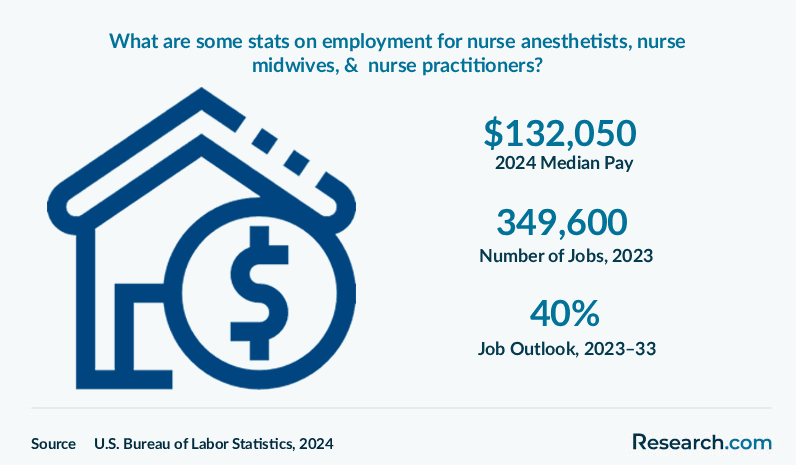
21. Enter a field with strong projected demand: The U.S. Bureau of Labor Statistics projects that employment for nurse anesthetists, nurse midwives, and nurse practitioners will grow by 40% from 2023 to 2033, significantly faster than the average growth rate for all occupations.
22. Increase earning potential: Salary depends heavily on role, specialty, geography, employer type, and experience. As of May 2024, the median annual wage for nurse practitioners was $132,050, with the top 10% earning over $217,270. The number of jobs in 2023 was 349,600, with projected job growth of 40% from 2023 to 2033.
23. Align with the profession’s doctoral-practice direction: The American Association of Colleges of Nursing (AACN) has endorsed the DNP as the standard for advanced nursing practice. Requirements still vary by role, employer, specialty, and state, so applicants should confirm whether a DNP is required, preferred, or optional for their target position.
24. Compete for executive-level positions: A DNP can help prepare nurses for roles such as Chief Nursing Officer (CNO), Director of Nursing Services, executive director, dean, or service-line leader. These jobs usually require not only a doctorate but also leadership experience, budget knowledge, performance improvement skills, and a record of managing people or programs.
25. Pursue in-demand clinical and nonclinical roles: DNP graduates may work in high-demand specialties such as family practice, psychiatric mental health, acute care, anesthesia, informatics, population health, nursing education, and healthcare administration. The best specialty is the one that matches your licensure pathway, patient population, lifestyle goals, and local job market.
What is the financial investment for a DNP career?
The cost of a DNP is not limited to tuition. You also need to budget for fees, books, technology, travel to clinical sites, certification exams, licensure costs, reduced work hours, and possible lost income. Even students comparing the most affordable DNP programs should calculate the full cost of attendance and the likely return based on their intended role.
| Cost factor | Why it matters | What to ask before enrolling |
| Tuition and fees | In 2025, DNP tuition generally ranges from $32,000 to over $110,000, and fees can add hundreds or thousands of dollars. | What is the total program cost, including fees, books, clinical requirements, and graduation costs? |
| Program length | A post-BSN to DNP program can take four to six years, while a post-MSN to DNP program can be completed in as little as 16 months. | How long do students usually take to graduate on a full-time or part-time schedule? |
| Lost or reduced income | Full-time study or intensive clinical placements can limit work hours. | Can I keep working, and how flexible are clinical placements and course schedules? |
| Employer support | Some healthcare employers offer tuition reimbursement, especially for hard-to-fill specialties or leadership pipelines. | Does my employer cover DNP coursework, and are there service commitments after graduation? |
| Financial aid and scholarships | Scholarships, grants, loans, and loan forgiveness programs can reduce out-of-pocket costs. | Which aid options are available specifically for DNP students in my track? |
| Return on investment | Higher earnings are possible, but not guaranteed. ROI depends on specialty, location, promotion timing, and debt level. | What roles do graduates obtain, and what salary range is realistic in my region? |
A DNP can be a strategic investment, but only if the numbers work. Compare total cost against expected role changes, salary growth, employer reimbursement, and the opportunity cost of time spent in school.
What skills and qualities do you need for a successful DNP career?
DNP success requires more than strong bedside skills. The best-prepared graduates combine clinical expertise with leadership, communication, evidence appraisal, technology use, and the ability to improve systems under pressure.
- Advocacy: DNP-prepared nurses often advocate for patients, communities, nursing teams, and policies that improve access, safety, and quality.
- Evidence-based practice: A central DNP skill is finding, evaluating, and applying research in real clinical settings.
- Communication: DNPs must explain complex information to patients, families, executives, clinicians, students, and policymakers.
- Critical thinking: Advanced roles require nurses to interpret patient data, organizational metrics, research findings, and risk factors before making decisions.
- Leadership and systems thinking: DNP graduates are expected to understand how staffing, workflow, policy, technology, culture, and finance affect outcomes.
- Technology and informatics: DNPs increasingly work with electronic health records, dashboards, telehealth tools, data reporting systems, and clinical decision support.
These skills matter in traditional and faster-format programs. Students considering accelerated DNP programs should confirm that speed does not come at the expense of clinical support, faculty access, accreditation, or board preparation.
According to the National Council of State Boards of Nursing, among nursing program directors in 2023–2024, 837 individuals, or 49.7%, held a doctoral degree. The proportion rises in more advanced nursing programs. A majority of directors in diploma programs (51.9%), bachelor’s programs (89.2%), accelerated BSN programs (78.0%), and master’s entry programs (92.3%) held a doctoral degree. By comparison, fewer directors in LPN/VN programs (26.7%) and associate’s programs (41.3%) held a doctoral degree.
This pattern reflects the importance of doctoral-level leadership in programs with more advanced academic expectations and clinical complexity.
What specializations are available in DNP programs?
DNP programs are not interchangeable. The specialization determines your coursework, clinical requirements, certification eligibility, job options, and sometimes your state licensure pathway. Choose the specialty first, then choose the school.
| DNP specialization | Primary focus | Important decision point |
| Adult-Gerontology Nurse Practitioner | Primary or acute care for adult and older adult patients, including acute care (AGACNP). | Decide whether you want primary care, acute care, or a specific specialty environment. |
| Certified Registered Nurse Anesthetist (CRNA) | Anesthesia care and patient monitoring before, during, and after procedures. | Expect highly specialized preparation and demanding clinical requirements. |
| Clinical Nurse Specialist (CNS) | Expert clinical practice, consultation, education, and quality improvement for a population or setting. | Best for nurses who want advanced influence within clinical systems. |
| Family Nurse Practitioner (FNP) | Primary care for patients across the lifespan. | Strong fit for nurses who want broad outpatient or community-based practice. |
| Nurse Executive | Operations, staffing, finance, policy, and organizational leadership. | Best for nurses targeting management or executive roles rather than APRN practice. |
| Nurse Midwifery | Women’s health, reproductive care, pregnancy, childbirth, and primary care services. | Confirm certification, clinical placement, and state practice requirements. |
| Nursing Informatics | Clinical technology, data, workflow, systems implementation, and information management. | Useful for nurses interested in analytics, EHR optimization, and digital health. |
| Psychiatric Mental Health Nurse Practitioner | Mental health assessment, diagnosis, treatment, and management across the lifespan. | Demand may be strong, but clinical placement quality is critical. |
| Public Health or Population Health | Community health, prevention, health equity, program evaluation, and policy. | Best for nurses who want system-level impact rather than individual primary care only. |
Leadership-focused tracks may have different practicum expectations than APRN tracks. If you are focused on administration rather than direct advanced practice, compare options such as online DNP programs without clinicals, but verify that the curriculum still meets your employer’s expectations and your state’s requirements if licensure is involved.
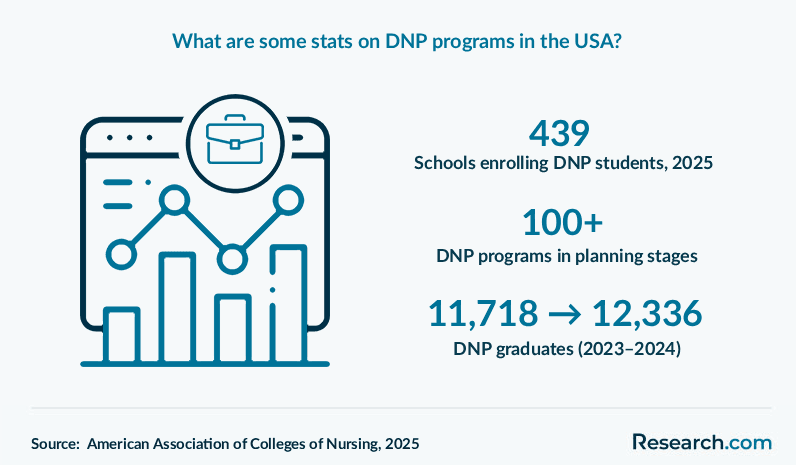
Recent data from the American Association of Colleges of Nursing (AACN) show continued DNP program growth. In 2025, there were 439 schools in the U.S. enrolling students in DNP programs, with over 100 more programs in the planning stages. These programs are available in all 50 states and the District of Columbia.
From 2023 to 2024, DNP enrollment increased from 41,831 to 42,767 students. During the same period, DNP graduates increased from 11,718 to 12,336. The growth signals sustained demand for doctoral-level nursing education and a larger pipeline of DNP-prepared nurses entering practice, leadership, and academic roles.
How much can you earn with a DNP degree?
DNP earnings vary widely. Specialty, location, experience, employer type, call requirements, leadership responsibilities, and whether the role is clinical or executive can all affect pay. A DNP may improve earning potential, but it does not guarantee a specific salary.
- Location and experience matter: Salaries differ by state and city. Higher-paying regions like California and Wyoming can offer salaries that are over $40,000 more than the national average, and compensation often rises with experience.
- Nurse anesthetist roles are among the highest paid: Nurse anesthetists (CRNAs) have a mean annual salary of around $212,650, with earnings that can exceed $280,000 in some states.
- Nurse practitioner pay varies by specialty: A DNP-prepared NP can expect a median salary of approximately $126,260, with pay affected by specialization, setting, and region.
- Overall DNP averages differ by data source: The average annual salary for a DNP-prepared nurse is around $117,859, with top earners making upwards of $185,000.
- Executive leadership can raise earning potential: Roles such as chief nursing officer can command salaries well over $200,000, but usually require significant leadership experience in addition to the degree.
PayScale data from 2025 show a clear salary progression across DNP-related roles. Instructional and general practice roles tend to fall lower on the scale, while specialized clinical and executive positions rise higher. A nursing instructor earns an average of $75,433, while a postsecondary professor earns $85,325. A gastroenterology nurse practitioner earns $98,315, and a nursing director earns $101,601. Pediatric nurse practitioners earn $104,459, while adult nurse practitioners and family nurse practitioners earn $107,711 and $107,888, respectively.
The average for an advanced practice registered nurse is $109,050. Nursing managers earn $111,073, and certified nurse midwives earn $111,701. Other advanced practice roles include advanced registered nurse practitioner at $113,502, nurse practitioner at $114,292, women’s health nurse practitioner at $118,312, and cardiovascular advanced registered nurse practitioner at $119,475.
Higher specialization and leadership responsibility are associated with higher reported averages. A clinical nurse specialist earns $121,459, an acute care nurse practitioner earns $123,570, and a neonatal nurse practitioner earns $125,514. An executive director earns $128,141, a psychiatric nurse practitioner earns $128,758, and a hospitalist advanced registered nurse practitioner earns $130,153. A director of nursing earns $133,346.
At the upper end, a dean of nursing earns $147,244, while a chief nursing officer (CNO) earns $147,998. A nurse anesthetist (CRNA) earns an average of $195,158. The highest-paying listed role is a combined chief operating officer (COO) / chief nursing officer (CNO) position, at $211,133.
The wide range shows why specialty choice matters. Before enrolling, compare likely roles, local demand, and DNP salary by specialty rather than relying on one national average.
How can you move from RN to DNP?
The RN-to-DNP path depends on your current degree. An RN with an associate degree usually needs a BSN or bridge pathway before entering many DNP programs. An RN with a BSN may apply directly to BSN-to-DNP programs, while an MSN-prepared nurse may qualify for a shorter post-master’s DNP.
- Confirm your RN license status: Your license should be active and in good standing before you apply.
- Identify your current academic level: ADN, diploma, BSN, and MSN applicants follow different routes.
- Choose your target role: Decide whether you want APRN practice, nurse executive leadership, informatics, education, or population health.
- Check prerequisites: Programs may require a BSN, statistics, health assessment, specific GPA standards, clinical experience, or current specialty certification.
- Verify accreditation: Look for recognized nursing accreditation and confirm that the program supports certification or licensure requirements for your specialty.
- Evaluate clinical placements: Ask whether the school places students, assists with placements, or requires students to find their own sites.
- Plan financing: Compare tuition, fees, lost income, employer reimbursement, scholarships, and loan options.
If you need to complete a BSN first, comparing easy online RN to BSN degrees can help you identify a practical bridge before applying to a DNP program.
How do you evaluate the quality and outcomes of a DNP program?
A DNP program should be judged by more than convenience or rankings. The right program should be accredited, transparent about outcomes, realistic about clinical placement, and aligned with your intended licensure or career path.
| Quality factor | Why it matters | Red flag |
| Accreditation | Accreditation affects eligibility for certification, licensure, transfer, employer recognition, and financial aid. | The school is unclear about programmatic accreditation or cannot explain how it supports certification eligibility. |
| Certification outcomes | Board pass rates help show whether students are prepared for APRN or specialty exams. | The program will not share recent pass-rate data. |
| Clinical placement support | Clinical access can determine whether students graduate on time. | Students must find all sites alone with little faculty support. |
| Faculty expertise | Faculty should have experience in the specialty, leadership area, or practice setting you plan to enter. | Few faculty members have current experience in your concentration. |
| Graduate outcomes | Employment, promotion, certification, and leadership placement data help estimate value. | The school promotes outcomes but does not provide evidence. |
| Cost transparency | Total cost affects ROI and debt risk. | Tuition is advertised, but fees, travel, clinical costs, or technology charges are unclear. |
Students who are still building foundational nursing credentials may also compare an easy online accelerated BSN program to understand how accelerated pathways structure admissions, clinical learning, and student support before moving into doctoral study.
Online vs. campus DNP programs: Which format should you choose?
Online DNP programs can work well for working nurses, but they are not automatically easier. Most still require clinical or practicum hours, project work, synchronous sessions, campus intensives, or local preceptors. Campus-based programs may offer stronger face-to-face networking and easier access to university-affiliated clinical sites.
| Format | Advantages | Possible drawbacks | Best for |
| Online DNP | Flexible scheduling, fewer relocations, continued employment, access to distant schools. | May require self-arranged clinical sites, strong time management, and travel for intensives. | Working nurses with local clinical access and strong independent study habits. |
| Campus DNP | In-person faculty access, local networks, structured learning environment, possible health-system partnerships. | Less schedule flexibility and possible commuting or relocation costs. | Students who prefer face-to-face learning and want stronger campus-based support. |
| Hybrid DNP | Combines online coursework with selected in-person learning, labs, or intensives. | Travel requirements can still add cost and scheduling challenges. | Nurses who want flexibility but also value in-person skill development and networking. |
What current and future trends are shaping advanced nursing practice?
Advanced nursing practice is changing because of workforce shortages, technology, telehealth, mental health demand, doctoral education expectations, and pressure to improve outcomes at lower cost. DNP students should choose programs that prepare them for these realities rather than only traditional role descriptions.
- DNP expectations for advanced practice: Major nursing organizations, including the AACN, have endorsed the DNP for advanced nursing practice. However, implementation differs by specialty, employer, and regulatory environment, so applicants should verify actual requirements for their target role.
- Primary care access needs: DNP-prepared nurse practitioners can play an important role in primary care, especially in rural and underserved communities.
- Telehealth expansion: Remote care has created opportunities in patient monitoring, behavioral health, chronic disease follow-up, triage, education, and care coordination.
- Artificial intelligence and informatics: AI, analytics, and digital tools are increasingly used to support clinical documentation, risk prediction, workflow design, and decision support. DNPs need enough informatics knowledge to evaluate these tools responsibly.
- Mental health specialization: Demand for behavioral health services has increased interest in psychiatric mental health nurse practitioners (PMHNPs), but students should pay close attention to clinical placement quality and supervision.
Common mistakes to avoid before choosing a DNP program
- Choosing a program before choosing a role: Your specialty determines licensure, certification, clinical placements, and job options.
- Ignoring accreditation: Accreditation can affect certification eligibility, employer acceptance, and financial aid.
- Looking only at tuition: Fees, travel, lost income, books, technology, exams, and clinical costs can change the true price.
- Assuming online means low effort: Online DNP programs can be rigorous and may still require clinical hours, projects, and in-person intensives.
- Not checking state licensure rules: APRN practice authority, prescriptive authority, and supervision rules vary by state.
- Overestimating salary gains: Some DNP roles pay substantially more, but salary increases depend on specialty, region, employer, and experience.
- Waiting too long to plan clinical placements: Limited preceptor availability can delay graduation.
- Relying only on rankings: A highly ranked program is not helpful if it does not support your specialty, schedule, state requirements, or clinical needs.
Questions to ask before applying to a DNP program
- Is the program accredited, and by which accreditor?
- Does this program prepare graduates for the certification or licensure required for my target role?
- What are the most recent board pass rates for my specialty?
- Does the school arrange clinical placements, help secure them, or leave placement entirely to students?
- How many clinical or practicum hours are required?
- What is the total cost, including tuition, fees, books, travel, exams, and technology?
- Can I complete the program while working full time or part time?
- What support is available for online students?
- What percentage of students graduate on time?
- What roles do graduates typically obtain after finishing the program?
What graduates say about their DNP experience
- : "Choosing the DNP route helped me move from strong clinical practice into broader leadership. I learned how to lead interdisciplinary teams, speak more effectively about policy, and prepare for executive-level responsibility. — Anya"
- : "The biggest change was learning how to turn evidence into measurable practice improvements. My DNP project helped me implement new safety protocols in my unit, and the advanced clinical coursework gave me more confidence with complex patients. — Kaelen"
- : "An online DNP made doctoral study possible while I kept working. The program was demanding, but specializing in mental health gave me a clearer purpose and opened career options I did not have before. — Silas"
Key Insights
- A DNP is most valuable when it is tied to a specific role, specialty, or leadership goal—not when pursued only for the title.
- The degree can strengthen advanced clinical practice, quality improvement, informatics, policy influence, academic leadership, and executive readiness.
- Cost varies widely. In 2025, DNP tuition generally ranges from $32,000 to over $110,000, so applicants should calculate total cost and likely ROI before enrolling.
- Employment for nurse anesthetists, nurse midwives, and nurse practitioners is projected to grow by 40% from 2023 to 2033, but local demand and specialty choice still matter.
- Accreditation, clinical placement support, certification outcomes, and state licensure alignment are more important than convenience alone.
- Online DNP programs can be a good fit for working nurses, but students must verify clinical requirements, intensives, support services, and practicum expectations.
- The best next step is to choose your target role first, then compare DNP programs based on specialty fit, cost, outcomes, and licensure readiness.
References:
- National Council of State Boards of Nursing. (2025, June). National Nursing Education Database: 2023–2024 aggregate data. NCSBN.
- PayScale. (2025, June 3). Doctor of Nursing Practice (DNP) salary. PayScale.
- Statista Research Department. (2025, May 13). Nurses in the U.S. - Statistics & Facts. Statista.
- U.S. Bureau of Labor Statistics. (2024, April 17). Nurse anesthetists, nurse midwives, and nurse practitioners. U.S. Bureau of Labor Statistics.
Other Things You Should Know About DNP Degrees
For a DNP degree in 2027, expect to complete at least 1,000 post-baccalaureate clinical practice hours. These hours must be supervised by a qualified preceptor, integrating direct patient care experiences and leadership in complex care settings, as outlined by accrediting bodies.
A DNP program should hold accreditation from the Commission on Collegiate Nursing Education (CCNE) or the Accreditation Commission for Education in Nursing (ACEN). Accreditation matters for federal aid eligibility, employer review, and meeting state licensure expectations for advanced nursing practice.


