2027 States Where Physics Graduates Have the Strongest Career Growth

Co-Founder and Chief Data Scientist
Choosing where to build a physics career can matter as much as choosing the degree itself. The U. S. Bureau of Labor Statistics reports a May 2024 median annual wage of $166,300 for physicists, but opportunities are not evenly spread across states. This guide is for physics students, graduates, career changers, and parents comparing education choices, job markets, and return on investment. You will learn which states have stronger physics career ecosystems, which roles are expanding, what education is usually required, and how to choose a program that supports real career mobility.
Key Things You Should Know
- Physics career growth is strongest in states with dense research, defense, aerospace, semiconductor, energy, medical technology, and federal laboratory ecosystems, especially California, New Mexico, Maryland, Colorado, Massachusetts, Virginia, Washington, and Texas.
- The BLS May 2024 median annual wage for physicists was $166,300, but state outcomes vary widely because many physics graduates work under titles such as optical engineer, data scientist, medical physicist, systems engineer, quantum researcher, or research scientist.
- A bachelor's degree can open applied technical roles, but stronger long-term prospects in physicist, research scientist, and faculty roles usually require a master's or PhD; program accreditation, research access, computing skills, and internships are key decision factors.
Which states offer the strongest physics career growth?
The states with the strongest physics career growth are not simply the states with the most physics jobs. A better way to compare them is to look at employment concentration, research funding ecosystems, employer diversity, wages, graduate-school pipelines, and whether physics skills transfer into high-growth adjacent fields such as semiconductors, quantum information, aerospace, defense, energy systems, imaging, and AI-enabled modeling.
Based on current U.S. labor-market patterns and BLS occupational data, the strongest state shortlist for physics graduates includes the following states. Use this table as a decision-support starting point, not as a guarantee of hiring outcomes.
| State | Why it is strong for physics graduates | Best-fit career directions | Who should prioritize it |
| California | Large research, aerospace, semiconductor, national lab, university, and technology economy | Quantum research, optics, photonics, aerospace, data science, semiconductor R&D | Graduates seeking the broadest mix of private-sector and research roles |
| New Mexico | Unusually high concentration of federal laboratory and defense research activity | National lab research, nuclear science, materials science, computational physics | Students interested in government-funded research and laboratory careers |
| Maryland | Strong federal lab, space science, standards research, defense contracting, and biomedical technology presence | Applied physics, medical technology, space systems, quantum measurement, defense R&D | Graduates who want federal-adjacent research without moving to the West Coast |
| Colorado | Aerospace, atmospheric science, photonics, federal labs, and quantum research clusters | Optics, aerospace systems, climate instrumentation, quantum science, geophysics | Students looking for research plus private-sector engineering options |
| Massachusetts | Dense university, biotech, robotics, AI, defense technology, and photonics ecosystem | Biophysics, imaging, robotics, computational physics, research engineering | Graduates considering advanced study or interdisciplinary R&D |
| Virginia | Federal contracting, aerospace, defense, data infrastructure, and research facilities | Systems engineering, modeling and simulation, defense research, space systems | Graduates interested in security-cleared or government-contractor pathways |
| Washington | Aerospace, cloud computing, clean energy, advanced computing, and quantum-related private-sector activity | Computational physics, aerospace, quantum software, energy modeling, data science | Physics graduates who want to combine science with software and industry research |
| Texas | Semiconductors, aerospace, energy, medical centers, defense, and large research universities | Energy systems, semiconductor process work, medical physics, aerospace, data analytics | Students who want a large job market with multiple applied physics exits |
Physics graduates should also compare job titles, not only state names. In many states, the strongest openings do not use the word "physicist" in the title. Search for roles such as research scientist, optical engineer, systems engineer, computational scientist, radiation physicist, algorithm developer, materials scientist, semiconductor process engineer, and data scientist.
A practical way to choose among states is to match your physics interest to the state's employer base. For example, a student focused on quantum hardware may compare California, Colorado, Maryland, and Massachusetts, while a student focused on national security research may prioritize New Mexico, Maryland, Virginia, and California.
Which physics jobs are growing fastest by state?
The fastest-growing physics-related jobs by state are usually applied roles that convert physics training into engineering, computing, instrumentation, healthcare, or defense work. That matters because a physics degree can be powerful, but the job market often rewards graduates who can translate theory into tools, models, devices, or systems.
The table below links common high-growth physics career directions with states where those pathways are especially relevant. The strongest option for you depends on your coursework, degree level, internships, and willingness to work in adjacent job titles.
| State or region | Physics-related roles with strong momentum | Why these roles fit the state | Preparation that helps |
| California | Quantum researcher, photonics engineer, semiconductor R&D scientist, aerospace systems analyst | Technology firms, aerospace companies, universities, and national laboratories create multiple routes from research to product development | Quantum mechanics, optics, Python, lab instrumentation, semiconductor fundamentals |
| New Mexico | Computational physicist, nuclear systems researcher, materials scientist, national lab researcher | Federal research laboratories support long-term scientific and defense-related projects | Advanced math, simulation, high-performance computing, security-clearance readiness |
| Maryland and Virginia | Applied physicist, modeling and simulation analyst, space systems scientist, defense research engineer | Federal agencies, contractors, space science organizations, and research centers hire physics-trained problem solvers | Programming, systems engineering, experimental design, communication for technical teams |
| Colorado | Optical engineer, atmospheric scientist, aerospace researcher, quantum measurement specialist | Federal labs, aerospace employers, and photonics activity support measurement-heavy careers | Optics, lasers, signal processing, instrumentation, uncertainty analysis |
| Massachusetts | Biophysics researcher, imaging scientist, robotics researcher, computational scientist | Universities, hospitals, biotech firms, and robotics companies value physics plus data and engineering skills | Statistics, machine learning, imaging, mechanics, biological physics |
| Texas | Energy modeler, medical physicist trainee, semiconductor process engineer, aerospace analyst | Energy, healthcare, chip manufacturing, defense, and space employers create multiple applied pathways | Thermodynamics, electronics, radiation physics, materials, data analytics |
| Washington | Computational physicist, aerospace analyst, quantum software researcher, energy systems modeler | Aerospace, cloud computing, and advanced technology employers reward physics graduates with software depth | Numerical methods, cloud tools, Python or C++, statistics, optimization |
To target these roles, physics graduates should build evidence of applied capability before graduation. Employers may like physics training, but they often screen for specific tools and project experience.
- Choose electives that match your target state, such as optics for Colorado, semiconductor physics for California or Texas, or computational modeling for New Mexico and Washington.
- Complete at least one research, internship, co-op, lab assistant, or industry project before graduation.
- Build a portfolio with code, simulations, instrumentation projects, technical writing samples, or posters from research work.
- Search job boards by skill and employer type, not only by the title "physicist."
- Ask faculty where recent graduates actually work and whether alumni entered physics, engineering, data, healthcare, or graduate school pathways.
Where are physicists employed most in the U.S.?
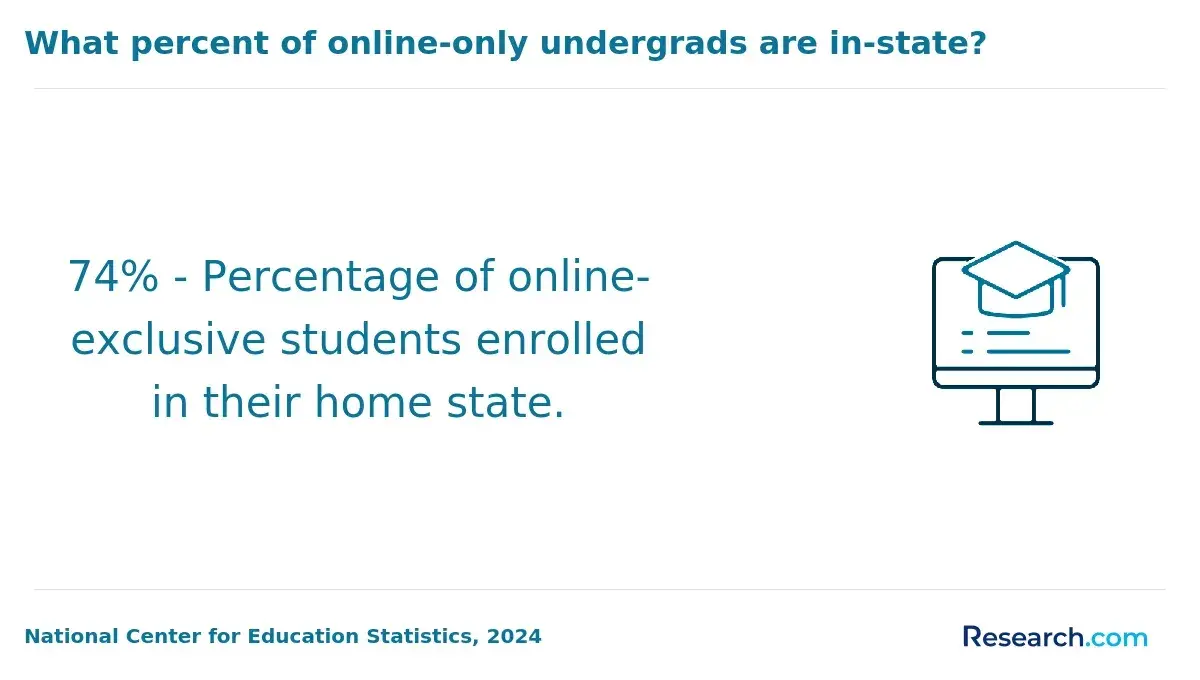
Physicists are employed most heavily in research-intensive settings. According to the BLS Occupational Outlook Handbook, the largest employment settings for physicists and astronomers include scientific research and development services, the federal government, and colleges and universities. That distribution matters because the best state for a physics graduate often depends on whether the student wants government research, industry R&D, academia, or an applied technical role.
The following employer categories are especially important for physics graduates because they shape hiring requirements, degree expectations, and advancement pathways.
| Employer setting | Common job titles | Typical degree expectation | What the work often involves |
| Scientific R&D organizations | Research scientist, applied physicist, computational scientist, materials researcher | Master's or PhD for research; bachelor's for technician or analyst routes | Experiments, modeling, prototype testing, technical reports, grant or contract work |
| Federal laboratories and agencies | Physicist, national lab researcher, systems analyst, nuclear researcher | Often master's or PhD; some bachelor's-level technical roles | Mission-driven research, defense, energy, measurement science, national security applications |
| Colleges and universities | Professor, postdoctoral researcher, lab manager, research associate | PhD for faculty; bachelor's or master's for lab support | Teaching, publishing, mentoring, running experiments, securing research funding |
| Aerospace and defense companies | Systems engineer, optical engineer, modeling analyst, test engineer | Bachelor's for some entry roles; graduate degree for advanced R&D | Simulation, testing, sensors, propulsion support, navigation, defense systems |
| Healthcare and medical technology | Medical physicist, imaging scientist, radiation safety specialist | Graduate degree and specialized training are often required for clinical roles | Radiation therapy planning, imaging systems, safety protocols, quality assurance |
| Technology and semiconductor firms | Process engineer, quantum engineer, data scientist, device physicist | Bachelor's to PhD depending on role seniority | Device testing, algorithms, sensors, chips, data analysis, materials behavior |
The main takeaway is that "physics employment" is broader than the physicist occupation. States with fewer formal physicist openings may still offer strong prospects if they have engineering, computing, energy, medical imaging, or defense employers that value physics-based problem solving.
What education do physics careers usually require?
Physics careers usually require more education than many other STEM paths, especially for research-heavy jobs. The typical entry-level education for physicists is a doctoral or professional degree according to BLS occupational guidance, but that does not mean every physics graduate needs a PhD. The right credential depends on the job target.
The table below compares common physics education levels and the career paths they usually support. This helps students avoid overpaying for a degree they do not need or underpreparing for a role that requires advanced training.
| Education level | Typical timeline | Career paths it can support | Best fit |
| Bachelor's in physics | About 4 years full time | Lab technician, data analyst, test engineer, software-adjacent roles, teaching assistant routes, entry engineering support | Students who want flexibility or plan to add applied skills, internships, or graduate study later |
| Master's in physics or applied physics | About 1 to 2 years after a bachelor's | Research associate, applied scientist, optical engineer, instrumentation specialist, technical analyst | Students who want stronger industry prospects without committing to a full PhD |
| PhD in physics | Often 5 or more years after a bachelor's | Physicist, principal investigator, research scientist, professor, national lab researcher | Students aiming for advanced research, academia, national labs, or deep R&D roles |
| Professional or specialized graduate pathway | Varies by field | Medical physicist, patent-related technical roles, engineering management, data science leadership | Graduates with a specific applied outcome in mind |
Cost should be part of the decision. College Board's 2024-25 tuition and fee averages show public four-year in-state tuition at $11,610, public four-year out-of-state tuition at $30,780, and private nonprofit four-year tuition at $43,350. For physics students, that means an in-state public option with strong labs, undergraduate research, and transfer pathways may produce better value than a higher-priced program with weaker career infrastructure.
Before enrolling, compare programs using a career-readiness checklist rather than prestige alone.
- Check whether undergraduates can join research labs early, not only in senior year.
- Ask how many physics majors complete internships, REU programs, co-ops, or industry projects.
- Review advanced electives in quantum mechanics, optics, computational physics, electronics, statistical mechanics, and materials.
- Compare placement outcomes for bachelor's graduates separately from master's and PhD graduates.
- Confirm whether the program supports careers outside academia, including engineering, data, finance, healthcare, and government research.
Which physics degree path leads to better job prospects?
The best physics degree path depends on the kind of job growth you want. A traditional physics degree is strong for research preparation, but an applied physics, engineering physics, computational physics, or double-major route may be better for students who want faster entry into industry roles.
This comparison shows how common degree paths align with job prospects and trade-offs.
| Degree path | Strengths | Trade-offs | Best career fit |
| Traditional physics | Strong theoretical foundation and graduate-school preparation | May require extra applied projects for industry hiring | Graduate school, research, teaching, national labs |
| Applied physics | Connects physics to devices, materials, optics, energy, and technology | May be less theory-intensive than a traditional track | R&D, instrumentation, photonics, semiconductor roles |
| Engineering physics | Combines physics depth with engineering problem-solving | Program structure varies widely by school | Aerospace, systems, defense, energy, advanced manufacturing |
| Computational physics | Builds modeling, simulation, and programming depth | Requires sustained coding and math skill development | Data science, AI modeling, national labs, computational research |
| Physics plus electrical engineering | Strong for electronics, signals, optics, semiconductors, and hardware | Can be more credit-intensive and demanding | Quantum hardware, photonics, chips, sensors, robotics |
Students who enjoy physics but want a more direct engineering labor-market path should compare curricula carefully. An online electrical engineering degree ranking can be useful when evaluating programs that emphasize circuits, systems, electronics, and hardware-oriented career outcomes.
Common mistakes include assuming a physics degree automatically leads to a physicist job, delaying programming coursework, and ignoring internships until senior year. A smarter approach is to decide early whether you want research, engineering, computing, healthcare, or teaching, then choose electives and projects that point in that direction.
How do online and campus physics programs compare?
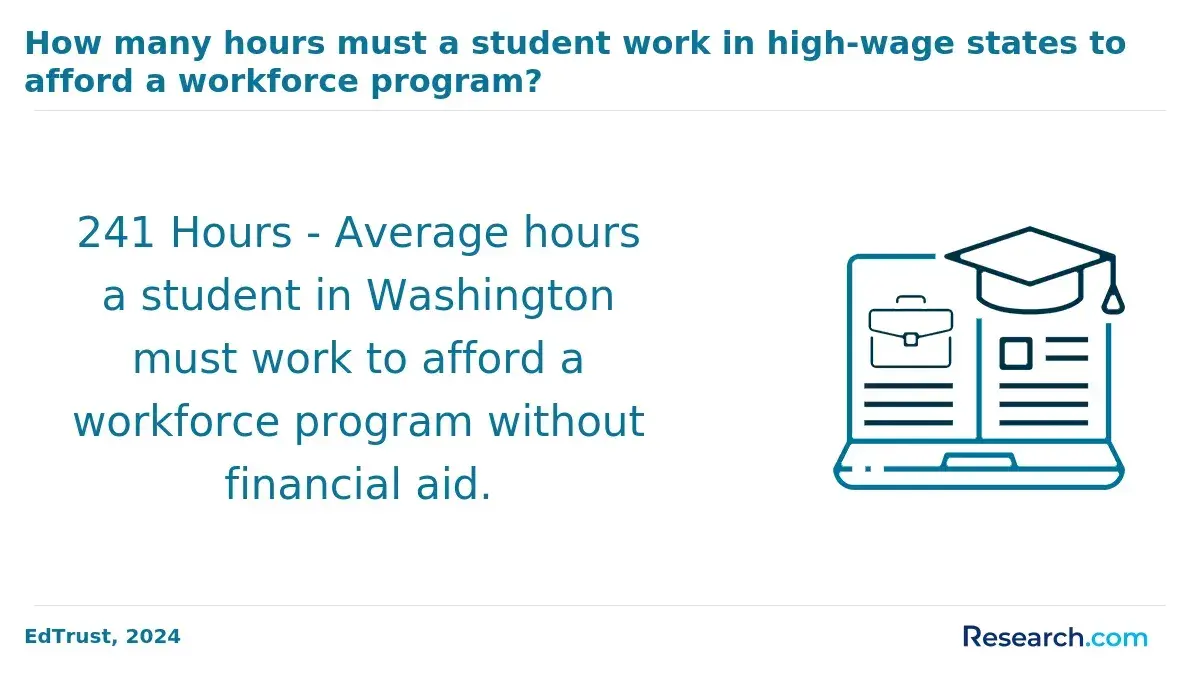
Online and campus physics programs can both be useful, but they do not serve the same student needs. Physics is lab-heavy, math-intensive, and often research-based, so the format should be evaluated by the quality of labs, faculty access, research opportunities, transfer policies, and employer recognition.
The table below compares online and campus formats for physics students who are trying to balance cost, schedule, and career outcomes.
| Program format | Advantages | Limitations | Best fit |
| Campus physics program | Direct lab access, faculty mentoring, research groups, peer collaboration, easier path to advanced lab work | Less scheduling flexibility and potentially higher relocation or housing costs | Traditional students, future PhD applicants, lab-focused learners |
| Online physics program | Flexible scheduling, useful for working adults, may reduce relocation costs, can support degree completion | Must verify lab delivery, research access, and transferability of credits | Adult learners, transfer students, military students, or students with local lab options |
| Hybrid physics program | Combines online theory courses with campus or local lab sessions | May require travel for intensives or scheduled lab blocks | Students needing flexibility without giving up hands-on training |
| Online adjacent STEM program | Can provide stronger career alignment for some applied goals | May not prepare students for physics graduate programs | Students targeting engineering, data, library information systems, or technical support roles |
An online degree in physics can make sense for students who need flexibility, already have access to local lab experience, or want to finish a bachelor's degree while working. It may be a weaker fit for students who need intensive experimental research, faculty recommendations for PhD admissions, or specialized equipment access.
If your long-term interest is research organization, archives, scientific information management, or academic library work rather than laboratory physics, a library science degree online may be a more direct graduate pathway than continuing deeper into physics.
Before choosing an online or hybrid format, ask admissions advisors specific questions instead of relying on marketing claims.
- How are laboratory courses completed, and are any campus visits required?
- Can online students join research groups, publish posters, or receive faculty research mentoring?
- Are upper-division physics courses offered regularly enough to graduate on time?
- Do credits transfer into graduate physics, engineering, or education programs?
- What career outcomes are reported for online physics students specifically?
What should physics curricula include for career readiness?
A career-ready physics curriculum should do more than cover classical mechanics and electromagnetism. Strong programs help students convert physics thinking into technical output: code, experiments, models, measurements, reports, presentations, and collaborative projects.
Look for curricula that include the following elements because they directly affect employability in strong physics states and adjacent technical fields.
- Core physics depth in mechanics, electromagnetism, quantum mechanics, thermodynamics, statistical mechanics, optics, and advanced laboratory methods.
- Mathematics through differential equations, linear algebra, probability, statistics, numerical methods, and complex variables when available.
- Programming experience in Python, C++, MATLAB, Julia, or similar tools used for modeling, simulation, data analysis, and automation.
- Electronics, instrumentation, sensors, signal processing, vacuum systems, lasers, or other hands-on technical skills relevant to R&D employers.
- Research or capstone projects that require students to define a problem, collect or model data, analyze uncertainty, and communicate results.
- Career-facing electives such as computational physics, materials science, semiconductor physics, medical physics, geophysics, biophysics, or machine learning.
AI and automation are changing physics career preparation. Employers increasingly value graduates who can use computational tools, manage large datasets, automate experiments, and evaluate model outputs. Physics students do not need to become software engineers, but they should graduate with enough coding and statistical reasoning to work with technical teams.
Red flags include programs with limited upper-division electives, outdated lab equipment, little undergraduate research, no internship support, and vague career-outcome reporting. If a school cannot explain where recent physics graduates go, ask for department-level outcomes before committing.
What accreditation should physics programs have?
Physics programs at U.S. colleges and universities should be offered by institutions with recognized institutional accreditation. This is the baseline requirement for federal financial aid eligibility, credit transfer, graduate-school recognition, and employer confidence. Unlike some fields, physics does not usually depend on a single required programmatic accreditor for all career paths, but accreditation still matters.
Students should verify accreditation before applying, especially for online, hybrid, transfer, or low-cost programs. Follow these steps to reduce risk.
- Confirm that the institution is accredited by an accreditor recognized by the U.S. Department of Education or the Council for Higher Education Accreditation.
- Ask whether physics credits transfer to public universities, graduate physics programs, engineering programs, or teacher-certification pathways if those are part of your plan.
- Check whether specialized paths, such as engineering physics or medical physics, have additional expectations from employers, graduate programs, or professional boards.
- Review whether online laboratory courses are accepted by graduate schools or licensing-adjacent programs you may pursue later.
- Avoid schools that pressure you to enroll quickly, avoid publishing outcomes, or cannot clearly explain accreditation status.
Medical physics deserves special attention. Clinical medical physicist roles often require graduate education, residency training, and board certification expectations that differ from general physics careers. If that is your goal, speak with programs and professional advisors before choosing an undergraduate or graduate pathway.
What salaries do physics graduates earn by state?
Physics salaries vary by state, job title, employer type, degree level, and whether the graduate works as a physicist or in an adjacent role. The BLS May 2024 median annual wage for physicists was $166,300, but that figure represents the physicist occupation, not every job held by physics majors. Entry-level bachelor's graduates may start in analyst, technician, software, teaching, or engineering support roles that follow different wage patterns.
The table below summarizes salary context by state group rather than promising exact outcomes. This is the safer way to use salary data because some states have small physicist samples and many physics graduates are counted under other occupational titles.
| State or state group | Salary outlook for physics graduates | Why pay can be stronger | What to verify before relocating |
| California | Often one of the strongest salary markets for advanced physics and adjacent technical roles | High-cost technology, aerospace, semiconductor, national lab, and R&D employers | Cost of living, lab location, commuting, and whether the role is research or engineering-titled |
| New Mexico | Strong for national lab and federal research pathways | High concentration of laboratory, defense, energy, and computational research activity | Security-clearance requirements, citizenship requirements for some roles, and rural or specialized lab locations |
| Maryland and Virginia | Strong for federal, defense, space, and contractor roles | Federal agencies, contractors, research centers, and technical consulting employers | Clearance expectations, contractor stability, and whether roles require graduate degrees |
| Colorado | Competitive for optics, aerospace, quantum, and atmospheric science-related roles | Federal labs, aerospace employers, photonics firms, and research universities | Housing costs near major research corridors and required specialization |
| Massachusetts | Strong for advanced research, biotech, imaging, robotics, and university-linked roles | Dense academic and private R&D ecosystem | Whether the role requires a graduate degree and whether postdoctoral pay fits living costs |
| Texas | Strong applied-physics potential across energy, chips, aerospace, and healthcare | Large industrial base, research universities, semiconductor expansion, and medical centers | Industry fit, location, and whether the job is classified as engineering, data, or physics |
| Washington | Strong for physics graduates with computing, aerospace, or energy modeling skills | Cloud, aerospace, advanced computing, and technology employers | Programming expectations and competition with computer science and engineering graduates |
When comparing salaries, focus on net opportunity rather than headline pay. A higher salary in a high-cost metro may not create better financial outcomes than a slightly lower salary in a lower-cost state with strong research employers. Students comparing different majors should also look at field-specific salary patterns; for example, an online animal science degree salary guide can help show how earnings vary across science-related fields with different employer bases.
The smartest salary comparison includes five factors: degree cost, time to full-time employment, graduate-school funding, local cost of living, and whether the job builds skills that transfer to higher-paying roles later.
What certifications help physics graduates advance careers?
Physics graduates do not usually need a general physics license to work in research or industry, but certifications can help when they point to a specific career direction. The best credential is the one employers in your target state and sector actually recognize.
The table below summarizes certifications and credentials that may help physics graduates advance in applied fields.
| Credential or certification area | Useful for | When it makes sense | Important caution |
| Medical physics board pathway | Clinical medical physics, radiation oncology, imaging, radiation safety | When the goal is patient-facing or clinical medical physics work | Requirements can include accredited graduate education, residency, and board certification steps |
| Professional Engineer pathway | Engineering physics, systems engineering, energy, infrastructure, technical consulting | When the role overlaps with regulated engineering practice | Eligibility varies by state and degree type; physics graduates should check state board rules early |
| Data science or cloud certifications | Computational physics, modeling, AI, analytics, research software, technical product roles | When paired with real projects, code samples, and statistical understanding | Certificates alone rarely replace a strong portfolio or degree preparation |
| Project management credentials | R&D project coordination, lab management, defense contracting, technical leadership | After gaining technical experience and moving toward team or program responsibility | Usually more valuable mid-career than immediately after a bachelor's degree |
| Radiation safety training | Labs, hospitals, nuclear facilities, imaging, regulatory compliance | When working around radiation sources or safety-sensitive environments | Employer-specific and state-specific training may still be required |
Physics graduates should be careful not to collect unrelated certificates. A focused project, internship, publication, or lab role often carries more weight than a generic credential. Choose certifications only after identifying the job titles, employers, and state requirements you plan to target.
Other Things You Should Know About Physics
Physics can be a strong major for career growth if students build applied skills in programming, data analysis, instrumentation, engineering, or research. The strongest outcomes often come from combining physics depth with internships, lab work, and a clear target field.
California offers the broadest mix of research, technology, aerospace, semiconductor, and national lab opportunities. New Mexico, Maryland, Colorado, Massachusetts, Virginia, Washington, and Texas are also strong depending on the student's specialization.
You usually need a PhD for physicist, professor, and advanced research scientist roles. A bachelor's or master's can still lead to strong applied careers in engineering support, data analysis, optics, software, instrumentation, healthcare technology, and defense contracting.
References
- Become a Physicist https://careers.cap.ca/becomeaphysicist.html
- The Australian Institute of Physics https://www.aip.org.au/ACCREDITATION
- CAMPEP: Commission on Accreditation of Medical Physics Educational Programs, Inc. https://www.campep.org/
- 5 High-Paying Careers in Physics https://vault.com/blogs/salary-and-benefits/5-high-paying-careers-in-physics
- Who accredits Physics/Astronomy programs? https://www.physicsforums.com/threads/who-accredits-physics-astronomy-programs.546371/
- Careers in Physics https://letstalkscience.ca/educational-resources/lessons/careers-in-physics
- Physics Employment Facts https://www.compadre.org/careers/facts.cfm
- Accreditation, Validation and Recognition of Physics Degrees https://telescoper.blog/2022/09/19/accreditation-validation-and-recognition-in-physics-degrees/
- Top jobs with a physics degree https://www.surrey.ac.uk/news/top-jobs-physics-degree