2027 Physics Roles at the Center of AI-Enabled Scientific Modeling

Co-Founder and Chief Data Scientist
Physics students now face a strategic choice: stay on a traditional research track or build AI and simulation skills for scientific modeling roles. The timing matters because the U. S. Bureau of Labor Statistics projects computer and information research scientist employment to grow 20% from 2024 to 2034, a signal that advanced modeling, algorithms, and scientific computing are gaining labor-market value.
This guide is for students, career changers, and working scientists who want to compare degrees, skills, costs, salaries, and job paths before committing time and money.
Key Things You Should Know
- Physics AI roles usually require strong physics fundamentals plus coding, numerical methods, machine learning, and high-performance computing; a bachelor's degree can open technician or analyst roles, while research scientist roles often expect a master's or PhD.
- Pay varies widely by role: BLS 2024 wage data places physicists at a median annual wage of about $166,290, while data scientists sit at about $112,590, so job title and industry matter as much as the degree name.
- Program choice should be based on accreditation, research access, computing curriculum, lab or simulation experience, and total cost; College Board 2024-25 data lists average published tuition and fees at $11,610 for in-state public four-year colleges and $43,350 for private nonprofit four-year colleges.
What are physics roles in AI-enabled scientific modeling?
Physics roles in AI-enabled scientific modeling combine physical laws, computational simulation, and machine learning to understand systems that are too complex, expensive, or slow to study only through experiments. Instead of replacing physics, AI usually acts as a speed and pattern-recognition layer: it helps approximate equations, optimize parameters, detect anomalies, reduce simulation time, or analyze large experimental datasets.
Common examples include using neural networks to accelerate fluid simulations, applying Bayesian methods to particle physics data, training surrogate models for materials discovery, or using physics-informed machine learning to keep predictions consistent with conservation laws. The strongest candidates understand both sides of the work: the scientific assumptions behind a model and the computational limits of the tools used to run it.
The table below separates related terms that are often used interchangeably. Understanding the difference helps you choose the right degree path, portfolio projects, and job titles to target.
| Term | What it means | Why it matters for career planning |
| Scientific modeling | Representing a physical system with equations, algorithms, or simulations | Core skill for physics, engineering, climate, energy, and aerospace roles |
| Computational physics | Using numerical methods and code to solve physics problems | Often the bridge between a physics degree and modeling jobs |
| AI-enabled modeling | Using machine learning to improve, approximate, or analyze scientific models | Valuable when simulations generate large datasets or require faster prediction |
| Physics-informed AI | Machine learning constrained by known physical laws or equations | Important in high-stakes settings where black-box predictions are risky |
| Digital twin | A computational model that mirrors a real system using live or historical data | Common in manufacturing, energy, aerospace, defense, and infrastructure |
For students who want a physics-first route but need flexibility, an online theoretical physics degree can be a starting point if it includes calculus-based physics, linear algebra, programming, and research or simulation opportunities. The key is not the delivery format alone; it is whether the curriculum gives you enough mathematical and computational depth.
Which physics careers use AI and simulation?
Physics AI and simulation careers sit across national labs, universities, defense contractors, semiconductor companies, climate and energy organizations, biotech firms, software companies, and advanced manufacturing. Job titles vary, so applicants should search both physics-specific titles and broader computational titles.
The table below shows career options that commonly use physics, AI, and simulation together. Use it to match your interests with realistic education expectations and daily responsibilities.
| Career path | Typical responsibilities | Common employers | Usual education level |
| Computational physicist | Build simulations, test numerical methods, analyze model accuracy, publish or document findings | National labs, universities, aerospace, defense, energy | Master's or PhD for research-heavy roles |
| AI research scientist in scientific computing | Develop machine learning models for scientific datasets, simulation acceleration, or inverse problems | Technology firms, national labs, research institutes | PhD often preferred |
| Data scientist for scientific applications | Clean experimental data, build predictive models, visualize uncertainty, communicate results | Biotech, climate tech, energy, materials, healthcare technology | Bachelor's to master's |
| Simulation engineer | Run finite element, computational fluid dynamics, electromagnetic, or multiphysics simulations | Automotive, aerospace, robotics, manufacturing | Bachelor's or master's in physics, engineering, or applied math |
| Materials informatics specialist | Use AI to predict material properties, screen compounds, and guide experiments | Semiconductors, batteries, chemicals, advanced materials | Master's or PhD often preferred |
| Quantitative researcher | Apply stochastic modeling, optimization, and statistical learning to financial systems | Finance, trading firms, risk analytics companies | Master's or PhD common |
A physics background can be especially powerful in data-heavy roles when paired with statistics and machine learning. If your preferred path leans more toward predictive analytics than laboratory or theory work, comparing physics programs with a data scientist degree can help you decide whether to prioritize domain science or applied analytics.
One common mistake is searching only for the word "physicist." Many relevant jobs are posted as research scientist, scientific machine learning engineer, simulation engineer, computational scientist, AI scientist, modeling analyst, or applied scientist. A smarter approach is to search by required skills, such as Python, PyTorch, numerical methods, differential equations, CUDA, uncertainty quantification, or computational fluid dynamics.
What degree is needed for AI physics jobs?
The degree needed for AI physics jobs depends on how close the role is to original research. A bachelor's degree can qualify candidates for technical analysis, software-adjacent, laboratory computing, or junior modeling roles. A master's degree is often useful for simulation engineering, applied data science, and industry modeling roles. A PhD is commonly expected for principal scientist, faculty, national lab research, and advanced AI research roles.
The table below compares degree levels by career fit. This can help you avoid overpaying for credentials you do not need or underpreparing for research roles that are highly competitive.
| Degree level | Best fit | Advantages | Limitations |
| Bachelor's in physics, applied physics, engineering physics, computer science, or applied math | Entry-level analyst, lab computing assistant, junior simulation support, technical software roles | Fastest route into the workforce and can be paired with projects or internships | May not be enough for independent research scientist roles |
| Master's in physics, computational science, data science, applied math, or engineering | Simulation engineer, applied scientist, scientific data scientist, modeling specialist | Balances specialization with shorter time commitment than a PhD | Research depth varies by program and thesis options |
| PhD in physics, applied physics, computational science, or related field | Research scientist, national lab scientist, faculty track, advanced AI modeling research | Strongest preparation for independent research and specialized scientific problems | Long timeline and opportunity cost; not necessary for every industry role |
| Graduate certificate or professional certificate | Working physicists or engineers adding AI, data science, cloud, or HPC skills | Lower cost and shorter timeline than a full degree | Usually not a substitute for a research degree in PhD-level roles |
If you are deciding between physics and computing, look at the job descriptions you want before choosing the major. Roles that emphasize model architecture, production machine learning, distributed systems, or software infrastructure may be better served by an online CS degree with physics electives or research projects.
A practical rule is to choose the degree that matches the hardest requirement in your target job. If postings require "PhD in physics, applied math, or related field," a short certificate is unlikely to be enough. If postings require Python, statistics, simulation tools, and a quantitative bachelor's degree, a portfolio and internship may matter more than earning another full degree immediately.
How do online and campus physics programs compare?
Online and campus physics programs can both prepare students for AI-enabled modeling, but they are not interchangeable. Campus programs usually provide easier access to laboratories, faculty research groups, instrumentation, and peer study networks. Online programs can work well for students who need flexibility and are focused on theory, computation, data science, or career switching.
The table below compares the formats on decision points that matter for scientific modeling careers. The best choice depends on whether you need hands-on lab infrastructure or mainly computational preparation.
| Factor | Online physics or computational program | Campus physics program |
| Flexibility | Best for working adults, caregivers, military students, and remote learners | Best for students who can attend scheduled labs and seminars |
| Laboratory access | May be limited, hybrid, simulated, or concentrated into short residencies | Usually stronger for experimental physics and instrumentation |
| Computing preparation | Can be strong if the program includes programming, numerical methods, and capstones | Can be strong when tied to faculty research and high-performance computing resources |
| Networking | Depends heavily on virtual research groups, online office hours, and career services | Often easier through seminars, labs, assistantships, and campus recruiting |
| Best fit | Computational modeling, data science, theory-focused paths, career upskilling | Experimental research, PhD preparation, lab-intensive specialization |
Before enrolling online, confirm whether the program is institutionally accredited, whether physics labs meet graduate school prerequisites, and whether students can join research or capstone projects. A red flag is a program that advertises "AI physics careers" but offers only introductory programming without calculus-based physics, statistics, or numerical modeling.
Campus programs are not automatically better, either. A campus degree with weak computing options may be less useful for AI modeling than an online or hybrid program with strong Python, machine learning, simulation, and research mentorship. Compare actual course catalogs, not marketing language.
What coursework prepares students for physics AI modeling?
The strongest preparation for physics AI modeling comes from a layered curriculum: physics for domain understanding, mathematics for model structure, computing for implementation, and statistics for uncertainty. Students should look for courses that lead to projects, not just exams, because employers and graduate advisors often want evidence that you can build and evaluate models.
Use the following coursework checklist to identify whether a program is aligned with AI-enabled scientific modeling. Missing one area does not automatically disqualify a program, but repeated gaps may require you to add electives, certificates, or independent projects.
- Physics core: classical mechanics, electromagnetism, quantum mechanics, thermodynamics and statistical mechanics, optics, and advanced laboratory or computational physics.
- Mathematics: calculus, linear algebra, differential equations, probability, numerical analysis, optimization, and complex variables when relevant.
- Computing: Python, C++ or Julia, data structures, algorithms, version control, Linux, parallel computing, and high-performance computing basics.
- AI and statistics: machine learning, deep learning, Bayesian inference, uncertainty quantification, statistical learning, and model validation.
- Scientific modeling: computational fluid dynamics, finite element methods, Monte Carlo methods, molecular dynamics, inverse problems, or physics-informed neural networks.
- Communication: technical writing, reproducible research, visualization, scientific presentation, and collaborative software documentation.
A good portfolio should show how you reason, not only that you can run a model. Strong projects explain the physical system, assumptions, equations or data sources, validation strategy, uncertainty, and limitations. For example, a project that compares a numerical solver with a neural network surrogate is more convincing when it explains when the AI model fails.
Students often overlook scientific information management, but large modeling teams depend on reproducible datasets, metadata, documentation, and research curation. If your interests include data stewardship for research organizations, a masters in library science with data curation or informatics coursework may complement a technical background in specialized scientific information roles.
What admissions requirements do physics programs expect?
Admissions requirements vary by degree level and school, but physics and computational science programs usually look for evidence that applicants can handle advanced math and technical problem-solving. Competitive graduate programs may also evaluate research experience, letters from faculty, and fit with available advisors.
The table below summarizes common admissions expectations. Always verify requirements with the program because prerequisites, test policies, and funding rules can change by institution.
| Program type | Common academic requirements | Application materials | What strengthens an application |
| Bachelor's in physics or related field | High school algebra, trigonometry, precalculus or calculus, lab science, and strong quantitative preparation | Transcript, application essay, recommendations if required, test scores if required | AP or dual-enrollment calculus, physics activities, coding projects, research camps |
| Master's in physics, computational science, or data science | Bachelor's degree with calculus, linear algebra, differential equations, physics or quantitative coursework | Transcript, statement of purpose, recommendations, resume, sometimes GRE or portfolio | Research experience, Python or C++ projects, strong grades in upper-level math and physics |
| PhD in physics or applied physics | Advanced undergraduate physics and math preparation; research alignment with faculty | Statement of purpose, research experience, recommendations, transcript, sometimes GRE subject or general scores | Publications, presentations, research assistantships, strong faculty fit |
| Graduate certificate in AI, data science, or scientific computing | Bachelor's degree and prerequisite programming or statistics, depending on program | Transcript, short statement, resume, sometimes proof of technical prerequisites | Professional experience, completed prerequisite courses, applied projects |
Applicants should take these steps before applying so they do not waste application fees or enter a program with missing prerequisites.
- Choose three to five target job titles and collect real job postings from employers you would consider.
- List the repeated degree, programming, math, and research requirements from those postings.
- Compare those requirements with each program's required courses, electives, labs, and capstone or thesis options.
- Ask admissions advisors whether online students, transfer students, or part-time students can access research mentors and computing resources.
- Confirm institutional accreditation and, when relevant, whether credits transfer into graduate programs.
A common red flag is a program that accepts students without checking math readiness but then requires advanced calculus-based courses immediately. If you have been away from school, consider refreshing calculus, linear algebra, and programming before enrolling full time.
How long and how much do physics degrees cost?
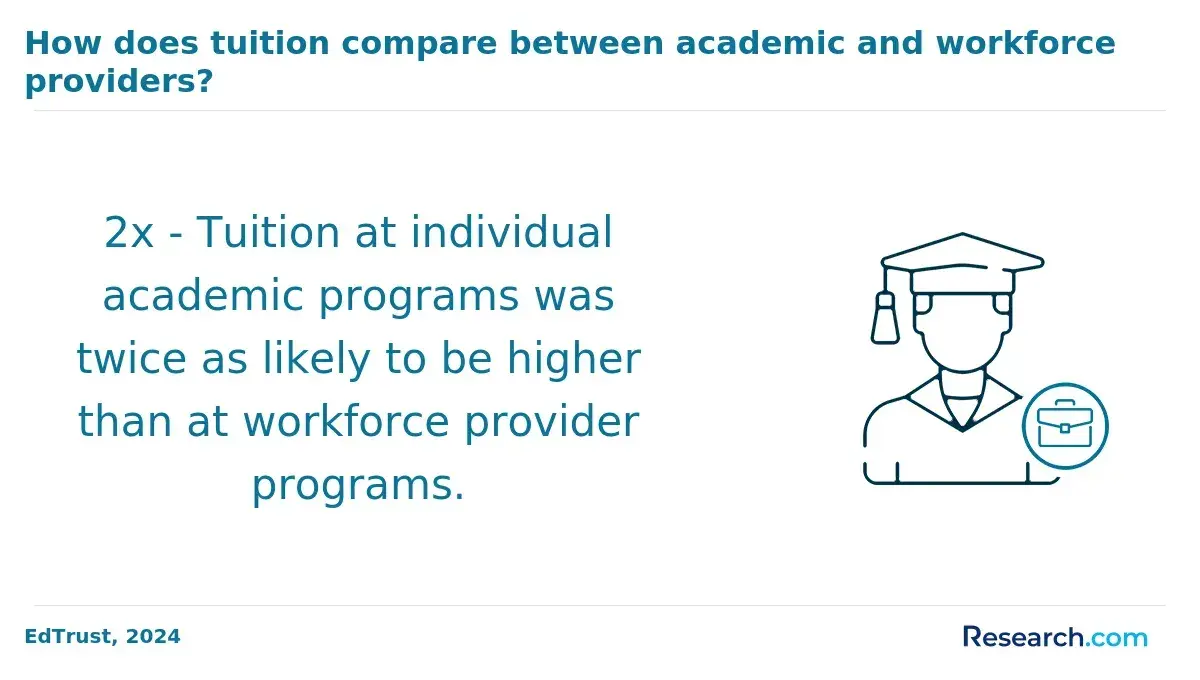
Physics degrees can range from a four-year bachelor's program to a PhD that takes several additional years after undergraduate study. Cost depends on residency, institution type, transfer credits, assistantships, lab fees, computing fees, and whether you study full time or part time. College Board 2024-25 data lists average published tuition and fees at $11,610 for in-state public four-year institutions and $43,350 for private nonprofit four-year institutions, which means school choice can change total cost dramatically before aid is applied.
The table below gives a practical comparison of timeline and cost drivers. It does not predict your final bill, but it shows which variables to compare before enrolling.
| Path | Typical time commitment | Main cost drivers | Cost-control strategies |
| Bachelor's degree | About four years full time; less with transfer credit or accelerated options | Tuition, fees, housing, labs, textbooks, computing equipment | Start at community college, use transfer pathways, compare in-state options, apply for need-based and merit aid |
| Master's degree | Usually one to three years depending on format and thesis requirements | Graduate tuition, research fees, software or computing costs, lost work time | Seek employer tuition benefits, assistantships, public universities, part-time options |
| PhD | Often five or more years after bachelor's study, depending on research progress | Opportunity cost, relocation, funding package, health fees, conference travel | Prioritize funded offers, compare stipend and cost of living, ask about summer support |
| Certificate or bootcamp-style upskilling | A few months to about one year | Program fees, software subscriptions, time away from work | Use employer support, choose stackable credits, avoid noncredit programs that do not match job requirements |
To evaluate return on investment, compare total net cost against the roles you realistically qualify for at graduation. Do not use the highest possible AI salary as your baseline. Use entry-level or mid-level postings in your region and industry, then factor in whether the degree gives you research access, internships, assistantships, or a portfolio that employers can evaluate.
Students should also watch for hidden costs. High-performance computing access, required software, summer research travel, conference attendance, and unpaid internships can affect affordability. A lower-tuition program may not be the best value if it lacks the research or computing infrastructure needed for your target role.
Which certifications help with physics AI careers?
Most physics AI careers do not require a state license, but certifications can help prove specific technical skills. They are most useful when they fill a gap in your degree, support a career pivot, or show readiness for tools used in industry. They are less useful when they replace core physics, math, or research preparation that the job clearly requires.
The table below lists certification areas that can strengthen a physics AI profile. Choose credentials based on job postings, not brand recognition alone.
| Certification area | Best for | What it signals | Limitations |
| Cloud computing | Scientific data pipelines, scalable modeling, deployment of AI tools | Ability to work with cloud storage, compute, and production workflows | Does not prove physics or modeling expertise |
| Machine learning or AI engineering | Data science, applied AI, surrogate modeling, model evaluation | Familiarity with ML workflows, model training, and evaluation | Quality varies; projects matter more than certificates alone |
| High-performance computing | Simulation, climate modeling, computational physics, national lab work | Experience with parallel computing, clusters, GPUs, or scientific workflows | May be tool-specific and should be paired with numerical methods |
| Vendor software for simulation | Engineering simulation, finite element analysis, computational fluid dynamics | Competence with industry simulation platforms | Can be narrow if you do not understand the underlying physics |
| Data management and reproducible research | Research computing, scientific data stewardship, collaborative modeling teams | Ability to document, preserve, and reproduce computational work | Usually complements rather than replaces technical modeling skills |
When deciding between a certificate and a degree, ask what problem you are trying to solve. A certificate makes sense if you already have the physics or quantitative foundation and need cloud, ML, or software proof. A degree makes more sense if job postings show that you lack the required academic credential or research preparation.
A common mistake is collecting certificates without building a coherent portfolio. A stronger strategy is to complete one or two credentials while creating projects that connect physics and AI, such as a physics-informed neural network, a Monte Carlo simulation, or an uncertainty analysis workflow.
What salaries do physics AI roles pay?
Salaries for physics AI roles depend on job title, degree level, industry, location, security clearance requirements, and whether the work is research, engineering, analytics, or software-focused. BLS 2024 wage data places physicists at a median annual wage of about $166,290, but that figure should not be treated as a guaranteed outcome for every physics graduate because many adjacent roles use different occupational categories.
The table below uses U.S. occupational wage categories that commonly overlap with AI-enabled scientific modeling. Use it as a salary context map, then compare local postings for the exact roles you want.
| Related occupation | Why it overlaps with physics AI modeling | 2024 median annual wage | Salary interpretation |
| Physicists | Research, modeling, instrumentation, and theory-heavy scientific work | About $166,290 | Most relevant to advanced physics research roles, often requiring graduate education |
| Computer and information research scientists | AI methods, algorithms, scientific computing, and advanced computational research | About $140,910 | Relevant when the role emphasizes new computational methods or AI research |
| Data scientists | Statistical modeling, machine learning, large scientific datasets, prediction | About $112,590 | Relevant for applied analytics roles using physics-domain data |
| Software developers | Scientific software, simulation tools, AI infrastructure, model deployment | About $133,080 | Relevant when the job is more software engineering than physics research |
| Postsecondary physics teachers | Academic teaching and research in physics departments | Varies by institution and rank | Faculty compensation depends heavily on tenure status, institution type, and research funding |
Industry can change compensation as much as education. Technology, finance, defense, semiconductor, and advanced manufacturing employers may pay differently from universities or nonprofit research organizations. However, higher pay may come with trade-offs such as proprietary work, security clearance requirements, less publication freedom, or stronger software engineering expectations.
For negotiation and planning, build a salary range from multiple sources: federal wage data, recent job postings, alumni outcomes, and cost-of-living differences. Avoid assuming that "AI" automatically means top-tier compensation; employers usually pay for a specific combination of domain expertise, production skills, research maturity, and business value.
What is the job outlook for physics modeling roles?
The job outlook for physics modeling roles is positive but uneven. BLS projections for 2024 to 2034 show computer and information research scientists growing 20%, which is much faster than the average for all occupations and reflects demand for advanced computing and AI research. Physics-specific roles are smaller and more specialized, so candidates often improve their prospects by targeting adjacent titles in data science, engineering simulation, scientific software, and applied research.
The strongest labor-market trend is convergence: employers increasingly want scientists who can code, validate models, work with large datasets, and communicate uncertainty. That does not mean every physicist must become a software engineer, but it does mean that computational fluency is becoming a baseline advantage.
Readers considering this path should use the following steps to improve employability while avoiding common mistakes.
- Pick a domain focus, such as climate, fusion, semiconductors, aerospace, quantum information, medical physics, materials, or finance, instead of trying to be a generic AI physicist.
- Build a portfolio with two or three substantial projects that show physics reasoning, code quality, model validation, and clear documentation.
- Seek research assistantships, internships, national lab programs, industry co-ops, or faculty-led computational projects before graduation.
- Learn to explain uncertainty, assumptions, and failure modes because scientific employers value trustworthy models over flashy predictions.
- Compare job postings every semester and adjust electives toward repeated requirements such as Python, C++, PyTorch, CUDA, Bayesian methods, or finite element analysis.
This career path is a strong fit for people who enjoy mathematics, coding, scientific questions, and long-term problem solving. It may not be the best fit for students who dislike abstract math, want immediate entry into high-paying AI roles without graduate study, or prefer purely hands-on lab work without computational analysis.
The smartest next step is to choose a target role first, then work backward to the degree, projects, and credentials that role requires. Physics AI modeling rewards depth, but only when that depth is connected to usable computational skills and real scientific problems.
Other Things You Should Know About Physics
Online physics degrees can be respected for AI modeling roles if they are from accredited institutions and include relevant coursework in machine learning, data science, and AI techniques. Employers often value the skills and projects demonstrated over the mode of delivery of the degree.
Not always. A bachelor's or master's degree can lead to data science, simulation, and technical modeling roles. A PhD is more common for independent research scientist, national lab, faculty, or advanced AI research positions.
Python is the most important starting point because it is widely used in machine learning and scientific computing. C++, Julia, SQL, Linux, Git, and GPU-related tools can also be valuable depending on the role.
References
- Physics Jobs in AI â Train Smarter Models | Remote Opportunities $30-70/hr â Mindrift https://mindrift.ai/blog/wave-of-physics-jobs
- Quantum Salary FAQ: How Much Do Quantum Jobs Pay? https://www.quantumjobs.us/quantum-jobs-salary-faqs
- Top Programs to Boost Your Artificial Intelligence Career - INSPYR Solutions https://www.inspyrsolutions.com/top-programs-to-boost-your-artificial-intelligence-career/
- Course Syllabus https://elearning.unimib.it/course/info.php
- Physicist https://www.developingexperts.com/career-builder/704
- A Virtuous Cycle: Generative AI and Discovery in the Physical Sciences https://mit-genai.pubpub.org/pub/ewp5ckmf
- Physics AI Training Careers | OpenTrain AI https://www.opentrain.ai/ai-training-careers/physics/
- Careers in modeling and simulation? https://www.physicsforums.com/threads/careers-in-modeling-and-simulation.244836/
- PhysicsX | Careers https://www.physicsx.ai/careers
- Expanding Role of AI in Physics - Toolshero.com https://www.toolshero.com/featured-posts/ai-development-in-physics/