2027 How to Choose an Online Physics Degree for Aerospace Careers

Co-Founder and Chief Data Scientist
Choosing an online physics degree for aerospace careers is a high-stakes decision because the right program can open doors in propulsion, flight testing, orbital mechanics, sensors, and space systems. The U. S. Bureau of Labor Statistics reported a May 2024 median annual wage of $134,830 for aerospace engineers, showing why students want a path into this field.
This guide is for prospective undergraduates, career changers, military-affiliated learners, and working adults who need a practical way to compare programs, costs, accreditation, skills, and career outcomes before enrolling.
Key Things You Should Know
- An online physics degree can support aerospace careers when it includes advanced math, classical mechanics, electromagnetism, computational modeling, laboratory work, and opportunities for research or internships.
- Program quality matters more than format: look for institutional accreditation, strong physics faculty, accessible labs, transfer-credit policies, career services, and aerospace-relevant electives.
- Use outcomes cautiously: BLS May 2024 data shows median pay of $134,830 for aerospace engineers and $166,290 for physicists, but actual roles and pay depend on degree level, clearance eligibility, location, employer, and experience.
How does an online physics degree prepare you for aerospace careers?
An online physics degree prepares students for aerospace work by building the scientific foundation behind flight, propulsion, orbital motion, sensors, materials, and space environments.
Physics is not the same as aerospace engineering: physics emphasizes why systems behave the way they do, while engineering emphasizes designing, certifying, and manufacturing systems that meet requirements. For aerospace careers, the strongest online physics programs connect theory with computation, experimental methods, and applied problem-solving.
At the bachelor's level, physics can qualify students for technician, analyst, research assistant, systems support, test, or entry-level technical roles, especially when paired with coding and internships.
For research scientist, advanced modeling, instrumentation, or leadership roles, a master's or doctorate may be preferred or required. Students who want a more design-heavy path should compare physics with aerospace, mechanical, or electrical engineering; avionics-focused learners may also want to review options such as electrical engineering programs online for veterans, particularly if they have military training in electronics, radar, aircraft systems, or communications.
The table below compares common online physics-related degree choices and how each one may fit an aerospace goal. Use it to identify whether a program's structure matches the kind of work you want to do after graduation.
| Degree path | Best fit for aerospace goals | Typical strength | Main limitation to check |
| Online bachelor's in physics | Entry-level technical roles, graduate school preparation, test support, data analysis | Strong foundation in mechanics, math, and problem-solving | May need in-person labs, internships, or graduate study for specialized aerospace roles |
| Online applied physics degree | Instrumentation, sensors, optics, materials, simulation, applied research | More practical and technology-oriented than a traditional physics curriculum | Course availability varies widely by school |
| Online engineering physics degree | Systems work, modeling, applied design, technical analysis | Blends physics with engineering methods | May not substitute for an ABET-accredited aerospace or mechanical engineering degree in some engineering roles |
| Online master's in physics or applied physics | Research, modeling, advanced technical roles, space systems analysis | Greater depth in computation, materials, quantum, plasma, or optics topics | Admissions may require a strong undergraduate physics and math background |
The smartest choice depends on the role you want. If you want to design aircraft structures, an engineering degree may be more direct. If you want to model trajectories, analyze sensor data, study plasma behavior, support space instrumentation, or prepare for graduate research, physics can be a strong route.
What types of aerospace jobs can you get with a physics degree?
A physics degree can lead to aerospace roles that rely on modeling, analysis, testing, instrumentation, materials, and research. The degree is especially useful where employers need people who can translate complex physical systems into measurable predictions, simulations, or experimental results.
The table below summarizes common aerospace-adjacent roles for physics graduates. It is not a promise of eligibility, because job titles vary by employer and many positions list specific engineering, graduate degree, citizenship, or clearance requirements.
| Role | What you may do | Typical preparation | Where physics helps most |
| Aerospace systems analyst | Evaluate performance, mission requirements, reliability, or trade studies | Bachelor's or master's in physics, engineering, math, or related field | Mechanics, statistics, modeling, and systems thinking |
| Flight test or test engineer support specialist | Help collect, validate, and interpret test data from aircraft, spacecraft, or components | Physics degree plus lab, instrumentation, coding, and safety experience | Experimental design, measurement, uncertainty, and data analysis |
| Propulsion or plasma research assistant | Support research involving combustion, electric propulsion, high-temperature flow, or plasma behavior | Often bachelor's for assistant roles; graduate degree for research scientist roles | Thermodynamics, electromagnetism, fluid mechanics, and computational methods |
| Remote sensing or payload analyst | Work with imaging systems, optical payloads, radar, infrared sensors, or space-based data | Physics degree plus optics, signal processing, Python, and data tools | Optics, electromagnetism, instrumentation, and statistics |
| Materials or radiation effects technician | Test materials, electronics, or components for aerospace environments | Physics, materials science, or engineering background | Solid-state physics, lab methods, and environmental testing |
| Research physicist | Conduct advanced research in areas such as space physics, plasma physics, optics, or quantum sensing | Usually master's or PhD | Deep theory, original research, and advanced computation |
Physics graduates who add strong programming and statistical skills can also move toward aerospace data roles. If your long-term goal is spacecraft telemetry, simulation analytics, autonomous systems, or mission data pipelines, comparing physics with an online master's in data science can help you decide whether you need more physics depth or more machine learning and data engineering preparation.
For many students, the best strategy is to define the target role first, then choose the degree. Aerospace employers often screen for specific technical keywords, so a physics degree should be supported by relevant projects, lab experience, software tools, and internship evidence.
How should you choose between online and campus physics programs for aerospace?
Online physics programs can work well for aerospace-focused students, especially working adults and learners who cannot relocate. The trade-off is that physics is a lab-heavy discipline, so students must verify how the program handles experiments, equipment, research access, proctored exams, and faculty mentoring.
The table below compares online and campus formats across the factors that matter most for aerospace preparation. It can help you avoid choosing a convenient format that does not support your career goal.
| Decision factor | Online physics program | Campus physics program | Best choice when |
| Schedule flexibility | Stronger for working adults, military learners, and students with family obligations | Less flexible but more structured | Choose online if you need to keep working while studying |
| Laboratory access | May use lab kits, simulations, local lab arrangements, or short residencies | Usually stronger hands-on access to equipment and facilities | Choose campus if advanced lab access is central to your aerospace plan |
| Research opportunities | Possible but requires more initiative and faculty outreach | Often easier to join faculty labs and student research groups | Choose campus if you want a research-intensive path to graduate school |
| Internship logistics | Can be strong if you live near aerospace employers or can travel | May benefit from existing employer pipelines and local recruiting | Choose based on proximity to NASA centers, defense contractors, labs, or aerospace hubs |
| Peer and faculty interaction | Depends heavily on advising, synchronous sessions, and project structure | More natural informal interaction | Choose online only if the program provides active mentoring and collaboration tools |
Online is often the better option if you are disciplined, need flexibility, and can build hands-on experience through local internships, employer projects, summer research, or campus residencies. Campus may be better if you want daily lab access, in-person research, or a more traditional route into a physics PhD.
Students who are mainly interested in aerospace software, simulation tools, robotics, or autonomous systems should also consider whether a computing-heavy path would be more direct. For example, an accelerated computer science degree online may make sense for students who want to enter software engineering faster and then specialize in aerospace applications through projects and internships.
What accreditation should an online physics degree have for aerospace roles?
The most important accreditation for an online physics degree is institutional accreditation from an accreditor recognized by the U.S. Department of Education or the Council for Higher Education Accreditation. This affects transfer credit, federal financial aid eligibility, graduate school recognition, and employer confidence.
Physics programs do not always have the same kind of programmatic accreditation expectations as engineering programs. ABET accreditation is common and important in many engineering fields, but many reputable physics departments do not have ABET-accredited physics degrees.
If the program is labeled engineering physics, applied engineering, mechanical engineering, electrical engineering, or aerospace engineering, ABET status becomes more important, especially for students who may later pursue engineering licensure or roles that explicitly require an accredited engineering degree.
Before enrolling, use this checklist to verify that a program is credible for aerospace-related goals. These steps matter because an online program can look polished while still lacking the recognition or technical depth employers and graduate schools expect.
- Confirm institutional accreditation on the school's website and verify it through a recognized accreditation database.
- Check whether the degree title is physics, applied physics, engineering physics, aerospace engineering, or another field, because employers may treat these differently.
- Review whether labs are required, how they are delivered, and whether lab transcripts or course descriptions will satisfy graduate admissions expectations.
- Ask whether graduates have entered aerospace employers, defense contractors, national laboratories, graduate physics programs, or engineering master's programs.
- Verify transfer policies before enrolling, especially for calculus, differential equations, general physics, chemistry, and programming courses.
Accreditation does not guarantee employment, but it reduces avoidable risk. A non-accredited or poorly recognized degree can limit financial aid, graduate school admission, and employer acceptance, even if the coursework sounds relevant.
What courses and specializations best support aerospace-focused physics study?
The best online physics degree for aerospace careers should go beyond introductory mechanics. It should include rigorous math, computational tools, experimental work, and electives that connect physics to flight, space, sensors, materials, or propulsion.
When comparing curricula, prioritize courses that map directly to aerospace tasks. The following course areas are especially useful because they build the analytical and technical base used in aerospace research and operations.
- Classical mechanics, because aerospace work depends on motion, forces, stability, orbits, and rotating systems.
- Electricity and magnetism, because avionics, plasma systems, radar, communications, and sensors depend on electromagnetic principles.
- Thermodynamics and statistical mechanics, because propulsion, high-temperature systems, and energy transfer require thermal analysis.
- Fluid mechanics or aerodynamics, because aircraft, launch vehicles, and propulsion systems interact with gases and flow fields.
- Optics and photonics, because satellites, remote sensing systems, lasers, imaging payloads, and guidance systems rely on optical physics.
- Computational physics, because simulation and numerical modeling are central to modern aerospace analysis.
- Quantum, atomic, or solid-state physics, because advanced sensors, semiconductors, materials, and radiation effects may appear in space systems work.
- Laboratory methods and instrumentation, because aerospace employers value measurement, calibration, uncertainty analysis, and experimental documentation.
Software skills can be just as important as coursework. Python, MATLAB, C++, numerical methods, version control, data visualization, and basic high-performance computing concepts can make a physics graduate more useful in test, simulation, modeling, and analysis roles.
Choose a specialization based on the kind of aerospace work you want. Space science and orbital mechanics support mission analysis; optics and photonics support payloads and remote sensing; plasma physics supports electric propulsion and space environments; materials physics supports structures, thermal protection, and radiation effects; computational physics supports simulation-heavy roles.
What admission requirements do online physics programs typically have for aspiring aerospace professionals?
Admission requirements vary by level, but online physics programs usually look for evidence that students can handle calculus-based science. Aerospace-focused students should pay close attention to prerequisites because weak math preparation can slow progress and increase total cost.
For bachelor's programs, admissions teams commonly review high school completion or transfer credits, prior math coursework, science preparation, transcripts, and sometimes placement results. For master's programs, schools often expect an undergraduate degree in physics or a closely related field with advanced math and upper-division physics coursework.
Applicants can improve their readiness by preparing the following items before applying. This is especially important for transfer students and working adults whose earlier coursework may be several years old.
- Official transcripts from high school, community college, military education, or previous universities.
- Proof of college algebra, trigonometry, precalculus, calculus, or higher math readiness, depending on the program level.
- Prior coursework in calculus-based physics, chemistry, programming, or engineering fundamentals when required.
- A statement of purpose that connects physics study to aerospace goals such as propulsion, space systems, remote sensing, or flight testing.
- Letters of recommendation for graduate programs, preferably from faculty or supervisors who can speak to quantitative ability and technical discipline.
- Documentation for transfer credit, military credit, or professional training that may reduce time to degree.
Students who do not yet meet prerequisites should not assume they are blocked. Community college calculus, introductory programming, and general physics courses can be a cost-effective bridge, as long as the target university confirms that credits will transfer.
How long do online physics degrees take, and what do they cost?
An online bachelor's degree in physics typically takes about four years of full-time study, while transfer students may finish faster if previous credits apply. Part-time students often need longer, especially because physics sequences are prerequisite-heavy: calculus, general physics, modern physics, and upper-division courses usually must be taken in order.
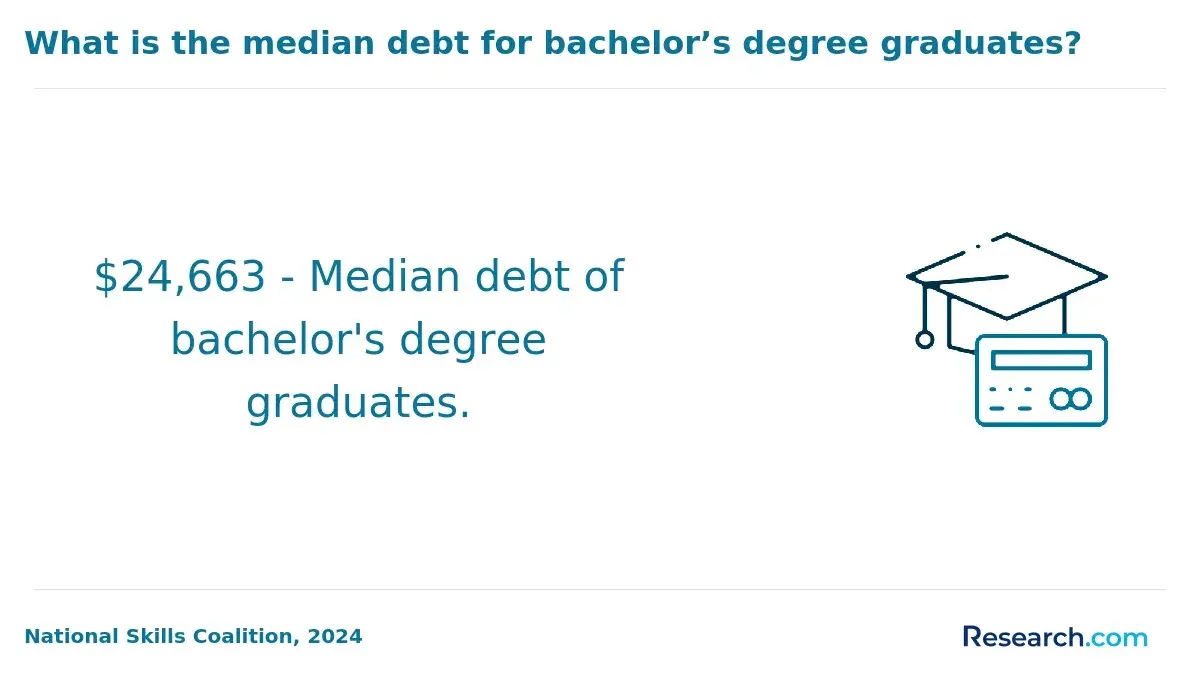
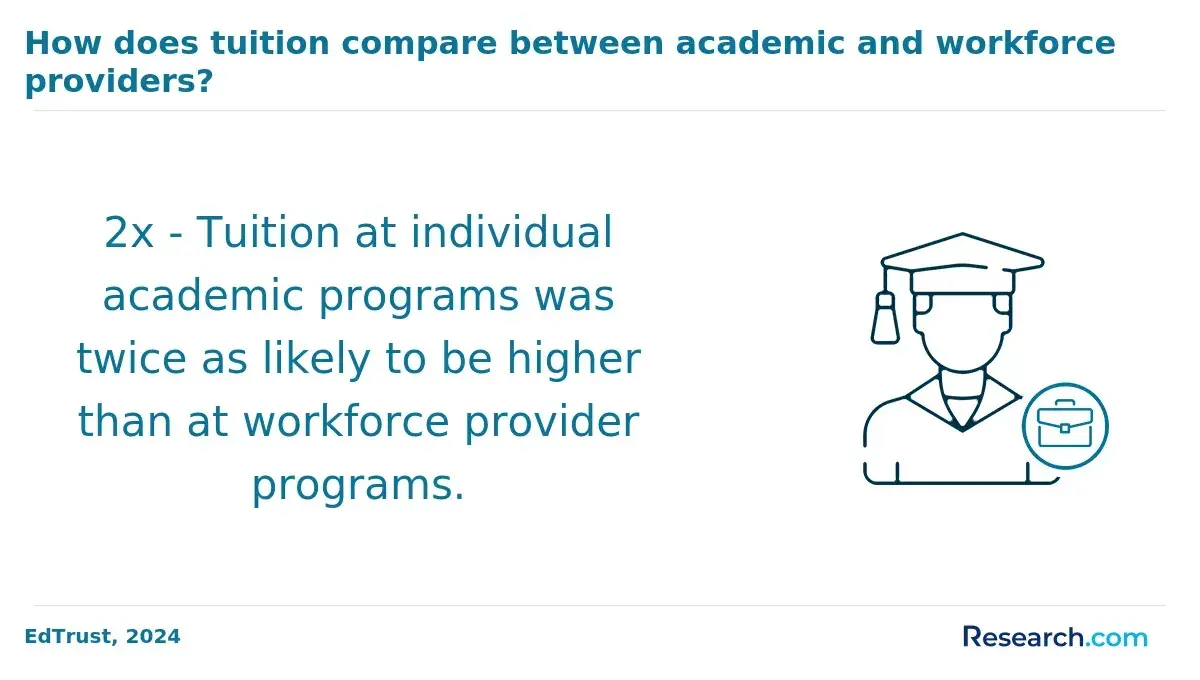
Cost depends on residency, institution type, transfer credits, lab fees, technology fees, books, and whether online students pay a different tuition rate. The College Board reported average published tuition and fees of $11,610 for in-state public four-year students and $43,350 for private nonprofit four-year students in 2024-25, which shows why comparing total cost-not just sticker tuition-is essential.
Use the following cost items when building a realistic budget. These categories matter because online programs can reduce commuting or housing costs but may still include fees that are easy to miss.
- Tuition per credit or per term, including whether online students pay in-state, out-of-state, or flat-rate tuition.
- Laboratory costs, including home lab kits, equipment deposits, software, proctoring, or required short campus residencies.
- Books, access codes, calculators, coding tools, and simulation software.
- Transfer-credit savings, especially for general education, calculus, introductory physics, and programming courses.
- Financial aid eligibility, employer tuition assistance, military education benefits, scholarships, and payment plans.
- Opportunity cost, including reduced work hours if labs, exams, or internships require daytime availability.
When comparing tuition pages, borrow a method used across other degree fields: separate tuition, fees, time to completion, and required materials before deciding which school is cheaper. For example, a guide to MLIS degree cost can be useful as a model for reading program costs critically, even though the field is different.
A lower-cost program can be the better investment if it is accredited, transfer-friendly, and strong in the courses you need. An accelerated or expensive program may be worth considering if it offers stronger research access, aerospace employer connections, or a faster path to graduate study, but only if the added cost supports your specific goal.
What salaries and earning potential can physics graduates expect in aerospace fields?
Physics graduates entering aerospace-related fields can see very different salaries depending on whether they work as technicians, analysts, engineers, software specialists, or research scientists. Degree level also matters: a bachelor's degree may support entry-level technical roles, while research physicist and advanced scientist roles often require graduate study.
The table below uses U.S. Bureau of Labor Statistics May 2024 median wage data for relevant occupations. These figures describe occupations, not guaranteed outcomes for physics graduates, but they help you evaluate the financial upside of different paths.
| Occupation | May 2024 median annual wage | How it relates to physics and aerospace |
| Aerospace engineers | $134,830 | Relevant for students who move into engineering-heavy roles, often with engineering coursework or graduate preparation |
| Physicists | $166,290 | Relevant for advanced research roles in government, defense, laboratories, space science, optics, or applied physics |
| Aerospace engineering and operations technologists and technicians | $78,170 | Relevant for hands-on test, operations, instrumentation, and support roles |
| Computer and information research scientists | $140,910 | Relevant for computational physics, aerospace AI, simulation, autonomy, and advanced data work |
The salary lesson is not simply "choose the highest-paying occupation." Instead, identify the education level and skills required for the role. A physics bachelor's graduate with strong coding and test experience may compete for different jobs than a physics PhD specializing in plasma propulsion or quantum sensing.
Location and employer also influence pay. Aerospace salaries can vary across defense contractors, commercial space companies, airlines, federal agencies, national labs, startups, and research universities. Some roles may require U.S. citizenship or the ability to obtain a security clearance, which can affect eligibility for defense and space systems work.
What is the job outlook for physics graduates entering aerospace and space industries?
The outlook is strongest for physics graduates who combine scientific depth with computational skills, systems thinking, and hands-on experience. Aerospace and space employers are investing in satellite systems, autonomous platforms, hypersonics, advanced propulsion, sensing, defense modernization, and data-intensive mission operations. These areas reward graduates who can model complex systems and validate results with evidence.
BLS projections for 2024-34 show aerospace engineer employment growing 6%, which is about as fast as the average for all occupations. For students, this means the field is not a low-effort hiring market; competition can be real, and employability depends heavily on internships, projects, software skills, and specialization.
Several trends should shape how you choose a program. AI and automation are changing aerospace workflows, but they are not eliminating the need for physics knowledge; instead, they increase demand for people who can judge whether models, simulations, and sensor outputs make physical sense.
Digital engineering, model-based systems engineering, and simulation-driven testing also make computational physics more valuable. At the same time, rising tuition costs make it important to avoid programs that do not provide measurable career support.
Students should also understand that "space industry" is not one job market. It includes launch companies, satellite operators, defense contractors, aerospace manufacturers, federal agencies, research laboratories, software firms, and component suppliers. A physics degree can fit many of these environments, but the right electives and experiences will differ by target employer.
How can students build internships, research, and certifications to boost aerospace employability?
The biggest mistake physics students make is treating the degree as the whole career plan. Aerospace employers often want proof that you can apply physics in real settings, work with technical teams, write code, handle data, and document results. Online students can absolutely build that evidence, but they need to plan earlier than campus students because opportunities may not appear automatically.
Use the following steps to build a stronger aerospace profile while completing an online physics degree. These steps are practical because they turn coursework into employer-visible evidence.
- Choose projects that produce a portfolio, such as orbital simulations, sensor data analysis, computational fluid dynamics exercises, satellite image processing, or propulsion-related modeling.
- Apply early for internships with aerospace manufacturers, defense contractors, NASA-related programs, national laboratories, aviation companies, and engineering services firms.
- Ask faculty about remote research, summer research, independent study, or data-analysis support roles tied to physics or aerospace topics.
- Build software fluency in Python, MATLAB, C++, Git, Linux, numerical methods, and data visualization.
- Join relevant professional communities, such as physics, aerospace, aviation, rocketry, robotics, astronomy, or satellite clubs, including remote-friendly groups when campus access is limited.
- Document lab and project work clearly with reports, code repositories, posters, presentations, or concise technical summaries.
- Consider certifications only when they support a specific goal, such as systems engineering, project management, CAD, cloud computing, data analytics, or safety training.
Watch for common red flags before committing to a program. Avoid schools that cannot explain lab delivery, provide no evidence of faculty engagement, hide total costs, lack recognized accreditation, offer few upper-division physics courses, or make unrealistic employment claims. Also be cautious about choosing a program only because it is fast; an accelerated path that skips depth in math, labs, or computation may be weaker for aerospace than a slower program with stronger technical substance.
A strong plan pairs the degree with experience. By graduation, aim to show not only that you completed physics coursework, but also that you can solve aerospace-relevant problems, communicate technical results, and learn tools used by modern engineering and research teams.
Other Things You Should Know About Physics
Neither is universally better. Aerospace engineering is usually more direct for aircraft or spacecraft design roles, while physics can be stronger for research, modeling, instrumentation, sensors, space science, and graduate study. Choose based on the job descriptions you want to qualify for.
Some programs offer most or all coursework online, but physics often requires labs. Check whether labs use home kits, simulations, local arrangements, or short campus residencies, and confirm that graduate schools or employers will recognize that lab format.
Many employers focus on accreditation, skills, experience, and technical fit rather than format alone. An online degree is stronger when it comes from an accredited institution and includes rigorous labs, advanced math, coding, projects, and internships.
Choosing an online physics degree with a curriculum focused on aerodynamics, propulsion, or space systems can be crucial. It ensures you gain relevant skills tailored for aerospace careers. Look for programs offering specialized courses or tracks that align with aerospace industry needs to improve your employment prospects in 2027.
References
- How to Become an Aerospace Engineer After 12th? A Student's Roadmap to Aerospace Engineering https://hindustanuniv.ac.in/blogs/how-to-become-an-aerospace-engineer-after-12th
- Physics Degree- Best Schools, Major & Programs https://www.onlinedegree.com/bachelors/physics/
- Best Engineering Courses for Aircraft & Space Careers in 2026 https://iiaeit.org/engineering-courses-for-aircraft-and-space-careers/
- Top 5 Internships for College Students That Actually Improve Employability | CollegeCampus https://collegecampus.bewise.in/blogs/top-5-internships-for-college-students-that-actually-improve-employability
- News: The Role of Internships in Building a Successful Engineering Career https://www.automate.org/news/the-role-of-internships-in-building-a-successful-engineering-career
- Choosing Between Becoming a Pilot or Studying Aerospace Engineering — Allplane https://allplane.tv/blog/2026/1/29/choosing-between-becoming-a-pilot-or-studying-aerospace-engineering
- How Physics Can Prepare You for the Jobs of the Future https://www.siena.edu/news/story/how-physics-can-prepare-you-for-the-jobs-of-the-future/
- What is the Best Way to Study Aerospace Engineering? - GD Goenka Aerospace Department https://aerospace.gdgoenka-university.com/what-is-the-best-way-to-study-aerospace-engineering/
- Aerospace Engineering: Best Subjects, Top Universities & Careers | Abbey Cambridge https://www.abbeycambridge.co.uk/2025/04/28/aerospace-engineering-subjects-universities-careers/
- Aerospace engineering internships for high school students https://riseglobaleducation.com/blogs/aerospace-engineering-internships-high-school-students