2027 Physics Jobs With the Best Work-Life Balance

Co-Founder and Chief Data Scientist
Choosing a physics career is not just about intellectual fit; it is also about hours, stress, family time, flexibility, and long-term stability. The U. S. Bureau of Labor Statistics reports that physicists earned a median annual wage of $166,290 in May 2024, but high pay can come with very different work conditions depending on the role. This guide is for students, career changers, and working professionals who want physics-related jobs that balance strong earning potential with predictable schedules. You will learn which paths fit different education levels, lifestyles, and risk tolerances.
Key Things You Should Know
- Physics-related roles with the strongest work-life balance are usually applied, regulated, or computational roles such as health physicist, metrologist, optical engineer, scientific software developer, data scientist, and government laboratory physicist rather than grant-dependent academic research jobs.
- Pay can remain competitive in balanced physics careers: BLS May 2024 data places physicists at a median annual wage of $166,290, data scientists at $112,590, and electrical engineers at $111,910, though salaries vary by location, degree level, clearance, and industry.
- The best education path depends on the target role: a bachelor's degree may be enough for engineering, software, teaching, or technical roles, while medical physics, research science, and many national laboratory positions often require a master's, PhD, residency, certification, or security clearance.
What physics careers offer the best work-life balance in the United States?
The physics careers most associated with good work-life balance are those where work is project-based, safety-regulated, software-enabled, or tied to standard business hours. "Work-life balance" in this context means more than a 40-hour week. It includes schedule predictability, remote or hybrid options, limited emergency duty, manageable travel, stable funding, and the ability to disconnect outside work.
For many people, the best-balanced physics jobs are not the most famous ones. University research, space missions, accelerator experiments, and startup hardware roles can be exciting, but they may involve grant pressure, irregular deadlines, travel, long experiments, or publication expectations. By contrast, applied physics roles in government, healthcare support, manufacturing, standards labs, software, and regulated industries often have clearer schedules and more defined responsibilities.
The table below compares common physics-related jobs by lifestyle fit. It focuses on U.S. roles where a physics background is useful and where the work environment is often more predictable than in traditional academic research.
| Career path | Typical work setting | Why balance can be strong | Main lifestyle trade-off |
| Health physicist or radiation safety specialist | Hospitals, universities, nuclear facilities, government agencies | Regulated safety work, documented procedures, and predictable compliance cycles | Some roles require incident response or facility access outside normal hours |
| Metrologist or standards physicist | Calibration labs, manufacturing, federal labs, quality organizations | Structured testing, lab schedules, and limited client emergencies | Work can be detail-heavy and procedure-driven |
| Optical engineer or photonics engineer | Semiconductor, defense, medical device, imaging, and telecom companies | Project-based engineering teams may support hybrid work and stable product cycles | Hardware testing can require on-site lab time |
| Computational physicist or scientific software developer | Research labs, engineering firms, software companies, energy, aerospace | Many tasks can be done remotely or asynchronously once systems are secure | Deadlines may intensify before releases, proposals, or model validation |
| Data scientist with physics background | Technology, healthcare, finance, government, energy | Transferable modeling skills, remote-friendly workflows, and broad industry options | Business deadlines and stakeholder communication become central |
| Medical physicist | Cancer centers, hospitals, imaging departments | High compensation and meaningful clinical work, often with scheduled procedures | Clinical deadlines, quality assurance, and occasional urgent needs can raise stress |
| Patent examiner or technical patent specialist | Federal government, law firms, corporate intellectual property teams | Document-based work, clear review systems, and potential remote arrangements | Requires comfort with legal writing and detailed technical review |
| Community college physics instructor | Two-year colleges and teaching-focused institutions | Teaching calendars, lower research pressure, and student-facing work | Grading, advising, and course preparation can spill into evenings |
The strongest overall fit for balance is usually a role where the employer values precision and reliability over constant availability. If your top priority is flexibility, computational physics, data science, patent examination, and technical analysis roles are often easier to align with hybrid work than laboratory-heavy jobs.
Which physics jobs combine strong salaries with reasonable hours and flexibility?
Physics jobs that combine strong salaries with reasonable hours usually sit at the intersection of quantitative skill, regulated responsibility, and specialized technology. These roles pay well because employers need advanced problem-solving, but they may not require the "always on" pace associated with startups, tenure-track academia, or mission-critical operations.
The best salary-to-balance choices depend on whether you prefer code, lab systems, healthcare, policy, or engineering. The comparison below summarizes roles that often provide a favorable mix of compensation, schedule control, and long-term employability.
| Role | Good fit for | Balance advantage | When it may not fit |
| Data scientist or machine learning analyst | Physics majors who enjoy modeling, statistics, and programming | Remote-friendly work, broad hiring market, and transferable skills | Not ideal for someone who wants hands-on laboratory work every day |
| Scientific software developer | Students who like simulations, high-performance computing, and numerical methods | Project-based workflow and strong demand in research, engineering, and defense | Secure or classified projects may limit remote work |
| Optical or photonics engineer | Students interested in lasers, imaging, sensors, semiconductors, or medical devices | Structured engineering teams and product roadmaps | Testing and troubleshooting may require on-site lab work |
| Health physicist | People who value safety, compliance, and applied radiation science | Clear procedures and stable institutional need | Emergency response responsibility varies by employer |
| Medical physicist | Graduate-trained physicists who want healthcare impact and high specialization | Strong pay and defined clinical responsibilities in many centers | Training is long, certification is demanding, and patient-care deadlines matter |
| Government physicist or technical analyst | People who want stability, mission-driven work, and defined benefits | Often predictable hours, retirement benefits, and structured advancement | Hiring can be slow, and some roles require clearance |
BLS 2024 wage data shows why computational paths are attractive for balance-focused physics graduates: data scientists had a median annual wage of $112,590 in May 2024. That figure does not mean every physics graduate will enter data science at that pay level, but it shows that a quantitative pivot can preserve strong earnings without requiring a PhD in physics.
Students considering this route should build evidence of job-ready skills, not just complete physics coursework. A portfolio of simulations, statistical models, Python projects, SQL work, or machine learning applications can make a physics background easier for employers to evaluate. For readers comparing education options, an affordable data science degree may be a practical alternative to a traditional physics graduate program if the goal is flexible analytical work.
What education and physics degrees are needed for balanced-workload careers?
The education needed for balanced physics careers ranges from a bachelor's degree to a PhD, depending on how specialized, regulated, or research-intensive the role is. A physics degree develops mathematical modeling, experimental reasoning, data analysis, and technical communication, but employers often look for an applied skill layer on top of the degree.
For bachelor's-level candidates, the most balanced options often come from combining physics with software, engineering, instrumentation, teaching preparation, or technical communication. For graduate-level candidates, balance is stronger when the degree leads to a defined professional role, such as medical physics, health physics, optical engineering, computational science, or national laboratory work, rather than an open-ended academic research track.
The table below shows the usual education level for common balanced physics career paths. Requirements vary by employer, but the comparison helps students avoid over- or under-investing in school.
| Target career | Common minimum education | Best add-on skills or credentials | Decision note |
| Data scientist or scientific programmer | Bachelor's degree in physics, computer science, statistics, or related field | Python, SQL, machine learning, cloud tools, version control | A master's can help, but a strong portfolio may matter more for entry-level roles |
| Optical, photonics, or systems engineer | Bachelor's in physics, engineering physics, electrical engineering, or optical engineering | Lab instrumentation, CAD, signal processing, lasers, sensors | Engineering coursework can improve eligibility for engineering job titles |
| Health physicist | Bachelor's in physics, health physics, nuclear engineering, or related field | Radiation protection, dosimetry, regulations, safety documentation | Graduate study may improve advancement into senior radiation safety roles |
| Medical physicist | Master's or PhD in medical physics or related physics field | CAMPEP-aligned education, residency, board certification preparation | This path is high reward but not short; confirm clinical training requirements early |
| Community college instructor | Master's degree in physics or a closely related discipline | Teaching experience, lab course design, student support skills | Teaching-focused jobs may offer better balance than research-focused faculty roles |
| Research physicist | PhD in physics or closely related field | Publication record, grants, computation, instrumentation, collaboration | Balance depends heavily on institution, funding model, and project deadlines |
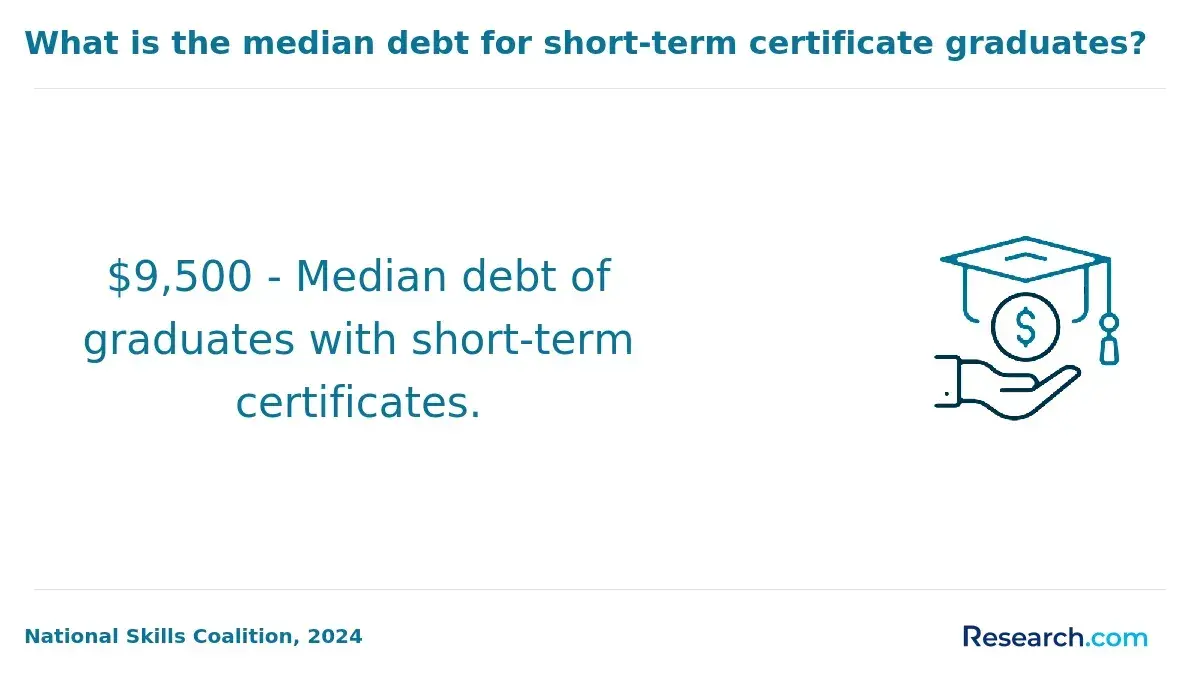
Cost should influence the education decision. College Board's 2024-2025 published tuition and fees estimate for in-state students at public four-year institutions was $11,610, which means a physics bachelor's degree can be more affordable when students use public universities, transfer credits, scholarships, or employer tuition benefits. The key is to compare total cost, not just annual tuition.
A common mistake is assuming a physics degree alone points to one career. In reality, the most balanced outcomes often come from pairing physics with a complementary field. Students who want simulation, embedded systems, or technical software roles may compare a physics major with a computer science degree online, especially if they need flexibility while working.
How do online and campus-based physics programs compare for career preparation?
Online and campus-based physics programs prepare students differently because physics is both mathematical and experimental. Online courses can work well for theory, programming, data analysis, general education, and some upper-division computational topics. Campus programs are usually stronger for hands-on labs, instrumentation, research groups, and direct faculty mentoring.
The best format depends on your target role. If your goal is data science, scientific software, technical analysis, or a physics-adjacent computing role, online or hybrid study can be very practical. If your goal is experimental physics, optics, materials research, medical physics, or engineering hardware, you should confirm how the program delivers labs and whether students can access research equipment.
The table below compares online and campus formats by career-preparation factor. Use it to identify which trade-offs matter most for your lifestyle and career goal.
| Factor | Online or hybrid physics-related study | Campus-based physics study | Best choice when |
| Schedule flexibility | Usually stronger for working adults and caregivers | Less flexible, especially for daytime labs | You need to keep working while studying |
| Laboratory training | May rely on kits, simulations, short residencies, or partner sites | Usually stronger for instrumentation and experimental technique | You want optics, materials, nuclear, or device-focused work |
| Research access | Varies widely and may require extra planning | Often easier through faculty labs and campus facilities | You plan to apply to research graduate programs |
| Networking | Can be strong if the program includes live sessions, projects, and career support | Often more organic through labs, seminars, and student organizations | You need faculty recommendations or lab mentors |
| Cost control | May reduce commuting, relocation, and housing costs | May provide assistantships, campus jobs, or research stipends | You compare total cost, not tuition alone |
One red flag is an online physics program that advertises career outcomes without explaining lab access, transfer policies, faculty support, or graduate-school preparation. Another is a campus program with excellent research prestige but limited support for students who want industry jobs rather than academia.
Students with military service or family obligations may also want to compare physics-adjacent engineering options. For example, programs listed among the best online electrical engineering degree programs for veterans can be relevant for learners who want applied electromagnetism, electronics, sensors, or defense-related technical careers with clearer professional pathways.
Which physics specializations most often lead to predictable schedules and low burnout?
Physics specializations most likely to lead to predictable schedules are those tied to stable operational needs, documented workflows, and broad employer demand. Specializations with large experimental campaigns, field deployments, telescope time, startup manufacturing deadlines, or continuous grant pressure can still be rewarding, but they may be harder to balance.
For students choosing electives or graduate concentrations, the goal is to identify where the physics skill set meets a structured labor market. The options below often provide better schedule control than highly competitive academic research tracks.
- Computational physics: Strong for simulation, modeling, high-performance computing, and scientific software roles that may support hybrid work.
- Health physics and radiation protection: Strong for compliance, safety, environmental monitoring, and institutional roles with defined procedures.
- Optics and photonics: Strong for product engineering, imaging, sensors, semiconductors, and medical devices, though lab presence is often required.
- Materials characterization: Strong for quality, testing, and applied R&D roles, especially when tied to manufacturing support rather than open-ended academic research.
- Data science and statistical modeling: Strong for flexible analytics careers outside traditional physics departments.
- Technical communication or scientific information work: Strong for people who enjoy explaining science, managing knowledge, and supporting research teams without running experiments full time.
BLS projects employment for data scientists to grow much faster than average from 2024 to 2034, which matters for physics students because many already have the math and modeling foundation needed for analytics roles. The practical takeaway is that adding statistics, coding, and domain data projects can widen the number of balanced job options available after graduation.
Some physics graduates also move into scientific publishing, research data management, technical librarianship, or knowledge organization. If that lower-lab-stress path is appealing, a library science degree online can complement a physics background for roles involving scientific information systems, academic libraries, archives, or research support services.
What are typical salaries and benefits for physics roles with good work-life balance?
Salaries for physics jobs with good work-life balance vary widely because "physics career" can mean research scientist, engineer, software developer, safety specialist, teacher, or analyst. The most reliable way to interpret pay is to compare the occupation, industry, location, degree level, and work setting rather than relying on a single physics-major average.
The table below uses BLS May 2024 median annual wage data for selected U.S. occupations that commonly align with physics training. These figures describe occupations, not guaranteed outcomes for any individual graduate.
| Occupation | May 2024 median annual wage | Work-life balance notes | Benefits commonly seen |
| Physicists | $166,290 | Balance is best in structured government, laboratory, or applied industry roles; academic and grant-funded roles may be less predictable | Health insurance, retirement plans, paid leave, research resources, possible relocation support |
| Data scientists | $112,590 | Often hybrid or remote-friendly, with deadlines driven by business or research projects | Remote work options, bonuses in some industries, professional development budgets |
| Electrical engineers | $111,910 | Stable schedules are common in mature engineering organizations, though testing phases may require extra hours | Health benefits, retirement plans, tuition support, certification support |
| Materials scientists | $104,900 | Balance depends on whether the role is quality/testing focused or fast-paced R&D | Lab resources, safety training, paid leave, employer-sponsored training |
| Postsecondary physics teachers | $99,480 | Teaching-focused roles can be predictable, while tenure-track roles often include research and service pressure | Academic calendars, retirement plans, tuition benefits, sabbatical eligibility in some institutions |
| Occupational health and safety specialists | $81,140 | Radiation safety and health physics roles may offer stable compliance schedules | Public-sector benefits, paid training, safety certifications, predictable leave policies |
Benefits can be as important as salary for work-life balance. Government agencies, public universities, hospitals, and large employers may offer stronger retirement plans, paid leave, health coverage, tuition assistance, and predictable holiday schedules than smaller employers. On the other hand, private technology or defense firms may pay more but require faster deadlines, on-site security restrictions, or project surges.
When comparing offers, ask about on-call expectations, travel, publication pressure, weekend coverage, remote-work eligibility, classified-work restrictions, and how overtime is handled. A slightly lower salary may be a better long-term choice if the role offers predictable hours, better benefits, and less burnout risk.
Employer Confidence in Online vs. In-Person Degree Skills, Global 2024

How long does it take to complete the training for these physics career paths?
The training timeline for balanced physics careers depends on how much regulation, clinical responsibility, or research independence the role requires. A student can enter some technical or analytical jobs after a bachelor's degree, while medical physics and research science often require many additional years.
The table below gives realistic U.S. training ranges for common physics-related paths. Timelines can shorten with transfer credit, prior military or technical experience, accelerated study, or employer-sponsored training.
| Career path | Typical training timeline | What happens during training | Fastest reasonable entry point |
| Data analyst, junior data scientist, or scientific programmer | 4 years for bachelor's degree, or shorter for candidates adding focused post-baccalaureate skills | Physics degree plus programming, statistics, projects, internships, and portfolio work | Entry-level analyst or technical associate role after bachelor's-level preparation |
| Optical, photonics, or systems engineer | 4 years for bachelor's; 1 to 2 additional years for master's if specialized | Physics or engineering coursework, labs, design projects, internships | Engineering technician, test engineer, or junior engineer role depending on degree and employer |
| Health physicist | 4 years for bachelor's; 2 additional years for some advanced roles | Radiation science, safety regulations, dosimetry, environmental monitoring, supervised experience | Radiation safety technician or junior health physicist role |
| Medical physicist | 6 to 10+ years depending on degree route, residency, and board certification | Graduate medical physics education, clinical residency, supervised practice, certification exams | Assistant or resident medical physicist role after graduate preparation |
| Community college physics instructor | 6 years is common if a master's degree is required | Physics graduate coursework, teaching assistantships, lab instruction, pedagogy experience | Adjunct or lab instructor role while building teaching experience |
| Research physicist | 9 to 12+ years if including bachelor's, PhD, and postdoctoral training | Advanced coursework, dissertation research, publications, grants, collaborations | Research assistant, staff scientist track, or postdoctoral appointment |
A practical way to reduce time risk is to choose stackable milestones. For example, a physics student can complete a bachelor's degree, add programming and internships, work in data or engineering, and later decide whether a master's or PhD is worth the opportunity cost.
Students should avoid choosing the longest path by default. A PhD can be the right investment for independent research, advanced national lab work, or faculty roles, but it may not be necessary for balanced careers in analytics, software, quality systems, radiation safety, or technical project work.
What licensing, certifications, or clearances apply to common physics-related jobs?
Licensing, certifications, and clearances vary significantly across physics-related careers. Some roles have no formal license but still value credentials, while others require board certification, state authorization, or federal security review. The safest approach is to check requirements for the specific job title, state, employer, and work setting before choosing a degree program.
The table below summarizes common credentials that may apply to balanced physics careers. It is not a substitute for state board, employer, or certifying-body rules, but it shows where students should investigate early.
| Role or setting | Credential, license, or clearance to check | Why it matters | Planning advice |
| Medical physicist | Board certification, CAMPEP-aligned graduate education or residency, state requirements where applicable | Clinical practice often requires documented competency and supervised training | Confirm the program and residency pathway before enrolling |
| Health physicist or radiation safety officer | Certified Health Physicist credential, radiation safety training, facility-specific authorization | Employers may require proof of radiation protection expertise and regulatory knowledge | Build supervised experience with dosimetry, surveys, and compliance documentation |
| Engineering physics, electrical, or systems engineering roles | Professional Engineer license for some public-facing engineering work | PE licensure may be needed for signing certain engineering documents | Consider ABET-aligned engineering coursework if licensure may matter |
| Defense, aerospace, national laboratories, and federal contractors | Security clearance, citizenship requirements, background investigation | Some technical work involves controlled data, facilities, or national security projects | Ask early whether remote work is limited by clearance or secure-facility rules |
| Public school physics teacher | State teaching license or alternative certification | K-12 teaching requirements are state-specific | Choose a program with approved teacher-preparation or licensure support if teaching is the goal |
| Patent examiner or patent agent | Technical degree eligibility and patent bar requirements for some roles | Patent work requires technical review ability and, for agents, formal registration | Keep transcripts and course descriptions because technical eligibility can be document-based |
The most common mistake is assuming that a strong physics degree automatically satisfies professional requirements. For regulated roles, the name of the degree, accreditation status, supervised experience, and exam eligibility may all matter.
Before enrolling, contact admissions, the department chair, and the relevant licensing or certifying organization with a specific question: "Will this program meet the education requirement for the role I want in the state or employer setting where I plan to work?" Written confirmation is better than a verbal assurance.
How can students choose accredited physics programs aligned with lifestyle priorities?
Accreditation is one of the most important safeguards when choosing a physics program. In the U.S., students should first confirm institutional accreditation from a recognized accreditor. Then they should check whether specialized accreditation or program alignment matters for their target role, such as ABET for engineering programs or CAMPEP for medical physics.
Students seeking work-life balance should choose programs not only by prestige but by how well the program supports their preferred career environment. A highly ranked research program may be excellent for PhD placement but less useful for a student who wants industry analytics, teaching, medical physics, or regulated safety work.
Use the following steps to compare programs in a practical way before applying or enrolling.
- Identify the exact job titles you want, then review recent postings to see whether employers ask for a bachelor's, master's, PhD, certification, clearance, programming skills, or lab experience.
- Confirm institutional accreditation and, when relevant, specialized accreditation or alignment for engineering, medical physics, teacher preparation, or clinical training.
- Ask how labs are delivered, especially if the program is online or hybrid, and whether students receive hands-on experience with instrumentation, uncertainty analysis, and safety procedures.
- Compare total cost, including tuition, fees, relocation, commuting, lost work hours, equipment, software, and the cost of additional graduate study.
- Review career outcomes by pathway, not just general graduate success; ask specifically about industry jobs, government roles, teaching placements, internships, and graduate-school admission.
- Evaluate lifestyle fit by asking about course scheduling, part-time options, research expectations, internship timing, and whether the program supports working adults.
Red flags include unclear accreditation, no published faculty information, weak lab explanations, limited advising for nonacademic careers, and pressure to enroll before financial aid or transfer credits are fully reviewed. Another warning sign is a program that promises a specific salary outcome; reputable schools can discuss career support and alumni examples, but they should not guarantee earnings.
Students comparing interdisciplinary paths can also look beyond traditional physics departments. For example, scientific computing, engineering, data science, and information science programs may support physics-adjacent careers with better flexibility. Research.com program guides, including the library science degree online resource, can help readers compare online study formats when their goals involve research information, technical documentation, or knowledge management rather than lab-based physics.
What is the long-term job outlook for flexible, family-friendly physics careers?
The long-term outlook for flexible, family-friendly physics careers is strongest where physics skills overlap with national priorities: computing, energy, healthcare, semiconductors, aerospace, defense, climate technology, medical devices, and advanced manufacturing. Employers in these areas need people who can model complex systems, evaluate uncertainty, work with technical data, and communicate findings clearly.
BLS projects employment of physicists and astronomers to grow 7% from 2024 to 2034, which is faster than the average for all occupations. For readers, the more important point is that physics training can support multiple labor markets, so career resilience often comes from keeping skills transferable rather than relying on one narrow job title.
AI and automation are changing physics-related work, but they are not replacing the need for physical reasoning. Instead, they are raising expectations. Employers increasingly value candidates who can use AI tools responsibly, write code, validate models, document assumptions, and explain why a result makes sense scientifically. A physics graduate who can combine domain knowledge with data literacy is likely to have more flexible options than one who relies only on coursework.
For better work-life balance over the long term, focus on roles with durable demand and clear boundaries. Government agencies, hospitals, universities, utilities, regulated manufacturers, and mature technology firms may offer more predictable schedules than early-stage startups or grant-dependent labs. However, culture varies by employer, so interviews should include questions about workload patterns, weekend expectations, remote-work policies, and turnover.
The smartest next step is to choose a target cluster, not just a major. A student interested in family-friendly physics careers might compare computational physics and data science, health physics, optics, teaching, and government technical analysis, then build internships and coursework around the top two options. That approach keeps doors open while reducing the risk of investing years in a path that does not match the desired lifestyle.
Other Things You Should Know About Physics
There is no single best role for everyone, but health physicist, metrologist, data scientist, scientific software developer, patent examiner, and government technical analyst often offer stronger schedule predictability than academic research or startup hardware roles.
Yes, especially if you add applied skills such as programming, data analysis, electronics, instrumentation, statistics, or technical writing. A bachelor's degree is often enough for entry-level analytics, software, engineering support, laboratory, teaching-support, and technical specialist roles, depending on the employer.
Medical physics can offer strong pay and meaningful clinical work, but the training path is long and some clinical settings involve urgent deadlines or occasional off-hours responsibilities. It is best for students who want healthcare impact and are willing to complete graduate training, residency, and certification steps.
In 2027, a physics PhD can open doors to various careers, but it may not always guarantee work-life balance due to research demands. Opt for roles in industry or government labs where structured hours are more common than in academia.
References
- Online Physics Degrees: Are They Useful in Today’s Scenario? https://www.allassignmenthelp.com/blog/online-physics-degrees-in-todays-scenario/
- Why a physics degree is so valuable in today's uncertain job market – Physics World https://physicsworld.com/a/why-a-physics-degree-is-so-valuable-in-todays-uncertain-job-market/
- How to Choose High School Courses That Align With Your Dream Career https://riseglobaleducation.com/blogs/how-to-choose-high-school-courses-that-align-with-your-dream-career
- Physics Employment Facts https://www.compadre.org/careers/facts.cfm
- Medical Physics Available Jobs and Positions in Australia https://www.uwamedicalphysics.org/jobs
- Medical Physicist License Requirements in Illinois (2026) | American Association of Physicists in Medicine https://careers.aapm.org/career-resources/get-the-job-2/medical-physicist-license-requirements-in-illinois-2026-122
- Frequently Asked Questions https://www.saintmarys.edu/academics/departments/physics/why
- Bio-Med Associates Medical Physics Consulting https://biomedphysics.com/ny-physicist-qualifications
- Eligibility Criteria https://careers.cern/eligibility-criteria/
- Physics job with flexible schedule? https://www.physicsforums.com/threads/physics-job-with-flexible-schedule.901849/