2027 Online Game Programming & Development Bachelor's Degree Completion Programs for Working Adults

Co-Founder and Chief Data Scientist
Many working adults struggle to balance career demands with the pursuit of a bachelor's degree in game programming & development. Without a clear path to complete their education, they risk stagnating in competitive job markets where technical expertise is crucial. Recent data shows that 68% of employers prioritize candidates with a completed bachelor's degree when hiring for advanced game programming roles. This article explores comprehensive online degree completion programs, detailing transfer policies, accreditation, tuition options, and employment outcomes. It aims to help readers identify the most efficient and cost-effective program suited to their professional and personal needs.
Key Benefits of Online Game Programming & Development Bachelor's Degree Completion Programs for Working Adults
- Online game programming & development degree completion programs offer flexible schedules, enabling working adults to balance study with full-time employment effectively.
- Fully asynchronous coursework allows professionals to learn at their own pace, fitting classes around demanding job hours without sacrificing income.
- These programs typically shorten the time to graduation by accepting transfer credits, avoiding the need to start a traditional four-year degree from scratch.
What Are Online Game Programming & Development Bachelor's Degree Completion Programs, and Who Are They Designed For?
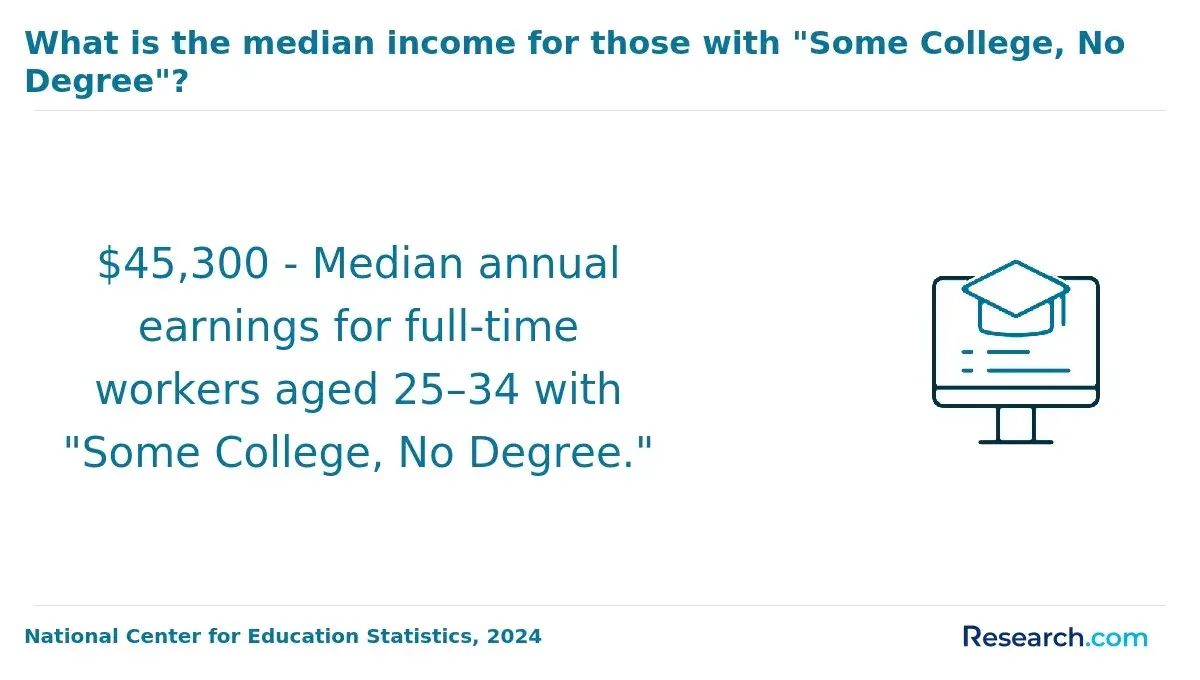
Degree completion programs in online game programming and development are designed specifically for adults who have previously earned college credits but have not yet finished their bachelor's degree. Unlike traditional four-year bachelor's pathways that start with a full curriculum, these completion programs focus on the remaining coursework required to graduate. According to the National Center for Education Statistics (NCES), roughly 36 million Americans have some college experience without a credential, making these programs essential for bridging that gap. Delivery formats are flexible, often fully online or hybrid, to accommodate working adults balancing career and family commitments. The accelerated nature of these programs allows students to finish faster, and their policies generally accept a large portion of transfer credits, which reduces duplication and overall time to completion.
Growing demand for bachelor's degrees in the workforce has driven the popularity of online game programming and development bachelor's degree completion programs for adult learners. Employers often now require a degree for technical roles that previously did not, creating new educational benchmarks. Key features of these programs include: before transferring into a bachelor's completion program. This pathway can smooth the transition for many adult learners aiming to complete their education in game programming and development.
- Accelerated Format: Remaining courses are condensed into shorter terms, enabling quicker degree completion than traditional programs.
- Transfer Credit Acceptance: Prior academic credits are widely recognized, minimizing redundant coursework and shortening time to degree.
- Flexible Delivery: Coursework is offered fully online or hybrid, making it easier for working adults to balance education with other responsibilities.
- Growing Demand: With more employers requiring bachelor's degrees, these programs help adults meet evolving job qualifications and advance their careers.Students interested in foundational studies might first explore an online associates degree
How Do Online Game Programming & Development Degree Completion Programs Differ From Traditional Four-Year Game Programming & Development Bachelor's Degrees?
Online game programming and development degree completion programs are tailored for working adults transferring 60 or more credits, providing an accelerated alternative to traditional bachelor's degrees. These programs focus on streamlining credit requirements by concentrating on advanced coursework and major-specific classes, compared to traditional programs that typically require 120 to 130 credits, including general education and electives.
- Credit Requirements: Completion programs accept substantial prior college credits, reducing total credits needed for graduation. This contrasts with the broader credit load of traditional programs that cover foundational coursework alongside the major.
- Curriculum Sequencing: Designed specifically for adult learners, completion curricula often replace general education requirements with prior learning assessments (PLAs), military training credits, or competency-based courses. Traditional degrees maintain a fixed, progressive course sequence with broader elective options and campus experiences.
- Time to Completion: According to IPEDS data, students with 60+ transferable credits in completion programs can often finish within two years or less, while traditional bachelor's degrees typically require four years of full-time study.
- Cost Per Credit Hour: Institutions usually charge higher per-credit rates for traditional pathways due to longer enrollment periods and additional campus resources. Completion programs feature streamlined tuition designed to lower costs by cutting redundant coursework.
- Adult Learner Adaptation: Flexible delivery formats such as asynchronous classes and accelerated terms support busy professionals. Experiential learning credits recognize work experience, allowing students to focus earlier on specialized game programming subjects.
- Trade-Offs: While completion programs reduce time and cost, they may limit elective diversity and networking opportunities offered by traditional degrees.
Working adults researching online game programming and development degree completion programs for working adults should weigh these factors carefully. For those interested in a fast track psychology degree online or similar compressed timelines, completion programs offer practical benefits in time and cost efficiency compared to traditional bachelor's degrees.
2026 Update: Evaluating Portfolio and Engine-Based Project Requirements
This 2026 update adds guidance on comparing the hands-on project expectations in online game programming and development completion programs, especially for working adults who need career-ready portfolio evidence.
- Whether courses require finished playable projects, prototypes, or only coding exercises
- Which game engines, programming languages, and production tools are used in upper-division coursework
- Whether students build solo projects, team-based projects, or both
- How version control, debugging, testing, and documentation are incorporated into assignments
- Whether capstone projects can be shared publicly in a portfolio or demo reel
- What hardware, software, or licensing costs may be needed beyond tuition
- How often instructors provide technical feedback on code quality and gameplay systems
Checking these details helps students choose a completion program that does more than award credits—it supports a stronger portfolio for future game development opportunities.
Which Accredited Universities Offer the Most Affordable Online Game Programming & Development Bachelor's Degree Completion Programs?
- Fort Hays State University (Kansas): Charges a uniform $260 per credit hour for online courses, regardless of residency. Accredited by the Higher Learning Commission (HLC), this program blends core computer science principles with specialized game development classes. It supports transfer credits from community colleges and prior learning assessments, offering a budget-friendly path for degree completion.
- Kennesaw State University (Georgia): Offers online courses at $295 per credit hour for in-state students and $1,330 for out-of-state learners. The university holds accreditation from the Southern Association of Colleges and Schools Commission on Colleges (SACSCOC). Its bachelor's completion program focuses on software development for games and benefits from strong articulation agreements with technical colleges to ease credit transfers for adult learners.
- Western Carolina University: In-state tuition is $301 per credit hour, with out-of-state rates at $1,067. Accredited by SACSCOC, the university delivers a structured online game programming & development curriculum aligned with academic standards. It allows up to 90 transfer credits and offers options for prior learning assessments to help students accelerate their degree progress.
- University of North Dakota: Charges a flat rate of $401 per credit hour for all online students, irrespective of residency. Accredited by the Higher Learning Commission, this program emphasizes practical skills in game design, programming, and interactive media. Its transfer policy accepts up to 90 credits, simplifying degree completion for those coming from other institutions.
- Columbia College: Features a flat $415 per credit hour online tuition without residency distinctions. Accredited by HLC, the college's computer science bachelor's completion with a game development track offers flexible start dates, competency-based evaluations, and strong support for transfer students and working professionals.
Programs with the lowest tuition rates commonly maintain flat or modest credit-hour pricing models and hold regional accreditation from well-regarded bodies like HLC or SACSCOC. They encourage transfer credits and prior learning assessments, which reduce time and cost to degree completion. Curricula closely align with gaming industry demands, equipping students with relevant skills for the workforce.
One professional who completed an online degree in game programming & development shared that balancing work, family, and studies was a significant challenge. He emphasized how the program's flexible scheduling and generous credit transfer policy eased his journey, allowing him to capitalize on previously earned credits. "At times it felt overwhelming," he remarked, "but being able to pause, catch up, and rely on practical course content made a big difference." His experience highlights how affordability combined with institutional flexibility can open doors for adult learners striving to enter the gaming industry.
How Many Transfer Credits Can Working Adults Apply Toward an Online Game Programming & Development Degree Completion Program?
Transfer credit policies for online game programming & development bachelor's programs usually allow students to apply between 60 and 90 semester hours toward their degree, helping them avoid retaking courses. However, the U.S. Department of Education's transfer summit reports that around 40% of credits are lost during transfer due to differences in course content or accreditation.
Programs with guaranteed or structured transfer pathways, often supported by articulation agreements between community colleges and four-year universities, reduce this loss and create smoother credit transfers. These formal partnerships enhance predictability, especially for degree completion students aiming to maximize their prior coursework.
- Credit Caps: Most institutions cap transferable credits at 60-90 semester hours to ensure students complete essential major requirements at the awarding university.
- Credit Equivalency: Schools assess official transcripts to verify whether courses align in accreditation and content before accepting transfer credits.
- Military and Professional Credits: Many transfer-friendly programs recognize ACE-recommended military training and accepted professional certifications, offering more options for veterans and working adults.
- Transcript Evaluations: Request official transcript reviews early to clarify how many credits will transfer, reducing surprises before enrollment.
Working adults exploring the maximum transfer credits allowed in game programming & development degree completion should research programs openly recognizing prior learning, including military experience and certifications. For those balancing budgets, it's helpful to compare tuition with options such as a book keeping certificate that may complement their professional goals.
What Are the Typical Admission Requirements for Online Game Programming & Development Bachelor's Degree Completion Programs?
- Transfer Credit Hours: Applicants usually need between 24 and 60 transferable credits from accredited institutions, highlighting foundational coursework tied to programming or computer science. These credits ensure students are prepared for advanced studies within the degree completion framework.
- GPA Thresholds: Many programs expect a minimum cumulative GPA, typically from 2.5 to 3.0 on a 4.0 scale, to qualify for admission. While some open-enrollment programs may waive this requirement, they often provide less academic support and yield a credential with lower industry recognition.
- Documentation Requirements: Submission of official transcripts is mandatory for all prior institutions attended. Some programs also request essays, letters of recommendation, or evidence of relevant experience to better assess candidates' preparedness and commitment.
- Prerequisite Coursework: Programs often require completion of introductory courses such as programming fundamentals, computer science basics, or introductory game design. Candidates lacking these prerequisites are commonly advised to take equivalent classes at community colleges before applying.
- Conditional Admission: Certain institutions offer provisional acceptance to students narrowly missing admission criteria, requiring demonstration of academic progress during their initial term to maintain enrollment.
- Admission Trade-Offs: Open-admission programs provide flexible entry and access but may lack specialized resources and hold lower prestige. Conversely, more selective programs demand stronger academic credentials but typically deliver superior support services and industry connections.
One professional who established her career after completing an online game programming & development bachelor's degree reflected on the process as "both daunting and rewarding." She recalled grappling with assembling transcripts from multiple colleges and completing prerequisite courses she initially overlooked. "It felt like piecing together a puzzle," she said, emphasizing the importance of early preparation. Despite initial uncertainty, the structured guidance offered by advisors helped her navigate conditional admission requirements and steadily build confidence. Today, she appreciates how the rigorous admission standards ultimately sharpened her focus and contributed to her success in the gaming industry.
How Long Does It Take to Complete an Online Game Programming & Development Bachelor's Degree Completion Program as a Working Adult?
Completion timelines for an online Game Programming & Development bachelor's degree vary widely depending on prior college credits, enrollment intensity, and program design. Those transferring 90 credits often need just 30 more, allowing degree completion in about a year with full-time study. Students transferring 60 credits generally require two to three years, while those with 30 credits typically face three to four years to finish.
- Enrollment Pace: Part-time students taking six credits per semester usually complete their degree in three to five years, balancing work and study. Accelerated full-time enrollment of 12 or more credits per term can shorten this to one or two years for many learners.
- Typical Course Load: A realistic approach for working adults is two courses per semester (around six credits), which often leads to a three- to four-year completion timeframe when attending fall and spring semesters only.
- Accelerated Sessions: Many institutions offer eight-week courses and summer terms, letting students stack multiple accelerated classes annually to reduce overall time by several months or more.
- Competency-Based Models: Programs allowing advancement through skill demonstration rather than time can enable motivated students to leverage existing knowledge, potentially finishing more rapidly.
- Personal and Employer Factors: Family responsibilities, job demands, and employer support like tuition assistance or flexible schedules significantly influence how quickly students complete their degrees.
Enrollment trends reflect growing demand for flexible online options; a recent report from the National Center for Education Statistics shows adult learners' participation in online degree programs increased by over 15% in the past five years.
What Financial Aid, Grants, and Employer Tuition Assistance Options Are Available for Online Game Programming & Development Completion Students?
Working adults finishing an online game programming & development bachelor's degree can access numerous financial aid options tailored to their unique circumstances. Federal aid remains essential, with Pell Grants and Direct Loans available to eligible students, including adult learners returning to complete their degrees. Many states also offer grants specifically for adult students resuming college, helping to reduce tuition expenses without requiring repayment.
Institutional scholarships provide another vital resource. Many colleges offer scholarships geared toward non-traditional students, often taking previous coursework and work experience into account. Additionally, specialized scholarships and fellowships focus exclusively on adults completing game programming & development or related STEM degrees, reflecting the growing need for skilled professionals in this field.
Employer tuition assistance programs are especially valuable for working students. According to IRS Section 127, employers can provide up to $5,250 annually in undergraduate education benefits tax-free. This incentive helps lower out-of-pocket costs and encourages employers to support employee education continuation, including degree completion in game programming & development.
Before enrollment, prospective degree completers should strategically navigate financial aid opportunities. Here is a checklist of essential steps:
- File the FAFSA: Submit the Free Application for Federal Student Aid promptly to increase eligibility for federal aid and many state grants.
- Explore State Grants: Investigate whether your state offers grants specifically for adult or returning students to supplement federal funding.
- Apply for Scholarships: Search for institutional and specialized scholarships targeting game programming & development completers and adult learners.
- Request Employer Benefits: Contact your human resources department to secure tuition assistance under IRS tax provisions.
How Does Per-Credit-Hour Tuition for Online Game Programming & Development Completion Programs Compare Across Accredited Institutions?
Per-credit-hour tuition for accredited online game programming & development bachelor's degree completion programs varies significantly across institutions. Data from the National Center for Education Statistics (NCES) and Integrated Postsecondary Education Data System (IPEDS) indicate a national average of about $350 per credit hour for these programs. This figure serves as a baseline for working adults to estimate costs when planning to finish their degree, although actual prices differ depending on the program structure and credit requirements.
Some public universities offer tuition as low as $250 per credit, while private schools often charge upwards of $600. Calculating total tuition based on common transfer credit scenarios-such as having completed 60 or 90 credits-reveals that finishing the remaining 60 credits at the average rate totals approximately $21,000, with 90 credits costing near $31,500, excluding additional fees. When comparing accredited online game programming & development degree per credit hour rates, it is crucial to factor in these differences to understand the full financial commitment.
Additional costs beyond tuition, such as technology fees supporting online platforms, graduation charges, exam proctoring fees, and required textbooks or digital materials, can add hundreds or thousands of dollars to overall expenses. These ancillary fees vary by program and should be included in budgeting considerations. Moreover, programs requiring more than the traditional 120 total credits to graduate may increase the total cost despite a lower per-credit rate.
Prospective students, including community college transfer students and military veterans, should carefully assess transfer credit policies and total credit hour requirements. For working adults seeking to align their schedules and budgets with program offerings, reviewing employer outcomes and accreditation standards is also essential. For those exploring options, this guide is a comprehensive resource on best online degrees for stay at home moms and other adult learners.
- National Average Benchmark: The typical per-credit tuition is about $350, serving as a useful mid-range reference for comparison across institutions.
- Cost Range Variability: Public universities often provide lower tuition rates ($250+ per credit), while private schools charge more than $600 per credit, showing wide disparity.
- Ancillary Fees Impact: Technology, graduation, exam proctoring, and textbooks can add significantly to the final cost, making it important to budget beyond just tuition.
- Total Credit Hours Matter: Programs with more than 30 remaining credits after transfer can increase total expenses, despite lower per-credit charges.
What Prior Learning Assessment and Credit-by-Exam Options Exist in Online Game Programming & Development Degree Completion Programs?
Prior learning assessment (PLA) options offer significant advantages for working adults seeking to complete an online game programming & development bachelor's degree. These pathways allow students to convert existing knowledge and skills into academic credits, effectively shortening the time and cost required for graduation.
- CLEP and DSST Exams: College-Level Examination Program (CLEP) and DANTES Subject Standardized Tests (DSST) provide standardized exams that assess knowledge in relevant subjects. Many degree completion programs accept these credits, helping students bypass introductory coursework.
- Portfolio Assessment: Some institutions allow learners to submit portfolios that showcase professional work, certifications, and documented competencies. This qualitative review process requires precise documentation and often includes detailed reflective essays or project descriptions.
- ACE Credit Recommendations: The American Council on Education (ACE) evaluates military training and corporate learning programs for academic credit equivalency. Military veterans and active-duty personnel benefit from this system, which recognizes prior service as legitimate college credit.
- Flexible Credit Limits: Top-ranked online game programming & development bachelor's degree completion programs often accept up to 60 credits via PLA, combining prior exams, portfolio submissions, and ACE evaluations for maximum flexibility.
- Documentation Guidance: Advising students to meticulously catalog prior learning-including course descriptions, training certificates, and work samples-improves the likelihood of credit approval. Early communication with academic advisors is essential to understand institutional policies and deadlines.
For those interested in how prior learning assessment options for online game programming & development degree completion programs can accelerate degree attainment, exploring specific program policies is crucial. Additionally, understanding credit-by-exam opportunities in game programming & development bachelor's degree completion helps candidates leverage their existing expertise.
Whether you are a community college transfer student, a military veteran, or a mid-career professional, this approach makes earning your degree more accessible. To explore if can you get a physics degree online options correlate with PLA policies at your institution, research and planning should be part of your strategy.
How Do Asynchronous Schedules in Online Game Programming & Development Programs Accommodate Full-Time Working Professionals?
- Fully Asynchronous Delivery: Online game programming & development completion programs offer fully asynchronous courses where lectures, assignments, and discussions are accessible 24/7. This flexibility allows students to study and submit work at any time, fitting perfectly with varied time zones and nontraditional work hours.
- Assignment Structure: Coursework is designed so students can progress independently, with deadlines spread evenly to prevent overload. Forums support ongoing peer and instructor interaction without live meeting requirements, making participation manageable for busy adults.
- Comparison with Other Formats: Unlike synchronous or hybrid programs requiring real-time attendance, asynchronous-only formats offer unmatched freedom for shift workers, travelers, and caregivers. However, some learners may find fewer opportunities for immediate feedback or live collaboration, which synchronous sessions provide.
- Eight-Week Terms: Several institutions adopt accelerated eight-week courses, enabling students to concentrate on fewer subjects per term. This structure reduces juggling multiple classes and helps balance study with professional and personal obligations.
- Time Management: Successful students frequently recommend setting consistent daily study blocks and using digital calendars or task management apps to track deadlines and milestones. Prioritizing assignments and scheduling buffer time can mitigate last-minute stress.
Digital Tools: Tools like cloud storage, virtual whiteboards, and note-taking applications foster organization and collaboration in asynchronous environments. Familiarity with learning management systems and mobile access enhances the remote learning experience.
What Concentrations and Career Tracks Are Available Within Online Game Programming & Development Degree Completion Programs?
Online game programming & development bachelor's degree completion programs typically offer several concentration tracks that fit within the standard 120-credit curriculum, ensuring no added time or tuition for students. These embedded specializations align closely with industry roles and labor market trends identified by the Bureau of Labor Statistics (BLS).
- Game Programming: Focused on software creation and algorithm design, this concentration prepares students for careers as game programmers or software developers. Median salaries hover around $110,000 annually with strong employment growth driven by the expanding digital gaming sector.
- Game Design: This track emphasizes gameplay mechanics, storytelling, and user experience. Graduates often find roles as game or level designers, with earnings typically between $65,000 and $90,000, reflecting high demand for immersive content creators.
- Game Art and Animation: Concentrating on 2D/3D modeling and visual effects, this path leads to careers like animator and concept artist. Median wages range from $75,000 to $85,000, supported by growing need for engaging visual content.
- Game Production and Management: Focused on budgeting, project leadership, and team coordination, this specialization targets roles such as game producer or project manager. Salaries generally span $85,000 to $120,000, often requiring certifications like PMP for advancement.
- Professional Certifications: Certain tracks prepare students for certifications such as Unity Certified Developer or Certified ScrumMaster, enhancing job prospects by verifying technical skills and agile management knowledge.
Selection of a concentration should balance personal passion with proven labor market outcomes, helping working adults maximize career growth and financial return within game programming & development fields.
What Graduates Say About Online Game Programming & Development Bachelor's Degree Completion Programs for Working Adults
- Jayce: "Choosing this bachelor's degree completion program was a game-changer because of its rigorous program structure and solid accreditation. I appreciated how my previous college credits transferred smoothly, saving me time and money throughout the process. The flexible tuition models allowed me to manage my finances better while gaining skills that employers truly value."
- Kaizen: "Reflecting on my journey, the option to apply prior learning credits significantly accelerated my path to graduation. The program's clear transfer credit policies removed the usual uncertainties for returning students like me. Ultimately, the emphasis on real-world applications ensured that my new credentials opened doors I hadn't imagined before."
- Dominic: "Professionally, completing my bachelor's online provided the balance I needed to keep working while advancing my education. The program's accreditation stood out as a hallmark of quality, reassuring both me and my employer about the degree's credibility. Tuition transparency and supportive faculty made the entire experience efficient and rewarding."
Other Things You Should Know About Game Programming & Development Degrees
The typical credit transfer process requires official transcripts and a course equivalency evaluation. Schools often accept credits from regionally accredited institutions and may require courses to meet specific grade thresholds. Most programs will inform accepted students about transferable credits during the admission phase.
Yes, some programs require a portfolio, but many degree-completion tracks for working adults do not. When required, it usually includes 2D or 3D art, code samples, or a playable prototype. Admissions offices often review it alongside a minimum 2.0 to 2.5 GPA and transferable credits.
Applicants should have foundational skills in programming languages such as C++ or Java, and experience in game engines like Unity or Unreal. Prior coursework in math and computer science, totaling around 60 credit hours, is also typically required for enrollment in 2027.
References
- DeVry Completion Grant | DeVry University https://www.devry.edu/devryworks/funding/completiongrant.html
- Bachelor of Science inGame Design and Development Online or On Campus https://www.albany.edu/cehc/programs/bs-game-design-and-development
- Game Programming Degree | Bachelor of Game Development https://www.cgspectrum.com/courses/game-programming-program
- Benefits of Online Learning for Working Adults https://unity.edu/distance-education-blogs/benefits-of-online-learning/
- How Much Does It Cost to Build an Online Course? https://onedtech.philhillaa.com/p/how-much-does-it-cost-to-build-an-online-course
- Transfer Credit Requirements https://www.umgc.edu/transfers-and-credits/credit-from-colleges/requirements
- What is Prior Learning Assessment? | Bergen Community College https://bergen.edu/academics/pla/
- FULL-TIME | WINNIPEG LOCATIONS GAMPF-AD Game Development - Programming https://catalogue.rrc.ca/Programs/WPG/Fulltime/GAMPF-AD/GraduationRequirements
- Online B.S. in Game Development https://www.walsh.edu/game-development-accelerated.html