2027 Online Social Work Degree Programs Costs: Tuition & Fees

Co-Founder and Chief Data Scientist
The real question is not only whether an online social work degree fits your schedule, but whether the total cost makes sense for the career path you want. Online BSW and MSW programs can reduce commuting and relocation expenses, yet tuition, fees, field placement requirements, textbooks, and lost work time can still add up quickly.
This guide explains what students typically pay for online social work degrees, what tuition usually includes, why prices vary by school and residency, and how online programs compare with campus-based options. It also covers affordable and higher-cost examples, return on investment, financial aid, and likely cost increases so you can compare programs with a clearer budget in mind.
Key Points About Online Social Work Degree Costs
- Average tuition for online social work degrees ranges from $8,000 to $30,000 annually, varying by institution type and program length.
- Costs depend on factors like credit hours, residency status, and access to financial aid or scholarships.
- The investment often leads to higher earning potential and licensure eligibility, supporting long-term career growth in social services.
What Is the Average Cost of an Online Social Work Degree?
The average tuition for online Social Work degrees in 2025 typically ranges from about $12,000 to over $50,000, depending on the degree level, program length, school type, residency rules, and how many credits a student transfers in. The lowest-cost options are usually public universities, especially for in-state students, while private universities and longer programs can cost substantially more.
For online bachelor’s programs, annual costs generally hover around $12,451, though some public schools offer rates under $8,000 per year for in-state students. Total bachelor’s degree costs usually fall between $30,000 and $56,000, but students who transfer community college credits or prior college coursework may pay less.
Master of Social Work programs vary more widely. Public universities often charge between $10,000 and $28,000 for the complete MSW program, while private institutions can exceed $100,000. California public schools typically charge about $29,000, while private universities like USC demand much higher fees. Per-credit tuition rates also create major differences, ranging from roughly $340 to over $1,600 depending on residency and school.
Compared with many graduate business or health-related programs, social work degrees are often moderately priced, especially at public universities. However, students should evaluate affordability against expected earnings, licensure goals, field placement requirements, and whether the program is accredited for the career outcomes they want.
What Is Typically Included in the Tuition for an Online Social Work Degree?
Tuition for an online Social Work degree usually pays for instruction and access to the academic systems needed to complete courses. It does not automatically cover every cost of earning the degree, so students should separate “tuition” from the full cost of attendance when comparing programs.
Most accredited online social work programs include the following in tuition or required institutional fees:
- Course instruction: Access to lectures, readings, assignments, discussions, assessments, and faculty feedback in social work theory, ethics, policy, research, and practice.
- Faculty support: Interaction with instructors, field education personnel, and program staff who guide students through academic and professional requirements.
- Online learning systems: Learning management platforms, virtual classrooms, discussion boards, assignment portals, and technical support.
- Academic services: Advising, tutoring, writing support, library access, research databases, and sometimes career counseling.
- Student services: Online orientation, digital student support, and, in some cases, wellness or accessibility services.
Common expenses outside tuition include textbooks, course materials, specialized software, background checks, immunizations, liability insurance, field placement transportation, home internet, computer equipment, and personal living costs. Field education can be a hidden budget pressure because students may need to travel to approved agencies, adjust work schedules, or complete unpaid practicum hours.
Before enrolling, ask the program for a full cost-of-attendance estimate, not just the advertised tuition rate. A lower per-credit price may not be the cheapest option if the school adds large fees or requires more credits than comparable programs.
What Factors Influence the Cost of Pursuing an Online Social Work Degree?
The cost of an online Social Work degree depends on more than the sticker price. Two programs with similar tuition rates can lead to very different total costs once residency rules, credit requirements, fees, transfer policies, and field placement logistics are included.
- Type of school and residency status: Public universities generally offer lower tuition for in-state students than out-of-state learners. For example, Georgia State University charges $4,590 per semester for in-state students and $14,700 for out-of-state students in its online BSW program.
- Credit-hour requirements and program length: A standard MSW might require 60 credits, while advanced standing options for BSW holders often require fewer credits, reducing overall costs. Students with transfer credits may also shorten a bachelor’s pathway.
- Technology and institutional fees: Online programs commonly charge technology fees, assessment fees, distance learning fees, or tuition differentials. These should be added to the advertised tuition before comparing schools.
- Field placement requirements: Social work programs require supervised practice experiences. Even online students may need to complete local fieldwork, which can create costs for transportation, schedule changes, childcare, or reduced work hours.
- Student support and faculty credentials: Programs with intensive advising, field placement coordination, tutoring, licensure preparation, and experienced faculty may charge more, but those services can be valuable if they improve persistence and career readiness.
- School reputation and accreditation: CSWE accreditation is critical for licensure eligibility. Programs at accredited schools with rigorous curricula and fieldwork tend to have higher tuition, but choosing a nonaligned program can create expensive problems later.
Students comparing timelines should also understand that a shorter program is not always cheaper, but it can reduce living expenses and time away from full-time work. Those considering accelerated graduate pathways can review a one year masters degree option to understand how compressed formats may affect cost and workload.
Are Online Social Work Programs Cheaper Than Traditional Programs?
Online Social Work programs are often cheaper overall than traditional campus-based programs, but the savings are not guaranteed. The largest differences usually come from reduced commuting, relocation, housing, and campus-related expenses rather than from tuition alone.
The average tuition for online Social Work degree programs ranges between $25,000 to $45,000, while the typical on-campus Master of Social Work (MSW) degree costs $30,000 to $70,000. Online students may also avoid parking fees, relocation costs, and some campus living expenses. For working adults, the ability to continue earning income can be one of the most important financial advantages.
However, online does not mean low-cost by default. Some private online MSW programs charge high per-credit tuition, and students still need to pay for books, technology, fees, and fieldwork-related expenses. Both online and traditional MSW programs generally require supervised field education and may prepare students for similar licensure pathways when properly accredited.
When comparing formats, focus on total cost and fit rather than assuming one is automatically better. Students still deciding on undergraduate options may also find it useful to compare broader degree pathways, including discussions of what are the easiest bachelor degrees to get, but social work should be chosen for career alignment rather than perceived ease.
Are There In-state and Out-of-state Tuition for Online Social Work Programs?
Yes. Many public universities still apply in-state and out-of-state tuition rules to online Social Work programs. Residency can therefore have a major effect on the final price, even when students never attend classes on campus.
Some institutions charge out-of-state online learners much more than residents. Residents in Florida pay significantly less per credit for the University of West Florida's online MSW compared to non-residents. Angelo State University also offers distinct pricing tiers, with in-state tuition notably lower than out-of-state rates.
Other universities use a different approach. The University of Kentucky, for example, applies a flat-rate tuition fee for all online Social Work students, removing the in-state versus out-of-state distinction. Some schools also participate in regional tuition agreements or offer waivers for neighboring state residents, military-affiliated students, or specific online cohorts.
Before applying, confirm how the school defines residency, whether online students qualify for in-state rates, and whether tuition changes if you move during the program. A program with a higher advertised rate may be less expensive than another school once residency discounts, waivers, and required fees are factored in.
Which Schools Offer the Most Affordable Social Work Degree Programs?
The most affordable online Social Work programs tend to combine low per-credit tuition, reasonable credit requirements, transparent fees, and flexible formats that let students continue working. Students should also confirm accreditation, field placement support, and whether the program fits their state’s licensure expectations.
Examples of lower-cost online social work options include:
- Charter Oak State College: This fully online Bachelor of Social Work (BSW) program charges $329 per credit, amounting to about $7,656 annually for both in-state and out-of-state students. Its flexible design targets working professionals looking for an affordable degree option.
- University of California, San Bernardino: The school offers a culturally responsive Master of Social Work (MSW) with tuition of $280 per credit and total costs ranging from $8,400 to $16,800 depending on the program track. Specializations include Latino health services, bilingual emphasis, and Title IV-E Child Welfare Training with stipends, highlighting it among the most affordable online social work programs in California.
- University of Wyoming: Its MSW program charges $299 per credit, with overall tuition between $9,269 and $17,940. The program features small cohorts, participation in the Western Regional Graduate Program for reduced out-of-state tuition, and strong community partnerships, ranking it among the cheapest online social work degree programs in the US.
Cost-saving features to look for include flat online tuition, reduced out-of-state rates, advanced standing MSW tracks, transfer-friendly bachelor’s policies, employer tuition benefits, and field placements near where you live. Students comparing low-cost MSW options can also review cheapest msw programs online as part of a broader affordability search.
For students who want to shorten the total time in school, resources on the quickest cheapest masters degree options can help frame the trade-off between speed, workload, and total cost.
Which Schools Offer the Most Expensive Social Work Degree Programs?
The most expensive online MSW programs are generally found at large, research-driven universities or institutions with strong brand recognition, specialized faculty, broad field placement networks, and extensive student services. Higher tuition may come with advantages, but it should be weighed against expected earnings and debt tolerance.
Examples of higher-cost online Social Work programs include:
- Virginia Commonwealth University (VCU): VCU provides an online Master of Social Work (MSW) program priced at $44,220 for the full 60-credit track, charging $737 per credit hour. The program is nationally recognized and emphasizes social justice, diversity, flexible scheduling, and comprehensive fieldwork support.
- West Virginia University (WVU): WVU offers an online MSW program costing $40,560, or $676 per credit hour. The curriculum focuses on integrated practice, with special attention to rural and community-based social work, supported by expert faculty.
- Programs with premium services: Higher costs may reflect faculty with research and clinical expertise, national field placement assistance, advanced technology platforms, career counseling, alumni networks, and specialized practice concentrations.
A high-cost program can be worthwhile for some students, especially if it provides strong placement support, licensure preparation, or access to a specific professional network. Still, expensive tuition should not be mistaken for automatic career value. Students should compare graduation requirements, field placement quality, licensure alignment, and debt projections before committing.
Students trying to limit upfront expenses may also want to explore accredited online universities free to apply, especially if application fees are a barrier to comparing multiple programs.
How Long Does It Take to See a Return on an Online Social Work Degree?
The return on an online Social Work degree depends on tuition, debt, income before enrollment, degree level, licensure status, and the type of role a graduate enters. MSW graduates often see a faster financial return than BSW graduates because the MSW can qualify them for higher-paying and more advanced roles, including clinical pathways when state requirements are met.
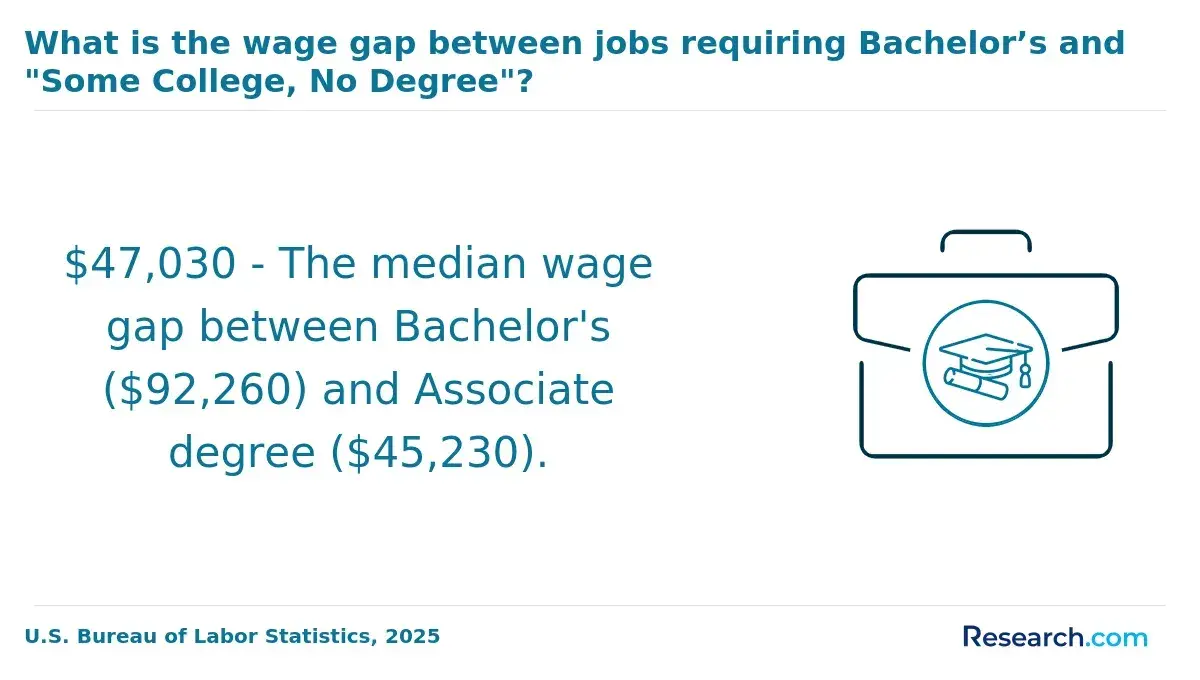
Graduates with a master's degree (MSW) generally see an ROI within 3 to 5 years after finishing their program, thanks to higher median starting salaries ranging from $55,350 to $65,070 annually. In contrast, those with only a bachelor's degree (BSW) may take up to 23 years to recoup their educational costs since the average starting salary is around $42,340. The MSW typically offers about $13,000 more in annual pay compared to the BSW, alongside enhanced career growth opportunities and access to higher-paying clinical roles.
The break-even timeline is highly sensitive to program cost. Online master's programs can range from $20,000 to $60,000, while bachelor's degrees may average near $110,000 in total. Students who keep working while enrolled, avoid high-interest debt, receive grants or employer assistance, or choose a lower-cost accredited program may shorten the payoff period.
To estimate your own ROI, compare the total amount you expect to pay with the salary difference between your current job and your likely post-degree role. Also include licensure costs, supervision requirements, and the time it may take to move into higher-paying positions.
Are Online Social Work Students Eligible for Financial Aid?
Yes. Online Social Work students in the United States are typically eligible for financial aid if they enroll in an accredited program and meet aid requirements such as U.S. citizenship or qualifying non-citizen status. In many cases, online students can access the same federal, state, institutional, and private funding options as campus-based students.
Financial aid packages may be based on financial need, academic performance, enrollment status, program type, or employer benefits. Aid can help cover tuition and fees, and sometimes living expenses, but students should verify eligibility before enrolling. Those seeking broader affordability options may also compare cheap online schools for job holders, particularly if they need flexible programs while employed.
- Federal financial aid for online social work programs: Includes Pell Grants, Federal Direct Loans, and Federal Work-Study. These options can cover a significant portion or even the full cost of tuition based on financial need and completion of the FAFSA.
- Social work scholarships for online students: Many universities award merit- or need-based scholarships targeted specifically to Social Work students, including those specializing in mental health or military social work, which can reduce overall expenses.
- Employer tuition assistance: Working professionals may qualify for tuition reimbursement from employers when their coursework aligns with job requirements or future career advancement.
Students should submit the FAFSA early, ask the school about social work department scholarships, and request a written aid estimate before accepting admission. Borrowing should be tied to a realistic repayment plan, especially for students entering lower-paid public service or nonprofit roles.
Are Online Social Work Program Costs Expected to Increase in the Coming Years?
Online Social Work program costs are expected to rise gradually, although the rate will vary by institution. Students planning to enroll later should build possible tuition increases into their budget instead of relying only on the current published rate.
Currently, the cost for online Social Work degrees ranges broadly, with public universities generally offering more affordable options than private ones. Many public institutions charge between $7,000 and $15,000 annually for in-state students, while out-of-state or private university tuition can exceed $20,000 per year. Some programs also include additional fees for technology or course materials, adding to the overall expense.
Prospective students should anticipate yearly tuition hikes of approximately 3% to 5%. Even small annual increases can matter in part-time programs that take several years to complete. Ask whether tuition is locked for a cohort, whether fees can change each term, and whether financial aid awards adjust when tuition rises.
To reduce exposure to future increases, students can compare flat-rate programs, complete prerequisite or general education credits before transfer, apply for advanced standing when eligible, and avoid unnecessary stop-outs that extend the program timeline.
What Students Say About The Cost of Pursuing Online Social Work Programs
- Tristan: "Pursuing my online Social Work degree was a game-changer for my career, especially considering the average tuition was much more affordable than I anticipated. Balancing work and studies was challenging, but knowing the investment would open doors to meaningful roles in community services kept me motivated. The cost was reasonable compared to traditional programs, making the return on investment truly worthwhile."
- Jesiah: "Reflecting on my journey through the online Social Work program, I realize how essential it was that the cost remained manageable, allowing me to focus on learning without overwhelming financial stress. Earning this degree online not only saved me money but also provided the flexibility to care for my family while advancing my skills. The value I've gained far exceeds the total investment, which averaged around what most expect for quality online education."
- Christopher: "As a professional seeking to enhance my expertise, the cost-effectiveness of the online Social Work degree made a significant difference in my decision. Completing the program delivered strong career benefits that surpassed the financial outlay, which was aligned with national averages for online education. This degree has been a strategic investment, and I'm confident it will continue to yield positive returns."
Other Things You Should Know About Social Work Degree Program Costs
Many online social work programs charge a separate technology fee of about $25 to $150 per term. Some also add online course fees or proctoring charges for exams. These fees are listed in the program’s tuition schedule and are usually billed in addition to credit-hour tuition.
Online Social Work degree programs in 2027 often include mandatory fees such as technology fees, library access charges, or graduation fees. These costs can range from $100 to $500 per semester, depending on the institution's policies. Check specific program details for exact amounts.
References
- Online MSW Degree Estimated Cost & Fees https://www.umt.edu/social-work//master-of-social-work/online-asynchronous-program/o-msw-cost.php
- Online Healthcare Certifications in Medical coding & billing - AAPC https://www.aapc.com/certifications
- Online Medical Billing & Coding School | Penn Foster https://www.pennfoster.edu/programs/healthcare/medical-billing-and-coding-career-diploma
- Online Bachelor of Social Work (BSW) Degree https://online.springarbor.edu/programs/online-bsw
- Online Social Work Training | Associate Degree | Tuition & Financing - USCI https://www.uscareerinstitute.edu/online-social-work-associate-degree/tuition-financing