2027 Are Online Social Work Degrees Respected by Employers?

Co-Founder and Chief Data Scientist
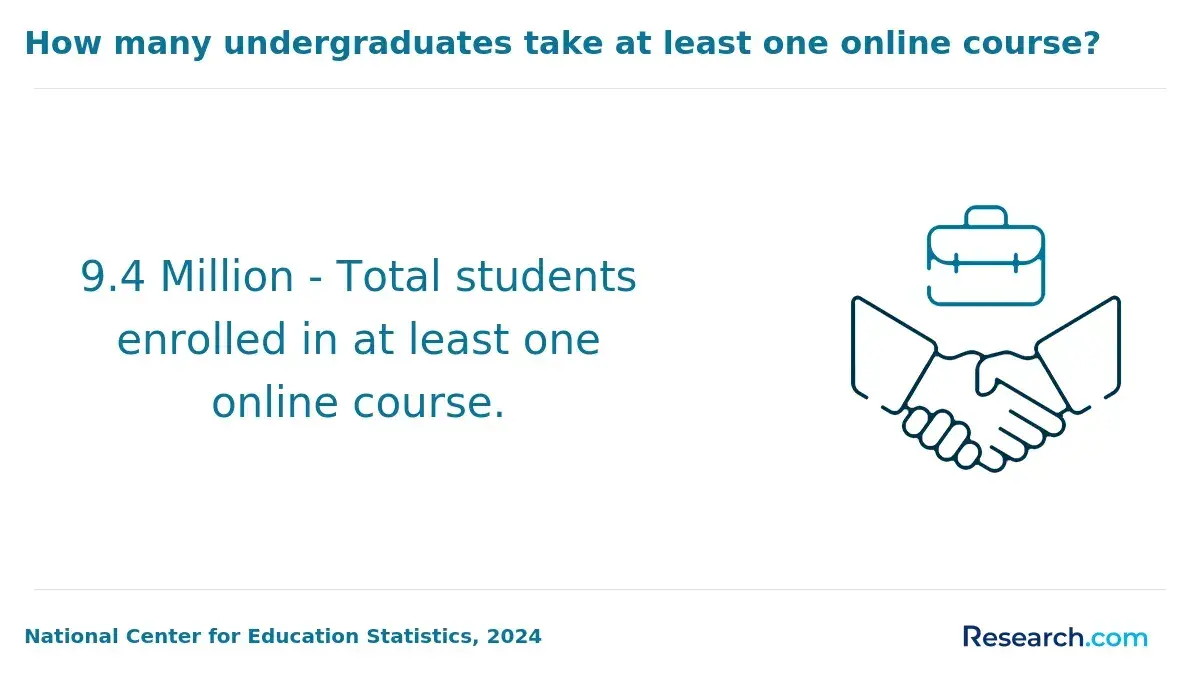
Choosing an online social work degree is not just a scheduling decision. It affects licensure eligibility, field placement options, employer confidence, and long-term career mobility. Online programs are now common enough that many hiring managers no longer treat the format itself as unusual; recent data shows that nearly 40% of social work students now pursue their degrees online. Still, not every online degree carries the same value.
This guide explains how employers evaluate online social work degrees in 2026: what makes a program legitimate, when university reputation matters, how accreditation affects licensure, what skills online graduates should prove, and how salaries and promotions compare with on-campus pathways. It is written for prospective BSW and MSW students, working adults considering a career change, and current human services professionals deciding whether an online credential will be respected in the job market.
Key Benefits of Online Social Work Degrees Respected by Employers
- Employers increasingly recognize online social work degrees from accredited programs as equivalent to traditional degrees, with surveys showing over 70% of hiring managers trust their legitimacy.
- Graduates develop critical skills such as client assessment, ethical decision-making, and crisis intervention through rigorous online coursework and supervised fieldwork, aligning with professional social work standards.
- Studies indicate that holders of accredited online social work degrees experience comparable employment rates and salary growth to campus-based graduates within two years of graduation, enhancing long-term career prospects.
Which Accrediting Bodies Make an Online Social Work Degree Legitimate?
The most important signal of legitimacy for an online social work degree is accreditation. Employers may notice the university name, delivery format, or field placement experience, but accreditation is what confirms that the program meets recognized academic and professional standards. For social work, this matters because licensure, graduate admission, credit transfer, and many hiring decisions depend on it.
Students should verify two types of accreditation before enrolling: programmatic accreditation for the social work degree itself and institutional accreditation for the college or university offering it.
- Programmatic accreditation by CSWE: The Council on Social Work Education (CSWE) is the central accreditor for social work education in the United States. CSWE is the only agency recognized by the Council for Higher Education Accreditation (CHEA) to accredit social work programs, including Bachelor of Social Work (BSW) and Master of Social Work (MSW) degrees. A CSWE-accredited program tells employers and licensing boards that the curriculum, field education, competencies, and assessment standards meet the profession’s expectations. There are more than 320 CSWE accredited online social work programs nationwide, which makes this accreditation the clearest benchmark for online program credibility.
- Regional institutional accreditation: The school offering the degree should also hold regional accreditation from an agency such as The Higher Learning Commission. This confirms that the institution as a whole meets standards for academic quality, financial stability, governance, student support, and administrative integrity. Regional accreditation also affects federal financial aid eligibility, transfer credit, graduate school recognition, and whether another institution or employer will view the degree as valid.
- Licensure and hiring impact: In many states and roles, graduating from a CSWE-accredited program is not optional. It can be required for social work licensure, advanced standing MSW admission, clinical supervision pathways, and certain public agency positions. A degree from an unaccredited or poorly accredited program may limit your ability to become licensed even if the coursework appears similar.
Before applying, check accreditation directly through the accreditor’s database, not only on a school’s marketing page. Also confirm whether the online version of the program is covered by the same accreditation as the campus program, whether field placements meet your state’s expectations, and whether the program prepares students for the license level they intend to pursue. Students comparing timelines may also find it useful to review how other accelerated associate degrees structure coursework and completion schedules.
Does University Reputation Affect Employer Views of Online Social Work Degrees?
Yes. University reputation can influence how quickly an employer trusts an online social work degree, especially during the first resume review. A familiar nonprofit university, a strong school of social work, visible community partnerships, and a record of graduate success can all make an online credential easier for hiring managers to interpret.
Reputation, however, does not replace accreditation. A well-known university without the right social work accreditation may still leave graduates with licensure problems. Conversely, a lesser-known institution with CSWE accreditation, strong field education, and good employer relationships can produce competitive candidates.
What reputation signals employers actually notice
- CSWE accreditation: This remains the strongest credibility marker because it connects directly to professional standards and licensure eligibility.
- Field placement quality: Employers want to know whether students completed supervised, relevant, in-person or locally approved practicum experience, not just online coursework.
- Agency partnerships: Programs with relationships across hospitals, schools, community agencies, child welfare organizations, and behavioral health providers often help students build practical experience before graduation.
- Graduate outcomes: Alumni employment, licensure preparation, and professional advancement can matter more than general university prestige.
- Faculty expertise: Faculty with current social work practice, policy, clinical, or research experience can strengthen the program’s credibility.
Employer views are also becoming more skills-based. Many recruiters now weigh experience, interview performance, field evaluations, licensure progress, references, and demonstrated competence alongside the school name. This is especially true for candidates who already work in human services or complete strong practicum placements.
For students choosing between programs, the practical question is not simply “Is this university famous?” It is “Will this program qualify me for the license and role I want, and will it help me build credible field experience?” Prospective students comparing flexible undergraduate options, including an easy bachelor's degree, should still prioritize recognized accreditation and career fit over convenience alone.
Do Employers Treat Online and On-campus Social Work Degrees Equally?
Many employers now treat accredited online and on-campus social work degrees as comparable, especially when both programs are CSWE-accredited and include supervised field education. The format of coursework matters less than whether the graduate can document professional competencies, ethical judgment, case management ability, cultural responsiveness, and readiness for the role.
That does not mean every online degree receives equal trust. Employers are more likely to question programs that lack recognized accreditation, provide weak field placement support, operate with limited faculty interaction, or come from institutions with poor academic reputations. In social work, hands-on learning is essential; an online program must still provide legitimate practicum experiences that meet professional expectations.
How employers commonly compare degree formats
| Employer concern | What reassures employers | What may raise doubts |
| Academic quality | CSWE accreditation, qualified faculty, rigorous assignments, clear learning outcomes | Unrecognized accreditation or unclear curriculum standards |
| Practice readiness | Supervised fieldwork, strong evaluations, relevant internship sites | Limited practicum support or placements unrelated to intended practice area |
| Professional maturity | Work experience, strong references, clear communication, ethical decision-making | Little evidence of applied experience or poor interview examples |
| Technology skills | Comfort with digital records, telehealth tools, virtual collaboration, online documentation | Inability to connect online learning to workplace tools |
Online graduates can strengthen employer confidence by highlighting the parts of their education that mirror workplace demands: field hours, client populations served, assessment tools used, group projects, crisis response training, documentation practice, and collaboration with supervisors. If an employer is unfamiliar with online social work education, a concise explanation of accreditation and practicum requirements can help.
The safest path is to choose a regionally accredited institution with a CSWE-accredited program, complete fieldwork in settings aligned with your career goals, and build a portfolio of applied experience. When those pieces are in place, online delivery is usually not the deciding factor.
Do Employers Trust Online Social Work Degrees from AI-powered Virtual Classrooms?
Employers are beginning to accept AI-supported online learning when it is part of an accredited, well-supervised social work program. AI tools can improve online education, but they do not replace the core requirements employers care about: CSWE-aligned curriculum, qualified faculty, ethical training, supervised field education, and documented practice competence.
AI-powered platforms may use adaptive learning systems, virtual simulations, automated feedback, and AI tutors to help students practice decision-making and review complex concepts. In social work education, these tools can be useful for preparing students to recognize risk factors, plan interventions, practice interviewing, and reflect on case scenarios before working with real clients.
Employers are most likely to trust these programs when the technology supports human instruction rather than substitutes for it. For example, a virtual simulation can help a student rehearse a crisis conversation, but field supervisors and faculty still need to evaluate professional judgment, boundaries, cultural humility, documentation, and ethical reasoning.
What AI can and cannot validate
- AI can support skill practice: Simulations and adaptive exercises can give students repeated exposure to case scenarios and immediate feedback.
- AI can improve learning visibility: Digital platforms may create records of progress, assessment performance, and competency development.
- AI cannot replace field education: Employers still expect supervised experience with real agencies, clients, documentation systems, and interdisciplinary teams.
- AI cannot compensate for weak accreditation: CSWE accreditation remains the stronger trust signal than any technology feature.
The Bureau of Labor Statistics' projection of 7% job growth between 2023 and 2033 reinforces the need for qualified social workers trained through credible pathways. AI may become part of that training, but employer confidence will depend on how transparently programs connect technology to professional standards, fieldwork, and licensure preparation.
What Skills Do employers Value from Online Social Work Graduates?
Employers value online social work graduates who can show both professional social work competence and the self-management skills needed to succeed in demanding service settings. An online degree can help demonstrate independence, digital fluency, and written communication, but graduates still need to connect those strengths to direct practice, case management, advocacy, and ethical decision-making.
The strongest candidates do not simply say they completed an online program. They explain what the program required, what populations they served in fieldwork, how they handled complex cases, and how they used supervision to improve practice.
- Communication: Social workers must write clear case notes, communicate with clients, document risk, participate in team meetings, and coordinate with agencies. Online students often build strong written communication through discussion posts, reflection papers, group projects, and case analyses.
- Time management: Online programs require students to manage deadlines, field hours, employment, and personal responsibilities. Employers value this because social workers often balance heavy caseloads, urgent client needs, documentation, and administrative requirements.
- Digital literacy: Modern social work settings rely on electronic records, telehealth platforms, online referral systems, data dashboards, and virtual meetings. Online graduates may be especially comfortable learning new systems and communicating professionally in digital environments.
- Emotional intelligence: Employers look for empathy, self-awareness, emotional regulation, active listening, and appropriate boundaries. These qualities are essential when working with trauma, family conflict, mental health concerns, poverty, crisis, and systemic barriers.
- Critical thinking and problem-solving: Social workers must assess needs, identify risks, evaluate resources, apply policy, and create realistic intervention plans. Case-based coursework and practicum experiences help graduates develop this judgment.
- Cultural responsiveness: Employers need graduates who understand how identity, community context, discrimination, language access, disability, and economic conditions affect client experiences and service delivery.
- Ethical judgment: Confidentiality, mandated reporting, informed consent, dual relationships, and professional boundaries are central to social work practice. Candidates should be ready to discuss ethical scenarios in interviews.
Students beginning with a fast associates degree online before moving into social work study can compare pathways such as fast associates degree online options, but BSW and MSW students should make sure later programs build the competencies employers expect in supervised practice.
Do Professional Certifications Help Validate Online Social Work Degrees?
Professional certifications can strengthen an online social work graduate’s credibility, but they do not replace an accredited degree or state licensure. Employers view certifications as additional evidence of specialized preparation, continuing education, and commitment to professional standards. They are most useful when they align with the job target, such as clinical practice, trauma services, substance abuse counseling, school social work, case management, or child welfare.
Certifications can be especially helpful for online graduates who want to show that their skills have been assessed beyond the classroom. They also help candidates stand out when several applicants meet the same minimum degree and licensure requirements.
- Clinical Social Work Certification, such as DCSW from NASW: This type of credential can signal advanced professional preparation. Requirements may include a CSWE-accredited master's degree, state licensure, and significant clinical experience, which helps employers separate experienced practitioners from entry-level applicants.
- Specialized practice credentials: Certifications in areas such as trauma recovery, substance abuse counseling, gerontology, school practice, or child welfare can show focused preparation for a specific population or setting.
- Continuing education evidence: Maintaining certifications often requires ongoing professional development. This reassures employers that the candidate is staying current with best practices, ethics, and emerging issues.
- Career mobility: Relevant certifications may support movement into specialized, supervisory, or higher-responsibility roles, although salary gains depend on employer policy, location, license level, and job setting.
- Professional recognition: Credentials from respected organizations such as the NASW can add credibility because employers and licensing boards are familiar with their standards.
- Networking benefits: Certification pathways may connect graduates with mentors, professional associations, peer communities, and continuing education opportunities.
Cost-conscious MSW applicants should compare tuition, accreditation, field placement support, and licensure outcomes alongside lists of the cheapest online msw programs, because a low price is only valuable if the degree supports the professional pathway you need.
A professional who completed an online social work program described certification as the point when some skeptical employers began taking his background more seriously. He said the process tested both his knowledge and practical skills, while also giving him more confidence in clinical conversations and ethical decision-making. The challenge was balancing certification requirements with work and personal responsibilities, but he viewed the credential as more than a resume line: it connected him to a professional community and helped translate his online degree into a recognized practice identity.
Do Online Social Work Graduates Earn the Same Salaries as On-campus Graduates?
Online and on-campus social work graduates can earn comparable salaries when they hold equivalent accredited degrees, meet the same licensure requirements, and compete for the same roles. Employers generally pay based on degree level, license status, experience, specialization, geographic location, and employer type rather than whether coursework was completed online.
The degree format may matter indirectly if it affects field placement quality, networking, licensure preparation, or employer perception. But an online MSW from a CSWE-accredited program that prepares graduates for licensure can lead to the same categories of roles as an on-campus MSW.
- Degree level and specialization: Salary differences are often driven by whether a graduate holds a BSW or MSW, not by online versus campus delivery. MSW holders generally earn 20-30% more than BSW graduates, and specialized clinical roles in metropolitan areas may offer higher compensation.
- Licensure and advancement: Graduates from accredited online and traditional MSW programs can pursue credentials such as Licensed Clinical Social Worker (LCSW) when they meet state requirements. Licensure can open access to clinical, supervisory, and higher-responsibility roles.
- Location and setting: Pay varies substantially by region and employer. Social workers in states like California earn significantly higher median wages than those in lower-paying regions, and healthcare settings often pay more than some community-based organizations.
- Experience and fieldwork: Students who use field placements to build specialized experience may be more competitive for better-paying roles after graduation.
Students should evaluate total program cost, financial aid access, field placement support, and expected licensure pathway before assuming a degree will pay off quickly. Finding an online college that accepts FAFSA can be an important step for students trying to manage debt while pursuing a social work degree online.
How Do Online Social Work Degrees Impact Career Growth and Promotions?
An accredited online social work degree can support career growth when it helps a professional qualify for licensure, move from support roles into social work positions, specialize in a practice area, or meet degree requirements for supervision and leadership. The format is less important than the credential’s accreditation, the graduate’s performance, and how well the program connects learning to workplace needs.
For working adults, online programs can be especially valuable because they make it possible to continue earning income while completing a BSW or MSW. This can allow students to apply new skills immediately in their current organization and position themselves for internal promotion.
- Flexibility for working professionals: Online study can help students balance employment, fieldwork, and family responsibilities. Staying employed may also preserve professional momentum and strengthen promotion readiness.
- Expanded career versatility: Graduates may pursue roles such as case manager, victim advocate, school social worker, behavioral health specialist, community program coordinator, or policy-focused practitioner, depending on degree level and licensure.
- Career-aligned fieldwork: Accredited online programs often require supervised local practicum experiences. Strong placements can lead to references, job offers, specialized experience, or internal advancement.
- Professional networking: Online programs may provide virtual events, alumni groups, faculty mentoring, peer collaboration, and agency connections. Students should use these intentionally rather than assuming networking happens automatically.
- Marketability and demand: With social work projected to grow by 12% from 2020 to 2030, employers need qualified professionals who can adapt to complex client needs and changing service models.
- Technology and communication skills: Online graduates often develop comfort with virtual meetings, digital collaboration, remote documentation, and self-directed work, all of which can support supervisory or hybrid roles.
A graduate who completed an online social work program while working full time described the degree as a turning point. The flexibility allowed her to continue earning income, and her field placement connected her with a local agency that later promoted her within six months of graduation. She also credited the online format with improving her ability to lead remote teams, communicate clearly in writing, and manage deadlines under pressure.
The main takeaway is that an online degree can open promotion pathways, but students need to choose placements strategically, document measurable accomplishments, pursue licensure on time, and build relationships with supervisors who can speak to their readiness for advancement.
What Companies Actively Hire Graduates from Online Social Work Programs?
Graduates of accredited online social work programs are hired across the same broad sectors that employ on-campus graduates. Most employers care more about accreditation, license eligibility, field experience, population expertise, and interview performance than the delivery format of the degree.
Instead of looking only for companies that “accept” online degrees, students should target employers whose roles match their degree level, licensure status, and practicum background.
- Healthcare organizations: Hospitals, clinics, behavioral health providers, hospice organizations, rehabilitation centers, and integrated care systems hire social work graduates for discharge planning, care coordination, patient advocacy, crisis support, and behavioral health roles.
- Government and public agencies: Local, state, and federal agencies employ social workers in child welfare, public assistance, veterans services, aging services, housing programs, corrections, public health, policy analysis, and program administration.
- Nonprofit and community organizations: Mental health agencies, family service organizations, domestic violence programs, crisis centers, housing nonprofits, and youth organizations hire graduates for outreach, case management, counseling support, program coordination, and advocacy.
- Remote and virtual service providers: Teletherapy, remote case management, digital behavioral health, and virtual care coordination roles continue to expand. Online graduates may be comfortable with the communication and documentation tools used in these settings, though licensure rules still apply.
- Education and academic institutions: Schools, universities, and student support organizations hire social workers as counselors, family liaisons, student success specialists, support coordinators, and adjunct instructors when candidates meet role requirements.
Job seekers should tailor applications to the employer’s setting. A hospital may want evidence of interdisciplinary teamwork and discharge planning. A school may prioritize child development, family systems, and crisis response. A nonprofit may value grant-funded program experience and community outreach. Combining a degree with relevant training, such as high paying certification programs, may improve competitiveness when the certification matches the role.
What Future Trends Will Shape Online Social Work Degrees' Credibility?
The credibility of online social work degrees will continue to depend on accreditation, field education quality, licensure outcomes, and employer experience with graduates. Technology will shape delivery, but trust will come from measurable competence and transparent standards.
Several trends are likely to influence how employers, licensing boards, and students judge online programs in the coming years.
- AI-driven learning validation: Artificial intelligence may help personalize coursework, provide practice scenarios, and track competency development. Employers may value these tools when they produce clear evidence of learning, but AI will need to remain connected to faculty oversight and ethical practice standards.
- Stronger accreditation expectations: Organizations such as the Council on Social Work Education (CSWE) will remain central to employer trust. As online programs expand, accreditation standards and reviews will help distinguish rigorous programs from weak ones.
- Global accreditation collaboration: Greater collaboration among accrediting and professional organizations may create more consistent expectations for online learning, supervised practice, and competency assessment across borders.
- Employer partnerships: Programs that partner with healthcare systems, schools, nonprofits, and public agencies can give students stronger field placements and clearer employment pathways.
- Skill-based hiring and outcomes data: Employers are increasingly interested in what graduates can do, not only where they studied. Licensure rates, field placement quality, job placement patterns, and supervisor evaluations may become more important in judging program value.
- Hybrid service delivery: Social work practice now includes in-person, hybrid, and remote service models. Online graduates who can demonstrate ethical digital practice, strong documentation, and effective virtual communication may have an advantage in some settings.
The programs most likely to gain credibility will be those that combine flexible delivery with rigorous admission standards, strong faculty engagement, supervised fieldwork, transparent outcomes, and clear alignment with licensure requirements.
Here's What Graduates of Respected Online Social Work Programs Have to Say About Their Degree
- : "Completing my online social work degree gave me the flexibility to balance my studies with raising a family, which traditional programs simply would not have allowed. After graduation, I found my first position as a case manager at a local nonprofit, where I could see how my coursework translated into community impact. The program’s focus on applied skills and trauma-informed care helped me build confidence and move toward leadership opportunities. What excites me most is the stability and growth potential in social work as the need for qualified professionals continues to rise. — Jamal"
- : "Going through an accredited online social work program expanded my professional network beyond my local area and helped me connect with child welfare organizations I would not have encountered otherwise. Remote learning did not weaken my engagement with the material or fieldwork; it strengthened my time management and self-discipline. Earning my degree online helped me move from volunteer roles into a full-time position with benefits, and I am now pursuing certification to become a licensed clinical social worker. The experience deepened my commitment to youth mental health advocacy. — Maria"
- : "The professional development I gained through my online social work degree has been significant. Courses in policy analysis and community organizing gave me practical tools for improving social programs. Since earning the degree, I secured a role as a program coordinator at a state agency, which would have been difficult without the flexibility of online study and the diverse perspectives in my cohort. This path helped me grow into work that improves resources for underserved populations. — DeShawn"
Other Things You Should Know About Respectable Online Social Work Degree Programs
In 2027, online social work degrees are increasingly respected by employers, especially when they are accredited. Employers prioritize accrediting bodies' legitimacy, ensuring that programs meet standard educational requirements. Additionally, practical experience gained through internships or fieldwork often holds significant importance alongside online coursework.
Online social work degrees in 2027 incorporate practical experience through virtual simulations and local field placements, complying with the Council on Social Work Education (CSWE) standards. These programs ensure students gain necessary hands-on skills, mandatory for both U.S. accreditation and employment.
References
- The impact of a social work degree: How you can make a difference - Bethel University Blog https://www.bethel.edu/blog/the-impact-of-a-social-work-degree-how-you-can-make-a-difference/
- Employers See Online Degrees as Comparable to In-person Degrees https://www.naceweb.org/talent-acquisition/candidate-selection/employers-see-online-degrees-as-comparable-to-in-person-degrees
- Full article: Perspectives on Social Work in the Digital Age https://www.tandfonline.com/doi/full/10.1080/17496535.2025.2517104
- Rising Demand, Real Impact: Why the Bachelor of Social Work is the Future of Care and Community https://www.naps.edu.au/blog/rising-demand-real-impact-why-the-bachelor-of-social-work-is-the-future-of-care-and-community
- Top 10 Social Work Trends for 2026 https://agentsofchangeprep.com/blog/top-10-social-work-trends-for-2026/
- Social Work Certifications and Career Advancement - Social Work Degree Center https://www.socialworkdegreecenter.com/certifications/
- Best Certifications for Social Workers in 2025 (Ranked) https://www.tealhq.com/certifications/social-worker
- Accreditation Directory | CSWE https://www.cswe.org/accreditation/about/directory/
- Ten Reasons to Pursue an Education in Social Work https://futuramo.com/blog/education-for-the-greater-good-ten-reasons-to-study-social-work/
- Social Work Salaries - How Much Do Social Workers Make? https://www.onlinemswprograms.com/careers/social-worker-salaries/